Selecting sheet metal for an outdoor enclosure is an engineering decision, not just a material purchase. For an outdoor projector enclosure, the right choice depends on corrosion risk, structural load, heat dissipation, mounting method, enclosure size, maintenance access, and budget. ShiRui evaluates these conditions together because no single metal is best for every outdoor installation.
What is outdoor projector enclosure?
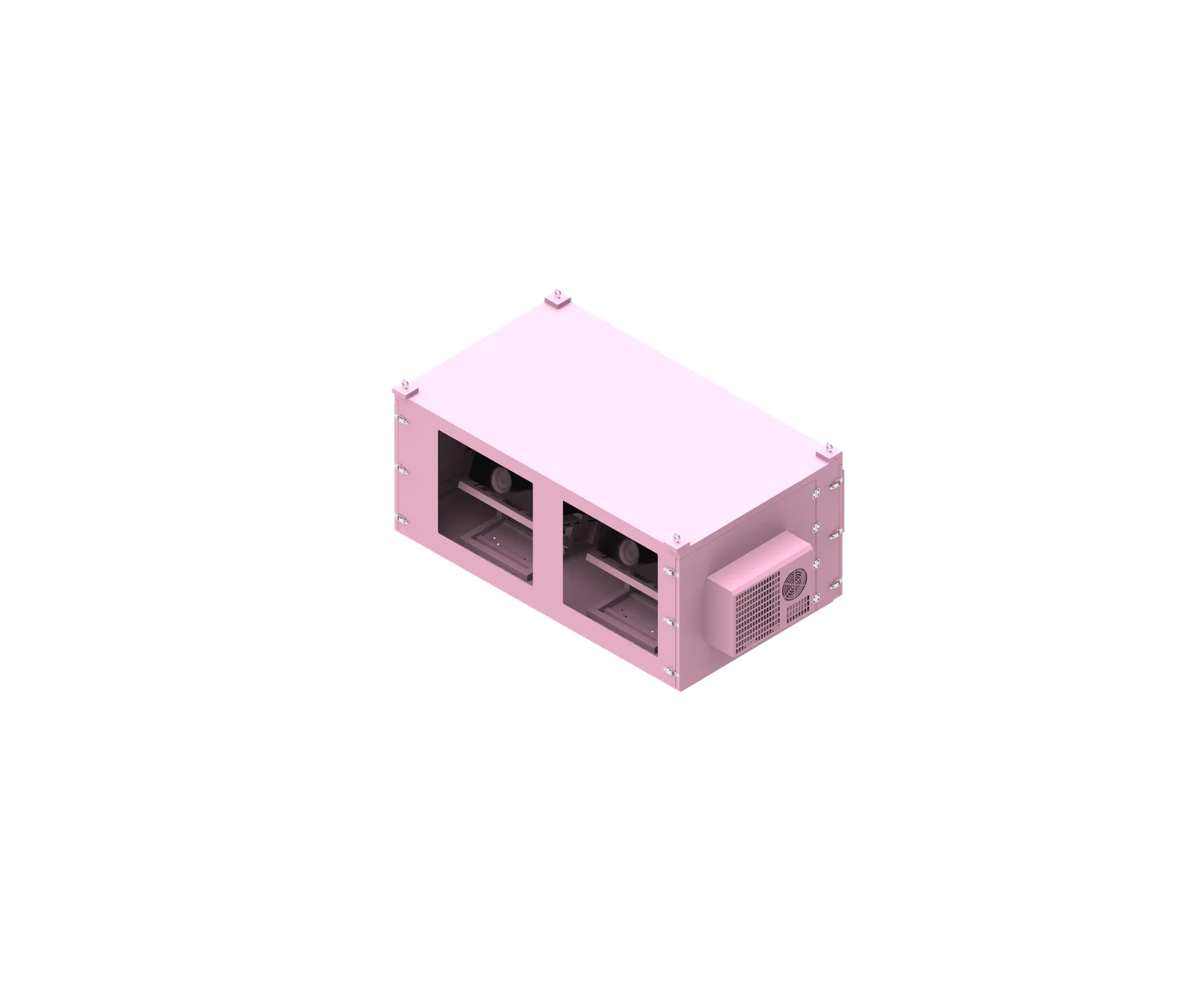
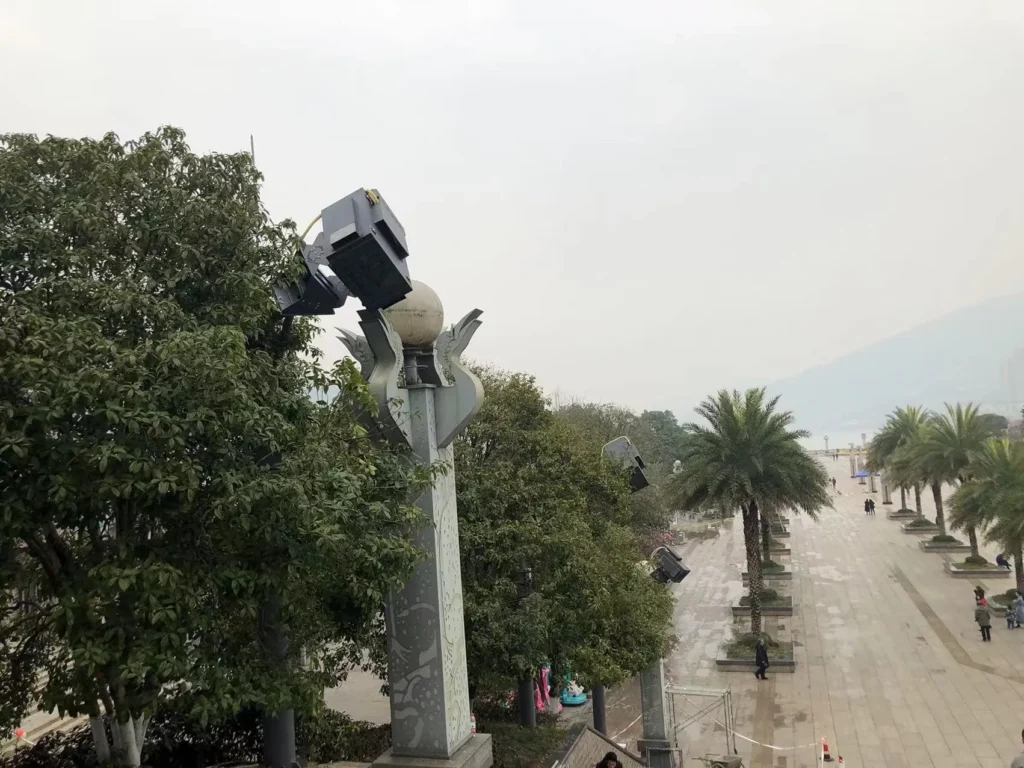
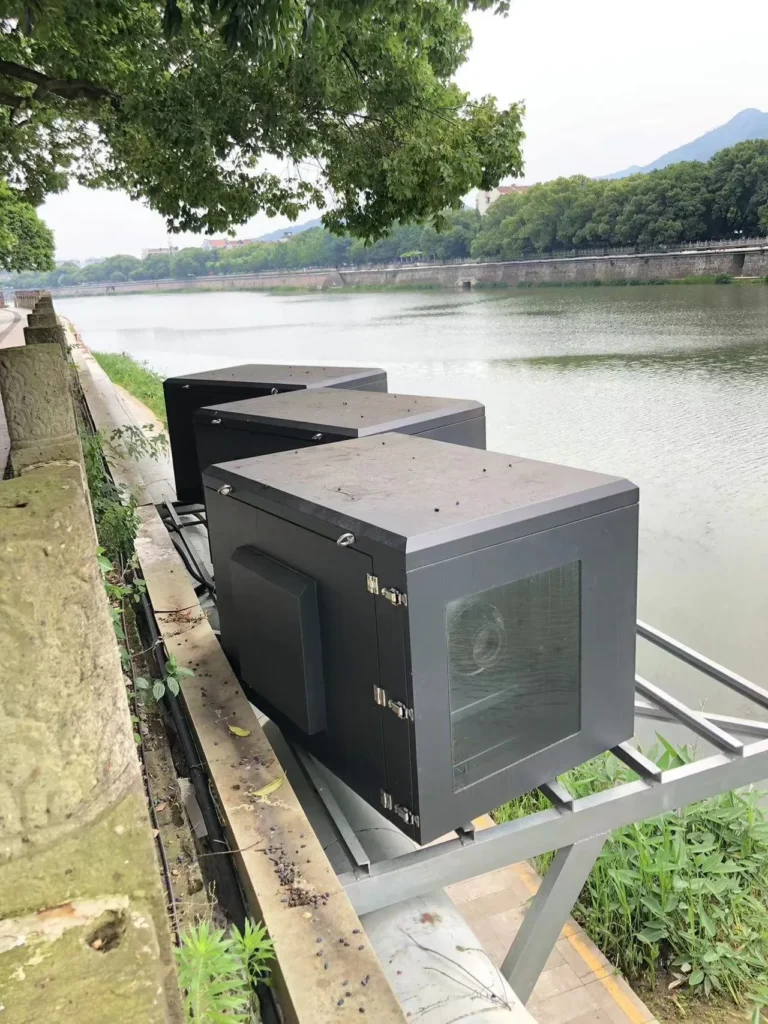
An outdoor projector enclosure is a protective cabinet designed to house projection equipment in exposed or semi-exposed environments. It shields the projector from rain, dust, humidity, sunlight, impact, and temperature changes while allowing ventilation, cable access, optical projection, maintenance, and optional climate-control components.
Protective Cabinet Purpose
An outdoor projector enclosure is not simply a metal box. It is a functional housing that must protect sensitive optical and electronic equipment while allowing the projector to operate safely.
For sheet metal selection, the enclosure structure must support internal equipment, resist corrosion, protect openings, and manage heat. This is especially important for permanent installations in commercial plazas, theme parks, building façades, outdoor events, museums, and architectural projection sites.
Key functions include:
- Protecting the projector from rain, dust, insects, and accidental contact
- Supporting the projector, brackets, fans, air-conditioning units, and cable systems
- Providing an optical window or projection opening
- Allowing maintenance access through doors or removable panels
- Managing heat through ventilation, fans, filters, or air-conditioning
- Withstanding outdoor exposure, wind load, and mounting stress
- Reducing corrosion risk through proper material and surface treatment
ShiRui Pro Tip: We always start by asking where the enclosure will be installed before discussing the metal. A cabinet used inland on a wall and a cabinet used near the sea on a pole may look similar, but the material logic can be completely different.
How Does outdoor projector enclosure Work?
An outdoor projector enclosure works by combining structural protection, environmental sealing, ventilation or climate control, and service access. The sheet metal body carries the load, the surface finish resists weather, and the internal layout controls heat, moisture, cables, and projector alignment.
Operating Structure and Protection Flow
The enclosure works as a controlled protective shell around the projector. The sheet metal forms the main structure, while doors, seals, vents, optical windows, mounting points, and internal brackets complete the system.
A typical working sequence includes:
- The projector is fixed to an internal bracket or slide rail.
- The enclosure body carries the equipment weight and mounting load.
- The optical window or projection opening allows the image to pass through.
- Ventilation, fans, filters, or air-conditioning help control internal temperature.
- Cable entries route power, signal, and control wiring.
- Doors or panels provide maintenance access.
- Surface treatment protects the metal from rain, humidity, UV exposure, and corrosion.
- Reinforcement improves rigidity for larger cabinets or exposed installations.
Material selection affects almost every part of this process. Aluminum may help reduce weight and improve heat dissipation, galvanized steel may help control cost for large cabinets, and stainless steel may be selected for stronger corrosion resistance in demanding environments.
ShiRui Pro Tip: I recommend reviewing the enclosure as a full system. If the metal is strong but the welds, cut edges, cable entries, or ventilation openings are poorly protected, the outdoor performance can still fail.
What are the key design considerations for sheet metal enclosures?
The key design considerations are installation environment, corrosion risk, enclosure dimensions, equipment weight, mounting method, heat dissipation, door size, wind exposure, surface treatment, maintenance frequency, and budget. Material selection should be based on environment and structure, not price or appearance alone.
Engineering Factors That Drive Material Choice
Sheet metal for an outdoor enclosure must be selected according to the complete use case. A small wall-mounted cabinet in a sheltered urban area may not need the same material as a large pole-mounted outdoor projector enclosure near the coast.
Important evaluation factors include:
- Rain exposure and drainage path
- Humidity level and condensation risk
- Coastal or salt-air exposure
- Dust, sand, and windblown particles
- Industrial pollution or chemical exposure
- UV exposure and coating durability
- Maximum and minimum site temperature
- Enclosure size and door dimensions
- Projector and accessory weight
- Mounting method: wall, floor, pole, frame, or custom support
- Wind load and vibration risk
- Corrosion risk and expected maintenance frequency
- Heat dissipation and climate-control requirements
- Required service life expectation
- Budget and fabrication requirements
The sheet metal material must also match the fabrication method. Bending, welding, punching, laser cutting, door assembly, and surface finishing all influence the final enclosure quality.
ShiRui Pro Tip: When a customer sends only the enclosure size, we still cannot make a reliable material recommendation. I need to know the site environment, mounting method, internal equipment weight, and corrosion conditions first.
What type of metal is best for outdoor use?
There is no single best metal for every outdoor enclosure. Galvanized steel, aluminum alloy, 201 stainless steel, and 304 stainless steel can all be suitable in different conditions. The best choice depends on corrosion exposure, weight limits, strength needs, heat dissipation, budget, and maintenance access.
Material Selection by Application Conditions
Each material has trade-offs. For ShiRui projects, the selection is usually based on where the enclosure will be installed and how it will be mounted.
Based on our internal data and market analysis, here is the breakdown:
| Material | Best Considered When | Main Advantages | Main Considerations |
|---|---|---|---|
| Galvanized Steel | Standard urban or commercial outdoor environments with controlled budget | Good strength, cost-effective, suitable for large cabinets, easy to fabricate | Heavier than aluminum; corrosion protection depends on coating quality and maintenance |
| Aluminum Alloy | Weight reduction, pole mounting, wall mounting, or heat dissipation are important | Lightweight, good corrosion resistance, good thermal conductivity | Higher material cost than galvanized steel; reinforcement may be needed for larger cabinets |
| 201 Stainless Steel | Mild environments where stainless-steel appearance and cost control matter | Stainless-steel appearance, good structural strength, more economical than 304 stainless steel | Lower corrosion resistance than 304; not preferred for severe coastal or highly humid corrosive environments |
| 304 Stainless Steel | Humid, coastal, salt-air, or demanding outdoor environments | Strong corrosion resistance, good durability in humid environments | Higher cost; heavier than aluminum; suitability still depends on environment and surface condition |
Galvanized steel should not be treated as rustproof. Aluminum should not be assumed to be better than steel in every situation. 201 stainless steel should not be used as a universal outdoor stainless option. 304 stainless steel is often valuable for corrosive sites, but it is not mandatory for every outdoor enclosure.
ShiRui Pro Tip: I avoid saying one metal is “the best.” A better question is: which material gives the right balance of corrosion resistance, structure, weight, fabrication, and cost for this exact installation?
Which is thicker, 18 or 22 gauge sheet metal?
18 gauge sheet metal is thicker than 22 gauge sheet metal. However, gauge numbers vary by material standard, so enclosure design should not rely on gauge alone. ShiRui usually confirms actual thickness in millimeters based on enclosure size, load, rigidity, and fabrication requirements.
Gauge Numbers and Practical Thickness Decisions
Gauge systems can be confusing because a lower gauge number generally means thicker material, but the exact thickness can vary depending on whether the sheet is steel, galvanized steel, aluminum, or stainless steel.
For engineering communication, millimeter thickness is clearer than gauge. ShiRui has used sheet metal thicknesses from approximately 1.2 mm to 4.0 mm in different projects, depending on the enclosure design and structural requirements.
Typical thickness selection factors include:
- Enclosure dimensions
- Door size and panel span
- Internal equipment weight
- Mounting method
- Wind exposure
- Required rigidity
- Material type
- Reinforcement structure
- Welding and bending design
- Maintenance access requirements
Larger or heavier outdoor enclosures may require thicker material or additional reinforcement. A compact enclosure may use a thinner sheet if the structure is properly designed. There should not be one universal thickness rule for every outdoor projector enclosure.
ShiRui Pro Tip: I prefer to specify real thickness in millimeters on engineering drawings. Gauge can be useful for quick discussion, but final production should be based on confirmed material thickness and structural design.
How the Installation Environment Affects Material Selection
The installation environment is one of the strongest drivers of sheet metal selection. Urban, coastal, desert, underground, hot-humid, and industrial locations expose enclosures to different corrosion, dust, heat, and maintenance risks, so the same material may perform differently from one site to another.
Site Conditions and Material Priorities
Outdoor conditions are not equal. A cabinet installed in a clean inland commercial area faces different risks from one installed near the sea, in a subway system, or beside an industrial facility.
Based on our internal data and market analysis, here is the breakdown:
| Environment | Main Risk | Material Selection Priority | Design Notes |
|---|---|---|---|
| Standard urban outdoor | Rain, UV, general humidity | Balanced cost, coating durability, structural strength | Galvanized steel with good powder coating or aluminum may be considered |
| Hot and humid | Moisture, condensation, heat buildup | Corrosion resistance and thermal management | Aluminum or 304 stainless steel may be considered depending on structure and budget |
| Coastal and seaside | Salt air, high corrosion risk | Strong corrosion resistance and edge protection | 304 stainless steel is commonly considered; coating and weld protection remain important |
| Desert and dusty | Sand, dust, high temperature variation | Sealing, filtration, abrasion resistance, heat control | Material must work with filters, vents, and maintenance access |
| Subway or underground | Humidity, limited ventilation, pollution | Corrosion resistance and serviceability | Stainless options may be considered depending on humidity and contamination |
| Industrial or polluted | Chemical exposure, airborne contaminants | Corrosion resistance and surface durability | Site-specific evaluation is important before material selection |
Environmental evaluation should include rain exposure, humidity, salt air, dust, sand, industrial pollution, UV exposure, and temperature range. Maintenance frequency also matters because a site with limited access may require a more corrosion-resistant material and better surface protection.
ShiRui Pro Tip: If the enclosure is within a coastal or polluted area, I do not recommend selecting material by price first. Corrosion risk should be reviewed before the quotation is finalized.
Galvanized Steel vs Aluminum vs 201 Stainless Steel vs 304 Stainless Steel
Galvanized steel, aluminum alloy, 201 stainless steel, and 304 stainless steel each serve different outdoor enclosure needs. The right selection depends on whether the project prioritizes cost, weight, strength, corrosion resistance, heat dissipation, appearance, or long-term maintenance reduction.
Practical Comparison for Outdoor Enclosures
Based on our internal data and market analysis, here is the breakdown:
| Material | Corrosion Resistance | Weight | Structural Strength | Heat Dissipation | Relative Cost | Typical Outdoor Use | Main Limitation |
|---|---|---|---|---|---|---|---|
| Galvanized Steel | Good when coating and maintenance are properly managed | Heavier | Good | Moderate | Lower | Standard urban equipment cabinets, large cost-sensitive enclosures | Not rustproof; less suitable for severe salt-air or highly corrosive environments |
| Aluminum Alloy | Good for many outdoor applications | Lightweight | Depends on thickness and reinforcement | Good | Higher than galvanized steel | Pole-mounted, wall-mounted, or heat-sensitive enclosures | May need thicker sections or reinforcement for large structures |
| 201 Stainless Steel | Moderate; suitable for milder conditions | Heavier than aluminum | Good | Moderate | Lower than 304 stainless steel | Cost-sensitive stainless-steel enclosures in mild environments | Lower corrosion resistance than 304; not preferred for coastal or highly humid corrosive sites |
| 304 Stainless Steel | Strong for humid, coastal, and demanding outdoor conditions | Heavier than aluminum | Good | Moderate | Higher | Coastal, humid, corrosive, or limited-maintenance installations | Higher cost; final performance still depends on surface condition and fabrication quality |
This comparison should be used as a general selection guide, not a fixed rule. The final decision should consider actual installation conditions, enclosure size, equipment weight, mounting method, surface treatment, and expected maintenance.
ShiRui Pro Tip: For large multi-projector enclosures, I pay special attention to structure and reinforcement. For coastal projector enclosures, I pay more attention to corrosion resistance than material price alone.
How Sheet Metal Thickness Is Selected
Sheet metal thickness is selected according to enclosure dimensions, structural load, door size, mounting method, internal equipment weight, wind exposure, required rigidity, and material type. ShiRui has used approximately 1.2 mm to 4.0 mm sheet metal in different projects, depending on engineering needs.
Thickness, Rigidity, and Reinforcement
Thickness should not be chosen by habit. A larger cabinet may need thicker metal, internal ribs, welded frames, or reinforced mounting plates. A smaller enclosure may achieve enough rigidity with thinner material if the bending structure and supports are well designed.
Common selection factors include:
- Confirm the enclosure dimensions.
- Check projector and accessory weight.
- Review whether the enclosure is wall-mounted, pole-mounted, floor-mounted, or frame-mounted.
- Evaluate door size and hinge loading.
- Consider wind exposure and vibration.
- Review panel span and deformation risk.
- Select material type and compatible thickness.
- Add reinforcement where needed instead of simply increasing all panel thickness.
- Confirm fabrication limits for bending, welding, and assembly.
- Review the final drawing before production.
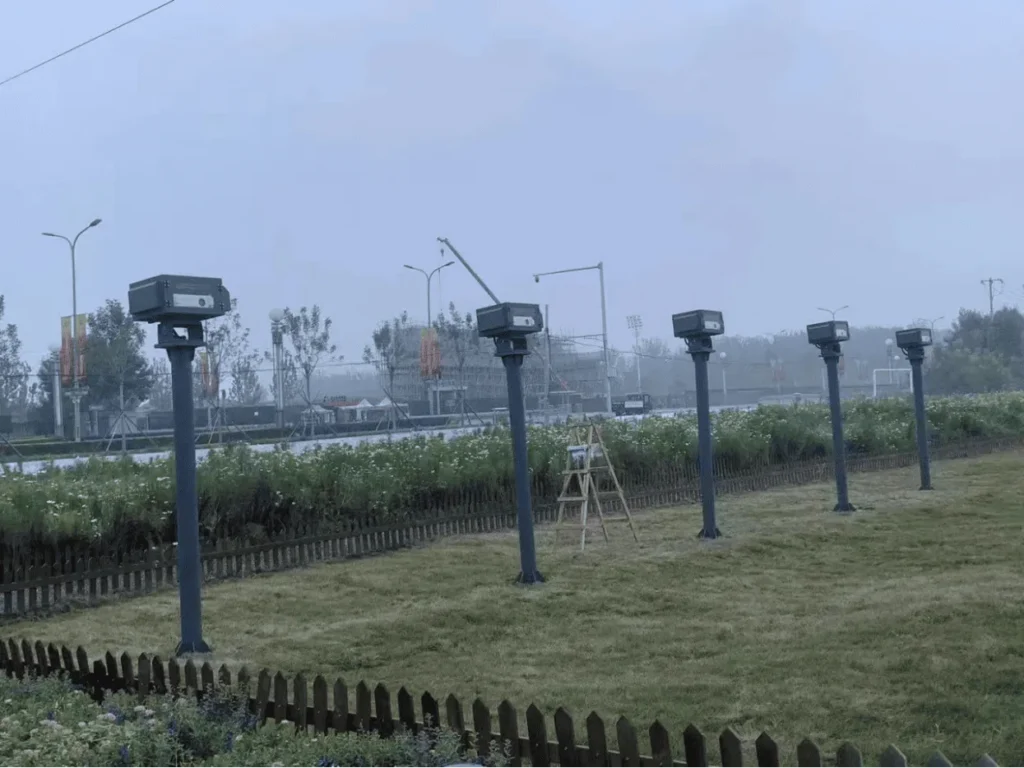
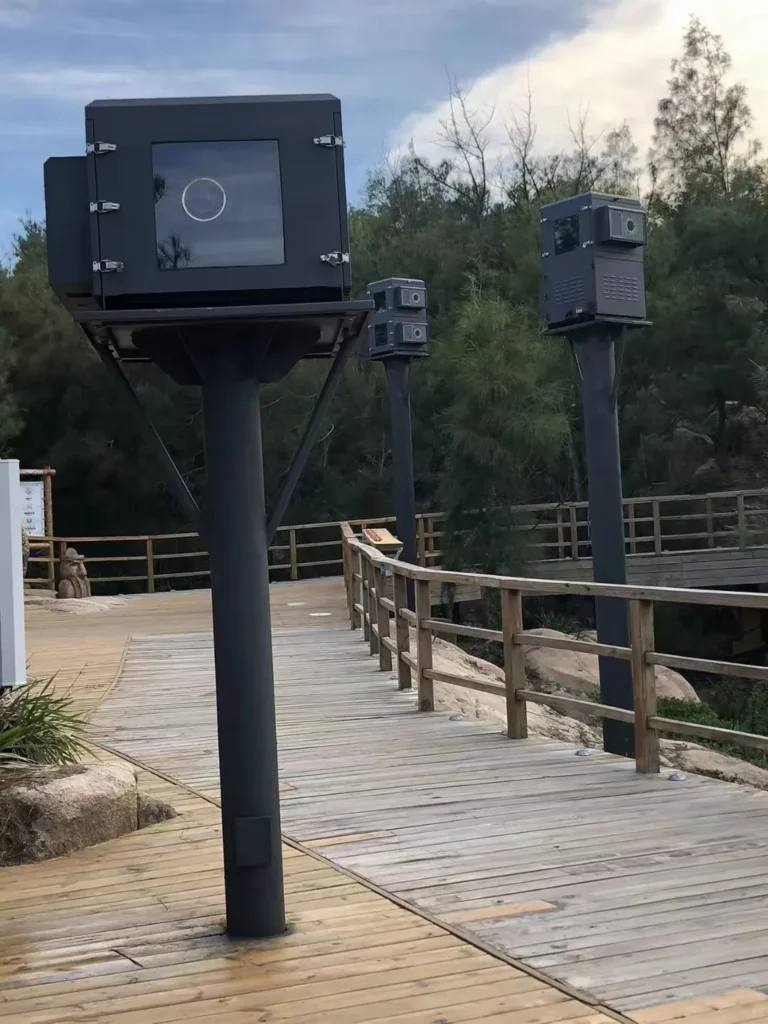
For pole-mounted projector enclosures, lower weight may be valuable, but rigidity and wind exposure still require careful review. For large enclosures, reinforcement can be just as important as sheet thickness.
ShiRui Pro Tip: I do not recommend using the same thickness for every enclosure. A good design may combine different sheet thicknesses, reinforcement plates, and structural frames to balance strength, weight, and cost.
Surface Treatment Matters as Much as the Base Metal
Even a suitable base metal can perform poorly outdoors if the surface treatment, weld areas, cut edges, fastener holes, or coating quality are not properly controlled. Powder coating, anti-corrosion treatment, stainless finishing, and edge protection all affect long-term enclosure performance.
Coating, Edges, Welds, and Outdoor Durability
Base material is only part of corrosion protection. Outdoor enclosures often fail first at vulnerable areas such as welds, corners, scratches, holes, and cut edges.
Important surface-treatment considerations include:
- Powder coating quality and outdoor durability
- Anti-corrosion pretreatment before coating
- Stainless-steel surface finishing and cleaning
- Protection of weld zones
- Protection of laser-cut or punched edges
- Drainage design to avoid standing water
- Fastener compatibility
- Avoiding coating damage during installation
- Maintenance planning for scratches or exposed metal
- UV resistance of the selected coating system
Galvanized steel can perform well when coating and maintenance are properly managed, but it should not be described as rustproof. Stainless steel can also suffer surface staining or localized corrosion if exposed to harsh conditions and not properly finished or maintained.
ShiRui Pro Tip: I always check edges, welds, and mounting holes carefully. These small details often decide whether an outdoor enclosure stays reliable after installation.
Material Selection for Projector Enclosures
Projector enclosures require material selection beyond ordinary equipment cabinets because they must manage heat, optical alignment, climate-control components, cable entries, maintenance doors, and mounting loads. For an outdoor projector enclosure, material choice must support both protection and projector operating performance.
Projector-Specific Engineering Requirements
A projector enclosure may include more functional parts than a standard electrical cabinet. The sheet metal must support these parts without excessive deformation, corrosion, or maintenance difficulty.
Projector-specific considerations include:
- Internal heat dissipation
- Fan, filter, or air-conditioning installation
- Pole-mounted or elevated structure
- Optical window frame and sealing
- Maintenance doors and slide-out access
- Cable entries for power, signal, and control
- Multi-projector weight
- Climate-control component weight
- Condensation management
- Vibration and alignment stability
For pole-mounted projector enclosures, aluminum alloy may help reduce weight, but structural rigidity and wind exposure must still be reviewed. For coastal projector enclosures, corrosion resistance becomes more important than material price alone. For large multi-projector enclosures, structural strength and reinforcement become more important.
ShiRui Pro Tip: When designing a projector enclosure, I review the projector, lens position, cooling airflow, access direction, and mounting method before finalizing the material. Optical and thermal requirements should influence the metal structure.
Key Features & Comparison
A good outdoor sheet metal enclosure balances corrosion resistance, strength, weight, heat management, surface protection, fabrication quality, and maintenance access. For projector use, the best design also supports optical windows, cable entries, climate control, and secure mounting without making the cabinet unnecessarily heavy or costly.
Feature Comparison for Outdoor Projector Enclosures
Based on our internal data and market analysis, here is the breakdown:
| Feature | Why It Matters | Galvanized Steel | Aluminum Alloy | 201 Stainless Steel | 304 Stainless Steel |
|---|---|---|---|---|---|
| Corrosion resistance | Determines suitability for rain, humidity, salt air, and pollution | Good with proper coating and maintenance | Good for many outdoor sites | Moderate for mild environments | Strong for humid and coastal environments |
| Weight | Affects pole mounting, wall mounting, transport, and installation | Heavier | Lightweight | Heavier than aluminum | Heavier than aluminum |
| Structural strength | Supports equipment, doors, brackets, and mounting loads | Good | Depends on thickness and reinforcement | Good | Good |
| Heat dissipation | Important for projector operation and climate control | Moderate | Good | Moderate | Moderate |
| Fabrication flexibility | Affects bending, welding, cutting, and enclosure customization | Good | Good, but design must consider material behavior | Good | Good |
| Cost control | Important for commercial and large-volume projects | Cost-effective | Higher than galvanized steel | More economical than 304 stainless steel | Higher |
| Surface treatment dependency | Affects outdoor durability | High; coating quality is important | Still important depending on environment | Surface finishing important | Surface finishing important |
| Typical projector enclosure fit | General outdoor cabinets and larger cost-sensitive structures | Strong option when budget and structure matter | Strong option when weight and heat matter | Mild environments with stainless appearance | Strong option for coastal, humid, or corrosive sites |
The right enclosure should not rank materials as simply good or bad. Instead, it should balance corrosion resistance, weight, strength, fabrication, cost, and environment.
ShiRui Pro Tip: If two materials both appear suitable, I compare the hidden factors: mounting load, maintenance access, edge protection, internal heat, and installation difficulty. Those often decide the better option.
Cost & Buying Factors
Cost should be evaluated together with durability, fabrication complexity, surface treatment, enclosure size, mounting method, and maintenance conditions. The lowest material price is not always the lowest project cost if corrosion, weight, reinforcement, or future maintenance creates additional risk.
Practical Buying Workflow
A practical selection process helps avoid overpaying for unnecessary material or under-specifying the enclosure for a harsh site.
Use this workflow:
- Identify the installation environment.
- Evaluate corrosion and humidity risk.
- Confirm enclosure size and equipment weight.
- Review mounting method and structural load.
- Consider heat dissipation requirements.
- Compare material cost and expected durability.
- Select material thickness and reinforcement.
- Confirm surface treatment.
- Review the final engineering drawing.
Customers can prepare the following checklist before requesting a recommendation:
- Installation location
- Indoor or outdoor use
- Coastal or inland environment
- Humidity level
- Rain exposure
- Dust or sand exposure
- Enclosure dimensions
- Equipment weight
- Mounting method
- Required quantity
- Preferred material
- Surface finish
- Site photos or drawings
Common selection mistakes include choosing only by lowest price, choosing only by appearance, using 201 stainless steel in severe coastal environments, assuming galvanized steel cannot corrode, ignoring enclosure weight for pole-mounted installations, ignoring weld and cut-edge protection, using one material thickness for every enclosure, ignoring coating quality, ignoring maintenance conditions, and selecting material without considering internal heat.
ShiRui Pro Tip: I ask customers for site photos whenever possible. A few images of the installation area can reveal rain direction, mounting limitations, corrosion risk, dust exposure, and maintenance challenges that may not appear in a simple size drawing.
Conclusion
The best sheet metal for an outdoor enclosure depends on the site environment, enclosure structure, equipment weight, mounting method, corrosion conditions, heat dissipation needs, maintenance access, and budget. ShiRui recommends selecting material through engineering evaluation rather than choosing by price or appearance alone.
Final Recommendation for Material Selection
For an outdoor projector enclosure, galvanized steel, aluminum alloy, 201 stainless steel, and 304 stainless steel can all be valid choices in the right conditions.
A practical final decision should consider:
- Use galvanized steel when strength, cost control, large cabinet fabrication, and coated outdoor protection are suitable for the environment.
- Use aluminum alloy when lower weight, corrosion resistance, and heat dissipation are important.
- Use 201 stainless steel only for relatively mild environments where cost-sensitive stainless construction is required.
- Use 304 stainless steel when humidity, coastal air, salt spray risk, or demanding outdoor exposure makes corrosion resistance a higher priority.
- Confirm sheet thickness according to structure, not a universal rule.
- Confirm surface treatment, weld protection, cut-edge protection, and coating durability.
- Review maintenance access and long-term site conditions before production.
To receive a material recommendation, provide the installation environment, enclosure size, equipment weight, mounting method, corrosion conditions, preferred finish, and any site photos or drawings.
ShiRui Pro Tip: Send us the environment details first, then the enclosure drawing. With location, size, weight, mounting method, and corrosion risk confirmed, we can recommend a more suitable material and structure for your outdoor projector enclosure.