Custom Outdoor Projector Enclosures
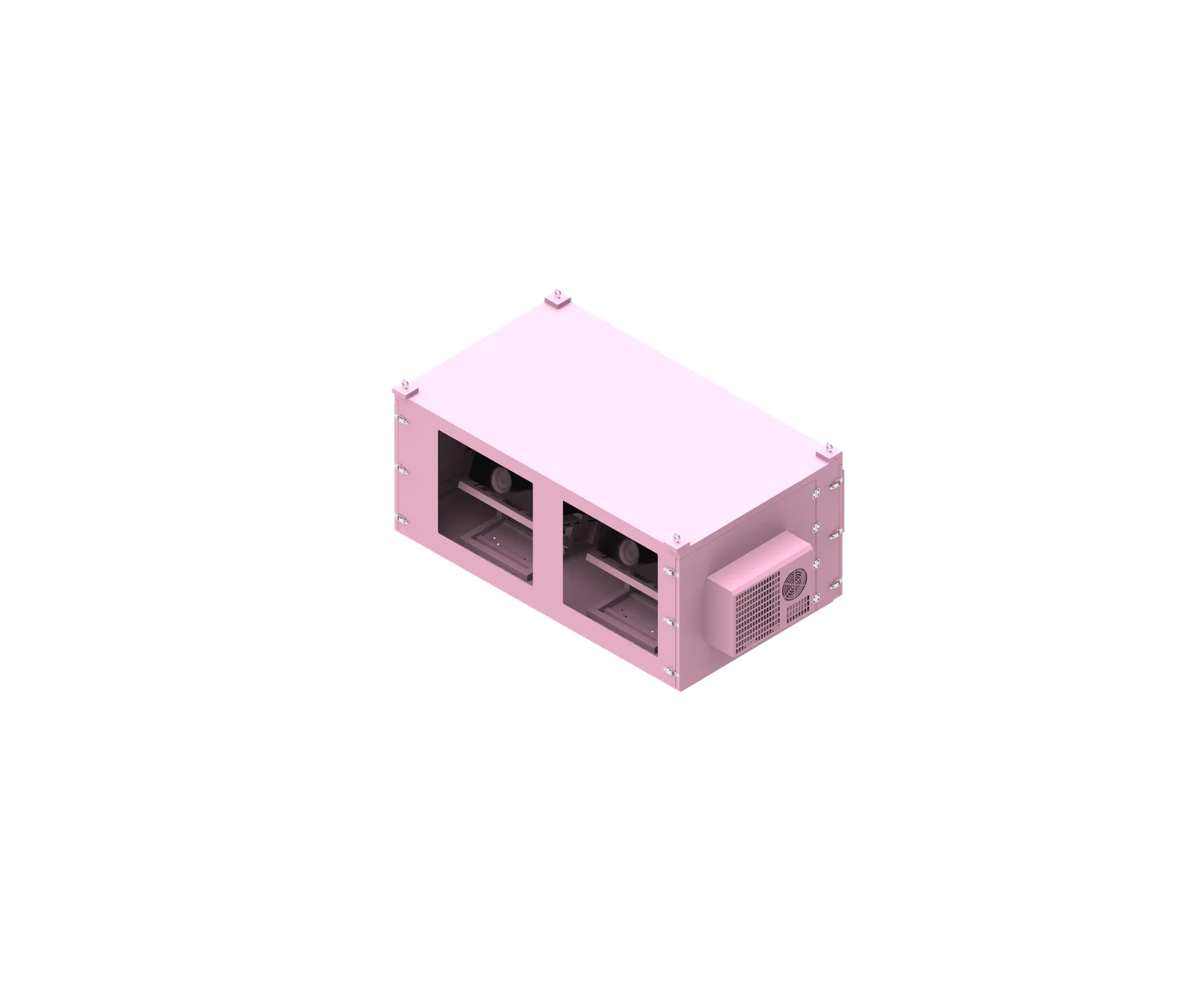
Our weatherproof, climate-controlled projector enclosures are built to protect high-lumen projectors outdoors. Every layout is custom-engineered to your projector's mounting holes, airflow direction, and maintenance clearance before we finalize the CAD drawings and start production.
- Match your projector’s exact dimensions and native airflow path.
- Dual cooling: air-cooled or air-conditioned for your heat load.
- Single or stacked multi-projector configurations available.
- Complete third-party certifications: IP65/IP66 waterproof, EMC & RoHS compliant.
Engineered for Demanding Outdoor Projection Environments
We engineer every enclosure for system integrators and contractors who need reliable projector protection in demanding outdoor environments — rain, dust, heat, or humidity.
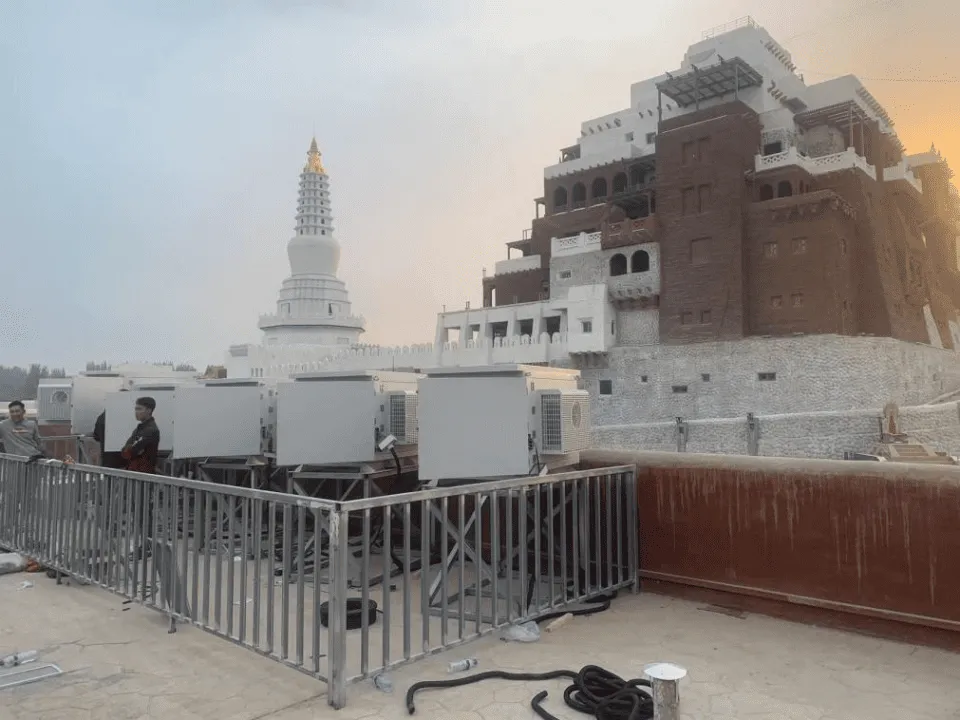
Projection Mapping
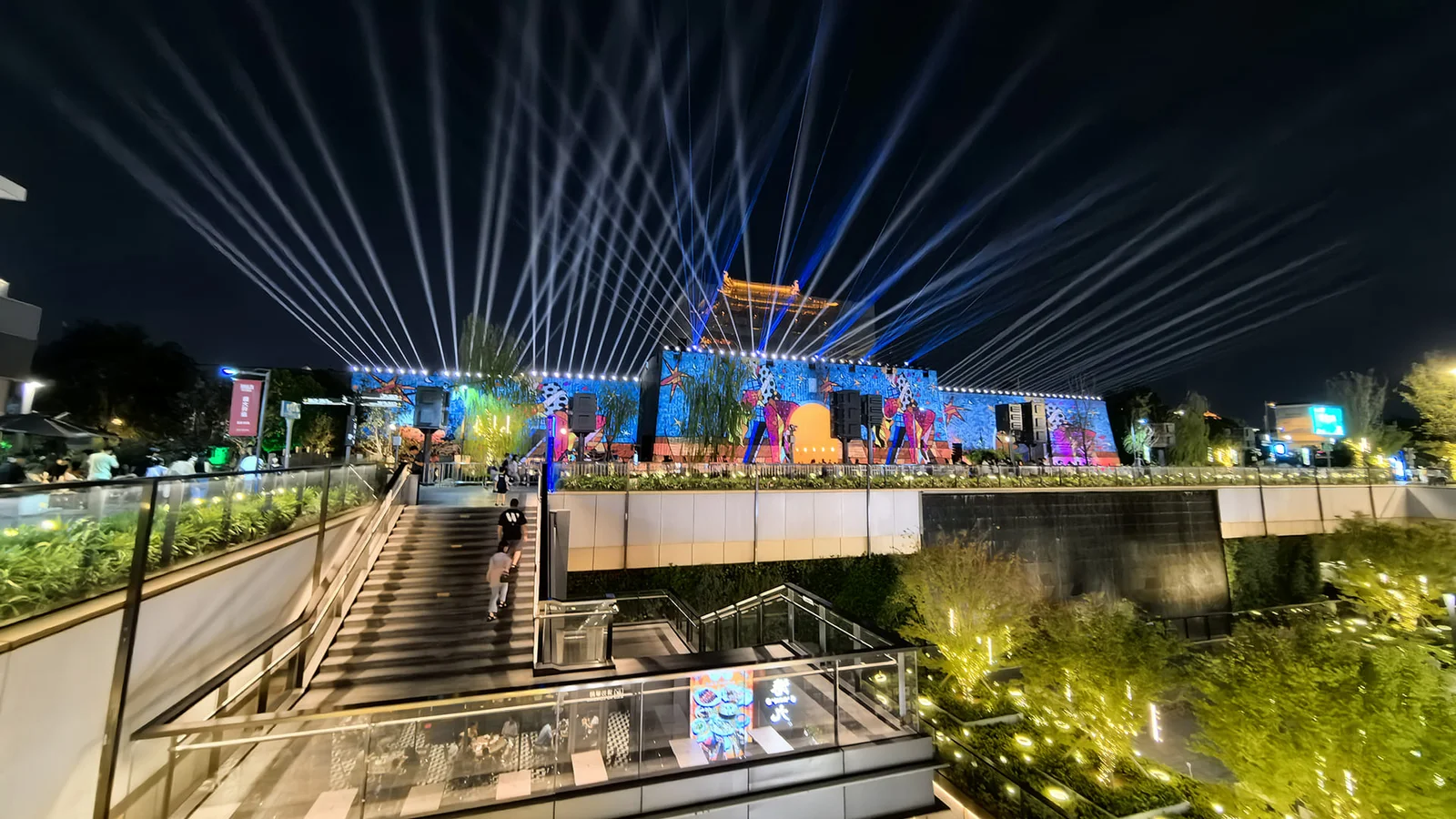
For building facades requiring precise alignment. The enclosure layout separates the projector mounting area and cable entry, helping integrators reduce on-site modification and retain access for routine lens adjustments.
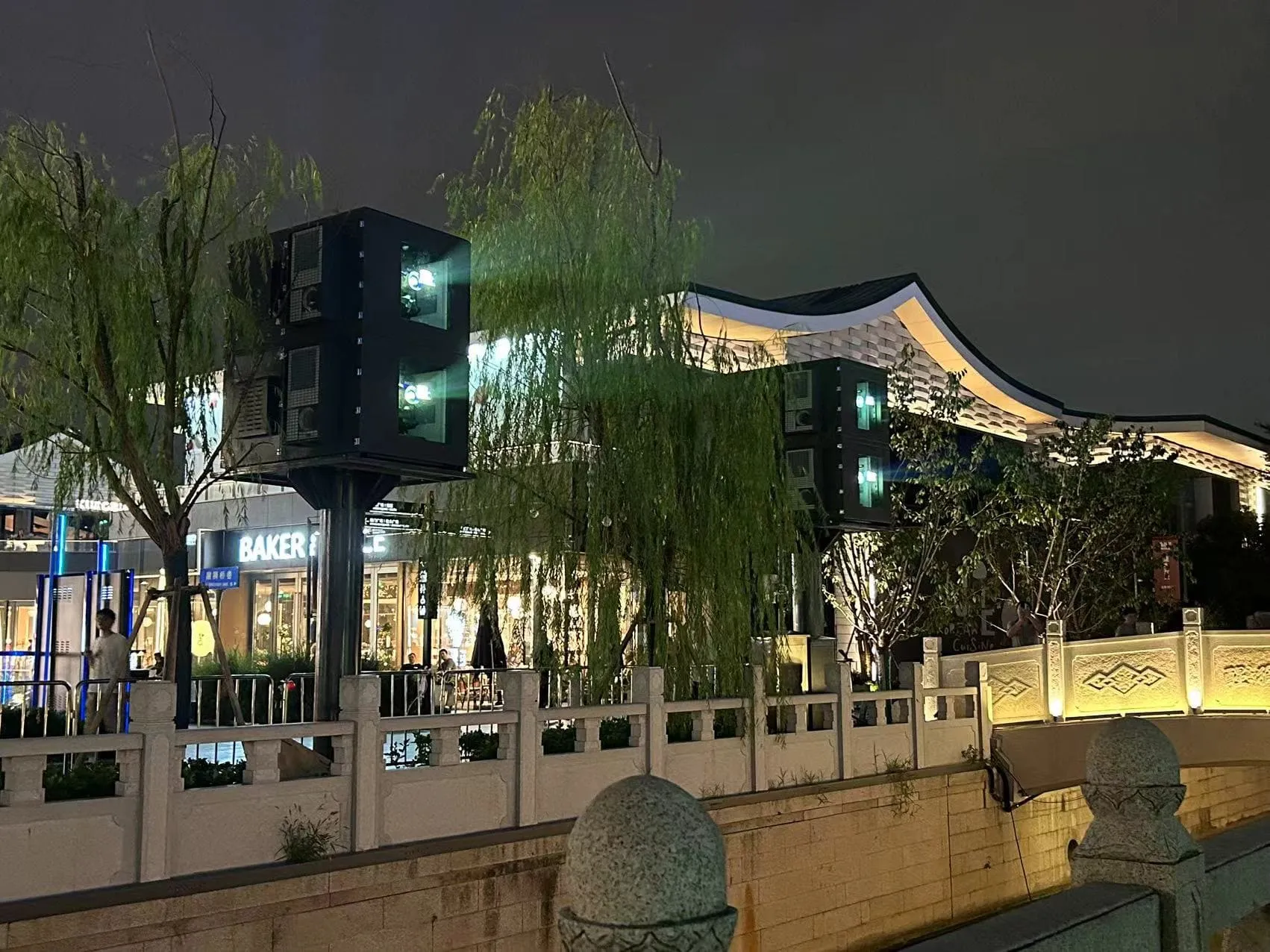
Scenic Night Tours
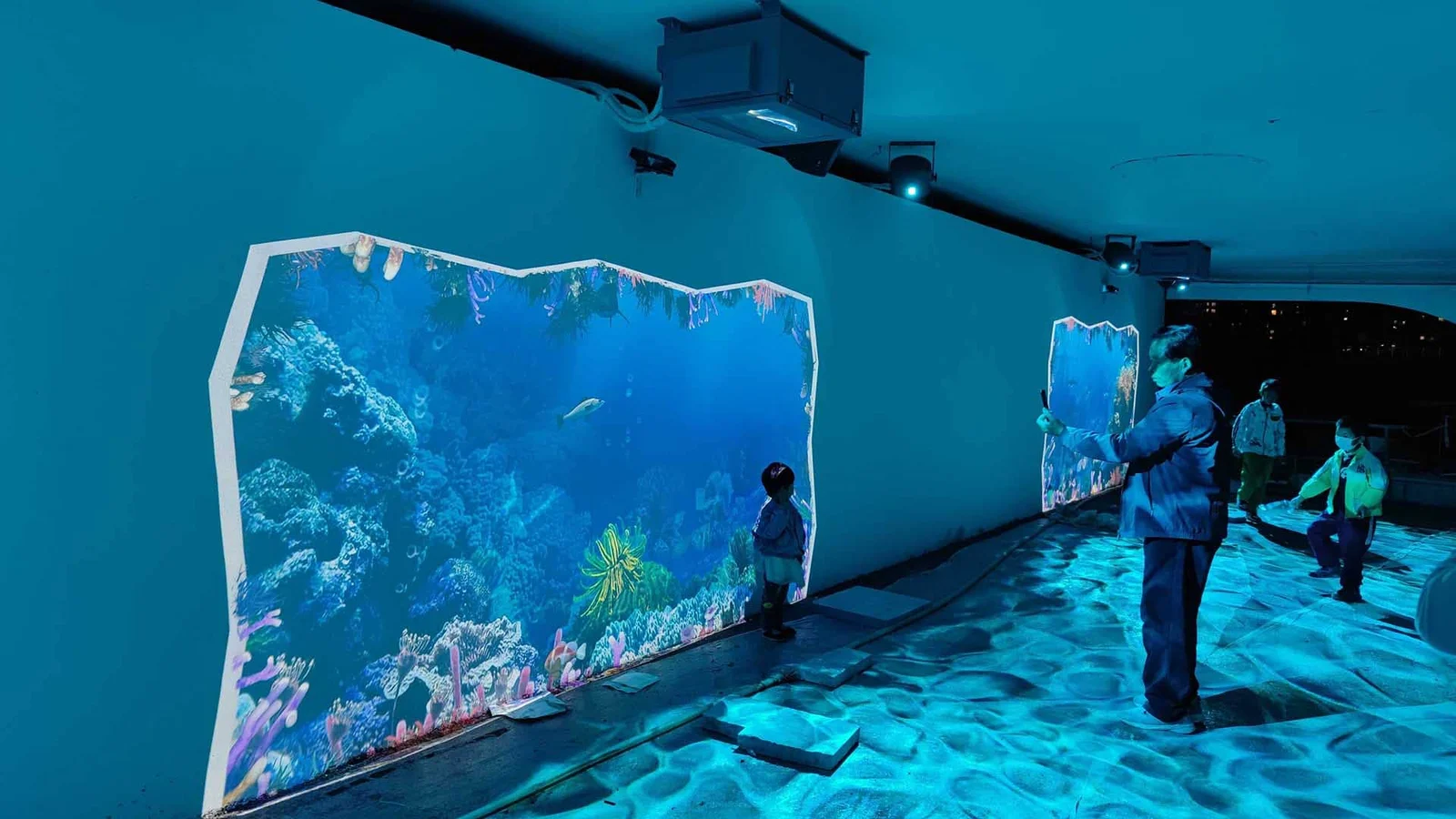
Installed in cultural tourism areas with high humidity and dust. Air-conditioned configurations manage internal temperatures, while the sealed structure protects the optical path from airborne particles.
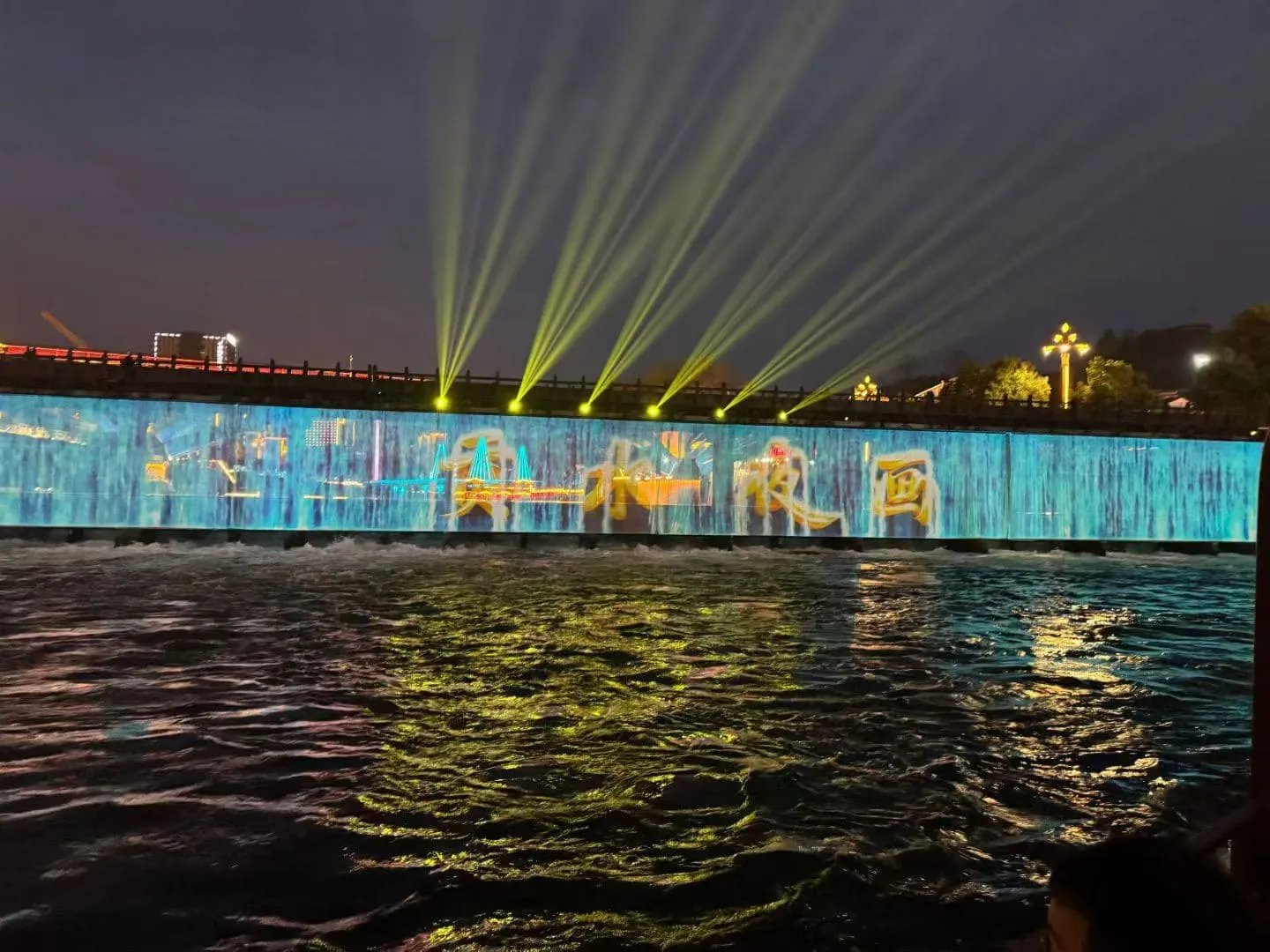
Water Screen Projection
Operating near riverbanks or lakes with continuous moisture exposure. Custom mounting plates ensure stable projection angles, while the weatherproof cabinet prevents water ingress during operation.
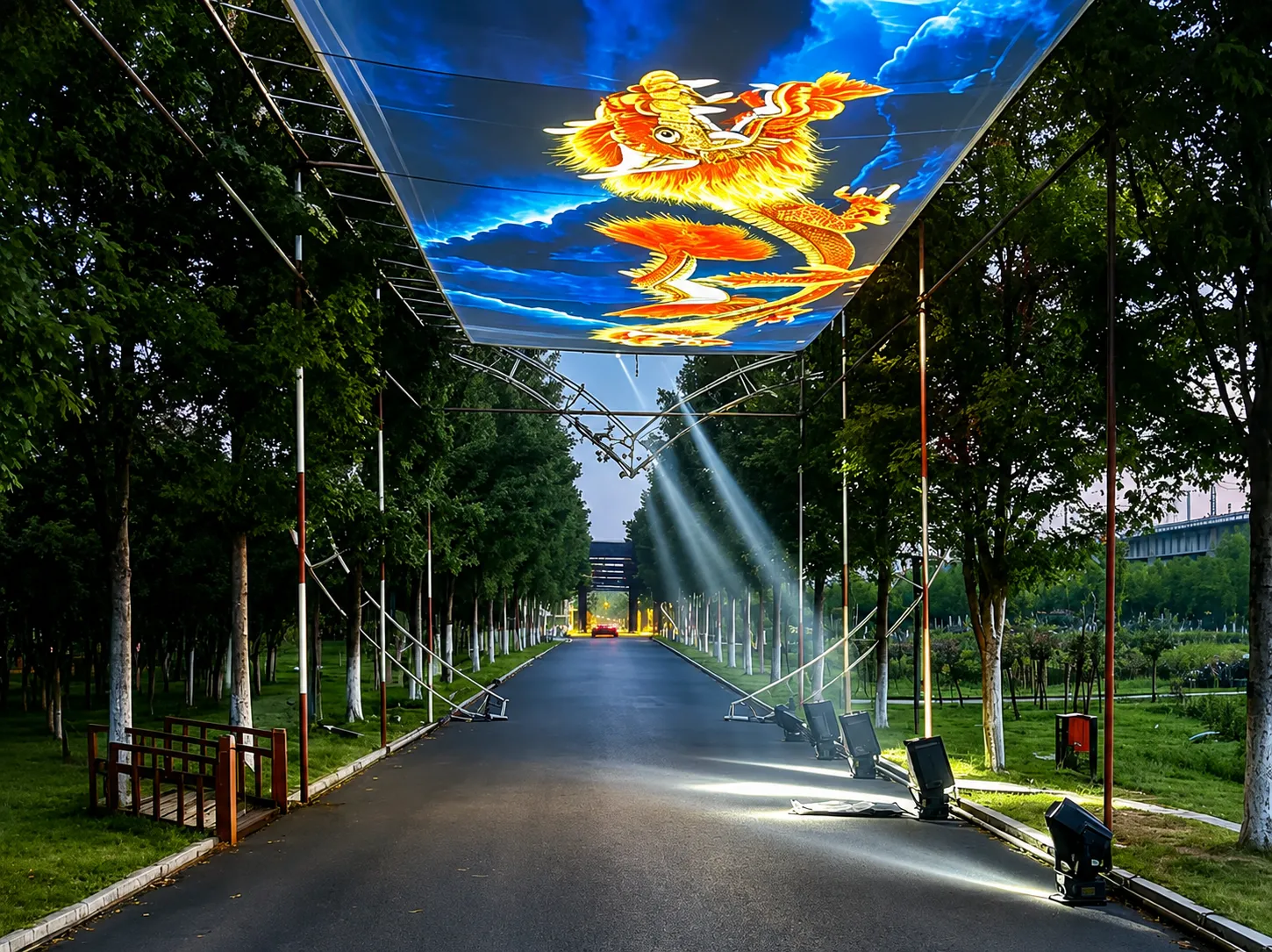
Outdoor Commercial Displays
Fixed installations in plazas or theme parks. The enclosures are designed with specified maintenance doors, allowing technicians to service the equipment without dismounting the entire housing.
Eliminating Environmental Risks for High-Lumen Outdoor Projectors
Outdoor projection involves more than just a waterproof box. Engineering a reliable outdoor projector housing requires addressing specific site constraints that affect projector lifespan and maintenance efficiency.
Rain Exposure & Cable Entry
Continuous rain requires sealed optical windows and specific cable entry glands. Improperly planned cable routing can compromise the enclosure's weather resistance during fixed outdoor installation.
Airborne Dust & Projector Intake
Dust accumulation on projector filters reduces cooling efficiency. The enclosure must manage external airflow paths to prevent particulate matter from reaching the projector's internal fans.
High Temperatures & Heat Load
High-lumen projectors generate significant internal heat. Without planned airflow direction or active air-conditioning, the ambient temperature combined with equipment heat load will trigger thermal shutdown.
Temperature Fluctuations & Condensation
Rapid temperature drops at night can cause condensation on the optical projection window, distorting the image. Integrated heating modules activate when temperature drops and humidity rises to prevent lens fogging.
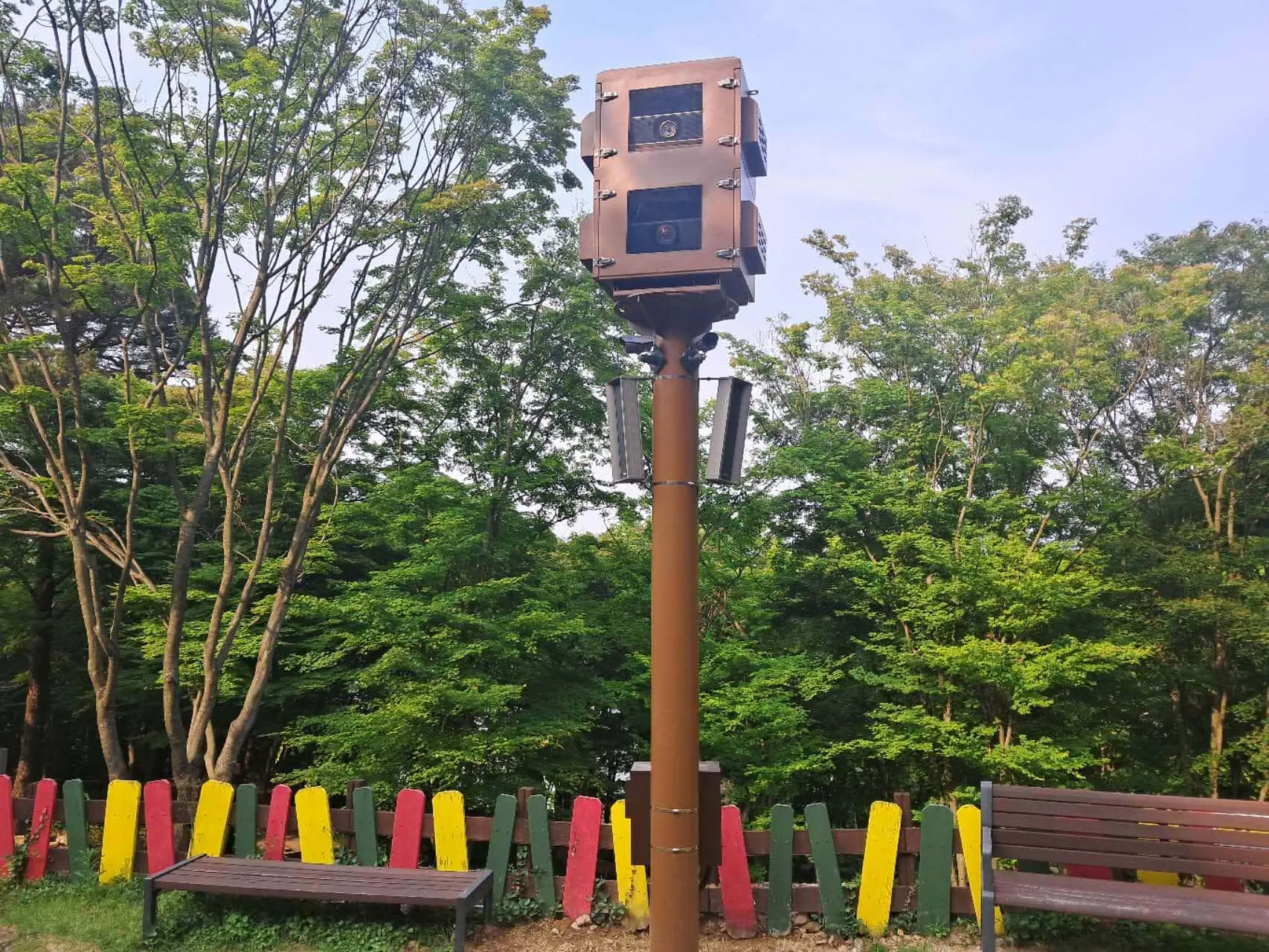
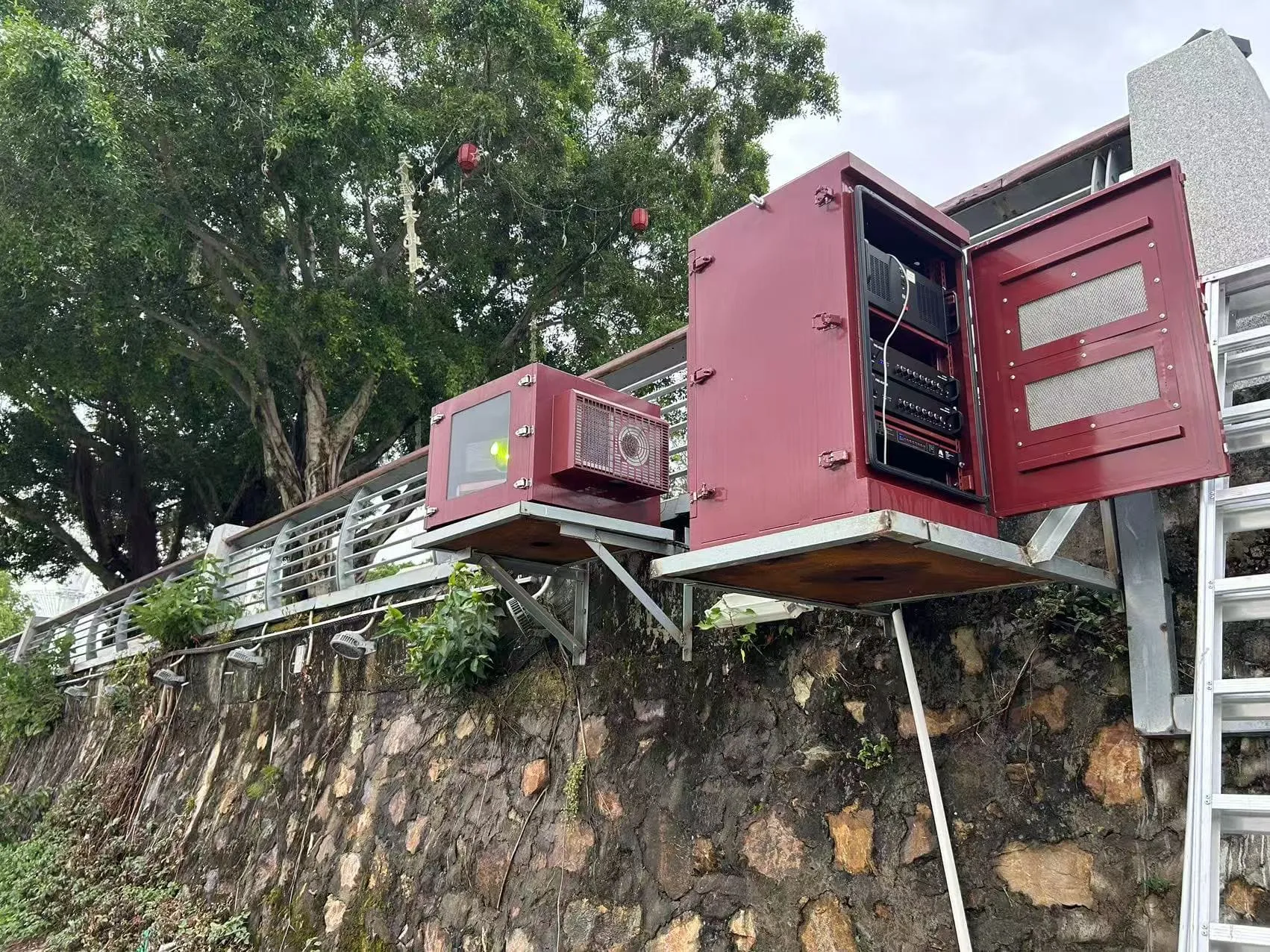
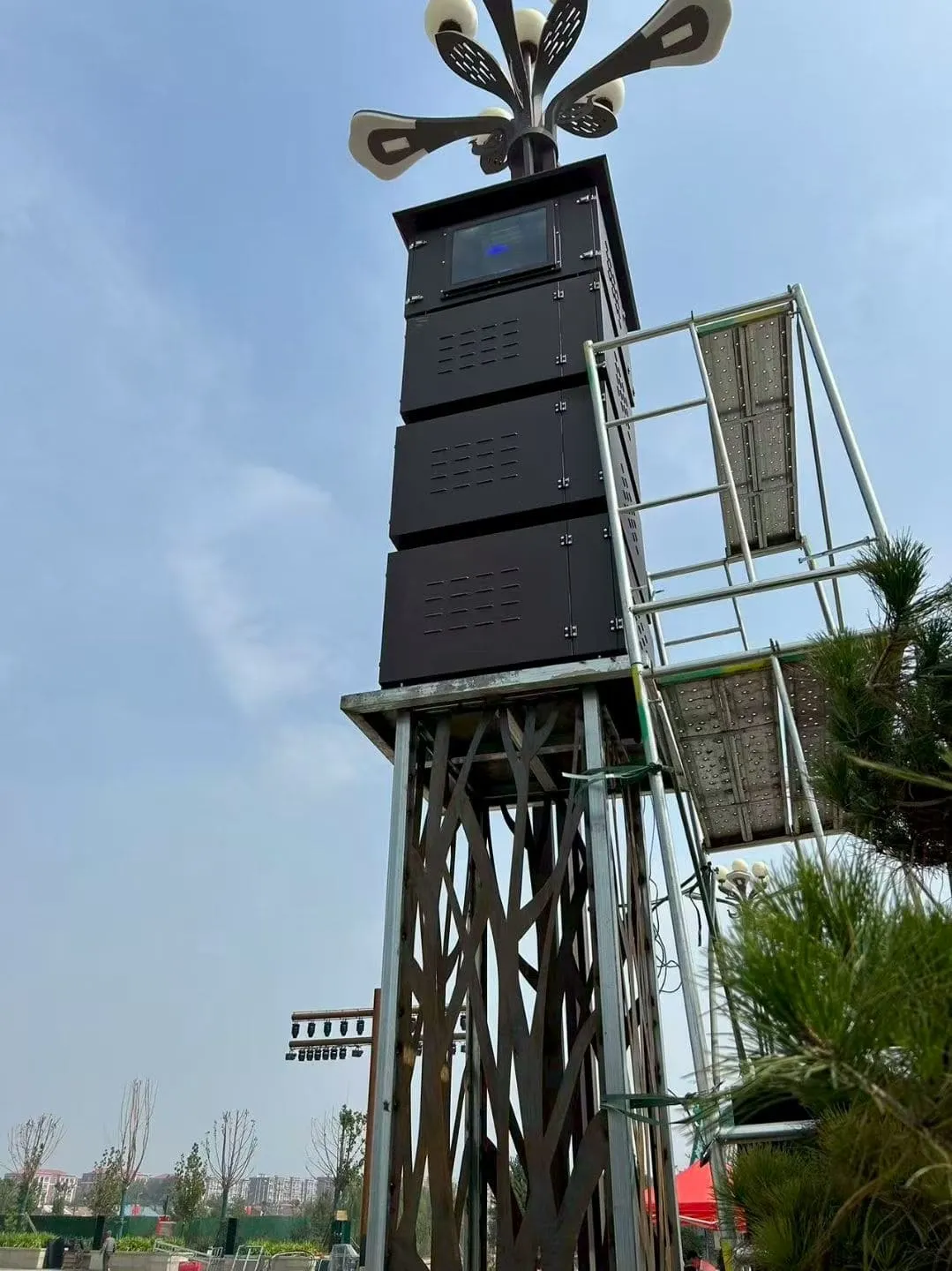
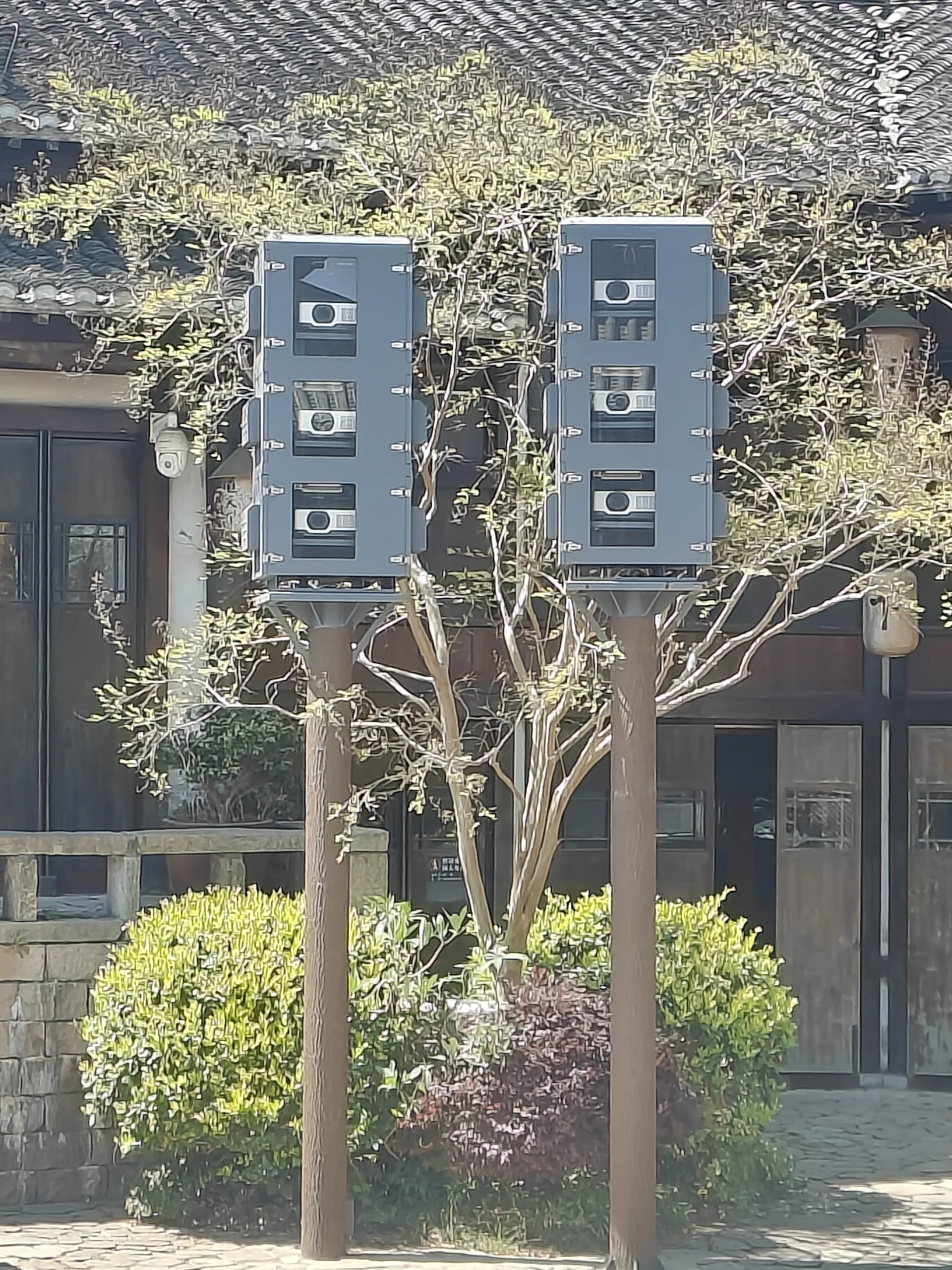
Outdoor Projector Enclosure Configurations
Configurations are determined based on projector brand, lumen output, and site conditions. We provide air-cooled outdoor projector enclosures, air-conditioned variants, and multi-projector setups.
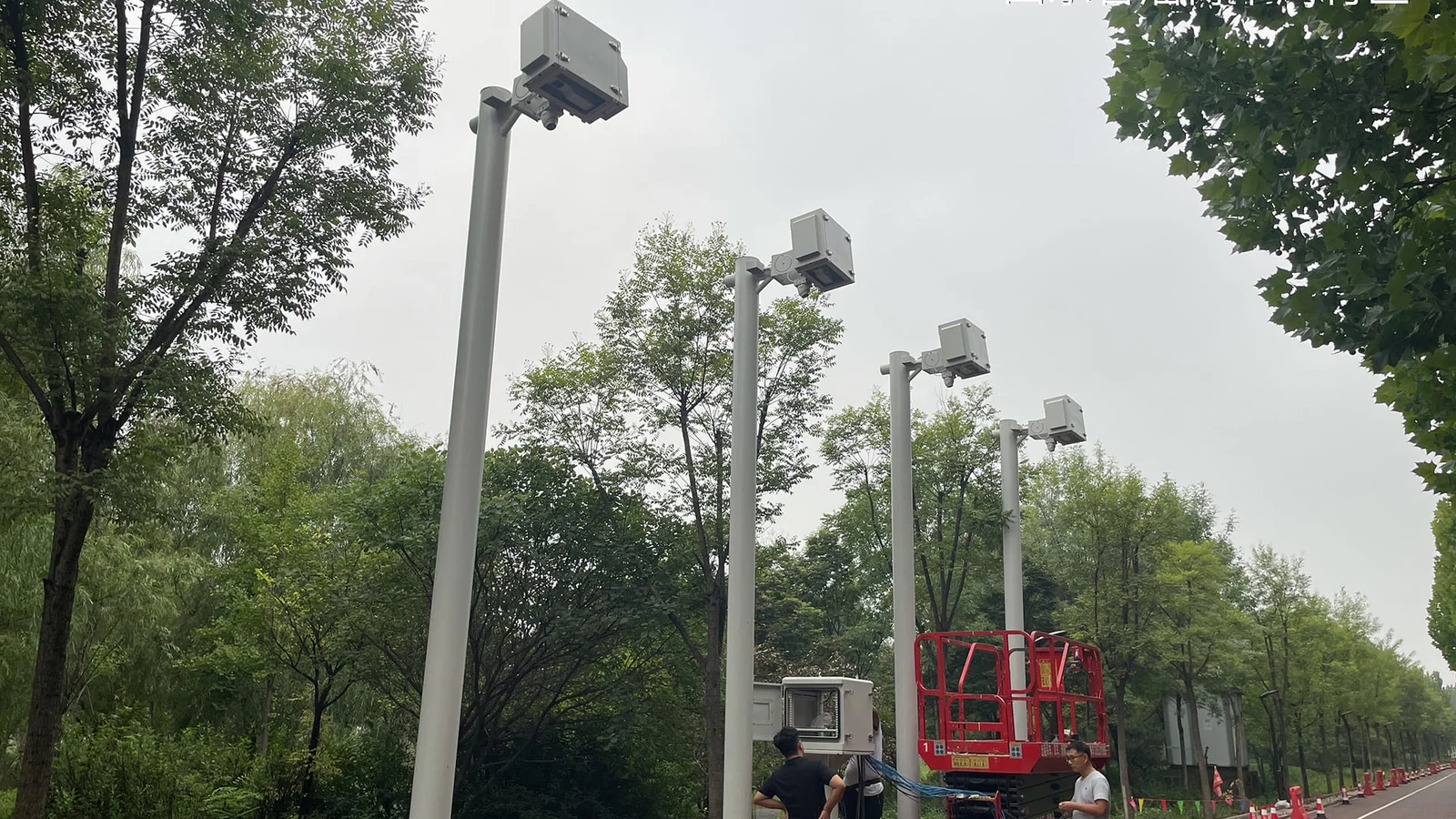
Air-Cooled Projector Enclosure
Utilizes intelligent fan systems. When the box temperature exceeds the preset value (e.g., 35°C) by ≥ 2°C, the cooling system starts. Designed for moderate climates.
- • Requires confirmation of projector air intake/exhaust.
- • Suitable for shaded or lower-temperature regions.
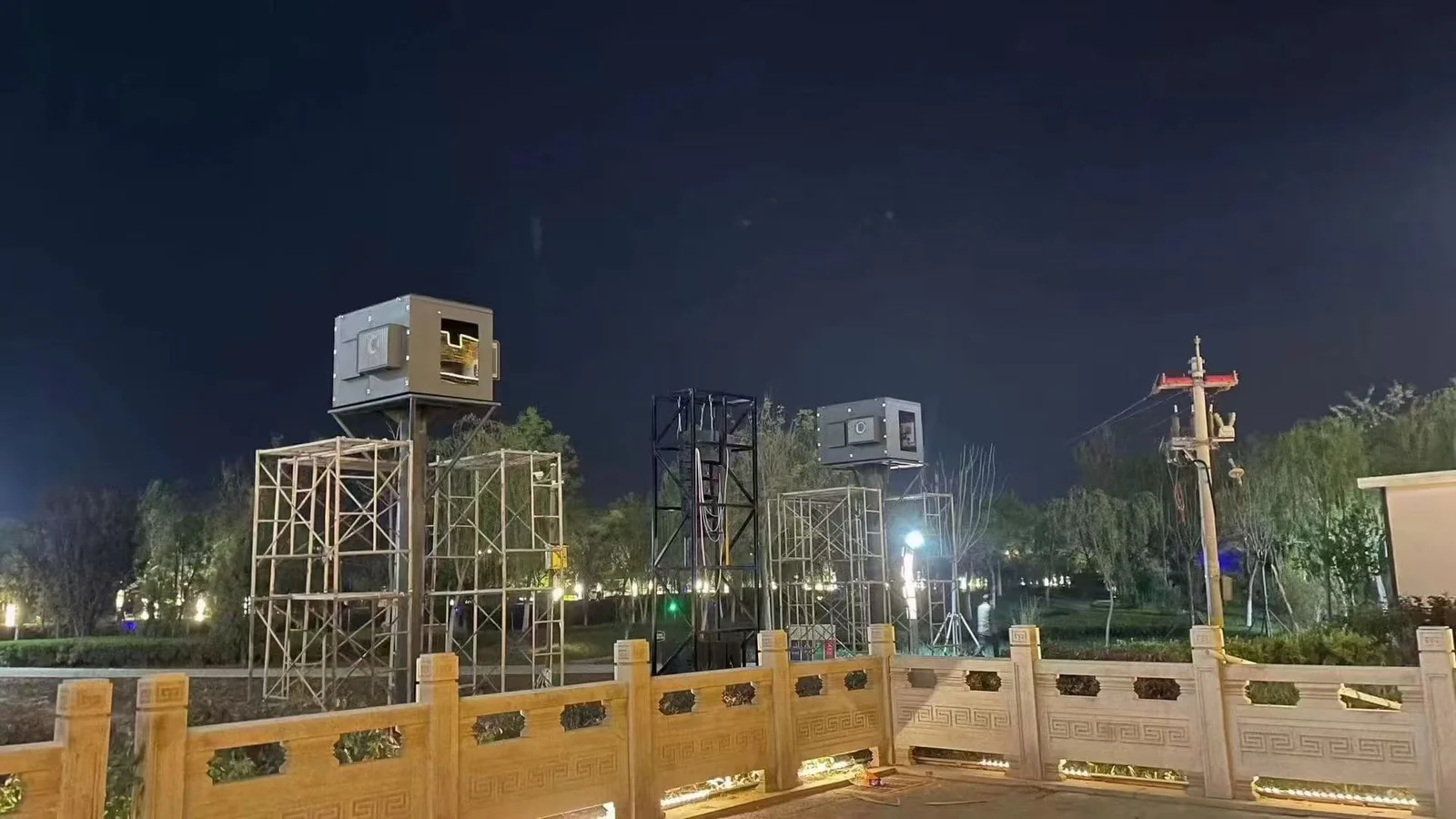
Air-Conditioned Enclosure
Integrates an active cooling unit for high-lumen projectors (e.g., 20,000 to 40,000 lumens) operating in hot or humid outdoor environments.
- • Manages internal climate independently of ambient air.
- • Cabinet dimensions adjust based on AC unit placement.
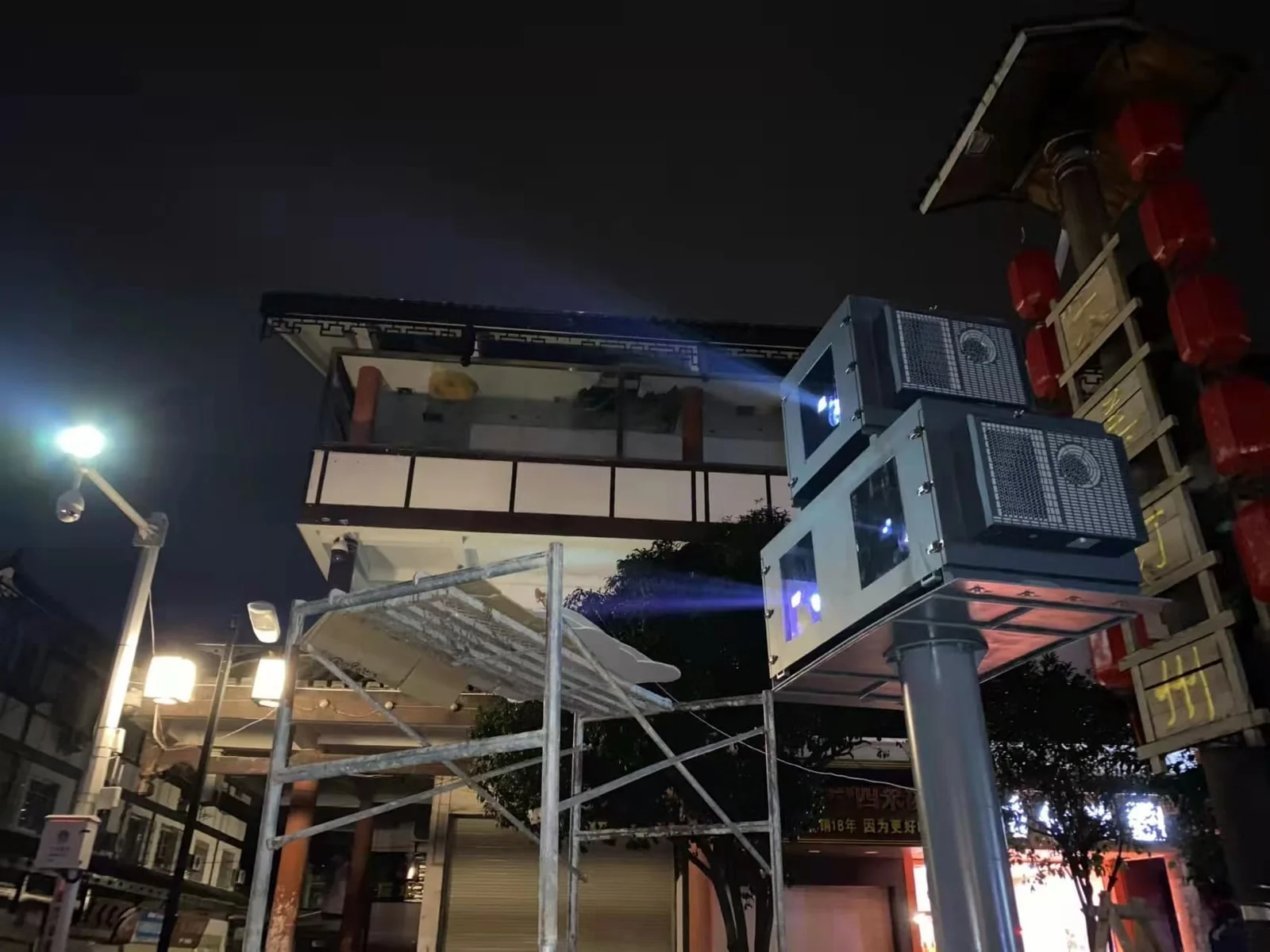
Multi-Projector Enclosures
Engineered for dual-projector stacking, side-by-side, or large multi-unit configurations (e.g., 3 to 5 projectors) for large-scale projection mapping.
- • Requires detailed site drawing and projection angles.
- • Structural reinforcement for heavy equipment loads.
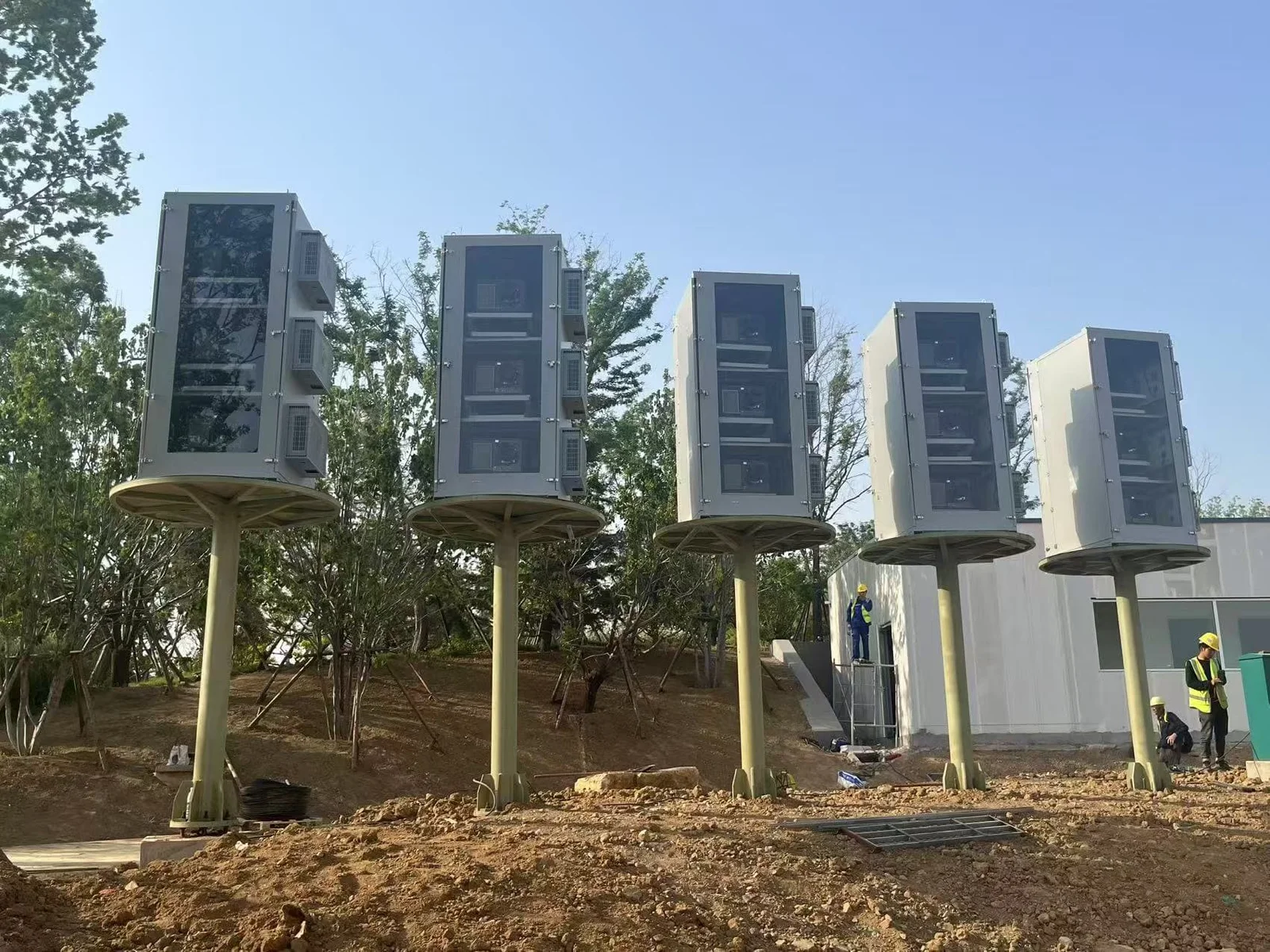
Custom Layouts Matching Your Projector Specifications
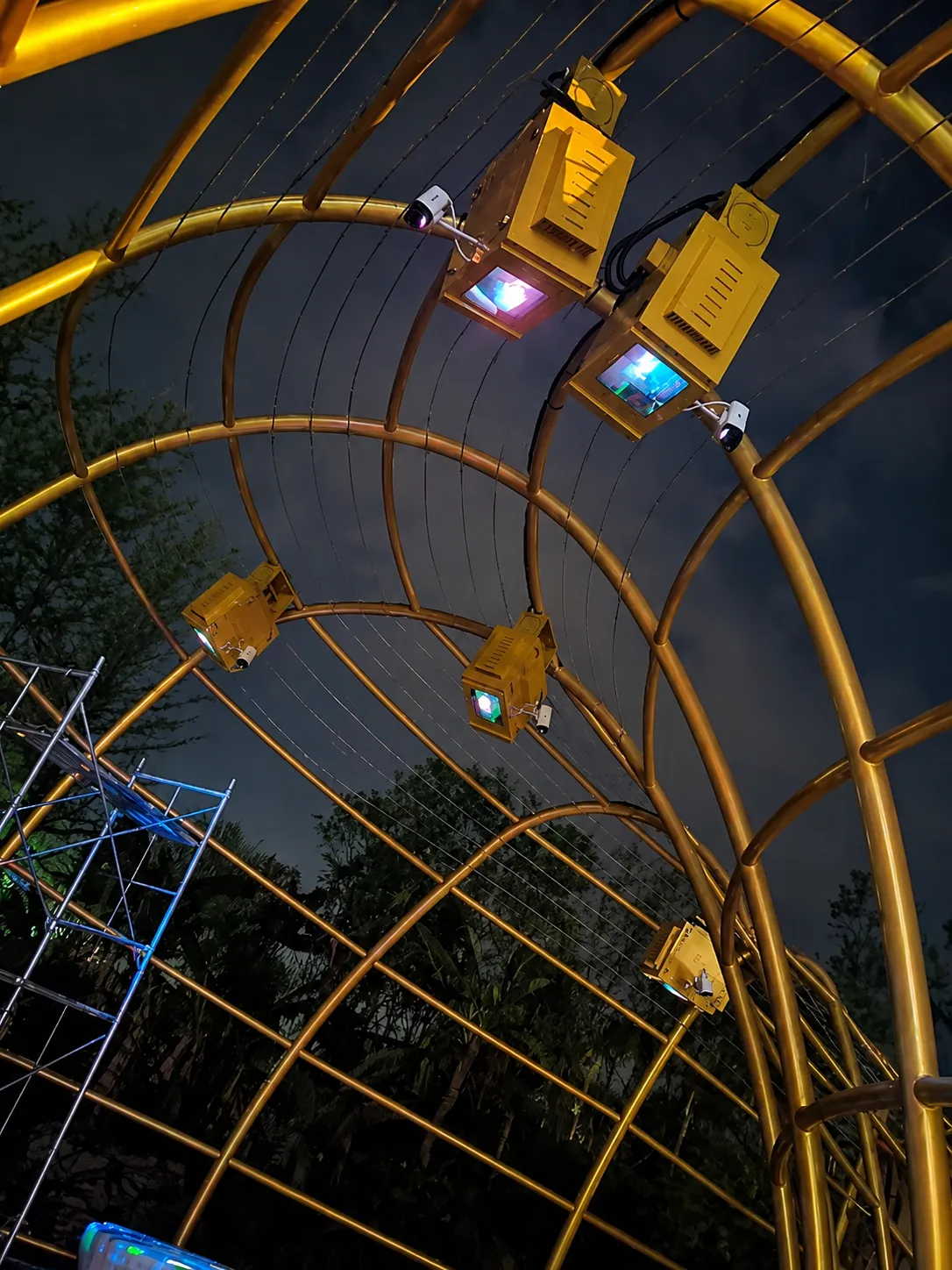
We engineer every enclosure to your projector's exact specs — brand, model, dimensions, mounting holes, airflow routing, and installation orientation — so it's ready for permanent outdoor installation with no field modifications.
Projector Mounting Area
Base plates are customized to match the specific mounting holes of models from Christie, Barco, Panasonic, Epson, or others, ensuring stability.
Optical Projection Window
Positioned precisely according to the projector's lens offset and throw ratio to prevent beam clipping and image distortion.
Airflow & Cooling Path
Internal baffles and fans are aligned with the projector's native air intake and exhaust to prevent hot air recirculation inside the cabinet.
Maintenance Access
Maintenance doors are designed based on where technicians need access for filter cleaning, lamp replacement, or cable adjustments.
Air-Cooled vs. Air-Conditioned Projector Enclosures
How to decide between air-cooled and air-conditioned projector housings? The cooling solution is determined after evaluating the projector’s thermal load, surrounding ambient conditions, cabinet internal volume and planned daily operating hours.
| Consideration | Air-Cooled Enclosure | Air-Conditioned Enclosure |
|---|---|---|
| Typical Project Condition | Moderate climates, shaded areas, or regions with lower ambient temperatures. | High ambient temperatures, direct sunlight exposure, or high humidity environments. |
| Projector Heat Load | Suitable for lower to mid-lumen projectors where fan ventilation is sufficient to dissipate heat. | Required for high-lumen projectors (e.g., 20K-40K lumens) that generate substantial internal heat. |
| Cabinet Structure | Relies on filtered intake and exhaust fans. Requires strategic placement to utilize ambient air. | Fully sealed internal-circulation system. Protects completely against external airborne dust and moisture. |
| Temperature Control Logic | Fans start when box temp is ≥ 2°C above preset (e.g., 35°C). Stops when ≤ 2°C below preset. | Active compressor maintains a specific internal climate range regardless of external spikes. |
| Information Required Before Quotation | Projector model, dimensions, intake/exhaust locations. | Projector model, heat dissipation (BTU/W), ambient max temp, installation space. |
Information Required for Custom Enclosure Engineering
To ensure the enclosure layout separates the projector mounting area, airflow path, and cable entry correctly, our engineering team requires specific project inputs before providing a quotation or production drawing.
Checklist for Customization
- Projector brand and model
- Projector dimensions
- Lumen output & heat load
- Order quantity
- Installation location & ambient
- Mounting orientation
- Single or multi-projector layout
- Cable and power requirements
- Maintenance access direction
- Required delivery date
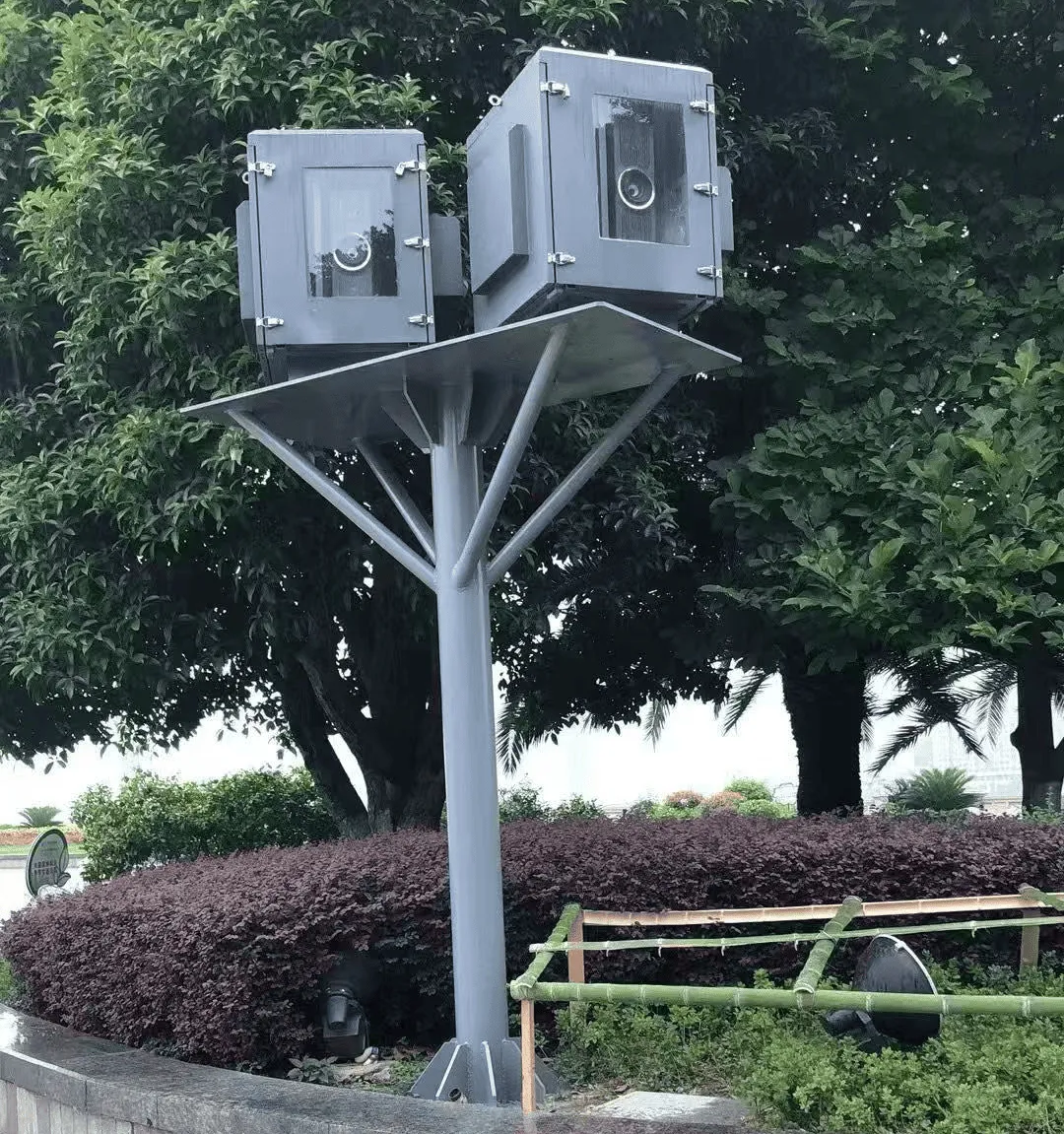
These inputs directly affect cabinet dimensions, mounting plate design, airflow layout, optical window position, door direction, and cooling configuration.
General Technical Specifications
Parameters vary based on the engineered design for specific projector models.
| Product Type | Outdoor Projector Enclosure (Weatherproof Housing) |
| Cooling Method | Air-Cooled or Air-Conditioned (Based on heat load and ambient) |
| Cabinet Material Options | 201 Stainless Steel, 304 Stainless Steel, or Galvanized Plate (Customized according to customer demand) |
| Compatible Projector Models | Customized according to projector model (e.g., Panasonic, Epson, Christie, Barco, Hisense) |
| Cabinet Dimensions | Customized according to projector dimensions and airflow requirements |
| Projector Configuration | Single-projector, Dual-stacking, Side-by-side, or Multi-projector setups |
| Condensation Prevention | Heating module starts when temp ≤ 5°C and humidity ≥ 85%; stops when warmed to 10°C and humidity ≤ 75% |
| Optical Window & Cable Entry | Positioned per confirmed drawing; sealed cable glands included |
| MOQ & Lead Time | [MOQ to be confirmed] | [Lead time to be confirmed after drawing review] |
Deployed in Diverse Outdoor AV Projects
Our enclosures protect high-value projection assets across various fixed installation environments, adapting to specific site constraints and projection methods.
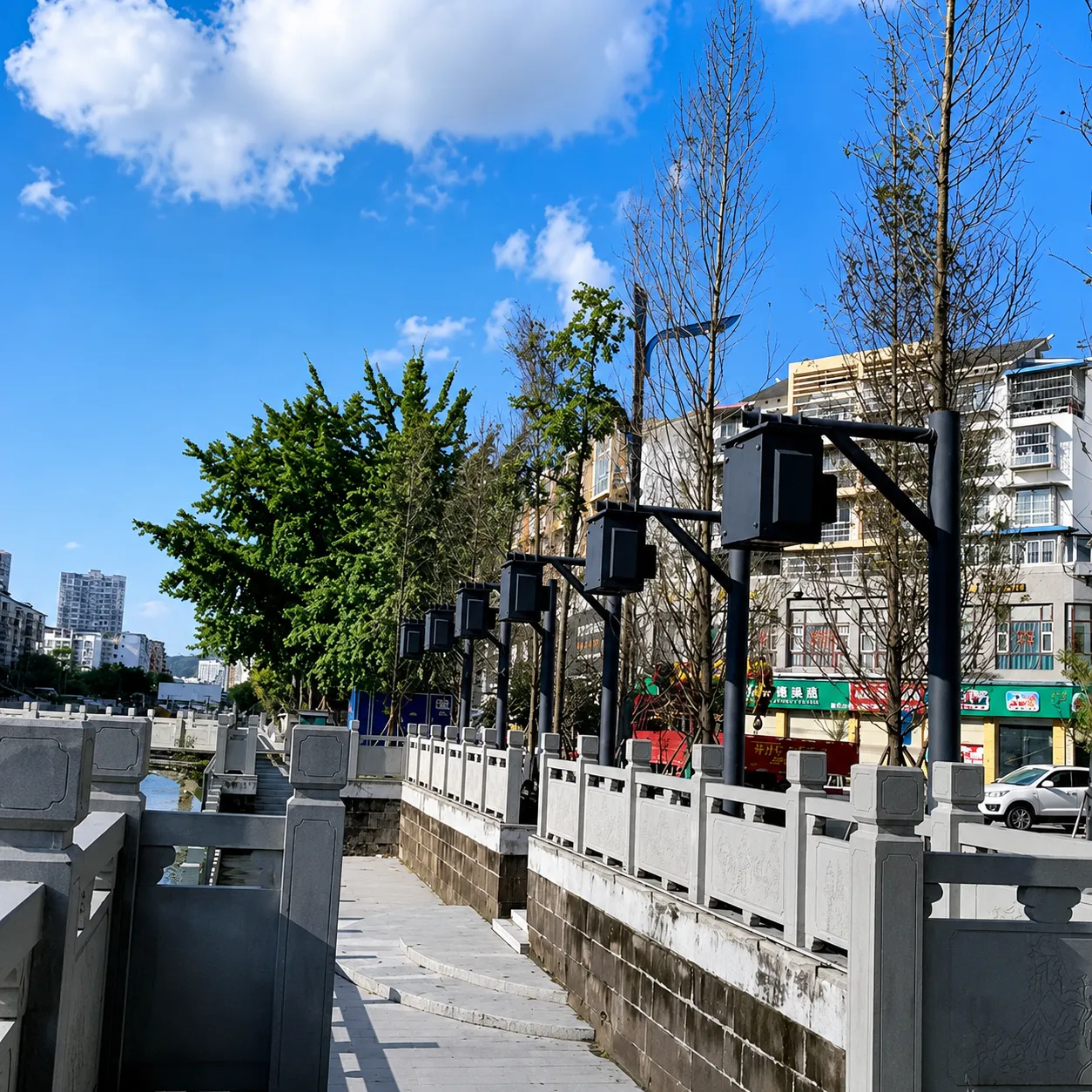
Building Projection Mapping
Installed in urban environments facing dust and rain. Integrators require multi-projector stacking enclosures to align high-lumen beams on large facades, utilizing air-conditioned units for thermal stability.
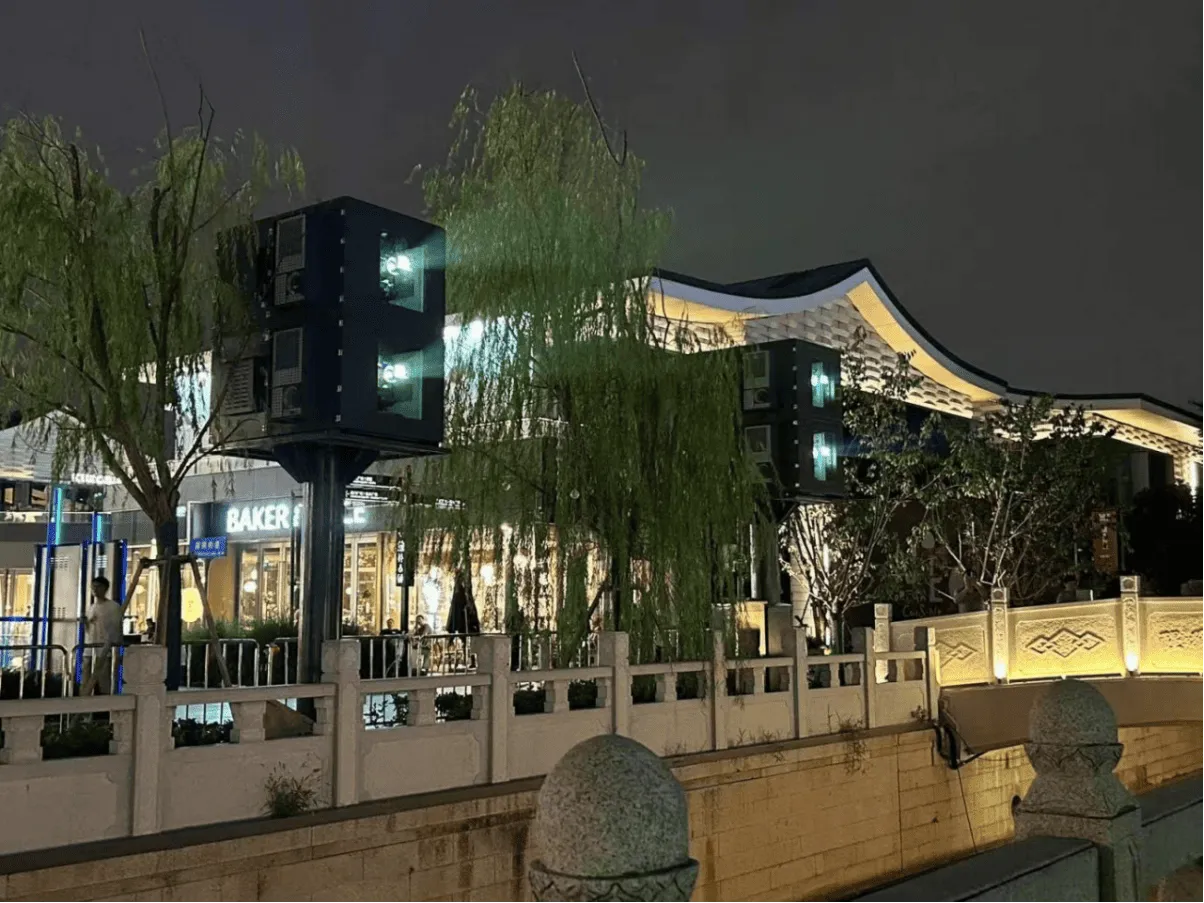
Scenic Night Tours
Operating in forested or mountainous cultural tourism projects. The enclosures are configured with anti-condensation heating modules to prevent lens fogging during rapid temperature drops at night.
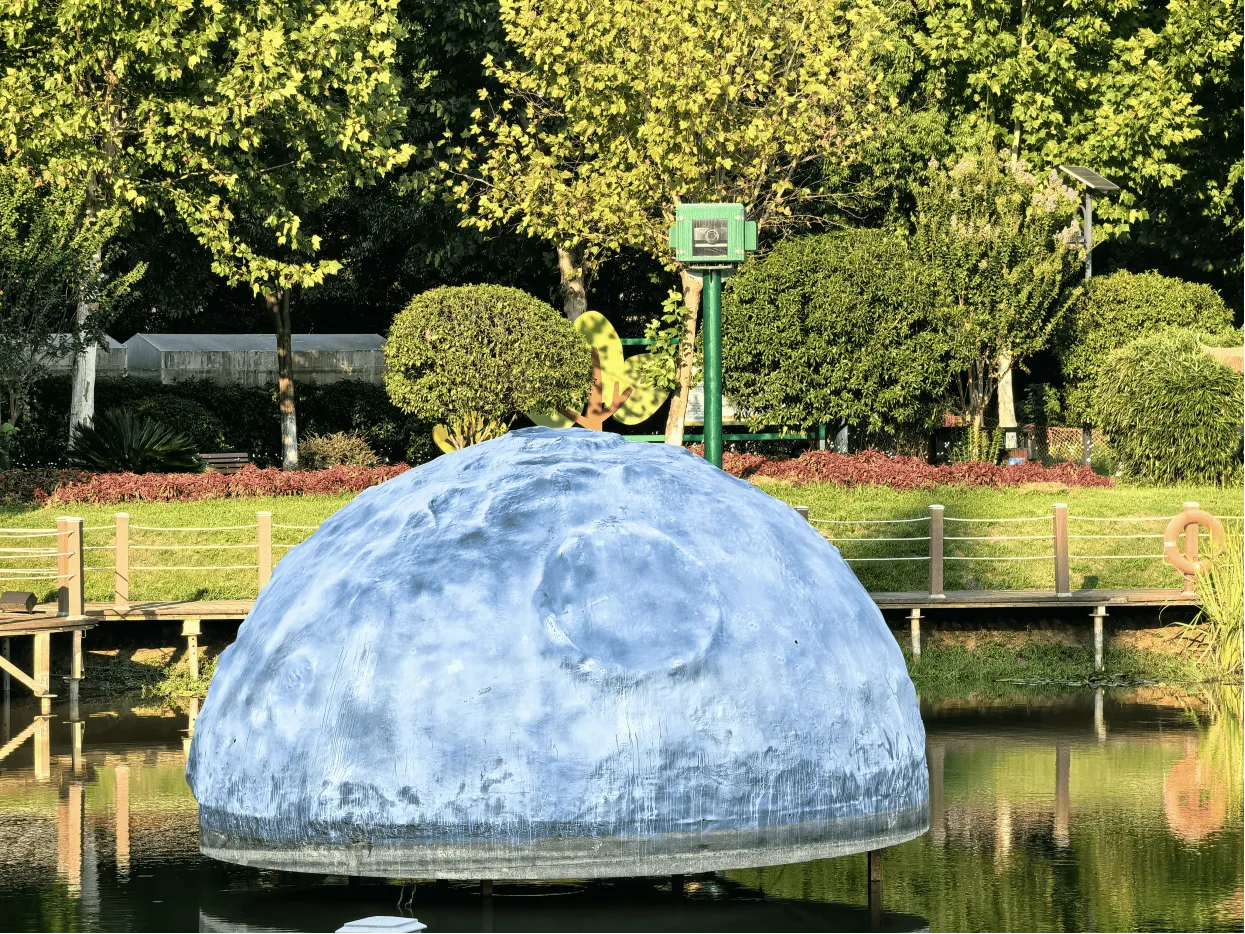
Water Screen Shows
Located near lakes or rivers with constant moisture exposure. Fully sealed internal-circulation projector enclosures are recommended to isolate the equipment from high humidity and water spray.
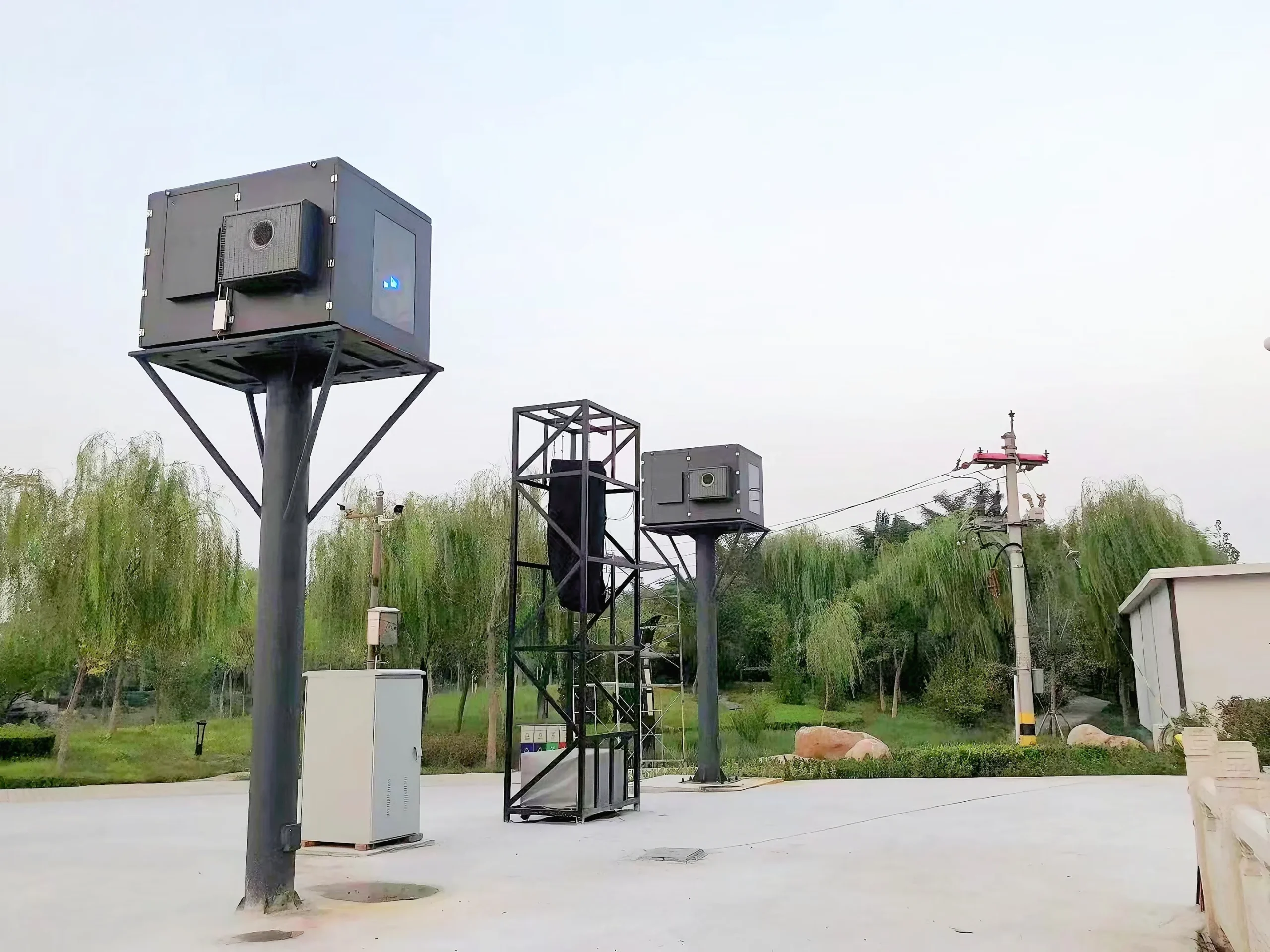
Theme Parks
Fixed installations requiring discreet placement and high reliability. Custom mounting plates and maintenance doors are designed to allow technicians quick access without disrupting park operations.
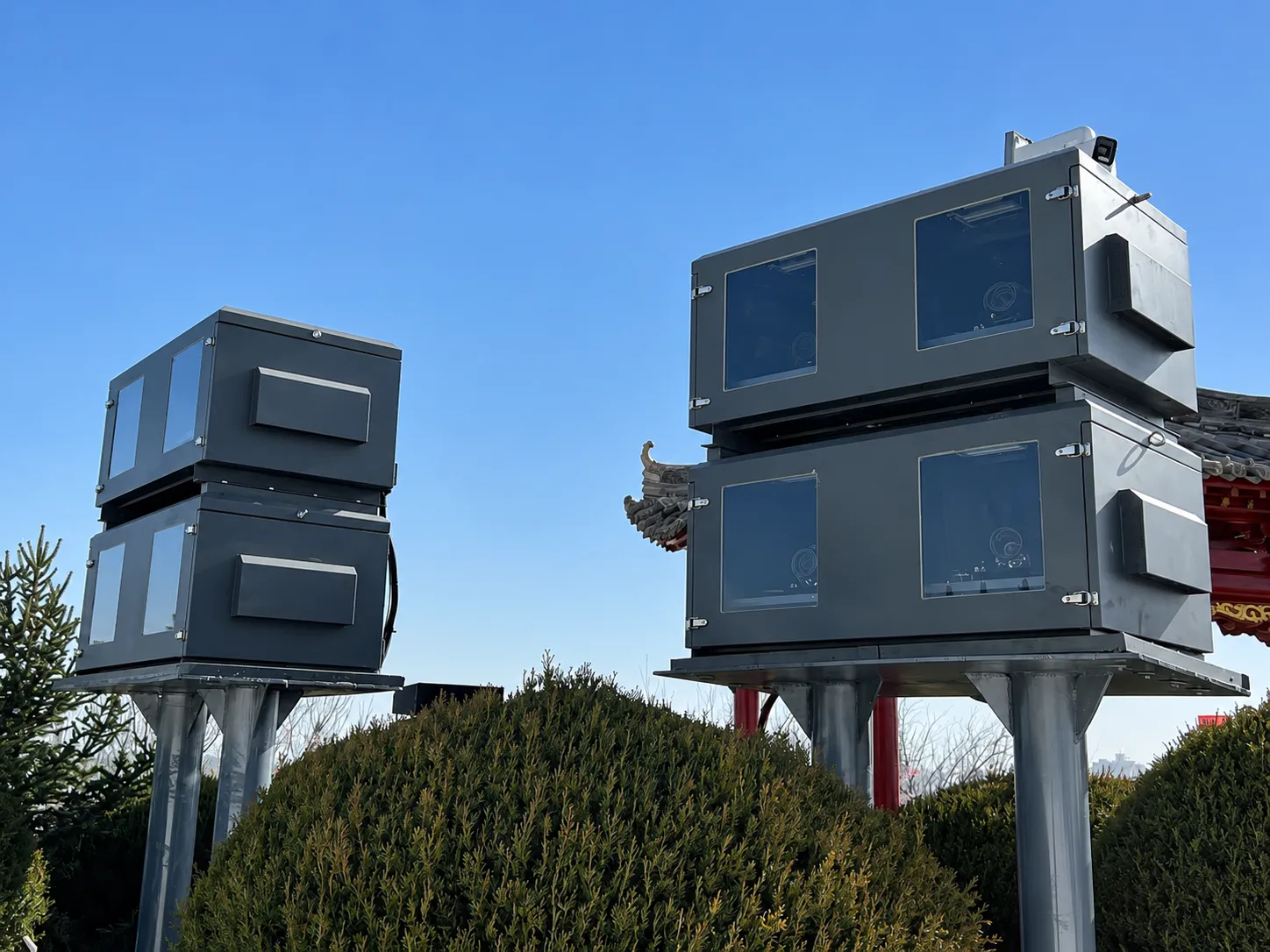
Outdoor Cinema & Events
Used for semi-permanent festival setups. Air-cooled outdoor projector enclosures provide adequate ventilation for mid-lumen projectors while protecting against unexpected weather changes.
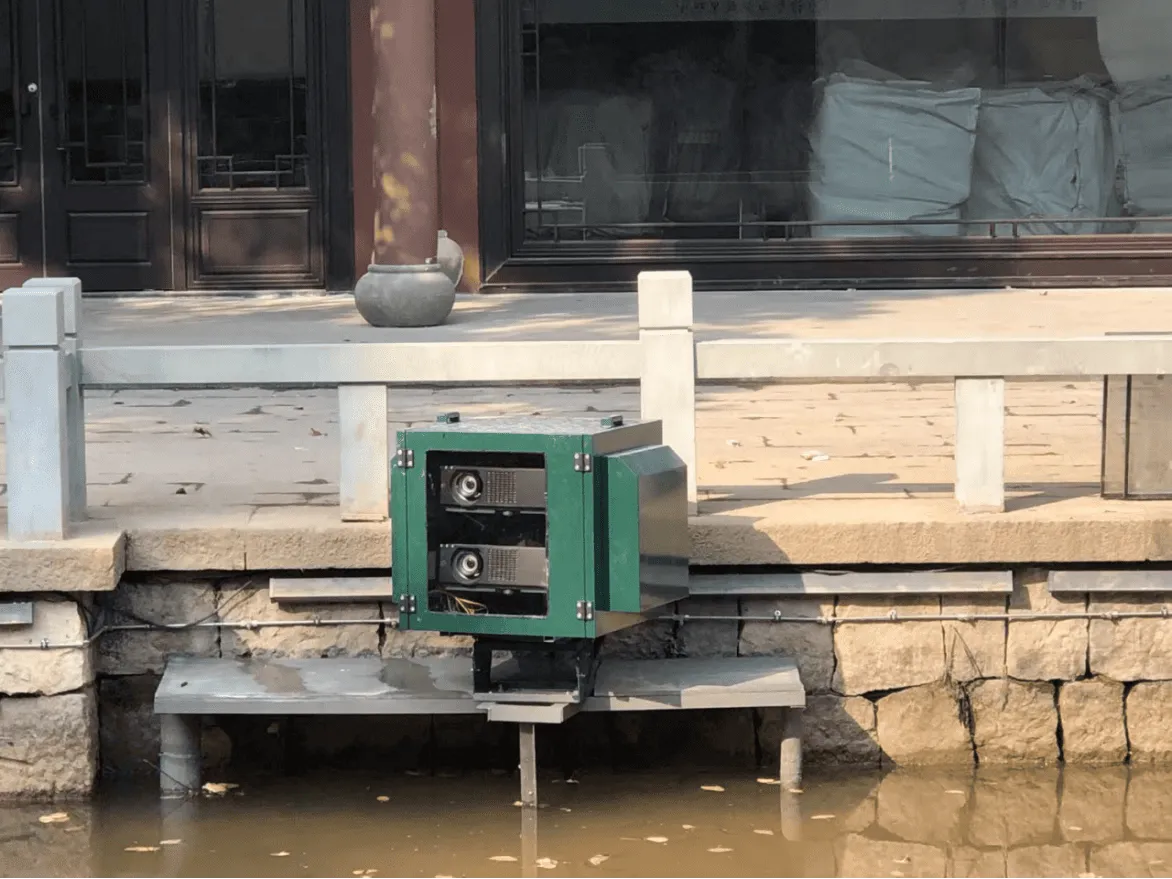
Commercial Plazas
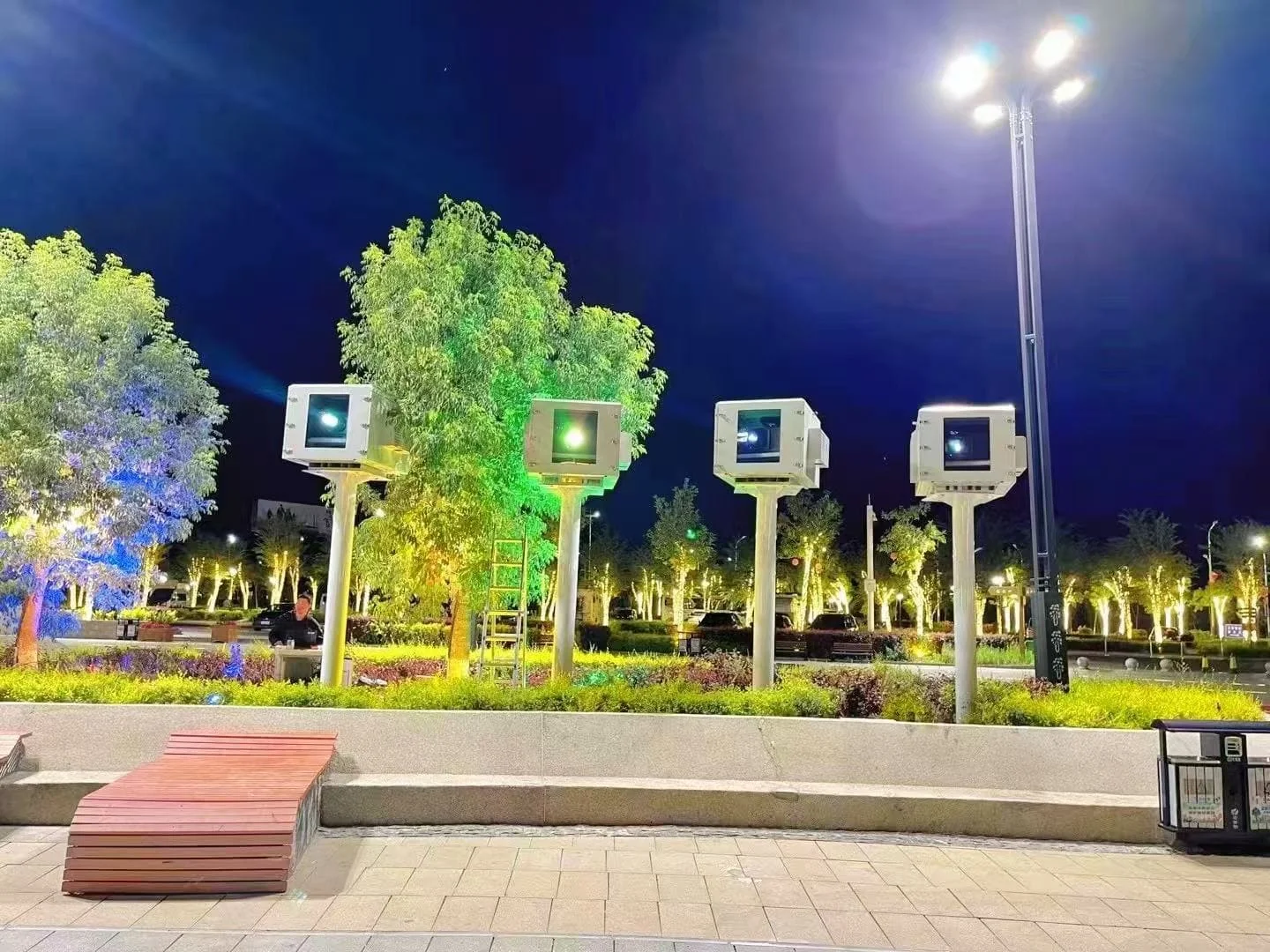
Ground or side-projection setups for interactive displays. The enclosures are built with durable materials (like 304 stainless steel) to withstand public environments and protect internal wiring.
Successful Outdoor Projection Installation Cases
We've deployed single and multi-projector enclosures across demanding sites — from coastal areas to canyon night tours — supporting Christie, Barco, Panasonic, Epson, and others from 4,000 to 40,000 lumens.
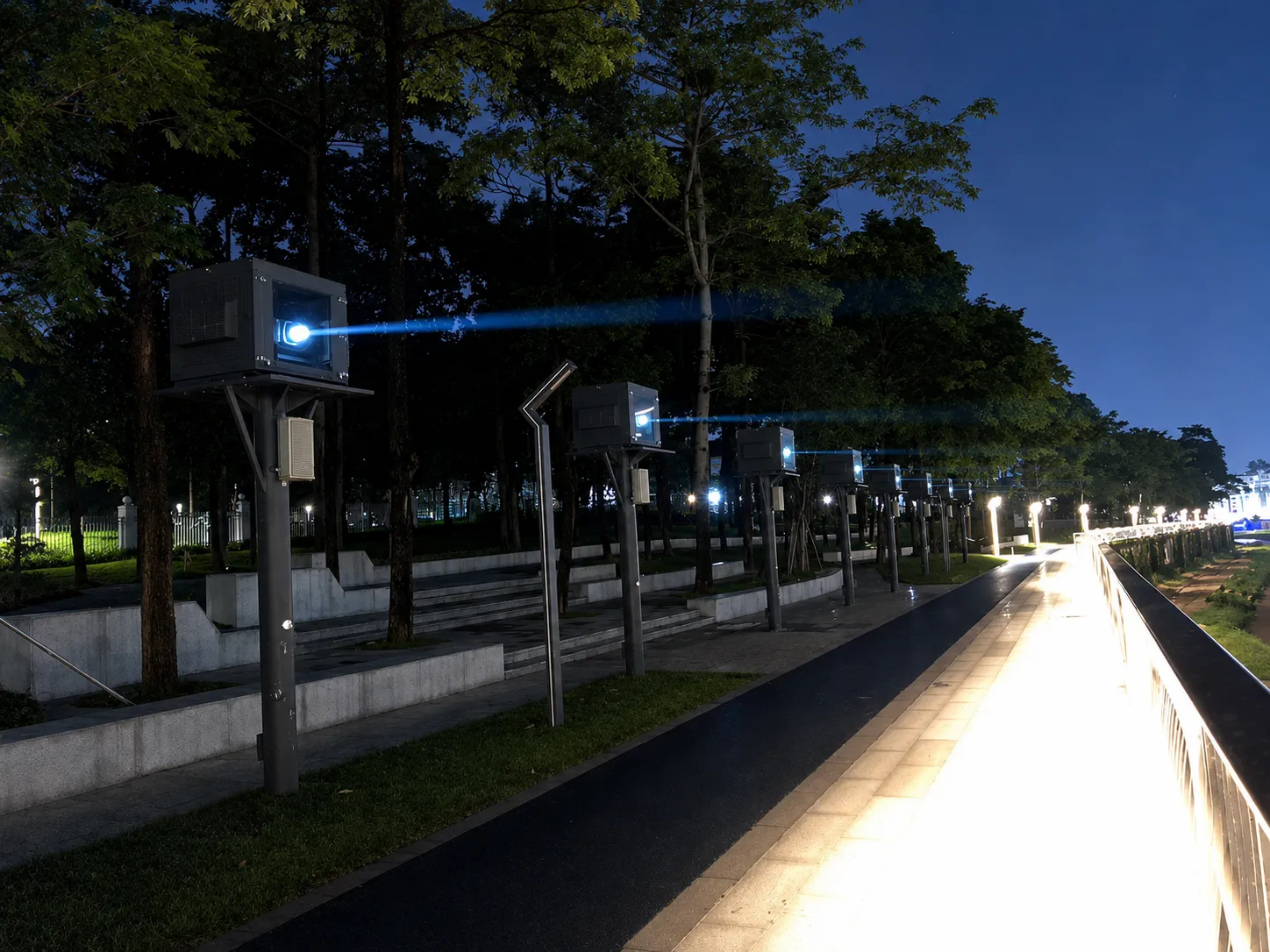
Pingtan International Tourism Island
- Configuration: 15,000-lumen AC single & dual-stacking
- Cooling Type: Air-Conditioned
- Requirement: High humidity protection for coastal environment.
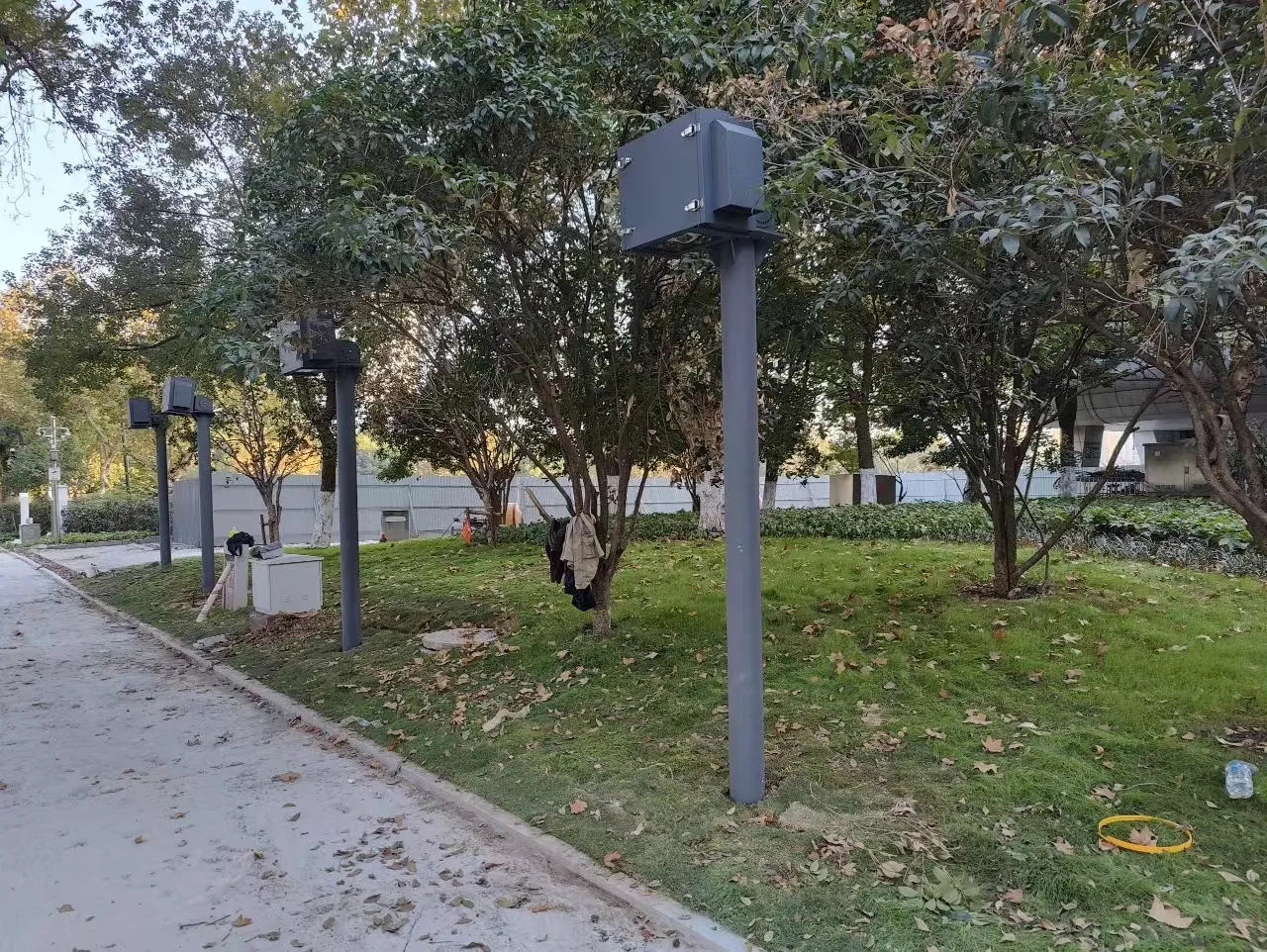
Sichuan Qu County Cooling Tower
- Configuration: 16 units, CB-L30000U
- Cooling Type: Air-Conditioned
- Requirement: Large-scale synchronized projection mapping.
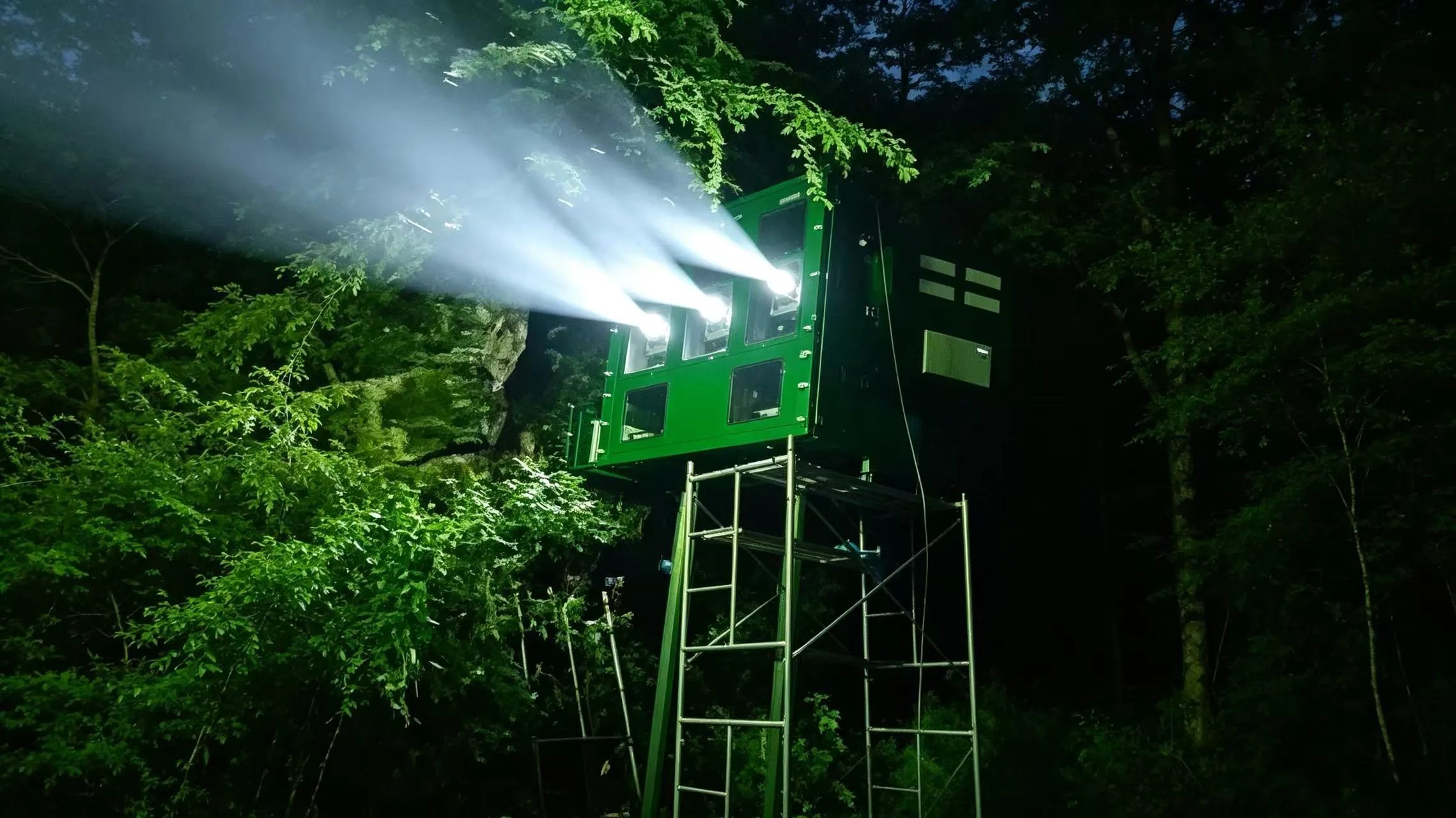
Chongqing Chengkou Kanggu
- Configuration: 25K lumen, 5-projector setup
- Method: Multi-unit complex projection
- Requirement: Custom structural support for 5 units.
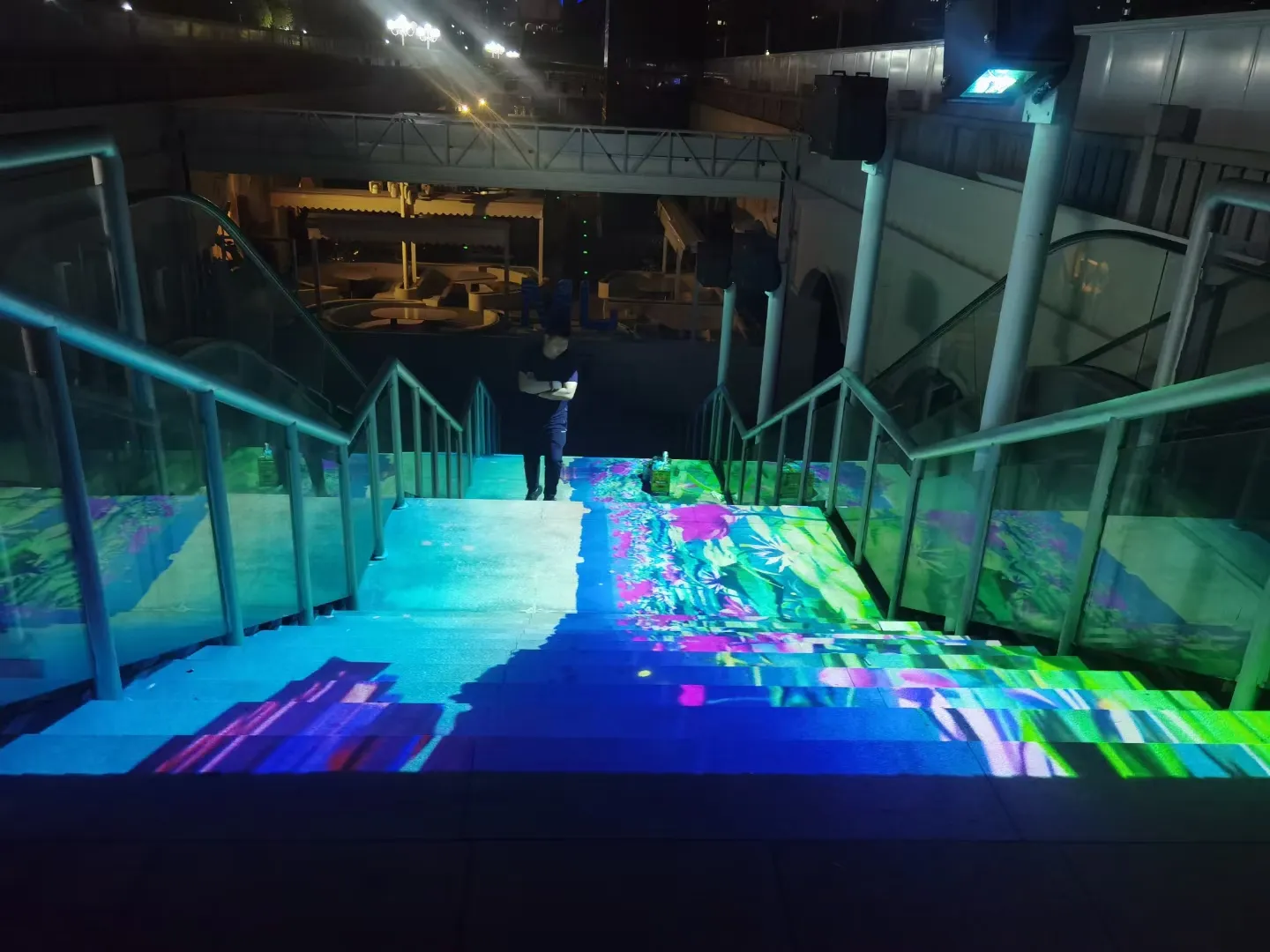
Hunan Xiangxi Dehang Canyon
- Configuration: 25x 6K Hisense, 9x 19K Barco, 6x 40K Barco
- Cooling Type: Mixed configurations
- Requirement: Diverse models operating in a natural canyon.
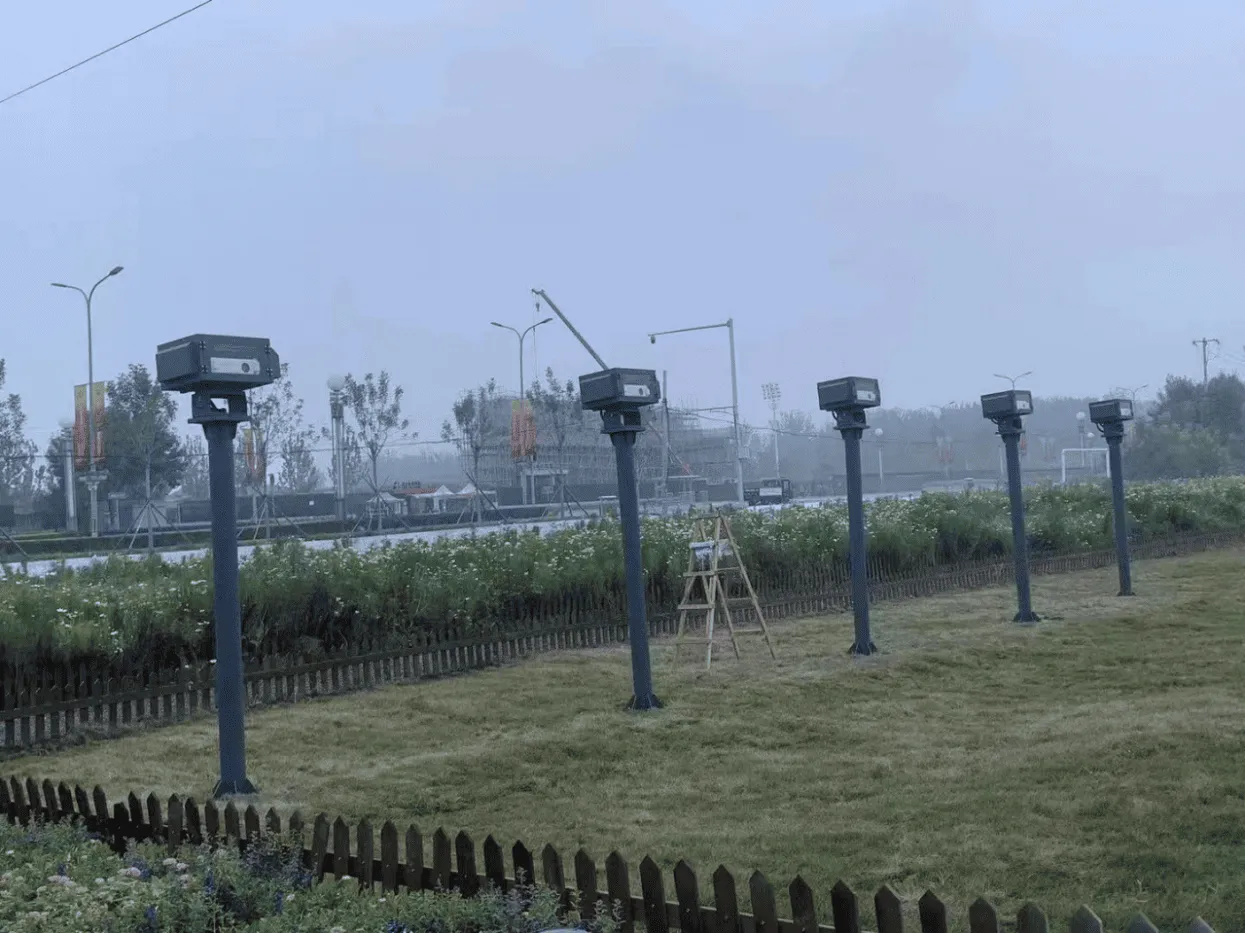
Ningxia Yinchuan Cultural City
- Configuration: 5x Christie 20,600 lumen
- Method: Water screen projection
- Requirement: Strict water ingress protection near water surface.
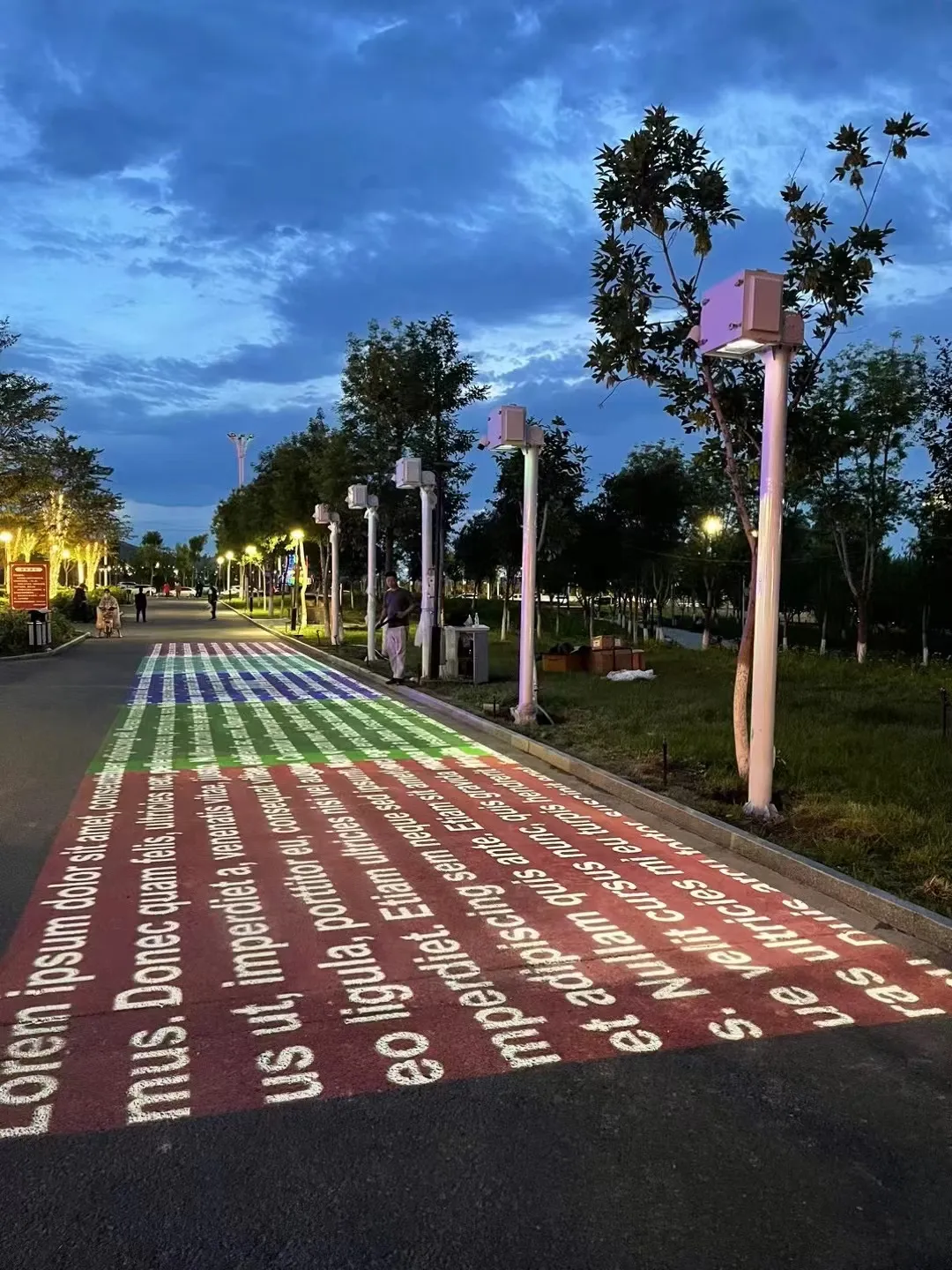
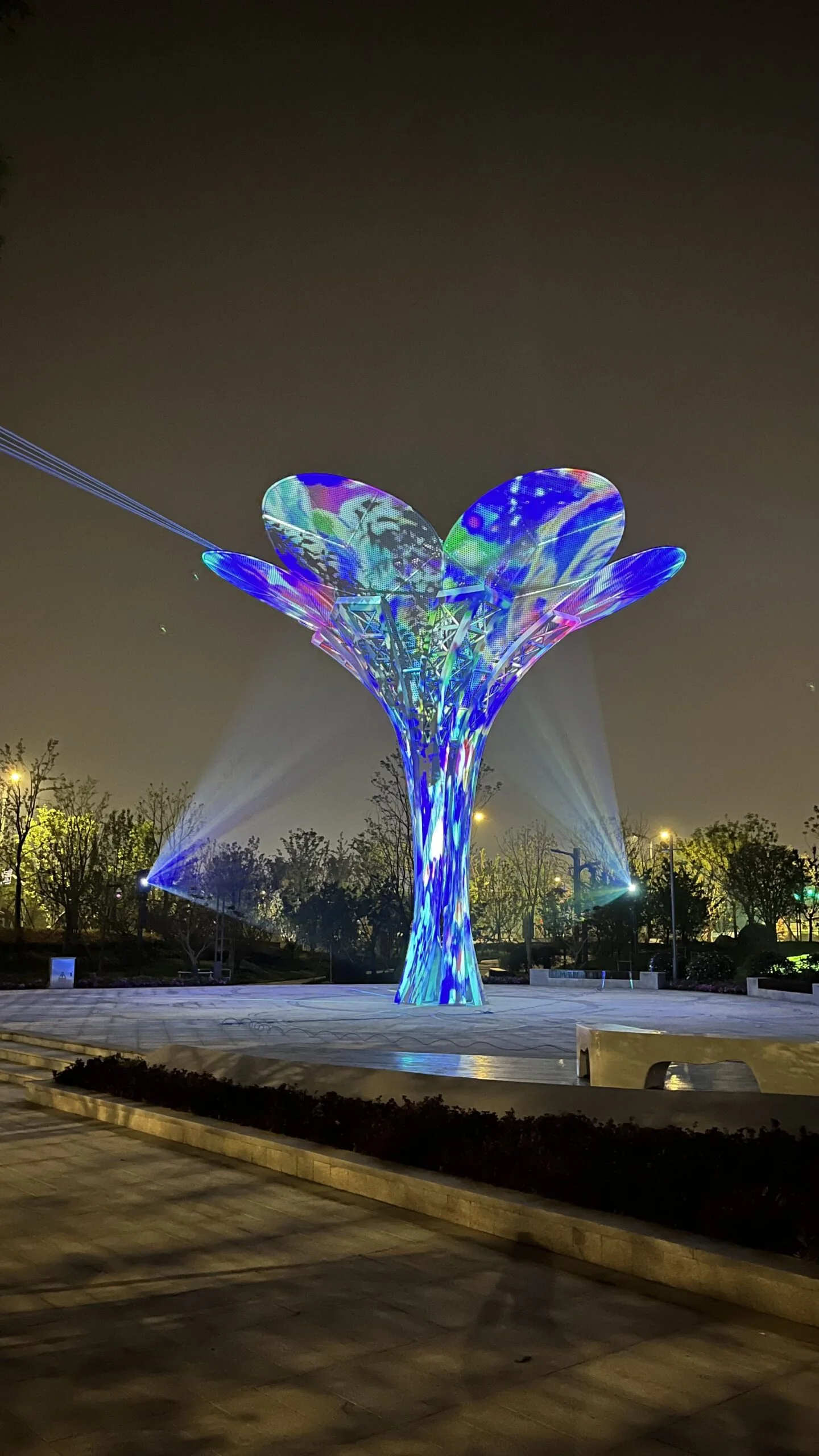
Zhejiang Huzhou Sculpture Plaza
- Configuration: 20,000 lumen single unit
- Cooling Type: Air-cooled thermostat box
- Requirement: Public plaza installation requiring robust housing.
Why Purpose-Built Enclosures Outperform Standard Cabinets
The priority in outdoor procurement is not simply finding a box that fits the projector. Integrators must ensure the mounting holes, airflow path, optical window position, cable entry, and maintenance space match the specific project requirements.
| Feature | Standard Generic Cabinet | Engineered Enclosure |
|---|---|---|
| Mounting Interface | Flat shelf, prone to shifting. | Custom base plate matching projector holes. |
| Airflow Planning | Random ventilation, risks hot air loop. | Baffles aligned with native intake/exhaust. |
| Optical Window | Fixed center, may clip offset lenses. | Positioned per specific throw ratio/offset. |
| Multi-Projector Support | Usually single unit only. | Engineered for stacking or side-by-side. |
| Drawing Confirmation | Buy as-is. | Pre-production layout review required. |
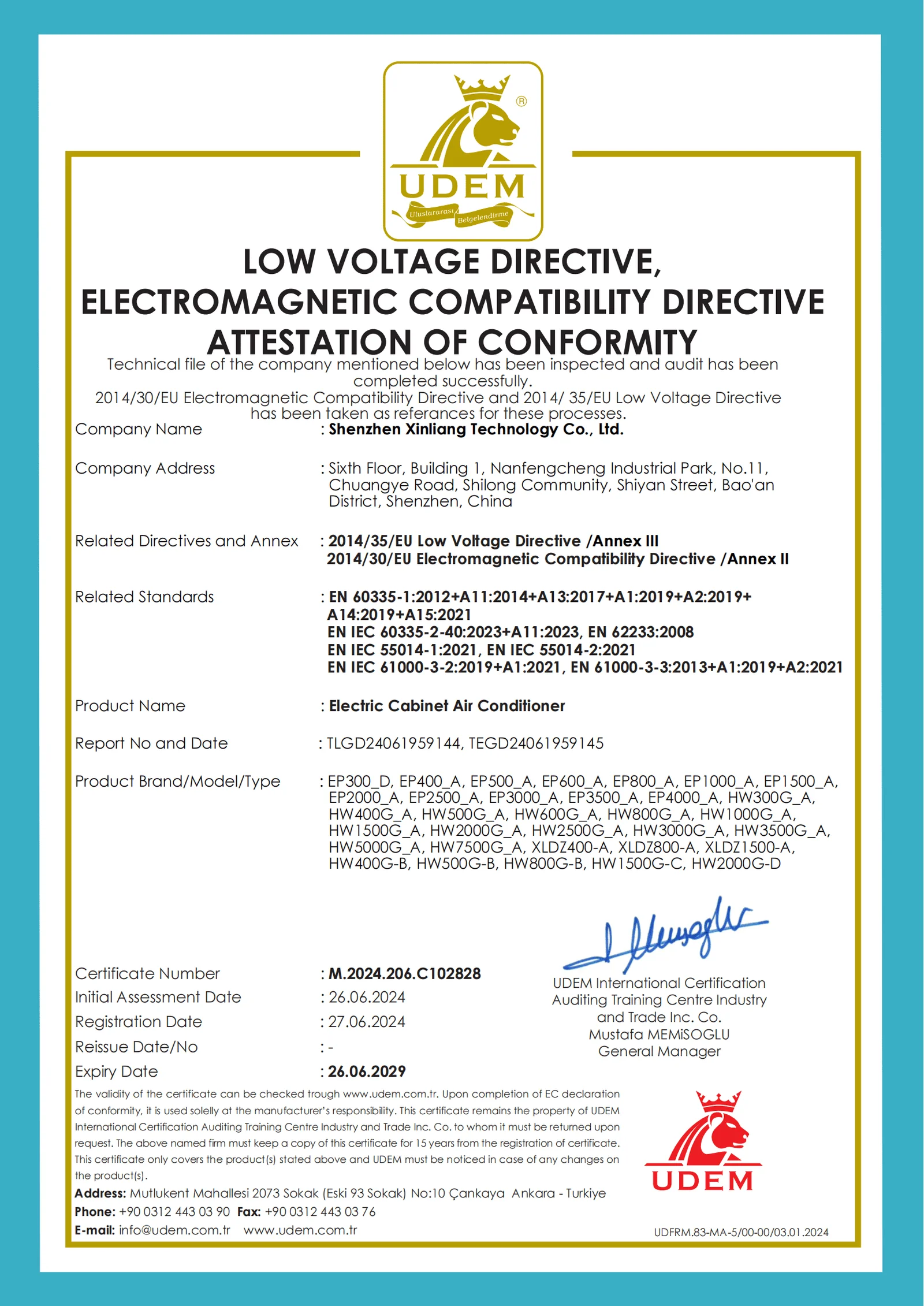
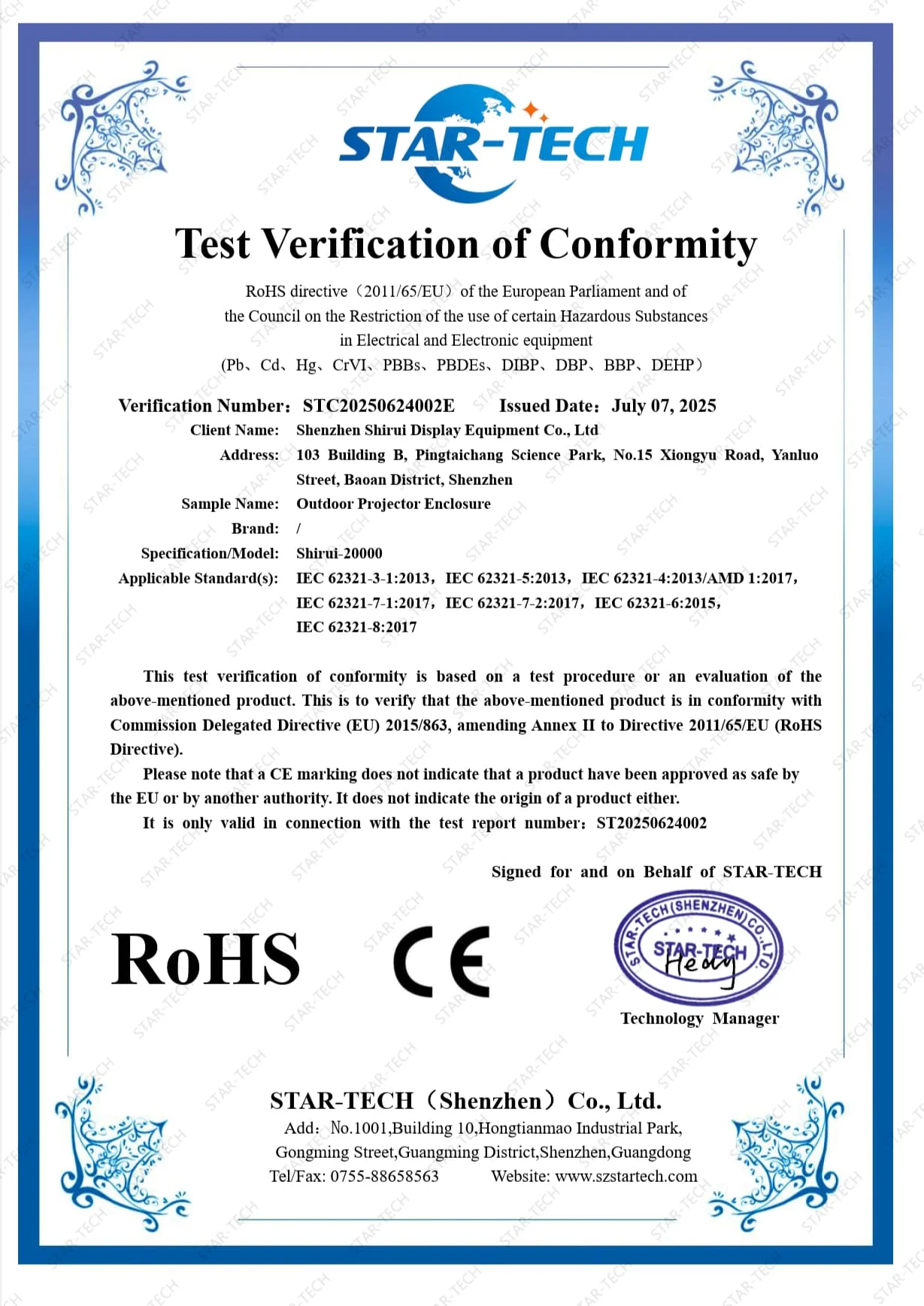
Test Reports for All Our Projector Enclosure Models
We provide third-party test certificates for all enclosure types to satisfy your project compliance demands.
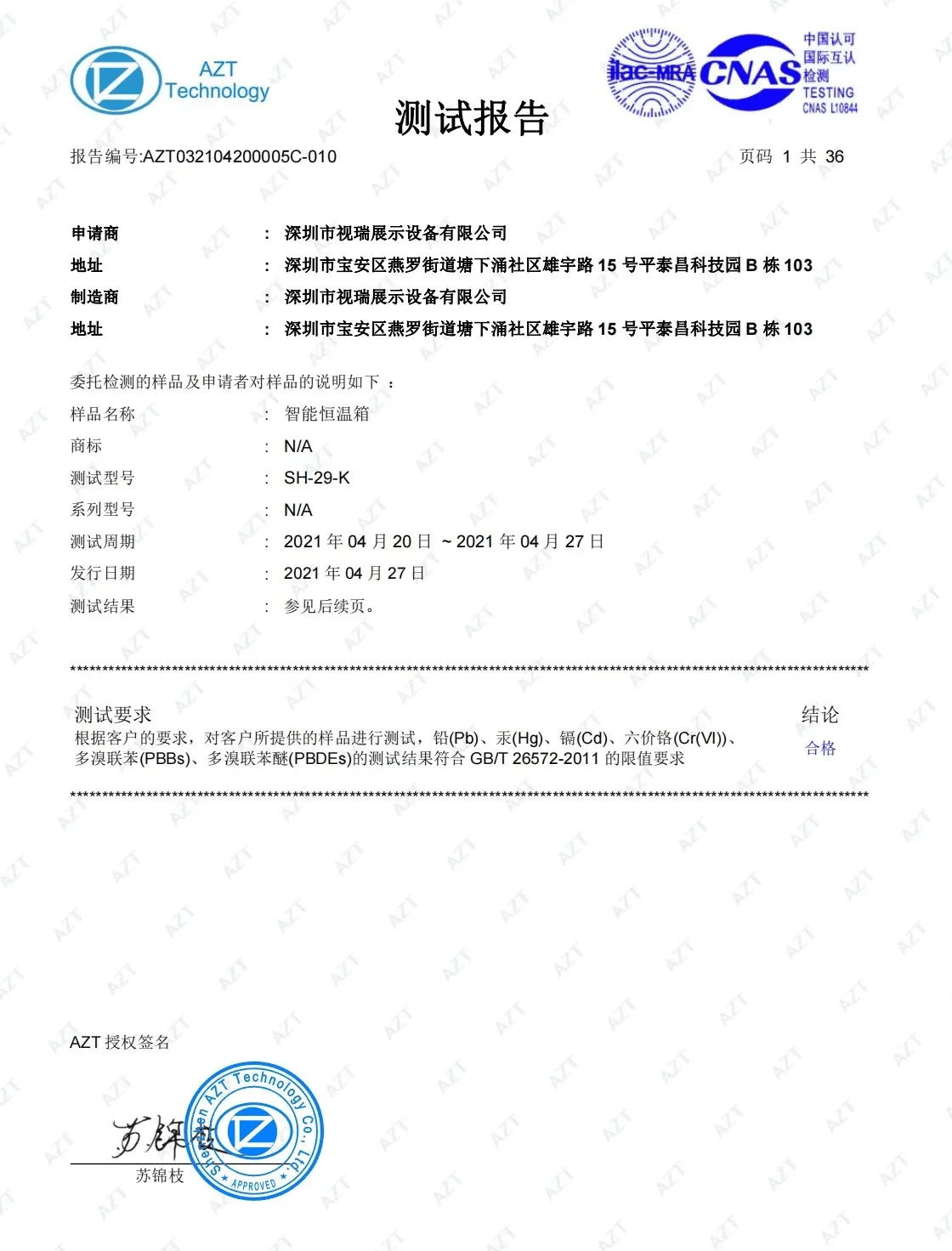
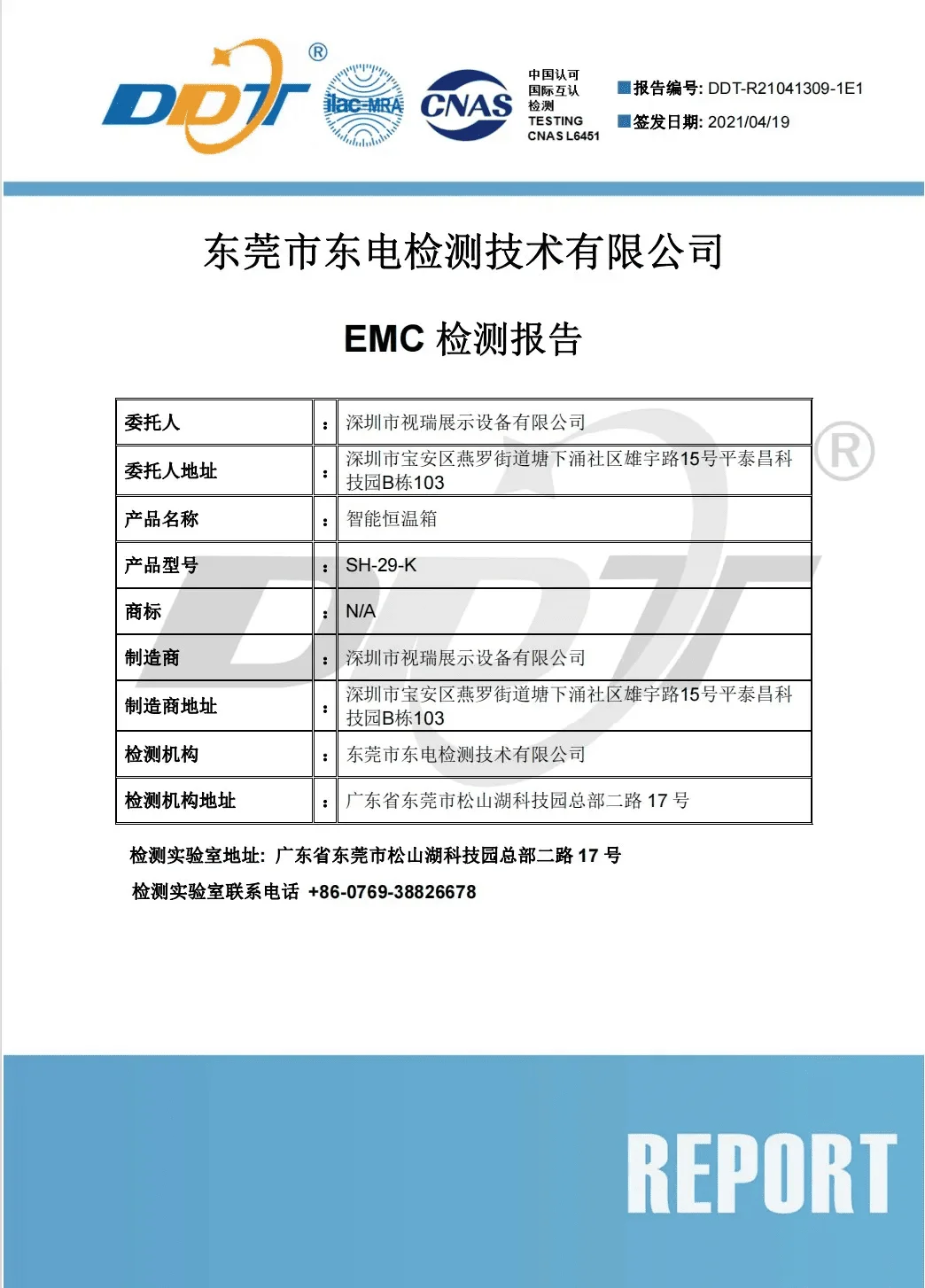
SH-29-K Intelligent Enclosure
Supported by third-party EMC test reports, IP6X dustproof testing, IPX6 waterproof testing, and RoHS hazardous-substance test documentation.
Outdoor Enclosure Series
RoHS conformity verification is available for models including Shirui-8000, Shirui-10000, Shirui-20000, and Shirui-30000.
Air-Conditioning Components
Selected cabinet air-conditioning components are supported by applicable LVD and EMC conformity documents provided by the component supplier.
* Disclaimer: Test scope, applicable model, and report availability should be confirmed for each specific order prior to production.
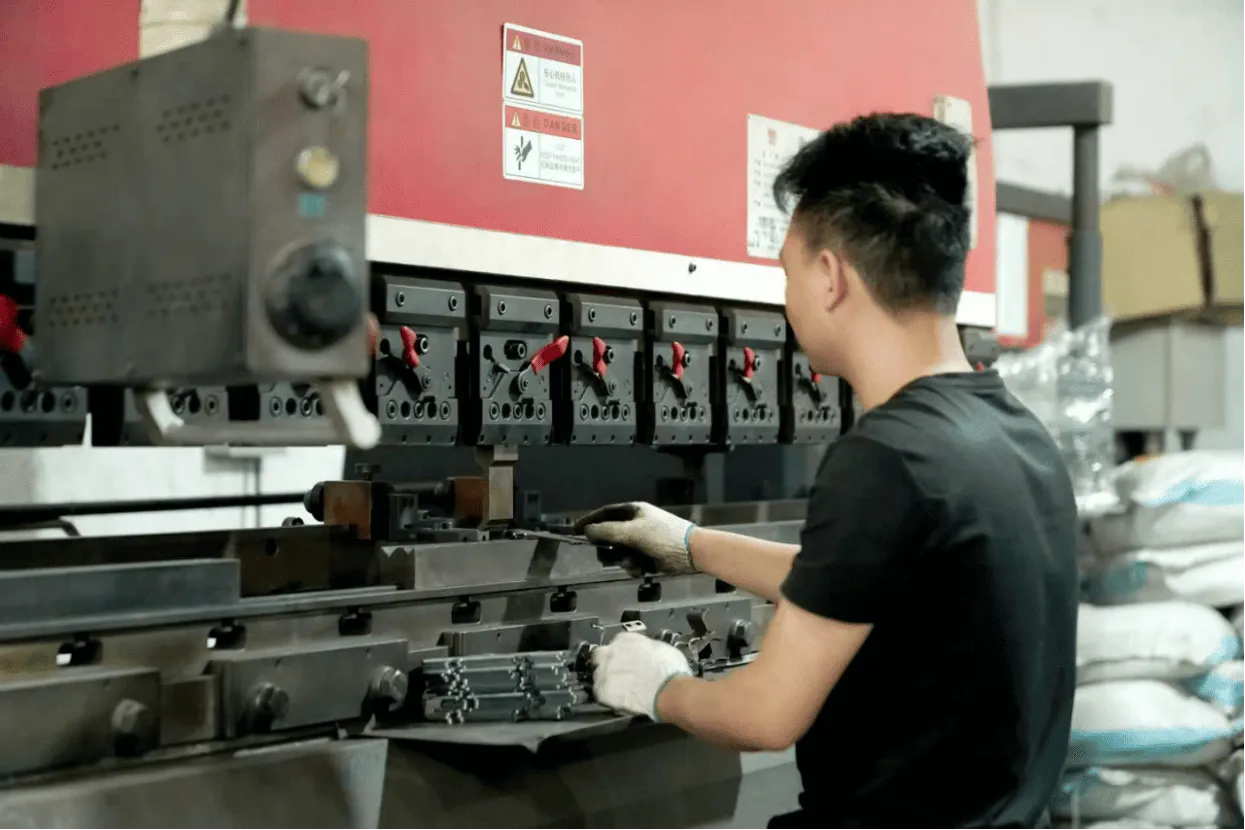
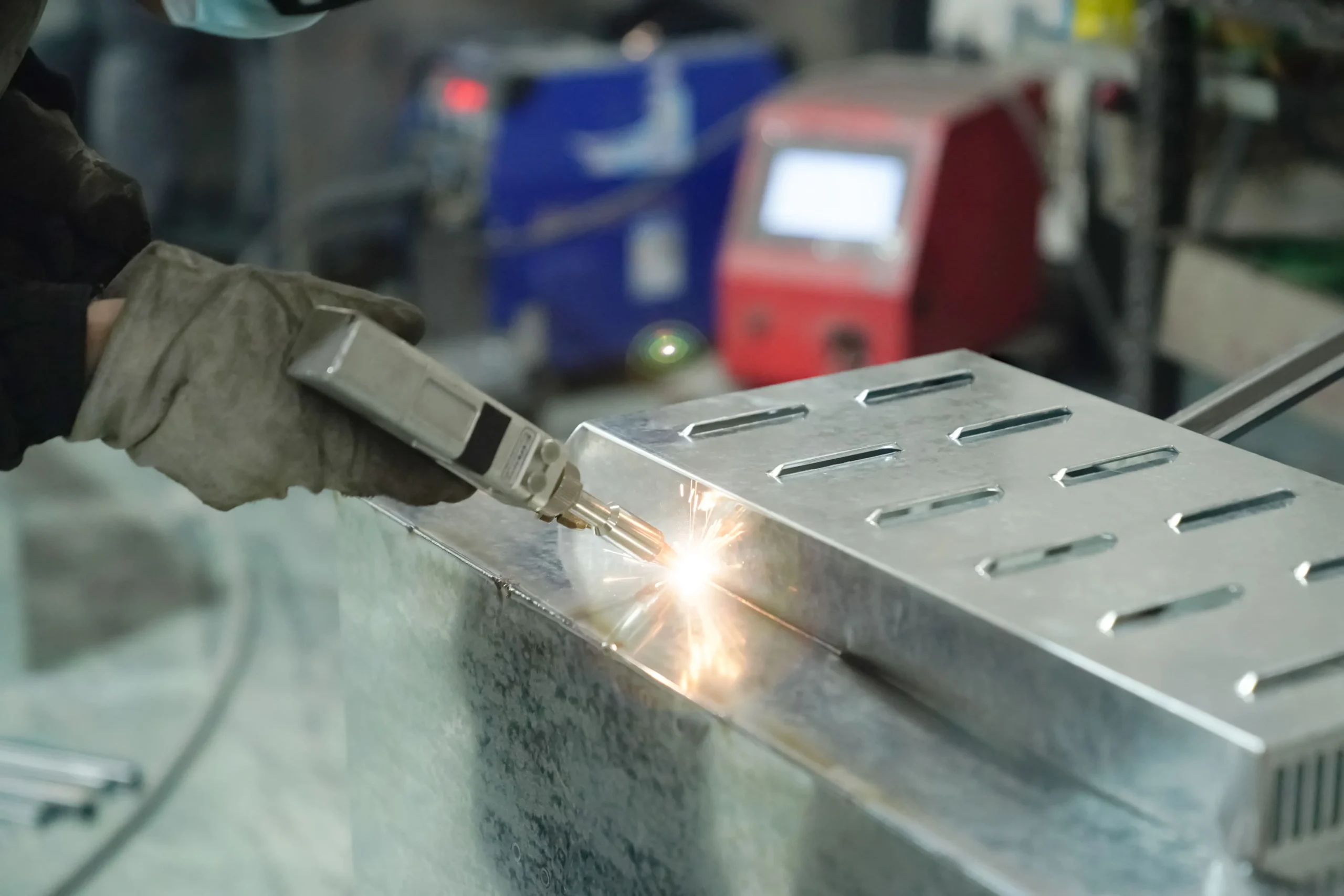
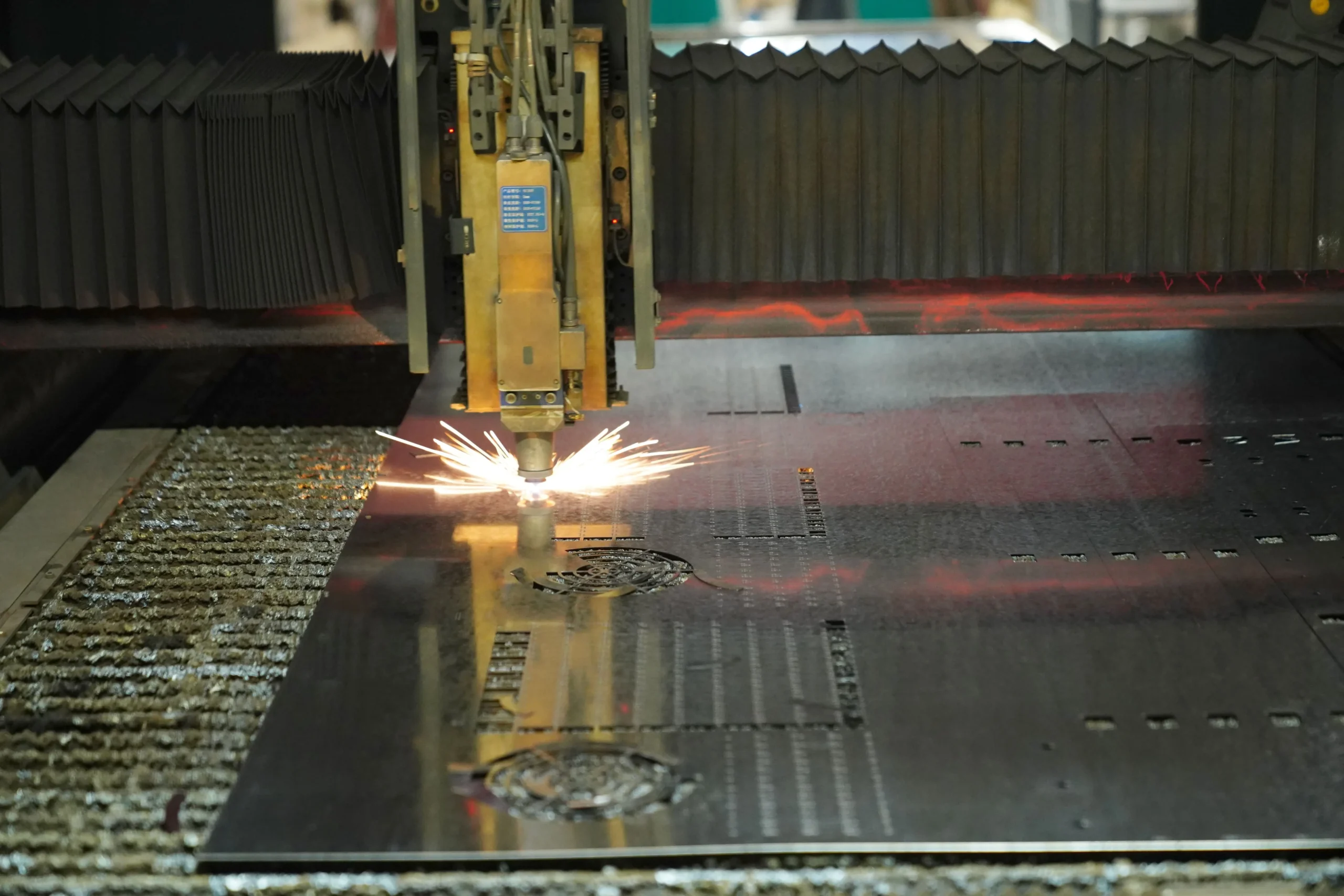
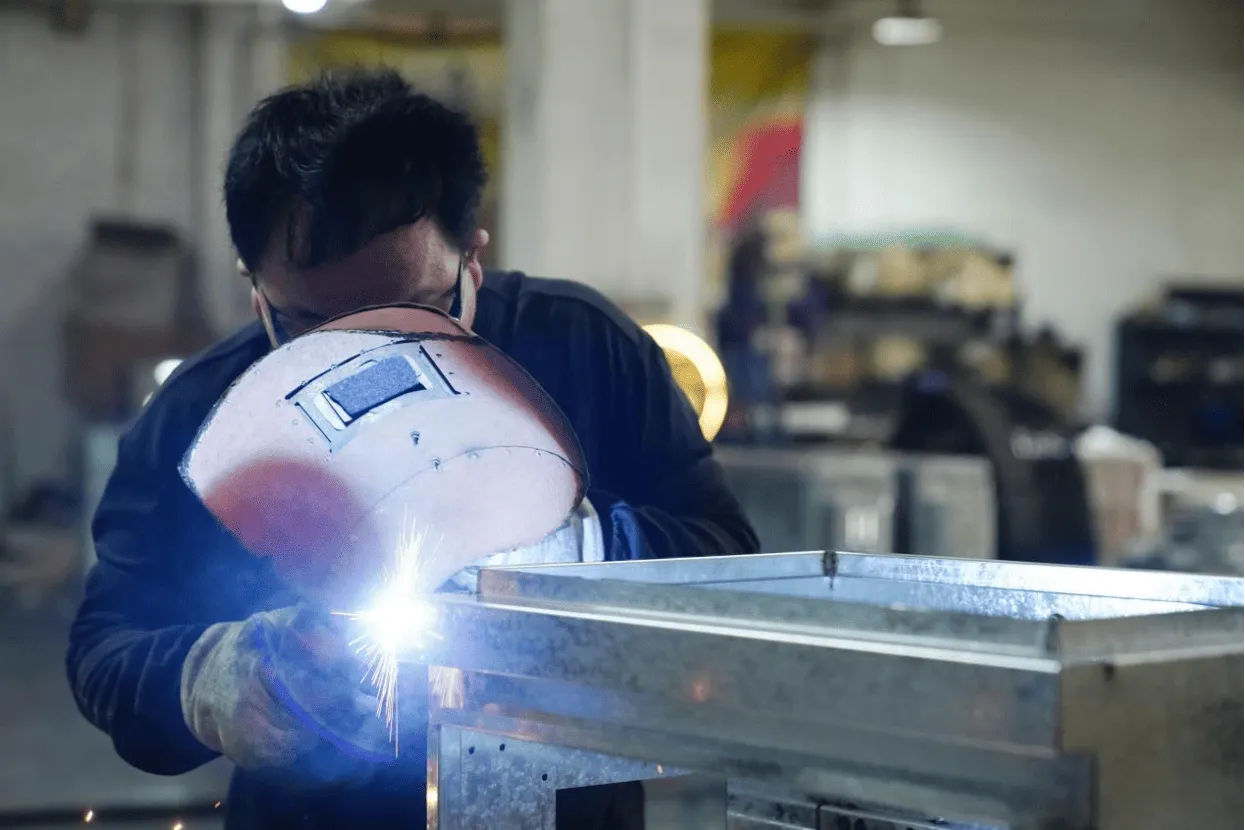
Precision Sheet Metal Manufacturing in Shenzhen
Our manufacturing process translates confirmed engineering drawings into physical enclosures. Custom projects reduce on-site modification risks because structural specifics are handled during fabrication.
- Drawing to Production: Confirmed CAD layouts dictate sheet metal cutting and CNC bending processes.
- Custom Machining: Mounting holes and optical windows are processed exactly according to the approved projector layout.
- Assembly & Inspection: Cabinets undergo structural checks before and after component installation to verify sealing and door alignment.
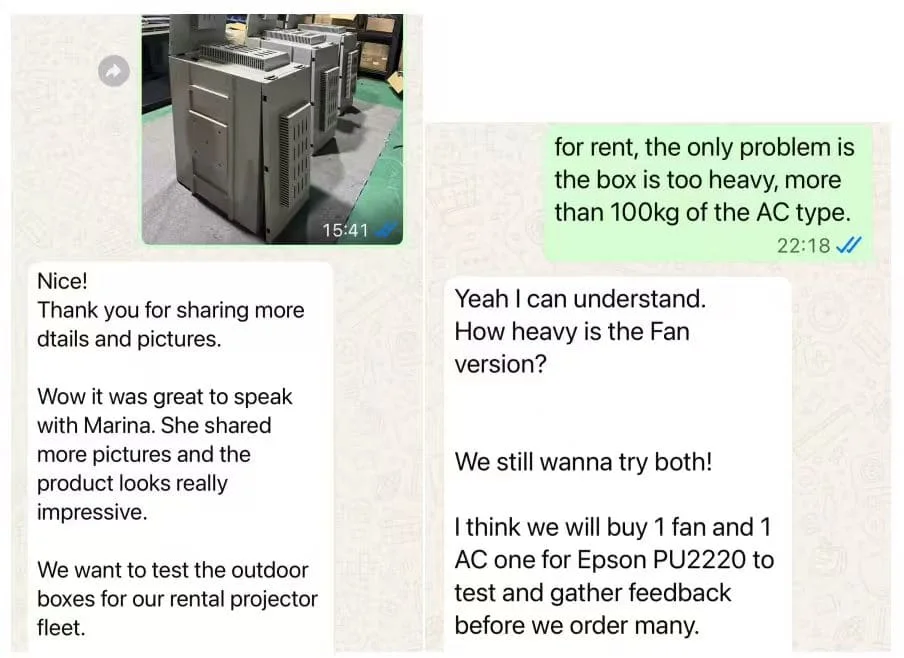
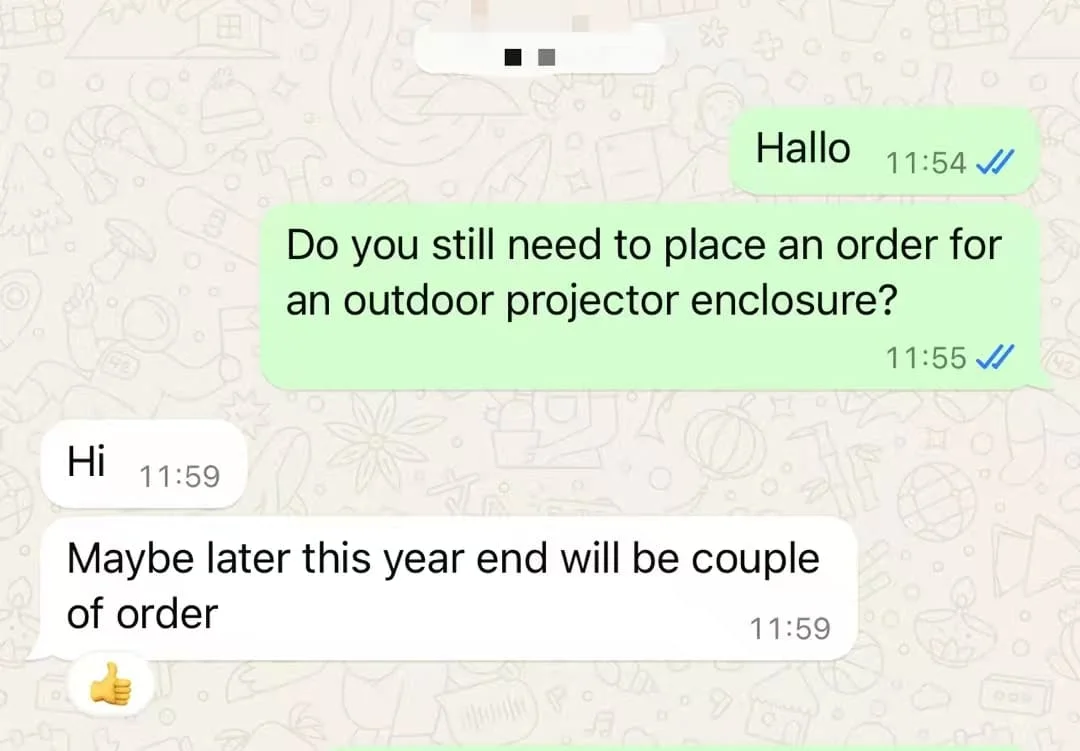
Trusted by Customers Worldwide
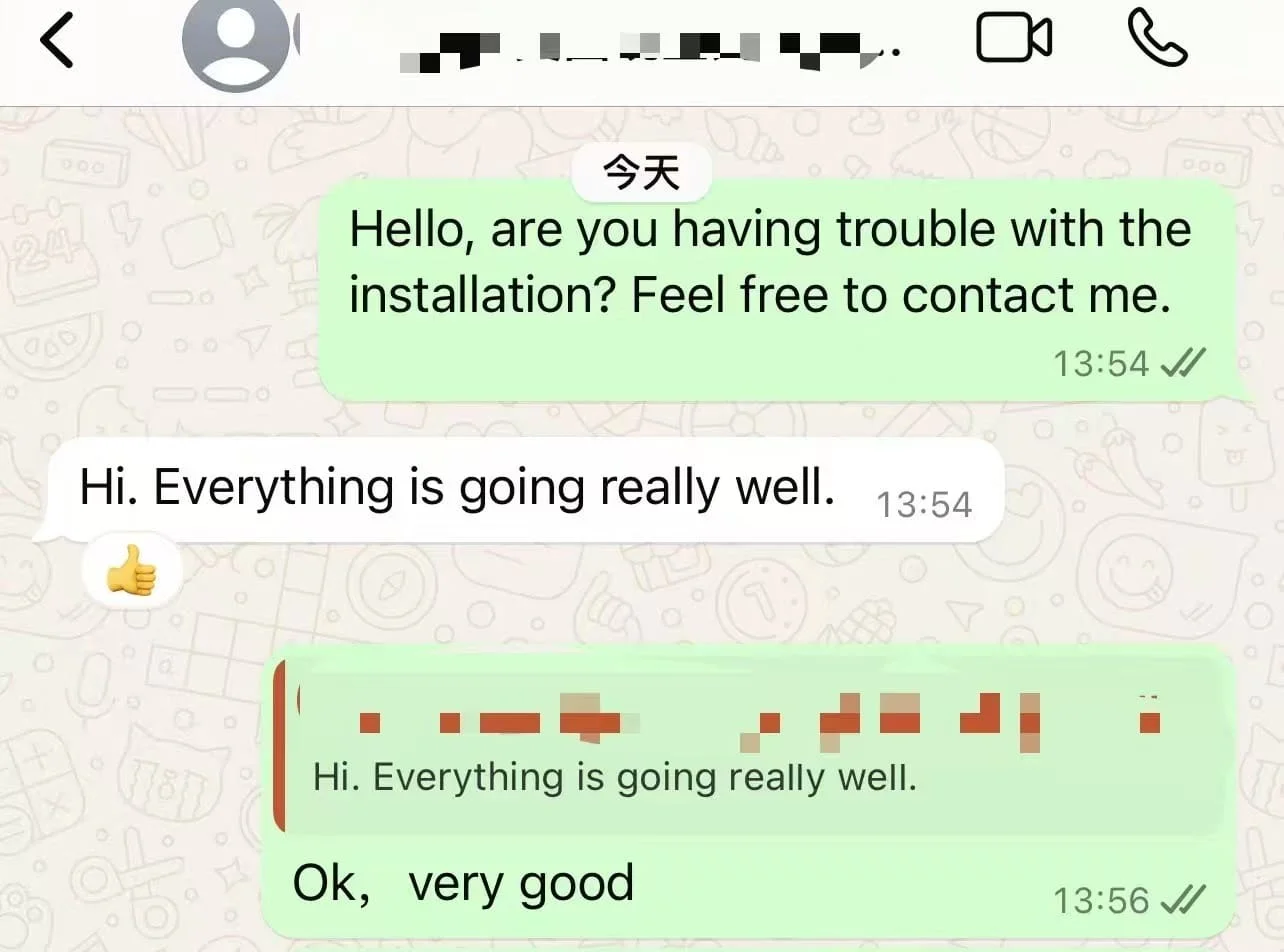
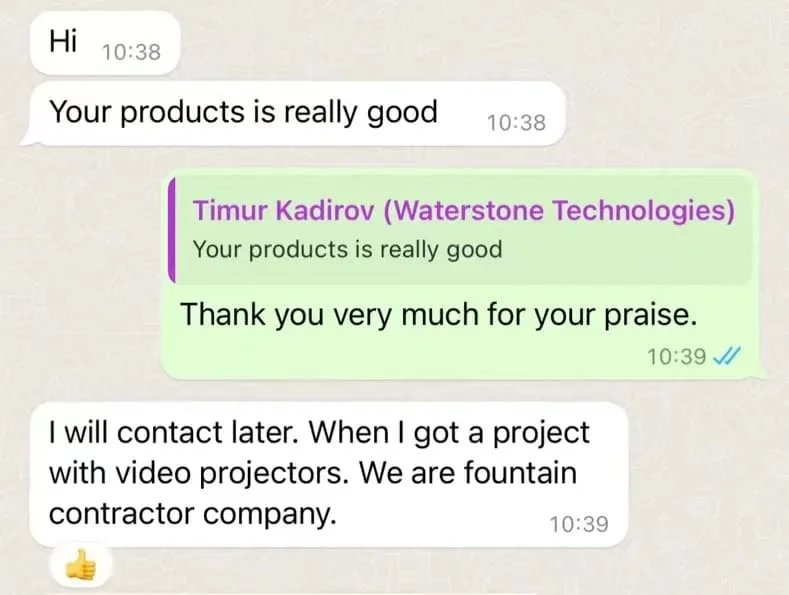
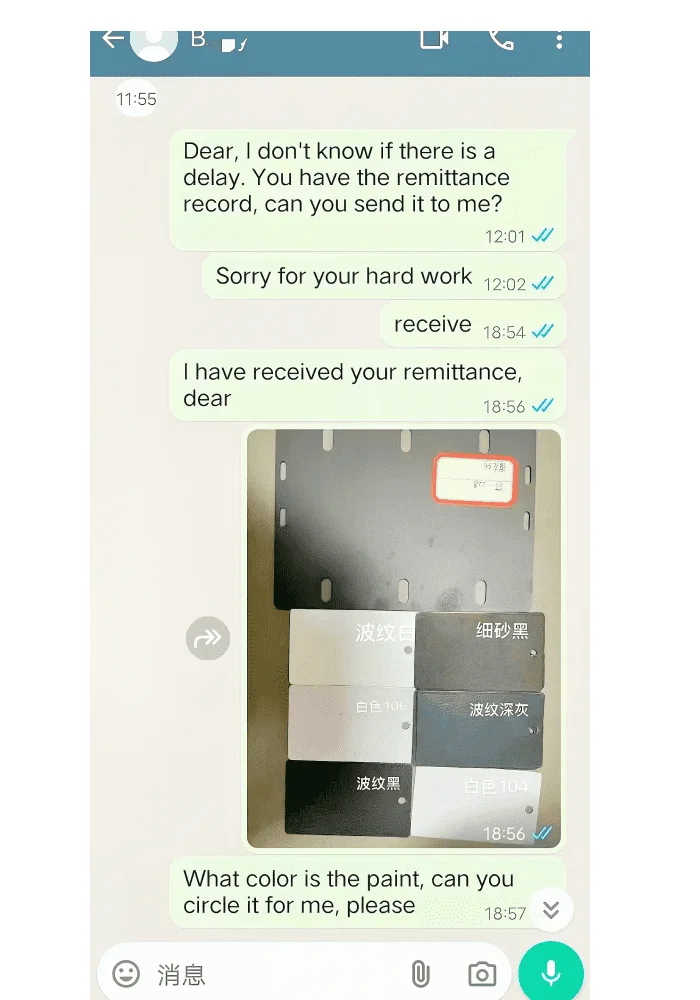
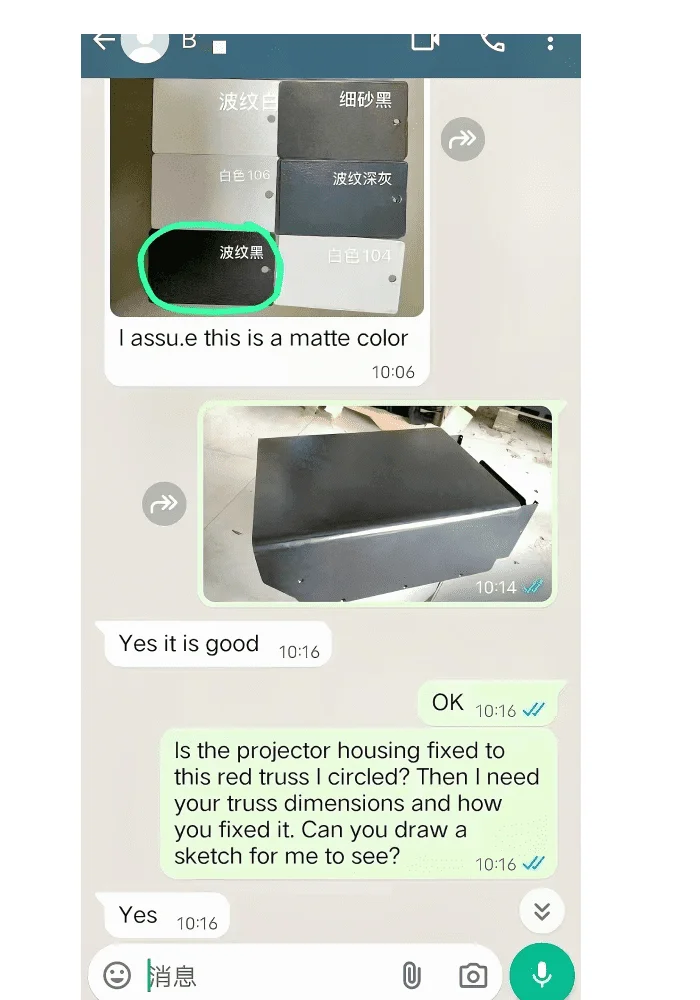
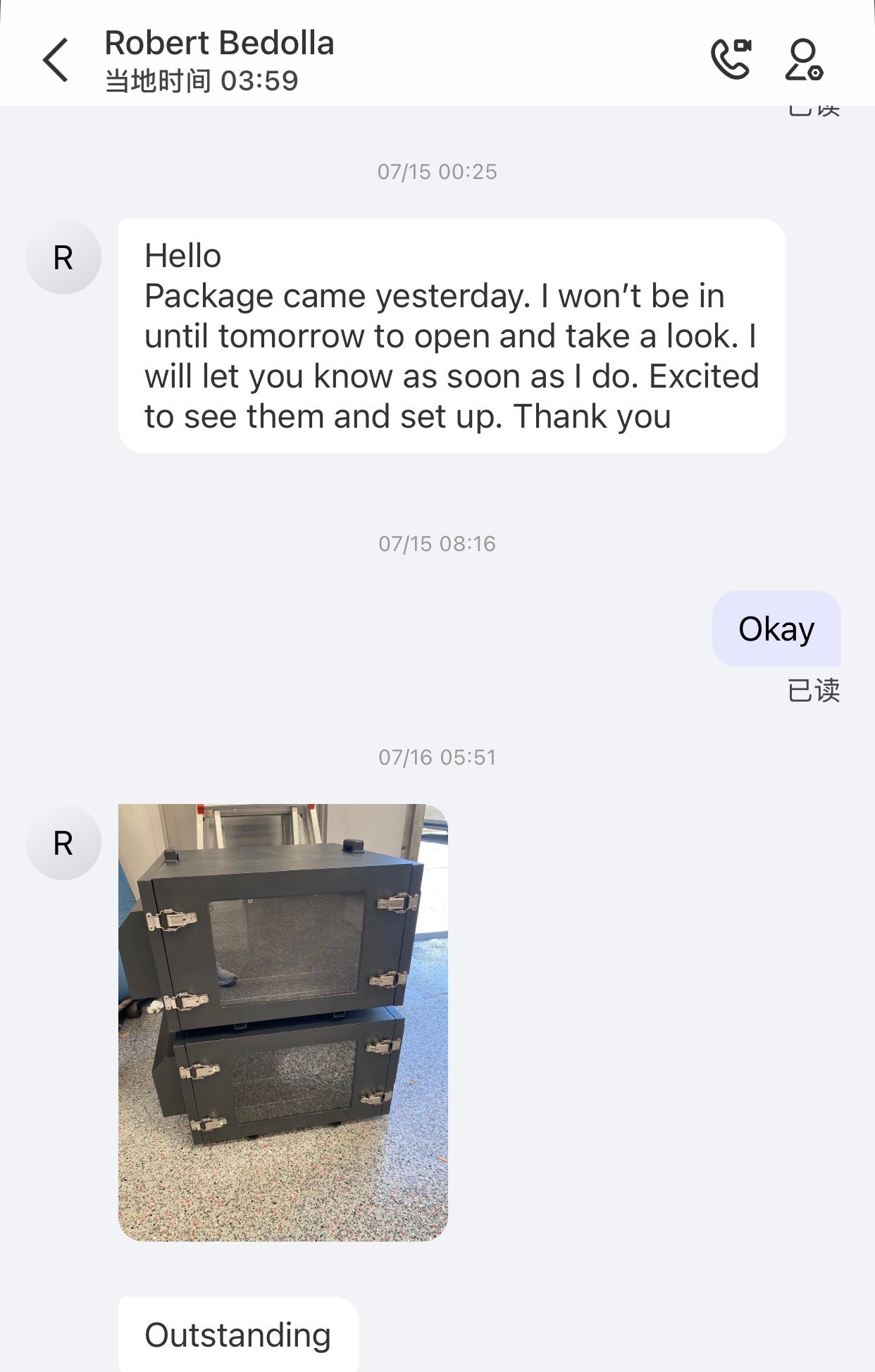
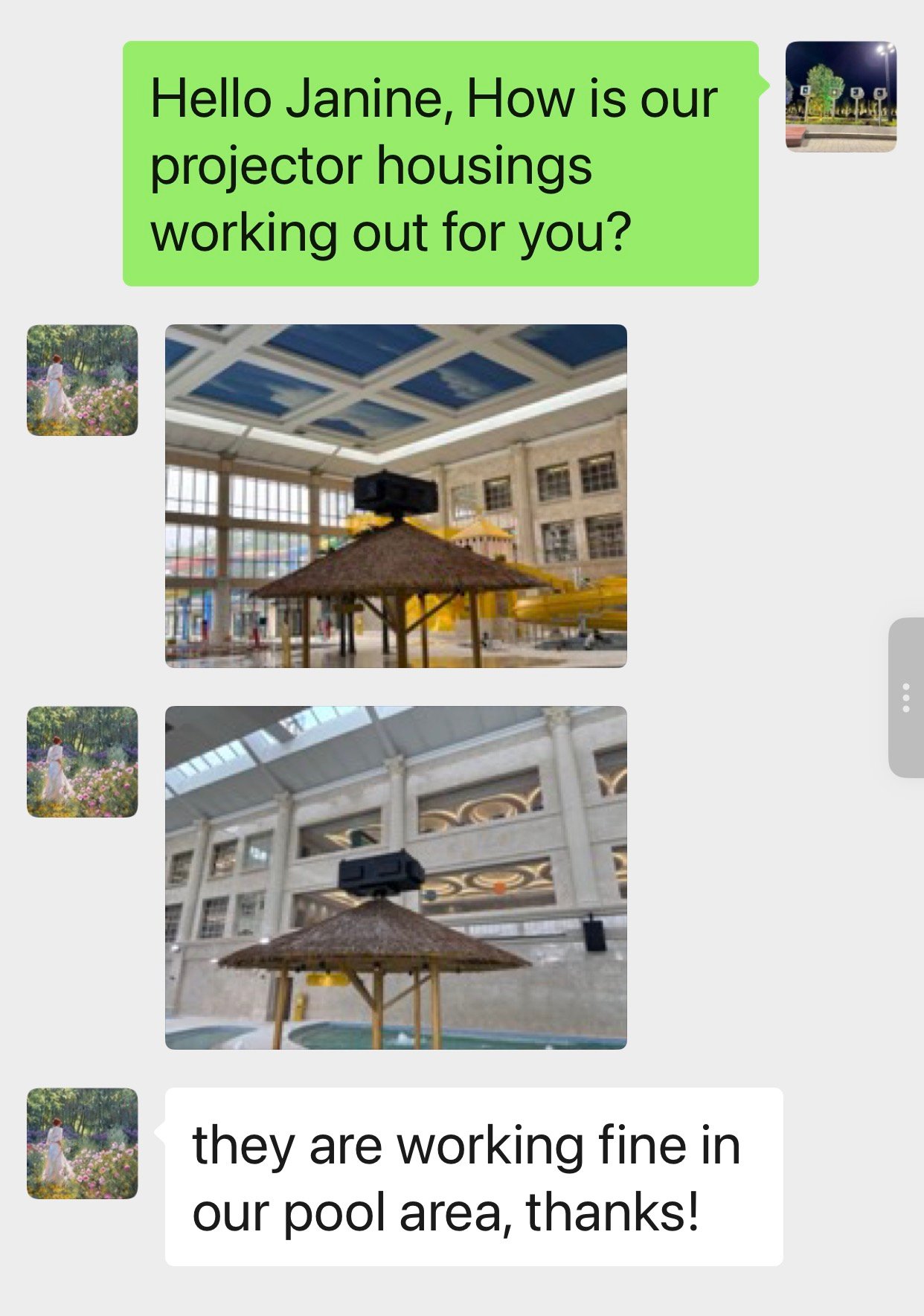
Real conversations and feedback from system integrators, engineering contractors, rental companies, and outdoor projection professionals around the world.
Custom Enclosure Engineering Workflow
Production scheduling is confirmed after the enclosure drawing, cooling configuration, order quantity, and required delivery date have been reviewed.
Project Information
Buyer provides projector model, site conditions, and required quantities.
Model Review
Engineers verify projector dimensions, heat load, and airflow paths.
Cabinet Layout
Drafting of enclosure drawing specifying mounting, window, and door locations.
Confirmation
Buyer reviews and approves the configuration and CAD layout.
Sample Approval
Sample or first-unit production and approval, if required for OEM projects.
Production
Sheet metal fabrication, welding, and component assembly commence.
Inspection
Final checks on structural integrity and cooling system functionality.
Delivery Support
Secure packing and dispatch with applicable documentation.
Get a Configuration-Based Quotation
Sending your projector model, quantity, installation method, and project environment allows our engineering team to accurately determine cabinet dimensions, cooling methods, mounting structures, and optical window positions.
Frequently Asked Questions for B2B Buyers
Review common technical and procurement inquiries regarding our custom outdoor projector enclosures.
What information is required to customize an outdoor projector enclosure?
How do I choose between air-cooled and air-conditioned models?
Can one enclosure fit Panasonic, Epson, Christie, Barco or other projector brands?
Can the enclosure support two or more projectors?
How are projector mounting holes confirmed?
What test reports are available?
What affects MOQ and lead time?
How can maintenance access be planned?
Send Your Projector Model Before Ordering the Enclosure
To receive an accurate configuration and quotation, please provide your projector model, quantity, installation method, site conditions, required delivery date, and any available drawings or datasheets.
* Third-party test documents, factory videos, and relevant outdoor projection project cases can be provided according to the enclosure model and project requirement.