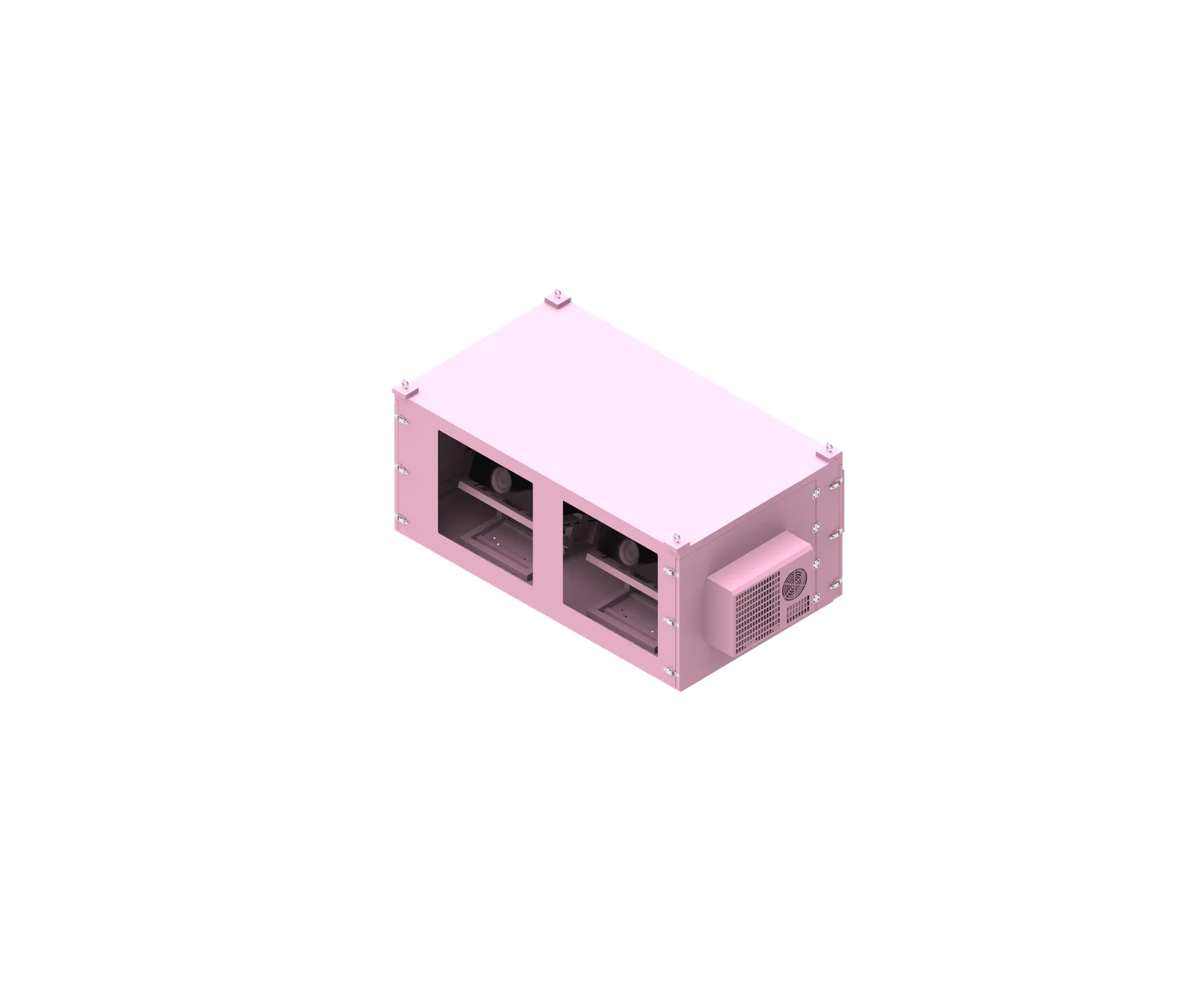
A successful custom sheet metal enclosure is designed around the equipment, environment, thermal requirements, installation method, and manufacturing process—not dimensions alone. For an outdoor projector enclosure, the design must protect optical performance, cooling, wiring, maintenance access, corrosion resistance, and site mounting while remaining practical to fabricate. ShiRui approaches each project as a complete engineered housing rather than a simple metal box.
What is outdoor projector enclosure custom sheet metal enclosure design?
Outdoor projector enclosure custom sheet metal enclosure design is the engineering process of creating a protective metal housing around specific equipment, such as a projector, electronics, sensors, power components, or climate-control systems. It balances weather protection, airflow, structural support, optical alignment, cable routing, maintenance access, and manufacturable sheet metal construction.
Video Guide: Learn about waterproof enclosures for outdoor projectors and how they provide a practical protection solution for professional outdoor projection systems. This video introduces the enclosure design, typical applications, and considerations for long-term outdoor projector installations.
Purpose and Engineering Scope
An outdoor projector enclosure is not selected only by measuring the projector and choosing a larger box. The enclosure must be designed around the actual projector model, lens position, intake and exhaust locations, cable connections, heat output, and installation environment.
For ShiRui custom projects, the enclosure may include a fresh-air system, fresh air plus air conditioning, internal circulation air conditioning, remote monitoring, heating, dehumidification, temperature and humidity sensing, smoke alarm, flooding alarm, optical ultra-white glass, reserved power sockets, and corrosion-resistant metal construction.
Key design inputs include:
- Equipment type, brand, model, size, and weight
- Projector lens position and projection angle
- Air intake and exhaust path
- Power consumption and heat output
- Indoor or outdoor installation conditions
- Dust, humidity, rain, salt-air, and temperature exposure
- Mounting method, such as ground, wall, pole, ceiling, or custom frame
- Required quantity and maintenance expectations
- Cable entry, connector space, and optical window requirements
- Required surface finish, color, and logo options
ShiRui Pro Tip: We always start with the real equipment data, not a standard cabinet size. If the projector airflow, lens centerline, or cable connectors are not confirmed early, the enclosure may look correct on paper but fail during installation.
How Does outdoor projector enclosure custom sheet metal enclosure design Work?
The design works by converting equipment requirements into a manufacturable enclosure structure. Engineers define internal space, airflow clearance, cable routing, mounting points, doors, cooling components, sealing details, material, sheet thickness, and surface treatment, then confirm drawings before fabrication through cutting, bending, welding, finishing, assembly, and inspection.
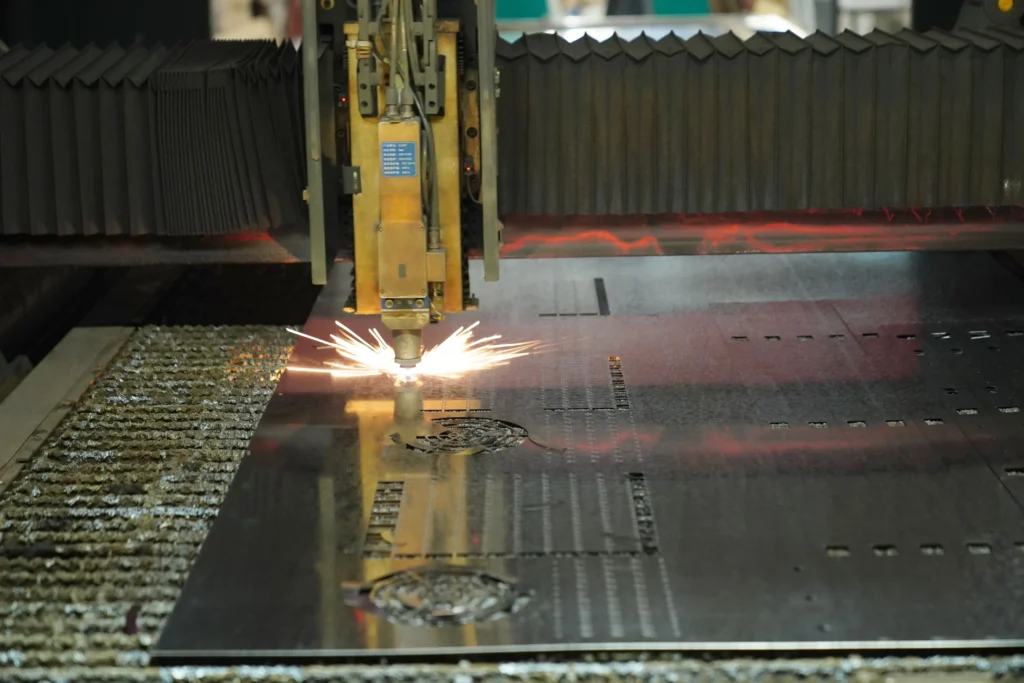
From Equipment Data to Fabricated Housing
The workflow begins with collecting equipment information and site conditions. For an outdoor projector enclosure, the projector is usually fixed to an internal platform or adjustable mounting bracket. The optical port must align with the lens, and the thermal system must prevent overheating, condensation, fogging, and dust buildup.
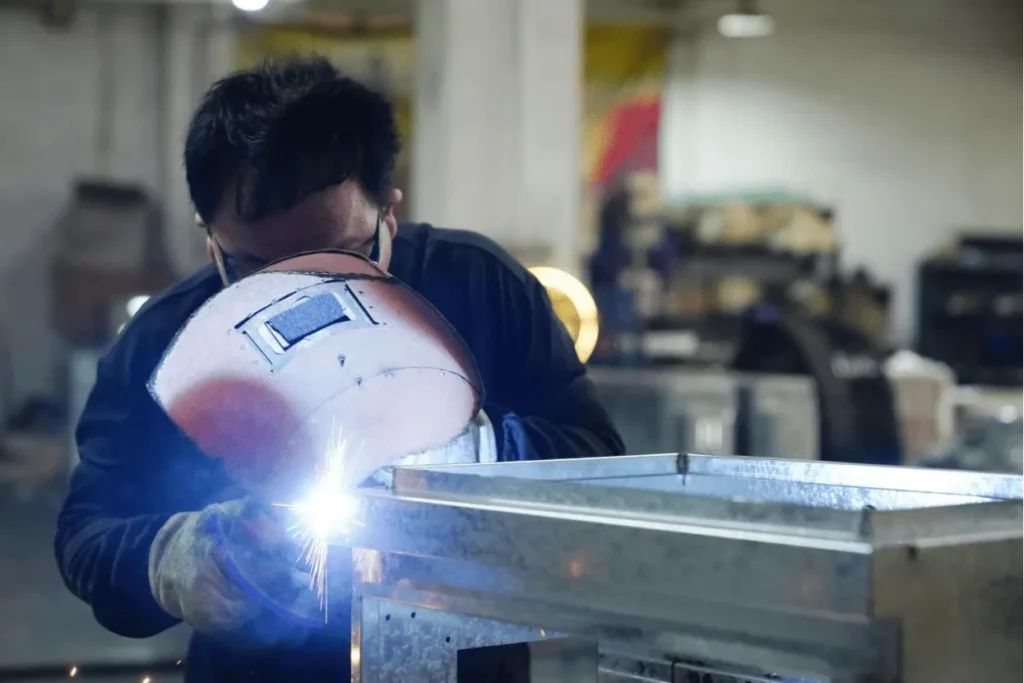
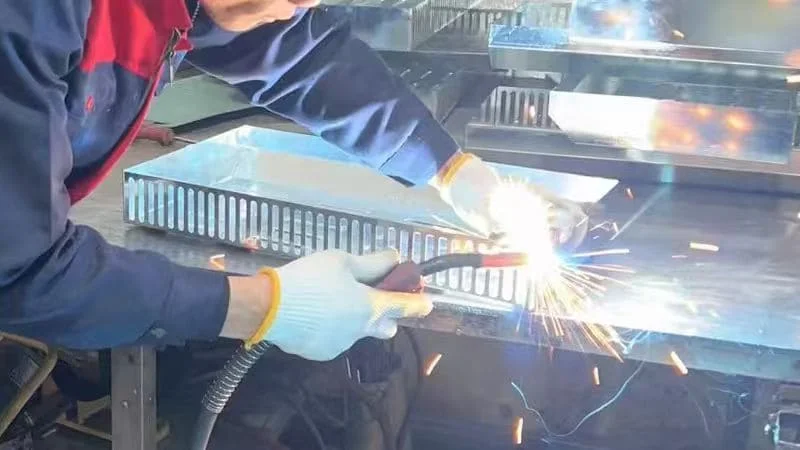
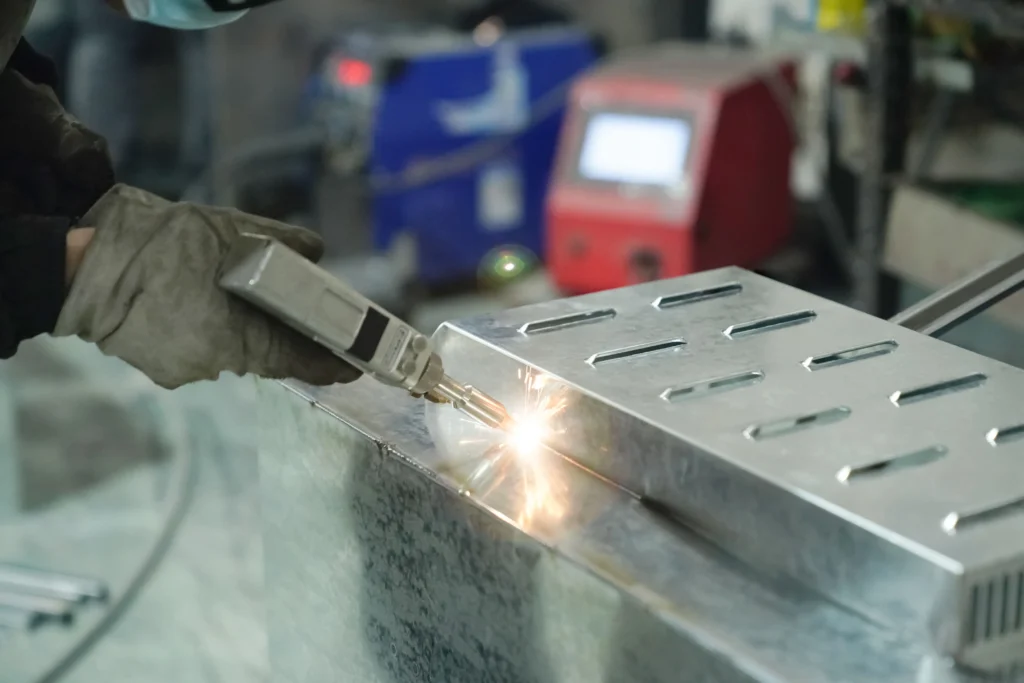
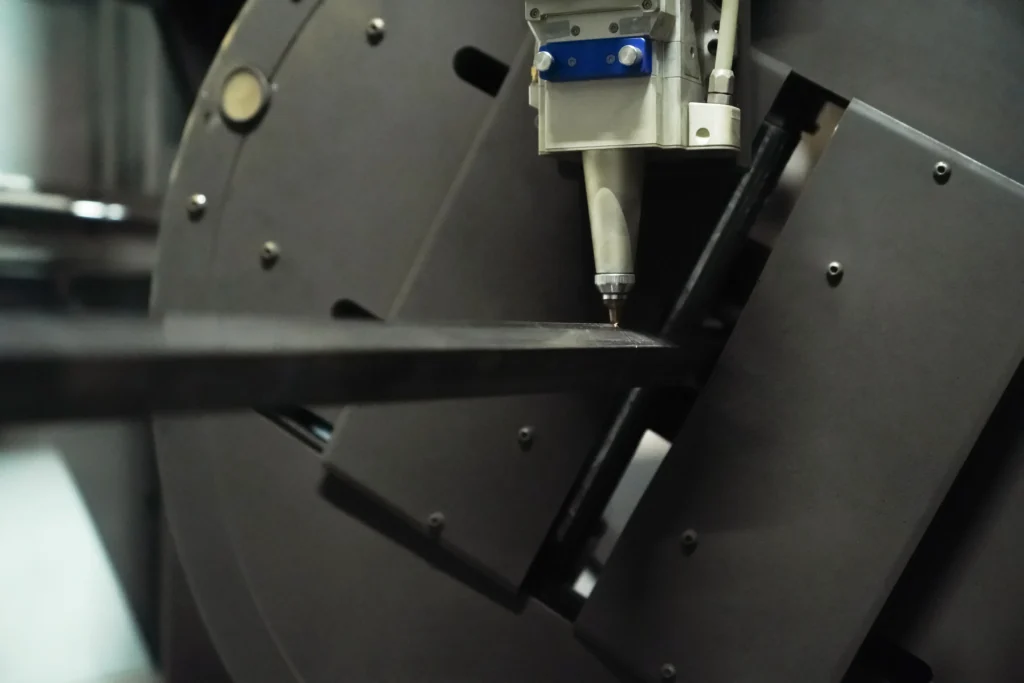
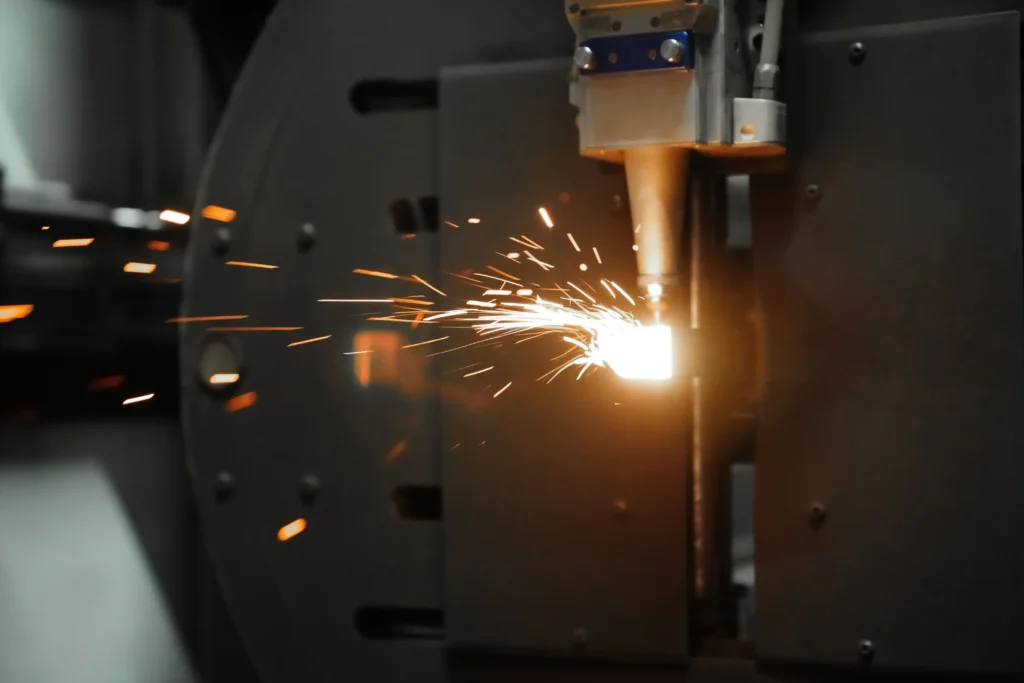
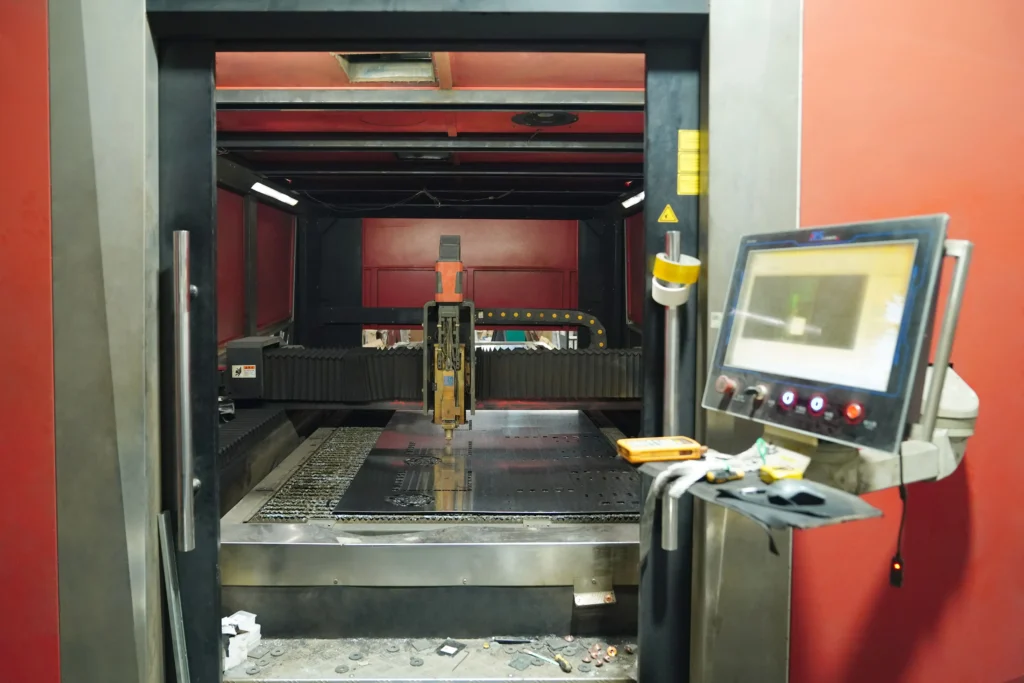
ShiRui’s custom enclosure manufacturing capabilities may include laser cutting, CNC bending, welding, grinding, surface finishing, mechanical assembly, electrical component integration, and final inspection.
A practical workflow looks like this:
- Confirm equipment brand, model, dimensions, weight, heat output, and connector locations.
- Define internal space for airflow, cables, brackets, sensors, sockets, cooling components, and service access.
- Select material according to corrosion risk, weight, strength, environment, and budget.
- Choose sheet thickness according to enclosure size, equipment load, door size, mounting method, and reinforcement design.
- Design the internal layout, including trays, brackets, DIN rails, sockets, fans, air conditioners, heaters, sensors, and cable management.
- Plan doors, removable panels, cable entries, optical windows, ventilation openings, and sealing structures.
- Review manufacturability, including bend locations, welding access, fastener access, surface finishing, and final assembly.
- Confirm drawings, prototype if required, then fabricate, assemble, and inspect.
ShiRui Pro Tip: I recommend confirming the heat path before locking the sheet metal layout. Once the panels, doors, and optical window are fabricated, changing the cooling system becomes much more expensive and less reliable.
What are the key design considerations for sheet metal enclosures?
The most important design considerations are equipment fit, thermal management, environmental protection, material selection, sheet thickness, internal layout, door access, cable entry, mounting structure, surface treatment, and manufacturability. For outdoor projector enclosures, lens alignment, optical glass, cooling airflow, condensation control, and dust protection are especially critical.
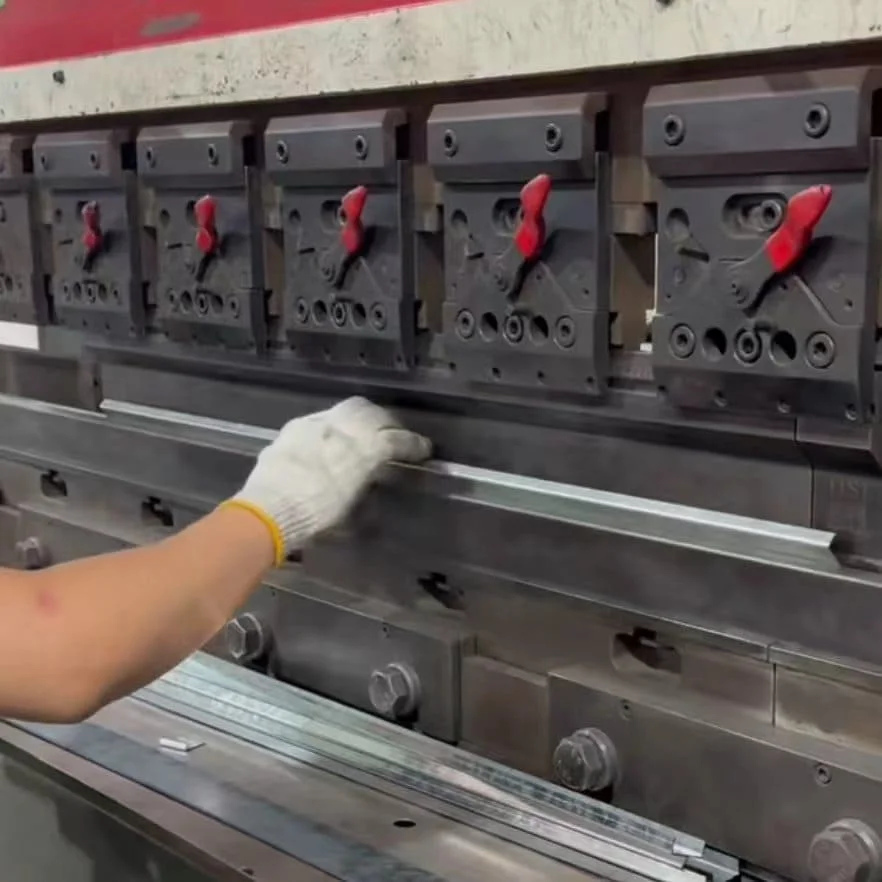
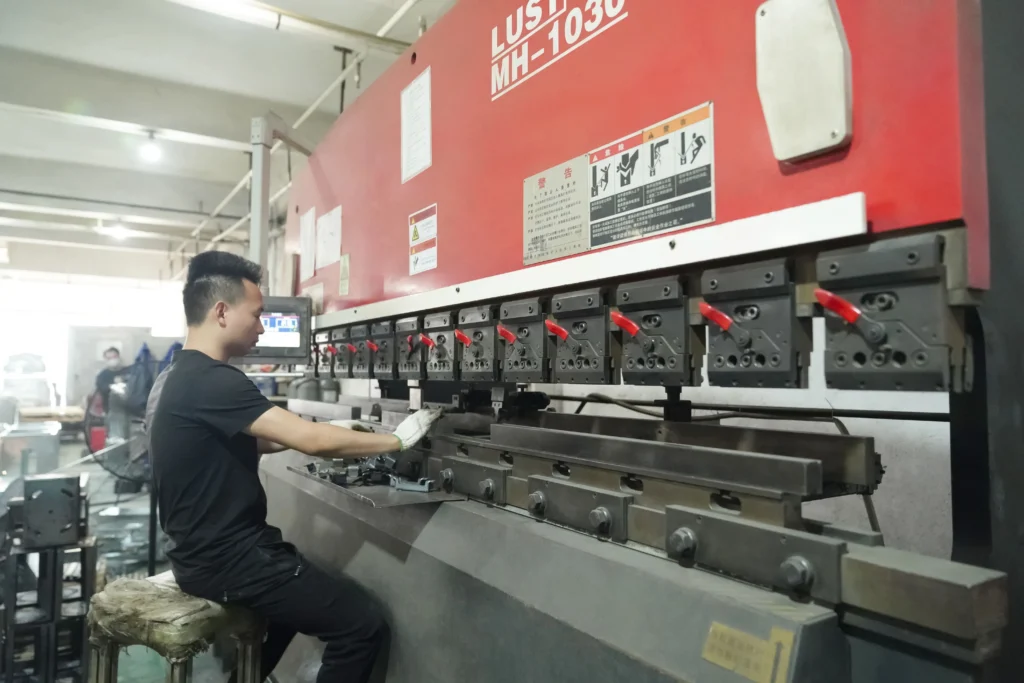
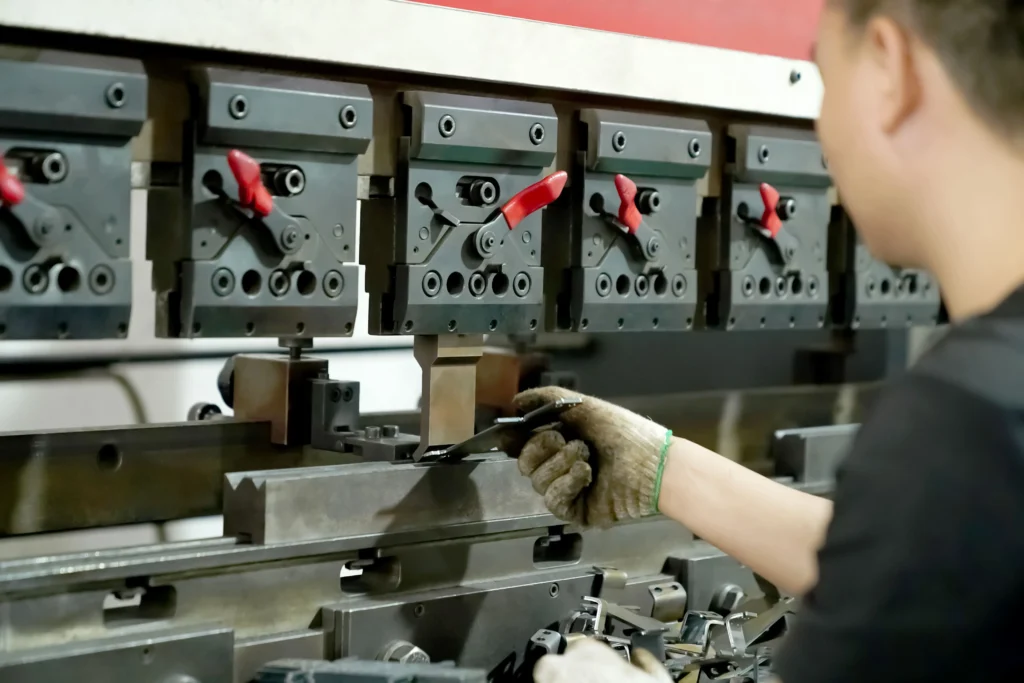
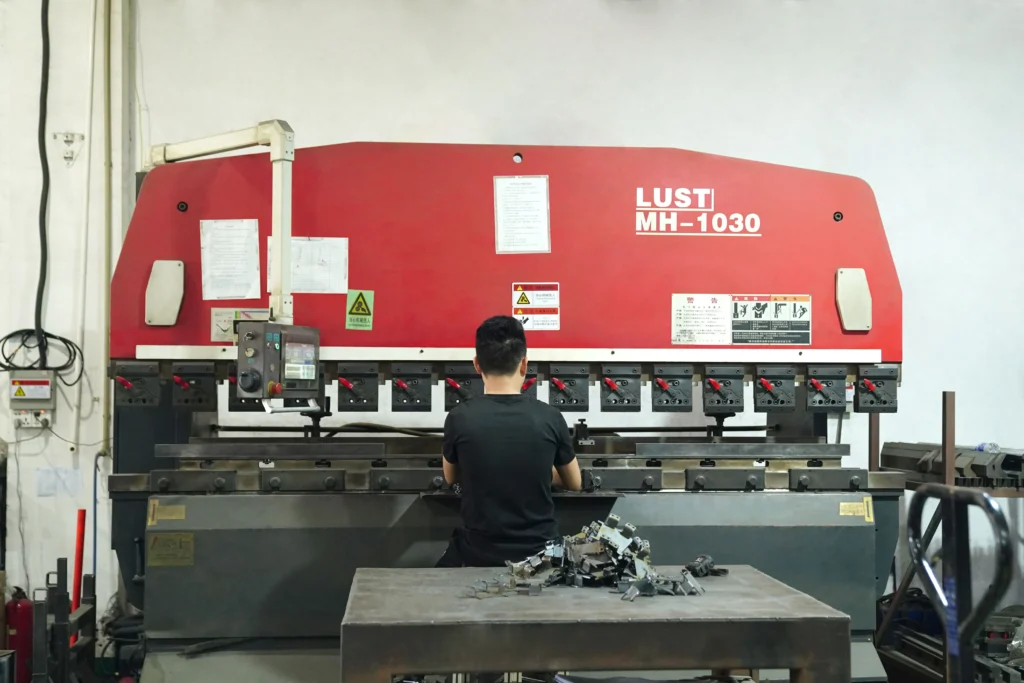
Design Factors That Must Be Reviewed Together
Good custom sheet metal enclosure design connects mechanical, electrical, thermal, environmental, and manufacturing requirements. A strong cabinet that overheats is not successful. A sealed enclosure with poor cable access is difficult to install. A corrosion-resistant material with unprotected welds and cut edges may still fail in harsh environments.
Based on our internal data and market analysis, here is the breakdown:
| Design Area | What to Confirm | Why It Matters |
|---|---|---|
| Equipment dimensions | Body size, connectors, lens position, mounting points | Prevents interference and optical misalignment |
| Heat generation | Power consumption, heat output, operating hours | Determines fan, air conditioner, sealed circulation, heating, or dehumidification needs |
| Environment | Rain, dust, humidity, salt air, insects, UV exposure | Drives material, sealing, coating, and filtration choices |
| Internal layout | Trays, brackets, DIN rails, sockets, sensors, cables | Keeps service work safe and organized |
| Door access | Door quantity, opening direction, removable panels | Allows installation, filter replacement, and component service |
| Cable entries | Power, signal, glands, bending space | Reduces water ingress and connector strain |
| Mounting structure | Wall, ground, pole, ceiling, frame | Supports enclosure and equipment load safely |
| Manufacturing method | Bending, welding, assembly, finishing | Avoids features that are hard to fabricate or protect |
For outdoor projector enclosures, ShiRui designs may also include 95% light transmittance optical ultra-white glass, internal blowing devices to reduce frost or fog on the projection port, F6 medium-efficiency air filters, anti-mosquito protection, temperature and humidity probes, and reserved 10A or 16A multifunctional sockets depending on project requirements.
ShiRui Pro Tip: Do not treat the IP rating as the whole design. Sealing helps against water and dust, but cooling, condensation, maintenance access, and corrosion protection still need their own engineering review.
Which software is best for sheet metal design?
The best software depends on the designer’s workflow, manufacturing supplier, and file requirements. SolidWorks, NX, and other parametric CAD tools are commonly used because they support sheet metal features, bend logic, flat patterns, assemblies, drawings, and design revisions needed for custom enclosure manufacturing.
Video Guide: Take a closer look at our waterproof projector enclosure designed for professional outdoor projection applications. See the enclosure structure and learn how it provides a practical protection solution for projector equipment used in permanent outdoor installations.
CAD Selection for Custom Enclosure Projects
For sheet metal enclosure design, the software should support folded sheet metal modeling, flat pattern development, assembly clearance checks, drawing generation, and revision control. The correct tool is not only the one with the most features; it is the one that lets the customer, designer, and manufacturer communicate clearly.
Useful CAD functions include:
- Sheet metal flange and bend modeling
- Assembly checks for equipment, brackets, doors, fans, air conditioners, and cable glands
- Flat pattern output for manufacturing review
- Hole and cutout layout for connectors, sensors, optical windows, and ventilation
- Drawing annotation for material, thickness, finish, hardware, and assembly details
- Parametric editing when enclosure dimensions or equipment models change
- 3D file exchange with the manufacturer when available
ShiRui can review customer drawings, 3D files, equipment photos, and site photos to evaluate custom enclosure feasibility. Manufacturing tolerances, bend details, and process limits should be confirmed according to the actual material, thickness, drawing, and fabrication method rather than assumed from a universal value.
ShiRui Pro Tip: When sending CAD files, include both the 3D model and 2D drawings if possible. The 3D model helps us understand fit and assembly, while the 2D drawing helps confirm material, thickness, finish, openings, and critical dimensions.
What are common sheet metal design mistakes?
Common mistakes include choosing material only by price, using one thickness for every enclosure, blocking equipment airflow, ignoring cable bending space, adding cooling too late, placing doors poorly, underestimating corrosion protection, overusing welded parts, ignoring mounting loads, and assuming IP65 alone solves heat and humidity problems.
Video Guide: Get a closer look at our outdoor projector enclosure designed for professional outdoor projection systems. This video highlights the enclosure design and shows how it provides a practical housing solution for projector equipment used in permanent outdoor installations.
Problems That Cause Rework or Field Failure
Custom enclosures often fail because the design focuses on the outer box instead of the equipment inside. Outdoor projector enclosure projects are especially sensitive because the projector needs accurate optical alignment, stable temperature, clean airflow, and convenient service access.
Common mistakes include:
- Selecting galvanized steel, aluminum, 201 stainless steel, or 304 stainless steel only by price
- Using the same sheet thickness for every enclosure size or mounting condition
- Leaving insufficient space for service, filter replacement, or equipment removal
- Blocking projector intake or exhaust vents
- Ignoring cable bending radius and connector clearance
- Designing the enclosure first and adding cooling later
- Placing doors where technicians cannot open them at the site
- Leaving welds, cut edges, or fabricated areas without proper surface protection
- Adding too many unnecessary welded parts instead of using practical bends or assembled panels
- Ignoring wall, pole, ceiling, ground, or frame mounting loads
- Designing outdoor openings without reviewing sealing and water paths
- Assuming an IP65 design automatically prevents condensation or overheating
- Sending incomplete drawings to the manufacturer
ShiRui Pro Tip: Before fabrication, I like to ask one simple question: can a technician install, wire, adjust, and remove the equipment without fighting the enclosure? If the answer is no, the layout needs revision.
How to Design a Custom Sheet Metal Enclosure Step by Step
A custom enclosure should be designed through a controlled workflow: define the equipment, confirm internal layout, evaluate the environment, select material and thickness, plan doors and openings, solve cooling and humidity control, confirm mounting, review manufacturability, approve drawings, prototype if needed, then fabricate, assemble, and inspect.
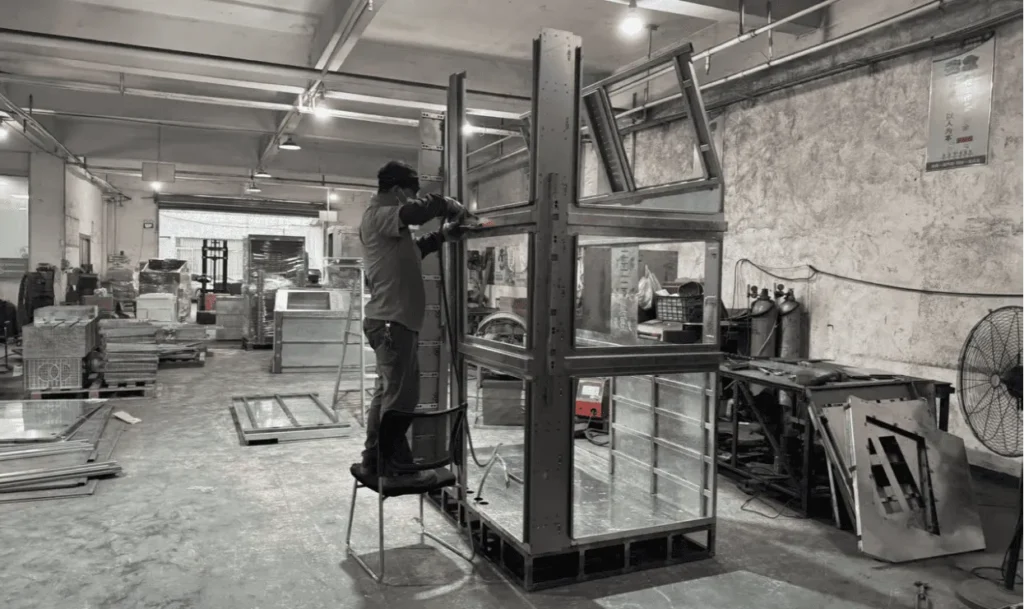
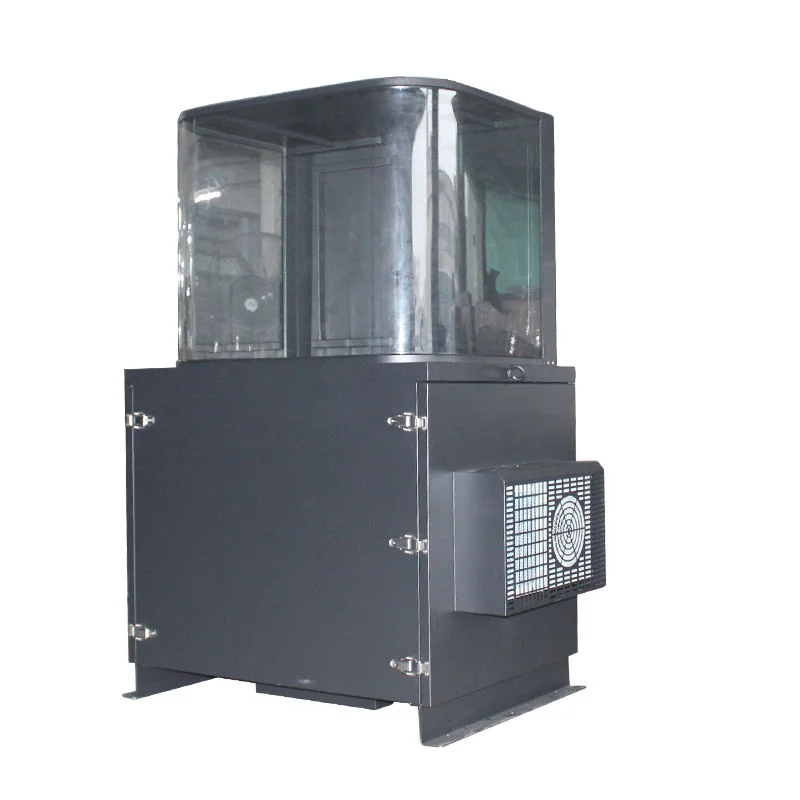
Practical ShiRui Design Workflow
The goal is to move from equipment requirements to a manufacturable enclosure without missing details that affect field performance. Internal space should not be calculated from a universal clearance value. Different equipment requires different airflow space, cable space, mounting structures, thermal components, and maintenance access.
Use this step-by-step workflow:
- Define the equipment and application.
- Confirm dimensions and internal components.
- Evaluate the installation environment.
- Select the material.
- Select sheet metal thickness.
- Design the internal layout.
- Plan doors and service access.
- Design cable entries and openings.
- Evaluate cooling and humidity control.
- Confirm the mounting structure.
- Select surface treatment.
- Review manufacturability.
- Prepare and approve drawings.
- Prototype if required.
- Fabricate, assemble, and inspect.
For outdoor projector enclosures, additional checks should include optical window alignment, projector lens centerline, internal mounting platform stability, single-projector or multi-projector arrangement, projection port anti-fogging, and whether the project requires fresh air, fresh air plus air conditioning, internal circulation air conditioning, heating, dehumidification, or remote monitoring.
ShiRui Pro Tip: I prefer to freeze the internal layout before discussing cosmetic details. Color, logo, and finish are important, but equipment position, airflow, wiring, doors, and mounting determine whether the enclosure will actually work.
Common Custom Enclosure Design Mistakes
The most damaging custom enclosure mistakes happen before fabrication: incomplete equipment data, poor airflow planning, weak service access, unsuitable material, incorrect thickness assumptions, unreviewed outdoor sealing, and incomplete drawings. These issues increase cost, delay production, and may cause overheating, corrosion, leakage, or difficult installation.
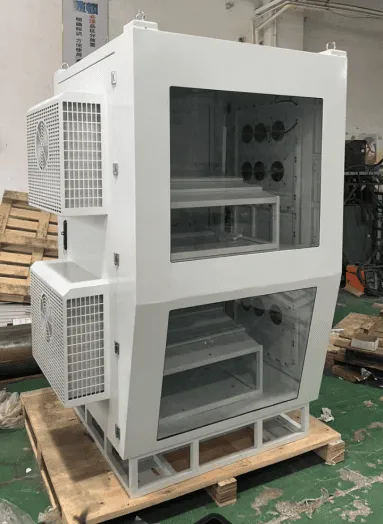
Mistakes to Avoid Before Production
Custom enclosure projects become more reliable when risks are identified during drawing review instead of after the enclosure is built. For outdoor projector enclosures, mistakes may affect both environmental protection and projection quality.
Avoid these errors:
- Selecting material only by price
- Using one sheet thickness for every enclosure
- Leaving insufficient maintenance space
- Blocking equipment intake or exhaust
- Ignoring cable bending space
- Adding cooling after the enclosure is already designed
- Poor door positioning
- Insufficient corrosion protection
- Too many unnecessary welded parts
- Ignoring mounting loads
- Designing openings without considering outdoor sealing
- Assuming IP65 alone solves heat and humidity problems
- Sending incomplete drawings to the manufacturer
In ShiRui projects, material and thickness are selected according to enclosure size, equipment weight, door size, mounting method, corrosion risk, wind exposure, internal load, and reinforcement design. Sheet metal thicknesses from approximately 1.2 mm to 4.0 mm may be used in different projects, but there is no single correct thickness for all outdoor enclosures.
ShiRui Pro Tip: If a drawing shows only the outside dimensions, it is not enough for a serious custom enclosure. We need to see the equipment, cable paths, heat sources, openings, doors, and mounting method before recommending a practical design.
What Information Should You Send to a Sheet Metal Enclosure Manufacturer?
Send the manufacturer complete equipment, environment, installation, and design requirements. The most useful information includes equipment model, dimensions, weight, power, heat output, airflow locations, connector positions, material preference, thickness request, quantity, mounting method, ambient conditions, openings, doors, surface finish, drawings, 3D files, and site photos.
Video Guide: Take a closer look at our outdoor enclosure for projector applications, designed for professional outdoor projection systems. This video highlights the enclosure structure and shows how it provides a practical protection solution for projector equipment used in long-term outdoor installations.
Customer Checklist for Faster Evaluation
A clear request helps ShiRui evaluate the enclosure structure, material, cooling concept, cable entries, surface treatment, and manufacturability more accurately. If some information is not available, it should be marked as unknown rather than guessed.
Send the following when possible:
- Equipment type
- Equipment brand and model
- Equipment dimensions
- Equipment weight
- Power consumption
- Heat output
- Air intake and exhaust positions
- Connector locations
- Required enclosure dimensions, if already known
- Preferred material
- Preferred sheet thickness, if specified
- Required quantity
- Installation method
- Indoor or outdoor use
- Maximum and minimum ambient temperature
- Humidity level
- Coastal or salt-air exposure
- Dust conditions
- Required openings
- Door requirements
- Surface finish
- Color
- Logo requirements
- Drawings
- 3D files, if available
- Equipment photos
- Site photos
For outdoor projector enclosures, also include lens position, projection direction, required optical window size, preferred glass requirement, cooling preference, remote monitoring requirements, and whether the site has high dust, water vapor, freezing risk, or limited maintenance access.
ShiRui Pro Tip: Photos are extremely useful. A drawing tells us dimensions, but equipment and site photos often reveal cable direction, mounting restrictions, ventilation risks, and service limitations that are not obvious from dimensions alone.
Key Features & Comparison
Key enclosure features should be matched to the project rather than selected from a fixed catalog. Material, protection level, cooling method, heating, dehumidification, optical glass, sensors, sockets, filters, remote communication, and surface finish all depend on the equipment, environment, maintenance plan, and customer requirements.
Video Guide: Explore our waterproof projector box for professional outdoor projection projects. Built for long-term outdoor installations, it helps protect projector equipment and supports reliable operation in changing weather conditions.
Material and Feature Comparison
Based on our internal data and market analysis, here is the breakdown:
| Material | Corrosion Resistance | Weight | Structural Strength | Heat Dissipation | Relative Cost | Typical Applications | Main Considerations |
|---|---|---|---|---|---|---|---|
| Galvanized Steel | Good when combined with suitable surface protection | Heavier than aluminum | Good for many cabinet structures | Moderate | Cost-effective | Equipment cabinets, outdoor cabinets, general custom enclosures | Cut edges, welds, coating quality, and environment must be reviewed |
| Aluminum Alloy | Good corrosion resistance in many environments | Lower weight | Suitable for many lightweight enclosure designs | Good | Usually higher than galvanized steel | Outdoor projector enclosures, lightweight housings, applications needing heat dissipation | Strength, joining method, surface finish, and cost should be balanced |
| 201 Stainless Steel | Better corrosion resistance than ordinary carbon steel, but not for severe corrosive exposure | Relatively heavy | Good | Moderate | More economical stainless option | Mild outdoor or indoor stainless enclosure projects | Not the first choice for harsh coastal or highly corrosive environments |
| 304 Stainless Steel | Stronger corrosion resistance for humid or more corrosive conditions | Relatively heavy | Good | Moderate | Higher | Humid, coastal, or demanding outdoor environments | Cost, weight, finishing, and project exposure should be confirmed |
ShiRui outdoor projector enclosure configurations may include fresh-air cooling, fresh air plus air conditioning, internal circulation air conditioning, remote versions with Wi-Fi, Ethernet, or 4G communication, Ali Cloud IoT platform connection, temperature and humidity sensors, road temperature sensing, smoke alarm, flooding alarm, heating, dehumidification, and internal blowing devices for the projection port.
Some thermostat box projects may use F6 medium-efficiency air filters for breathable, dustproof, and anti-mosquito protection. Waterproof certification up to IP65 may be available depending on design and project requirements, but the required protection level should always be confirmed according to the drawing and application.
ShiRui Pro Tip: Do not ask only, “Which material is best?” Ask, “Which material is best for this equipment, this site, this mounting method, this budget, and this maintenance plan?” That question leads to a better enclosure.
Cost & Buying Factors
Custom sheet metal enclosure cost depends on material, thickness, size, structure, quantity, cooling system, doors, seals, optical glass, sensors, electrical integration, surface finish, assembly complexity, and inspection requirements. Accurate pricing requires drawings, equipment data, installation environment, and project-specific manufacturing requirements.
What Influences the Final Price
Custom enclosure pricing should not be estimated only by outer dimensions. Two enclosures with the same size can have very different costs if one includes air conditioning, sensors, optical ultra-white glass, internal circulation, multiple doors, stainless steel construction, complex welding, or special surface treatment.
Based on our internal data and market analysis, here is the breakdown:
| Cost Factor | Impact on Buying Decision | What to Confirm |
|---|---|---|
| Material | Affects corrosion resistance, weight, strength, and cost | Galvanized steel, aluminum alloy, 201 stainless steel, or 304 stainless steel |
| Sheet thickness | Affects rigidity, door stability, load capacity, and fabrication | Select according to size, load, material, and reinforcement |
| Enclosure size | Affects material usage, handling, structure, and shipping | Confirm internal space, not just outside dimensions |
| Cooling system | Can significantly change structure and cost | Natural ventilation, fan, filtered airflow, air conditioner, internal circulation |
| Outdoor protection | Affects seals, cable entries, surface treatment, and testing needs | Rain, dust, humidity, salt air, UV, insects, condensation |
| Electrical integration | Adds wiring, sockets, sensors, controls, and assembly work | 10A/16A sockets, probes, alarms, communication modules |
| Optical requirements | Important for projector enclosures | Lens alignment, projection port, ultra-white glass, anti-fogging |
| Surface finish | Affects durability and appearance | Powder coating, stainless finishing, anti-corrosion treatment, color, logo |
| Quantity | Affects production planning and unit cost structure | Prototype, small batch, or project quantity |
| Drawing completeness | Affects quotation accuracy | 2D drawings, 3D files, photos, site conditions |
ShiRui does not need to force every customer into one standard enclosure. Instead, the design and quotation should reflect the actual equipment, site, and function requirements. Lead time, tolerances, IP testing, structural load ratings, warranty terms, and certifications should be confirmed according to the specific drawing and project agreement.
ShiRui Pro Tip: The cheapest enclosure is not always the lowest-cost solution. If poor cooling, weak corrosion protection, or bad maintenance access causes field rework, the project cost quickly becomes much higher than the original enclosure price.
Conclusion
A reliable custom sheet metal enclosure is the result of coordinated mechanical, thermal, electrical, environmental, and manufacturing decisions. For outdoor projector enclosures, the design must protect the projector, preserve optical performance, manage heat and humidity, resist outdoor exposure, support installation loads, and remain serviceable throughout use.
Moving from Requirement to Manufacturable Design
The best custom enclosure projects begin with complete equipment and site information. Material, thickness, doors, cooling, cable entries, optical windows, mounting brackets, surface treatment, and manufacturing details should be reviewed as one system.
Before production, confirm:
- Overall dimensions and internal layout
- Equipment position and mounting structure
- Door quantity, opening direction, and service access
- Cable entries, connectors, glands, and openings
- Cooling, heating, dehumidification, and filtration method
- Material, sheet thickness, reinforcement, and surface treatment
- Optical window alignment for projector applications
- Outdoor sealing, corrosion protection, and maintenance requirements
- Drawings, 3D files, prototype needs, and inspection requirements
ShiRui designs and manufactures custom sheet metal enclosures, outdoor projector enclosures, outdoor network cabinets, climate-controlled equipment cabinets, and other project-specific metal housings. To start a custom enclosure evaluation, send your equipment dimensions, drawings, material requirements, installation environment, cooling needs, and quantity for engineering review.
ShiRui Pro Tip: The earlier we receive real equipment data, photos, drawings, and site conditions, the better we can help optimize the enclosure before fabrication instead of solving avoidable problems after production.