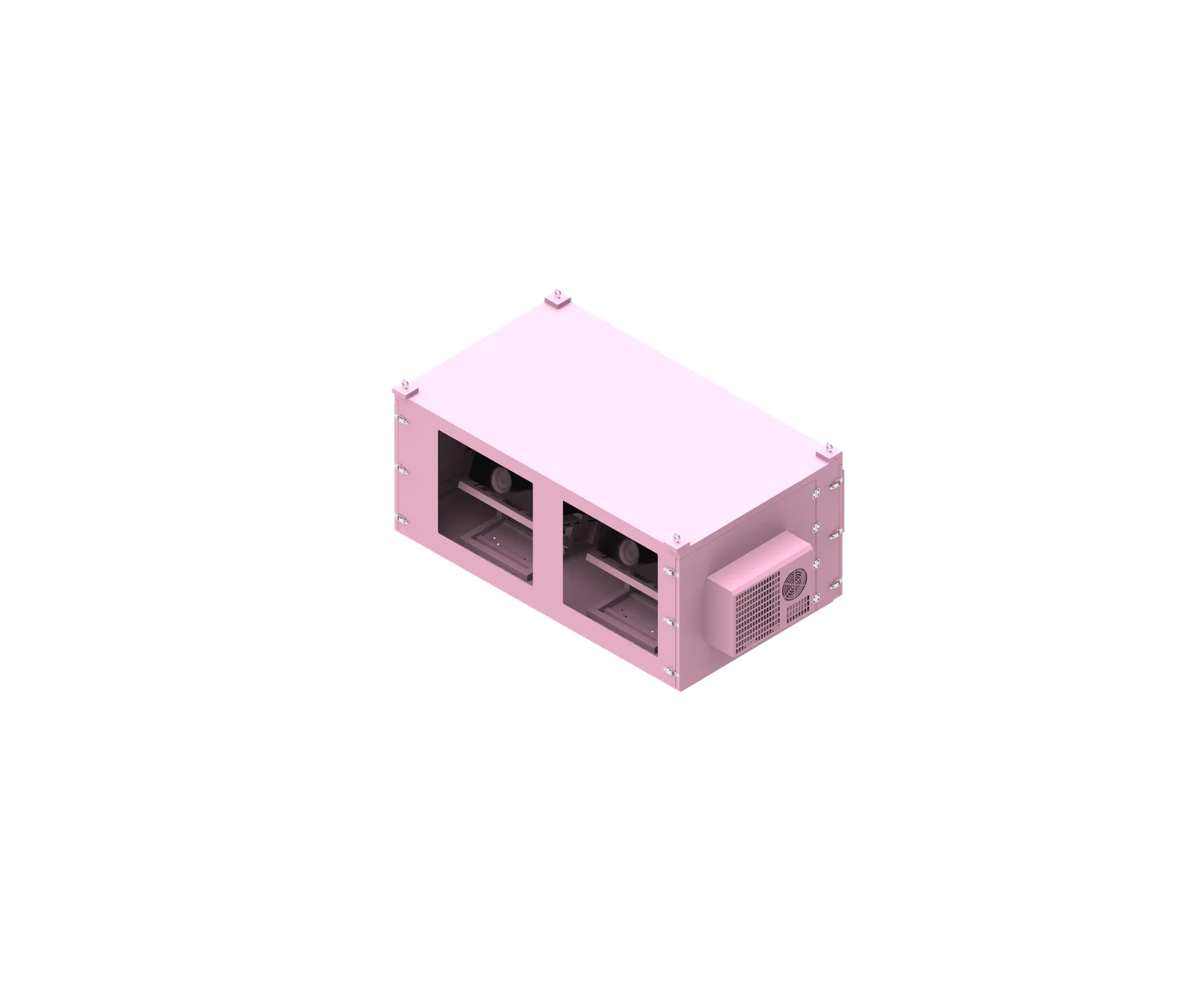
Outdoor projector enclosure compatibility depends on engineering details, not brand names alone. Panasonic, Epson, Christie, and Barco projectors may look similar in purpose, but their dimensions, lens geometry, airflow paths, heat output, mounting interfaces, and service requirements can differ significantly. For reliable outdoor operation, the enclosure should be verified against the exact projector model, datasheet, and installation environment.
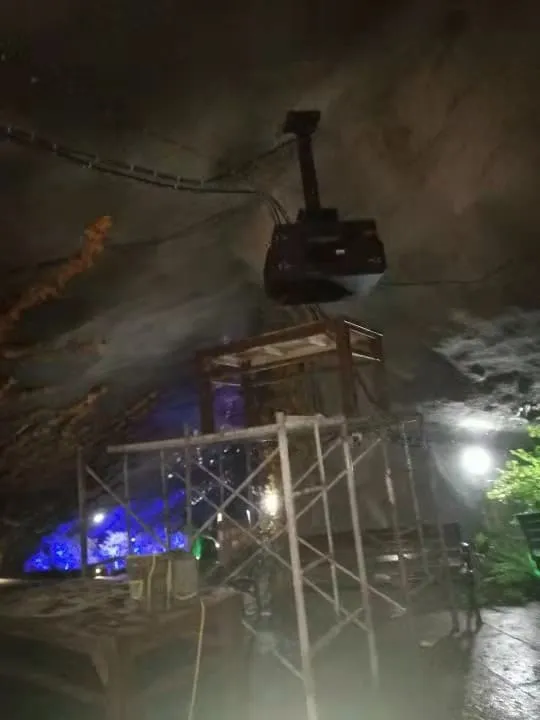
Understanding Cross-Brand Outdoor Enclosure Compatibility
Panasonic, Epson, Christie, and Barco projectors should not be assumed to fit the same outdoor enclosure. A shared enclosure is only practical when the models have compatible size, lens position, airflow direction, heat load, mounting points, cable access, and maintenance clearance. Professional projects usually require model-specific enclosure design.
Compatibility Depends on Engineering Parameters
A projector enclosure is not just a weatherproof box. It must protect the projector while preserving optical alignment, thermal balance, airflow, cable routing, and maintenance access. Even within the same brand, two projector models may require different internal brackets, optical window positions, filter locations, and cooling capacity.
For Panasonic, Epson, Christie, and Barco projectors, outdoor projector enclosure compatibility should be checked model by model.
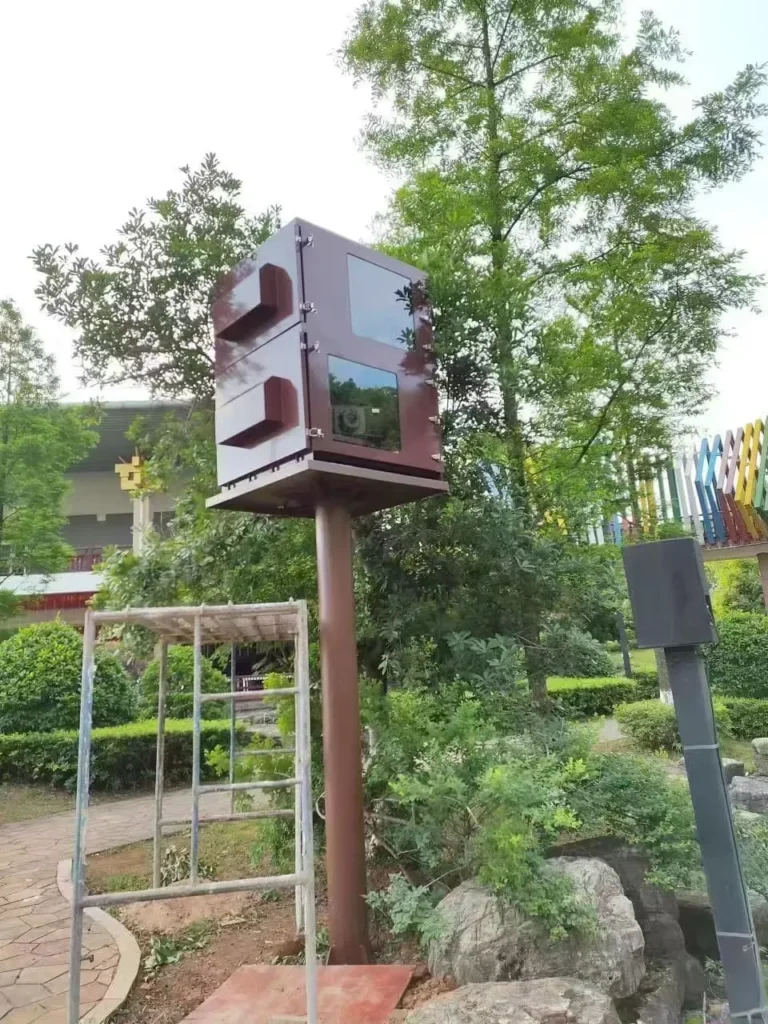
Based on our internal data and market analysis, here is the breakdown:
| Compatibility Factor | Why It Matters | Risk If Ignored |
|---|---|---|
| External dimensions | Determines enclosure size and internal clearance | Projector may not fit or may overheat |
| Lens center position | Determines optical window alignment | Image distortion, clipping, or blocked projection |
| Air intake and exhaust layout | Controls cooling efficiency and ventilation | Heat buildup and reduced projector life |
| Power consumption | Indicates thermal load and cooling demand | Undersized cooling system |
| Mounting points | Affects bracket design and stability | Unsafe or misaligned installation |
| Cable and service access | Supports maintenance and wiring | Difficult repair or blocked connectors |
ShiRui Pro Tip: I always confirm the exact projector model before enclosure design. Brand information alone is never enough, because lens position and airflow layout can change completely from one model series to another.
How Shared Outdoor Projector Enclosures Work
A shared outdoor projector enclosure works only when it provides correct physical fit, optical alignment, weather protection, ventilation, temperature control, cable access, and service clearance for each projector model. If one projector has different airflow, lens position, or heat output, the enclosure may need structural or cooling modifications.
Functional Design Requirements
An outdoor enclosure must create a controlled operating environment around the projector. The design must block rain, dust, insects, direct sunlight, and unauthorized access while allowing the projector to breathe and project clearly through a properly positioned optical window.
A compatible enclosure design normally follows these steps:
- Confirm the projector brand and exact model number.
- Check projector dimensions, weight, and center of gravity.
- Measure the lens center position and projection direction.
- Identify all air intake and exhaust locations.
- Calculate power consumption and expected heat transfer requirements.
- Confirm ceiling, floor, wall, or truss mounting method.
- Design the optical window, bracket, cable entry, and maintenance doors.
- Select forced-air cooling or industrial air-conditioning based on heat load and operating conditions.
For lower-heat-load installations, intelligent forced-air cooling may be enough. For high-brightness projectors, hot climates, enclosed spaces, or 24/7 operation, an industrial air-conditioning temperature-control system is generally more reliable.
ShiRui Pro Tip: I do not place air filters, brackets, cables, or enclosure walls near projector vents unless the clearance has been checked carefully. Blocked airflow is one of the fastest ways to damage an outdoor projector.
Which projector is better, Christie or Barco?
Christie and Barco both produce professional-grade projectors, so the better choice depends on brightness needs, color performance, installation type, lens options, service support, and budget. For outdoor enclosure design, neither brand is automatically easier; the exact model’s airflow, heat load, and lens position matter most.
Christie vs Barco in Outdoor Installations
Christie and Barco are widely used in large venues, projection mapping, events, museums, simulation, and high-brightness commercial environments. Both brands offer powerful projector platforms, but enclosure compatibility depends less on the logo and more on the specific projector architecture.
Based on our internal data and market analysis, here is the breakdown:
| Comparison Item | Christie | Barco |
|---|---|---|
| Common use cases | Events, mapping, large venues, cinema, staging | Mapping, simulation, events, control rooms, large venues |
| Brightness range | Strong professional high-brightness options | Strong professional high-brightness options |
| Lens flexibility | Model-dependent, often extensive | Model-dependent, often extensive |
| Outdoor enclosure concern | Heat load, airflow path, lens alignment | Heat load, airflow path, lens alignment |
| Service access | Must be checked by model | Must be checked by model |
| Best choice | Depends on project requirements | Depends on project requirements |
For a temporary event, the priority may be brightness, quick installation, and rental availability. For a permanent outdoor installation, the priority shifts to thermal stability, long-term maintenance, weatherproofing, and service access.
ShiRui Pro Tip: I recommend choosing Christie or Barco based on the projection requirement first, then designing the enclosure around that exact model. Selecting the enclosure before confirming the projector can create costly redesign work later.
Which Epson projector is best for watching outdoor movies?
For outdoor movies, the best Epson projector is usually one with sufficient brightness, suitable resolution, reliable color performance, and a throw ratio that matches the screen size and viewing distance. For enclosure use, the selected Epson model must also have manageable heat output and clearly understood ventilation requirements.
Epson Selection Criteria for Outdoor Cinema
Outdoor movie projection is different from indoor home theater use. Ambient light, screen size, throw distance, humidity, wind, dust, and nighttime temperature changes all affect performance. A projector that looks excellent indoors may need more brightness and better environmental protection outdoors.
When selecting an Epson projector for outdoor movies, consider:
- Brightness suitable for the screen size and ambient light level.
- Resolution appropriate for the content, such as Full HD or 4K enhancement.
- Lens shift and zoom flexibility for easier installation.
- Throw distance compatibility with the outdoor screen.
- Noise level if the audience sits near the projector.
- Heat output and ventilation direction for enclosure design.
- Maintenance access for filters, lamp modules, or laser system service.
- Weather protection through a properly designed outdoor enclosure.
For occasional backyard movie nights, a portable setup may be enough. For permanent outdoor cinema, theme parks, restaurants, hotels, or public spaces, the projector should be protected by a purpose-built enclosure with verified cooling and airflow.
ShiRui Pro Tip: I avoid choosing an outdoor movie projector based only on brightness. Lens placement, throw distance, and enclosure cooling are just as important if the installation needs to work reliably night after night.
What projectors are good for outdoor use?
Good outdoor projectors are bright, stable, serviceable, and compatible with proper environmental protection. Laser projectors are often preferred for professional outdoor installations because they offer long life and consistent performance, but any projector used outdoors still needs correct enclosure design, ventilation, temperature control, and weather protection.
Outdoor Projector Suitability Checklist
Outdoor use places extra stress on a projector. Heat, rain, dust, humidity, insects, UV exposure, and temperature swings can shorten projector life if the system is not engineered correctly. The projector and enclosure should be selected as one integrated solution.
Good outdoor projector candidates usually have:
- Adequate brightness for the screen size and ambient light.
- Stable laser projector or high-quality lamp light source.
- Flexible lens options for accurate image placement.
- Clear manufacturer ventilation requirements.
- Service access for filters, lenses, and electronics.
- Suitable mounting options for the installation structure.
- Manageable power consumption and thermal load.
- Compatibility with forced-air or air-conditioned enclosure cooling.
Based on our internal data and market analysis, here is the breakdown:
| Outdoor Use Scenario | Recommended Projector Type | Enclosure Consideration |
|---|---|---|
| Backyard movie night | Portable or mid-brightness projector | Temporary weather protection may be enough |
| Restaurant patio | Laser projector with moderate brightness | Quiet cooling and secure enclosure |
| Hotel courtyard | Commercial laser projector | Weatherproof enclosure with service access |
| Projection mapping | High-brightness professional projector | Custom optical window and high-capacity cooling |
| 24/7 outdoor display | Industrial-grade laser projector | Air-conditioned enclosure recommended |
ShiRui Pro Tip: I treat outdoor projection as a complete system: projector, enclosure, screen, power, signal, mounting, and cooling. If one part is underspecified, the whole installation becomes unreliable.
Key Features & Comparison
The most important features of an outdoor projector enclosure are weather resistance, thermal control, correct optical alignment, secure mounting, unobstructed ventilation, cable protection, and service access. For Panasonic, Epson, Christie, and Barco projectors, these features must be adapted to the exact model rather than standardized by brand.
Cross-Brand Enclosure Design Comparison
Based on our internal data and market analysis, here is the breakdown:
| Comparison Item | Panasonic | Epson | Christie | Barco |
|---|---|---|---|---|
| Body size | Model-dependent | Model-dependent | Model-dependent | Model-dependent |
| Lens position | Different by model | Different by model | Different by model | Different by model |
| Airflow design | Model-specific | Model-specific | Model-specific | Model-specific |
| Mounting points | Model-specific | Model-specific | Model-specific | Model-specific |
| Heat load | Depends on projector | Depends on projector | Depends on projector | Depends on projector |
| Cooling method | Forced air or AC, based on heat load | Forced air or AC, based on heat load | Often requires higher-capacity cooling | Often requires higher-capacity cooling |
| Optical window | Must match lens location | Must match lens location | Must match lens location | Must match lens location |
| Maintenance access | Must verify model | Must verify model | Must verify model | Must verify model |
| Same enclosure suitability | Must verify model | Must verify model | Must verify model | Must verify model |
A universal enclosure may work only when all major design parameters are close enough. If the projector dimensions, airflow, thermal load, lens position, or mounting points differ significantly, the enclosure structure, internal bracket, optical window, or cooling system should be redesigned.
For stacked projector installations, the enclosure must be recalculated according to the number of projectors and total thermal load. Simply enlarging the enclosure is not enough; airflow separation, heat extraction, service doors, and mounting strength must also be reviewed.
ShiRui Pro Tip: I consider the optical window and cooling system the two most critical customization points. If either one is wrong, the enclosure may look correct from the outside but fail in real operation.
Cost & Buying Factors
The cost of an outdoor projector enclosure depends on projector size, cooling method, enclosure material, weatherproof rating, optical window design, mounting structure, control system, and customization level. High-brightness or 24/7 outdoor projectors usually require more advanced thermal control, which increases the enclosure budget.
Pricing Factors That Affect Enclosure Selection
Outdoor enclosure pricing should be evaluated by total installation risk, not just the metal box cost. A cheaper enclosure that blocks airflow or lacks proper temperature control can lead to projector shutdown, image failure, or expensive equipment damage.
Based on our internal data and market analysis, here is the breakdown:
| Buying Factor | Lower-Cost Option | Higher-Spec Option | When It Matters Most |
|---|---|---|---|
| Cooling system | Intelligent forced-air cooling | Industrial air-conditioning | Hot climates, high brightness, 24/7 use |
| Enclosure material | Standard coated metal | Stainless steel or enhanced anti-corrosion finish | Coastal, humid, or industrial areas |
| Optical window | Standard glass or acrylic | High-transmission optical glass | High-brightness or precision projection |
| Custom bracket | Basic internal support | Model-specific adjustable bracket | Heavy or lens-sensitive projectors |
| Environmental protection | Basic weather shielding | Sealed, filtered, temperature-controlled design | Permanent outdoor installations |
| Monitoring system | Manual inspection | Temperature, humidity, and fan/AC monitoring | Remote or mission-critical sites |
Before buying, confirm these details with the enclosure manufacturer:
- Exact projector model and datasheet.
- Required airflow clearance from the projector manufacturer.
- Projector power consumption and operating temperature range.
- Lens position and required projection angle.
- Mounting method and structural load.
- Cable entry, signal connection, and maintenance access.
- Local climate, including maximum temperature, rain, dust, salt, and humidity.
ShiRui Pro Tip: I suggest budgeting for the correct cooling system from the beginning. Retrofitting air-conditioning or redesigning airflow after installation is usually more expensive than designing it properly the first time.
Conclusion
A single outdoor enclosure can sometimes serve different projector models, but only when the physical, optical, thermal, mounting, and service requirements are sufficiently similar. For Panasonic, Epson, Christie, and Barco projectors, the safest professional approach is to design the enclosure around the exact model and operating environment.
Final Recommendation for Professional Installations
A universal enclosure should never be selected only because several projectors belong to well-known professional brands. Panasonic, Epson, Christie, and Barco all offer many projector series, and each model can have different dimensions, lens centers, ventilation paths, power ratings, and maintenance layouts.
The five key parameters to verify are:
- Projector external dimensions and weight.
- Lens center position and projection direction.
- Air intake and exhaust layout.
- Power consumption and thermal load.
- Mounting points, cable connections, and maintenance clearance.
If any of these parameters differ significantly, the enclosure structure, internal bracket, optical window, or cooling system may need to be customized. ShiRui can support outdoor projector enclosure design by reviewing the projector model, installation site, cooling requirement, and maintenance plan before production.
ShiRui Pro Tip: I recommend sending the projector model number, datasheet, installation photos, and operating environment details before enclosure design begins. With that information, we can confirm whether a shared enclosure is realistic or whether a custom model-specific solution is safer.