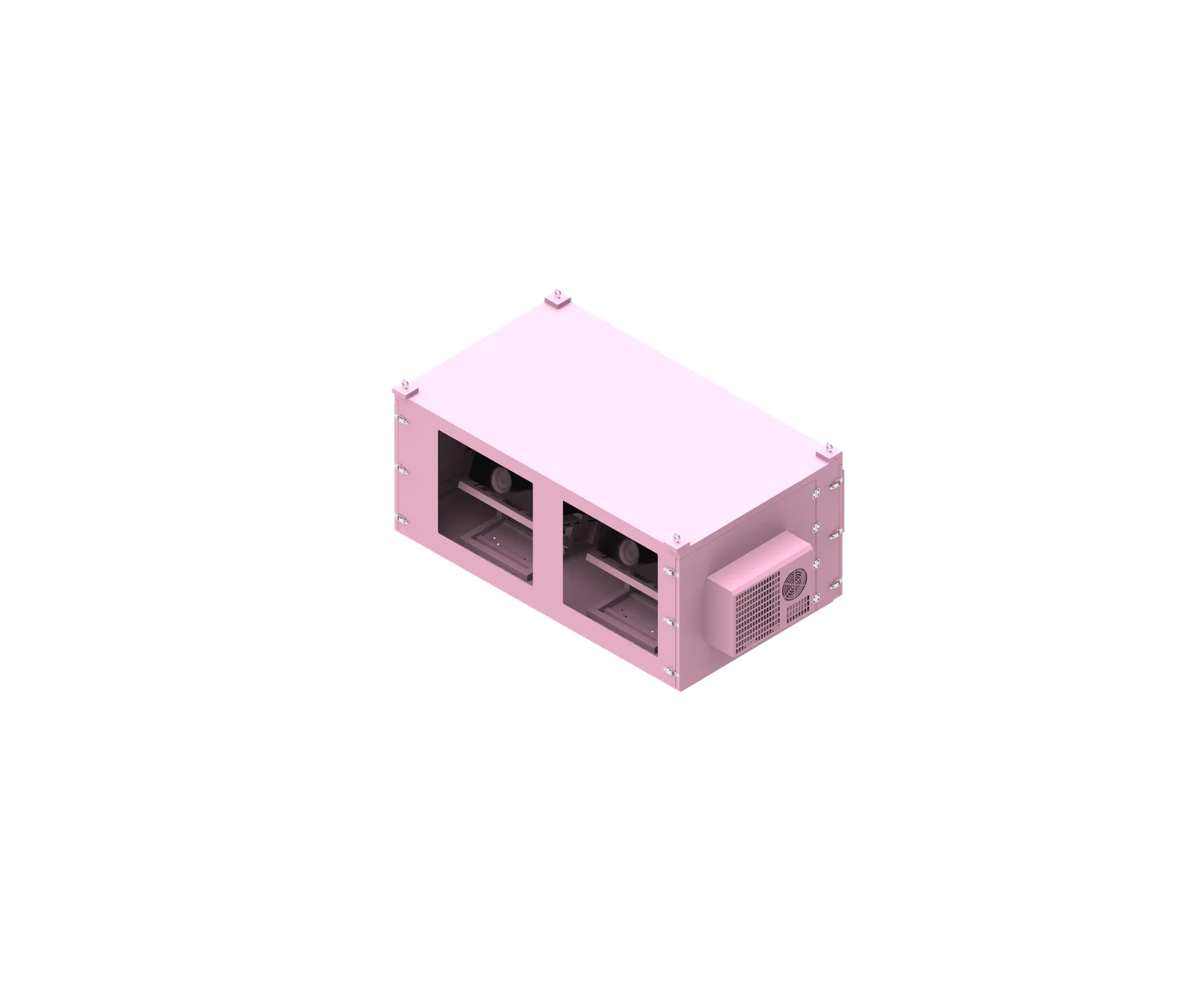
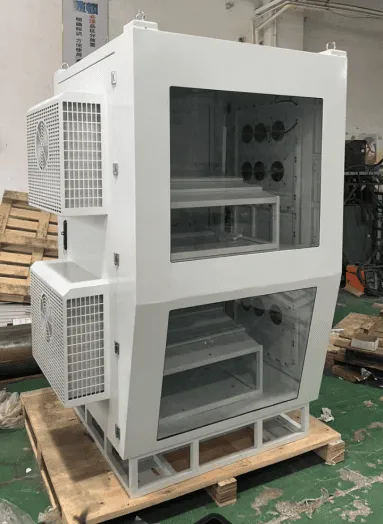
A stacked projector enclosure for high-brightness outdoor projection is a weather-protected, climate-managed cabinet that houses two or more projectors in an upper-and-lower arrangement. In vertical projector stacking, the projectors may overlay the same image for brightness stacking, provide redundancy, or serve separate projection zones. The enclosure must be engineered around structure, airflow, optics, power, outdoor protection, and maintenance access—not simply made taller.
What is stacked projector enclosure?
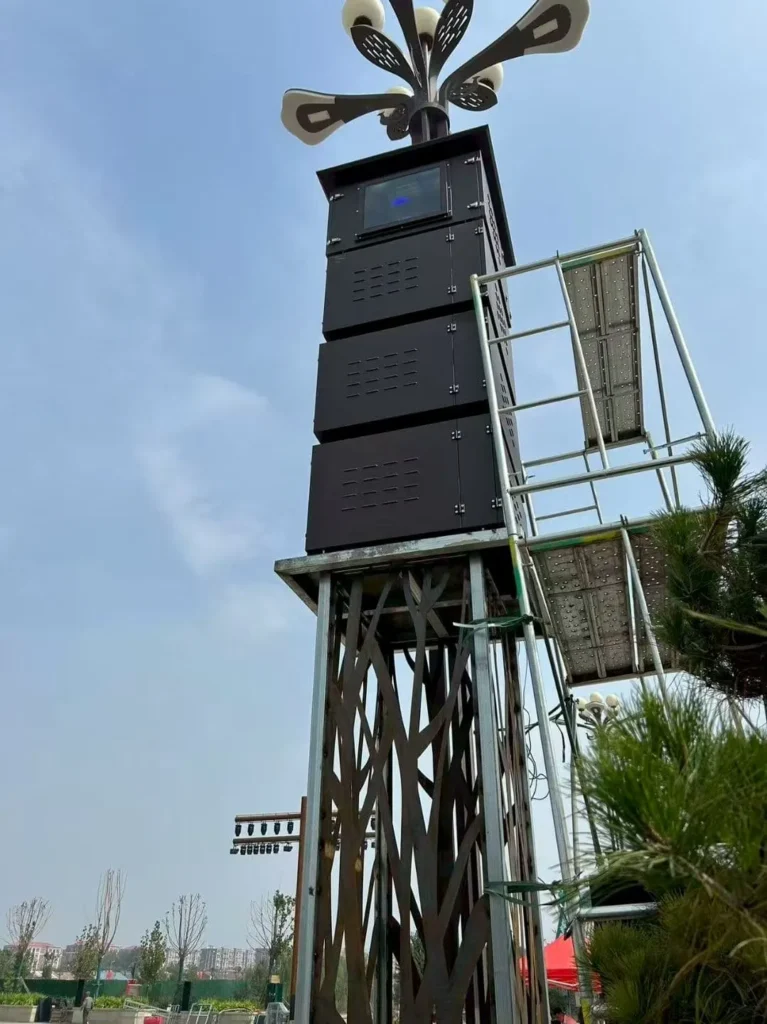
A stacked projector enclosure is an outdoor projector enclosure designed to hold multiple projectors in a controlled, protected cabinet. In a vertically stacked projector enclosure, the projectors are arranged upper-and-lower, with separate mounting, alignment, cooling, cable routing, and service access for each projector. It is commonly used in projection mapping and scenic night-tour projects.
Definition and Core Use
A vertically stacked projector enclosure is not the same as a portrait projector installation. Vertical stacking describes the physical upper-and-lower arrangement of multiple projectors. Portrait orientation describes how a projector is rotated for image format or projection geometry, and it must be approved by the projector manufacturer.
In high-brightness outdoor projects, a vertical stacked projector enclosure is selected when designers need more projection capability but cannot increase cabinet width. This is common on rooftops, narrow columns, viewing platforms, bridge structures, waterfront scenic areas, and projection-mapping equipment bases.
Typical reasons include:
- Overlaying compatible projected images on the same area for brightness stacking.
- Providing projector redundancy for critical installations.
- Serving different projection zones from one compact horizontal location.
- Reducing horizontal cabinet footprint where side-by-side installation is not practical.
- Keeping two lens centers close together horizontally for alignment-sensitive mapping.
A general outdoor projector enclosure protects against rain, dust, sun exposure, and unauthorized access. A stacked projector enclosure adds a second layer of complexity because the combined thermal load, optical paths, structural load, and maintenance requirements must be reviewed together.
ShiRui Pro Tip: I always confirm whether the client means physical vertical stacking, portrait orientation, brightness stacking, or edge blending before enclosure design starts. These terms affect the mechanical layout, window position, airflow path, and control strategy.
How Does stacked projector enclosure Work?
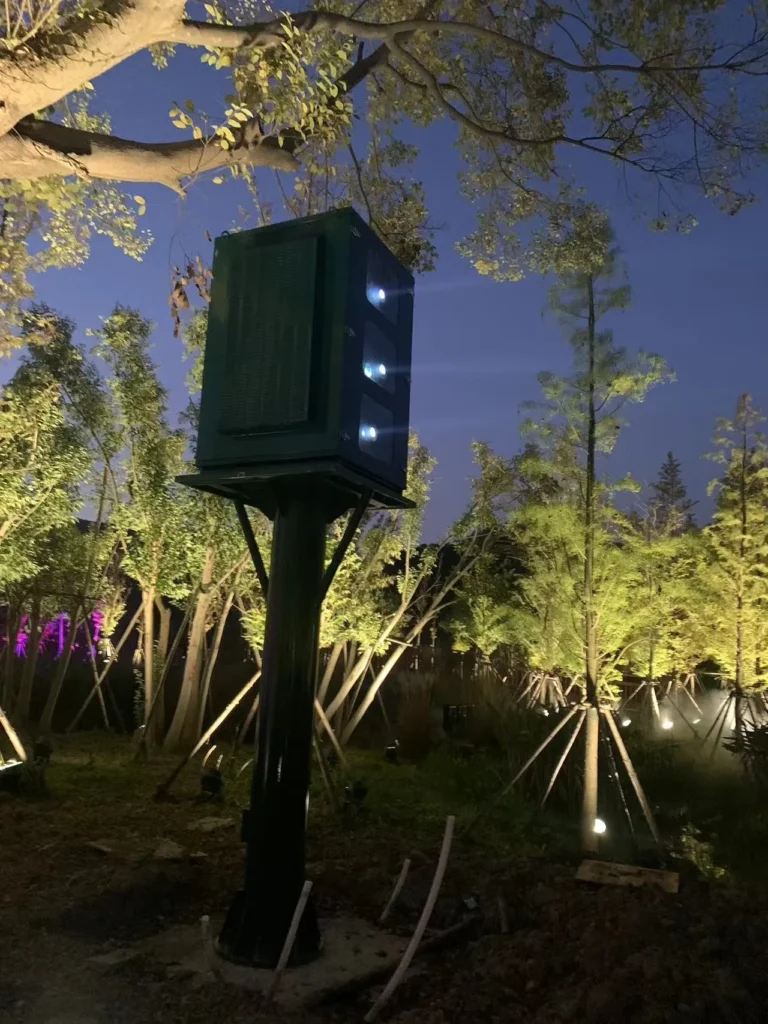
A stacked projector enclosure works by supporting each projector on engineered trays or frames while maintaining correct airflow, temperature control, optical alignment, and outdoor protection. The enclosure must keep the lower projector’s heat from affecting the upper projector, align separate lens paths, distribute power safely, and allow maintenance without disturbing calibration.
Engineering Working Principle
A dual stacked projector enclosure usually includes a reinforced cabinet body, internal projector trays, optical windows, cooling or air-conditioning components, electrical distribution, control interfaces, sensors, filters, gaskets, and access doors.
The enclosure design starts with the exact projector model and lens—not just lumen rating. Manufacturer manuals should be treated as the primary technical source for approved orientation, clearance, intake position, exhaust position, stacking frames, rigging points, weight, and service access.
A practical design workflow includes:
- Confirm projector brand, exact model, lens model, and quantity.
- Check manufacturer-approved installation orientation and stacking or rigging requirements.
- Define whether the project uses brightness stacking, redundancy, or separate projection zones.
- Map each projector’s native intake and exhaust direction.
- Design upper and lower mounting trays with adjustment access.
- Separate hot exhaust from cool intake paths.
- Position optical windows to avoid beam clipping and reflection.
- Review power, control, alarm, grounding, and surge protection requirements.
- Confirm service doors, filter access, lens cleaning access, and projector removal path.
- Approve final drawings before production.
Vertical stacking reduces cabinet width, but it increases height, center-of-gravity elevation, wind-load sensitivity, and maintenance complexity. The lower projector may also create heat that rises toward the upper projector, so airflow separation is one of the most important engineering tasks.
ShiRui Pro Tip: I do not design the airflow path from cabinet size alone. I first mark the projector’s intake and exhaust vents on the layout drawing, then build the enclosure airflow around the projector—not the other way around.
Which projector has the highest lumens?
The highest-lumen projector depends on the current professional projector market and the exact model generation, so enclosure design should not rely on a generic “highest lumens” claim. For stacked projector enclosure projects, the more important inputs are exact projector power consumption, heat dissipation data, lens configuration, installation orientation, and manufacturer-approved operating conditions.
Lumens Are Not Enough for Enclosure Design
High-brightness outdoor projection often uses 15,000-lumen, 25,000-lumen, 30,000-lumen, 40,000-lumen, or higher professional projectors. However, a high-brightness projection enclosure cannot be designed accurately from lumen output alone.
Two projectors with similar lumen ratings may have different:
- Electrical power consumption.
- Heat dissipation characteristics.
- Intake and exhaust locations.
- Lens-center positions.
- Filter locations.
- Service clearance requirements.
- Approved mounting orientations.
- Lens options and throw ratios.
For brightness stacking, two 15,000-lumen projectors should not automatically be marketed as producing a guaranteed 30,000-lumen image. Actual on-screen output can be affected by calibration, image overlap, color matching, lens efficiency, optical glass transmission, geometry correction, projection surface, projector operating mode, and measurement method.
Based on our internal data and market analysis, here is the breakdown:
| Design Input | Why It Matters More Than Lumens Alone | Enclosure Impact |
|---|---|---|
| Power consumption | Indicates electrical and thermal load | Cooling, wiring, protection devices |
| Heat dissipation data | Supports cooling architecture review | Fan cooling or air-conditioned design |
| Intake and exhaust direction | Prevents hot-air recirculation | Ducts, baffles, chamber layout |
| Lens model | Determines beam path and window position | Optical glass size and placement |
| Installation orientation | Confirms safe projector operation | Tray, frame, and cabinet geometry |
| Service direction | Affects routine maintenance | Door position and clearance |
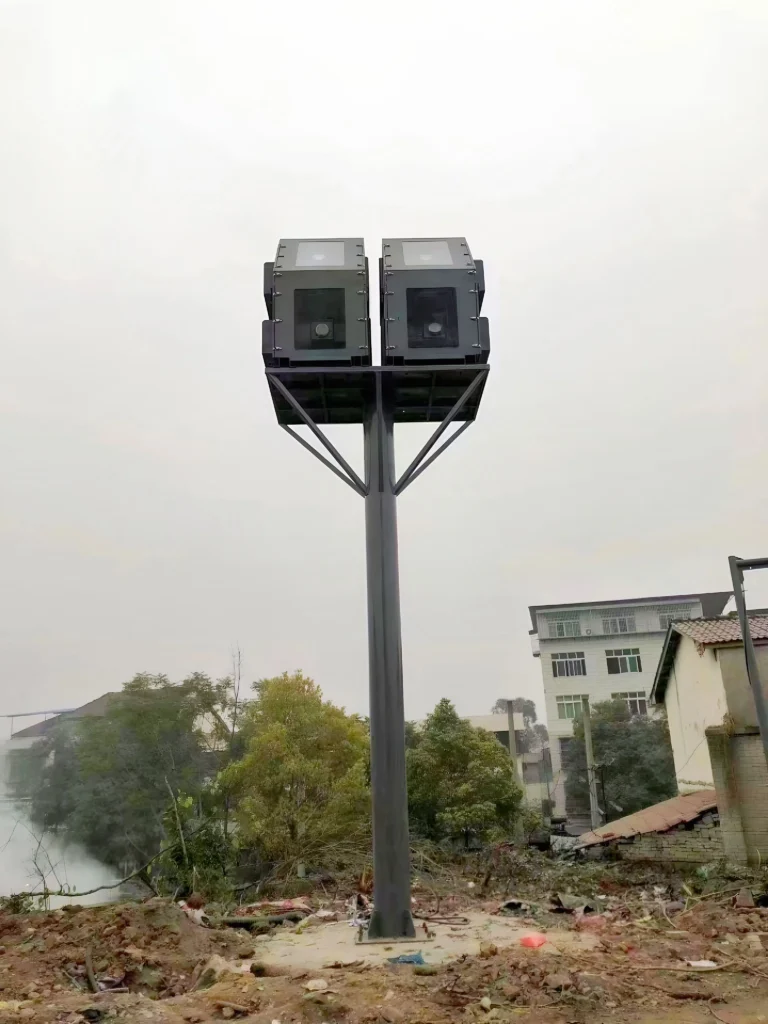
ShiRui project references include configurations involving 6K projectors, Christie 14K single/dual/triple configurations, Christie 25K single/dual configurations, Barco 30K and 40K projectors, a 25K five-position projector project, and an outdoor enclosure project involving six Christie projectors. These demonstrate broader multi-projector enclosure experience, but they should not be described as vertically stacked unless the source confirms an upper-and-lower arrangement.
ShiRui Pro Tip: When a client asks for “the brightest projector enclosure,” I ask for the projector manual first. The best enclosure is not the one that fits a lumen number; it is the one that supports the projector’s real heat, airflow, optics, and maintenance requirements.
Can you put a projector vertical?
A projector can be installed vertically only if the exact projector manufacturer documentation allows that orientation. Vertical projector stacking is different: the projectors remain arranged upper-and-lower inside the enclosure, but each projector may still be installed in its approved normal orientation. Never assume portrait operation or physical stacking is allowed without manufacturer approval.
Orientation, Stacking Permission, and Structural Safety
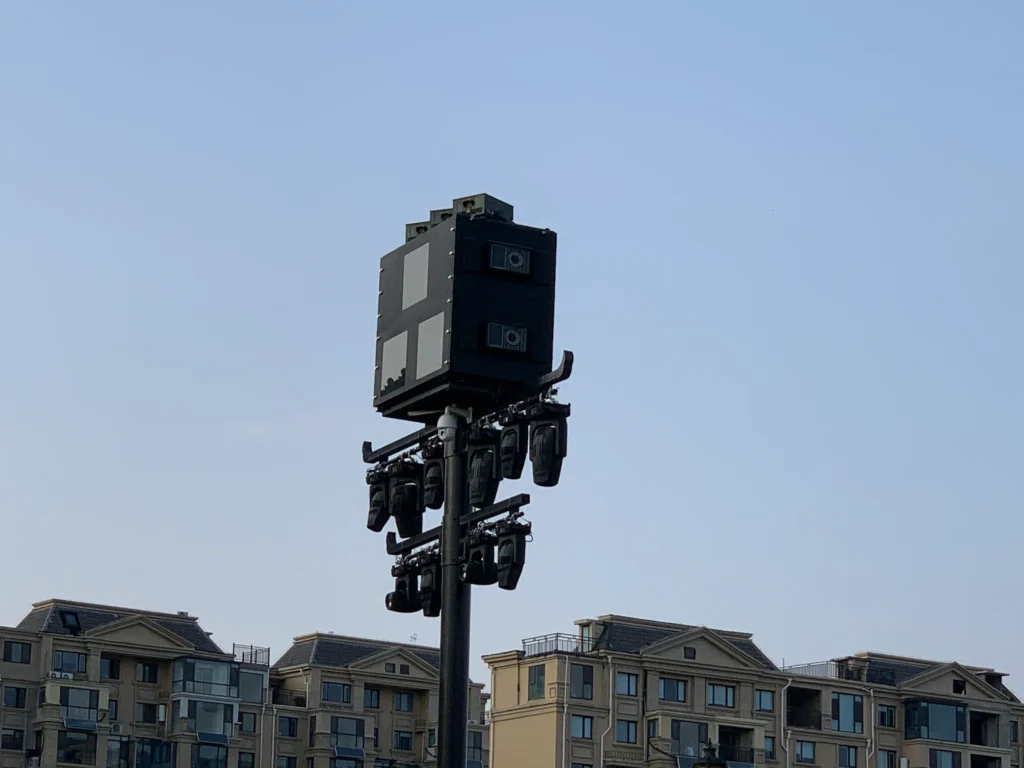
Projectors should not simply be placed directly on top of each other unless the manufacturer documentation and an approved stacking or rigging structure allow it. Many professional projectors require specific frames, spacing, load transfer methods, or orientation limits.
A vertical stacked projector enclosure must consider the combined weight of:
- Upper and lower projectors.
- Internal frame and mounting rails.
- Independent projector trays.
- Air conditioner or ventilation components.
- Power supply, controller, sensors, and wiring.
- Optical glass, door panels, cabinet body, and fasteners.
- Mounting base, lifting points, and transportation supports.
The enclosure should transfer load into the base through reinforced structure, not through the projector bodies. Center-of-gravity calculations are especially important because vertical stacking increases cabinet height and can increase wind-load sensitivity.
Mounting may involve ground bases, rooftops, walls, poles, platforms, or truss structures. Each method requires suitable fastener access, anti-loosening measures, vibration review, lifting strategy, and site structural approval.
Based on our internal data and market analysis, here is the breakdown:
| Structural Item | Design Question | Risk if Ignored |
|---|---|---|
| Approved orientation | Does the projector manual allow it? | Premature failure or warranty issues |
| Stacking frame | Is manufacturer-approved rigging required? | Unsafe load transfer |
| Center of gravity | How high is the combined mass? | Wind or vibration instability |
| Independent trays | Can each unit be adjusted separately? | Poor alignment and difficult service |
| Lifting points | Can the enclosure be safely installed? | Installation damage or safety risk |
ShiRui Pro Tip: I never let the enclosure shell become the only structural answer. For stacked designs, the internal frame, tray system, and base load path are just as important as the external weatherproof cabinet.
What projector screen is best for a dark room?
For a dark room, the best projector screen is usually selected by image goal, projector brightness, viewing angle, ambient light level, surface flatness, and color requirements. For outdoor vertical stacked projector enclosure projects, the “screen” may be a building façade, scenic surface, water-screen structure, rock surface, or custom projection surface.
Screen Selection and Brightness Stacking Reality
In a controlled dark room, a neutral white or gray screen with appropriate gain is often selected according to projector brightness and contrast goals. In outdoor projection mapping, the projection surface may not be a conventional screen at all. Surface texture, color, reflectivity, geometry, viewing distance, and environmental lighting can significantly affect visible image brightness.
Brightness stacking means multiple projectors intentionally overlay the same image area. Edge blending normally combines adjacent image areas and is not the same as brightness stacking. A dual projector enclosure may be used for either approach, but the optical and media-server design must define the use case clearly.
For image quality review, consider:
- Surface color and reflectance.
- Viewing distance and viewing angle.
- Projector throw ratio and lens shift.
- Calibration and color matching.
- Geometry correction requirements.
- Optical glass transmission.
- Ambient light from buildings, streets, moonlight, or scenic lighting.
- Whether images are overlaid or adjacent.
- Measurement method for on-screen brightness.
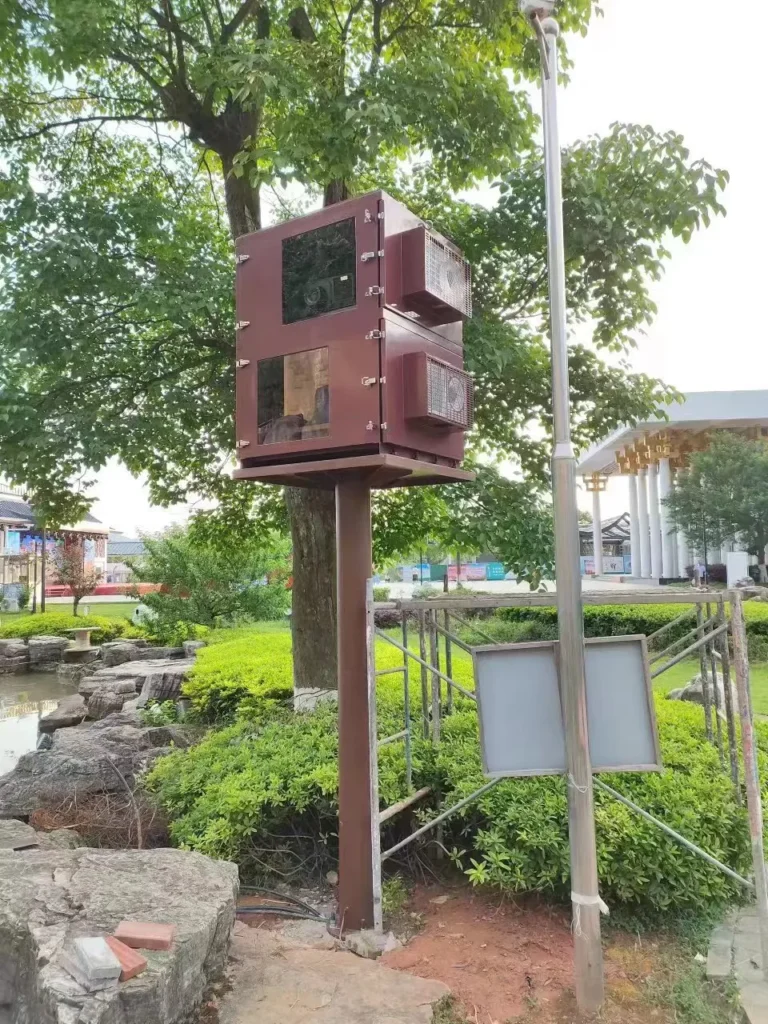
The enclosure must provide two independent optical paths. Designers must review upper and lower lens-center height, lens offset, throw ratio, zoom range, projection angle, beam divergence, optical-window position, window condensation risk, and potential internal reflection.
ShiRui Pro Tip: I ask for projection-surface photos and night-site lighting conditions early. A well-built enclosure cannot compensate for an unsuitable surface, uncontrolled ambient light, or an undefined brightness-stacking plan.
Key Features & Comparison
The key features of a vertical stacked projector enclosure include reinforced load-bearing structure, separated airflow paths, climate control, accurate optical windows, independent projector adjustment, outdoor sealing, power and signal integration, and maintainable access. Compared with side-by-side layouts, vertical stacking saves width but increases height, center-of-gravity risk, and thermal interaction.
Vertical Stacking vs Side-by-Side Layout
Vertical stacking is not automatically better than side-by-side installation. It is useful when horizontal space is limited or lens centers need to remain close horizontally, but it requires more careful review of heat movement, maintenance access, and stability.
Based on our internal data and market analysis, here is the breakdown:
| Design Factor | Vertical Stacking | Side-by-Side Layout | Main Engineering Consequence |
|---|---|---|---|
| Horizontal footprint | Narrower | Wider | Vertical stacking suits narrow platforms |
| Cabinet height | Taller | Lower | Higher center of gravity |
| Center of gravity | Higher | Lower | More wind and stability review |
| Structural reinforcement | Strong vertical load path needed | Wider base support needed | Frame design changes |
| Lens-center arrangement | Compact horizontally | Spread horizontally | Affects mapping alignment |
| Optical window design | Upper/lower windows or shared window | Left/right windows or shared window | Beam clipping must be checked |
| Airflow interaction | Lower heat can rise upward | Side airflow may interfere | Ducting and baffles differ |
| Maintenance access | More complex vertically | Easier if side space exists | Service doors must be planned |
| Cable routing | Vertical separation | Horizontal separation | Cable bend radius and access change |
| Installation platform width | Advantageous | Requires more width | Site structure decides suitability |
| Image stacking | Can support overlay | Can also support overlay | Brightness stacking depends on optics |
| Edge blending applications | Possible but not always ideal | Often suitable for adjacent images | Projection layout drives choice |
Side-by-side installation may be more suitable when horizontal space is available, both projectors require side maintenance, native airflow paths interfere vertically, lower enclosure height is important, or the projection layout uses adjacent blended images.
Recommended internal reading: Multi-projector outdoor enclosures, Single vs dual projector enclosures, and How projector airflow direction affects enclosure design.
ShiRui Pro Tip: I choose vertical stacking only after checking site footprint, service access, airflow direction, and optical geometry. If a side-by-side cabinet solves the problem more safely, it should stay on the table.
Cost & Buying Factors
The cost of a stacked projector enclosure depends on projector quantity, exact models, cooling method, structural design, optical-window complexity, IP protection requirements, installation method, controls, sensors, and customization level. Buyers should evaluate engineering risk, serviceability, and long-term reliability instead of comparing cabinet price alone.
What Drives the Budget
A vertically stacked projector enclosure is a project-specific engineering product. A fan-cooled design may be suitable only when ambient conditions and heat load permit. It requires controlled intake and exhaust paths, filter-pressure-loss review, and possibly separate airflow channels for each projector. Pulling humid, dusty, or salt-laden outside air into the cabinet may not suit every environment.
Air-conditioned or closed-loop cooling may be considered for high combined heat loads, hot and humid sites, dusty locations, coastal scenic areas, or long operating hours. It still requires correct supply-air and return-air placement, condensate management, airflow around both projector bodies, and condensation review around lenses and optical glass.
Based on our internal data and market analysis, here is the breakdown:
| Buying Factor | Why It Affects Cost | Design Area Affected |
|---|---|---|
| Exact projector model | Defines size, heat, airflow, service needs | Cabinet and cooling |
| Number of projectors | Adds weight, heat, optics, power | Structure and controls |
| Cooling method | Fan cooling vs air-conditioned design | Thermal architecture |
| Optical windows | Separate or shared glass paths | Front panel and alignment |
| Mounting method | Ground, rooftop, wall, pole, truss | Base and reinforcement |
| Protection level | Doors, glands, gaskets, cooling interfaces | Outdoor sealing |
| Monitoring | Temperature, humidity, alarms, remote access | Electrical and control |
| Maintenance access | Sliding rails, doors, removable trays | Fabrication complexity |
Power distribution should review combined electrical load, startup current, grounding, surge protection, power sequencing, network cables, signal cables, projector control, fan or air-conditioner control, temperature and humidity monitoring, high-temperature alarms, fan-failure alarms, door-open alarms, and water-leak alarms. Circuit-breaker sizes, cable sizes, and electrical ratings must follow project-specific data and local standards.
ShiRui Pro Tip: I recommend budgeting for drawings, airflow review, and maintenance planning—not only sheet metal. The lowest initial cabinet price can become expensive if a projector overheats or cannot be serviced after alignment.
Conclusion
A stacked projector enclosure is a specialized outdoor engineering solution for high-brightness projection, not a generic oversized cabinet. Successful vertical projector stacking requires verified projector data, manufacturer-approved mounting, separated airflow, structural reinforcement, correct optical paths, protected power and controls, outdoor sealing, and maintenance access designed before fabrication.
Project Snapshot, Checklist, FAQs, and Next Step
Verified ShiRui project snapshot
| Item | Confirmed Information |
|---|---|
| Project | Pingtan International Tourism Island, Tannan Bay Scenic Area |
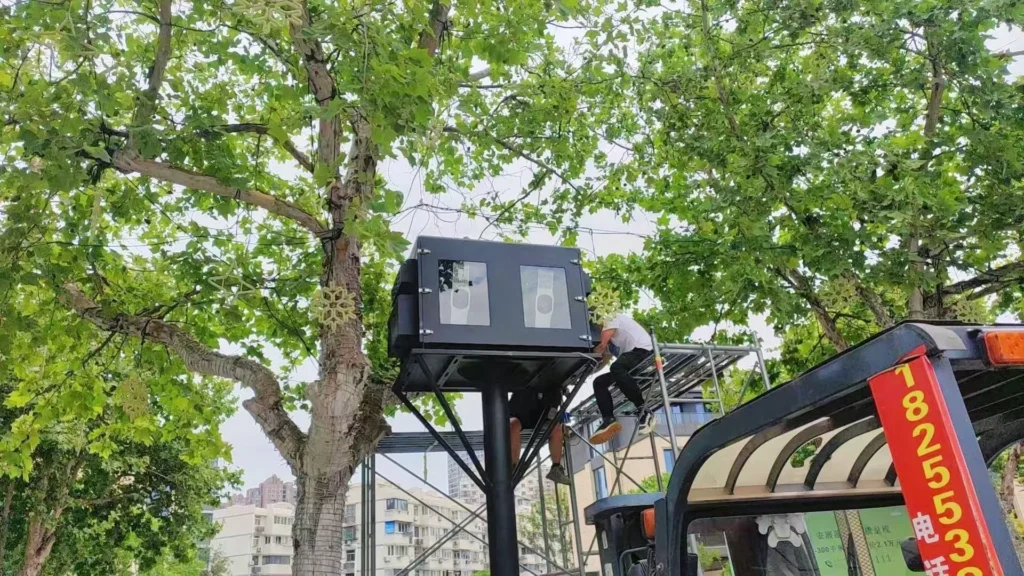
| Confirmed configuration | 15,000-lumen air-conditioned dual-projector vertically stacked enclosure |
| Confirmed related reference | 15,000-lumen air-conditioned single-projector enclosure also documented |
| Engineering topics that may be discussed generally | Vertical structure, combined thermal management, dual optical alignment, outdoor protection, maintenance access |
| Not claimed | Specific operating temperatures, cooling measurements, measured brightness increase, customer feedback, or exact projector model |
ShiRui also has broader multi-projector enclosure references, including a 4,800-lumen fan-cooled dual-projector ground-projection project in Shenzhen Longhua, a dual-projector flat-projection enclosure project at Dongtai Station, a four-position side-projection outdoor enclosure project at Shuiyun Longwan Urban Forest Park in Yancheng, a 25K five-position projector project, and an outdoor enclosure project involving six Christie projectors. These should not be described as vertically stacked unless the project source confirms an upper-and-lower arrangement.
For outdoor protection, ShiRui-12000 was tested according to GB/T 4208-2017 for IP65, and the report states that the tested items met the requirements. The IPX5 test recorded no internal water ingress, and the IP6 test recorded no internal dust ingress. This does not automatically prove that every stacked enclosure or a specific 15,000-lumen vertical stacked configuration is independently IP65-tested. Protection also depends on doors, optical windows, cable glands, cooling interfaces, drain outlets, mounting holes, field modifications, and gasket compression. Recommended internal reading: IP54 vs IP65 projector enclosure and How to prevent condensation inside a projector enclosure.
Before design, provide:
| Required Information | Why It Is Needed | Design Area Affected |
|---|---|---|
| Projector brand and exact model | Confirms real dimensions and manuals | Structure, cooling, access |
| Number of projectors | Defines stacked arrangement | Cabinet layout |
| Projector dimensions and weight | Supports frame and tray design | Load distribution |
| Power consumption and heat data | Supports thermal review | Cooling and electrical |
| Exact lens model and lens-center position | Defines beam path | Optical windows |
| Throw ratio and lens shift | Confirms projection geometry | Alignment |
| Intake and exhaust locations | Prevents recirculation | Airflow design |
| Approved orientation and stacking frame | Confirms safe installation | Mounting structure |
| Image stacking or separate zones | Defines optical strategy | Alignment and controls |
| Installation method | Matches site support | Base, lifting, fasteners |
| Temperature, humidity, sunlight, dust, coast, water-screen conditions | Defines environmental stress | Cooling and protection |
| Operating hours | Determines durability needs | Thermal and maintenance |
| Power, signal, and network requirements | Supports integration | Electrical system |
| Maintenance direction, site photos, structural drawings | Confirms access and fit | Final production drawings |
Design review checklist:
- Projector model confirmed.
- Lens model confirmed.
- Stacking permission checked in manufacturer documentation.
- Structural frame reviewed.
- Combined weight reviewed.
- Center of gravity reviewed.
- Native airflow paths confirmed.
- Lower-projector exhaust isolated from upper-projector intake.
- Cooling capacity and architecture reviewed from project data.
- Optical windows aligned with both lens paths.
- Power distribution reviewed by qualified electrical personnel.
- Maintenance doors and clearance planned.
- Condensation control reviewed.
- IP interfaces reviewed.
- Lifting and installation method reviewed.
- Final drawing approved before production.
FAQs:
What is a vertically stacked projector enclosure?
It is a weather-protected, climate-managed cabinet that houses two or more projectors in an upper-and-lower arrangement.
Is vertical stacking the same as portrait installation?
No. Vertical stacking describes physical arrangement. Portrait installation describes projector orientation and must be manufacturer-approved.
Does stacking two projectors double image brightness?
Not automatically. Calibration, overlap, lens efficiency, glass transmission, surface conditions, and measurement method affect actual on-screen output.
Can any two projector models be stacked together?
No. The exact models, lenses, airflow paths, weight, orientation limits, and approved stacking structures must be checked.
Is vertical stacking better than side-by-side installation?
Only when it fits the site and optical goals. Side-by-side may be better for service access, lower height, or adjacent edge-blended images.
How do you prevent the lower projector from heating the upper projector?
Use model-specific airflow design, baffles, ducts, separated intake and exhaust paths, correct sensor placement, and temperature monitoring.
Does an IP65 report automatically cover every stacked enclosure?
No. IP performance depends on the tested model and exact configuration, including doors, windows, glands, cooling interfaces, and field modifications.
What information is required for a custom stacked projector enclosure?
Projector model, lens model, dimensions, weight, power, airflow direction, mounting method, environmental conditions, projection layout, and site drawings are essential.
High-brightness laser safety must also be reviewed. Stacking multiple high-brightness projectors may affect total optical output, hazard-distance assessment, restricted viewing areas, installation height, access control, and projector positioning. Safety calculations must follow the exact projector manufacturer documentation, lens configuration, local regulations, and project-specific optical design.
Send ShiRui your projector brand, exact model, lens model, quantity, vertical stacking drawing, power consumption, airflow direction, mounting method, site temperature, humidity, and project photos for a custom stacked projector enclosure layout review.
ShiRui Pro Tip: I treat every vertically stacked enclosure as a custom engineering review. Once the projector model, lens, airflow, mounting, and environment are confirmed, the enclosure can be designed with far fewer assumptions and much lower project risk.