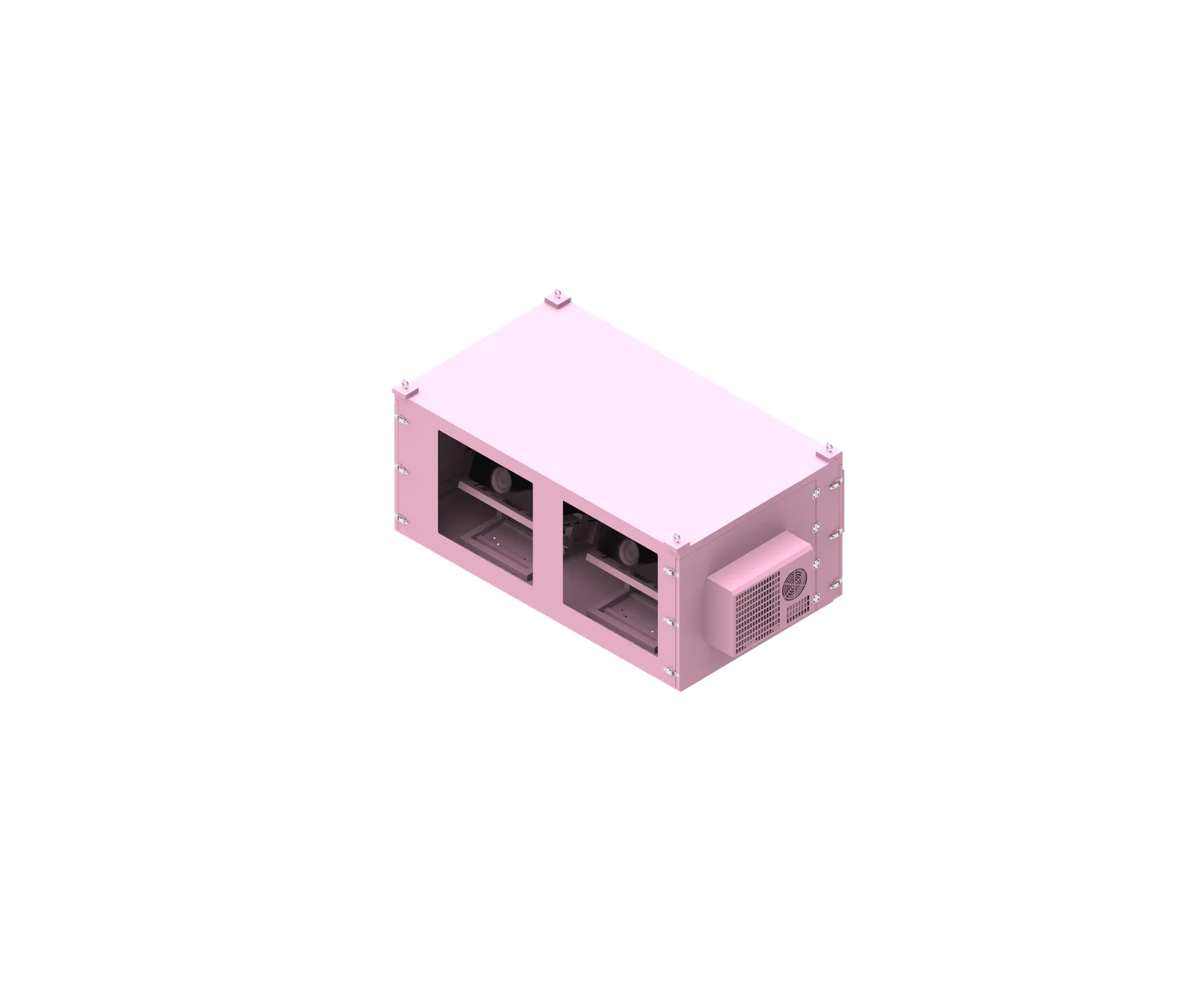
Projector heat load calculation starts with electrical input power, not brightness. For an outdoor enclosure, convert projector watts to BTU/h, add internal equipment heat, solar gain, enclosure transmission load, and airflow losses, then size ventilation or air conditioning for the target projector inlet temperature. Lumens alone are not enough because two projectors with similar brightness can use very different power and produce very different heat.
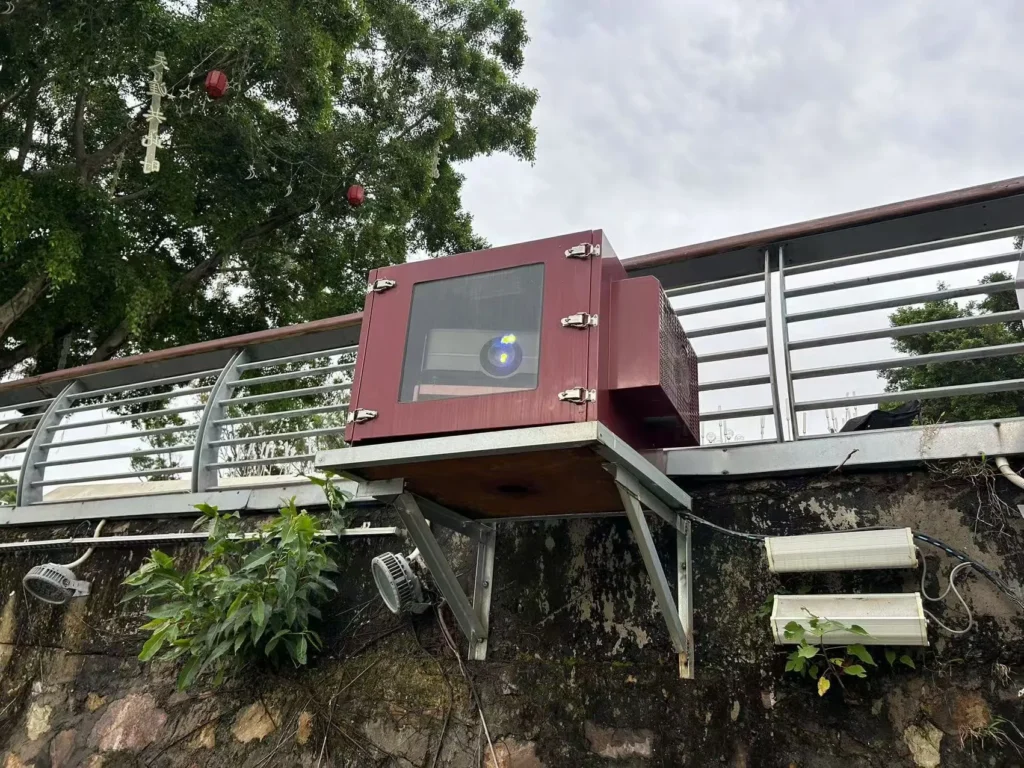
What is projector heat load calculation?
Projector heat load calculation is the engineering process of estimating how much sensible heat a projector and its enclosure must remove during operation. It normally converts electrical watts to BTU/h, adds solar and enclosure heat gains, and compares the result with fan airflow, heat exchanger, or air-conditioner cooling capacity.
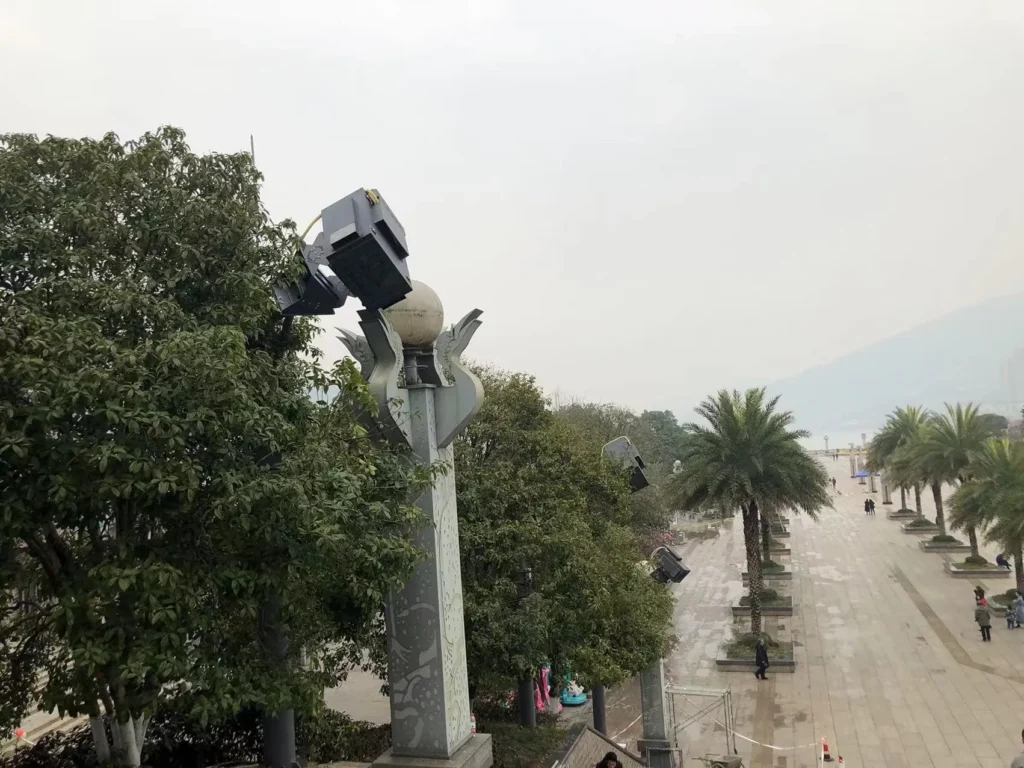
Heat Load Fundamentals for Projector Enclosures
A projector is an electrical device, and nearly all of its consumed electrical power eventually becomes sensible heat inside or near the enclosure. Some light exits through the lens, but for enclosure cooling design, using input power as heat is a conservative engineering calculation.
Lumens alone cannot determine projector heat output. Brightness tells you optical output, not electrical efficiency, laser-driver losses, lamp ballast losses, power-supply losses, or cooling-fan heat. Always use manufacturer specification power or ShiRui measured input power when available.
Based on our internal data and market analysis, here is the breakdown:
| Input Item | Preferred Data Source | How to Use It | Data Label |
|---|---|---|---|
| Projector nameplate maximum input power | Projector datasheet | Conservative internal heat estimate | Manufacturer specification |
| Measured average input power | Power meter during real content playback | More realistic continuous heat load | ShiRui measured data, if provided |
| Measured peak input power | Power meter during maximum operating mode | Peak cooling check | ShiRui measured data, if provided |
| Media player, switch, converter, UPS | Equipment datasheets or measurement | Add directly as watts | Manufacturer specification or ShiRui measured data |
| Solar gain on enclosure | Site exposure and surface area | Add to total cooling load | Engineering calculation |
| Enclosure wall heat transfer | Material, insulation, area, temperature difference | Add or subtract depending on ambient | Engineering calculation |
Basic conversion:
Heat output (BTU/h) = Electrical input power (W) × 3.412
The conversion factor 3.412 BTU/h per W is an engineering calculation constant.
ShiRui Pro Tip: I always ask for the projector’s maximum input power before brightness. ANSI lumens help with image design, but watts tell us how much heat the enclosure cooling system must actually remove.
How Does projector heat load calculation Work?
The calculation works by building a heat balance: internal equipment watts plus solar and enclosure heat gain must be lower than the cooling system’s real removable heat. For ventilation, you calculate required airflow from allowable temperature rise. For air conditioning, you convert the total watts into BTU/h or cooling watts.
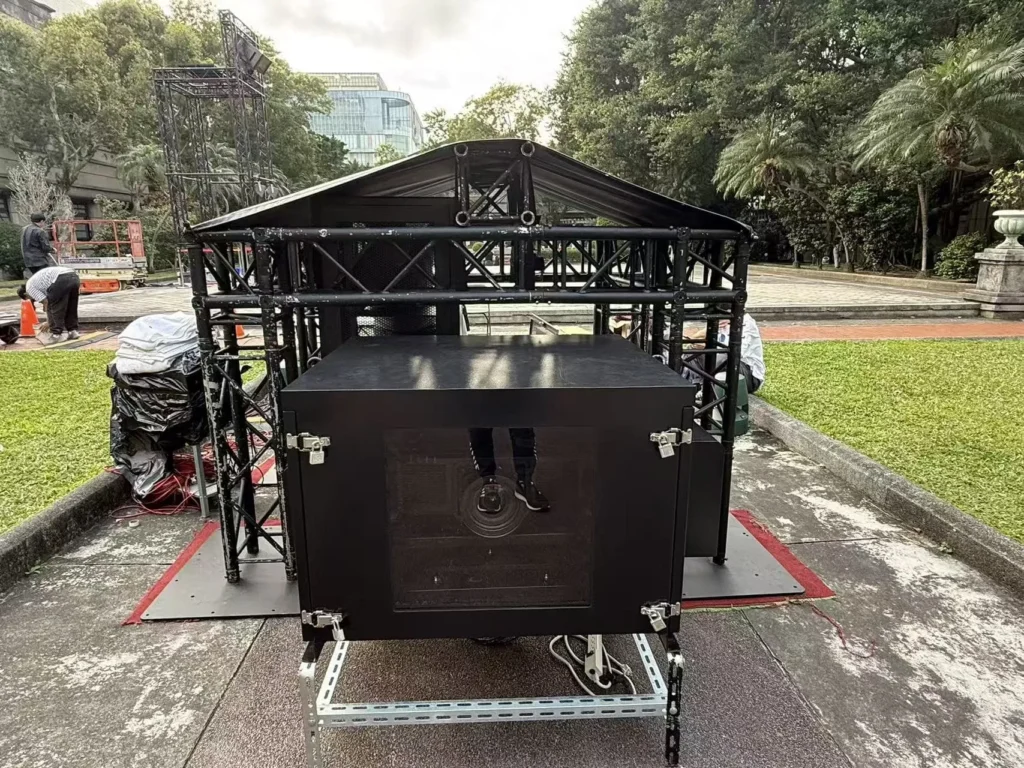
Step-by-Step Engineering Method
For outdoor projector enclosure cooling, use a structured method instead of guessing from projector size or lumens.
- Collect projector power data.
Use nameplate maximum input power as a conservative manufacturer specification. If ShiRui measured data is available, use measured average and peak input power for a more realistic projector heat load calculation. - Add internal equipment heat.
Include media players, fiber converters, signal extenders, routers, control modules, power supplies, and internal fans. - Convert watts to BTU/h.
BTU/h = W × 3.412
This is an engineering calculation. - Estimate enclosure transmission load.
Metric formula:Q_transmission (W) = U × A × ΔT
WhereUis thermal transmittance in W/m²·K,Ais surface area in m², andΔTis outdoor-to-indoor temperature difference in K. This is an engineering calculation. - Estimate solar load.
Q_solar (W) = α × G × A_solar
Whereαis surface absorptivity,Gis solar irradiance in W/m², andA_solaris sun-exposed area. This is an engineering calculation. - Calculate total heat load.
Q_total = Q_projector + Q_internal_equipment + Q_transmission + Q_solar + design margin
Design margin is a design assumption, not a measured result. - Calculate ventilation airflow if using fans.
Metric:Airflow (m³/h) = Q(W) × 3.0 ÷ ΔT(K)
The 3.0 factor is an engineering calculation approximation for air near sea level. Imperial:Airflow (CFM) = BTU/h ÷ (1.08 × ΔT°F)
The 1.08 factor is an engineering calculation approximation for standard air. - Select cooling equipment.
Compare required airflow, heat exchanger capacity, or air-conditioner rated cooling capacity with the calculated total heat load. - Verify with measurement.
Measure ambient temperature, projector inlet temperature, projector exhaust temperature, enclosure outlet temperature, airflow, humidity, and power draw.
Example worksheet specification:
| Worksheet Field | Unit | Data Label |
|---|---|---|
| Projector model | Text | Manufacturer specification |
| Maximum input power | W | Manufacturer specification |
| Measured average input power | W | ShiRui measured data, if available |
| Internal equipment load | W | Manufacturer specification or ShiRui measured data |
| Outdoor ambient temperature | °C or °F | Design assumption or ShiRui measured data |
| Target projector inlet temperature | °C or °F | Manufacturer specification or design assumption |
| Solar exposure | Full sun, partial shade, shade | Design assumption |
| Enclosure surface area | m² or ft² | Engineering calculation |
| Insulation U-value | W/m²·K or BTU/h·ft²·°F | Manufacturer specification or design assumption |
| Required airflow | m³/h or CFM | Engineering calculation |
| Required cooling capacity | W or BTU/h | Engineering calculation |
ShiRui Pro Tip: I recommend designing from peak watts, then validating against measured average watts. That keeps the enclosure safe during startup, high-brightness mode, hot weather, and partially clogged filter conditions.
How do I calculate the heat load of an enclosure panel?
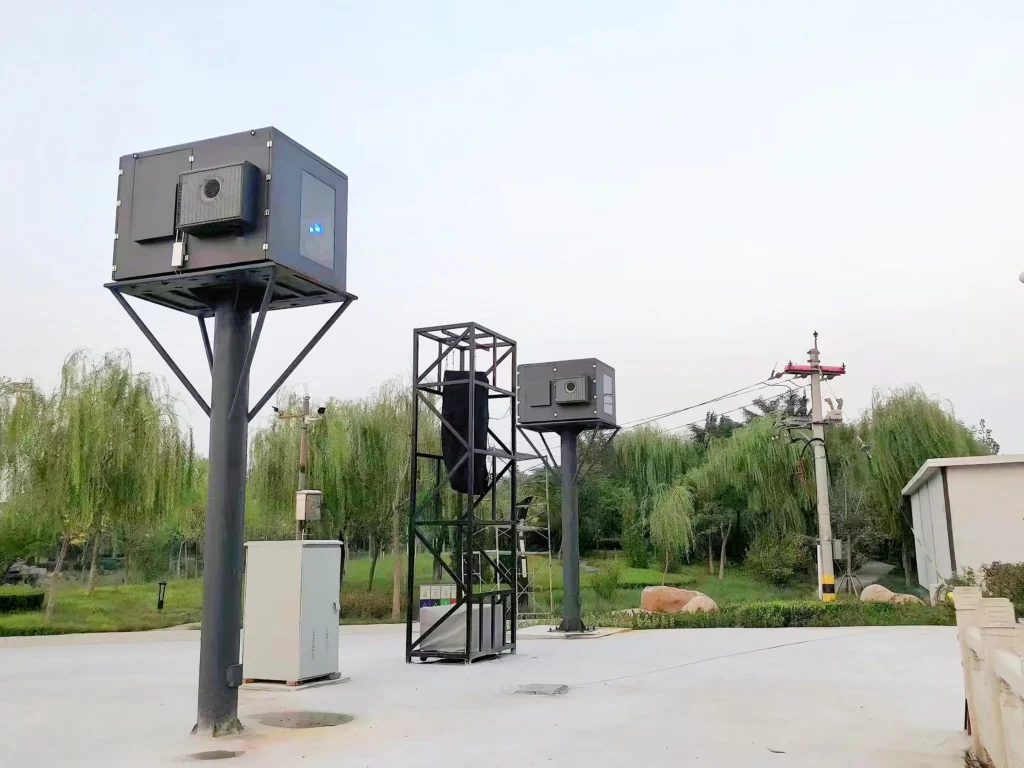
To calculate enclosure panel heat load, multiply the panel U-value by its area and the temperature difference across it. For outdoor projector enclosures, also consider solar radiation on sun-facing panels, because solar gain can exceed simple wall transmission when the enclosure is exposed to direct sunlight.
Panel Transmission and Solar Gain
Panel heat load is separate from projector heat output. It describes how much heat enters or leaves through enclosure walls, doors, window panels, service hatches, and lens ports.
Metric formula:
Q_panel (W) = U × A × ΔT
Imperial formula:
Q_panel (BTU/h) = U × A × ΔT
Where:
| Symbol | Meaning | Metric Unit | Imperial Unit | Data Label |
|---|---|---|---|---|
Q_panel | Panel heat transfer | W | BTU/h | Engineering calculation |
U | Overall heat-transfer coefficient | W/m²·K | BTU/h·ft²·°F | Manufacturer specification or design assumption |
A | Panel area | m² | ft² | Engineering calculation |
ΔT | Temperature difference | K | °F | Design assumption or ShiRui measured data |
Worked metric example:
| Item | Value | Label |
|---|---|---|
| Panel area | 2.0 m² | General example |
| U-value | 1.5 W/m²·K | General example |
| Outdoor ambient | 40°C | General example |
| Target internal air | 30°C | General example |
| Temperature difference | 10 K | Engineering calculation |
| Panel heat gain | 1.5 × 2.0 × 10 = 30 W | Engineering calculation |
| Panel heat gain in BTU/h | 30 × 3.412 = 102 BTU/h | Engineering calculation |
Solar gain example:
| Item | Value | Label |
|---|---|---|
| Solar absorptivity | 0.7 | General example |
| Solar irradiance | 800 W/m² | General example |
| Sun-exposed area | 1.0 m² | General example |
| Solar heat gain | 0.7 × 800 × 1.0 = 560 W | Engineering calculation |
This shows why outdoor enclosure heat load calculation must include solar exposure. A small sun-facing panel can add more heat than basic wall transmission.
ShiRui Pro Tip: I treat solar load as a site condition, not a product feature. If the enclosure moves from shade to full sun, the same projector and fan package can perform very differently.
How do I calculate the heat dissipation in an enclosure?
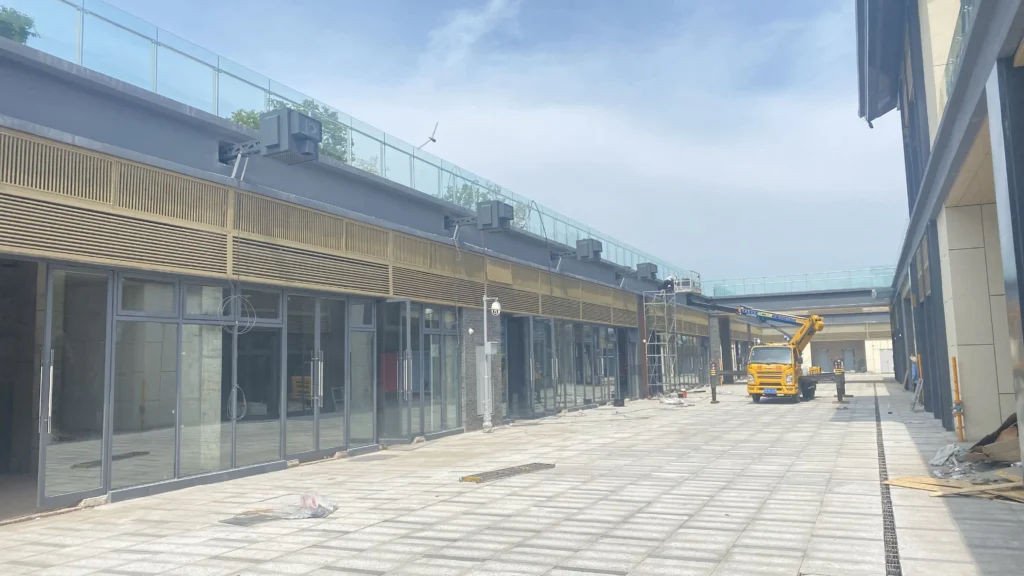
Calculate enclosure heat dissipation by determining how much heat leaves through ventilation, conduction, radiation, or active cooling. For projector enclosure ventilation, the key relationship is heat removed equals airflow multiplied by air heat capacity and allowable temperature rise between enclosure inlet and outlet.
Ventilation, Conduction, and Active Cooling Paths
An enclosure can dissipate heat in several ways. Outdoor projector enclosure cooling design usually combines multiple paths, but the dominant method should be identified clearly.
Based on our internal data and market analysis, here is the breakdown:
| Cooling Path | Main Formula or Rating | Best Use Case | Key Limitation |
|---|---|---|---|
| Fan ventilation | CFM = BTU/h ÷ (1.08 × ΔT°F) | Clean outdoor air, moderate ambient temperature | Dust, rain protection, filter pressure loss |
| Metric ventilation | m³/h = W × 3.0 ÷ ΔT(K) | Metric airflow calculation | Reduced performance at altitude and with filters |
| Heat exchanger | Manufacturer rated W or BTU/h | Sealed or semi-sealed designs | Capacity depends on ambient temperature |
| Air conditioner | Manufacturer rated W or BTU/h | Hot ambient, sealed projector enclosure | Condensate, power draw, maintenance |
| Passive conduction | Q = U × A × ΔT | Small loads or cool ambient conditions | Usually insufficient for high-power projectors |
Worked imperial example:
| Item | Value | Label |
|---|---|---|
| Projector input power | 1,200 W | General example |
| Internal equipment load | 100 W | General example |
| Total internal electrical load | 1,300 W | Engineering calculation |
| Heat in BTU/h | 1,300 × 3.412 = 4,436 BTU/h | Engineering calculation |
| Allowable air temperature rise | 15°F | Design assumption |
| Required airflow | 4,436 ÷ (1.08 × 15) = 274 CFM | Engineering calculation |
Important corrections:
- Filter pressure loss: Rated fan airflow is often measured in free air. A rain hood, insect screen, filter, baffle, or duct can reduce effective airflow.
- Airflow short-circuiting: If inlet and outlet openings are too close, cool air can leave without passing through the projector intake.
- Projector intake/exhaust layout: Cooling air should reach the projector intake first, then carry hot exhaust away from the lens area and electronics.
- Altitude: Air density decreases at higher elevation, so the same CFM removes less heat.
- Humidity: Humidity does not greatly change sensible heat formulas, but it affects condensation risk in air-conditioned projector enclosures.
ShiRui Pro Tip: I never size fans only by their catalog airflow. I look at the installed airflow after filters, grilles, bends, and rain protection because that is the airflow the projector actually receives.
How many BTUs do I need to cool 900 ft?
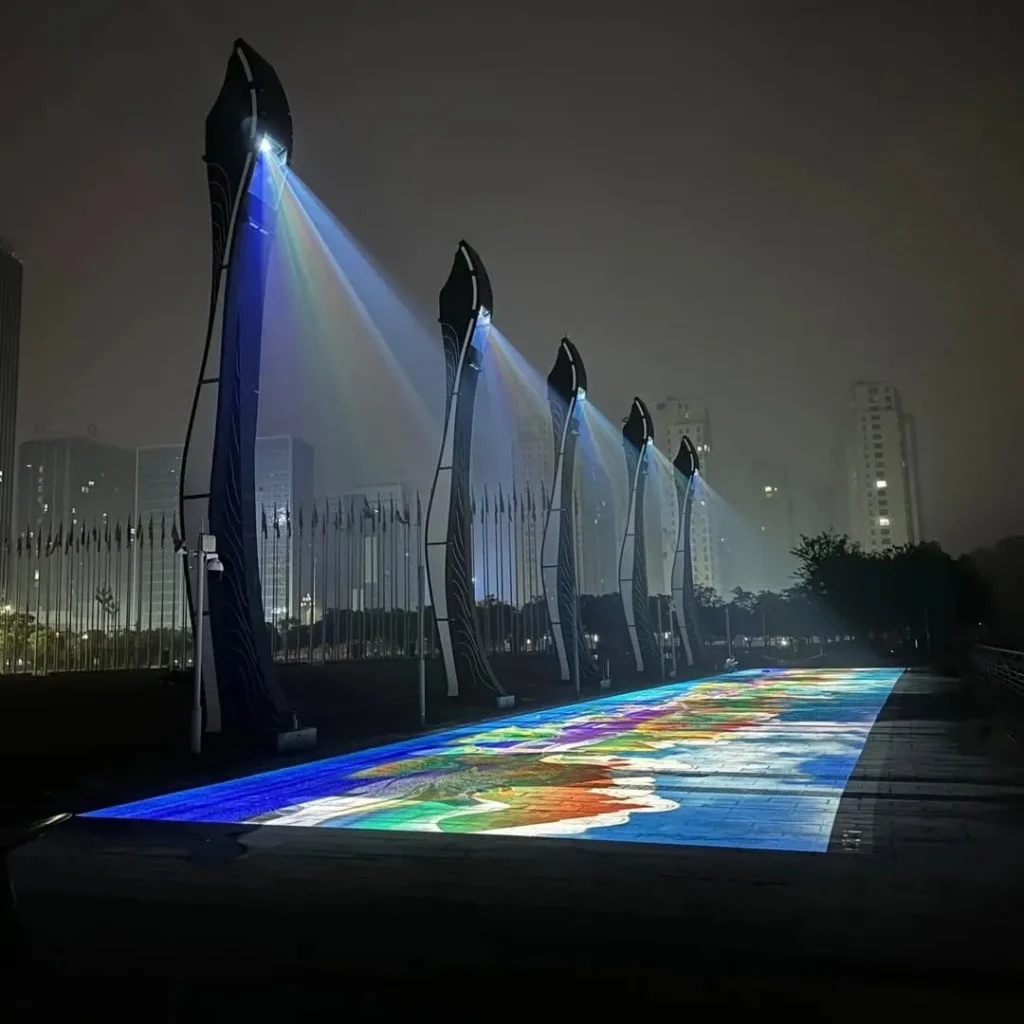
If “900 ft” means 900 ft² of building space, a rough comfort-cooling example is about 18,000 BTU/h using 20 BTU/h per ft². For projector enclosures, area-based sizing is not reliable; calculate watts, solar gain, enclosure heat transfer, and required projector inlet temperature instead.
Area-Based Cooling Versus Equipment-Based Cooling
The question often appears in HVAC sizing, but projector enclosure cooling calculation is different. A room air conditioner may be estimated from floor area, while a projector enclosure must be sized from equipment heat and outdoor thermal conditions.
Based on our internal data and market analysis, here is the breakdown:
| Cooling Scenario | Example Method | Example Result | Data Label |
|---|---|---|---|
| General room cooling | 900 ft² × 20 BTU/h per ft² | 18,000 BTU/h | General example |
| Projector enclosure cooling | 1,500 W × 3.412 | 5,118 BTU/h before solar and panel gains | Engineering calculation |
| Outdoor enclosure in full sun | Add solar gain and transmission load | Site-specific | Engineering calculation |
| Air-conditioned projector enclosure | Select rated capacity above total calculated load | Project-specific | Manufacturer specification plus engineering calculation |
For a projector enclosure, the correct question is not “How many BTUs for 900 ft²?” but:
- What is the projector input power in watts?
- What additional equipment is inside the enclosure?
- What is the maximum outdoor ambient temperature?
- What is the target maximum projector inlet temperature?
- Is the enclosure in full sun, partial shade, or shade?
- What airflow remains after filters, vents, and rain hoods?
- Is the system fan-cooled, heat-exchanger-cooled, or air-conditioned?
If the enclosure uses air conditioning, cooling capacity should be compared against the total calculated heat load:
Required AC capacity (BTU/h) ≥ Q_total(W) × 3.412
Add a design margin only when it is justified by site uncertainty, filter loading, solar variation, or measurement tolerance. The margin value should be stated as a design assumption.
ShiRui Pro Tip: I avoid translating room-sizing rules into enclosure design. A small projector box in direct sun can need more cooling discipline than a much larger shaded equipment area.
Key Features & Comparison
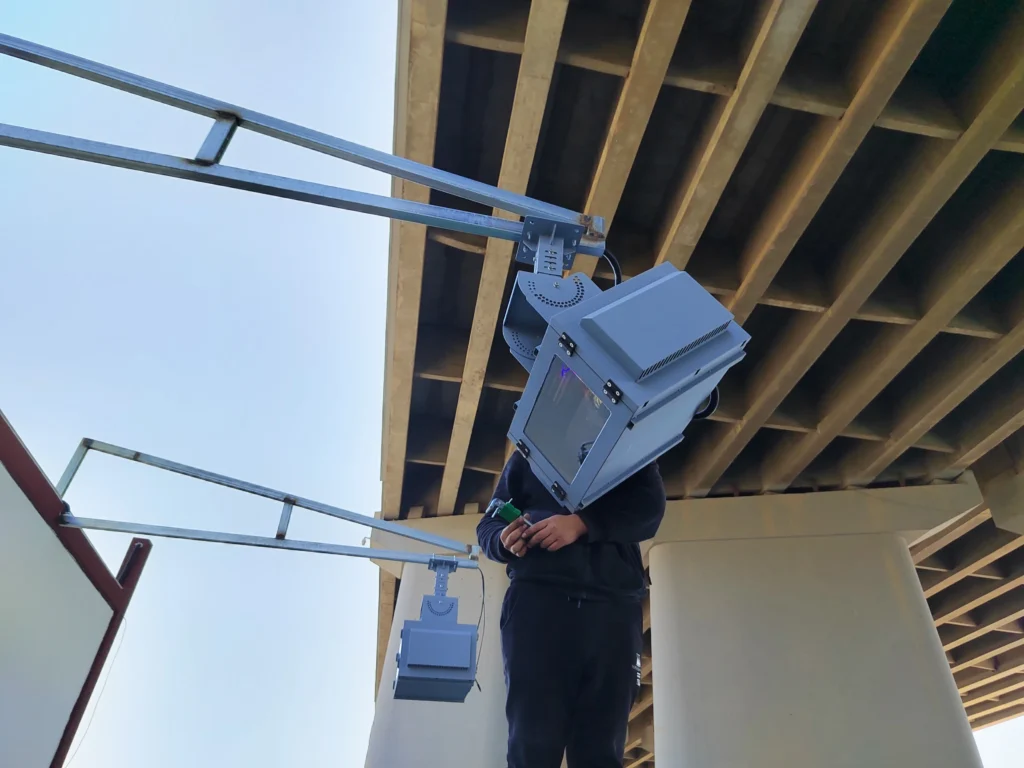
Fan cooling, heat exchangers, and air conditioning solve different projector thermal management problems. Fans are efficient when outdoor air is cool and clean. Heat exchangers help isolate the internal air path. Air conditioning provides the strongest temperature control when ambient temperature, humidity, or solar exposure is high.
Cooling Method Selection for Outdoor Projector Enclosures
Based on our internal data and market analysis, here is the breakdown:
| Cooling Method | Typical Design Basis | Advantages | Limitations | Best Fit |
|---|---|---|---|---|
| Filtered fan ventilation | Required CFM or m³/h from heat load and allowable ΔT | Simple, efficient, lower power | Depends on ambient air; vulnerable to dust, rain, filter clogging | Moderate climates, shaded installs, serviceable venues |
| High-capacity forced ventilation | Higher airflow with ducting and baffles | Good for high internal watts when ambient is acceptable | Noise, pressure loss, airflow balancing | Rental staging, temporary projection mapping |
| Air-to-air heat exchanger | Manufacturer rated heat transfer | Helps keep internal air cleaner than open ventilation | Cannot cool below ambient | Dusty areas, semi-sealed outdoor cabinets |
| Air-conditioned projector enclosure | Rated cooling capacity in W or BTU/h | Controls temperature below ambient; better for hot sites | Condensate, compressor maintenance, higher power | Theme parks, permanent outdoor venues, full-sun installations |
| Hybrid fan plus AC | Ventilation plus active cooling control | Energy-saving when ambient is favorable | More controls and commissioning work | Large outdoor venues with variable weather |
Design factors that strongly affect projector cooling capacity:
- Solar exposure: Full sun can dominate the heat load.
- Surface color: Darker finishes absorb more solar radiation.
- Insulation: Insulation reduces heat gain but can also retain internal heat if active cooling fails.
- Lens-port sealing: Leaks can bypass designed airflow paths.
- Humidity control: Air conditioning may require condensate drainage and anti-condensation logic.
- Filter maintenance: Dirty filters reduce effective airflow and raise projector inlet temperature.
- Intake/exhaust separation: Hot exhaust must not recirculate into the projector intake.
ShiRui’s role in this process is typically to help integrators define the enclosure airflow path, cooling configuration, and measurement points so the final design is based on thermal behavior rather than catalog assumptions alone.
ShiRui Pro Tip: My first layout check is always airflow direction. If the enclosure delivers cool air to the exhaust side and leaves the projector intake in a stagnant pocket, even oversized cooling hardware may underperform.
Cost & Buying Factors
The cost of outdoor projector enclosure cooling depends on heat load, ambient temperature, solar exposure, filtration, sealing level, controls, and service access. A lower-cost fan enclosure can work in mild conditions, while an air-conditioned projector enclosure is usually justified for hot climates, full sun, or sealed installations.
Pricing Drivers and Specification Checklist
Cooling cost is not only the fan or air-conditioner price. Technical buyers should evaluate the total installed and operating cost, including controls, filters, condensate handling, power consumption, maintenance labor, and downtime risk.
Based on our internal data and market analysis, here is the breakdown:
| Buying Factor | Why It Matters | Cost Impact |
|---|---|---|
| Projector input power | Higher watts require more heat removal | Higher cooling capacity |
| Solar exposure | Full sun adds external heat gain | Larger enclosure, insulation, shade, or AC |
| Ambient temperature | Determines whether fan cooling can maintain inlet limits | May require air conditioning |
| Sealing requirement | Protects against dust, rain, insects, and humidity | More complex cooling path |
| Filter grade and area | Affects pressure loss and maintenance interval | Larger vents or stronger fans |
| Noise limit | Larger slow fans may be quieter than small high-speed fans | Mechanical design cost |
| Controls and sensors | Enables staged fans, alarms, compressor protection | Higher initial cost, better protection |
| Service access | Filters, fans, and AC coils must be reachable | Enclosure and mounting cost |
| Redundancy | Backup fans or thermal alarms reduce operational risk | Higher hardware cost |
Recommended procurement questions:
- What projector model and maximum input power are being used?
- Is the power value a manufacturer specification or ShiRui measured data?
- What maximum outdoor ambient temperature is the design assumption?
- What target projector inlet temperature is required by the manufacturer specification?
- Is the installation in full sun, partial shade, or shade?
- What is the measured effective airflow after filters and grilles?
- Does the enclosure prevent hot exhaust recirculation?
- Is condensate management required for air conditioning?
- Are thermal alarms, remote monitoring, or automatic shutdown controls required?
- What measurement method will verify performance after installation?
Measurement methodology for validation:
| Measurement Point | Purpose | Data Label |
|---|---|---|
| Outdoor ambient air | Establish site condition | ShiRui measured data, if tested |
| Enclosure inlet air | Confirm cooling-air entry temperature | ShiRui measured data, if tested |
| Projector inlet air | Verify projector thermal safety | ShiRui measured data, if tested |
| Projector exhaust air | Detect recirculation or blockage | ShiRui measured data, if tested |
| Enclosure outlet air | Confirm heat removal path | ShiRui measured data, if tested |
| Electrical input power | Convert watts to heat load | ShiRui measured data, if tested |
| Effective airflow | Validate fan performance after restrictions | ShiRui measured data, if tested |
| Internal relative humidity | Check condensation and moisture risk | ShiRui measured data, if tested |
Valid ShiRui first-party test values were not provided for this article, so no measured performance claims, temperature chart, shutdown count, or product-specific cooling threshold is stated here.
ShiRui Pro Tip: I prefer buying decisions that include commissioning measurements. A cooling system that is verified at the projector inlet is far more useful than one selected only from a fan or AC catalog page.
Conclusion
A reliable projector enclosure cooling calculation starts with watts, converts heat to BTU/h, adds enclosure and solar loads, then checks airflow or air-conditioner capacity against the allowed projector inlet temperature. The safest designs also account for filters, altitude, humidity, airflow layout, and field verification.
Practical Summary, Assumptions, and FAQs
Use this compact calculation sequence for most outdoor projector enclosure projects:
- Start with projector maximum input power from the manufacturer specification.
- Add internal equipment watts from manufacturer specifications or measured values.
- Convert projector watts to BTU/h using
W × 3.412. - Add enclosure transmission load using
U × A × ΔT. - Add solar load using
α × G × A_solar. - Calculate total heat load.
- For fan cooling, calculate airflow using
m³/h = W × 3.0 ÷ ΔT(K)orCFM = BTU/h ÷ (1.08 × ΔT°F). - For an air-conditioned projector enclosure, select rated capacity above the calculated total load.
- Verify performance by measuring projector inlet temperature, exhaust temperature, enclosure outlet temperature, airflow, power, and relative humidity.
Key limitations:
- Calculations are only as accurate as the input data.
- Fan rated airflow may not equal installed airflow.
- Solar exposure can change during the day.
- Altitude reduces air density and heat removal per unit airflow.
- Humidity affects condensation risk in air-conditioned enclosures.
- Projector manufacturer temperature limits must take priority over general design rules.
- Placeholder data such as
[W],[°C], or[model]is not valid measured data.
FAQs:
| Question | Short Answer |
|---|---|
| Can I calculate projector heat output from lumens? | No. Use electrical input power because lumens do not define efficiency or total heat generation. |
| Should I use average watts or maximum watts? | Use maximum watts for conservative sizing and measured average watts for runtime analysis when valid measured data exists. |
| Is all projector power converted to heat? | For enclosure design, treating electrical input as heat is a conservative engineering calculation. |
| When do I need air conditioning instead of fans? | Use air conditioning when ambient air is too hot, the enclosure must be sealed, solar load is high, or projector inlet temperature cannot be maintained by ventilation. |
| How do filters affect cooling? | Filters add pressure loss, reducing effective airflow unless fan capacity and filter area are correctly selected. |
| Where should sensors be placed? | Measure ambient, enclosure inlet, projector inlet, projector exhaust, and enclosure outlet temperatures. |
| What should ShiRui receive for a project review? | Projector model, input power, enclosure dimensions, material, solar exposure, ambient temperature, target inlet temperature, cooling method, airflow path, and service requirements. |
ShiRui Pro Tip: If you are unsure which cooling method fits your site, send the projector power data, enclosure dimensions, ambient condition, and installation photos first. With those inputs, we can usually identify whether ventilation, a heat exchanger, or air conditioning is the right direction.