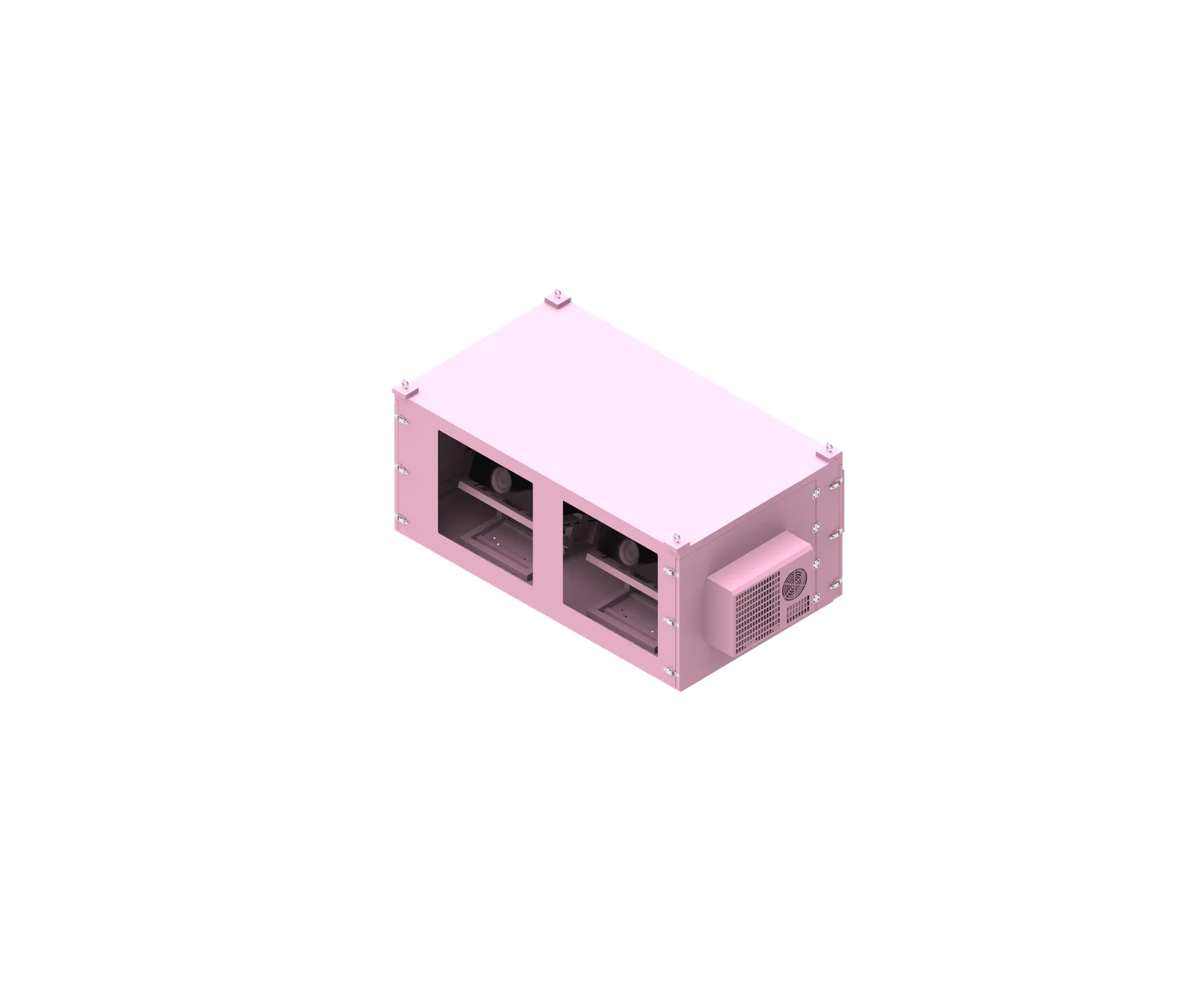
SuiRui supplied 16 custom air-conditioned projector enclosure units for a cooling tower projection project where professional projection equipment needed long-term outdoor protection. The project required more than standard weatherproof boxes: each enclosure had to support environmental sealing, controlled cooling, internal airflow, optical alignment, cable routing, and practical maintenance access across a multi-unit outdoor projection installation.
Video Guide: Get a closer look at an outdoor projector enclosure developed for professional projection projects. This video presents the enclosure design and shows how it can be used to house projector equipment across permanent outdoor installations, commercial venues, and large-scale visual applications.
| Project Item | Details |
|---|---|
| Project Type | Cooling Tower Projection |
| Application | Large-Scale Outdoor Projection |
| Enclosure Quantity | 16 Units |
| Enclosure Type | Air-Conditioned Projector Enclosure |
| Configuration | Custom Design |
| Installation | Outdoor |
| Main Purpose | Projector Environmental & Thermal Protection |
What is air-conditioned projector enclosure?
An air-conditioned projector enclosure is a protective outdoor cabinet designed to house a projector while managing heat, weather exposure, dust, humidity, and cable access. In this cooling tower projection project, 16 custom units were used to protect professional projectors during outdoor operation without relying on a simple metal box.
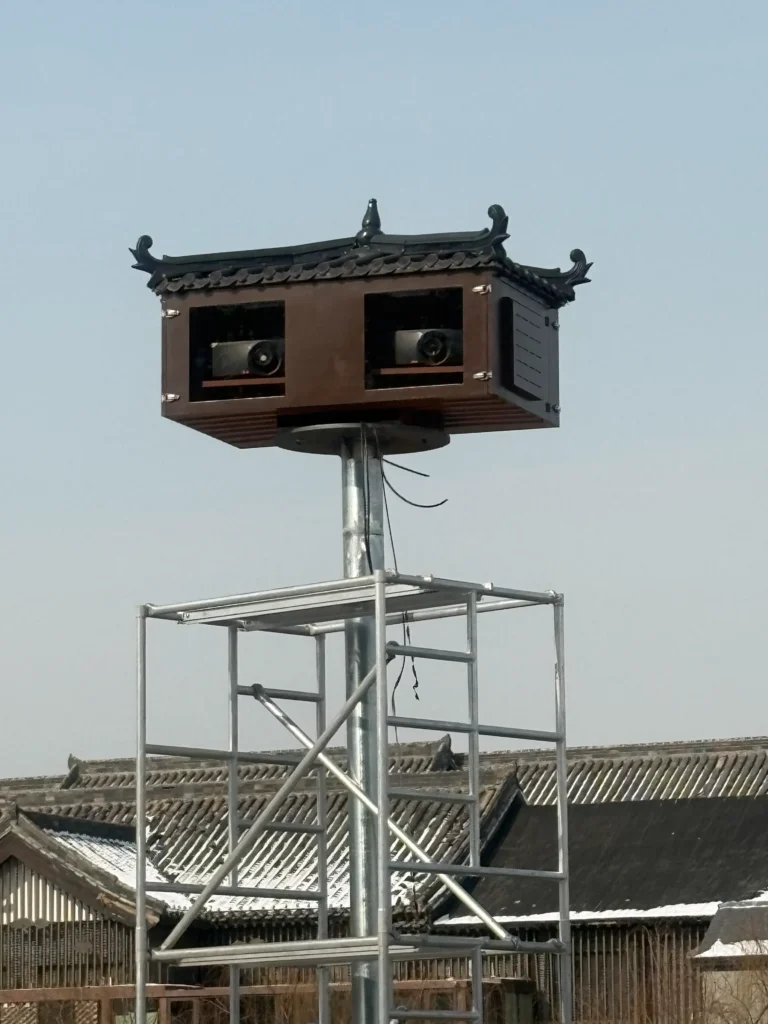
Definition and Project Role
An air-conditioned projector enclosure combines mechanical protection, thermal management, optical access, and electrical integration into one engineered system. For outdoor projection, the enclosure must protect the projector from rain, dust, insects, humidity, and temperature changes while allowing the projected image to pass through a correctly positioned optical window.
For this cooling tower projection project, the 16-unit requirement indicates a multi-position outdoor projection system. Large architectural or industrial surfaces such as cooling towers often require multiple projector locations to achieve the required visual coverage. Each projector position needs its own enclosure because each unit must maintain environmental protection, cooling performance, and lens alignment independently.
Based on our internal data and market analysis, here is the breakdown:
| Element | Function in an Air-Conditioned Projector Enclosure |
|---|---|
| Outer Cabinet | Protects projector and internal components from outdoor exposure |
| Air-Conditioning System | Helps manage internal heat load without relying only on outside air |
| Internal Mounting Structure | Supports the projector and keeps lens position stable |
| Optical Window | Provides a clear projection path while maintaining enclosure protection |
| Cable Entry System | Allows power, signal, network, and control cables to enter safely |
| Service Door | Provides access for installation, adjustment, cleaning, and maintenance |
SuiRui Pro Tip: We always recommend confirming the exact projector model, lens position, air intake, exhaust direction, and installation orientation before enclosure design begins, because these details directly affect cooling layout and optical-window placement.
How Does air-conditioned projector enclosure Work?
An air-conditioned projector enclosure works by isolating the projector from direct outdoor exposure while using an internal air conditioning system to remove heat generated by the projector and the surrounding environment. The enclosure must also maintain airflow, optical alignment, sealing, cable access, and serviceability as one integrated design.
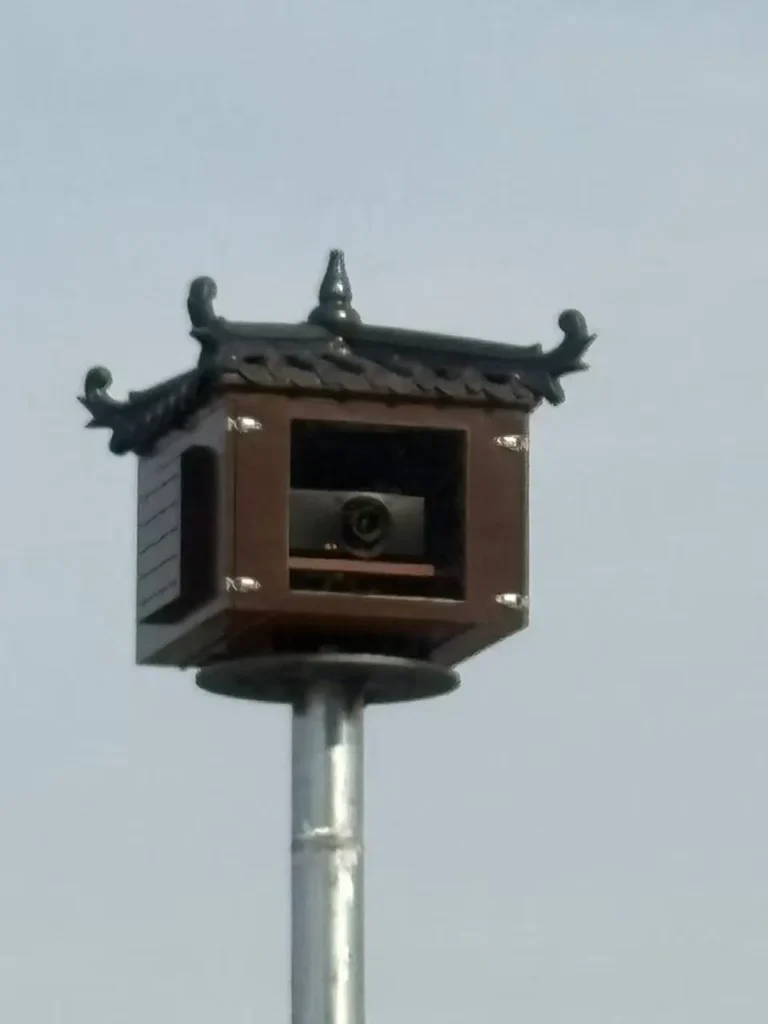
Cooling and Protection Working Principle
A professional projector generates substantial heat during operation. Outdoors, the enclosure also receives external heat from ambient air, sunlight, and surrounding structures. The air-conditioned design helps control the internal environment by removing heat from the cabinet while reducing direct contact between the projector and outdoor contaminants.
However, air conditioning alone is not enough. The enclosure layout must ensure cooled air reaches the projector’s intake areas and hot exhaust air does not recirculate into sensitive zones. The design must also avoid blocking the projector’s original airflow path.
A typical operating sequence includes:
- The projector is installed on an internal mounting structure aligned with the optical window.
- Power, video signal, network, and control cables are routed through planned cable entries.
- The air-conditioning system starts according to the thermal-control design.
- Internal airflow distributes cooled air around the projector.
- Heat from projector operation and environmental exposure is removed from the enclosure.
- The optical window allows projection output while the cabinet remains protected.
- Maintenance access allows inspection, cleaning, adjustment, and servicing when required.
SuiRui Pro Tip: In our engineering reviews, we do not treat the air conditioner as a standalone component. We evaluate the projector’s heat output, original airflow path, enclosure volume, outdoor exposure, and service access together before finalizing the design.
What are the benefits of air-conditioned projector enclosure?
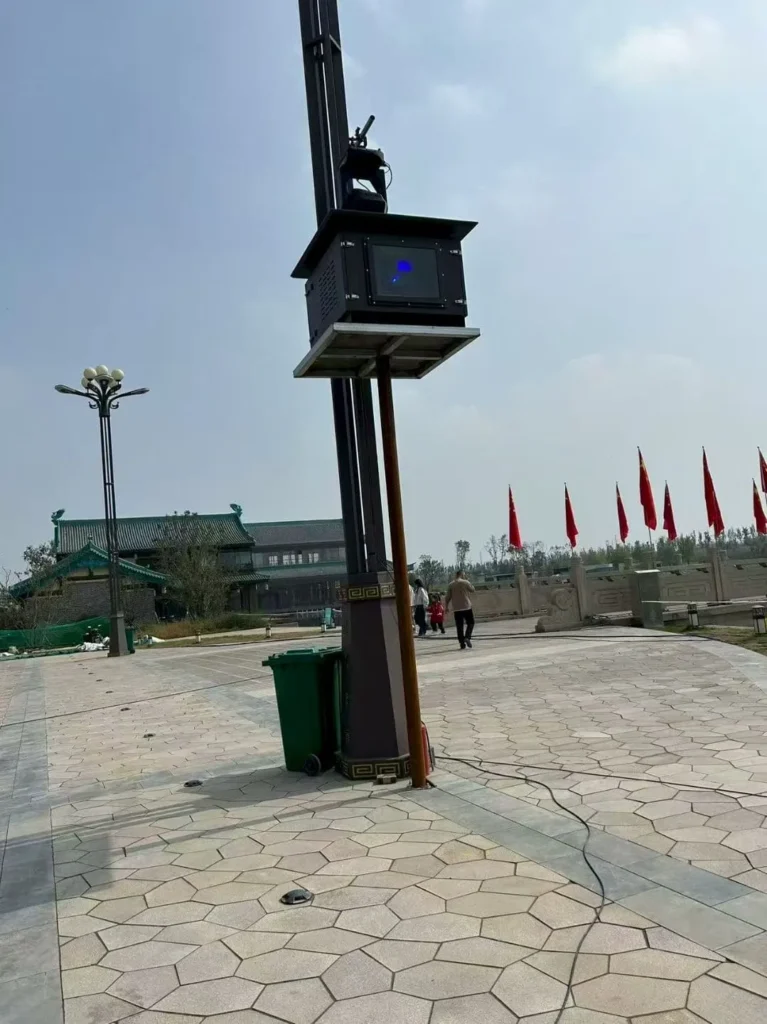
The main benefit of an air-conditioned projector enclosure is stable outdoor protection for professional projection equipment. It helps protect against rain, dust, humidity, temperature changes, insects, and contaminants while providing active thermal management, making it suitable for demanding outdoor projects such as cooling tower projection installations.
Benefits for Large Outdoor Projection Projects
Cooling tower projection is different from indoor projection because the equipment may be installed outdoors for extended periods and positioned at significant distances from the projection surface. The projector enclosure must therefore support long-term reliability, not just short-term weather resistance.
In this project, 16 custom outdoor projector enclosure units helped standardize protection across multiple projector positions. Consistency is especially important when many units are installed in the same system, because installation teams benefit from repeatable cabinet layouts, similar cable-entry positions, and predictable maintenance access.
Key benefits include:
- Environmental protection: Helps shield equipment from rain, dust, humidity, insects, and outdoor contaminants.
- Thermal control: Supports heat removal from the projector and enclosure interior.
- Improved equipment stability: Helps reduce exposure-related risks during outdoor operation.
- Optical coordination: Allows the lens and optical window to be positioned for the intended projection path.
- Batch consistency: Makes multi-unit installation and maintenance easier.
- Custom integration: Adapts the enclosure to projector size, lens position, airflow direction, mounting requirements, and cable routing.
SuiRui Pro Tip: For multi-projector outdoor projects, I recommend standardizing as many enclosure details as possible, including cable entries, door orientation, optical-window position, and internal mounting layout, unless the site conditions require different configurations.
How to maintain a air-conditioned projector enclosure?
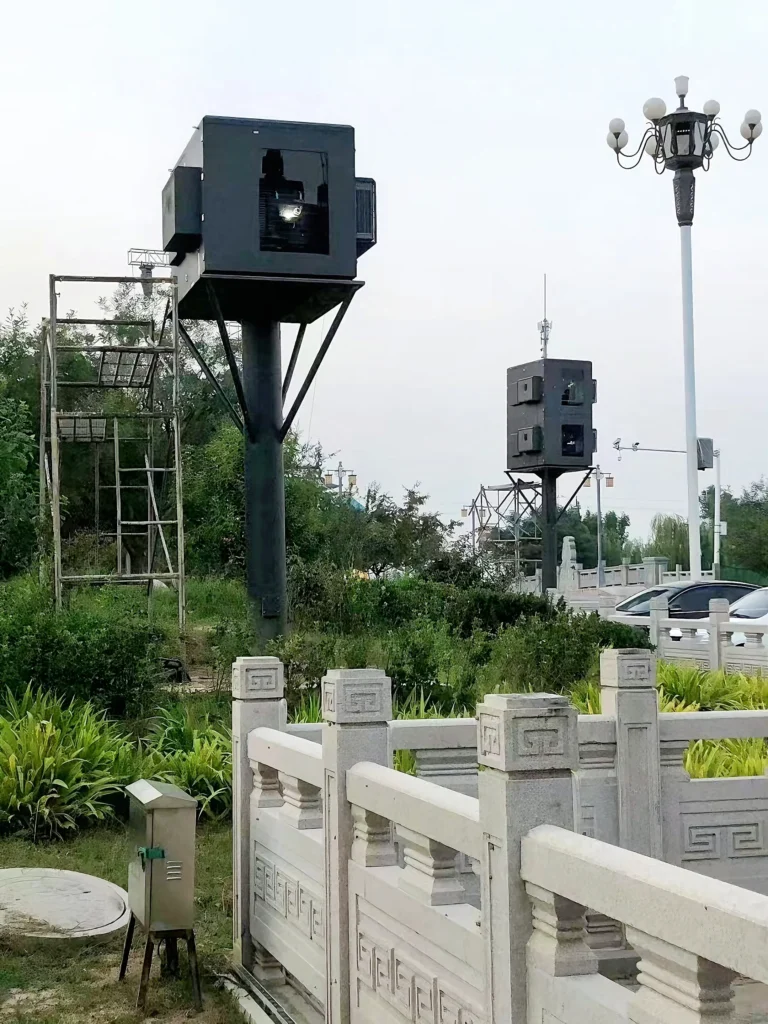
Maintaining an air-conditioned projector enclosure involves checking the projector, cooling system, seals, optical window, cable entries, electrical connections, and internal cleanliness. For a 16-unit outdoor installation, a consistent maintenance routine is important because small differences between units can affect long-term service efficiency.
Maintenance Checklist for Outdoor Operation
Outdoor projector enclosures should be maintained as complete systems. The projector, enclosure shell, cooling equipment, cable entries, door seals, and optical path all work together. If one element is neglected, the entire protection strategy may be weakened.
For a cooling tower projection environment, maintenance planning should also consider access conditions. The enclosure should allow technicians to inspect and service the projector without unnecessary disassembly or alignment disruption.
Recommended maintenance checks include:
- Inspect the optical window for dust, water marks, scratches, or contamination that may affect image quality.
- Check door seals and gasket areas for deformation, aging, or debris.
- Verify cable-entry sealing to reduce the risk of water, dust, or insects entering the cabinet.
- Inspect internal airflow paths to make sure projector intake and exhaust areas are not blocked.
- Check the air-conditioning unit for normal operation according to the selected cooling design.
- Review electrical wiring for secure connections and signs of wear.
- Clean the enclosure interior when dust or contaminants are present.
- Confirm projector position if the enclosure has been opened, moved, or serviced.
SuiRui Pro Tip: I suggest creating a maintenance record for each enclosure number in a 16-unit project. This makes it easier to track recurring issues, compare unit conditions, and plan preventive service before failures occur.
What is the price of air-conditioned projector enclosure?
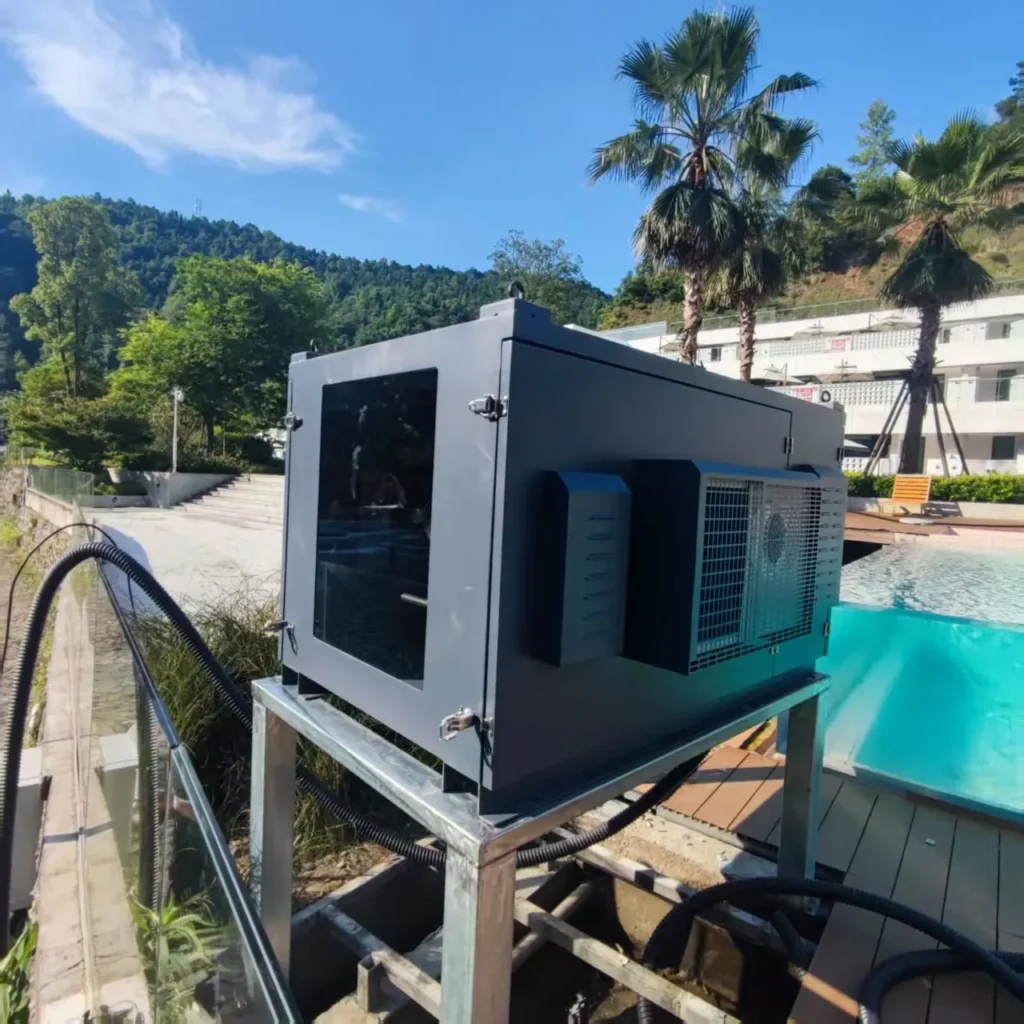
The price of an air-conditioned projector enclosure depends on projector size, cooling requirements, cabinet material, optical-window design, electrical configuration, cable-entry layout, environmental protection level, and order quantity. For custom 16-unit projects, pricing should be based on confirmed drawings and technical requirements rather than a generic catalog box.
Pricing Variables and Quotation Inputs
A custom projector enclosure manufacturer cannot accurately price a professional outdoor unit without understanding the projector and site conditions. The enclosure must be designed around the actual projector dimensions, weight, power consumption, lens position, airflow layout, installation method, and operating environment.
For a project using 16 air-conditioned projector enclosures, batch production may improve consistency and manufacturing efficiency, but the final cost still depends on the technical configuration. It is not advisable to estimate price based only on enclosure size.
Based on our internal data and market analysis, here is the breakdown:
| Cost Factor | Why It Affects Price |
|---|---|
| Projector Size and Weight | Determines cabinet structure, internal mounting, and handling requirements |
| Heat Load | Influences cooling-system selection and internal airflow design |
| Optical Window | Requires alignment with lens center, lens shift, and projection angle |
| Cabinet Material and Finish | Affects outdoor durability, corrosion resistance, and fabrication cost |
| Cable Entry Design | Impacts sealing, installation convenience, and electrical integration |
| Access Door Design | Affects maintenance efficiency and enclosure complexity |
| Quantity | Batch production affects fabrication planning and consistency control |
| Custom Requirements | Special mounting, control, monitoring, or climate features may change cost |
SuiRui Pro Tip: When requesting a quotation, send projector drawings, lens information, operating hours, site photos, and installation drawings early. The more complete the input, the more accurate the enclosure design and price evaluation will be.
Key Features & Comparison
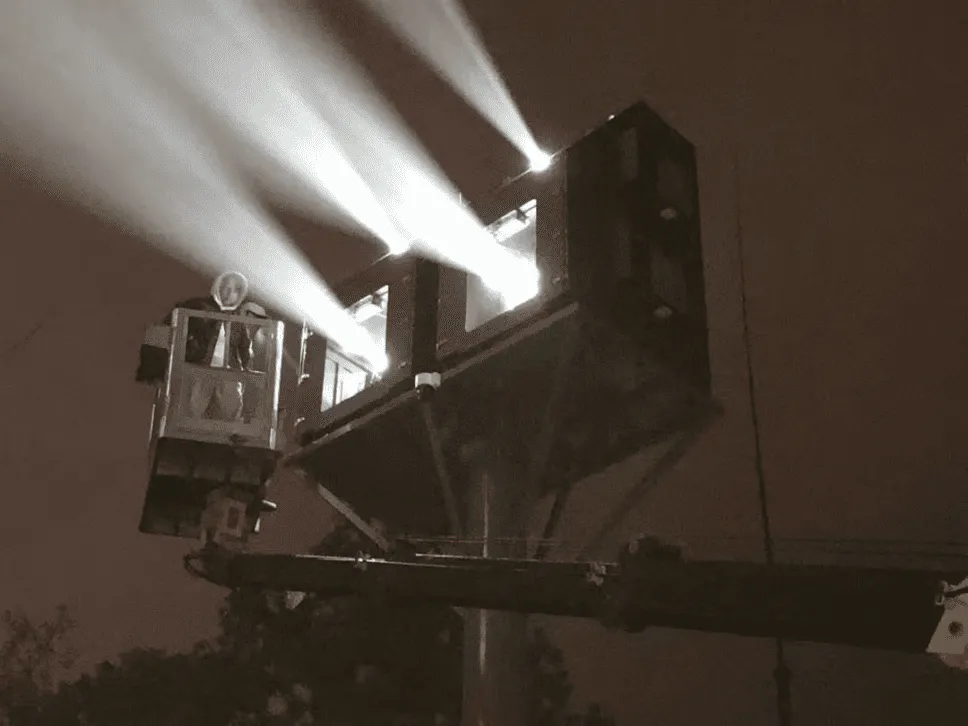
A custom air-conditioned projector enclosure differs from a basic outdoor projector box because it integrates cooling, sealing, optical alignment, cable management, structure, and maintenance access. For this 16-unit cooling tower projection project, the design approach had to support batch consistency and long-term outdoor projector protection.
Custom Enclosure Features Compared With Standard Boxes
Based on our internal data and market analysis, here is the breakdown:
| Feature | Standard Projector Box | Custom Air-Conditioned Projector Enclosure |
|---|---|---|
| Thermal Management | Often limited or generic ventilation | Designed around projector heat load, airflow, and outdoor exposure |
| Outdoor Protection | May provide basic cover only | Considers rain, dust, humidity, insects, contaminants, and temperature changes |
| Optical Alignment | May require field modification | Optical window coordinated with lens center and projection angle |
| Projector Fit | Generic internal space | Designed around actual projector dimensions and mounting requirements |
| Cable Routing | Often basic openings | Planned entries for power, signal, network, control, and cooling equipment |
| Maintenance Access | May be inconvenient | Designed for projector service, lens adjustment, cleaning, and inspection |
| Batch Consistency | May vary between units | Repeatable fabrication for multi-unit projects |
| Engineering Review | Limited customization | Based on projector data, site conditions, and installation needs |
A 16-unit batch requires more planning than a single enclosure. Dimensional consistency, optical-window placement, cooling-system installation, cable-entry layout, door structure, electrical assembly, and surface finish should be controlled across all units. This helps simplify installation and long-term maintenance.
Important feature areas include:
- Cabinet structure suitable for outdoor installation.
- Air-conditioned thermal-management design.
- Internal airflow paths that respect projector intake and exhaust locations.
- Optical window positioned according to the projector lens.
- Cable entries planned before fabrication.
- Service access for installation, inspection, and maintenance.
- Consistent layout across all 16 enclosure units.
SuiRui Pro Tip: Before batch manufacturing, I prefer to confirm drawings carefully with the customer’s projector and installation data. Changing the optical window or cable-entry position after production starts can create avoidable cost and schedule pressure.
Cost & Buying Factors
Buying an air-conditioned projector enclosure should begin with engineering requirements, not only budget. The key factors are projector model, heat generation, outdoor climate, operating schedule, optical alignment, mounting method, cable routing, maintenance access, and whether the project requires one enclosure or a consistent multi-unit batch.
What Buyers Should Confirm Before Ordering
For a cooling tower projection project or other large outdoor projection application, the enclosure should be designed around the real equipment and site conditions. A projector enclosure case study is most valuable when it shows how many technical inputs must be coordinated before fabrication.
Buyers planning a similar project should prepare the following information:
- Projector brand and model.
- Number of projectors.
- Projector dimensions.
- Projector weight.
- Projector power consumption.
- Lens model.
- Projection distance.
- Lens shift requirements.
- Installation method.
- Maximum and minimum ambient temperature.
- Expected operating hours.
- Project location.
- Available power supply.
- Required environmental protection.
- Installation drawings or site photos.
- Cable types and entry directions.
- Maintenance access requirements.
For large projects, the purchasing decision should also consider manufacturer capability. A projector enclosure manufacturer should be able to review thermal management, internal airflow, optical access, structural support, electrical layout, and batch consistency together.
SuiRui Pro Tip: I advise buyers not to wait until projectors arrive on site before discussing enclosure details. Early coordination helps prevent conflicts between lens position, cooling layout, mounting structure, and cable routing.
Conclusion
This 16-unit cooling tower projection project demonstrates that outdoor projector protection is not only about waterproofing. A professional air-conditioned projector enclosure must coordinate thermal management, environmental protection, optical alignment, structural installation, cable routing, and maintenance access before batch manufacturing begins.
Engineering Lessons From the 16-Unit Project
The main lesson from this SuiRui project is that outdoor projector enclosure design must be project-specific. Cooling tower projection involves large surfaces, outdoor exposure, multiple projector positions, and long-term equipment protection. Standard cabinets are often not enough because they do not fully address heat control, airflow, optical geometry, and service access.
Key lessons for similar projects include:
- Confirm the exact projector before enclosure design.
- Evaluate total thermal requirements early.
- Confirm lens and optical-window alignment before fabrication.
- Plan cable entry before manufacturing.
- Standardize enclosure configuration across batch projects where practical.
- Consider installation and maintenance during the design stage.
- Confirm drawings before batch production.
For large outdoor projection projects, the enclosure should be engineered around the actual projector, real installation conditions, and long-term operating requirements. SuiRui can support custom outdoor projector enclosure projects where air-conditioned thermal management, batch consistency, and practical field serviceability are critical.
SuiRui Pro Tip: If you are planning a similar outdoor projection project, send us the projector information, lens details, site drawings, and environmental requirements first. We can help evaluate the enclosure structure, cooling approach, optical-window layout, and batch-production strategy before manufacturing.