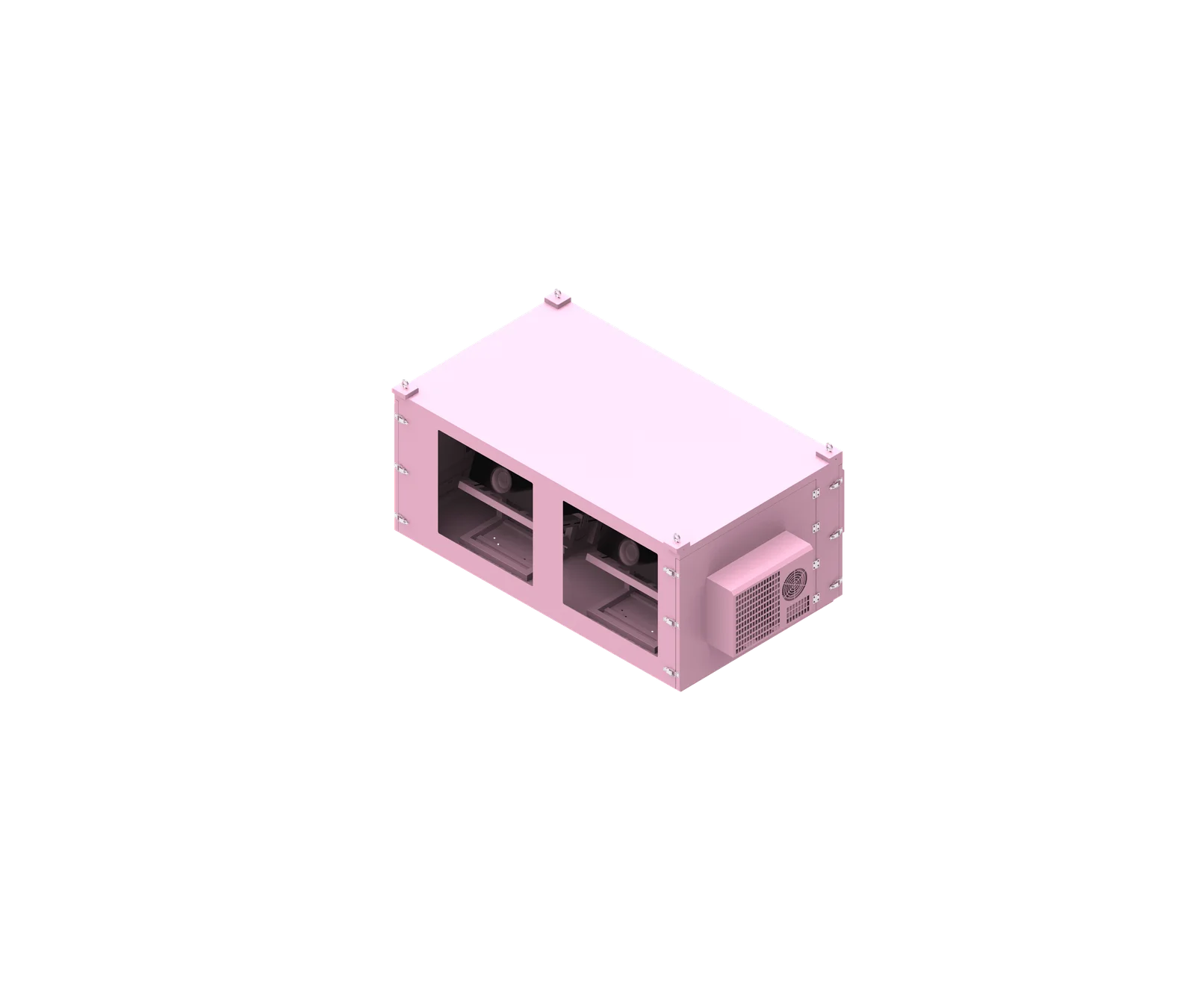
A desert projector enclosure must control both contamination and heat. In desert, dusty, and sandstorm-prone sites, an outdoor projector enclosure is not just a protective shell; it is an environmental-control system designed around fine dust, wind-driven sand, solar heat gain, projector airflow, cable sealing, optical clarity, and long-term maintenance access.
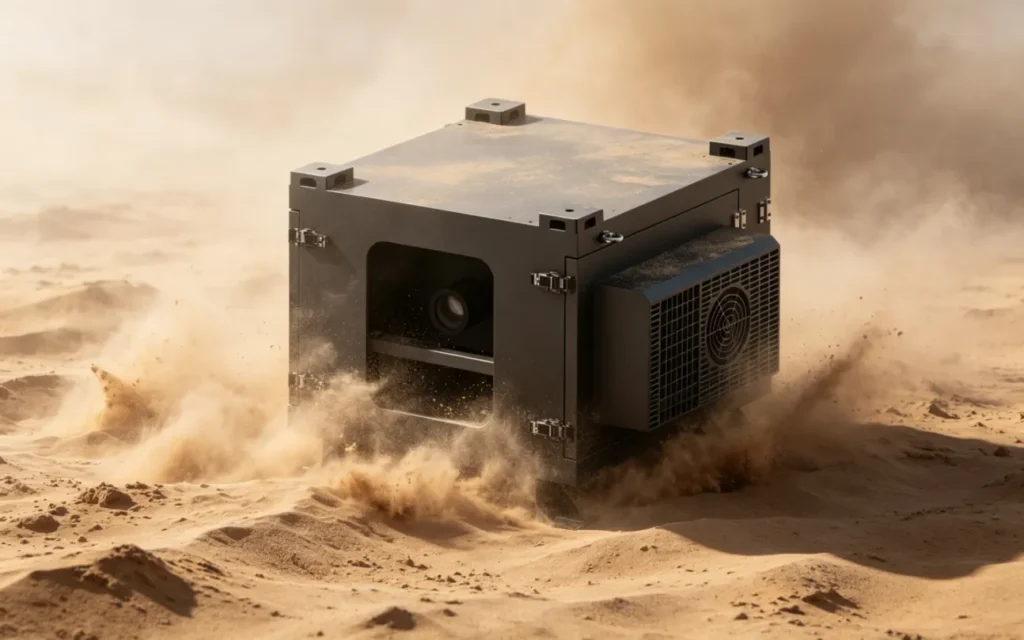
What is desert projector enclosure?
A desert projector enclosure is a protective outdoor cabinet engineered to reduce dust and sand ingress while managing projector heat in harsh climates. Unlike a simple rain cover, it must consider sealing, cooling, optical-window protection, solar exposure, cable entries, and service access as one integrated system.
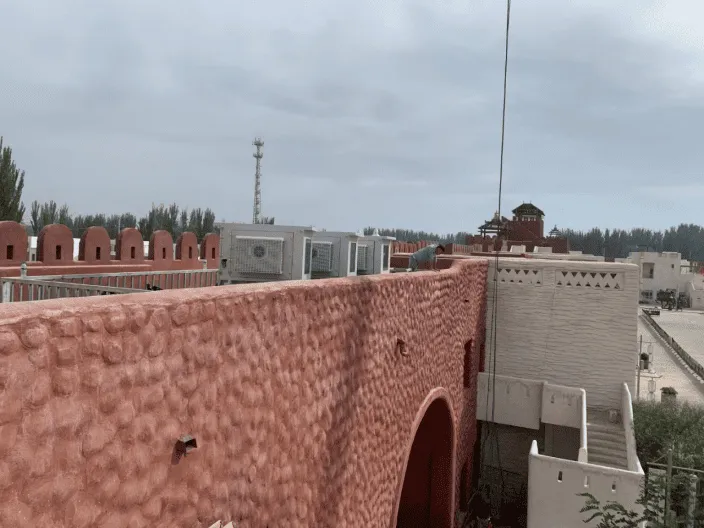
Functional Definition and Design Scope
A desert projector enclosure protects a projector from environmental stress while allowing it to operate within a safe thermal range. The central challenge is that projectors generate heat continuously, so simply sealing the cabinet can trap heat and create reliability problems.
For desert installations, the enclosure should be evaluated as a complete system, not just a metal box with an IP label.
Based on our internal data and market analysis, here is the breakdown:
| Design Area | Why It Matters in Desert Projects | Engineering Consideration |
|---|---|---|
| Dust and sand protection | Fine particles can enter through small gaps and airflow paths | Door seals, cable glands, access panels, optical-window sealing |
| Thermal management | Projectors generate heat during operation | Cooling method must match projector heat load and ambient conditions |
| Solar exposure | Direct sunlight increases enclosure temperature | Surface finish, shading, orientation, and solar heat gain must be reviewed |
| Optical protection | Dust on the glass reduces image quality | Sealed optical window with safe cleaning access |
| Maintenance access | Desert systems require inspection and cleaning | Doors, filters, heat exchangers, seals, and cable entries must remain accessible |
| Installation method | Wind and mounting affect safety and serviceability | Pole, wall, rooftop, or structure-mounted designs need project review |
SuiRui Pro Tip: I recommend treating the enclosure as part of the projection system, not an accessory. Before selecting a desert projector enclosure, confirm the projector model, airflow direction, site climate, operating hours, and maintenance conditions.
How Does desert projector enclosure Work?
A desert projector enclosure works by combining dust control, controlled airflow, thermal transfer, optical sealing, and serviceable construction. The goal is to keep dust and sand away from the projector while removing heat safely, without relying only on enclosure sealing or outside-air ventilation.
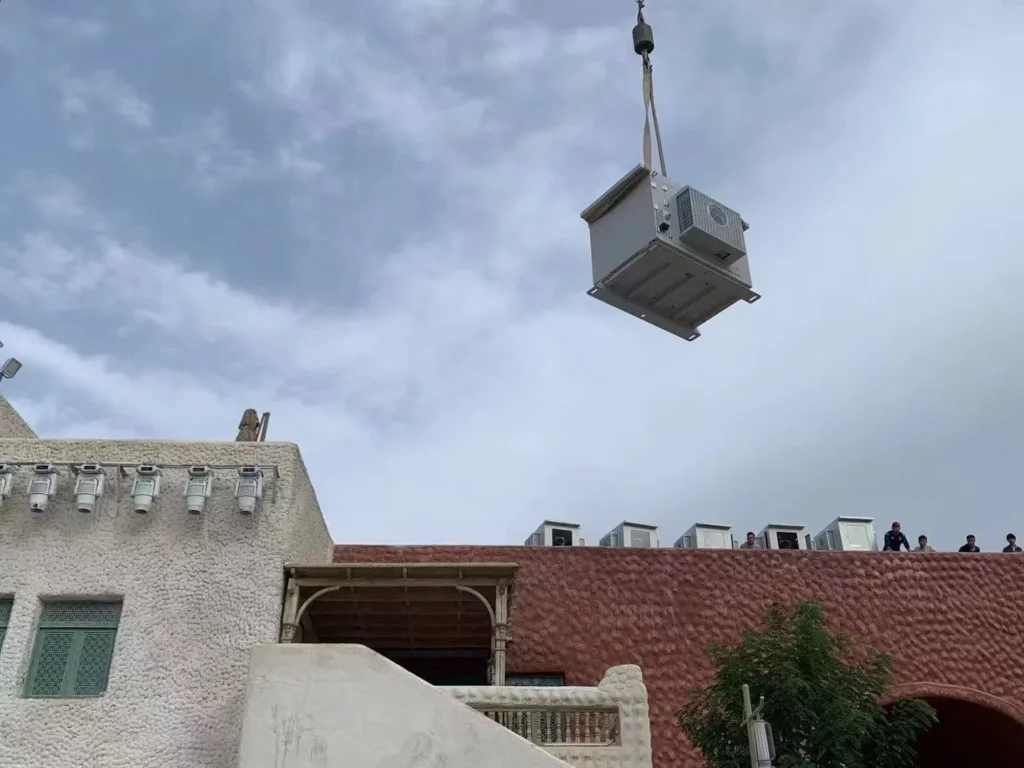
Environmental Control Process
The enclosure manages two competing requirements: it must limit contamination while still removing heat. A good design balances sealing, cooling, internal air circulation, and maintenance access according to the actual site.
A typical engineering workflow includes:
- Identify the exact projector model, dimensions, power consumption, and airflow direction.
- Review site climate, including maximum and minimum ambient temperature, solar exposure, dust severity, and operating hours.
- Determine whether the enclosure will use filtered ventilation, a more isolated cooling architecture, or an air conditioned projector enclosure design.
- Evaluate projector intake and exhaust paths to avoid hot-air recirculation.
- Design door seals, optical-window seals, cable glands, and access panels to reduce dust paths.
- Review cooling-system access, including fans, filters, heat exchangers, and sensors where used.
- Confirm installation structure, weight, wind exposure, maintenance access, and electrical requirements.
- Prepare technical drawings and verify the enclosure configuration before fabrication.
SuiRui Pro Tip: I always check the projector’s original airflow direction before discussing cooling. If the enclosure forces hot exhaust back into the projector intake, even a powerful cooling system may perform poorly.
What are some good outdoor projectors that can work in daylight?
Outdoor projectors that perform better in daylight usually combine high brightness, appropriate lens selection, strong contrast handling, and compatibility with suitable screens. However, in desert installations, the projector choice must also match enclosure cooling capacity, airflow direction, heat output, and optical-window requirements.
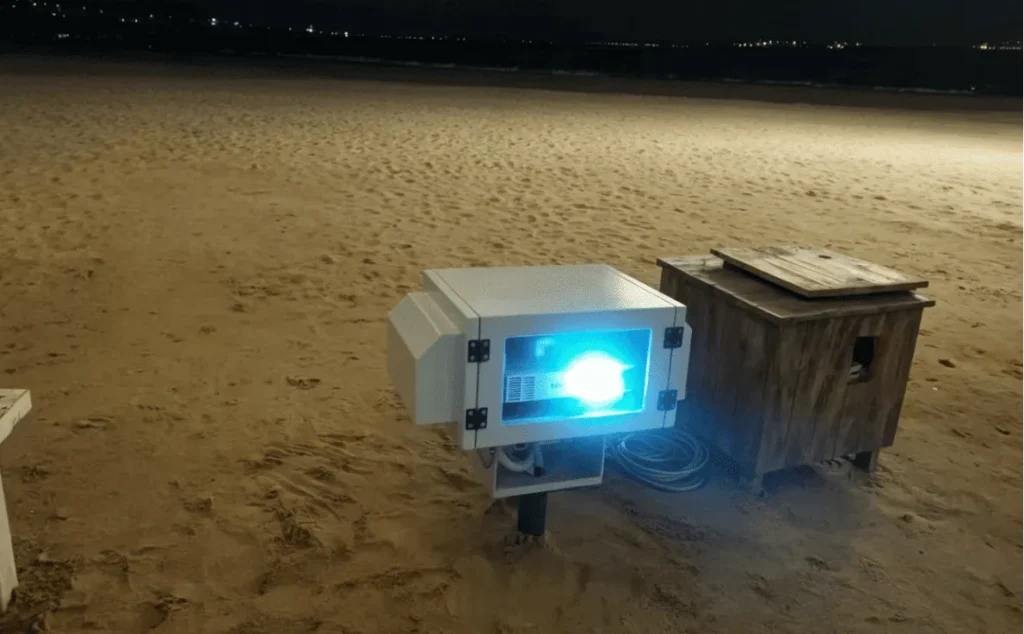
Daylight Projector Selection Criteria
Daylight projection is not solved by projector brightness alone. The projector, screen, viewing angle, ambient light, content type, and enclosure optical design all affect image quality. In desert environments, thermal behavior is equally important because high-brightness projectors often produce significant heat.
Based on our internal data and market analysis, here is the breakdown:
| Selection Factor | Why It Matters Outdoors | Desert Enclosure Impact |
|---|---|---|
| Brightness output | Helps image visibility under ambient light | Higher brightness often means higher heat load |
| Projector type | Laser models are common in demanding applications | Cooling and dust protection still matter |
| Lens throw ratio | Determines projector position and image size | Optical window must align with the lens path |
| Airflow direction | Affects intake and exhaust routing | Enclosure must not block or recirculate air |
| Power consumption | Closely related to heat generation | Cooling must be sized from actual heat load |
| Service requirements | Outdoor systems need periodic inspection | Enclosure should allow access without realignment |
| Screen compatibility | Impacts daylight visibility | ALR or high-gain screen choice may reduce projector demand |
Common categories to evaluate include high-brightness laser projectors, large-venue projectors, and professional installation projectors. The best option depends on the required image size, viewing conditions, operating schedule, and the enclosure’s thermal design.
SuiRui Pro Tip: I prefer to review the projector datasheet before enclosure design starts. Brightness is important, but heat load, intake location, exhaust direction, and lens position often determine whether the system will be reliable outdoors.
What is the best outdoor enclosure for a projector?
The best outdoor projector enclosure is the one engineered for the exact projector, climate, dust level, heat load, solar exposure, mounting method, and maintenance plan. For desert sites, buyers should not select an enclosure based only on IP rating or cabinet material.
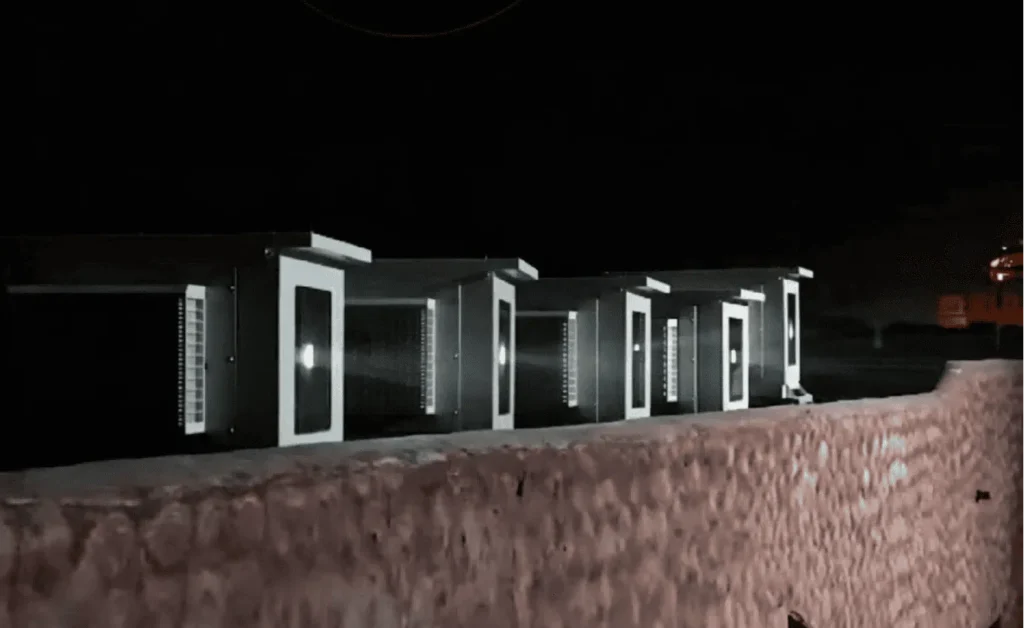
Best-Fit Engineering Criteria
There is no universal best enclosure for every desert project. An outdoor projector enclosure for desert use must be specified according to the site and equipment. A mild dusty location may support one cooling strategy, while a severe sandstorm-prone site may justify a more isolated thermal architecture after engineering evaluation.
Based on our internal data and market analysis, here is the breakdown:
| Requirement | What to Check | Why It Affects “Best” Choice |
|---|---|---|
| Projector model | Dimensions, lens, airflow, heat output | Determines cabinet layout and cooling design |
| Dust severity | Fine dust, sandstorms, nearby roads, exposed terrain | Determines sealing and filtration strategy |
| Ambient temperature | Maximum and minimum project design conditions | Influences cooling selection and startup planning |
| Solar exposure | Direct sun, shade, orientation, surface finish | Adds thermal load beyond projector heat |
| IP requirement | Required solid and water ingress protection | Must be matched with actual design verification |
| Cooling method | Filtered ventilation, heat exchange, air conditioning | Must match heat load and contamination risk |
| Maintenance access | Glass, seals, filters, fans, heat exchangers | Determines long-term serviceability |
| Mounting structure | Pole, wall, roof, truss, custom frame | Affects wind exposure, weight, and service access |
An IP65 projector enclosure, when properly designed and verified, may offer strong dust and water protection. However, IP65 alone does not prove suitability for every desert environment because thermal performance, solar load, airflow, abrasion, condensation risk, and maintenance still require project-specific review.
SuiRui Pro Tip: When I help customers compare enclosures, I ask for the projector model and project location first. Without those two items, any “best enclosure” recommendation is only a guess.
What projector screen is best for daylight?
The best projector screen for daylight is usually one that improves perceived contrast under ambient light, such as an appropriate ALR or high-gain screen selected for the viewing geometry. For desert projects, screen choice should be coordinated with projector brightness, sun direction, viewing distance, and installation conditions.
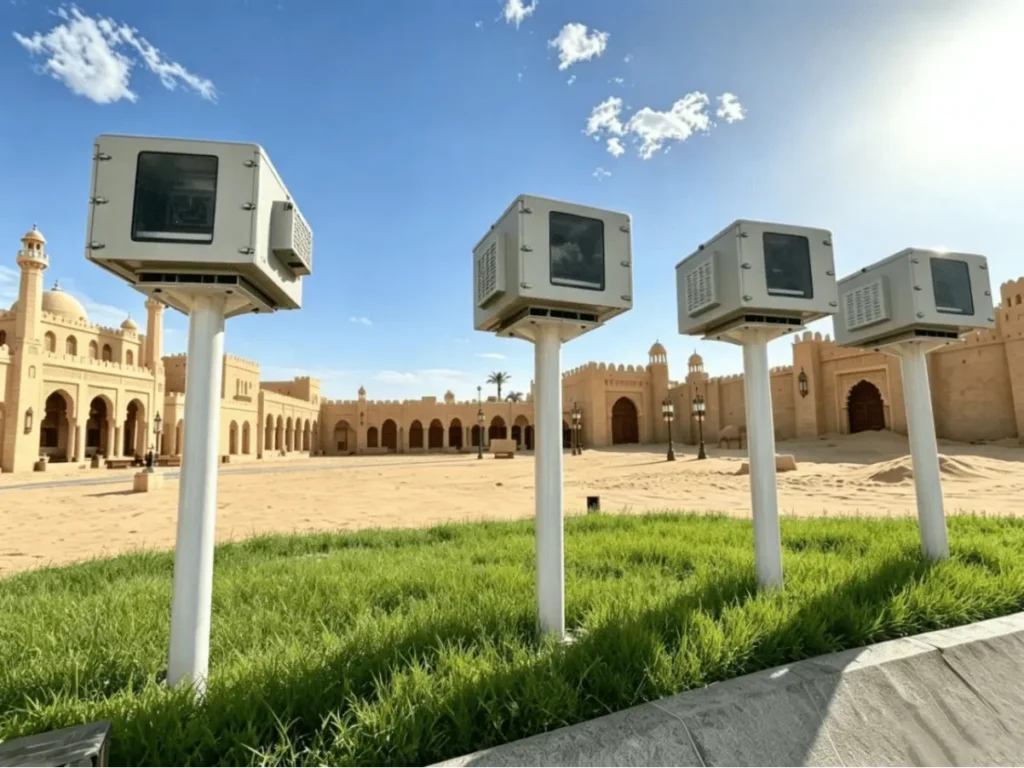
Screen Performance in Bright Outdoor Conditions
A daylight screen must manage ambient light, viewing angle, and image contrast. In desert environments, strong sunlight and bright surroundings can reduce image visibility, so screen selection should be part of the full projection design rather than an afterthought.
Based on our internal data and market analysis, here is the breakdown:
| Screen Factor | Daylight Benefit | Design Caution |
|---|---|---|
| Ambient light rejection | Improves contrast in controlled viewing directions | Must match projector and audience position |
| Gain | Can increase brightness toward viewers | High gain may narrow viewing angle |
| Surface color | Gray surfaces may improve perceived contrast | Not ideal for every projector or content type |
| Viewing angle | Determines audience coverage | Narrow screens may not suit wide audiences |
| Outdoor durability | Supports long-term exposure | Wind, dust, UV, and cleaning access must be considered |
| Installation orientation | Reduces direct sunlight impact | Site layout and sun path should be reviewed |
| Screen size | Larger images need more projector output | Brightness and heat load may increase projector requirements |
For the best result, avoid placing the screen where direct sun hits the viewing surface during operation. If daylight viewing is critical, coordinate projector brightness, screen gain, ambient light control, and enclosure thermal design together.
SuiRui Pro Tip: I suggest confirming the screen and projector together. A better screen can sometimes reduce the need for an oversized projector, which may also reduce heat load inside the enclosure.
Key Features & Comparison
Key features of a desert projector enclosure include dust-resistant sealing, suitable thermal management, protected optical glass, sealed cable entries, serviceable cooling components, structural mounting support, and project-specific verification. The strongest designs balance contamination control and heat removal instead of focusing on only one feature.
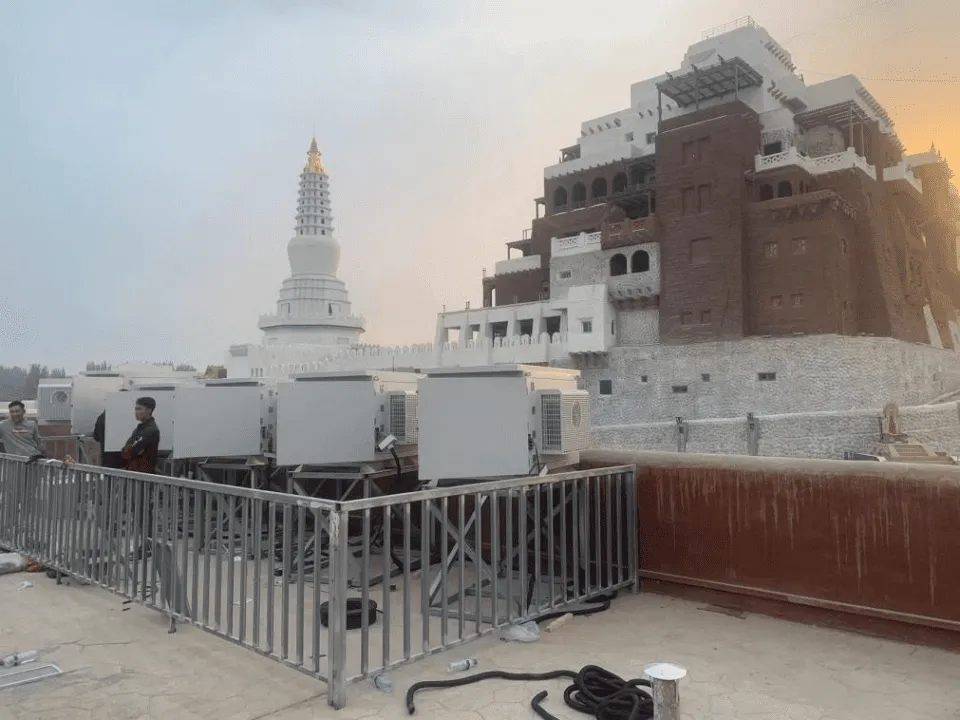
Fan Cooling vs More Isolated Air-Conditioned Designs
Filtered fan cooling and air-conditioned enclosure designs can both be valid, depending on the projector and site. The correct choice depends on heat load, dust severity, maintenance capability, operating schedule, and project requirements. Severe desert conditions may justify a more isolated air-conditioned design after thermal evaluation.
Based on our internal data and market analysis, here is the breakdown:
| Design Factor | Filtered Fan Cooling | Sealed / AC-Type Design |
|---|---|---|
| Outside-air exchange | Higher | Lower |
| Dust exposure | Depends heavily on filtration and sealing quality | Can be reduced with a more isolated internal circuit |
| Filter maintenance | More important because airflow depends on filter condition | Different maintenance focus, including external heat exchanger inspection |
| High heat load | Must be evaluated carefully | Can suit demanding thermal loads when properly selected |
| Severe sandstorm exposure | Requires careful evaluation of dust bypass and filter loading | Often worth evaluating for severe fine-dust locations |
| Thermal control | Depends on ambient air and airflow performance | Can provide more controlled internal conditions |
| Internal airflow design | Still required to prevent hot spots | Still required to prevent hot-air recirculation |
| Maintenance access | Filter, fan, seal, and glass inspection | AC unit, heat exchanger, drain/condensation considerations, seal, and glass inspection |
| Main risk if poorly designed | Dust ingress and reduced cooling from clogged filters | Inadequate cooling capacity, heat-exchanger contamination, or poor service access |
Important enclosure features include:
- Continuous door gasket sealing with reliable latch compression.
- Properly sized cable glands and sealed unused openings.
- Optical-window sealing with access for safe external cleaning.
- Cooling architecture selected from projector heat load, ambient temperature, solar exposure, and operating hours.
- Internal airflow paths designed around projector intake and exhaust.
- Sensor placement that reflects useful enclosure conditions rather than localized cold or hot spots.
- Maintenance access for filters, fans, heat exchangers, electrical components, cable glands, and seals.
- Structural review for pole-mounted, rooftop, or elevated installations.
SuiRui Pro Tip: I do not treat “fan cooling versus air conditioning” as a fixed rule. I first evaluate dust severity and heat load, then choose the cooling architecture that protects both the projector and the maintenance team.
Cost & Buying Factors
The cost of a desert projector enclosure depends on projector size, heat load, required IP rating, cooling method, material, optical-window design, electrical controls, monitoring options, mounting structure, and verification requirements. Buyers should compare total operating reliability, not only the initial cabinet price.
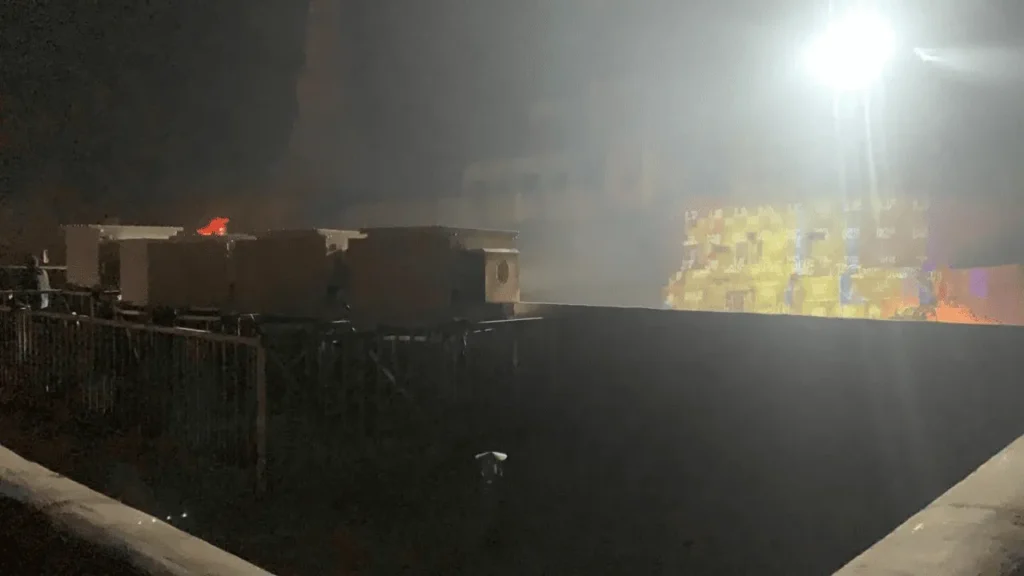
Pricing Variables That Affect Engineering Scope
A dustproof projector enclosure for desert operation can range from a simpler outdoor cabinet to a highly engineered air conditioned projector enclosure with monitoring and custom mounting. Cost should reflect project risk, environmental severity, and long-term service requirements.
Based on our internal data and market analysis, here is the breakdown:
| Buying Factor | Cost Impact | Why It Matters |
|---|---|---|
| Projector size and weight | Affects enclosure dimensions and structure | Larger projectors need more space and stronger support |
| Heat load | Drives cooling system selection | Cooling should not be selected by enclosure volume alone |
| Required IP rating | Affects sealing, fabrication, and verification | IP6X dust protection differs from IP5X under IEC 60529 terminology |
| Cooling method | Major cost driver | Fans, filters, heat exchangers, and AC systems have different costs |
| Material selection | Affects price, weight, corrosion resistance, and fabrication | Galvanized steel, aluminum, and stainless steel each have tradeoffs |
| Optical window | Affects image quality and sealing | Needs correct aperture, sealing, and cleaning access |
| Electrical system | Adds controls, sensors, power distribution, and safety components | Must match actual loads and project requirements |
| Remote monitoring | Optional cost increase | Useful for remote sites but not required in every enclosure |
| Mounting method | Can affect engineering and installation cost | Pole-mounted systems need weight, center-of-gravity, and wind review |
| Testing and documentation | May increase project cost | IP test documentation, functional testing, or inspection may be required |
Before requesting a quotation from SuiRui or any enclosure manufacturer, prepare the following information:
- Projector brand and exact model.
- Projector dimensions, weight, power consumption, and airflow direction.
- Lens model and required optical-window position.
- Project location and climate information.
- Maximum and minimum ambient temperature for the project.
- Dust, sand, and sandstorm severity.
- Direct sunlight exposure and installation orientation.
- Daily operating hours and seasonal usage.
- Required IP rating and any project specifications.
- Installation method, mounting height, and available service access.
- Power supply, control requirements, and monitoring needs.
- Quantity, drawings, site photos, and maintenance conditions.
SuiRui Pro Tip: I advise buyers to share drawings and site photos early. Small details, such as cable-entry direction or service-door clearance, can affect both cost and reliability.
Conclusion
A desert projector enclosure should be designed around the exact projector, site climate, dust exposure, thermal load, solar conditions, installation method, and maintenance plan. The right solution balances dust protection and heat management instead of relying only on enclosure sealing or an IP label.
Practical Selection Summary
Desert and sandstorm-prone installations create a difficult engineering balance. The enclosure must reduce dust and sand contamination while removing heat generated by the projector and added by solar exposure. If the cabinet is sealed without proper cooling, overheating can occur. If large amounts of untreated outdoor air are used for cooling, contamination risk increases.
A practical selection process should follow this sequence:
- Confirm the projector model, heat load, lens, and airflow direction.
- Review climate conditions, including temperature range, sunlight, dust, sand, and possible condensation risk.
- Decide whether filtered ventilation, a more isolated cooling system, or an air conditioned projector enclosure is appropriate.
- Design internal airflow to prevent hot spots and exhaust recirculation.
- Specify door seals, optical-window sealing, cable glands, and access panels.
- Plan maintenance access for glass, seals, filters, fans, heat exchangers, and electrical components.
- Review structure, mounting, wind exposure, and service safety.
- Request appropriate verification based on project requirements, such as IP documentation, thermal testing, factory functional testing, or electrical inspection.
SuiRui can support project-specific outdoor projector enclosure design for desert, dusty, and sandstorm-prone environments when buyers provide the projector model, site conditions, installation method, and required performance criteria.
SuiRui Pro Tip: My final recommendation is simple: never specify a desert projector enclosure from the IP rating alone. Start with the projector, climate, dust severity, and heat load, then engineer the enclosure around the real operating conditions.