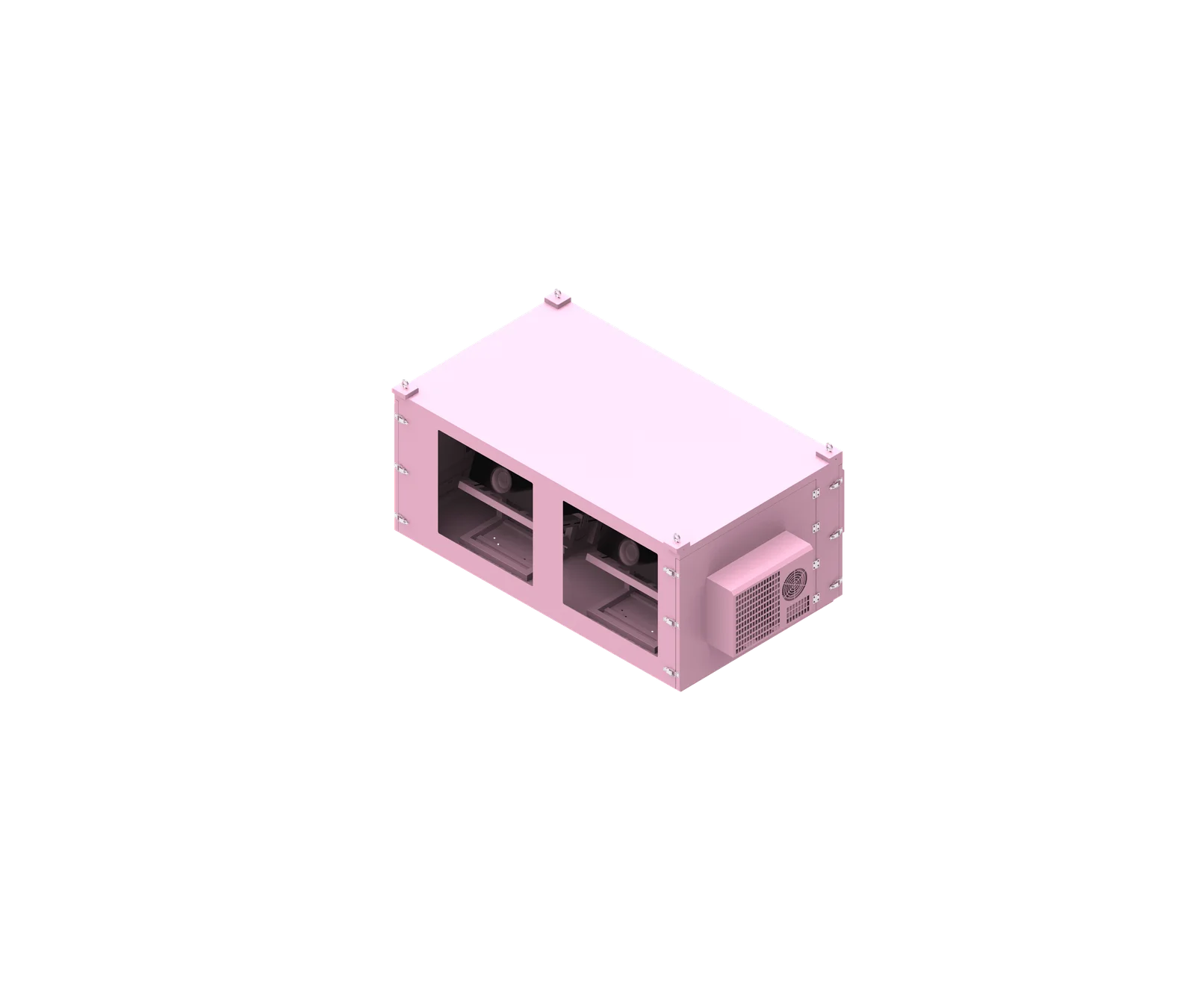
This engineering case study reviews a custom outdoor projector enclosure concept for a professional installation using five 25,000-lumen projectors. The key lesson is that a five projector enclosure is not simply a larger cabinet; it is a complete thermal, optical, electrical, structural, and maintenance system designed around five high-brightness devices operating together in an outdoor environment.
Video Guide: Take a closer look at a waterproof projector enclosure designed for professional outdoor projection equipment. This video presents the enclosure structure and shows how a dedicated housing solution can support projector protection in permanent installations and long-term outdoor applications.
What is five projector enclosure?
A five projector enclosure is a custom outdoor protection system designed to house, support, cool, power, and service five projectors in one coordinated installation. For five 25,000-lumen projectors, the enclosure must manage multiple heat sources, airflow paths, lens positions, cables, and access points as one engineered system.
System Definition and Engineering Scope
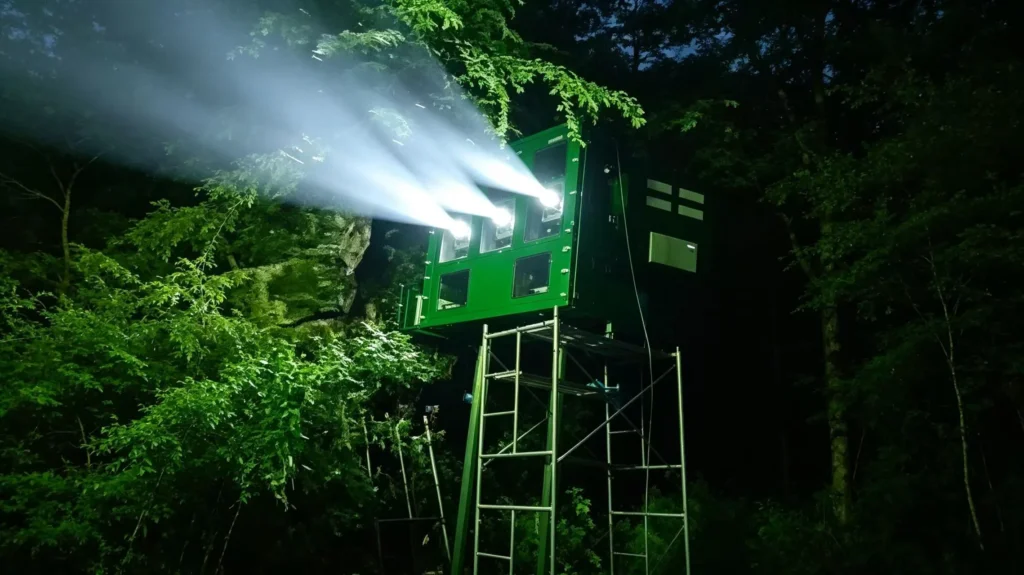
A five projector enclosure is purpose-built for projects where multiple projectors are needed for large outdoor projection surfaces, projection mapping, scenic night tours, cultural tourism projects, building façades, outdoor performances, or large architectural projection. In this verified project, the enclosure system is designed for five professional projectors, each rated at 25,000 lumens.
The important distinction is that the enclosure must be designed around the complete projector array, not around five isolated units. Projector quantity changes heat load, airflow interaction, structural load, cable routing, optical geometry, electrical distribution, and maintenance planning.
Key elements of a custom projector enclosure for five high-brightness units include:
- Weather protection for outdoor operation conditions such as rain, dust, humidity, insects, and contaminants
- Internal mounting support for five projectors
- Optical-window planning for five lens positions
- Cooling and airflow management for five separate intake and exhaust patterns
- Power distribution for projectors and supporting systems
- Cable routing for power, signal, Ethernet, fiber, and control cables
- Maintenance access for each projector and related components
- Structural coordination with the final installation platform or support structure
Shirui Pro Tip: We always begin a five-projector enclosure project by treating the five projectors as one interacting system. If the enclosure is planned as five independent boxes inside one cabinet, thermal conflicts and service problems are much more likely.
How Does five projector enclosure Work?
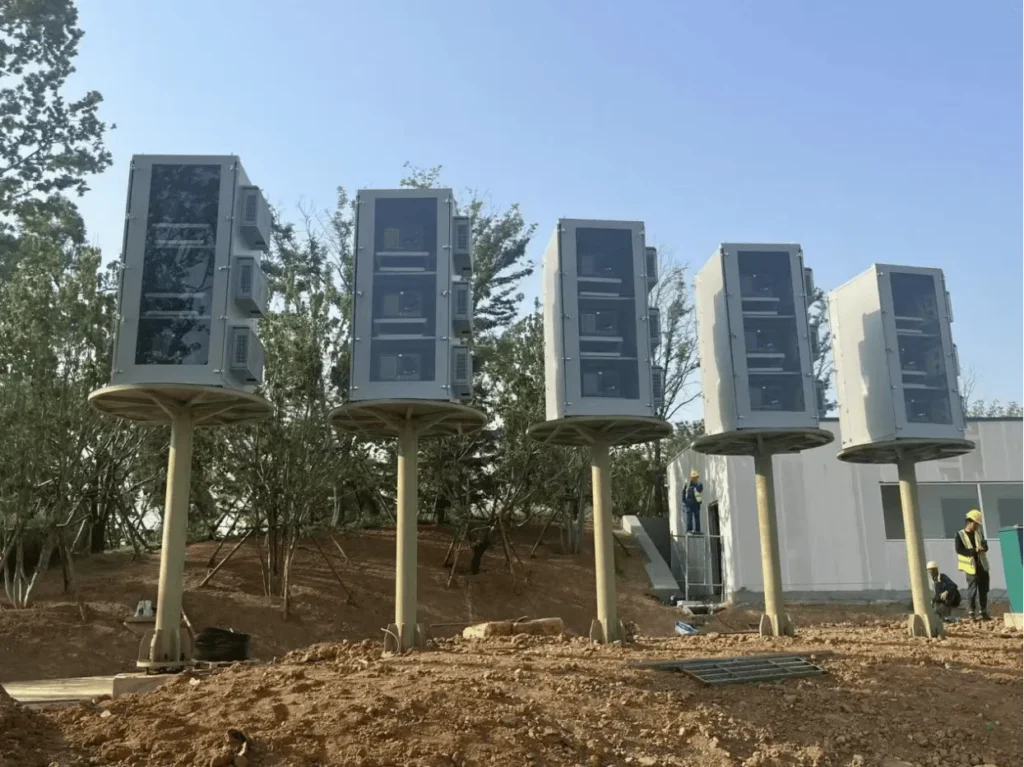
A five projector enclosure works by combining outdoor protection, controlled airflow, optical access, structural support, electrical distribution, and service access into one coordinated housing system. Each projector must receive suitable intake air, exhaust heat safely, project through correctly positioned windows, and remain accessible for alignment and maintenance.
Operating Principle for Five High-Brightness Projectors
The enclosure works as an environmental and mechanical interface between the outdoor site and the projectors. It protects sensitive equipment while allowing the projectors to operate optically and thermally as intended.
For five 25,000-lumen projectors, the workflow is more complex than a single-projector outdoor projector enclosure. Each projector has its own intake zone, exhaust zone, lens position, power connection, signal path, and maintenance requirement. These must be mapped before fabrication.
A recommended engineering workflow is:
- Confirm the exact projector models and quantity.
- Review projector dimensions, weights, power consumption, intake locations, and exhaust locations.
- Determine the projector arrangement based on projection geometry.
- Map all five airflow paths.
- Calculate combined thermal load using manufacturer power and thermal data, not lumen output.
- Define optical-window positions from actual lens centerlines and projection angles.
- Design the internal mounting structure without blocking airflow.
- Plan power distribution and cable routing.
- Design service doors and maintenance clearances.
- Review environmental sealing, condensation risk, and outdoor protection requirements.
- Approve technical drawings before fabrication.
- Verify airflow and temperature distribution after assembly.
Shirui Pro Tip: I do not recommend using lumen output as a shortcut for cooling design. For a 25000 lumen projector enclosure, we ask for actual power consumption, projector thermal data, operating hours, ambient conditions, and solar exposure before selecting a cooling architecture.
How many lumens is best for an outdoor projector?
The best lumen level for an outdoor projector depends on screen size, ambient light, projection distance, content type, surface reflectivity, and viewing conditions. For professional outdoor projection, 25,000 lumens per projector is suitable for demanding large-scale applications, but enclosure design must still be based on heat, airflow, and equipment data.
Brightness Selection Versus Enclosure Engineering
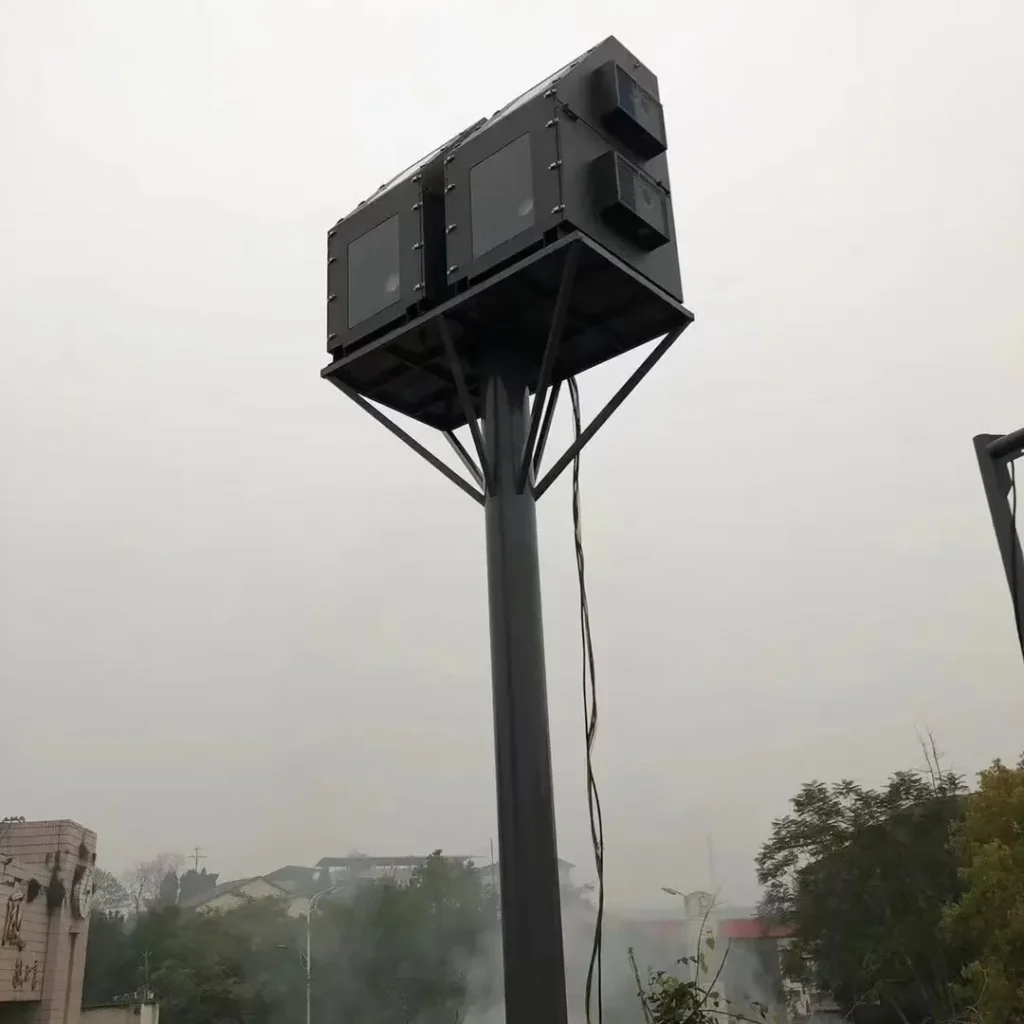
Outdoor projection generally requires higher brightness than indoor projection because ambient light, projection distance, and surface size reduce perceived image intensity. Large architectural surfaces, scenic outdoor shows, and projection mapping may require multiple high-brightness projectors to achieve the desired visual impact.
However, lumen output describes projector brightness. It does not directly define electrical power, heat generation, or cooling capacity. In this case, each projector is rated at 25,000 lumens, but the enclosure cooling design should be based on verified projector specifications rather than brightness alone.
Based on our internal data and market analysis, here is the breakdown:
| Outdoor Projection Factor | Why It Matters | Enclosure Design Impact |
|---|---|---|
| Projection surface size | Larger surfaces usually require more brightness | May require multiple projectors and more lens openings |
| Ambient light | Brighter surroundings reduce image contrast | May drive the use of high-lumen projectors |
| Projection distance | Longer throws reduce delivered image intensity | Affects lens selection and optical-window geometry |
| Surface reflectivity | Dark or uneven surfaces need more brightness | May require more projectors or tighter alignment |
| Operating duration | Longer runtime increases thermal exposure | Requires stable cooling and temperature verification |
| Projector quantity | Multiple units increase complexity | Changes airflow, structure, power, and service planning |
Shirui Pro Tip: When customers ask how many lumens they need, I separate image design from enclosure design. Brightness helps define the projection result, but power consumption and thermal data define how the enclosure must protect the equipment.
Is 30000 lumens good for a projector?
Yes, 30,000 lumens is considered very bright and suitable for many professional large-venue or outdoor projection applications. However, higher brightness usually comes with higher power and thermal demands, so a 30000 lumen projector enclosure must be engineered around verified projector data, not brightness rating alone.
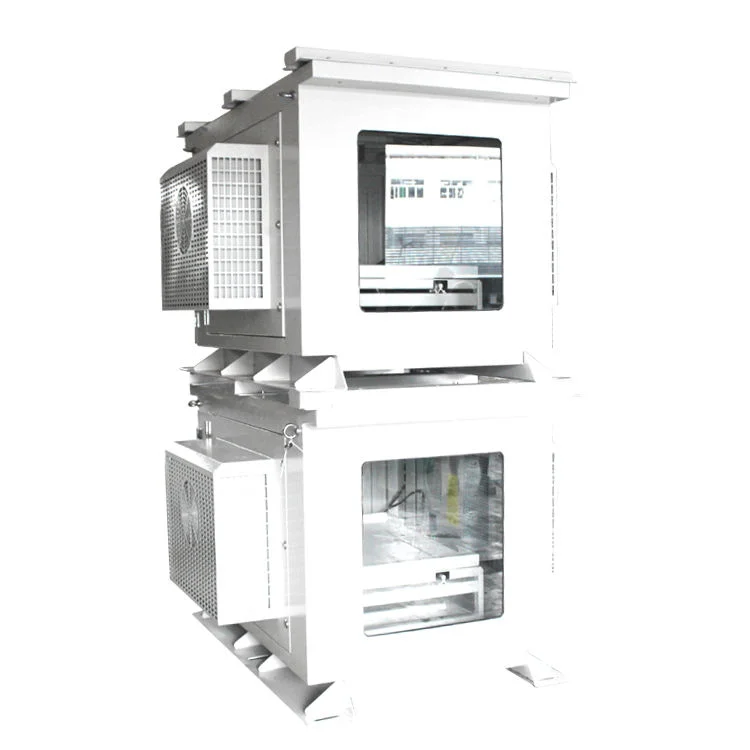
Evaluating High-Lumen Projectors in Outdoor Systems
A 30,000-lumen projector can be appropriate for demanding outdoor use, especially where large image size, long throw distance, or higher ambient light is involved. In this case study, the verified projectors are 25,000 lumens each, which already places them in the professional high-brightness category.
The enclosure challenge increases as projector performance increases. High-brightness projectors often require careful thermal planning, but lumen output still cannot be used as a direct cooling calculation. The correct process is to obtain the exact projector model, power consumption, manufacturer clearances, exhaust direction, and operating requirements.
Important evaluation points include:
- Does the projector brightness match the projection surface and ambient-light condition?
- What is the projector’s actual electrical power consumption?
- Where are the projector intake and exhaust openings?
- What clearance does the manufacturer require?
- What lens is used, and where is the lens centerline?
- How long will the projector operate outdoors?
- Will the enclosure experience sun exposure, humidity, dust, or condensation risk?
- How will technicians access the projector for cleaning, service, and alignment?
Shirui Pro Tip: A brighter projector does not automatically mean a better project. I look first at the complete projection requirement, then confirm whether the enclosure can safely manage the projector’s heat, airflow, power, and service needs.
Is a 3000 lumen projector suitable for daylight viewing?
A 3,000-lumen projector is usually not suitable for demanding daylight outdoor viewing, especially on large surfaces or in direct sun. It may work in shaded, small-format, controlled environments, but professional outdoor projection typically requires much higher brightness and careful enclosure engineering for long-term equipment protection.
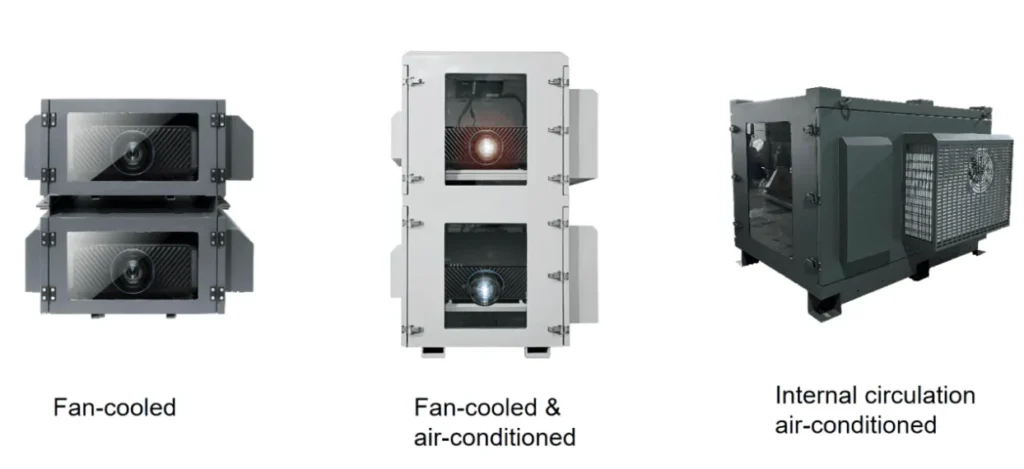
Daylight Viewing and Practical Brightness Limits
Daylight viewing is one of the most difficult projection conditions because sunlight and sky brightness reduce contrast dramatically. A 3,000-lumen projector may be acceptable for small shaded setups, temporary evening use, or controlled backyard viewing, but it is generally not comparable to professional outdoor systems using 25,000-lumen projectors.
For a multi projector outdoor enclosure, brightness level is only one part of the design. Five high-brightness projectors introduce combined thermal and structural challenges that a smaller single-projector system may not face.
Typical practical distinctions include:
- 3,000 lumens: Better suited to dark or shaded viewing conditions and smaller images
- Mid-brightness projectors: Useful for controlled outdoor evening applications
- 25,000 lumens per projector: Suitable for professional outdoor projection scenarios requiring high image output
- Multiple high-brightness projectors: Used when projection geometry, surface size, mapping zones, or image blending require more than one unit
Daylight feasibility should always be assessed by a projection designer using site conditions, surface type, throw distance, and content requirements.
Shirui Pro Tip: I advise customers not to solve daylight visibility with projector brightness alone. If the image must be visible in bright conditions, the surface, viewing angle, ambient light control, projector selection, and enclosure placement all need to be reviewed together.
Key Features & Comparison
The key feature of a five projector enclosure is system-level coordination. Compared with a single-projector cabinet, it must handle five heat sources, five airflow paths, five lens positions, more cable routes, larger structural demands, more complex power distribution, and service access for every projector without disturbing alignment.
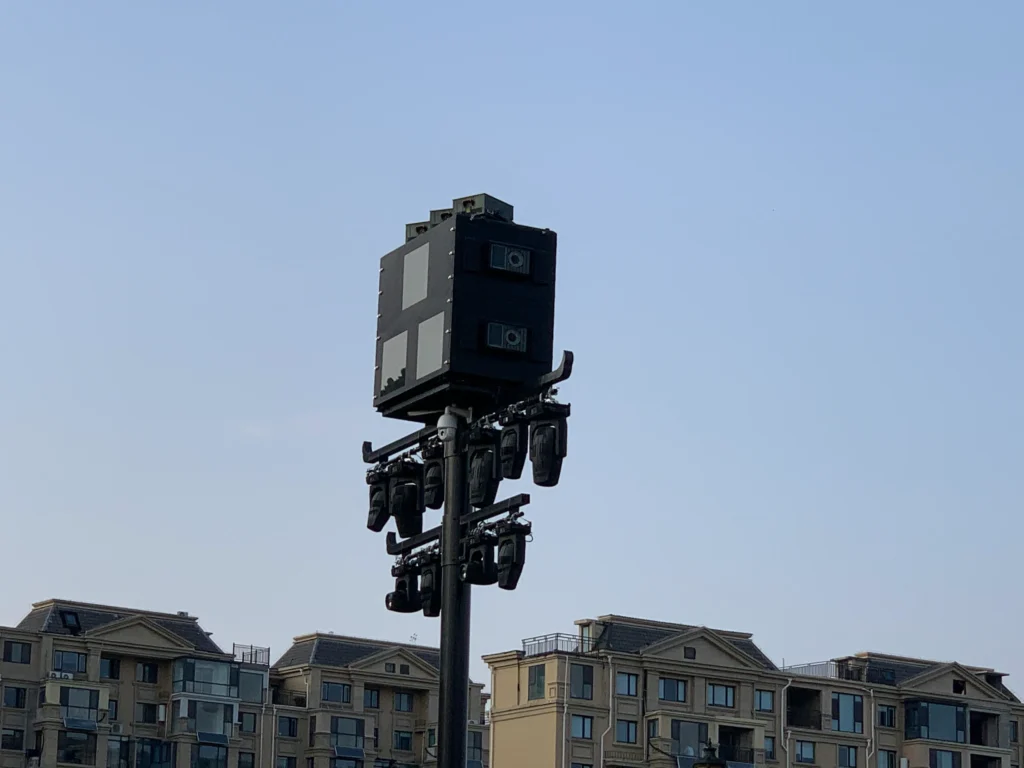
Single Versus Five-Projector Engineering Differences
A five-projector enclosure case study shows why multi-projector systems should not be treated as a simple scale-up. The enclosure must be engineered around interacting heat sources, airflow zones, optical paths, and maintenance points.
Based on our internal data and market analysis, here is the breakdown:
| Design Factor | Single Projector | Five Projectors |
|---|---|---|
| Heat Sources | 1 | 5 |
| Airflow Paths | 1 | 5 interacting paths |
| Lens Positions | 1 | 5 |
| Power Circuits | Simple | Much more complex |
| Cable Routing | Limited | Multiple power and signal routes |
| Structural Load | Lower | Significantly higher |
| Maintenance | One unit | Five service positions |
| Thermal Verification | Simpler | Multi-point verification needed |
| Optical Alignment | One projector | Multi-projector alignment |
| Cooling | One heat source | Combined heat plus distribution control |
For the verified project, each projector is rated at 25,000 lumens. That brightness level supports professional outdoor projection, but the enclosure design must still be driven by the exact projector data. The design should evaluate five separate heat sources, five intake and exhaust patterns, electrical components, cooling-system heat, ambient heat, and solar heat gain.
A reliable custom projector enclosure should also account for optical-window design. Five lens center positions, lens shift, projection angles, lens-to-window distances, and required clear apertures must be verified before production. Depending on the arrangement, the system may use separate optical windows or larger combined openings.
Shirui Pro Tip: In multi-projector enclosure design, I pay special attention to airflow interaction. One projector’s exhaust should never become another projector’s intake air, even if the average cabinet temperature looks acceptable.
Cost & Buying Factors
The cost of a five projector enclosure depends on projector models, arrangement, outdoor conditions, cooling strategy, structure, optical-window design, electrical requirements, cable routing, and service-access complexity. Buyers should provide complete technical data before quotation so the enclosure can be engineered accurately instead of estimated from lumen output.
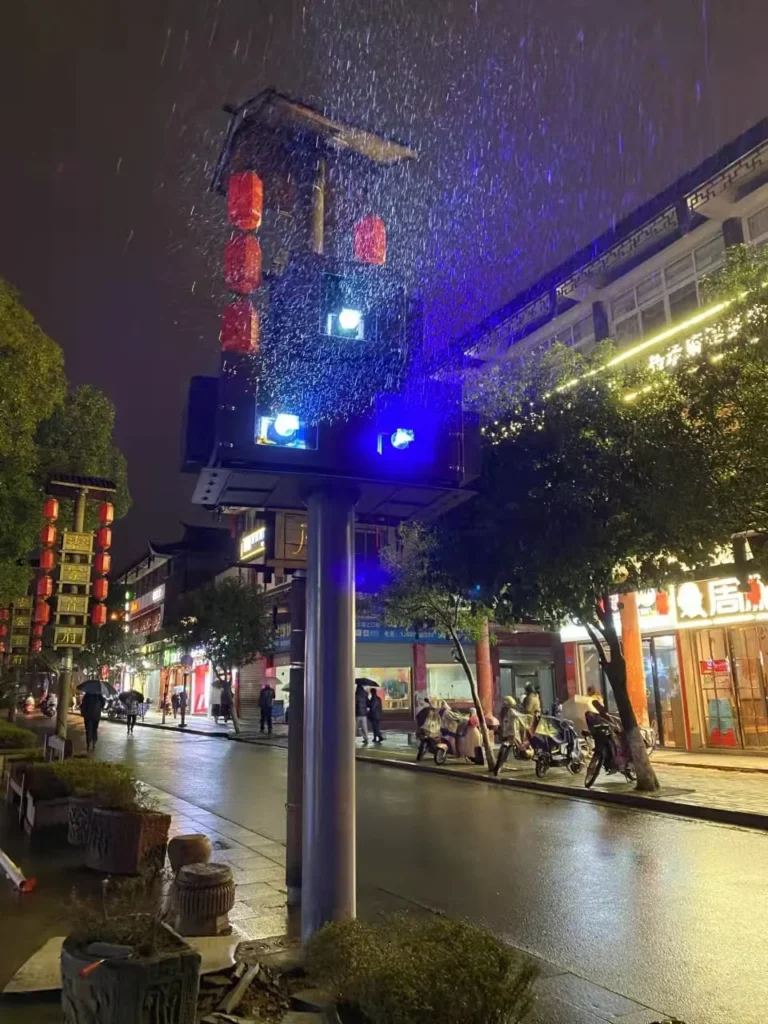
Pricing Drivers and Required Buyer Information
A custom multi projector enclosure is priced according to engineering complexity, manufacturing scope, and system requirements. For five 25,000-lumen projectors, the enclosure may require more complex fabrication, internal support, airflow separation, optical-window coordination, and maintenance planning than a standard outdoor projector enclosure.
Because verified project data does not include dimensions, cooling capacity, material thickness, IP rating, installation method, or projector model, these should not be assumed. A responsible quotation should be based on confirmed project information.
Based on our internal data and market analysis, here is the breakdown:
| Buying Factor | Why It Affects Cost | Information Needed from Buyer |
|---|---|---|
| Exact projector model | Defines size, airflow, power, and mounting | Brand, model, datasheet |
| Projector quantity | Confirms five-unit layout complexity | Quantity and arrangement |
| Projector dimensions | Drives enclosure volume and access | Length, width, height |
| Projector weight | Affects internal structure and support | Weight per projector |
| Power consumption | Determines electrical and thermal planning | Rated power and operating data |
| Intake/exhaust positions | Critical for airflow design | Manufacturer airflow diagram |
| Lens model and shift | Defines optical-window geometry | Lens type and lens centerline |
| Installation method | Affects structure and center of gravity | Platform, frame, rooftop, or other support |
| Outdoor environment | Drives sealing, cooling, and condensation planning | Temperature, humidity, dust, rain exposure |
| Operating hours | Affects thermal stability and reliability | Daily and seasonal use pattern |
| Cable requirements | Affects entry points and routing | Power, signal, fiber, Ethernet, control cables |
| Maintenance expectations | Determines door layout and access zones | Service method and access direction |
Buyers planning a similar five projector enclosure should prepare site drawings, projector datasheets, projection geometry, installation photos, power information, and environmental requirements before fabrication begins.
Shirui Pro Tip: The fastest way to reduce redesign risk is to provide the exact projector datasheet at the beginning. Without intake location, exhaust direction, dimensions, weight, lens data, and power consumption, enclosure design becomes guesswork.
Conclusion
A reliable five-projector outdoor enclosure should be engineered around exact projector models, actual arrangement, thermal data, lens geometry, structural support, power distribution, cable routing, outdoor protection, and maintenance access. Five 25,000-lumen projectors create one integrated engineering problem, not five separate cabinet problems.
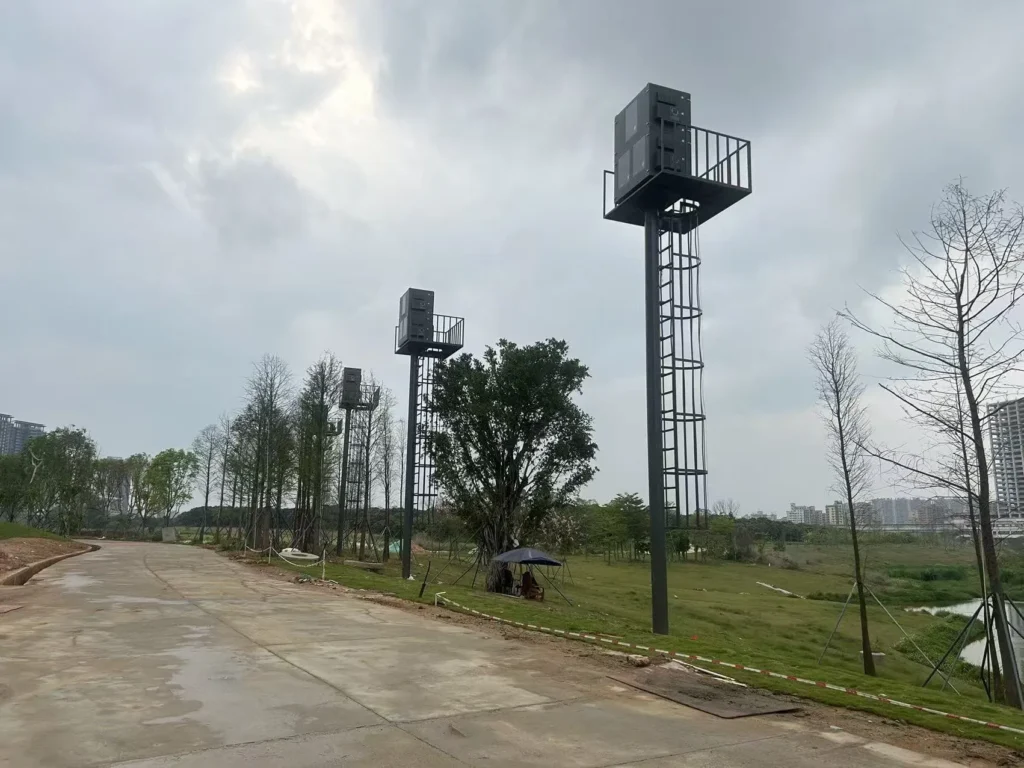
Engineering Lessons for Similar Projects
The verified project involves five projectors, each rated at 25,000 lumens, for a professional outdoor projection installation. The main engineering challenge is protecting and thermally managing five high-brightness projectors in an outdoor environment.
The most important lessons are:
- Five projectors create interacting thermal and airflow conditions.
- 25,000 lumens should not be used as a heat-load calculation.
- Each projector airflow path should be mapped individually.
- Hot exhaust from one projector should not feed another projector intake.
- Optical windows should follow actual lens geometry.
- Power distribution should be designed for the complete system.
- Cable routing should be planned before fabrication.
- Maintenance access should allow each projector to be serviced where practical.
- Structural design should consider total equipment weight and center of gravity.
- Airflow and temperature should be verified after assembly.
For similar professional installations, Shirui recommends a complete engineering review before production: confirm projector models, map airflow, calculate combined thermal load from actual power data, define lens positions, plan cable entries, design access zones, approve drawings, fabricate, assemble, verify airflow, and complete final inspection.
Shirui Pro Tip: For large outdoor projection projects, we design the enclosure only after we understand the projector array. The best result comes when thermal management, optical alignment, structure, power, cable routing, and maintenance are coordinated before manufacturing begins.