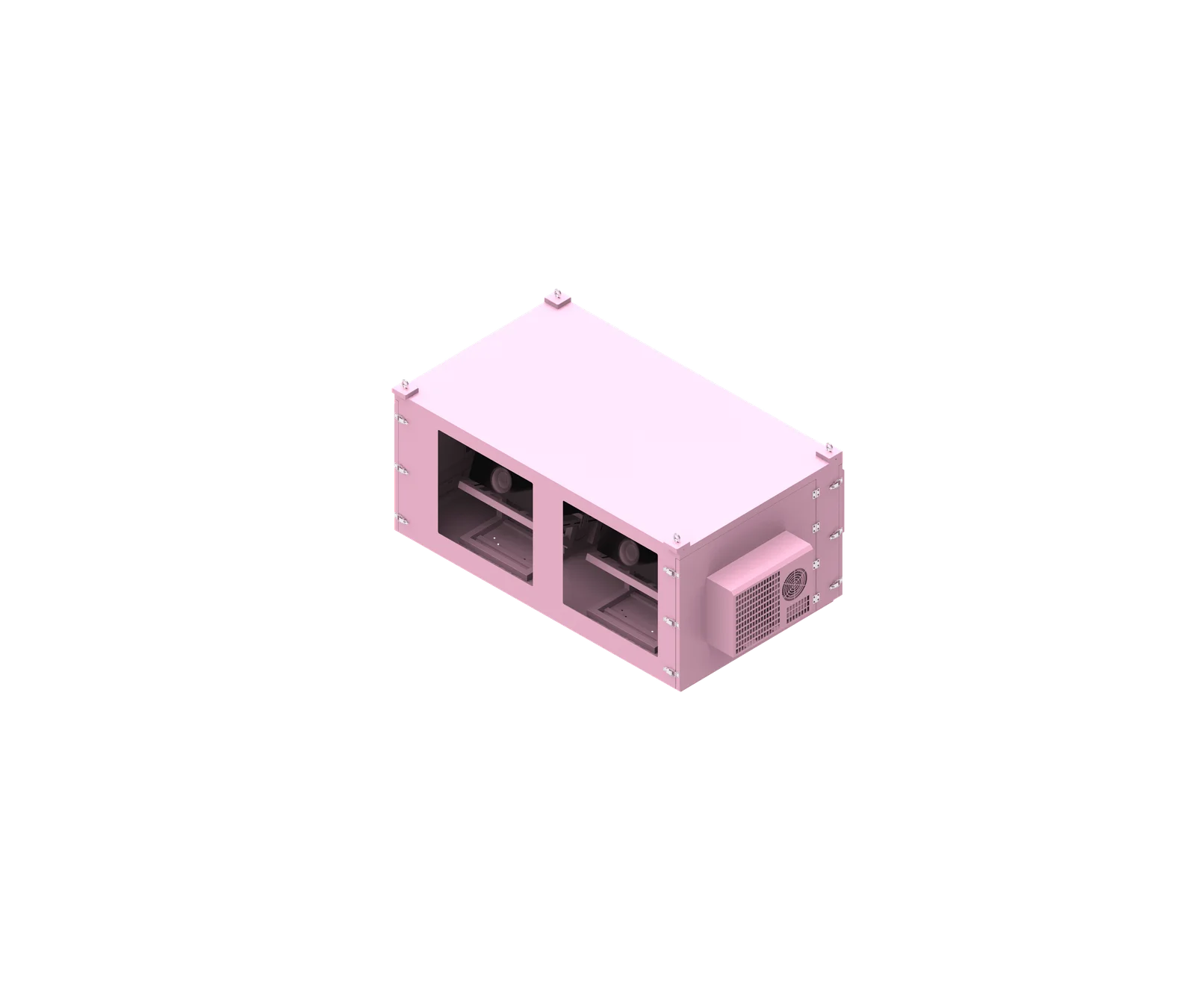
Choosing the right protection level for a weatherproof network cabinet is an engineering decision, not a fixed rule. The required outdoor network cabinet IP rating depends on rain, dust, cooling method, cable entry, installation location, maintenance access, and project specifications. IP65 is commonly used for many exposed outdoor applications, but it is not automatically required—or sufficient—for every outdoor network enclosure.
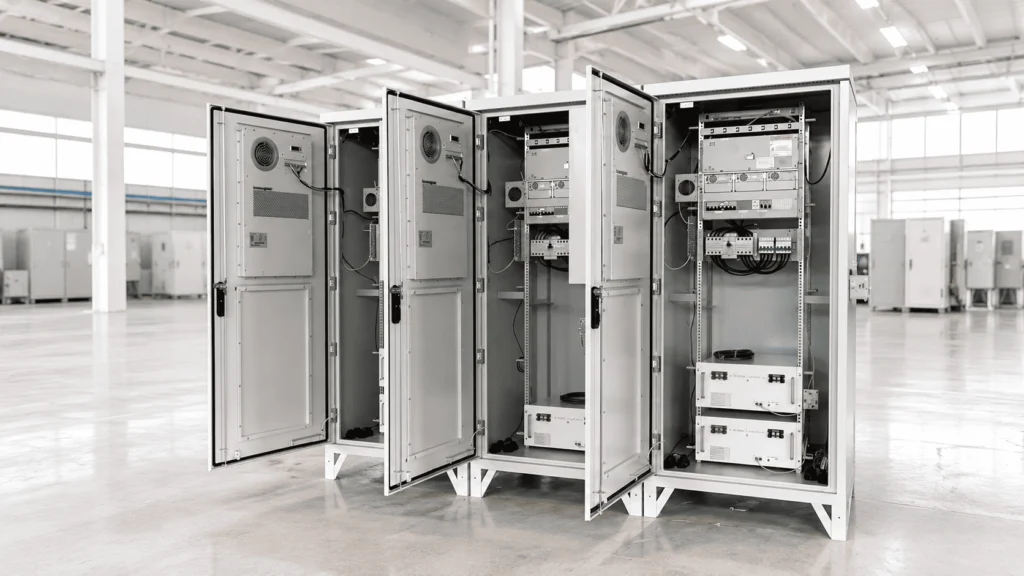
What is outdoor network cabinet IP rating?
An outdoor network cabinet IP rating describes how well the enclosure resists ingress from solid particles and water under defined test conditions. The first digit refers to dust or particle protection, while the second digit refers to water protection. It does not measure heat control, condensation resistance, corrosion resistance, or flood protection.
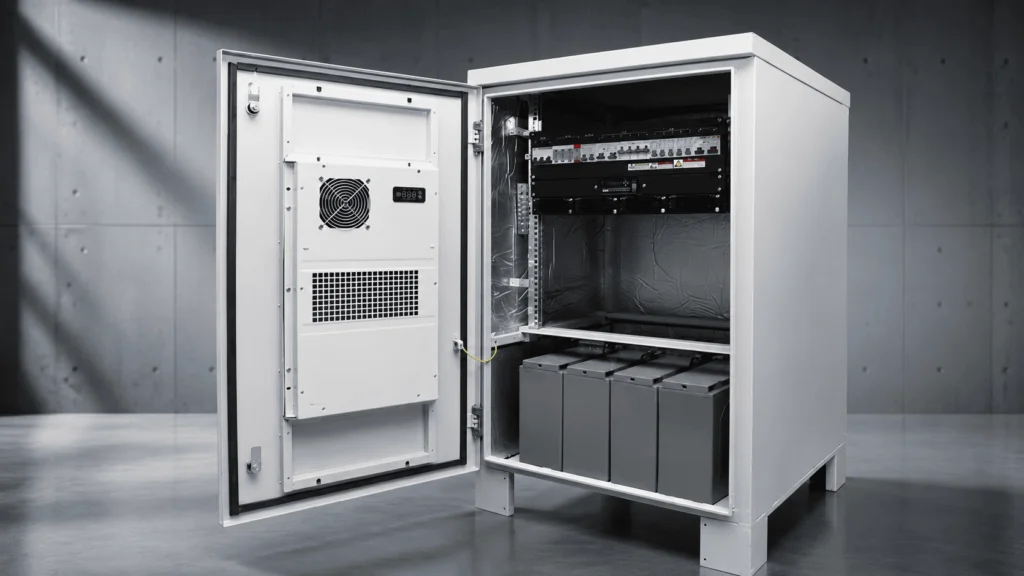
How IP Ratings Are Read in Cabinet Selection
IP ratings help buyers compare environmental sealing levels for an outdoor telecom cabinet, but they must be interpreted with the full cabinet configuration in mind. Doors, cable glands, fan openings, filters, air-conditioning interfaces, removable panels, and blanking plugs can all affect the final protection level.
Based on our internal data and market analysis, here is the breakdown:
| IP Element | What It Indicates | Practical Meaning for Outdoor Cabinets |
|---|---|---|
| First digit | Solid-particle protection | Resistance to dust, sand, and airborne particles |
| Second digit | Water protection | Resistance to rain, spray, or water jets |
| IP5X | Dust-protected | Dust ingress is limited under applicable test conditions |
| IP6X | Dust-tight | Stronger dust protection under applicable test conditions |
| IPX4–IPX6 | Water exposure levels | Protection varies from splashing to stronger water jets |
IP rating tells you how the cabinet resists dust and water ingress—it does not tell you whether the cabinet can control heat, condensation, or corrosion.
ShiRui Pro Tip: When I review an outdoor network enclosure specification, I never check the IP number alone. I also check the cooling path, cable-entry layout, gasket design, and whether the quoted cabinet configuration matches the tested or specified configuration.
How Does outdoor network cabinet IP rating Work?
An outdoor network cabinet IP rating works by classifying the enclosure’s resistance to dust and water ingress under defined conditions. The rating applies to the assembled cabinet design, not just the metal shell. Any added fans, glands, filters, air conditioners, doors, or access panels can change the real protection level.
Complete Cabinet Design Determines Real Protection
A waterproof network cabinet depends on multiple sealing points working together. Even if the enclosure body is well designed, poorly selected cable glands, loose access panels, damaged gaskets, or unsealed spare holes can compromise protection in the field.
Key sealing points include:
- Door gasket compression and sealing surface quality
- Cable glands matched to actual cable diameters
- Properly sealed gland plates and conduit interfaces
- Filter, fan, heat-exchanger, or air-conditioner openings
- Removable panels and service-access covers
- Blanking plugs for unused holes
- Maintenance procedures after installation
A cabinet with open ventilation cannot be evaluated the same way as a fully sealed cabinet. Ventilated cabinets may still be suitable for outdoor use, but their IP rating depends on the design of louvers, filters, baffles, and airflow paths.
ShiRui Pro Tip: In outdoor projects, I ask customers to confirm cable size and cable quantity early. Cable entry is one of the most common weak points, and changing it on-site by drilling holes can reduce both IP protection and corrosion resistance.
What is the best IP rating for an outdoor panel?
There is no single best IP rating for every outdoor panel or outdoor network cabinet. A sheltered installation may have different requirements from a desert, coastal, rooftop, pole-mounted, or ground-mounted site. The best rating is the one that matches actual dust exposure, water exposure, cooling design, and project standards.
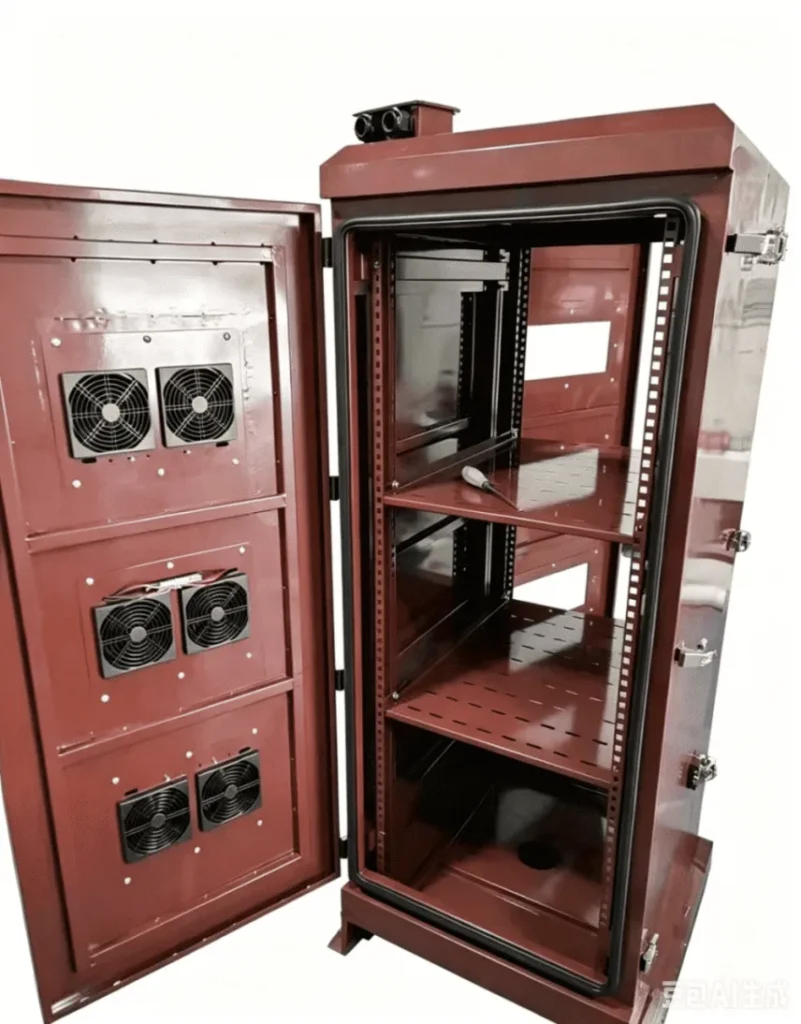
Selection by Installation Environment
For a weatherproof network cabinet, the correct protection level should be selected after reviewing the real environment. Higher IP protection can improve sealing, but network equipment also produces heat. A tightly sealed cabinet may require heat exchangers, air conditioning, internal circulation, or other thermal-management solutions.
Based on our internal data and market analysis, here is the breakdown:
| Environment | IP Consideration | Also Check |
|---|---|---|
| Sheltered outdoor | Project-specific | Ventilation |
| Exposed rain | Higher water protection | Cable sealing |
| Dusty/desert | Strong dust protection | Cooling and filters |
| Coastal | Water/dust protection | Corrosion resistance |
| High humidity | Environmental sealing | Condensation control |
| Hot climate | Suitable IP level | Cooling capacity |
| Ground mounted | Rain/splash protection | Flood and drainage risk |
IP65 outdoor network cabinet designs are commonly specified for many exposed outdoor installations because they combine dust-tight classification with water-jet protection. However, IP65 does not automatically mean the cabinet is suitable for deserts, coastal sites, high humidity, extreme heat, or flood-prone locations.
ShiRui Pro Tip: I recommend starting with the site conditions, not the IP number. First define rain, dust, temperature, humidity, mounting, and cooling requirements—then choose the appropriate IP target.
What is an IP66 enclosure?
An IP66 enclosure is classified as dust-tight and protected against powerful water jets under applicable test conditions. It may be specified for severe weather exposure or demanding industrial environments. However, IP66 is not automatically better for every outdoor network cabinet because sealing, cooling, cost, and maintenance must still be balanced.
Where IP66 May Be Relevant
IP66 protection may be considered when the cabinet faces stronger water exposure than typical rain or when the project specification explicitly requires it. It can be relevant for exposed industrial sites, high-pressure washdown areas, or installations with severe wind-driven rain.
Typical reasons to consider IP66 include:
- Project documents specifically require IP66 protection.
- The cabinet is exposed to severe wind-driven rain.
- Water-jet exposure is expected in the installation area.
- Dust-tight performance is needed together with stronger water resistance.
- The cooling system can maintain temperature without compromising sealing.
However, a highly sealed enclosure still needs an appropriate thermal strategy. Switches, routers, PoE devices, UPS units, and power supplies generate heat that must be removed safely.
ShiRui Pro Tip: I do not recommend choosing IP66 only because it “sounds stronger.” If the cabinet needs ventilation or frequent maintenance access, the complete design must support that rating in real operation.
What is an IP65 rated enclosure?
An IP65 rated enclosure is classified as dust-tight and protected against water jets under applicable test conditions. For many exposed outdoor network cabinet applications, IP65 is a common and practical target. Still, the complete cabinet configuration—including doors, cable entries, cooling interfaces, and panels—must support that protection level.

Why IP65 Is Commonly Specified
An IP65 outdoor network cabinet is often selected because it provides a strong balance between dust protection and resistance to rain or water jets. It can be suitable for many outdoor telecom cabinet installations where direct weather exposure is expected.
Based on our internal data and market analysis, here is the breakdown:
| IP65 Aspect | Practical Benefit | Important Limitation |
|---|---|---|
| Dust-tight classification | Helps reduce dust ingress | Does not eliminate thermal concerns |
| Water-jet protection | Supports many exposed outdoor uses | Does not mean flood-proof |
| Sealed doors and panels | Improves environmental protection | Gaskets require maintenance |
| Cable gland sealing | Protects cable-entry points | Incorrect gland size can compromise sealing |
| Cooling interface design | Maintains protection around equipment | Fans or AC units must be properly integrated |
IP65 does not mean condensation-proof, corrosion-proof, heat-proof, or submersion-proof. For high humidity, coastal, desert, or hot-climate applications, additional design features are often required.
ShiRui Pro Tip: When customers request an IP65 outdoor network cabinet, I always confirm whether they need natural ventilation, forced-air cooling, a heat exchanger, or air conditioning. The cooling method can change the sealing strategy completely.
Key Features & Comparison
Outdoor network cabinet IP rating selection should compare IP54, IP55, IP65, IP66, and other project-specific options against the actual environment. The cabinet should not be selected by IP number alone. Buyers should also evaluate thermal management, corrosion resistance, condensation control, cable sealing, mounting method, and maintenance access.
Practical IP Rating Comparison for Outdoor Cabinets
Based on our internal data and market analysis, here is the breakdown:
| Rating | General Protection Meaning | Possible Application | Key Buying Caution |
|---|---|---|---|
| IP54 | Dust-protected and protected against splashing water | Sheltered outdoor or semi-outdoor technical areas | Not automatically suitable for direct severe rain |
| IP55 | Dust-protected and protected against water jets | Certain outdoor applications with moderate exposure | Cable entry and ventilation still need review |
| IP65 | Dust-tight and protected against water jets | Many exposed outdoor network cabinet projects | Not a substitute for cooling, corrosion, or condensation control |
| IP66 | Dust-tight and protected against powerful water jets | Severe weather or demanding industrial sites | Higher sealing may increase thermal-management requirements |
| Higher ratings | Project-specific enhanced protection | Special applications | Must match actual standards and conditions |
A good outdoor network enclosure should be reviewed as a system. The enclosure body, doors, locks, hinges, gaskets, cable glands, roof, ventilation system, surface treatment, and installation method all contribute to long-term performance.
Common selection mistakes include:
- Assuming every outdoor cabinet must be IP65
- Assuming higher IP always means better
- Ignoring internal heat load
- Ignoring cable-entry sealing
- Ignoring gasket aging and maintenance
- Treating IP65 as flood-proof
- Treating IP65 as condensation-proof
- Forgetting corrosion protection in coastal areas
- Modifying the cabinet after testing or delivery
ShiRui Pro Tip: I prefer to compare IP ratings together with cabinet configuration drawings. A simple IP label is not enough if the final cabinet includes fans, air conditioning, extra cable holes, or field-installed accessories.
Cost & Buying Factors
The cost of a weatherproof network cabinet depends on more than the IP rating. Higher sealing requirements, cooling architecture, material choice, corrosion protection, cable-entry design, electrical integration, and project documentation can all affect price. Buyers should define the environment and configuration before comparing quotations.
What Drives Outdoor Network Cabinet Cost
A higher IP target may require better gaskets, improved door compression, sealed glands, rainproof structures, specialized cooling interfaces, or more careful manufacturing. However, the largest cost driver is often the complete configuration, not the IP rating alone.
Based on our internal data and market analysis, here is the breakdown:
| Buying Factor | Cost Impact | Why It Matters |
|---|---|---|
| IP rating target | Medium to high | Higher sealing may require more complex construction |
| Cooling method | High | Fans, filters, heat exchangers, or air conditioners change design and cost |
| Material and coating | Medium to high | Coastal or corrosive sites may need stronger protection |
| Cable-entry system | Medium | Glands, gland plates, and connectors affect sealing |
| Cabinet size | Medium to high | Larger cabinets require more material and stronger structure |
| Thermal load | High | More equipment heat may require active cooling |
| Mounting method | Medium | Pole, wall, rooftop, and ground mounting have different structural needs |
| Documentation requirements | Project-dependent | Formal test evidence or compliance documentation may affect procurement |
Before requesting a quotation from ShiRui or any cabinet supplier, buyers should prepare:
- Installation location and exposure level
- Sheltered, semi-outdoor, or fully exposed condition
- Rain, dust, humidity, and temperature data
- Coastal, industrial, desert, or high-altitude conditions
- Equipment list and estimated heat load
- Cooling method preference
- Cable quantity, cable diameter, and cable-entry direction
- Mounting method and maintenance access requirements
- Required project standards or customer specifications
- Expected documentation for IP rating verification
ShiRui Pro Tip: The most accurate quotation comes when the buyer provides the environment and equipment details first. If we know the heat load, cable entry, exposure level, and installation method, we can recommend a more practical outdoor network cabinet IP rating.
Conclusion
The correct outdoor network cabinet IP rating depends on the real installation environment and complete cabinet design. IP65 is commonly used for many exposed outdoor applications, but it is not universal. Buyers should evaluate dust, rain, cooling, cable entry, condensation, corrosion, mounting, maintenance, and project specifications together.
Practical Selection Workflow
A reliable waterproof network cabinet selection process should start with site conditions and end with verification of the complete cabinet configuration. The IP rating should support the application, but it should not replace thermal, corrosion, or condensation planning.
Recommended workflow:
- Confirm installation environment.
- Evaluate rain exposure.
- Evaluate dust and sand exposure.
- Review project or customer IP requirements.
- Calculate equipment heat load.
- Select cooling architecture.
- Define cable-entry design.
- Review door, panel, and gasket sealing.
- Check corrosion and surface-treatment needs.
- Check humidity and condensation risks.
- Choose the appropriate IP target.
- Verify the complete cabinet configuration.
- Confirm applicable test documentation or project evidence.
For harsh outdoor network applications, buyers should evaluate IP protection together with temperature control, corrosion resistance, cable sealing, and long-term maintenance. ShiRui can support B2B buyers by reviewing the project environment and helping define a practical outdoor network enclosure configuration.
ShiRui Pro Tip: My final check is simple: does the selected IP rating match the actual cabinet that will be installed on-site? If the answer is unclear, review the doors, cable glands, cooling interfaces, and maintenance plan before approving the purchase.