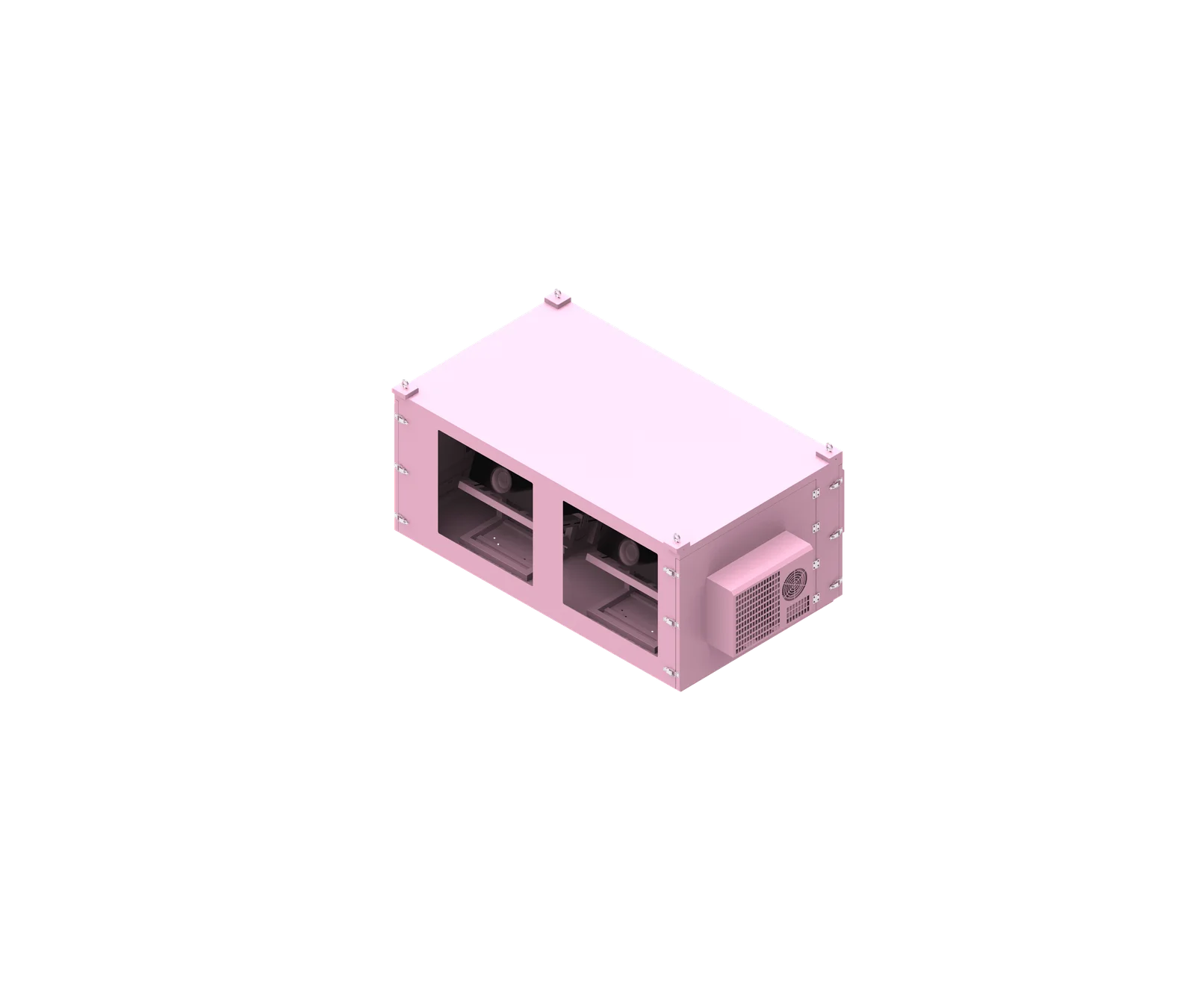
Choosing the right outdoor cabinet material is not simply a question of “which steel is best.” For outdoor network cabinets, telecom cabinets, and custom equipment enclosures, long-term durability depends on material grade, surface treatment, fabrication quality, cut-edge protection, hardware selection, and the installation environment. Galvanized steel, 201 stainless steel, and 304 stainless steel can all be suitable when matched correctly to corrosion risk, structure, maintenance, and budget.
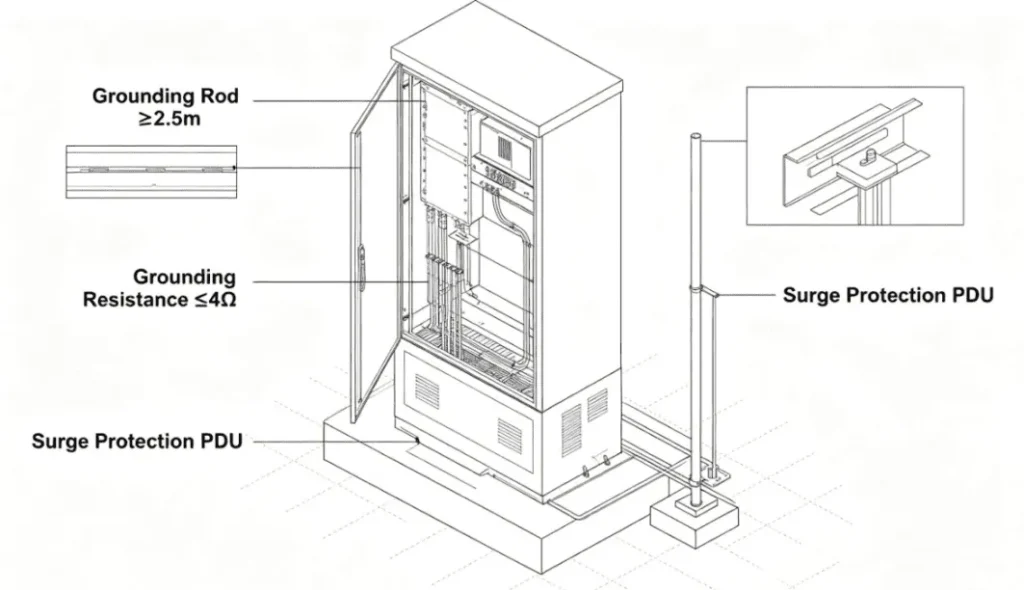
What is outdoor cabinet material?
Outdoor cabinet material is the base metal and protection system used to build an enclosure for outdoor service. It affects corrosion resistance, strength, weight, appearance, maintenance, and cost. For practical projects, galvanized steel, 201 stainless steel, and 304 stainless steel should be selected according to the real installation environment.
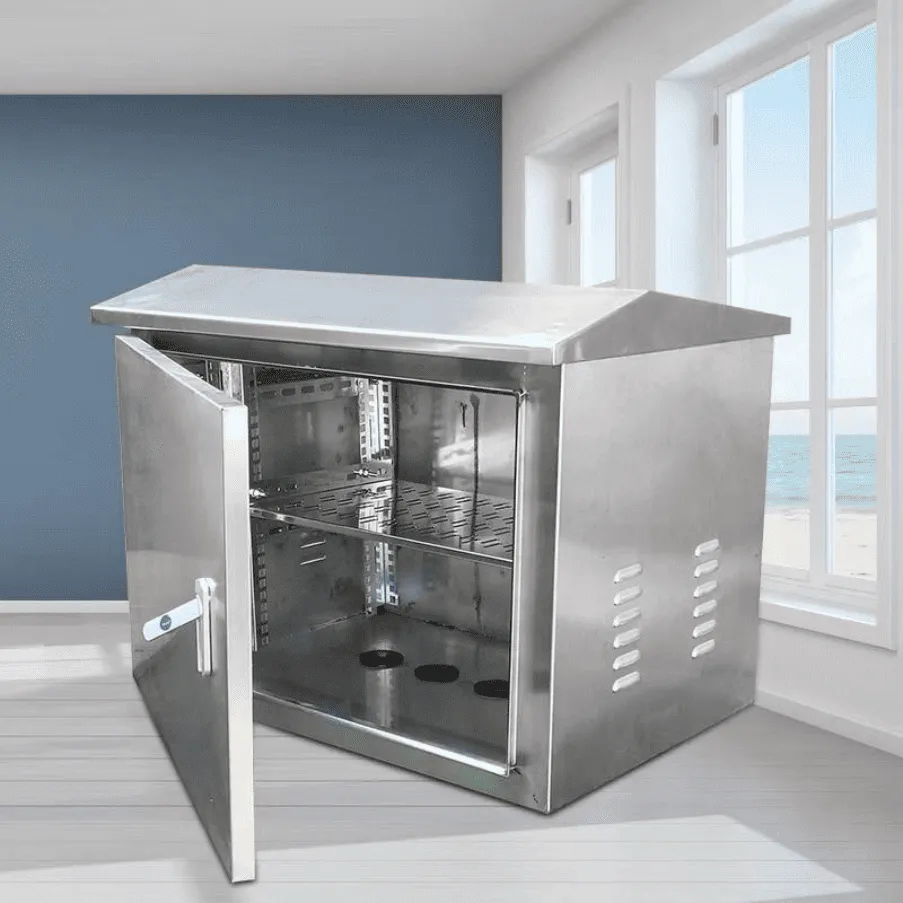
Material Meaning in Outdoor Enclosure Manufacturing
Outdoor cabinet material includes more than the steel grade printed on a quotation. It also includes surface treatment, coating system, fabrication quality, fasteners, hinges, locks, cable glands, and the way cut edges and welds are protected.
For ShiRui custom outdoor cabinets, we evaluate material selection as a complete enclosure system rather than a single sheet-metal specification.
Based on our internal data and market analysis, here is the breakdown:
| Material Option | What It Is | Typical Outdoor Use | Key Point |
|---|---|---|---|
| Galvanized steel outdoor cabinet | Carbon steel protected by a zinc-containing layer, often powder coated | Standard outdoor network cabinets, telecom cabinets, equipment enclosures | Cost-effective when coating and edge treatment are well controlled |
| 201 stainless steel cabinet | Austenitic stainless steel with generally lower nickel and higher manganese than 304 | Mild outdoor environments where stainless appearance and budget matter | Can be considered outdoors, but needs caution in humid or chloride-rich conditions |
| 304 stainless steel outdoor cabinet | Austenitic stainless steel widely used for outdoor and industrial equipment | Higher humidity, higher corrosion risk, long-term outdoor installations | Stronger corrosion resistance than 201 in many environments, but not marine-proof in every case |
| Powder-coated galvanized steel | Galvanized sheet plus outdoor coating system | Many standard custom cabinets | Final performance depends on zinc condition, surface preparation, coating adhesion, and fabrication details |
| Stainless steel outdoor enclosure | Stainless sheet-metal enclosure, sometimes brushed or powder coated | Projects requiring stainless construction or appearance | Still requires good welding, finishing, hardware, and installation design |
Material grade is only one part of outdoor cabinet durability; surface treatment, fabrication quality, and environment are equally important.
For example, galvanized steel with good powder coating and correct edge treatment may be more practical in a normal outdoor environment than a 201 stainless cabinet with poor fabrication installed near severe coastal exposure.
ShiRui Pro Tip: When I review an outdoor cabinet material request, I never start with price alone. I first ask where the cabinet will be installed, whether salt, humidity, dust, or industrial pollution is present, and how difficult future maintenance will be.
How Does outdoor cabinet material Work?
Outdoor cabinet material works by combining structural strength with corrosion protection. The base metal supports the equipment, while zinc layers, stainless alloy chemistry, powder coating, sealing, drainage, and fabrication details help resist outdoor exposure. IP rating protects against water and dust ingress, but it does not define corrosion resistance.
How Materials Protect Outdoor Cabinets in Real Conditions
A cabinet material works through several layers of protection. Galvanized steel relies on zinc-containing protection and often an added powder coating. Stainless steel relies on its alloy composition and surface condition. However, both can fail early if fabrication, hardware, or installation details are ignored.
Outdoor network cabinet material selection should follow a project-specific workflow:
- Confirm project location and whether the cabinet is fully exposed or partially sheltered.
- Evaluate rain, humidity, condensation, dust, sand, and temperature cycling.
- Identify coastal salt, chloride exposure, or industrial pollutants.
- Define cabinet size, equipment weight, mounting method, and wind-load concerns.
- Choose the base material: galvanized steel, 201 stainless steel, or 304 stainless steel.
- Define surface treatment, such as powder coating, stainless finish, cleaning, or passivation where required.
- Confirm fasteners, hinges, locks, cable glands, and external cooling components.
- Review IP rating separately from corrosion resistance.
- Confirm drawings, material grade, thickness, finish, and inspection requirements before fabrication.
- Consider 316 stainless steel or special corrosion protection if severe marine or chloride exposure is expected.
IP rating is frequently misunderstood. A galvanized steel cabinet can be designed with strong ingress protection, while a stainless steel cabinet can leak if doors, cable entries, cooling interfaces, or gaskets are poorly designed.
Material corrosion resistance and IP protection are separate engineering topics.
ShiRui Pro Tip: I always separate two questions for customers: “Will water and dust enter the cabinet?” and “Will the cabinet body resist corrosion?” The first relates to IP design; the second relates to material, coating, fabrication, and environment.
Which material is better for outdoor kitchens, aluminum or stainless steel?
For outdoor kitchens, stainless steel usually offers stronger impact resistance and a professional equipment appearance, while aluminum provides lighter weight and good corrosion resistance when properly finished. The better choice depends on exposure, structural load, cleaning requirements, budget, and whether the project prioritizes appearance, weight, or heavy-duty durability.

Aluminum and Stainless Steel Selection for Outdoor Cabinetry
Although ShiRui mainly manufactures outdoor network cabinets, telecom cabinets, and custom sheet-metal enclosures, the same engineering logic applies to outdoor kitchens: no single material is best for every site.
Aluminum and stainless steel behave differently in outdoor environments. Aluminum is lighter and can be practical where reduced weight matters. Stainless steel is often selected for commercial appearance, strength, and durability, but the grade and finish still matter.
Based on our internal data and market analysis, here is the breakdown:
| Factor | Aluminum Outdoor Cabinet | Stainless Steel Outdoor Cabinet |
|---|---|---|
| Weight | Usually lighter | Usually heavier, depending on thickness and structure |
| Appearance | Can be powder coated in many colors | Natural stainless appearance or powder coated |
| Corrosion behavior | Good when alloy and finish are suitable | Depends on stainless grade, finish, cleaning, and environment |
| Structural rigidity | Requires correct design and reinforcement | Strong sheet-metal performance with proper thickness and bending |
| Coastal use | Needs suitable alloy, coating, and hardware evaluation | 304 may help, but severe chloride exposure may require 316 evaluation |
| Maintenance | Coating damage and galvanic corrosion risk should be checked | Chloride deposits, staining, and contamination should be cleaned |
| Cost | Project-dependent | Grade-dependent; 304 usually costs more than many common alternatives |
| Best fit | Lightweight outdoor furniture, decorative cabinets, selected enclosures | Heavy-duty equipment cabinets, commercial outdoor cabinetry, industrial enclosures |
For outdoor kitchens, stainless steel is often preferred when the user wants a more industrial, durable, and easy-clean surface. Aluminum may be preferred where weight, design flexibility, and color options are more important.
However, the same warning applies: stainless steel is not automatically rust-proof in every outdoor condition, and aluminum is not automatically maintenance-free.
ShiRui Pro Tip: If a customer asks me whether aluminum or stainless steel is “better,” I ask whether the cabinet will face salt air, direct rain, grease, cleaning chemicals, or heavy equipment loads. The best material changes when the environment changes.
What materials are best for cabinets?
The best cabinet materials depend on the application. For outdoor telecom and network cabinets, properly protected galvanized steel, 201 stainless steel, and 304 stainless steel can all be valid options. The right choice depends on corrosion severity, required service life, surface treatment, structural design, appearance, maintenance access, and project budget.
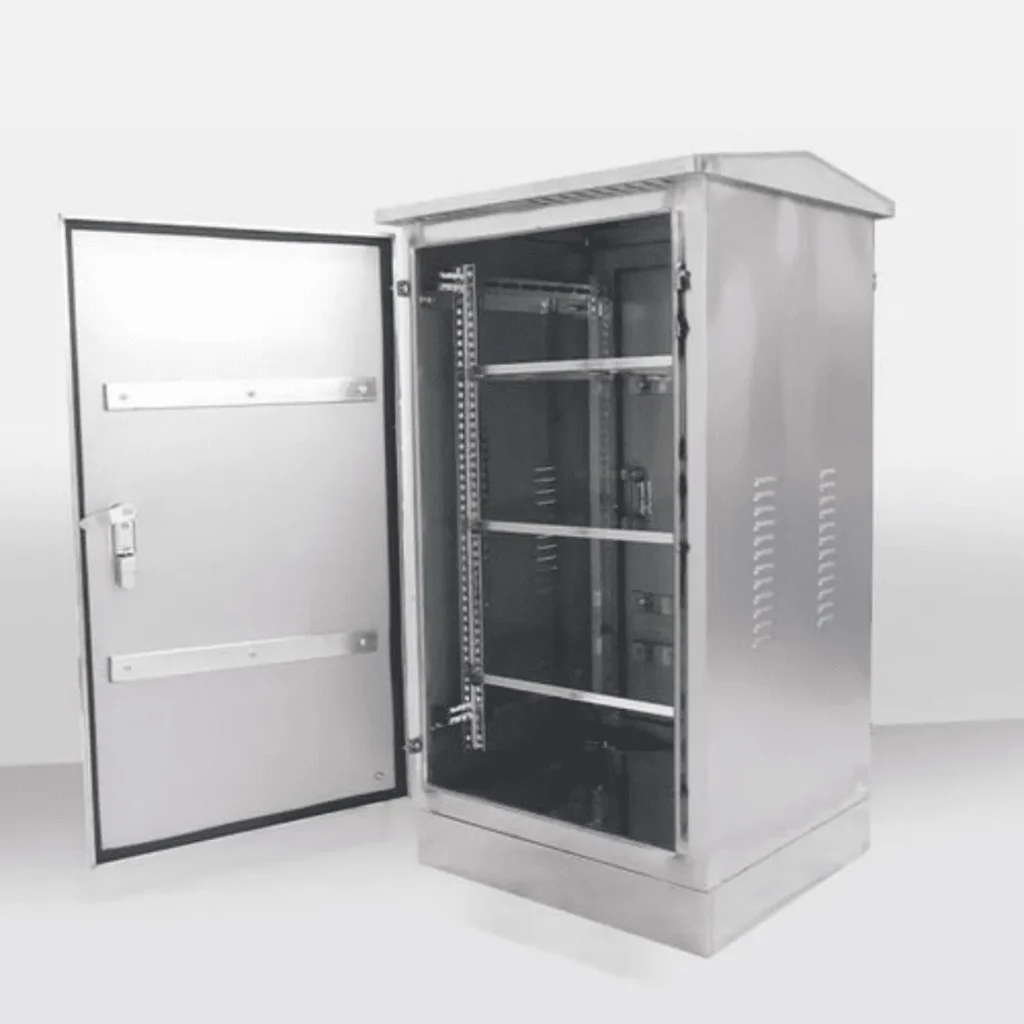
Best Materials by Outdoor Application
For outdoor equipment cabinets, “best” should be defined by project conditions rather than material reputation. A stainless steel outdoor enclosure is not always the most economical solution, and a galvanized steel outdoor cabinet is not automatically inferior.
Different environments create different risks.
Based on our internal data and market analysis, here is the breakdown:
| Application Condition | Practical Material Direction | Reason |
|---|---|---|
| Normal outdoor environment | Galvanized steel with suitable powder coating, or 304 if specified | Good balance between cost, fabrication, and protection |
| Mild corrosion environment requiring stainless appearance | 201 stainless steel may be evaluated | Lower-cost stainless option where chloride exposure is limited |
| High humidity or long-term outdoor exposure | 304 stainless steel or enhanced coated galvanized steel | Better corrosion safety margin may be required |
| Severe coastal or marine exposure | Evaluate whether 304 is enough; consider 316 or special protection | High chloride exposure can challenge 304 |
| Large custom telecom cabinet | Galvanized steel with proper surface treatment, or stainless if required | Good fabrication performance and structural flexibility |
| Industrial pollution area | Project-specific material and coating review | Chemicals and airborne contaminants vary widely |
| Desert or dusty environment | Durable coating, sealing, UV resistance, and dust control | Abrasion, heat, and dust may matter more than rain alone |
| Budget-sensitive outdoor project | Galvanized steel or 201 stainless where suitable | Must still match environmental risk |
Galvanized steel can provide a strong cost-to-performance ratio for many outdoor cabinets, especially when combined with good surface preparation and powder coating. 201 stainless steel may be considered where exposure is mild and project specifications allow it. 304 stainless steel generally offers stronger corrosion resistance than 201 in many outdoor environments, but it should still be checked against chloride exposure and maintenance conditions.
ShiRui Pro Tip: I advise buyers not to ask only, “Is it stainless?” Instead, ask for material grade, sheet thickness, surface treatment, fastener material, edge treatment, and whether the cabinet is designed for the actual installation environment.
What are the best quality kitchen cabinets I can buy on a budget?
For budget-conscious outdoor cabinets, the best value often comes from matching the material to the environment instead of automatically choosing the most expensive metal. Powder-coated galvanized steel can be very practical for many standard outdoor projects, while 201 or 304 stainless steel may be justified when stainless appearance or higher corrosion resistance is required.
Budget Selection Without Sacrificing Outdoor Reliability
A good budget cabinet is not simply the cheapest cabinet. It is the cabinet that meets the project environment, structural requirements, and maintenance expectations without unnecessary over-specification.
For outdoor kitchens, telecom cabinets, and network enclosures, the budget decision should include both initial cost and lifecycle risk.
Based on our internal data and market analysis, here is the breakdown:
| Budget Question | Why It Matters | Practical Buying Advice |
|---|---|---|
| Is the cabinet fully exposed to rain? | Rain affects sealing, coating, and hardware | Check door seals, roof structure, cable entries, and drainage design |
| Is the site near the coast? | Chlorides can accelerate corrosion | Use caution with 201; evaluate 304 or 316 depending on severity |
| Is stainless appearance required? | Appearance can drive material choice | 201 may be considered in mild environments; 304 for higher risk |
| Is powder coating acceptable? | Coating allows color and added protection | Galvanized steel plus suitable coating can be cost-effective |
| Is maintenance easy? | Low access increases lifecycle risk | Consider stronger material and coating margins |
| Are large cabinet dimensions required? | Size affects sheet thickness, weight, and structure | Do not select material by price alone |
| Are fasteners and hinges specified? | Hardware can fail before panels | Match hardware to the same environmental requirements |
| Is the IP rating clearly defined? | Ingress protection is not corrosion resistance | Confirm both sealing design and material protection |
For many budget-sensitive outdoor equipment cabinets, galvanized steel with suitable powder coating and proper edge treatment can be a strong option. 201 stainless steel can be considered where stainless appearance is needed and corrosion exposure is mild. 304 stainless steel may be worth the higher cost when humidity, maintenance difficulty, or corrosion risk is greater.
ShiRui Pro Tip: When customers want the best quality on a budget, I recommend spending money where failure risk is highest: surface preparation, coating quality, cut-edge protection, seals, hinges, locks, and correct material selection for the environment.
Key Features & Comparison
Galvanized steel, 201 stainless steel, and 304 stainless steel differ in cost, corrosion behavior, appearance, fabrication, and maintenance. The best outdoor cabinet material depends on environment and execution. A well-treated galvanized cabinet can outperform a poorly fabricated stainless cabinet in the wrong environment or with unsuitable hardware.
Practical Comparison for Outdoor Network Cabinets and Enclosures
The most useful comparison is not a universal ranking. Instead, compare material behavior under actual outdoor conditions, including humidity, salt, coating, fabrication, welding, fasteners, and maintenance.
Based on our internal data and market analysis, here is the breakdown:
| Factor | Galvanized Steel | 201 Stainless | 304 Stainless |
|---|---|---|---|
| Initial Cost | Lower | Medium | Higher |
| Outdoor Corrosion Resistance | Depends strongly on zinc protection, coating, edge treatment, and environment | Moderate; generally lower than 304 in demanding outdoor exposure | Better than 201 in many outdoor environments |
| Coastal Use | Needs careful protection and coating-system evaluation | Less preferred; use caution with salt/chloride exposure | Better than 201, but evaluate chloride severity |
| Powder Coating | Common | Optional | Optional |
| Stainless Appearance | No | Yes | Yes |
| Fabrication | Good for laser cutting, bending, welding, and large custom cabinets | Good with correct parameters and finishing | Good with correct parameters and finishing |
| Cut/Weld Protection | Very important because zinc/coating can be affected | Surface finishing and contamination control are important | Surface finishing, cleaning, and contamination control are important |
| Normal Outdoor Projects | Strong option when properly protected | Possible where exposure is mild | Strong option where budget allows |
| High Humidity | Evaluate coating, edges, and condensation control | Use caution | Often a better choice |
| Severe Salt/Marine | Special evaluation required | Generally less suitable | May still require 316 or special protection |
| Appearance Options | Wide colors with powder coating | Stainless finish or powder coating | Stainless finish or powder coating |
| Large Cabinet Suitability | Strong option for cost-effective custom sizes | Possible | Possible but higher material cost |
| Maintenance Focus | Inspect scratches, exposed edges, coating damage | Inspect staining, chloride deposits, contamination | Inspect staining, chloride deposits, weld finish, hardware |
| Typical Use Logic | Best when cost-performance and coating are suitable | Best when stainless appearance and moderate exposure meet budget | Best when higher corrosion risk justifies higher cost |
Galvanized steel is carbon steel protected by a zinc-containing surface layer. It may be supplied as pre-galvanized sheet, galvanized sheet, hot-dip galvanized components, or galvanized steel with powder coating. These are not identical, and their corrosion behavior can differ after cutting, bending, drilling, and welding.
201 stainless steel is an austenitic grade that generally uses less nickel and more manganese than 304. It can provide a stainless appearance and useful fabrication performance at a lower material cost than 304 in many markets. It may be suitable outdoors in relatively mild environments, but it needs caution in coastal, high-humidity, chloride, salt-spray, and industrial pollution conditions.
304 stainless steel is widely used for outdoor and industrial equipment because it combines corrosion resistance, fabricability, weldability, strength, and appearance. It generally resists outdoor corrosion better than 201, but it is not automatically suitable for every marine or chloride-rich environment.
ShiRui Pro Tip: I avoid simple formulas like “304 is always best.” For a real project, I compare environment, coating, edges, welds, fasteners, and maintenance access before recommending galvanized steel, 201 stainless, 304 stainless, or a higher-grade option.
Cost & Buying Factors
Cost should be evaluated as total project cost, not only raw material price. Galvanized steel often offers strong cost-performance, 201 stainless steel may reduce stainless cabinet cost in mild environments, and 304 stainless steel usually costs more but can reduce corrosion risk in more demanding outdoor applications.
What Buyers Should Check Before Placing an Order
Outdoor cabinet cost depends on material, thickness, fabrication complexity, surface treatment, cabinet size, quantity, cooling system, hardware, IP design, and inspection requirements. A low quotation may not be economical if the material or finish does not match the installation environment.
Based on our internal data and market analysis, here is the breakdown:
| Buying Factor | What to Confirm | Why It Affects Cost and Durability |
|---|---|---|
| Exact material grade | Galvanized steel type, 201 stainless, 304 stainless, or other grade | Prevents misunderstanding before production |
| Sheet thickness | Based on cabinet size, equipment weight, mounting, doors, and reinforcement | Thickness affects strength, weight, fabrication, and cost |
| Surface treatment | Powder coating, stainless finish, cleaning, passivation, or other process | Surface quality strongly affects outdoor durability |
| Cut-edge protection | Treatment after laser cutting, drilling, and field modification | Exposed edges are common weak points |
| Welding treatment | Weld cleaning, protection restoration, or finishing process | Welding can affect zinc coating or stainless surface condition |
| Fasteners and hardware | Screws, hinges, locks, handles, mounting brackets | Poor hardware can fail before the cabinet body |
| IP rating | Door seals, cable entries, cooling interfaces, gaskets | IP rating controls ingress, not corrosion resistance |
| Installation environment | Rain, humidity, salt, pollution, dust, sand, UV, temperature | Environment determines material risk |
| Maintenance access | Easy inspection or difficult remote location | Lower access may justify higher protection |
| Documentation | Material certificate, supplier documentation, grade verification if required | Important for specified stainless projects |
Before production, buyers should confirm material and finish before laser cutting, CNC bending, welding, and surface finishing. Changing material after drawing approval can affect cost, weight, fabrication method, structure, and coating requirements.
A practical material-selection workflow is:
- Define project environment.
- Evaluate corrosion severity.
- Confirm rain, humidity, condensation, dust, sand, and UV exposure.
- Check coastal salt, chloride, or industrial pollution risk.
- Review structural requirements, cabinet size, equipment weight, and mounting method.
- Select surface treatment and finish requirements.
- Confirm maintenance expectations and budget.
- Compare galvanized steel.
- Compare 201 stainless steel.
- Compare 304 stainless steel.
- Consider 316 stainless steel if severe marine or chloride exposure requires it.
- Confirm material, drawing, finish, hardware, and inspection plan before fabrication.
ShiRui Pro Tip: When a buyer sends only dimensions and asks for the lowest price, I recommend adding environment details first. The cheapest material on paper can become expensive if corrosion repair, replacement, or site maintenance is difficult.
Conclusion
There is no single best outdoor cabinet material for every project. Galvanized steel, 201 stainless steel, and 304 stainless steel each have practical advantages. The right choice depends on environment, corrosion risk, surface treatment, fabrication quality, structural design, maintenance access, appearance requirements, and total project budget.
Final Material Selection Guidance
For many standard outdoor cabinets, properly protected galvanized steel can provide excellent cost-performance. It is especially practical for large custom cabinets, telecom enclosures, and outdoor network cabinets where powder coating, edge treatment, and maintenance are properly planned.
201 stainless steel can be considered when the environment is relatively mild, chloride exposure is limited, stainless appearance is required, and the project specification allows it. It should not be dismissed automatically, but it should be used carefully in more aggressive outdoor environments.
304 stainless steel generally provides stronger corrosion resistance than 201 for many outdoor applications. It is often preferred for high humidity, longer outdoor exposure, limited maintenance access, or projects requiring stainless construction. However, 304 is not marine-proof in every condition. Severe coastal, marine, or chloride-rich projects may require evaluation of 316 stainless steel or special corrosion-protection systems.
Based on our internal data and market analysis, here is the breakdown:
| Project Scenario | Recommended Direction |
|---|---|
| Normal outdoor environment with cost focus | Galvanized steel with suitable powder coating and edge protection |
| Mild outdoor environment requiring stainless appearance | 201 stainless steel may be evaluated |
| High humidity or higher corrosion risk | 304 stainless steel may be preferred |
| Severe coastal or chloride-rich exposure | Evaluate whether 304 is sufficient; consider 316 or special protection |
| Large custom outdoor equipment enclosure | Compare galvanized steel and stainless options based on size, structure, finish, and budget |
| Project with difficult maintenance access | Choose a stronger corrosion protection margin |
| Project with strict appearance requirements | Compare powder-coated galvanized steel, 201 stainless, and 304 stainless finishes |
| Project with strict IP requirements | Design sealing separately from corrosion protection |
The central principle is simple: material grade is only one part of outdoor cabinet durability. Surface treatment, welding quality, cut-edge protection, fasteners, hardware, cable entries, cooling components, installation environment, and maintenance conditions are equally important.
ShiRui can help evaluate your outdoor cabinet material based on project location, corrosion exposure, cabinet size, structural requirements, IP rating, surface finish, and budget before production drawings are finalized.
ShiRui Pro Tip: If you are unsure which material to choose, send the installation environment, cabinet size, equipment weight, required IP rating, surface color, and corrosion concerns. I can usually narrow the options quickly and help avoid both under-specification and unnecessary over-spending.