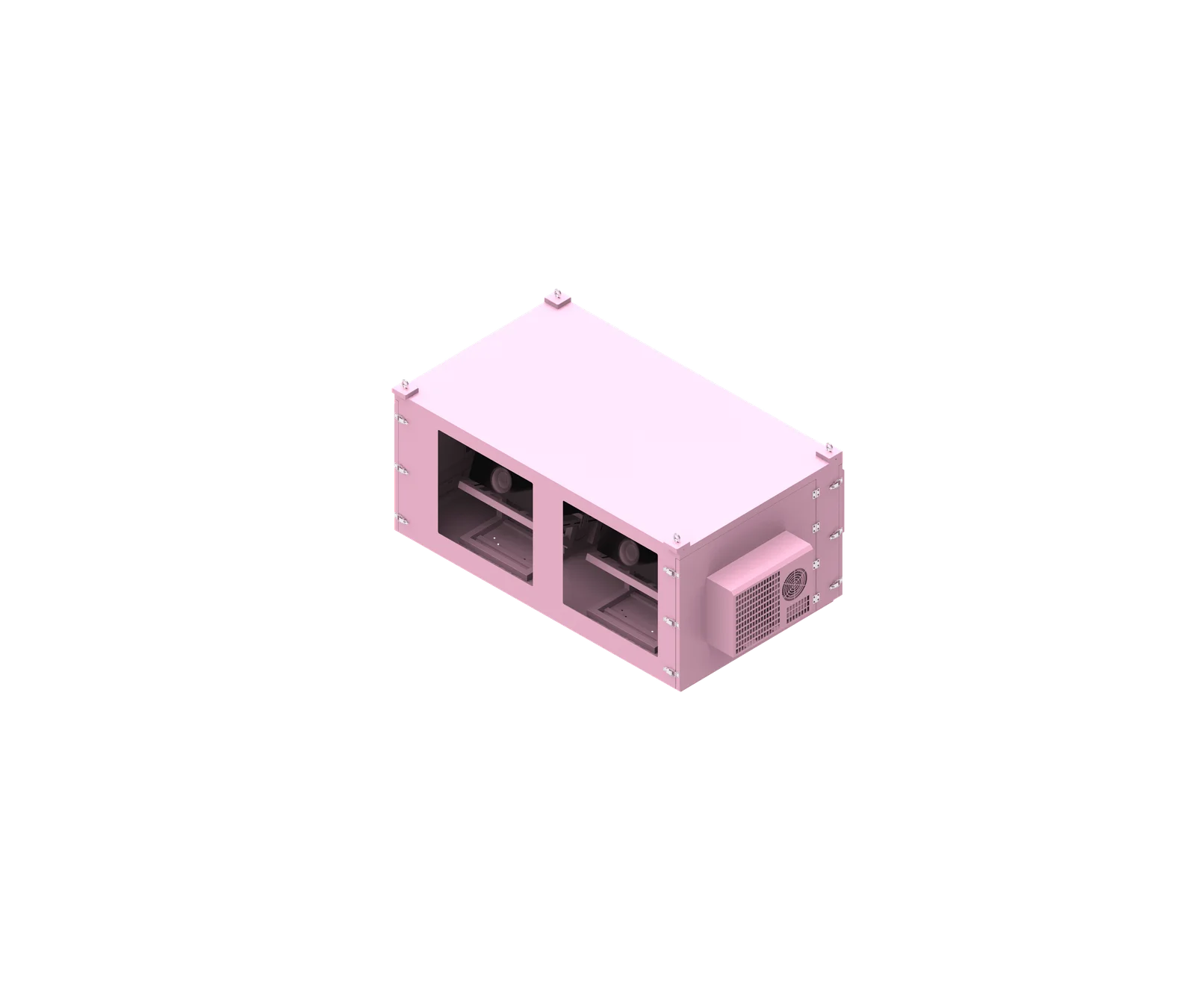
Outdoor network cabinet temperature control is a complete climate-management process that protects switches, routers, power systems, batteries, monitoring devices, and communication modules from outdoor heat, cold, humidity, solar load, and condensation. In professional cabinet design, the goal is not to make the enclosure as cold as possible, but to maintain suitable operating conditions based on equipment requirements and site conditions.
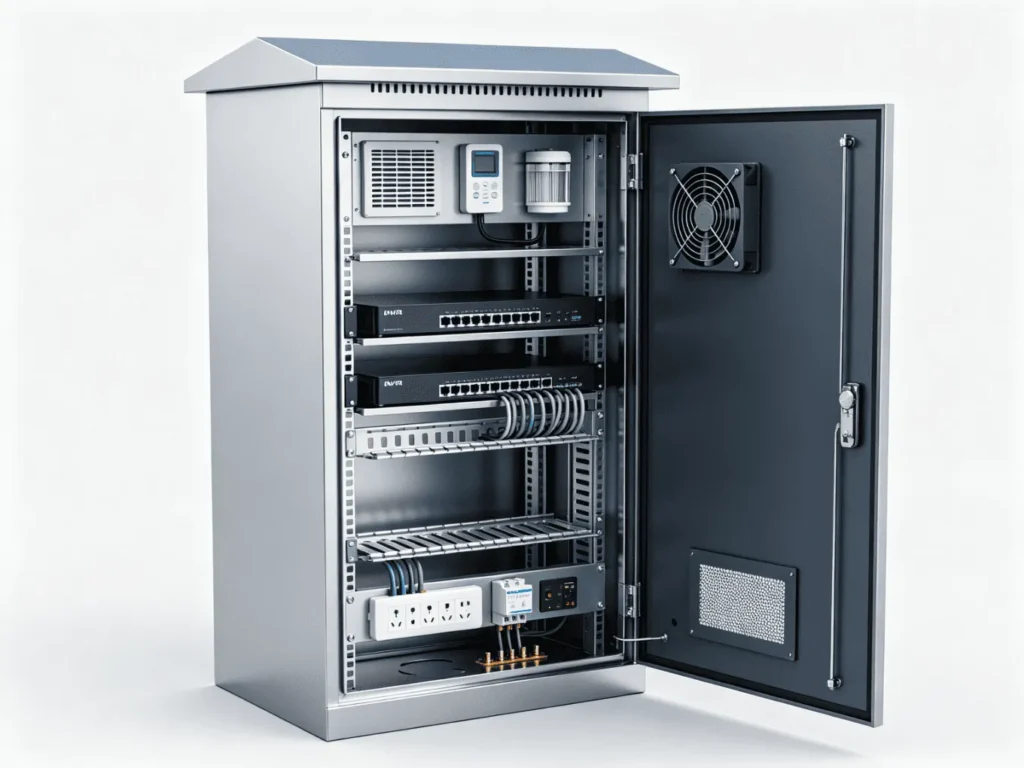
What is outdoor network cabinet temperature control?
Outdoor network cabinet temperature control is the coordinated management of heat, cold, humidity, airflow, and condensation risk inside an outdoor enclosure. It uses sensors, controllers, cooling, heating, ventilation, and internal circulation to keep installed equipment within suitable operating conditions under changing outdoor environments.
Complete Climate Control, Not Cooling Alone
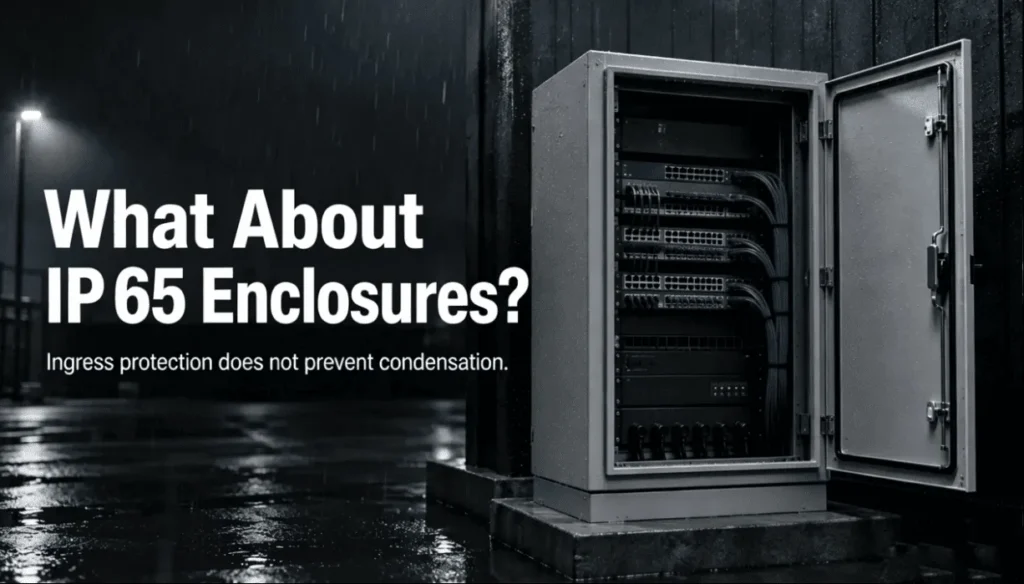
Outdoor cabinet climate control is not only about cooling—it is about managing temperature, humidity, and dew point together. A temperature controlled network cabinet must respond to equipment heat, ambient temperature, sunlight, night cooling, rain, humidity, dust, and maintenance conditions.
The cabinet may include different combinations of climate-control components depending on the project:
- Temperature sensors for internal air, equipment intake zones, hot zones, or return air
- Humidity sensors for condensation-risk monitoring and alarm logic
- Fans for ventilation or internal circulation
- Heat exchangers for separating internal and external air paths
- Industrial air conditioners for active cooling when needed
- Heaters for low-temperature operation or anti-condensation control
- Controllers for coordinated logic between cooling, heating, airflow, and alarms
- Sealing, cable glands, insulation, sun shields, and condensate drainage to support environmental protection
A reliable outdoor telecom cabinet temperature control design starts with actual requirements, not assumptions. The correct solution depends on equipment heat load, ambient conditions, humidity, solar exposure, IP rating, installation method, operating schedule, and required monitoring functions.
ShiRui Pro Tip: When we design outdoor cabinets at ShiRui, we first ask for the equipment list, power consumption, site location, temperature range, humidity level, IP requirement, and installation environment before recommending fans, AC, heating, or insulation.
How Does outdoor network cabinet temperature control Work?
Outdoor network cabinet temperature control works by collecting temperature and humidity data, comparing it with project-specific control logic, and activating cooling, heating, air circulation, alarms, or humidity-control measures as needed. The system should manage heat and moisture together to reduce overheating, low-temperature problems, and condensation risk.
Sensor-Controlled Climate Logic
A practical outdoor cabinet climate control system usually follows a feedback loop. Sensors measure actual internal conditions, the controller evaluates demand, and output devices respond.
Temperature Sensor + Humidity Sensor
                ↓
        Climate Controller
                ↓
     ┌──────────┼──────────┐
     ↓          ↓          ↓
   Cooling    Heating   Air Circulation
     ↓          ↓          ↓
      Stable Temperature & Humidity
                ↓
        Reduced Condensation Risk
The logic should remain project-specific. It is not good engineering practice to apply one universal temperature set point, humidity limit, dew-point margin, heater wattage, or alarm threshold to every outdoor network cabinet.
Typical control actions may include:
- Temperature rises: Cooling demand may increase through ventilation, fan cooling, heat exchange, or air conditioning.
- Temperature falls: Heating may activate if equipment requires low-temperature support or condensation prevention.
- Humidity rises: The controller may trigger an alarm, heater, dehumidification strategy, or remote monitoring event.
- Condensation risk increases: Anti-condensation heating, airflow adjustment, or dew-point-based logic may be used.
- Airflow becomes uneven: Internal circulation can help reduce hot spots, cold zones, and humidity concentration.
- Fault occurs: Alarms may report cooling failure, heater failure, high humidity, door opening, or water leakage depending on cabinet design.
ShiRui Pro Tip: Never place the only temperature sensor directly in cold AC discharge air or near a heater. We prefer sensor locations that represent the real equipment intake or critical operating zone.
How hot is too hot for a server rack?
A server rack or outdoor network cabinet is too hot when installed equipment exceeds the operating limits specified by the equipment manufacturer or when internal hot spots reduce reliability. The safe limit depends on device specifications, heat load, airflow path, ambient temperature, solar exposure, and cabinet design.
Overheating Depends on Equipment and Location
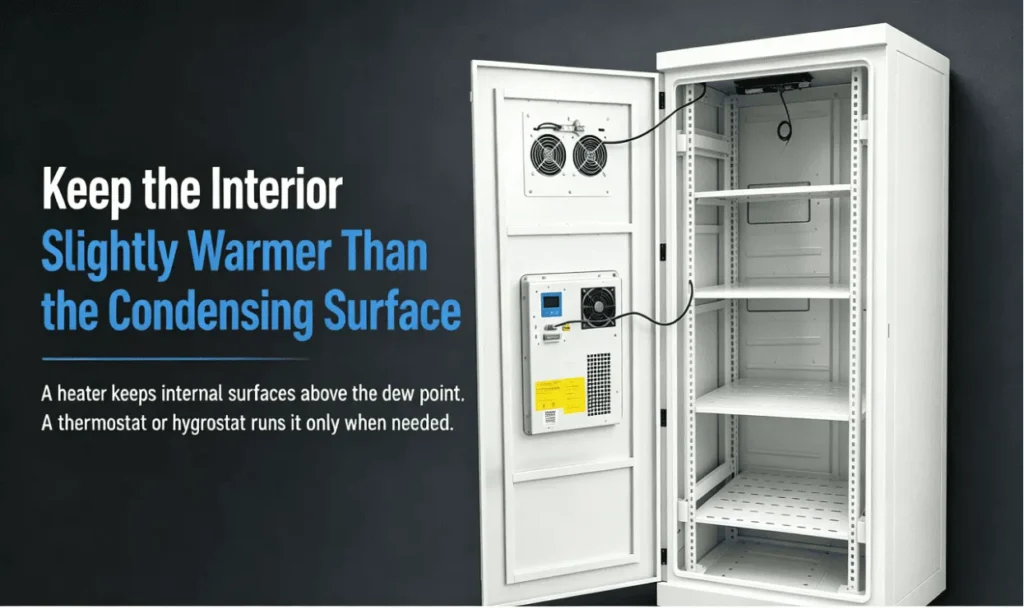
There is no single universal “too hot” value for every server rack, telecom cabinet, or outdoor network enclosure. A cabinet containing PoE switches, UPS batteries, power supplies, routers, and industrial computers may have very different thermal requirements from a cabinet with low-power communication modules.
Based on our internal data and market analysis, here is the breakdown:
| Heat Source or Condition | Why It Matters | Design Response |
|---|---|---|
| Network switches and routers | Continuous electronic heat generation | Calculate total internal heat load |
| PoE switches | Higher power output can create higher cabinet heat | Verify power budget and cooling demand |
| UPS systems and batteries | Sensitive to temperature and lifecycle conditions | Review manufacturer operating limits |
| Power supplies | Add localized heat near electrical panels | Maintain airflow clearance |
| Solar radiation | Can raise cabinet surface temperature | Consider sun shield, finish, insulation, or cooling |
| Poor airflow | Creates hot spots even when cooling exists | Improve layout and internal circulation |
| Blocked filters | Reduces ventilation or cooling efficiency | Include maintenance access and filter checks |
| High ambient temperature | Limits fan cooling effectiveness | Evaluate AC or heat exchanger if required |
Fan cooling can only move outdoor air through the cabinet. It does not create refrigerated air. If the outdoor air is already too warm for the required internal condition, increasing fan airflow may not solve the problem.
Air conditioning may be considered when heat load is high, outdoor temperature is high, tighter control is needed, or direct outdoor-air exchange should be reduced. However, AC capacity should be calculated from the complete thermal load, not only from cabinet dimensions.
ShiRui Pro Tip: If a customer only gives us cabinet size, we cannot responsibly select the cooling system. We need the equipment list, power consumption, ambient range, solar exposure, and required internal conditions.
What are the ideal temperature and humidity ranges for a data center?
Ideal temperature and humidity ranges for a data center or outdoor cabinet should come from the installed equipment requirements and project environment. For outdoor cabinets, designers must also consider dew point, condensation, solar gain, night cooling, IP protection, maintenance moisture, and whether equipment operates continuously or shuts down.
Why Outdoor Cabinets Need Project-Specific Ranges
Outdoor network cabinet humidity control is different from indoor comfort control. Relative humidity alone does not determine condensation risk. Temperature and humidity together define the dew-point condition.
High humidity plus a cold surface creates condensation risk. If a door panel, cable gland, internal metal surface, or equipment casing becomes colder than the dew point of the surrounding air, moisture may condense.
Based on our internal data and market analysis, here is the breakdown:
| Condition | Main Risk | Possible Control |
|---|---|---|
| High temperature | Equipment overheating | Fans / AC / heat exchanger |
| Low temperature | Startup or operating problems | Heater |
| High humidity | Condensation / corrosion | Humidity control |
| Surface below dew point | Condensation | Heating / control logic |
| Poor air circulation | Hot spots | Internal circulation |
| Strong sunlight | Extra thermal load | Cooling / sun shield |
| Large day-night swing | Condensation risk | Temperature + humidity control |
| AC overcooling | Cold surfaces | Optimize control strategy |
An IP-rated outdoor cabinet can still develop internal condensation. IP protection mainly addresses external water and dust ingress under defined test conditions. It does not automatically control internal humidity, dew point, temperature cycling, or moisture introduced during maintenance.
That is why IP protection and outdoor cabinet climate control must be designed together.
ShiRui Pro Tip: We often remind buyers that waterproof does not mean condensation-proof. A sealed cabinet may keep rain out, but trapped humid air can still condense when internal surfaces cool down.
How do you control temperature and humidity?
Temperature and humidity are controlled by combining correct enclosure design, sensors, control logic, cooling, heating, ventilation, internal circulation, sealing, cable-entry protection, and sometimes dehumidification. The right method depends on heat load, climate, humidity, dust, required IP rating, equipment limits, and operating schedule.
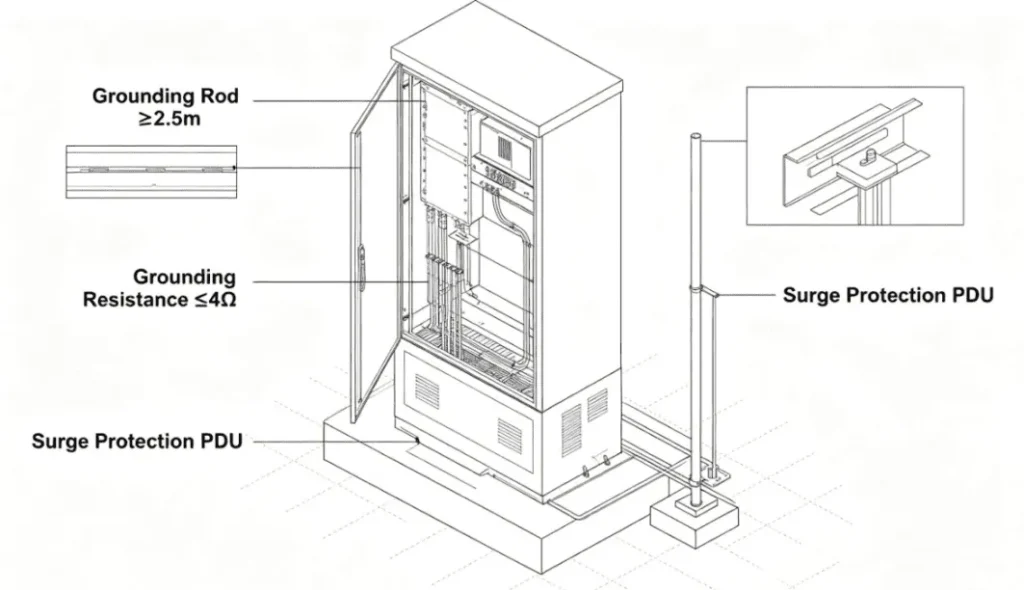
Practical Control Methods for Outdoor Cabinets
A complete outdoor network cabinet condensation control strategy uses multiple design layers. No single method is automatically sufficient for every site.
Common control methods include:
- Natural ventilation: Uses passive airflow where heat load and outdoor conditions allow.
- Fan cooling: Moves filtered outside air through the cabinet when ambient air is suitable.
- Heat exchanger: Transfers heat while helping reduce direct internal exposure to outdoor dust and humidity.
- Industrial air conditioning: Provides active cooling when heat load, ambient temperature, or internal requirements demand it.
- Cabinet heater: Supports low-temperature startup, operating protection, or anti-condensation control.
- Internal circulation fan: Reduces temperature stratification, hot zones, cold zones, and humidity concentration.
- Humidity sensor or hygrostat: Helps monitor moisture and trigger project-specific actions.
- Dew-point-aware control: Evaluates temperature and humidity together to reduce condensation risk.
- Cable sealing: Prevents humid air from entering through glands, gland plates, conduits, or unused openings.
- Condensate drainage: Ensures AC condensate exits properly without creating a new moisture source.
Outdoor cabinets can behave differently during the day and at night. During daytime, solar gain and equipment heat may increase internal temperature. At night, exterior surfaces may cool quickly while humid air remains trapped inside. After equipment shutdown, condensation risk may increase because internal heat decreases and surface temperatures can fall.
ShiRui Pro Tip: For humid sites, we pay close attention to cable glands, door sealing, drainage, and maintenance procedures. Humidity often enters during installation or service, not only through the cabinet wall.
Key Features & Comparison
A well-designed outdoor cabinet climate control system combines enclosure construction, thermal calculation, humidity monitoring, airflow design, condensation prevention, and remote visibility. The best solution may use ventilation, fan cooling, heat exchange, air conditioning, heating, or a hybrid approach depending on the installation environment and equipment requirements.
Comparing Common Outdoor Cabinet Climate-Control Options
Based on our internal data and market analysis, here is the breakdown:
| Feature or Method | Main Function | Advantages | Important Limitations |
|---|---|---|---|
| Natural ventilation | Passive heat removal | Simple, low maintenance, no active cooling device | Depends heavily on ambient conditions and heat load |
| Fan cooling | Moves outdoor air through cabinet | Cost-effective where outside air is suitable | Does not cool below ambient air; filter condition matters |
| Heat exchanger | Transfers heat with separated air paths | Helps reduce direct dust and humid-air entry | Suitability depends on heat load and temperature difference |
| Industrial air conditioning | Active cooling | Useful for high heat load or high ambient temperature | Requires capacity calculation, power, drainage, and airflow design |
| Cabinet heater | Low-temperature and anti-condensation support | Helps equipment startup and dew-point control | Must be coordinated with cooling logic |
| Internal circulation | Improves climate uniformity | Reduces hot spots and cold zones | Does not actively remove heat or moisture by itself |
| Humidity monitoring | Tracks moisture level | Supports alarms and condensation strategy | Must be evaluated together with temperature |
| Dew-point logic | Reduces condensation risk | More intelligent than temperature-only control | Requires correct sensor data and control design |
| Sun shield / double roof | Reduces direct solar heating effect | Useful for exposed outdoor locations | Actual performance depends on construction and site |
| Insulation | Reduces rapid heat transfer | Helps stabilize internal conditions | Can also affect heat removal if poorly designed |
| Remote monitoring | Reports cabinet climate and alarms | Useful for distributed telecom or network sites | Communication method depends on project requirement |
Even with air conditioning, poor internal layout can create hot spots, cold-air short circuits, and uneven equipment temperatures. The cooling system must be integrated with equipment placement, cable routing, airflow clearance, and sensor location.
ShiRui Pro Tip: In custom sheet-metal cabinet projects, we treat climate control as part of the mechanical design. Door structure, cable entry, airflow channel, sun protection, sealing, and service access all affect performance.
Cost & Buying Factors
The cost of an outdoor network cabinet cooling system or complete climate-control package depends on enclosure size, material, IP rating, heat load, cooling method, heating requirement, humidity-control design, sensors, controller functions, monitoring, corrosion protection, installation environment, and testing requirements. Accurate pricing requires project data.
Information Buyers Should Prepare Before Quotation
For outdoor network cabinet temperature control, the lowest upfront price is not always the most economical solution. Undersized cooling, poor humidity control, weak sealing, or bad airflow can lead to equipment failure, maintenance cost, and network downtime.
Buyers should provide the following information before design and quotation:
- Equipment list and quantity
- Equipment power consumption or heat-load data where available
- Project location and installation environment
- Maximum and minimum ambient temperature
- Relative humidity and condensation concerns
- Solar exposure and cabinet orientation
- Dust, rain, coastal, salt-spray, or corrosive conditions
- Required internal operating conditions
- Required IP protection level
- Operating hours and possible shutdown periods
- Power supply availability
- Monitoring and alarm requirements
- Installation method, such as pole-mounted, wall-mounted, floor-standing, or base-mounted
- Maintenance access requirements
- Material, surface treatment, insulation, and sun-shield preferences
A practical engineering workflow is:
- Confirm equipment list
- Calculate internal heat load
- Evaluate ambient temperature
- Evaluate humidity and dew-point risk
- Review solar exposure
- Determine required internal conditions
- Select ventilation, fan, heat exchanger, or AC strategy
- Determine heating and anti-condensation requirements
- Design internal airflow and circulation
- Select sensor locations
- Define controller logic and alarms
- Verify thermal performance where required
- Complete functional testing before shipment
ShiRui Pro Tip: When comparing quotations, check whether the supplier calculated heat load and humidity risk or simply added a fan or AC by cabinet size. That difference often decides long-term reliability.
Conclusion
Reliable outdoor network cabinet climate control starts with real equipment requirements and actual site conditions. Temperature, humidity, and dew point should be considered together so the cabinet can reduce overheating, low-temperature operating issues, moisture accumulation, and condensation risk while protecting network equipment in outdoor environments.
Engineering Summary for Reliable Outdoor Cabinet Design
Outdoor network cabinet temperature control is not simply an air conditioner turning on and off. It is a coordinated system involving enclosure structure, sensors, controller logic, cooling, heating, ventilation, internal circulation, humidity monitoring, sealing, drainage, alarms, and testing.
The most important principle is:
Outdoor cabinet climate control is not only about cooling—it is about managing temperature, humidity, and dew point together.
For professional outdoor network cabinet design, avoid these common mistakes:
- Choosing cooling only by cabinet size
- Monitoring temperature but ignoring humidity
- Assuming IP protection prevents condensation
- Installing AC without internal airflow design
- Placing sensors in unrepresentative locations
- Ignoring solar heat gain
- Ignoring nighttime condensation
- Ignoring equipment shutdown conditions
- Overcooling and creating cold surfaces
- Blocking airflow with cables
- Forgetting AC condensate drainage
- Ignoring filter maintenance
- Failing to test sensors, fans, heaters, AC, alarms, and controller outputs
ShiRui designs and manufactures outdoor network cabinets and custom sheet-metal enclosures with project-specific climate-control integration. For a reliable solution, provide your equipment list, heat load, site conditions, IP requirement, humidity data, and monitoring needs so the cabinet can be engineered around the real operating environment.
ShiRui Pro Tip: If you are planning an outdoor telecom, network, power, or monitoring cabinet, involve the enclosure manufacturer early. Climate control is much easier to design correctly before the cabinet layout, cable entry, airflow path, and control logic are fixed.