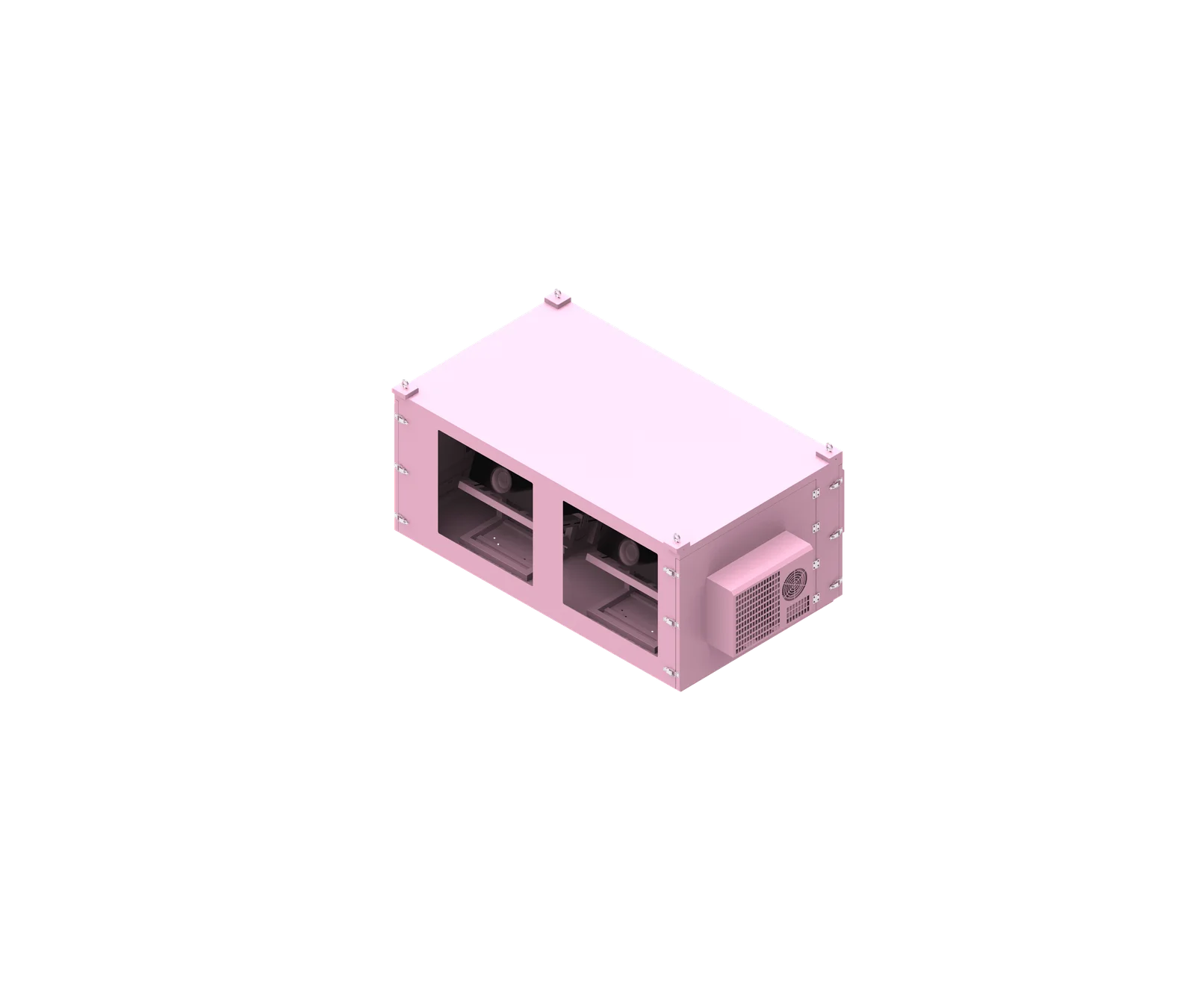
A professional outdoor projector enclosure specification should define the full project context, not just an IP rating and cooling device. AV consultants should document the exact projector, lens, climate, thermal performance, optical geometry, mounting, electrical interfaces, service access, and verification requirements so enclosure manufacturers can quote technically comparable solutions.
What is outdoor projector enclosure specification?
An outdoor projector enclosure specification is a technical document that defines how an enclosure must protect, cool, support, power, and service a projector in a specific outdoor installation. It should describe project conditions and required performance clearly enough for manufacturers to engineer an appropriate enclosure without guessing critical details.
Specification Scope for AV Consultants
An effective outdoor projector enclosure specification connects AV design requirements with mechanical, thermal management, optical, structural, and electrical engineering requirements. It should not be reduced to a line such as “outdoor projector enclosure, IP65, with air conditioning,” because that leaves too many design assumptions unresolved.
Based on our internal data and market analysis, here is the breakdown:
| Specification Area | AV Consultant Should Define |
|---|---|
| Projector | Exact manufacturer, model, quantity, datasheets |
| Lens | Exact lens model, throw ratio, zoom, lens shift |
| Environment | Project location, temperature, humidity, rain, dust, salt, sunlight |
| Thermal | Required operating conditions based on projector limits |
| IP Protection | Required ingress-protection level and scope |
| Optical | Window position, clear aperture, lens alignment, reflection control |
| Structure | Mounting method, height, project wind criteria, service position |
| Electrical | Voltage, frequency, loads, grounding, protection |
| Cable Entry | Cable types, quantities, connector sizes, entry direction |
| Monitoring | Temperature, humidity, alarms, status signals if required |
| Maintenance | Door access, filter access, projector removal path |
| Testing | Thermal, airflow, electrical, IP evidence, FAT, SAT |
| Documentation | Drawings, wiring diagrams, manuals, inspection records |
A good specification defines performance outcomes and project constraints. It allows an enclosure manufacturer such as ShiRui to propose a suitable design while still giving the consultant enough control to evaluate compliance.
ShiRui Pro Tip: I always recommend starting the specification with the projector model and lens model, not the enclosure size. Once those are fixed, the enclosure geometry, airflow strategy, window position, service access, and cable interfaces become much easier to engineer correctly.
How Does outdoor projector enclosure specification Work?
The specification works by translating project requirements into measurable enclosure design inputs. It tells the manufacturer what equipment must be protected, where it will operate, what environmental conditions it must withstand, how the image exits the enclosure, how technicians will service it, and how performance will be verified.
From Project Conditions to Enclosure Design
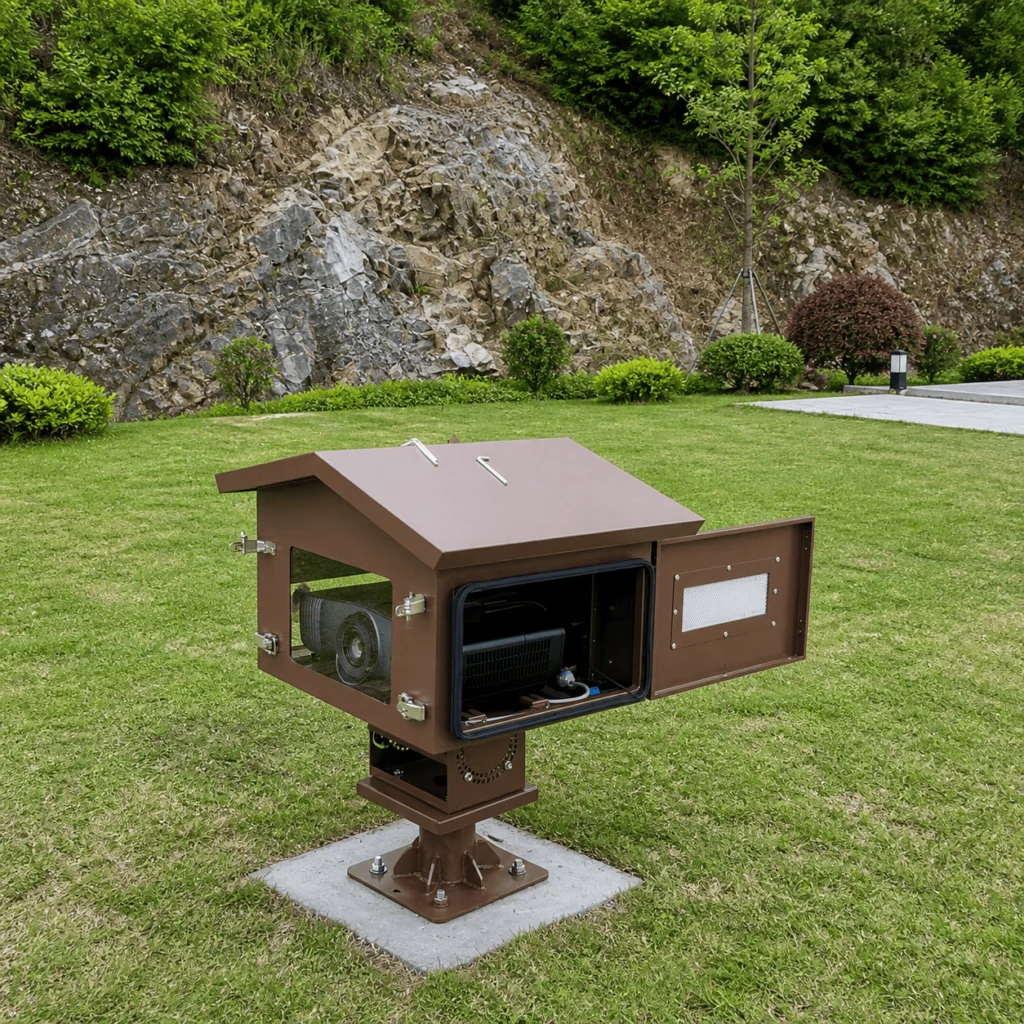
A complete outdoor projector enclosure design specification follows a logical workflow. The consultant defines the application and performance requirements; the manufacturer then develops the cabinet, cooling system, mounting, electrical layout, and service features around those inputs.
A recommended consultant workflow is:
- Define the projection application and operating schedule.
- Select the exact projector model and quantity.
- Select the exact lens model, throw ratio, zoom position, and lens shift.
- Collect environmental data for the project location.
- Define required projector operating conditions based on the projector manufacturer’s limits.
- Define ingress-protection requirements and whether they apply to the complete assembled enclosure.
- Define thermal-performance requirements without forcing an unsuitable cooling method.
- Identify condensation, humidity, cold-start, or heating requirements.
- Provide projection geometry, including throw distance, image size, angle, and orientation.
- Define mounting method, structural interfaces, access direction, and applicable project criteria.
- Define cable entry, power supply, grounding, protection, and control interfaces.
- Define service access, projector removal, and maintenance requirements.
- Define verification requirements such as FAT, SAT, airflow checks, or thermal measurement.
- Review manufacturer proposals, deviations, drawings, and final test documentation.
This approach prevents the enclosure manufacturer from guessing essential project data. It also helps the client compare bids on the same technical basis.
ShiRui Pro Tip: When I review a consultant specification, I look first for missing airflow information. If the projector intake and exhaust locations are not defined, even a well-built enclosure can perform poorly because hot air may recirculate back into the projector.
What are the benefits of outdoor projector enclosure specification?
A complete specification reduces design risk, improves bid comparison, protects projector reliability, and avoids costly rework. It helps consultants align optical, thermal, structural, electrical, and service requirements before fabrication, so the selected enclosure is suitable for the actual projector, installation environment, and operating schedule.
Project Benefits and Risk Reduction
The main benefit is not simply buying a stronger box. The value is in coordinating the enclosure with the full outdoor projection system specification. This is especially important for high-brightness projectors, projection mapping, building façade projection, scenic projection, multi-projector systems, and installations in harsh climates.
Key benefits include:
- Comparable manufacturer quotations: Suppliers price the same scope instead of making different assumptions.
- Better projector compatibility: The enclosure matches the real dimensions, airflow, lens center, service zones, and cable locations.
- Improved thermal reliability: Cooling is based on heat load, ambient conditions, airflow, solar exposure, and operating schedule.
- Reduced optical risk: Window position and clear aperture are coordinated with lens shift, zoom, throw distance, and projection angle.
- Lower maintenance cost: Access doors, filters, fans, lens access, and projector removal paths are planned before fabrication.
- Clear compliance evidence: Testing, documentation, IP evidence, FAT, and SAT requirements are defined before procurement.
- Fewer field modifications: Cable entry, brackets, structure, and service access are coordinated before production.
- Better lifecycle performance: Corrosion, condensation, dust, humidity, and low-temperature operation are considered early.
A well-written AV consultant projector enclosure specification also protects the consultant. It creates a documented engineering basis for procurement and review rather than relying on broad terms such as “weatherproof,” “industrial grade,” or “suitable for outdoor use.”
ShiRui Pro Tip: I prefer specifications that separate mandatory requirements, performance requirements, and optional features. It makes technical review faster and prevents a low quotation from winning simply because important items were excluded.
How to maintain an outdoor projector enclosure specification?
Maintaining the specification means keeping it aligned with the latest projector selection, site data, installation method, electrical design, and service expectations. If the projector, lens, location, mounting height, operating schedule, or cable package changes, the enclosure specification should be reviewed before drawings are approved.
Keeping the Specification Current During Design
An outdoor projector enclosure requirement is often written early, while final projector, structural, and electrical decisions may change later. Consultants should treat the document as a controlled design item, not a one-time procurement note.
Recommended maintenance actions include:
- Track projector changes: Confirm that any projector substitution includes updated dimensions, weight, power, airflow, lens center, and connector layout.
- Track lens changes: Update throw ratio, zoom, lens shift, and optical-window requirements whenever the lens changes.
- Update environmental assumptions: Revise maximum and minimum ambient conditions, humidity, dust, salt exposure, sheltering, and solar exposure if site data changes.
- Coordinate structural updates: Review mounting method, access direction, wind criteria, vibration concerns, and center of gravity with qualified project engineers.
- Coordinate electrical updates: Confirm supply voltage, frequency, total enclosure load, protection, grounding, monitoring, and control interfaces.
- Review cable-entry details: Confirm cable quantities, connector sizes, pre-terminated cables, conduit interfaces, and entry direction before fabrication.
- Check maintenance access: Verify that doors, filters, fans, cooling equipment, lens, and projector removal path remain practical after installation coordination.
- Update testing requirements: Align FAT, SAT, airflow checks, thermal verification, and documentation requirements with the final project scope.
For safety-related structural and electrical requirements, final values should be determined by qualified project engineers and applicable local standards.
ShiRui Pro Tip: I ask clients to freeze cable-entry details before production whenever possible. Uncontrolled field drilling can damage coatings, reduce ingress protection, complicate cable management, and create avoidable corrosion risks.
What is the price of outdoor projector enclosure specification?
The price depends on projector size, heat load, lens geometry, environmental exposure, cooling method, material, mounting structure, electrical scope, monitoring, testing, and documentation. Consultants should avoid comparing enclosure prices unless each supplier is quoting the same technical requirements, included components, and verification scope.
Pricing Drivers Without Universal Assumptions
There is no universal price for a custom projector enclosure specification because the enclosure is engineered around the projector and site conditions. A small sheltered installation with simple ventilation is not comparable to a coastal, sun-exposed, multi-projector system with heating, monitoring, corrosion protection, and formal test documentation.
Based on our internal data and market analysis, here is the breakdown:
| Cost Driver | Why It Affects Price |
|---|---|
| Projector model and quantity | Changes cabinet size, mounting, heat load, and service access |
| Lens and optical geometry | Affects window position, clear aperture, baffles, and alignment features |
| Environmental exposure | Drives sealing, corrosion protection, dust strategy, and condensation control |
| Thermal requirement | Determines whether ventilation, heat exchange, air conditioning, or hybrid cooling is suitable |
| Material and finish | Influences durability, weight, corrosion performance, and architectural appearance |
| Mounting method | Adds brackets, reinforcement, center-of-gravity review, and structural coordination |
| Electrical scope | Adds distribution, protection, sensors, controllers, grounding, and wiring labor |
| Monitoring and alarms | Adds hardware, integration, programming, and documentation |
| Testing and documentation | Adds inspection time, records, reports, FAT/SAT support, and compliance evidence |
| Customization level | Increases engineering, drawing, fabrication, and review effort |
A lower quotation may exclude optical glass, internal projector support, cable glands, cooling equipment, heating, sensors, monitoring, mounting brackets, electrical protection, testing, or documentation. Consultants should request a clear compliance matrix and deviation list from each bidder.
ShiRui Pro Tip: When two enclosure quotations differ significantly, I compare the included scope line by line. Many price gaps come from missing cooling components, cable interfaces, mounting hardware, sensors, test records, or optical-window details rather than from manufacturing efficiency.
Key Features & Comparison
Key features should be specified as project-based requirements, not generic accessories. The most important areas are projector compatibility, environmental protection, thermal management, optical-window design, structural mounting, electrical interfaces, maintenance access, monitoring, security, testing, and documentation. Each feature should have a clear purpose.
Feature Comparison for Consultant Review
Based on our internal data and market analysis, here is the breakdown:
| Feature Area | Weak Specification | Strong Specification |
|---|---|---|
| Projector | “For 20,000-lumen projector” | Defines exact projector manufacturer, model, quantity, datasheets |
| Lens | “With projection window” | Defines lens model, throw ratio, zoom, shift, lens center, clear aperture |
| IP Rating | “Weatherproof cabinet” | Defines required ingress-protection level and scope of assembled enclosure |
| Thermal | “With air conditioning” | Defines ambient conditions, heat load, projector operating limits, verification method |
| Airflow | Not mentioned | Defines intake, exhaust, clearance, and prevention of hot-air recirculation |
| Condensation | Assumed solved by waterproofing | Defines humidity, temperature variation, dew-point risk, and control requirement |
| Material | “Stainless steel required” by habit | Defines corrosion environment and durability requirement, then selects material accordingly |
| Mounting | “Outdoor mount” | Defines pole, wall, ceiling, platform, ground, or custom frame mounting |
| Wind/Structure | Generic manufacturer claim | Uses project structural criteria determined by qualified engineers |
| Cable Entry | “Cable glands included” | Defines cable types, quantities, connector sizes, and entry direction |
| Electrical | “Power provided” | Defines voltage, frequency, complete loads, grounding, protection, and standards |
| Maintenance | Not described | Defines access doors, filter access, lens access, and projector removal path |
| Monitoring | “Remote monitoring” | Defines exact monitored points such as temperature, humidity, cooling status, door status |
| Testing | “Factory tested” | Defines inspection, airflow, thermal, electrical, IP evidence, FAT, and SAT criteria |
| Documentation | “Manual included” | Defines drawings, wiring diagrams, installation guide, maintenance guide, reports |
This comparison shows why a complete projector enclosure technical specification should focus on measurable project requirements. It helps manufacturers propose the correct engineering solution while avoiding unnecessary over-specification.
ShiRui Pro Tip: I recommend asking every bidder to complete the same compliance table. It quickly reveals whether one supplier has included optical glass, cooling, brackets, electrical components, sensors, test records, or documentation that another supplier omitted.
Cost & Buying Factors
Buying decisions should consider total project suitability, not enclosure price alone. Consultants should evaluate whether the quotation includes the required cooling strategy, optical window, internal mounting, electrical system, cable entry, corrosion protection, monitoring, service access, testing, documentation, and project-specific customization.
Practical Buying Criteria for AV Consultants
A reliable buying process starts with a clear specification and ends with drawing approval, factory verification, installation review, and site acceptance. The enclosure is part of the outdoor projection system, so procurement should evaluate performance, maintainability, and compliance evidence.
Important buying factors include:
- Technical compliance: Does the supplier respond to each requirement, or only provide a general product brochure?
- Projector and lens coordination: Does the proposal reference the exact projector and lens models?
- Thermal design basis: Does the supplier explain the cooling method relative to heat load, ambient conditions, airflow, and operating schedule?
- Condensation strategy: Does the proposal address humidity, low temperature, day-night variation, or dew-point risk where relevant?
- Optical-window design: Does the proposal coordinate lens center, shift, zoom, clear aperture, and reflection control?
- Material and corrosion suitability: Does the design match the actual site environment instead of relying on generic material assumptions?
- Mounting and structure: Are brackets, access direction, service clearance, center of gravity, and project structural criteria coordinated?
- Electrical integration: Are voltage, loads, grounding, protection, monitoring, and control interfaces clearly defined?
- Maintenance practicality: Can technicians access and remove the projector without dismantling the entire enclosure?
- Verification evidence: Are FAT, SAT, thermal checks, airflow checks, electrical checks, or IP documentation included where required?
- Documentation quality: Are drawings, wiring diagrams, manuals, inspection records, and test reports part of the deliverables?
The best purchase is usually the proposal that most clearly satisfies the actual project requirements, not the one with the longest generic feature list.
ShiRui Pro Tip: I advise consultants to request a deviation list with every quotation. If a manufacturer cannot clearly state what is included, excluded, or different from the specification, the buying risk is usually higher than the price suggests.
Conclusion
A complete specification should coordinate projector compatibility, environmental protection, thermal performance, optical geometry, structural installation, electrical systems, maintenance access, verification, and documentation. The clearer these requirements are before quotation, the easier it is to compare suppliers, reduce redesign, and deliver a reliable outdoor projection system.
Consultant Checklist Before Issuing the Specification
An AV consultant should specify the performance conditions an outdoor projector enclosure must satisfy, not simply name a cabinet, IP rating, and cooling component. The following checklist can be used before tender or quotation.
- Project application:
- Projector brand and exact model:
- Projector quantity:
- Lens model:
- Throw ratio and intended zoom:
- Required lens shift:
- Projection distance:
- Projection angle and orientation:
- Projector power consumption or thermal data:
- Projector airflow direction:
- Manufacturer-required clearances:
- Project location:
- Maximum ambient temperature:
- Minimum ambient temperature:
- Relative humidity:
- Rain exposure:
- Dust or sand exposure:
- Salt-spray or corrosive exposure:
- Solar exposure:
- Required IP rating and scope:
- Required thermal-performance outcome:
- Cooling method, if mandatory:
- Heating requirement:
- Condensation-control requirement:
- Temperature monitoring locations:
- Humidity monitoring:
- Optical-window requirement:
- Clear aperture requirement:
- Material or corrosion requirement:
- Surface finish and color:
- Mounting method:
- Mounting height:
- Project wind or structural criteria:
- Cable types and quantities:
- Connector sizes and entry direction:
- Power supply voltage and frequency:
- Electrical protection and grounding:
- Remote monitoring requirements:
- Remote control requirements:
- Security requirements:
- Maintenance access:
- Projector removal path:
- Testing requirements:
- FAT requirements:
- SAT requirements:
- Documentation requirements:
- Certification or compliance scope:
- Spare parts requirements:
- Total enclosure quantity:
With this level of detail, ShiRui and other qualified enclosure manufacturers can engineer and quote comparable solutions based on real project needs.
ShiRui Pro Tip: My final advice is simple: define the conditions and required performance first, then let the enclosure engineering follow. That approach gives consultants better control, manufacturers better information, and project owners a more reliable outdoor projection installation.