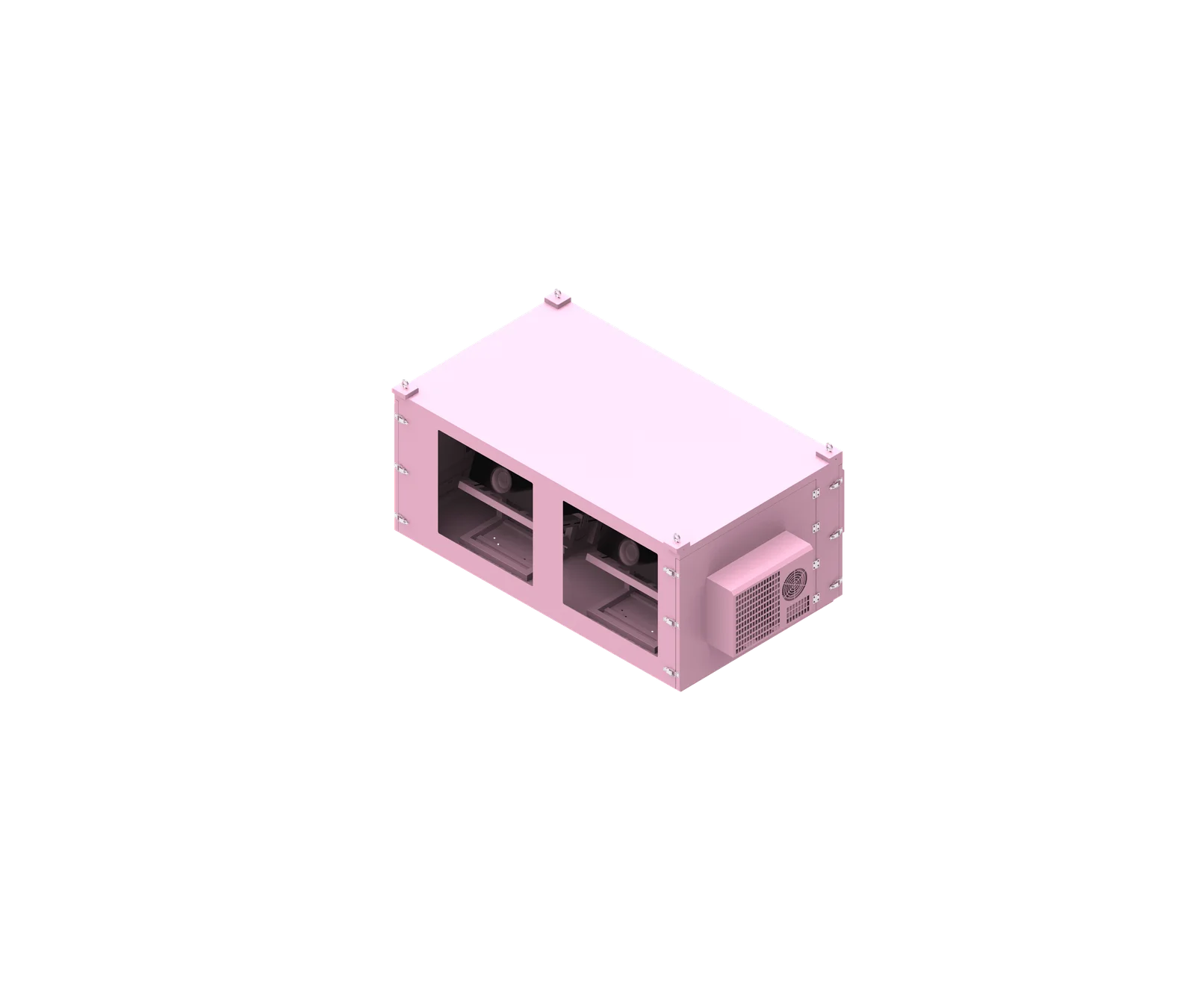
When a projector model changes after drawing approval, the approved enclosure drawing should be treated as a configuration that may no longer be valid. A custom outdoor projector enclosure is engineered around a specific projector, lens, airflow path, heat load, mounting structure, optical window, wiring layout, and maintenance method. The key question is not “Will the new projector fit?” but “Will the complete enclosure system still work correctly with the new projector?”
What is projector model change enclosure design?
Projector model change enclosure design is the engineering review and redesign process used when a replacement projector is introduced after enclosure drawings have already been approved. It verifies whether the existing custom enclosure still supports the new projector’s dimensions, lens geometry, airflow, heat load, mounting, wiring, and service requirements.
Engineering Meaning of a Projector Change
A projector model change is not simply an equipment substitution. In outdoor projector enclosure projects, the approved drawing usually confirms one complete engineering configuration: projector body, lens model, optical-window position, cooling concept, mounting holes, cable entry, electrical components, access doors, and cabinet dimensions.
If the projector changes, some or all of those assumptions may change. Even two projectors with similar brightness or similar outer dimensions may have different air intake locations, exhaust paths, lens-center positions, connector locations, service access requirements, or power consumption.
Based on our internal data and market analysis, here is the breakdown:
| Item to Recheck | Why It Matters |
|---|---|
| Dimensions | May interfere with cabinet walls, doors, ducts, or internal brackets |
| Weight | Affects mounting rails, support frame, and center of gravity |
| Mounting holes | May require a new mounting plate or bracket |
| Air intake | Changes the enclosure airflow supply path |
| Exhaust | May cause hot-air recirculation or heat buildup |
| Power consumption | Changes thermal and electrical load |
| Lens center | Changes optical-window alignment |
| Lens shift | Changes required clear aperture |
| Lens model | Changes projection geometry and physical clearance |
| Connectors | Changes cable routing and bend space |
| Maintenance access | May affect filter, lens, cover, or connector serviceability |
| Cooling system | May require recalculation or redesign |
ShiRui Pro Tip: When we receive a projector change request, we first freeze the original approved configuration. That means recording the original projector, lens, drawing revision, cooling method, mounting arrangement, optical-window location, and electrical layout before judging the new model.
How Does projector model change enclosure design Work?
It works by comparing the original approved projector-and-lens configuration against the replacement projector using manufacturer documentation, not assumptions. The review checks mechanical fit, mounting, airflow, thermal load, optical alignment, electrical interfaces, cable routing, service access, and production status before deciding whether no change, minor revision, major revision, or new design is required.
Step-by-Step Engineering Review Workflow
A reliable projector enclosure design change starts with controlled comparison. The factory should not receive a new projector model by email while continuing production from the old approved drawing. A projector enclosure engineering change should trigger formal review and, where required, revised drawing approval.
Recommended workflow:
- Stop and confirm current production status.
- Record the original approved configuration.
- Obtain the exact new projector model.
- Confirm the exact new lens model.
- Compare width, height, depth, and service clearance.
- Compare projector weight and center of gravity.
- Check mounting-hole pattern and bracket requirements.
- Compare air intake and exhaust locations.
- Review manufacturer airflow clearance requirements.
- Recalculate heat load using actual power consumption data.
- Check cooling equipment suitability.
- Compare lens center, lens shift, throw ratio, and zoom range.
- Recheck optical-window size, position, and clear aperture.
- Review connector locations and cable bend radius.
- Check voltage, current, plug type, wiring, and protection.
- Verify maintenance access and projector removal path.
- Classify the impact: no change, minor revision, major revision, or new design.
- Revise drawings, BOM, wiring diagrams, and related documents.
- Obtain customer reapproval before production continues.
- Repeat affected inspections or tests after modification.
ShiRui Pro Tip: I recommend asking for the exact projector datasheet, dimensional drawing, airflow diagram, lens data, and power consumption sheet at the same time. Partial information often leads to partial engineering review, which is risky for outdoor enclosures.
What are the benefits of projector model change enclosure design?
The main benefit is risk control. A structured enclosure review prevents optical misalignment, overheating, airflow conflict, mounting failure, cable interference, electrical mismatch, service-access problems, and unnecessary fabrication waste. It helps AV integrators, contractors, consultants, and procurement teams make an informed decision before manufacturing or rework continues.
Why a Formal Review Protects the Project
A custom outdoor projector enclosure is a system, not just a metal box. It must protect the projector from weather while maintaining correct operating temperature, optical performance, cable access, structural support, and serviceability. A projector enclosure design change review makes hidden risks visible before they become site problems.
Key benefits include:
- Prevents using an optical window that no longer aligns with the lens center.
- Reduces risk of hot-air recirculation inside the cabinet.
- Confirms whether existing fans, air conditioner, heat exchanger, or internal circulation remain suitable.
- Avoids incorrect mounting brackets or unsupported weight changes.
- Verifies whether the projector can still be installed, removed, and serviced.
- Helps determine whether existing purchased parts can still be used.
- Protects IP/weather-sealing integrity after any modification.
- Creates a documented basis for cost, schedule, and approval decisions.
ShiRui Pro Tip: The safest decision is not always “redesign everything.” Sometimes the original enclosure remains compatible. The important point is that compatibility must be demonstrated by engineering review, not assumed from projector brightness or outer size.
How to maintain a projector model change enclosure design?
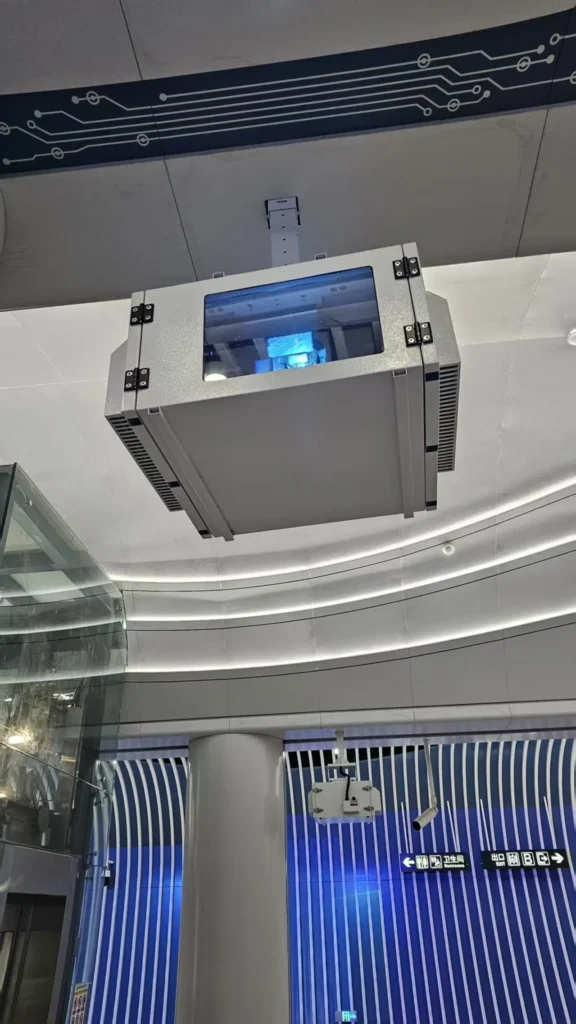
Maintaining a revised enclosure design means keeping drawings, BOMs, wiring diagrams, optical data, thermal assumptions, spare-parts lists, FAT checklists, and installation documents synchronized with the approved replacement projector. After significant modification, the affected fit, airflow, thermal, electrical, sealing, and service-access checks should be repeated.
Documentation and Verification After a Design Change
Once the new projector has been reviewed, the design record must be updated. If the drawing changes but the BOM, wiring diagram, maintenance manual, or FAT checklist does not, the project can still fail during manufacturing, installation, or service.
Documents and checks that may need updates include:
- General arrangement drawing.
- Internal layout drawing.
- Projector mounting drawing.
- Optical-window drawing.
- Cable-entry drawing.
- Wiring diagram.
- Cooling-system layout.
- BOM and purchased-component list.
- Installation instructions.
- Maintenance documentation.
- Spare-parts list.
- FAT checklist.
- Packing and lifting instructions if size or weight changes.
Testing after modification should be based on the affected areas. Possible checks include projector fit, mounting stability, optical alignment, airflow path, temperature-control behavior, electrical function, door operation, cable routing, and sealing inspection.
ShiRui Pro Tip: We never reuse old thermal or airflow conclusions automatically when the replacement projector has different intake, exhaust, or power data. The previous test belonged to the previous configuration.
What is the price of projector model change enclosure design?
The price depends on the project-specific impact, not a universal redesign fee. Cost may be affected by engineering review, revised drawings, new mounting parts, new optical glass, cooling changes, electrical changes, rework, replacement panels, purchased components, coating status, and whether fabrication has already started or finished.
Cost Drivers Without Universal Assumptions
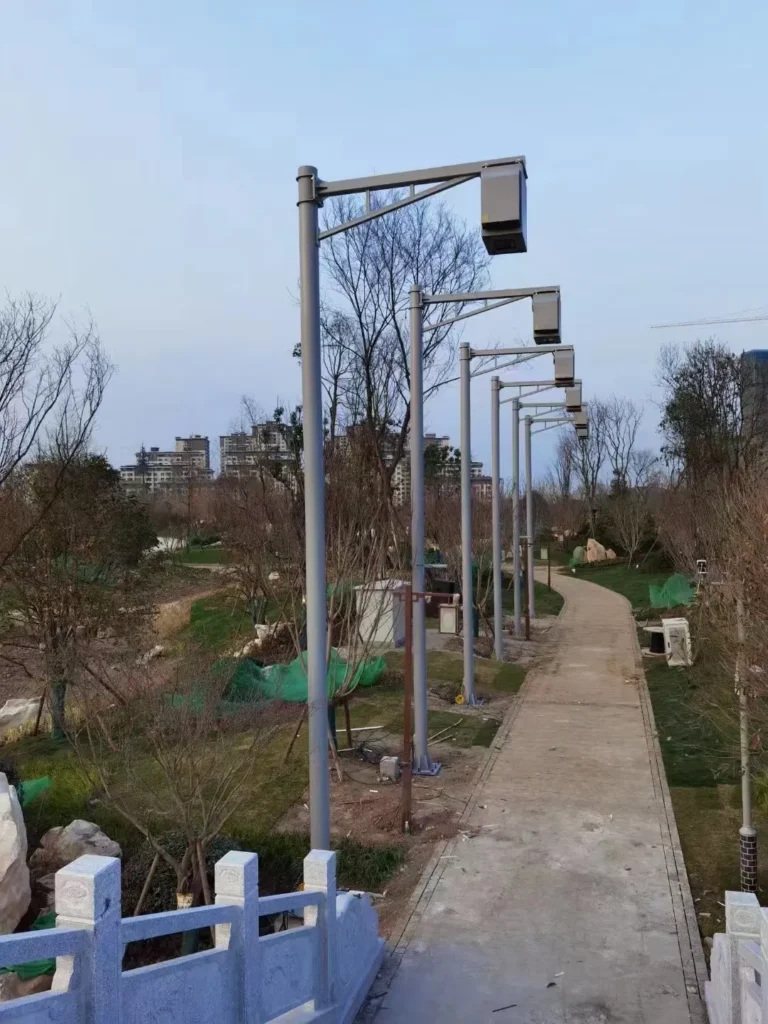
A projector enclosure modification can be simple or complex. If the enclosure has not entered fabrication, the main impact may be engineering review, drawing revision, recalculation, and customer reapproval. If laser cutting, bending, welding, powder coating, assembly, or component purchasing has already started, the change may affect material, labor, schedule, and rework feasibility.
Based on our internal data and market analysis, here is the breakdown:
| Project Status | Possible Cost Factors |
|---|---|
| Drawing approved, fabrication not started | Engineering review, drawing revision, customer reapproval, BOM update |
| Sheet metal already cut | Replacement panels, new cutouts, possible scrap or rework |
| Cabinet bent or welded | Structural rework, new mounting frame, front-panel replacement |
| Powder coating completed | Coating repair, corrosion-protection concerns, appearance impact |
| Optical glass manufactured | New glass if size, position, or aperture changes |
| Cooling components purchased | Fan, AC, heat exchanger, duct, or sensor changes |
| Electrical parts purchased | Breaker, fuse, wiring, terminal, plug, or control revisions |
| Cabinet completed | Rework, retesting, sealing review, possible new cabinet evaluation |
ShiRui Pro Tip: I avoid quoting a projector-change cost before reviewing the original approved drawing and the exact replacement projector/lens data. The same change request can be minor before fabrication and much more complex after coating or assembly.
Key Features & Comparison
A good projector model change review compares the complete enclosure system, not just the projector body. The essential features include mechanical fit, structural support, airflow compatibility, thermal capacity, optical-window alignment, lens-shift clearance, electrical load, connector access, maintenance path, documentation control, and manufacturing-stage impact.
Compatibility Review Matrix
Based on our internal data and market analysis, here is the breakdown:
| Review Area | Original Drawing Assumption | What to Compare on New Projector | Possible Result |
|---|---|---|---|
| Cabinet space | Internal width, height, depth | Body size, protruding lens, connector clearance | Same cabinet, internal modification, or larger cabinet |
| Mounting | Approved hole pattern and rails | Thread locations, mounting surface, bracket needs | New plate, new rails, or support redesign |
| Weight | Approved load and balance | Projector mass and center of gravity | Structural review or mounting reinforcement |
| Air intake | Cooling-air supply location | Front, rear, side, bottom, or multiple intakes | Duct, fan, sensor, or layout change |
| Exhaust | Hot-air discharge route | Exhaust direction and temperature path | Recirculation review or cooling redesign |
| Heat load | Original projector power data | Actual manufacturer power consumption | Cooling capacity review |
| Lens center | Approved optical-window coordinates | Actual lens center coordinates | Window reuse, repositioning, or replacement |
| Lens shift | Approved clear aperture | Horizontal/vertical shift envelope | Larger aperture or front-panel change |
| Throw ratio | Original lens geometry | New lens throw range and zoom settings | Optical review with AV integrator |
| Connectors | Existing cable entry and routing | Power, HDMI, fiber, network, control positions | Cable rerouting or connector-space change |
| Electrical | Approved voltage/current/protection | Voltage, frequency, plug, current demand | Wiring or protection update |
| Service access | Door position and removal path | Filter, lens, cover, and connector access | Door or internal layout revision |
| Documentation | Approved revision | New model, new lens, new components | Drawing revision and reapproval |
ShiRui Pro Tip: Similar dimensions do not mean enclosure compatibility. Two projectors can fit in the same volume but require completely different airflow, optical-window placement, cable routing, and service access.
Cost & Buying Factors
Buying decisions should consider more than the enclosure purchase price. The total impact of a projector model change can include redesign work, component reuse, rework feasibility, optical glass changes, cooling-system compatibility, electrical revisions, packaging changes, site-structure implications, schedule coordination, and approval control.
Practical Procurement and Project-Management Factors
For procurement teams and project managers, the manufacturing stage is one of the most important cost and schedule factors. Earlier changes are usually easier to absorb than changes made after material cutting, welding, powder coating, or final assembly. However, the exact impact must be evaluated case by case.
Before approving a custom projector enclosure modification, check:
- Has fabrication started?
- Have optical glass, AC units, fans, brackets, or electrical parts been purchased?
- Has sheet metal already been laser-cut or bent?
- Has the cabinet been welded or coated?
- Does the new projector require a different optical window?
- Does the cooling system remain suitable?
- Does the projector still align with the site projection geometry?
- Will the crate, pallet, lifting method, or shipping volume change?
- Does the site pole, platform, wall bracket, or ceiling structure need rechecking?
- Has the revised drawing been formally approved?
The buying decision should also include AV system coordination. A projector model change may affect projection distance, image size, resolution, lens selection, signal interfaces, and control-system integration. Where these affect the enclosure, the AV integrator and enclosure manufacturer should review the change together.
ShiRui Pro Tip: If the new projector differs substantially in size, weight, heat load, airflow architecture, or lens position, heavy rework may not be the best value. In some cases, a new enclosure is safer or more economical—but that decision should come only after project-specific review.
Conclusion
When a projector model changes after drawing approval, do not decide compatibility by size or brightness alone. Recheck mechanical dimensions, mounting, airflow, heat load, optical alignment, electrical requirements, cable interfaces, maintenance access, manufacturing status, and documentation. If any assumption changes, revise the enclosure drawing and obtain approval before production continues.
Final Engineering Recommendation
The approved enclosure drawing represents a specific projector enclosure compatibility decision. Once the projector or lens changes, that decision should be reopened.
A practical decision matrix can help classify the result:
Based on our internal data and market analysis, here is the breakdown:
| Decision Category | Meaning |
|---|---|
| No Design Change | Original enclosure remains technically compatible after review |
| Minor Revision | Small bracket, wiring, cable, sensor, or internal adjustment required |
| Major Revision | Optical, thermal, structural, door, or cabinet changes required |
| New Design | Original approved enclosure is no longer practical for the replacement projector |
Customers should send the new projector brand and exact model, exact lens model, datasheet, dimensional drawing, airflow diagram, power consumption data, lens-shift information, throw ratio, projection distance, and any updated project drawings immediately.
For ShiRui custom outdoor projector enclosure projects, the goal is not only to place the projector inside a cabinet. The goal is to ensure the entire enclosure system continues to work correctly outdoors—with proper cooling, optical alignment, electrical safety, sealing, and serviceability.
ShiRui Pro Tip: If your approved enclosure drawing was based on one projector and you now plan to use another, pause production and request an engineering compatibility review. It is much easier to revise a controlled design than to repair an incompatible enclosure after fabrication.