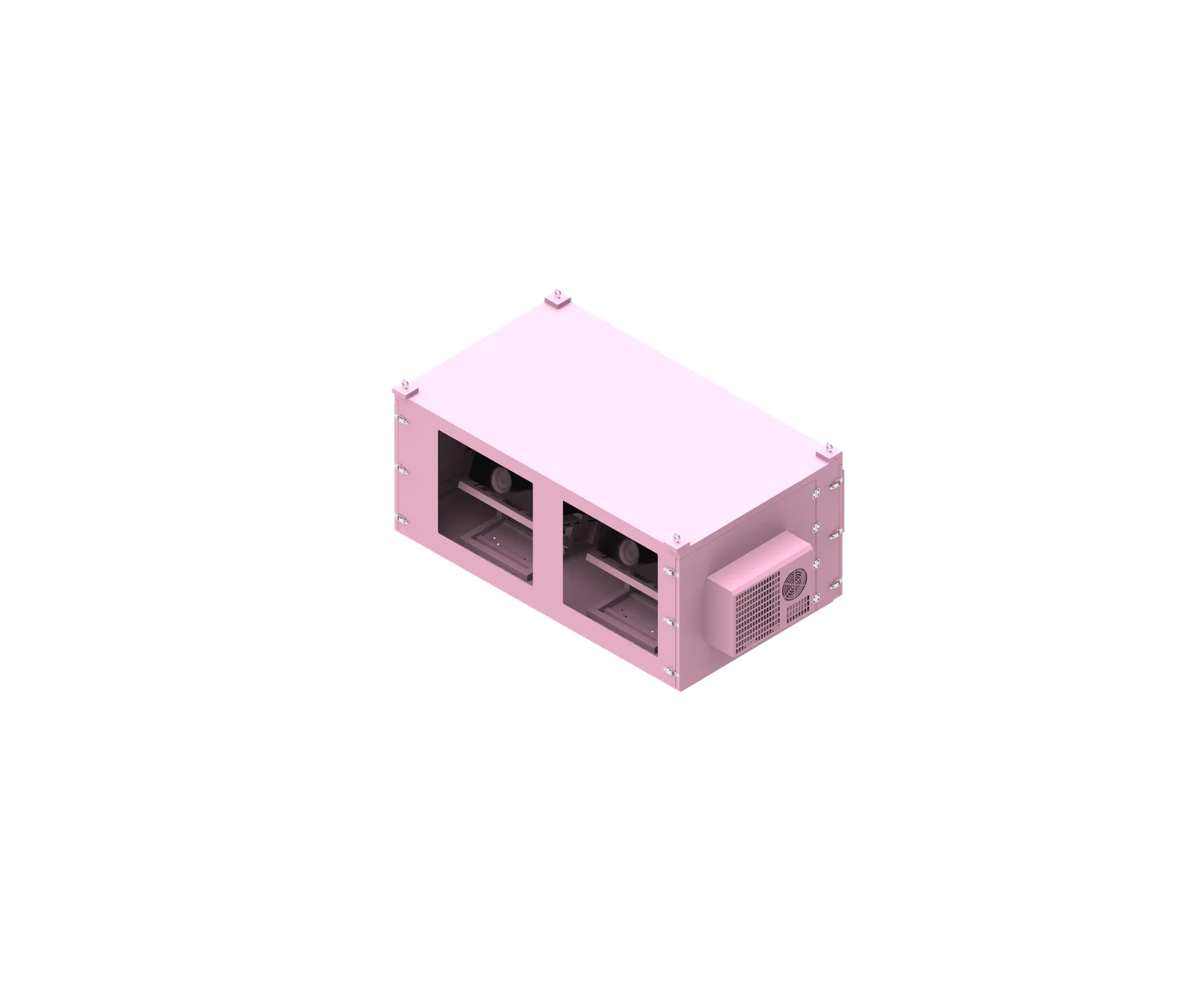
A fixed outdoor projection project needs more than a simple rain cover; it needs an engineered outdoor projector enclosure matched to the projector, site climate, installation method, and maintenance plan. As a manufacturer, ShiRui designs these enclosures around waterproof sealing, thermal control, optical glass alignment, cable entry, mounting safety, humidity management, and long-term service access for AV integrators and project contractors.
Video Guide: Explore our outdoor waterproof projector enclosure and learn how it provides reliable protection for professional outdoor projection installations.
What is outdoor projector enclosure?
An outdoor projector enclosure is a protective cabinet designed to house a projector in fixed outdoor or semi-outdoor installations. It protects against rain, dust, corrosion, heat, humidity, insects, and accidental exposure while maintaining lens visibility, ventilation, power access, cable routing, mounting stability, and maintenance convenience for real engineering projects.
Video Guide: Explore waterproof outdoor projector enclosures designed to protect projection equipment from rain, dust, and demanding outdoor conditions.
Engineering Definition and Project Role
A professional outdoor projector enclosure is not only a metal box. It is a matched system that combines sheet metal structure, waterproof sealing, thermal design, optical window positioning, power distribution, sensor control, and installation interfaces.
For ShiRui projects, enclosure design usually starts from the projector model and site environment. A building projection project may require precise lens alignment and wall or pole mounting review. A water screen projection project may require stronger humidity control and anti-fog treatment. A subway or dusty site may require an internal circulation air conditioning structure to reduce direct entry of dust and water vapor.
Key design elements usually include:
- Projector model, body size, lens position, and air inlet/outlet direction
- Enclosure material such as 201 stainless steel, 304 stainless steel, or galvanized plate
- Waterproof sealing structure, with waterproof certification available up to IP65 depending on project configuration
- Optical ultra-white glass window with about 95% light transmittance
- Cooling method, humidity control, heating, and anti-condensation design
- Cable entry direction, reserved mounting holes, maintenance door direction, and internal socket layout
- Optional sensors such as temperature and humidity sensor, smoke alarm, flooding alarm, and temperature control probe
ShiRui Pro Tip: I always recommend confirming the projector lens position before enclosure production, not after installation. Even a small mismatch between the optical glass and lens center can reduce image quality and create unnecessary site adjustment work.
How Does outdoor projector enclosure Work?
An outdoor projector enclosure works by separating the projector from harsh outdoor conditions while maintaining controlled airflow, stable temperature, safe power distribution, clear projection through optical glass, and accessible maintenance. Its structure must balance waterproof sealing with heat dissipation, because projectors generate continuous heat during operation.
Video Guide: Explore our outdoor projector enclosure and its protective design for reliable professional outdoor projection installations.
Protection, Cooling, and Control Logic
The enclosure works as a controlled micro-environment around the projector. Rain and dust are blocked by the cabinet structure, sealing strips, filters, and waterproof cable entry. Heat is managed by fresh air, air conditioning, or internal circulation cooling depending on the projector and site conditions.
For professional applications, ShiRui can configure several cooling structures:
- Fresh air system for general outdoor use where filtered air exchange is acceptable.
- Fresh air system + air conditioning for higher heat load or hotter installation sites.
- Internal circulation air conditioning for sandy, dusty, humid, or subway environments where direct outside air should be minimized.
- Fresh air remote-control version for projects requiring remote status adjustment.
- Fresh air + air conditioning remote-control version for more complex long-hour operation.
- Internal circulation air conditioning remote-control version for sealed or high-risk environments.
The control system can include temperature and humidity sensing. For example, heating may start when temperature is ≤ 5°C and humidity is ≥ 85%, then stop when temperature reaches 10°C and humidity is ≤ 75%. For fan cooling, when the internal box temperature is higher than the preset 35°C value by ≥ 2°C, the fan system starts; when the temperature is below the preset value by ≤ 2°C, the fan stops.
Remote monitoring options can include WiFi, Ethernet, or 4G connection to Ali Cloud IoT platform with encrypted data communication. This helps project teams check enclosure status and respond earlier when site conditions change.
ShiRui Pro Tip: I do not suggest choosing the cooling system only by projector wattage. Site dust, humidity, sunlight exposure, operating hours, and whether the enclosure is pole-mounted or ceiling-mounted all affect the final cooling decision.
How to make a homemade outdoor projector screen?
For a fixed outdoor projection project, a screen should be planned as part of the full projection system, not as an isolated DIY surface. The screen material, gain, flatness, wind resistance, projector brightness, throw distance, and enclosure lens alignment all affect final image clarity and installation reliability.
Video Guide: Explore our waterproof projector box designed for reliable outdoor projector protection. This video provides a closer look at the enclosure design and helps AV integrators and project contractors evaluate a suitable solution for permanent outdoor projection installations.
Screen Planning for Fixed Outdoor Projects
Although a temporary homemade screen can be made from fabric, PVC board, painted wall, or projection screen material, professional projects should evaluate screen stability, surface flatness, weather exposure, and projector brightness. If the projector is installed inside an outdoor projector enclosure, the enclosure window must align with the lens and screen centerline before production.
For engineering projects, use this planning sequence:
- Confirm the projection purpose
Building facade, scenic night-tour, advertising, water screen, event plaza, or fixed outdoor cinema. - Check the projector model and lumen level
Higher ambient light usually requires higher brightness and better contrast planning. - Measure throw distance and image size
The enclosure position, lens shift, mounting height, and screen size must be coordinated. - Choose a screen surface
Options include coated projection fabric, fixed frame outdoor screen, treated wall surface, or special water screen media. - Review wind and weather exposure
Outdoor screens may need frame reinforcement, drainage, tensioning, or seasonal maintenance. - Align the enclosure optical glass
The ultra-white glass window should match the projector lens before fabrication to avoid image clipping or reflection problems. - Plan maintenance access
Both the screen and enclosure should be serviceable without dismantling major structures.
ShiRui Pro Tip: When a customer sends us only the screen size, I always ask for projector model, lens position, and site photos too. The screen may look simple, but enclosure position and optical alignment decide whether the final image can be installed smoothly.
What can I use as a projector screen outside?
Outside, you can use a professional outdoor projection screen, coated wall, tensioned fabric, PVC board, inflatable screen, or water screen depending on the project. For fixed installations, the surface must match projector brightness, environment, wind load, image size, and the enclosure’s optical window position.
Video Guide: Discover how an outdoor projector enclosure protects projection equipment and supports reliable long-term operation in demanding outdoor environments.
Outdoor Screen Material Comparison
Based on our internal data and market analysis, here is the breakdown:
| Screen Option | Suitable Project Type | Main Advantage | Key Risk to Review | Enclosure Coordination |
|---|---|---|---|---|
| Professional outdoor screen | Fixed outdoor cinema, plaza, event area | Better flatness and image control | Wind load, frame stability | Align lens center and screen center |
| Coated wall surface | Building projection, facade display | Large image area, lower visible hardware | Wall texture and uneven reflectivity | Review throw angle and maintenance access |
| Tensioned projection fabric | Temporary or semi-fixed outdoor use | Lightweight and adjustable | Wrinkles, rain exposure, wind | Confirm projector brightness and enclosure mounting |
| PVC or rigid board | Small fixed display | Flat and easy to install | Expansion, surface aging | Match image size and viewing distance |
| Water screen | Scenic night-tour, fountain show | Dramatic visual effect | Humidity, fog, water vapor | Use anti-fog, dehumidification, and proper cooling design |
| Inflatable screen | Events and mobile use | Fast deployment | Not ideal for fixed unattended structures | Usually less relevant for permanent enclosures |
In fixed projects, the screen decision should be made together with the enclosure decision. For example, a water screen projection site may require humidity-resistant enclosure design, internal blowing to reduce fog on the projection window, and careful sealing around cable entry. A dusty open-air site may require fresh air filtration with F6 medium-efficiency air filters or an internal circulation air conditioning design.
ShiRui Pro Tip: I prefer reviewing real site photos before recommending a screen-related enclosure layout. Photos reveal wall texture, sunlight direction, mounting obstacles, drainage risks, and whether the maintenance door can actually open after installation.
How to make a projector visible outside?
To make a projector visible outside, select enough brightness for ambient light, control the projection surface, reduce stray light, position the projector accurately, and protect it inside a correctly cooled outdoor projector enclosure. Visibility depends on optical planning and environmental control, not only projector lumen rating.
Video Guide: Explore our outdoor enclosure for projector protection and see how its durable design supports reliable outdoor projection installations. Ideal for AV integrators, project contractors, scenic attractions, commercial venues, and permanent outdoor display projects.
Visibility Factors for Outdoor Projection
Outdoor visibility is affected by light pollution, screen reflectivity, image size, projector brightness, lens quality, and viewing distance. A professional enclosure supports visibility by keeping the projector stable, clean, dry, and correctly aligned over long operating periods.
Important factors include:
- Ambient light level: Night projection performs better than dusk or daylight projection.
- Projector lumen level: Higher brightness may be required for large building projection or scenic installations.
- Image size: The larger the image, the more brightness is spread across the surface.
- Projection surface: A smooth, controlled surface improves contrast and sharpness.
- Lens alignment: The optical glass window must align with the projector lens before production.
- Glass quality: ShiRui uses optical ultra-white glass with about 95% light transmittance for the projection window.
- Internal temperature: Overheating can reduce performance or trigger projector protection.
- Condensation control: Fog or frost on the window can reduce image clarity; internal blowing, heating, and dehumidification can help.
For long-hour outdoor projection, the enclosure cooling method should be reviewed carefully. Fresh air systems may suit many open-air projects, while internal circulation air conditioning is often more suitable for sandy, dusty, humid, or subway environments.
ShiRui Pro Tip: If a client says the image is “not bright enough,” I do not immediately suggest a larger projector. I first check image size, surface color, ambient light, optical glass alignment, and whether heat or condensation is affecting the projection path.
Key Features & Comparison
A professional outdoor projector enclosure should combine waterproof sealing, corrosion-resistant material, thermal management, optical glass, sensor control, cable entry, power layout, mounting design, and maintenance access. The right configuration depends on the projector model, project environment, installation method, and expected operating conditions.
Video Guide: Watch this waterproof projector enclosure in action and learn how it helps protect projectors during long-term outdoor use. Its weather-resistant structure provides dependable protection against water, dust, moisture, and changing temperatures.
Feature Comparison for Project Matching
Based on our internal data and market analysis, here is the breakdown:
| Feature | Professional Design Purpose | Common ShiRui Options | When It Matters Most |
|---|---|---|---|
| Enclosure material | Corrosion resistance and structural strength | 201 stainless steel, 304 stainless steel, galvanized plate | Coastal, humid, open-air, or customer-specified projects |
| Waterproof sealing | Protects projector and electrical parts | Sealed cabinet structure, waterproof cable entry, IP65 available | Rain-exposed fixed installations |
| Cooling system | Controls internal temperature | Fresh air, fresh air + AC, internal circulation AC, remote-control versions | Long-hour operation, high-lumen projectors, hot sites |
| Dust filtration | Reduces dust and mosquito entry | F6 medium-efficiency air filter in fresh air structures | Outdoor parks, dusty roads, scenic areas |
| Optical window | Maintains projection clarity | Optical ultra-white glass, about 95% transmittance | Building projection, mapping, long-distance projection |
| Humidity control | Reduces condensation and moisture risk | Heating, dehumidification, temperature/humidity sensor | Water screen, coastal, high-humidity sites |
| Anti-fog support | Helps keep window clear | Internal blowing device, heating logic | Cold, humid, or water-adjacent installations |
| Power layout | Supports projector and internal devices | Reserved 16A or 10A multifunctional socket | High-power projector or customized wiring |
| Safety sensing | Helps project team respond earlier | Smoke alarm, flooding alarm, temperature probe, road temperature sensing | Remote or difficult-access sites |
| Remote monitoring | Supports status checking | WiFi, Ethernet, 4G to Ali Cloud IoT platform | Distributed projects or maintenance teams |
| Mounting interface | Matches real installation structure | Pole, wall, ceiling, platform, reserved mounting holes | Fixed engineering projects |
| Maintenance access | Allows service without full dismantling | Custom maintenance door direction and access layout | Pole-mounted, ceiling-mounted, or narrow-space sites |
Material selection should be based on corrosion risk, installation method, project environment, and customer requirements. For example, 304 stainless steel is often considered for higher corrosion-risk environments, while galvanized plate may be selected for suitable cost-sensitive structures after surface treatment review.
ShiRui also supports sheet metal processing, self-developed outdoor projector shell products, waterproof projector case production, outdoor network cabinet experience, factory video, real product photos, engineering project case photos, offline exhibition materials, and certificates available on request.
ShiRui Pro Tip: I recommend confirming the maintenance door direction at the drawing stage. On many sites, the enclosure itself is correct, but the wall, pole, ceiling bracket, or nearby structure blocks the door after installation.
Cost & Buying Factors
The cost of an outdoor projector enclosure depends on material, size, cooling method, waterproof level, sensor configuration, socket layout, optical glass size, mounting structure, remote monitoring, and customization requirements. Accurate pricing requires projector data, site photos, installation method, and expected operating environment.
Video Guide: See how our waterproof projector enclosure provides dependable protection for professional outdoor projection equipment. Its weather-resistant design helps shield projectors from rain, dust, moisture, and changing outdoor conditions, making it suitable for long-term outdoor installations.
Pricing Factors Buyers Should Confirm
A professional quotation should not be based only on projector width and height. The enclosure is engineered around heat, humidity, dust, corrosion, mounting safety, power distribution, and service access.
Before requesting a quote, prepare:
- Projector model and dimensions
- Lens position and projection direction
- Air inlet and outlet direction of the projector
- Heat load or projector lumen level, if available
- Site photos and installation environment
- Installation method: wall, pole, ceiling, ground, or platform
- Required mounting holes or bracket interface
- Cable entry direction and cable quantity
- Cabinet drawing, if available
- Expected cooling method
- Environment type: coastal, desert, subway, high-humidity, water screen, or open-air site
- Power requirements, including 16A or 10A multifunctional socket reservation
Cost usually increases when the enclosure requires air conditioning, internal circulation cooling, remote monitoring, special mounting brackets, larger optical glass, stainless steel material, sensors, alarm devices, or complex maintenance access. However, under-specifying the enclosure can create higher site service costs later.
Useful internal review pages may include Outdoor Projector Enclosure, Waterproof Projector Enclosure, Outdoor Projector Housing, Pole Mount Projector Enclosure, Ceiling Mount Projector Enclosure, Temperature Control Board, and the Contact page.
ShiRui Pro Tip: When a buyer asks for the lowest price, I first separate “must-have” and “optional” functions. Waterproof sealing, correct cooling, lens alignment, cable entry, and maintenance access are not optional for a fixed outdoor project.
Conclusion
Making an outdoor projector enclosure for a fixed project is an engineering process: collect projector data, select material, design waterproof sealing, choose cooling, align optical glass, configure sensors and sockets, review mounting and cable entry, confirm drawings, then discuss production and installation details.
Video Guide: Learn how to install an outdoor projector enclosure on a pole for professional outdoor projection projects. This video introduces the mounting process and helps AV integrators and contractors achieve a stable, practical installation.
Practical Project Workflow
A reliable outdoor projector enclosure should be designed from real site constraints, not from a generic cabinet size. For B2B buyers, AV integrators, engineering contractors, scenic night-tour teams, importers, distributors, and OEM buyers, the most efficient workflow is to confirm project information before fabrication.
Recommended workflow:
- Send projector model so the enclosure can match size, lens position, airflow, and service space.
- Send site photos to review rain exposure, sunlight, mounting structure, cable direction, and maintenance access.
- Discuss cooling method based on heat load, operating hours, dust, humidity, and environment type.
- Confirm material such as 201 stainless steel, 304 stainless steel, or galvanized plate according to corrosion risk and budget.
- Review waterproof and cable entry design to support fixed outdoor installation.
- Confirm optical glass position before production to protect image quality.
- Select sensors, socket, and control options according to maintenance and monitoring needs.
- Review enclosure drawing including mounting holes, door direction, internal layout, and installation interface.
- Request a quote and production discussion with clear specifications.
ShiRui can support customized outdoor projector enclosure projects with sheet metal processing capability, outdoor network cabinet and waterproof projector case production experience, self-developed outdoor projector shell products, real product photos, factory video, engineering case photos, offline exhibition materials, and certificates available on request.
For your next project, you can send the projector model, site photos, expected installation method, and cooling preference to request a quote, review enclosure design, or start a WhatsApp consultation.
ShiRui Pro Tip: The fastest way for us to evaluate a project is simple: send the projector model, lens position photo, site photos, installation method, and whether the site is coastal, dusty, humid, subway, water screen, or open-air. That information prevents most early design mistakes.