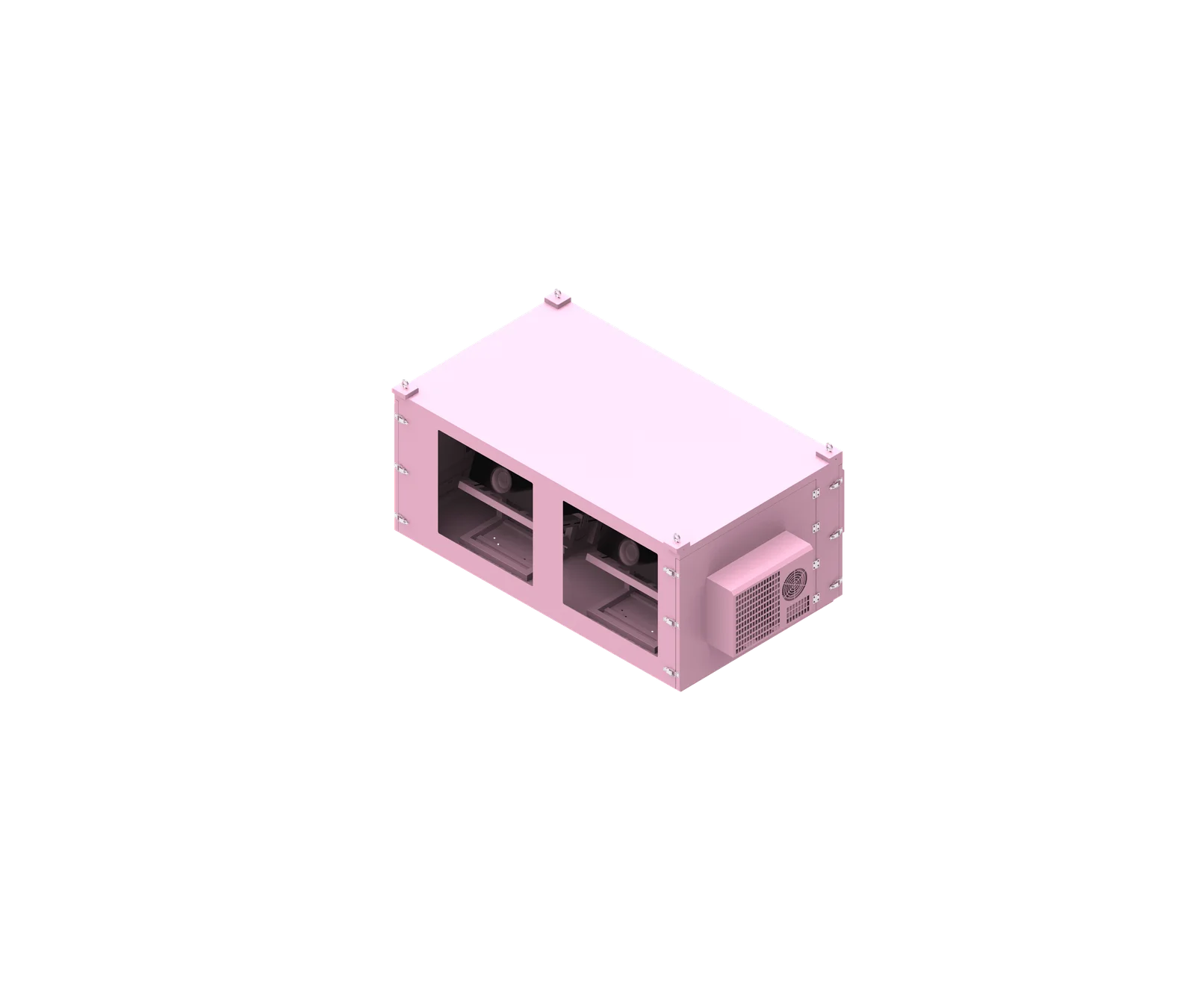
A projector enclosure door gasket is a small component with a large effect on outdoor reliability. When the door closes, the gasket must be compressed enough to maintain continuous contact, but not so much that it is crushed, distorted, or aged prematurely. More gasket compression does not automatically mean better sealing. The goal is uniform compression within the gasket’s designed working range.
Video Guide: Explore a projector enclosure outdoor solution developed for professional projection projects. This video presents the enclosure design and shows how housing dimensions, internal layout, and installation configuration can be adapted to different projector equipment and outdoor project requirements.
What Is Projector Enclosure Door Gasket?
A projector enclosure door gasket is an elastomer or foam sealing element installed between the enclosure door and the cabinet sealing surface. Its purpose is to reduce rainwater, dust, wind-driven moisture, and outdoor contaminants from entering through the service-door perimeter when the door is properly closed and compressed.
Door Gasket Function in Outdoor Projector Enclosures
A projector enclosure door gasket works as part of the enclosure door seal system. It is not just a strip of rubber; it is an engineered interface between the sheet-metal door, the cabinet frame, hinges, latches, coating surface, and maintenance access design.
For outdoor projector enclosure sealing, the gasket must create a continuous sealing path around the complete door perimeter. Any break in that path—especially at corners, joints, hinge areas, latch zones, or distorted sheet-metal surfaces—can become a leakage route.
Common gasket materials and constructions may include:
- EPDM for many outdoor weathering applications, depending on formulation and supplier data
- Silicone where wider temperature capability or specific environmental performance is required
- Neoprene or other elastomers for project-specific requirements
- Closed-cell foam materials for certain compression and sealing needs
- Solid, sponge, hollow, D-shaped, P-shaped, bulb, rectangular, or custom profiles
The correct gasket is selected according to the enclosure design, operating environment, required protection level, door size, latch system, hinge geometry, and gasket manufacturer recommendations.
ShiRui Pro Tip: When we design a ShiRui outdoor projector enclosure gasket system, we do not start by asking “how thick is the gasket?” We start by reviewing the door size, sealing flange, latch layout, hinge movement, and the actual environmental exposure.
How Does Projector Enclosure Door Gasket Work?
A projector enclosure door gasket works by being compressed between the closed door and the enclosure frame. This compression creates contact pressure along the perimeter, helping block water and dust. The seal must be continuous and uniform; too little, too much, or uneven compression can reduce sealing reliability.
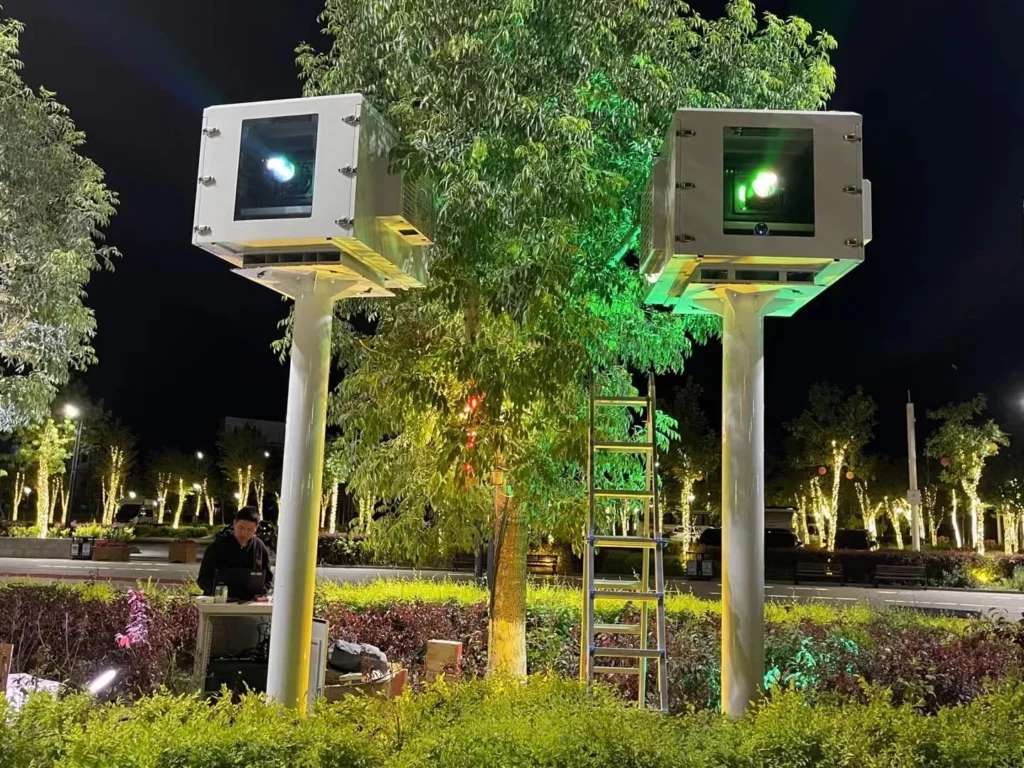
Compression Creates Contact Pressure
When the enclosure door closes, the gasket is squeezed between two surfaces: the door and the cabinet sealing flange. This controlled compression generates sealing pressure. That pressure helps resist rainwater, dust, wind-driven moisture, and outdoor contaminants.
The process is simple in principle but demanding in execution:
- The door rotates or moves into the closed position.
- The gasket contacts the frame or door sealing surface.
- The latch pulls the door into its final position.
- The gasket compresses within its intended working range.
- Contact pressure forms a continuous perimeter seal.
- Hinges, latches, door stiffness, and frame flatness determine whether that compression is even.
The key point is that gasket compression must be controlled. A gasket can appear to touch the metal surface while still having insufficient contact pressure. Conversely, a heavily crushed gasket may look “tight” but may lose elastic recovery over time.
ShiRui Pro Tip: I always check whether the latch force is producing even perimeter contact, not just a strong closing feel. A hard-to-close door is not automatically a well-sealed door.
Can You Over Compress a Gasket?
Yes, a gasket can be over compressed. Excessive gasket compression can cause permanent deformation, compression set, extrusion, reduced recovery, door distortion, hinge stress, and excessive latch force. Reliable projector enclosure waterproof sealing depends on controlled compression, not maximum compression.
Why Maximum Compression Can Reduce Long-Term Sealing
Over-compression is one of the most common mistakes in outdoor enclosure gasket design. Many people assume that tightening the latch harder improves waterproofing. In reality, excessive compression can damage both the gasket and the sheet-metal structure.
Based on our internal data and market analysis, here is the breakdown:
| Compression Condition | Possible Result | What to Check |
|---|---|---|
| Too little compression | Water or dust leakage | Latch adjustment, door gap, door flatness |
| Correct compression | Continuous sealing contact | Uniform contact around the perimeter |
| Too much compression | Gasket damage or permanent flattening | Latch force and gasket recovery |
| Uneven compression | Local leakage | Door stiffness and latch position |
| Poor corner joint | Corner leakage | Gasket joint and corner construction |
| Door distortion | Uneven sealing pressure | Reinforcement and fabrication accuracy |
| Aged gasket | Loss of sealing force | Compression set and elasticity |
| Dirty gasket | Local gaps | Cleaning and maintenance condition |
Compression set is especially important. After long-term compression, some gasket materials may not fully return to their original shape. If the gasket loses recovery, sealing pressure may decrease even if the door still closes normally.
This is why gasket material, profile, working compression range, temperature exposure, UV resistance, and maintenance cycle all matter.
ShiRui Pro Tip: If leakage appears near a door, I do not immediately tighten the latch. I first inspect the gasket, corners, door flatness, hinge side, latch side, and sealing flange to find the real cause.
How Much Does Head Gasket Thickness Affect Compression?
In an engine, head gasket thickness affects combustion compression ratio. In a projector enclosure, the relevant issue is different: gasket free height, closed-door gap, and gasket profile determine sealing compression. The correct compression must follow the gasket supplier’s data and the enclosure’s mechanical design.
Translating the Thickness Question to Enclosure Sealing
The term “head gasket” belongs to engine design, not projector enclosure sealing. However, the concept of thickness affecting compression can be useful as an analogy.
For an enclosure door gasket, compression is influenced by the relationship between the gasket’s free height and the closed-door gap. But there is no universal percentage that applies to every outdoor enclosure gasket.
Key design factors include:
- Free height of the gasket before door closure
- Closed-door gap between the door and sealing flange
- Gasket cross-section and profile geometry
- Solid, sponge, closed-cell foam, or hollow construction
- Door stiffness and frame flatness
- Hinge geometry and closing path
- Latch quantity, position, and adjustment
- Temperature range and aging behavior
- Manufacturer-recommended working compression
Different gasket profiles behave differently. A hollow bulb gasket, a dense solid rubber strip, and a closed-cell foam gasket should not be compressed using the same rule. The correct approach is to calculate or verify compression based on the selected gasket’s published data and the actual enclosure geometry.
ShiRui Pro Tip: For ShiRui custom sheet-metal enclosures, we confirm the closed-door geometry before finalizing the gasket. The gasket thickness is only meaningful when it is matched to the real door gap and latch system.
Should You Use Sealant on Gaskets?
Sealant should not be used as a substitute for a correctly designed projector enclosure door gasket. It may be appropriate in selected joints, corners, or bonded gasket applications, but improper sealant use can interfere with compression, serviceability, replacement, and long-term sealing performance.
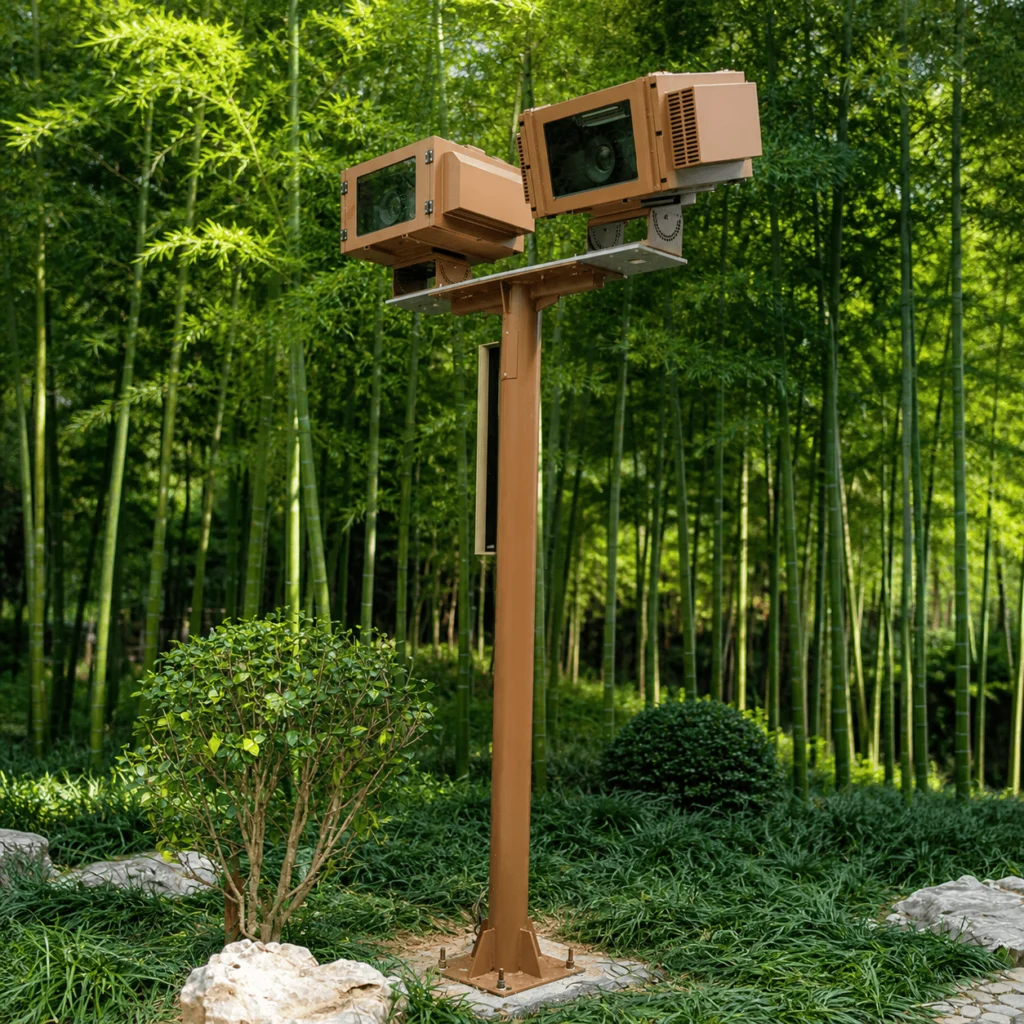
When Sealant Helps and When It Causes Problems
Sealant can be useful in some enclosure designs, but it must be applied with engineering judgment. A door gasket should normally remain capable of elastic compression and recovery. If sealant prevents the gasket from moving, compressing, or being replaced properly, it may reduce service reliability.
Sealant may be considered for:
- Gasket end joints where a continuous molded loop is not used
- Corner details requiring additional sealing support
- Bonded gasket installation, when specified by the gasket supplier
- Local sheet-metal joints outside the active compression zone
- Project-specific sealing details validated by testing
Sealant should be used carefully because it can create problems such as:
- Uneven gasket height
- Hard spots in the sealing path
- Poor adhesion on contaminated surfaces
- Difficulty replacing the gasket during maintenance
- Interference with gasket compression
- False confidence without actual sealing verification
Surface preparation is essential. Adhesive-mounted or bonded gaskets require clean, dry, properly finished surfaces. Powder coating, oil, dust, welding residue, and handling contamination can weaken adhesion or shift the gasket position.
ShiRui Pro Tip: I prefer a mechanically sound gasket design first, then use sealant only where the joint detail truly needs it. Sealant should support the enclosure door seal, not compensate for poor door or frame design.
Key Features & Comparison
The best projector enclosure door gasket system balances material selection, profile geometry, compression control, latch layout, hinge design, and sheet-metal accuracy. A reliable IP65 projector enclosure gasket concept depends on the complete assembly, not the gasket alone or the highest possible compression force.
Practical Sealing Factors to Compare
Based on our internal data and market analysis, here is the breakdown:
| Design Factor | Why It Matters | Common Risk | Recommended Engineering Focus |
|---|---|---|---|
| Gasket material | Affects weathering, recovery, UV resistance, and temperature behavior | Premature hardening or loss of elasticity | Select by environment and supplier data |
| Gasket profile | Controls compression force, contact area, and closing behavior | Copying one compression rule across different profiles | Match profile to door motion and gap |
| Designed compression | Creates sealing pressure | Too little leakage; too much compression set | Follow gasket manufacturer working range |
| Door flatness | Determines uniform perimeter contact | Local gaps and uneven pressure | Control sheet-metal forming and reinforcement |
| Frame flatness | Provides the sealing reference surface | Welding distortion or uneven bends | Inspect flange geometry before assembly |
| Latch position | Applies closing force locally | Over-compression near latches, leakage between latches | Design latch quantity and placement by door size |
| Hinge geometry | Affects closing path and hinge-side compression | Rolling, shearing, or uneven gasket load | Coordinate hinge position with gasket height |
| Corner joint | Maintains continuous seal at direction changes | Gaps, stretching, poor bonding | Use controlled corner construction |
| Surface finish | Affects gasket contact and durability | Spatter, sharp edges, coating defects | Clean, smooth, continuous sealing surface |
| Maintenance access | Repeated opening affects gasket condition | Adhesion failure, dirt, damage | Inspect and clean during service |
A well-designed outdoor enclosure gasket system should not rely on one feature alone. For example, stronger latches cannot fully compensate for a warped door. A high-quality gasket cannot overcome a severely distorted sealing flange. A smooth powder-coated surface may still leak if the gasket joint is poorly installed.
In outdoor projector enclosure sealing, the goal is system reliability. The gasket, door, cabinet frame, hinges, latches, cable entries, optical window, cooling interfaces, panels, and fasteners all influence the final environmental protection.
ShiRui Pro Tip: When customers ask for an IP65 projector enclosure gasket, I remind them that IP performance is verified at the complete enclosure level. The gasket is critical, but the full assembly decides the result.
Cost & Buying Factors
The cost of a projector enclosure door gasket system depends on gasket material, profile, door size, latch quantity, retention method, fabrication precision, testing requirements, and environmental conditions. Buying only the cheapest outdoor enclosure gasket can increase leakage risk, maintenance cost, and long-term service problems.
What Drives Gasket and Sealing Cost
For a professional outdoor projector enclosure, the gasket price is only one part of the sealing cost. The larger cost is often in the enclosure design, sheet-metal control, installation accuracy, inspection, and testing.
Important buying factors include:
- Environmental exposure Consider rain, dust, wind, UV, humidity, salt, industrial pollution, cleaning chemicals, and temperature cycling.
- Door size and stiffness Large service doors may require reinforced construction, stronger frames, or multiple latches to maintain uniform compression.
- Gasket material and profile EPDM, silicone, neoprene, foam, sponge, solid, and hollow profiles all have different cost and performance characteristics.
- Mounting method Adhesive-backed gaskets, bonded gaskets, gasket grooves, retainer channels, and custom sealing flanges have different manufacturing and maintenance implications.
- Latch and hinge system Adjustable latches may help fine-tune compression, but they must be used carefully to avoid crushing the gasket or distorting the door.
- Inspection and validation Factory water checks, compression verification, witness-mark inspection, and formal IP testing may add cost but reduce field risk.
- Maintenance requirements Gaskets that are easy to inspect, clean, and replace can reduce long-term service cost for outdoor installations.
A lower-cost gasket may be acceptable if it matches the project environment and mechanical design. A more expensive gasket is not automatically better if it is poorly compressed, misaligned, or installed on a distorted door.
ShiRui Pro Tip: In custom enclosure projects, I evaluate gasket cost together with door reinforcement, latch selection, and inspection requirements. A slightly better sealing design is often cheaper than repairing water damage after installation.
Conclusion
Reliable projector enclosure sealing requires controlled, uniform gasket compression within the gasket’s intended working range. Too little compression can leave leakage paths, while excessive compression can damage the gasket, distort the door, stress the hardware, and reduce long-term sealing reliability.
Final Engineering Guidance
Door-gasket compression should be designed as part of the complete enclosure structure, not treated as an isolated rubber-strip decision.
A practical engineering workflow is:
- Define the required environmental protection.
- Review projector enclosure size and door dimensions.
- Design the sealing flange and door structure.
- Select gasket material for the actual environment.
- Select the gasket profile and retention method.
- Obtain manufacturer compression recommendations.
- Coordinate hinge geometry with gasket height and door motion.
- Design latch quantity, position, and adjustment range.
- Check door stiffness and cabinet frame flatness.
- Fabricate and inspect the door and sealing surface.
- Install the gasket with correct positioning and clean surfaces.
- Verify compression uniformity around the perimeter.
- Perform functional, water, or formal IP testing as required.
- Inspect gasket condition during field maintenance.
Proper gasket compression contributes to projector enclosure waterproof sealing, but it does not alone guarantee IP65 or any other rating. Final performance depends on the complete assembled enclosure, including doors, gaskets, cable entries, optical window, cooling interfaces, panels, fasteners, and all other openings.
For outdoor projector enclosures, the professional principle is clear: controlled compression, uniform contact, suitable materials, accurate sheet-metal fabrication, and verified assembly produce better long-term sealing than simply forcing the door tighter.
ShiRui Pro Tip: If you are specifying a ShiRui outdoor projector enclosure, provide the projector model, installation environment, door access needs, cooling method, and required protection level. We can then design the gasket, door, latches, hinges, and sealing structure as one coordinated system.