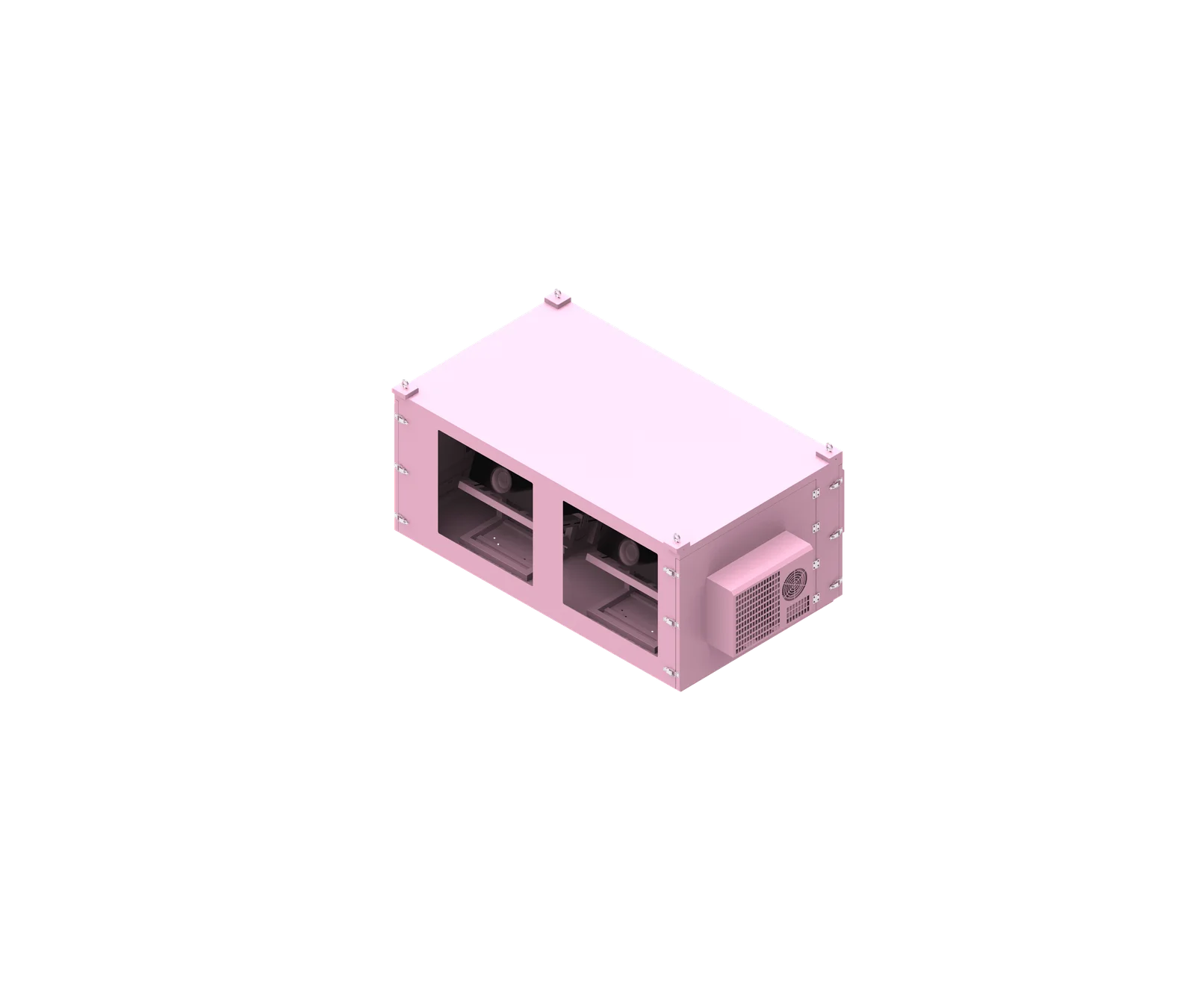
Ambient temperature tells only part of the story: an outdoor projector enclosure exposed to direct sunlight can face a very different cooling load from the same enclosure installed in shade. For AV integrators, projection engineers, and project managers, enclosure color, coating properties, orientation, sun exposure, and shading must be reviewed together before selecting the projector enclosure cooling system.
What is outdoor projector enclosure cooling load?
Outdoor projector enclosure cooling load is the total heat that the thermal-management system must control to keep the projector and electronics within safe operating conditions. It includes projector heat, auxiliary equipment heat, ambient heat transfer, and solar heat gain from direct sunlight on the enclosure surface.
Cooling Load as a Combined Thermal Condition
Outdoor projector enclosure cooling load is not determined by projector power or cabinet size alone. A sun-exposed enclosure receives heat from inside and outside at the same time, so the thermal design must consider the complete operating environment.
A practical way to understand the relationship is:
- Projector heat
- Electrical equipment heat
- Ambient heat transfer
- Solar heat gain
- Site-specific loads such as wind, humidity, insulation, and mounting condition
Together, these factors determine the required cooling system and the long-term reliability of the outdoor projector enclosure.
Based on our internal data and market analysis, here is the breakdown:
| Heat Source | What It Means | Why It Matters |
|---|---|---|
| Projector heat | Heat generated while the projector operates | Usually the main internal load |
| Electrical equipment heat | Media players, power supplies, controllers, switches | Adds to internal cabinet temperature |
| Ambient heat transfer | Heat entering or leaving through enclosure panels | Depends on outdoor air temperature and enclosure construction |
| Solar heat gain | Solar radiation absorbed by the enclosure surface | Can significantly increase cooling demand in direct sunlight |
| Project-specific factors | Wind, shade, altitude, mounting, insulation | Changes real thermal performance on site |
ShiRui Pro Tip: I never size an outdoor projector enclosure from dimensions or projector brightness alone. I first ask where the enclosure will be installed, whether it will face direct sun, and what color and coating the client requires.
How Does outdoor projector enclosure cooling load Work?
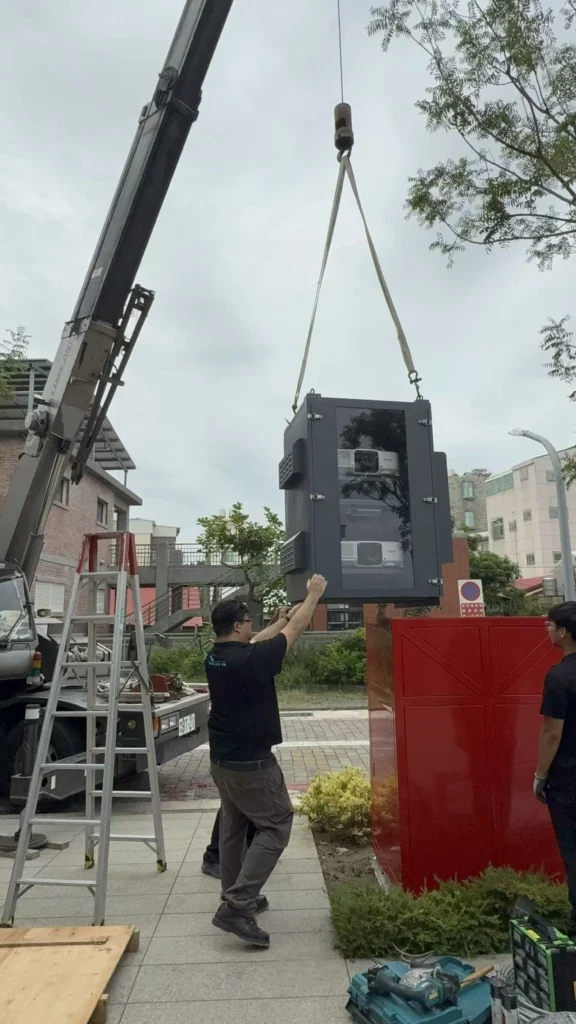
Outdoor projector enclosure cooling load works by combining internal heat generation with external environmental heat entering the cabinet. When direct sunlight strikes the enclosure, absorbed solar energy can raise panel temperature and increase the demand on fans, air conditioners, or other thermal-control systems.
Heat Flow Through a Sun-Exposed Enclosure
The thermal process starts when the projector and electronics generate heat inside the enclosure. At the same time, outdoor air temperature and solar radiation influence the enclosure from outside. If the cabinet is sealed and air-conditioned, solar heat gain becomes part of the load the AC must remove. If the cabinet is fan-cooled, outdoor air temperature limits how much cooling is possible.
A practical thermal-design workflow is:
- Confirm projector model, power consumption, and heat output.
- Identify other internal equipment and electrical loads.
- Collect project environmental conditions, including maximum ambient temperature.
- Review projector enclosure sun exposure by time of day and season.
- Define enclosure orientation and which panels receive direct sunlight.
- Confirm projector enclosure color, coating, and surface finish.
- Evaluate shading, sun shields, double roofs, or architectural protection.
- Estimate complete outdoor projector enclosure cooling load.
- Select the cooling architecture.
- Place temperature sensors according to the control objective.
- Test or validate under representative site conditions where required.
This process prevents the common mistake of treating outdoor ambient temperature as the only design condition.
ShiRui Pro Tip: When I review a project, I always ask whether the enclosure sits in afternoon sun. Many systems operate at night, but the cabinet may already be hot before the projector starts.
What are the benefits of outdoor projector enclosure cooling load?
Understanding outdoor projector enclosure cooling load helps prevent overheating, cooling undersizing, energy waste, and premature equipment failure. It also allows the enclosure manufacturer and AV integrator to balance appearance, sun exposure, surface finish, cooling capacity, and long-term reliability.
Practical Benefits for Outdoor Projection Projects
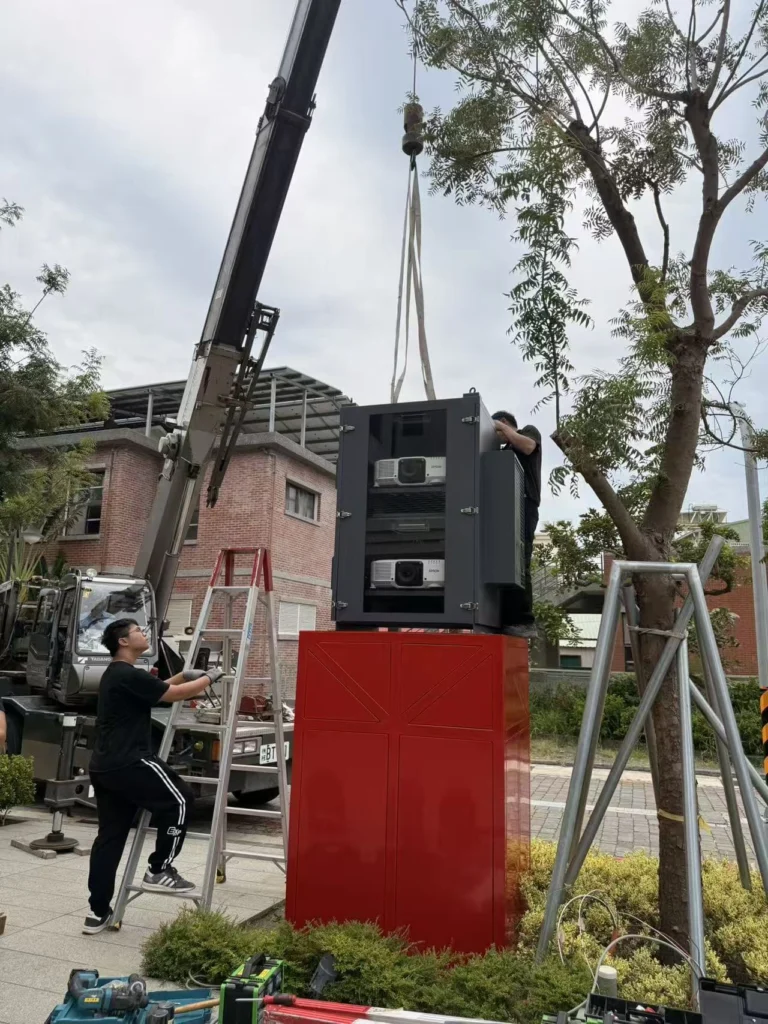
A correct cooling-load review supports both performance and project planning. It helps buyers avoid undersized cooling systems that cannot handle solar gain and oversized systems that increase cost, weight, noise, and complexity without proper justification.
Based on our internal data and market analysis, here is the breakdown:
| Benefit | Project Impact | Practical Result |
|---|---|---|
| Better cooling-system selection | Considers projector heat, solar load, and ambient conditions | More reliable thermal control |
| Reduced overheating risk | Reviews direct sunlight and pre-start cabinet temperature | Safer projector operation |
| Improved design coordination | Aligns enclosure color, architecture, and thermal performance | Fewer late-stage redesigns |
| Lower lifecycle risk | Considers maintenance, filters, condenser airflow, and surface cleanliness | More predictable operation |
| Better buyer decisions | Uses coating data and site information instead of assumptions | More accurate specification |
Correct thermal planning is especially important for projection mapping, outdoor advertising, cultural-tourism projects, pole-mounted cabinets, roof installations, and scenic sites where direct sun and appearance requirements often conflict.
ShiRui Pro Tip: I tell clients that color is not just a cosmetic decision when the enclosure is in direct sunlight. If the finish changes after drawing approval, we review whether the thermal assumptions also need to change.
How to maintain an outdoor projector enclosure cooling load?
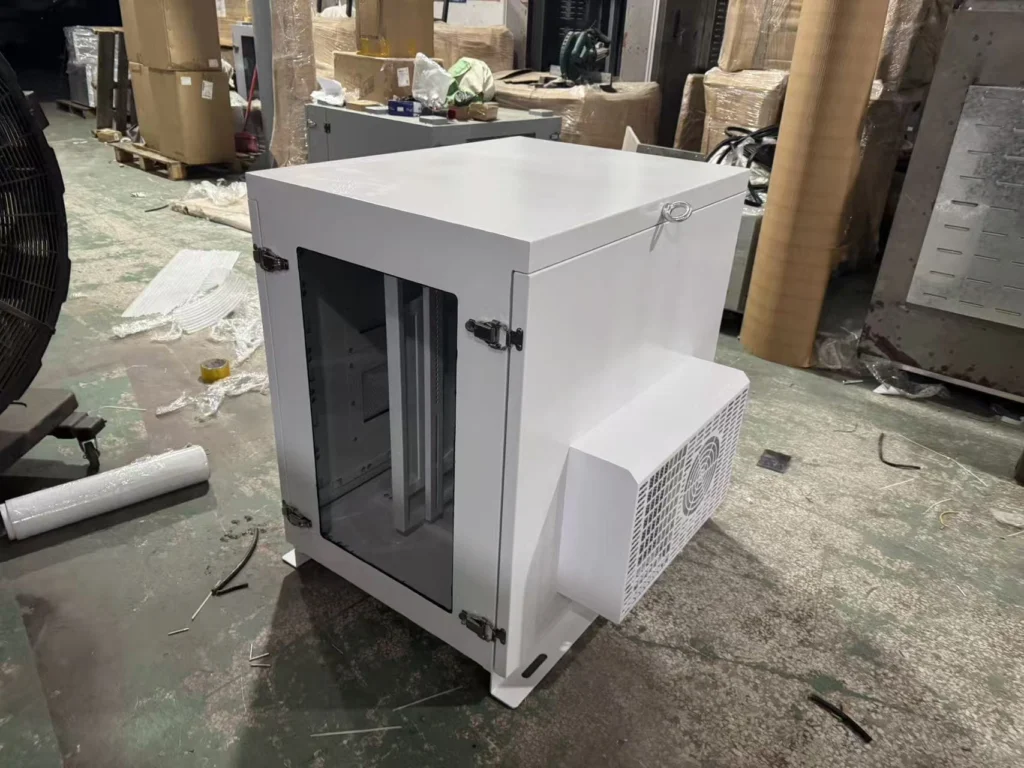
Maintaining outdoor projector enclosure cooling load means keeping the cooling path, filters, condenser area, sensors, sun shields, and enclosure surfaces in conditions close to the intended design. Dirt, blocked airflow, poor sensor placement, and coating degradation can all affect thermal performance.
Maintenance Items That Protect Thermal Performance
Outdoor thermal systems are exposed to dust, rain, wind, salt, insects, pollution, and seasonal changes. Even a well-designed projector enclosure cooling system can struggle if airflow is restricted or sensors are placed where they read a sun-heated wall instead of representative internal air.
Recommended maintenance checks include:
- Inspect air filters and replace or clean them based on site conditions.
- Keep fan intakes, exhaust openings, and AC condenser areas clear.
- Confirm that sun shields do not block ventilation or service access.
- Clean heavy dirt buildup from enclosure surfaces where appropriate.
- Check seals, gaskets, drain paths, and condensation control components.
- Verify that temperature sensors remain securely positioned.
- Inspect the optical window for dirt, heat exposure effects, and condensation risks.
- Review operating data during hot-season or high-solar conditions.
- Confirm that added structures, signs, or covers have not changed airflow.
- Reassess thermal performance if the enclosure color or coating is changed.
Maintenance should be adjusted for coastal, desert, rooftop, and high-dust environments.
ShiRui Pro Tip: I prefer to check projector intake temperature, not only cabinet air temperature. The key question is whether the projector is receiving acceptable air under real operating conditions.
What is the price of outdoor projector enclosure cooling load?
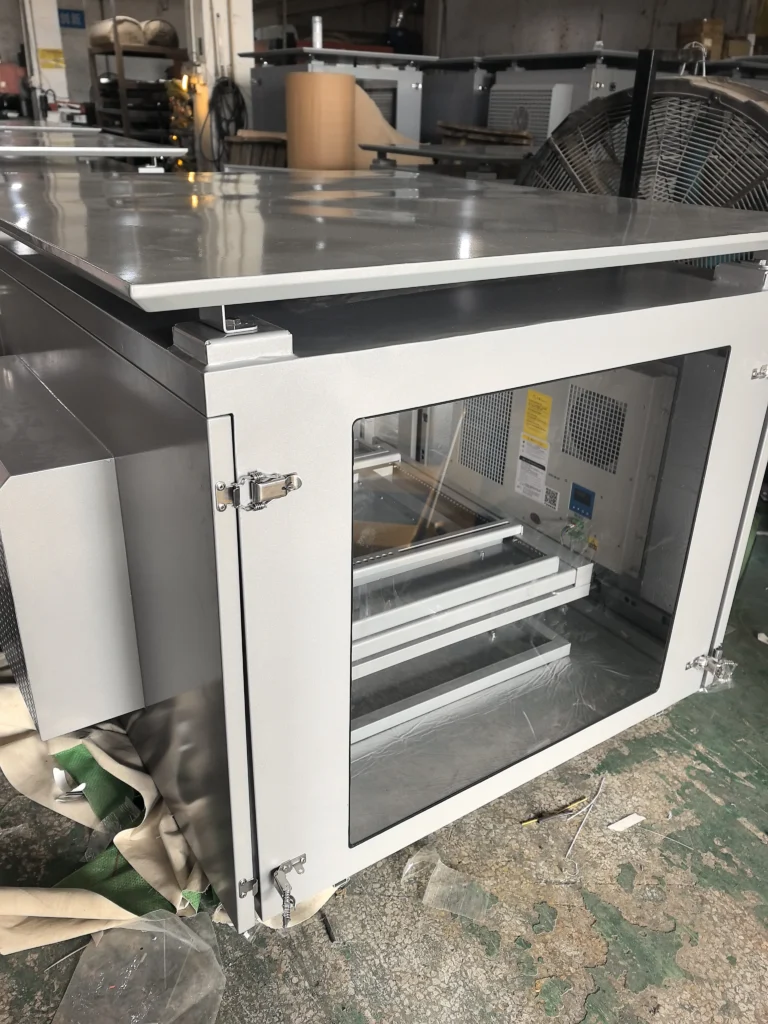
Outdoor projector enclosure cooling load is not a standalone product price; it is an engineering basis that affects enclosure cost, cooling-system selection, coating choice, testing scope, and installation requirements. Higher solar exposure or demanding environmental conditions may require more advanced thermal design.
Price Drivers Linked to Thermal Design
The cost of an outdoor projector enclosure depends on the total thermal requirement, not just the enclosure dimensions. A light-colored shaded cabinet and a dark roof-mounted cabinet in direct sun may require different cooling approaches, even if they house the same projector.
Based on our internal data and market analysis, here is the breakdown:
| Cost Factor | Why It Affects Price | Buyer Should Provide |
|---|---|---|
| Projector heat load | Determines internal heat to remove | Projector model and power consumption |
| Sun exposure | Adds external solar heat gain | Site photos, orientation, operating season |
| Enclosure color and coating | Affects solar absorption and reflection | Required RAL color, finish, coating data if available |
| Cooling method | Fan cooling, AC cooling, heat exchanger, or hybrid systems vary in cost | Cooling preference and noise limits |
| Environmental protection | Rain, dust, salt, corrosion, and humidity requirements affect design | Installation environment |
| Validation level | Testing and monitoring add engineering effort | Acceptance criteria and project risk level |
| Mounting method | Pole, wall, roof, or structure mounting changes exposure and service access | Mounting drawings |
Pricing should be based on project-specific thermal inputs rather than a universal enclosure price list.
ShiRui Pro Tip: When buyers send only projector dimensions, we cannot accurately judge cooling cost. I ask for city, sun exposure, color, projector power, and mounting method before recommending the thermal solution.
Key Features & Comparison
The key feature of proper outdoor projector enclosure thermal design is that it evaluates color, finish, sun exposure, shading, airflow, insulation, and cooling control together. No single factor, including enclosure color, can determine the complete cooling load by itself.
Color, Sun Exposure, and Design Response Comparison
Based on our internal data and market analysis, here is the breakdown:
| Condition | Thermal Effect | Design Consideration |
|---|---|---|
| Light color + shade | Lower solar load potential | Standard thermal review |
| Light color + direct sun | Solar gain still exists | Include sun exposure in cooling design |
| Dark color + shade | Color impact may be reduced | Check actual site conditions |
| Dark color + direct sun | Potentially higher solar load | Recheck cooling design and coating data |
| Direct sun + sun shield | Can reduce direct exposure | Maintain ventilation and service clearance |
| Hot climate + direct sun | Combined external load | Perform full thermal calculation |
| Night use after daytime sun | Cabinet may already be hot | Consider startup and pre-cooling condition |
| Glossy or matte finish | Thermal behavior depends on coating properties | Do not assume performance from appearance alone |
| Roof-mounted enclosure | Often highly exposed | Review roof, side panels, airflow, and structure |
| Pole-mounted enclosure | May receive sun from multiple directions | Review orientation and daily solar path |
Color is important, but surface thermal performance also depends on solar absorptance, solar reflectance, infrared emissivity, coating chemistry, finish aging, dirt buildup, enclosure geometry, and installation orientation.
Light-colored or solar-reflective finishes may help reduce solar heat gain in appropriate applications. Dark enclosures can still be used when architecture, landscape integration, branding, or concealment requires them, but the cooling system must be selected for the actual thermal load.
ShiRui Pro Tip: If a client requires black for visual concealment, I do not reject the color. I review sun exposure, add shielding where useful, and design the cooling system around the real installation condition.
Cost & Buying Factors
Buying an outdoor projector enclosure requires more than comparing cabinet size and cooling-unit price. The correct purchase decision should consider projector heat, ambient conditions, solar heat gain, color, coating, installation orientation, service access, and long-term maintenance.
Information Buyers Should Provide Before Quotation
For ShiRui to design or quote a custom projector enclosure accurately, the buyer should provide enough information to evaluate both internal and external heat loads.
Useful buying inputs include:
- Projector brand and model
- Projector quantity
- Projector power consumption
- Internal equipment list
- Installation city or region
- Maximum ambient temperature requirement
- Direct sun, partial shade, or full shade condition
- Enclosure orientation and mounting method
- Required enclosure color
- Surface finish requirement, such as powder coating, paint, or stainless steel
- Operating schedule
- Cooling preference, if already specified
- Site photos, drawings, or architectural elevations
- Required internal operating conditions
- Maintenance access limitations
- Any noise, appearance, corrosion, or branding requirements
Buyers should avoid sizing the cooling system from lumens, cabinet dimensions, or color name alone. If quantitative analysis is required, verified coating data and realistic environmental assumptions should be used.
ShiRui Pro Tip: The best time to discuss enclosure color is before final cooling selection. A late change from a light finish to a dark finish may be harmless in some shaded projects, but it should be reviewed for direct-sun installations.
Conclusion
Outdoor projector enclosure cooling load must be evaluated as a complete thermal condition. Projector heat, electrical equipment heat, ambient temperature, solar heat gain, enclosure color, coating properties, orientation, shading, airflow, and maintenance all influence the final cooling-system requirement.
Practical Design Takeaways
The main lesson is simple: the same projector enclosure can experience different cooling demand depending on whether it is shaded or exposed to direct sunlight. Ambient temperature alone does not describe the full thermal condition of a sun-exposed cabinet.
Key takeaways for AV and projection teams:
- Do not treat projector enclosure color as only an appearance decision.
- Do not assume white always provides a fixed thermal benefit.
- Do not assume black enclosures cannot be used outdoors.
- Use coating data when thermal performance is critical.
- Include direct sunlight and pre-start cabinet heating in the design review.
- Protect roof and side panels when site orientation requires it.
- Keep sun shields clear of fans, AC condensers, doors, and service areas.
- Place sensors where they represent the intended control condition.
- Validate performance under realistic site conditions when project risk is high.
- Select cooling capacity from total project thermal load, not color or cabinet size alone.
ShiRui can support custom outdoor projector enclosure thermal design by reviewing projector heat, environmental conditions, enclosure construction, color requirements, and cooling architecture together.
ShiRui Pro Tip: My final recommendation is to define the operating environment before choosing the cooling system. When color, coating, sun exposure, and projector heat are reviewed together, the enclosure design becomes more reliable and easier to maintain.