Choosing an outdoor network cabinet for harsh environments requires more than selecting a waterproof metal box. The correct cabinet depends on two sides of the project: the equipment inside and the environment outside. A professional selection process should evaluate thermal load, humidity, dust, corrosion, cable entry, mounting method, electrical design, maintenance access, and long-term service conditions together.
What is outdoor network cabinet?
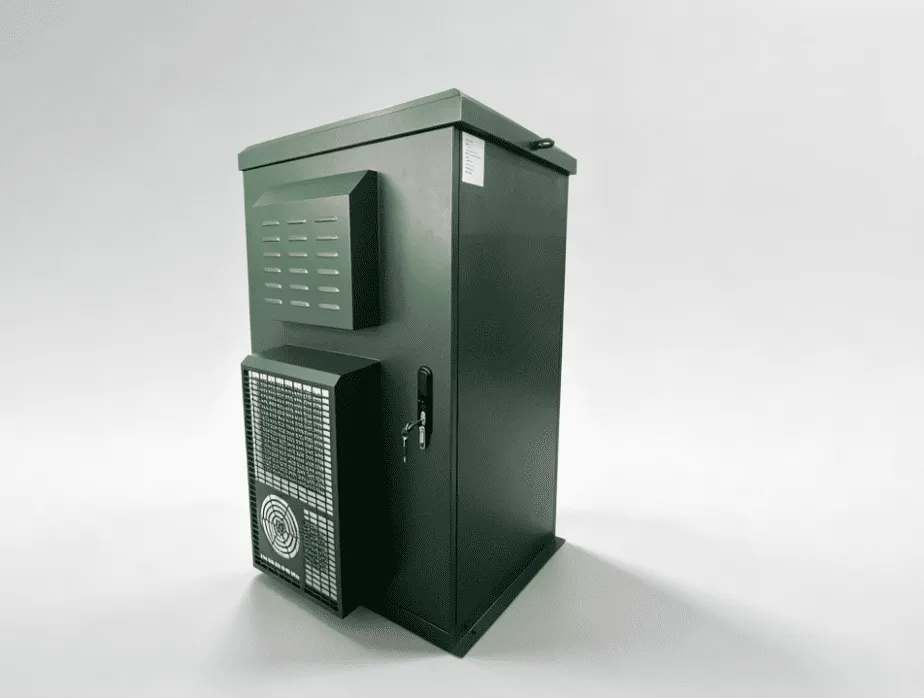
An outdoor network cabinet is a protective enclosure designed to house network, telecom, power, fiber, and monitoring equipment in outdoor environments. Unlike a simple indoor rack, it must protect equipment from weather, temperature changes, dust, humidity, corrosion, unauthorized access, and installation-related mechanical stress.
Practical Definition for Engineering Selection
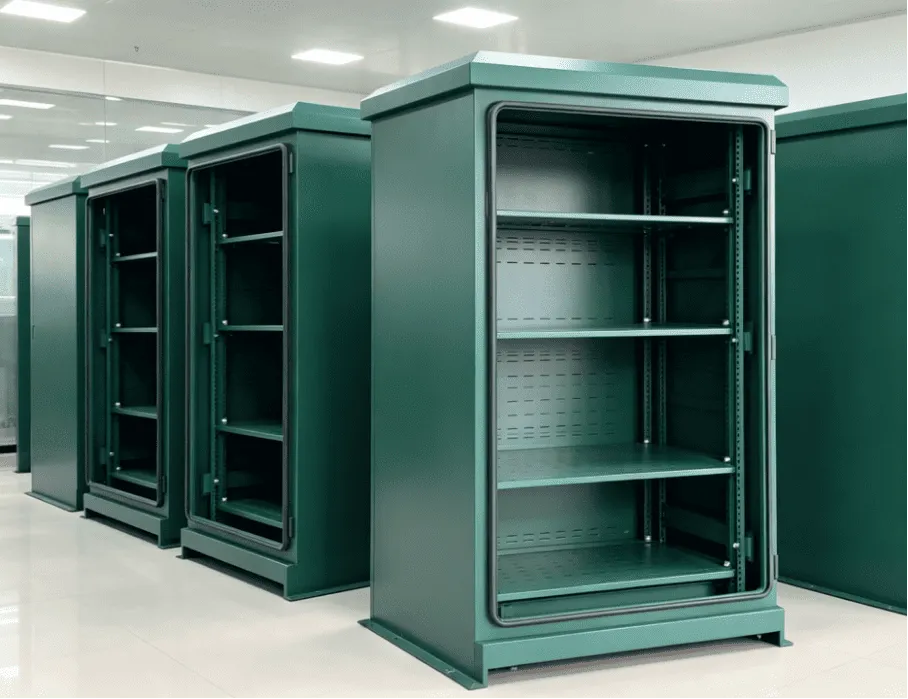
A professional outdoor network cabinet is designed around the equipment it protects, not just around its external dimensions. It may contain switches, routers, fiber trays, optical distribution frames, PoE equipment, power supplies, UPS systems, batteries, monitoring modules, and remote communication devices.
Before choosing a weatherproof network cabinet, confirm the actual internal requirements:
- Equipment type and quantity
- Equipment width, height, and depth
- Rack-unit requirements, if applicable
- Connector positions and cable-bending space
- Power supply and power distribution needs
- Heat generated by active devices
- Fiber routing, service loops, and bend radius
- Required access for maintenance and replacement
- Installation method: wall, pole, base, rooftop, or steel structure
- Site risks such as rain, dust, salt spray, solar radiation, snow, vandalism, or flooding
An IP65 outdoor network cabinet may be appropriate for some projects, but IP65 alone does not automatically make a cabinet suitable for every outdoor environment. Protection level, thermal design, corrosion resistance, and installation details must be evaluated together.
ShiRui Pro Tip: I always start cabinet selection by asking for the equipment list and site conditions before discussing cabinet size. The right outdoor equipment cabinet is determined by what goes inside and what happens outside.
How Does outdoor network cabinet Work?
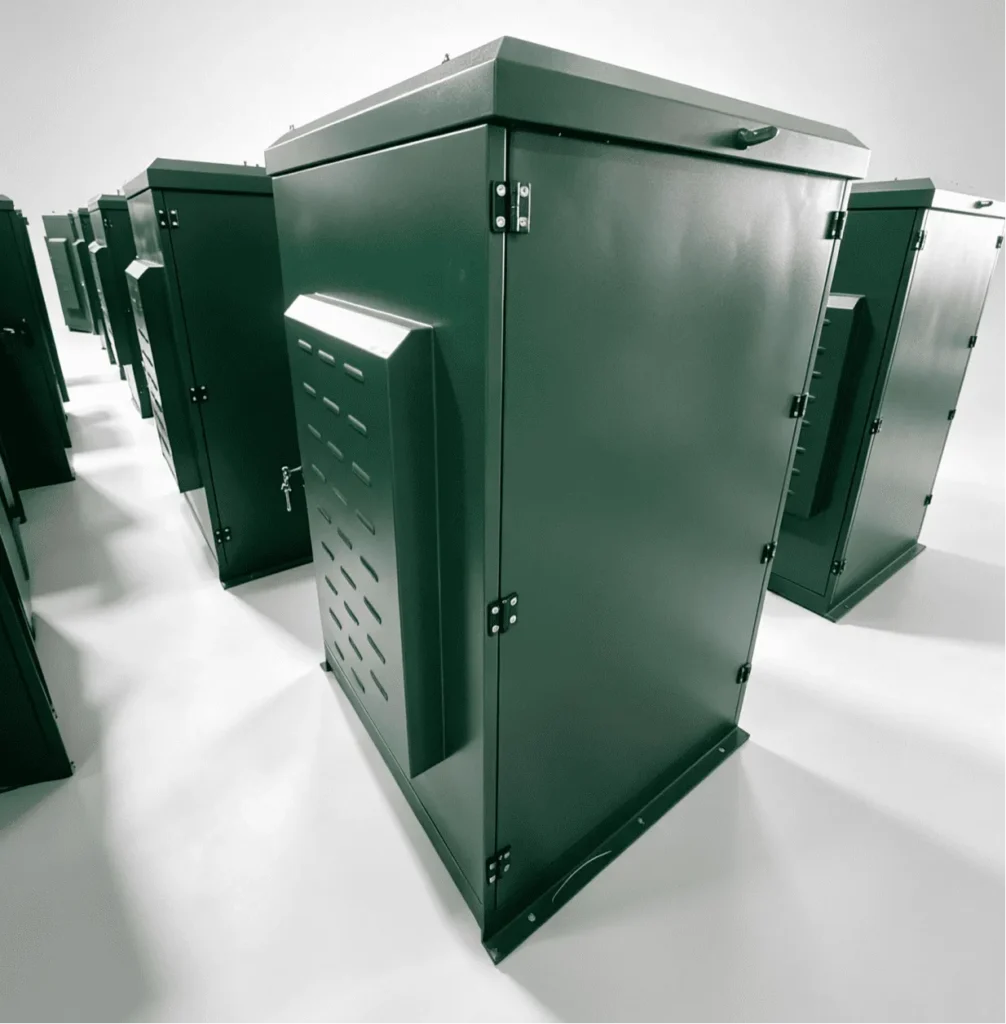
An outdoor network cabinet works by combining environmental sealing, thermal management, cable protection, structural support, electrical integration, and service access. Its purpose is not only to keep rain out, but also to maintain a stable operating environment for network equipment throughout real outdoor conditions.
Protection System and Operating Logic
A harsh environment network cabinet works as an integrated protection system. Each design feature supports equipment reliability under specific site risks. For example, a sealed door may help against rain, but condensation control may still be needed if temperature changes are large.
A typical engineering workflow includes:
- Equipment evaluation
Identify switches, routers, fiber equipment, power modules, UPS, batteries, sensors, and communication devices. - Space planning
Confirm internal usable space, cable-bending radius, rack depth, connector clearance, and technician access. - Thermal assessment
Review total heat load, maximum ambient temperature, solar exposure, airflow path, and equipment operating requirements. - Environmental protection design
Select sealing, drainage, ventilation, cooling, heating, corrosion resistance, and dust-control measures according to the actual site. - Cable-entry planning
Design cable glands, bottom entry, side entry, fiber routing, grounding cables, and unused opening seals before manufacturing. - Electrical and grounding design
Consider AC/DC power, PDU, surge protection, bonding, grounding, auxiliary systems, and monitoring requirements. - Mounting and structure review
Confirm wall, pole, ground, rooftop, or steel-frame installation, including weight distribution and wind exposure where relevant. - Factory verification
Check dimensions, gaskets, doors, cooling systems, heating systems, cable entries, electrical assembly, surface finish, and final configuration.
The cabinet should balance protection and ventilation. A fully sealed design may reduce dust and salt contamination, but it may require heat exchangers or air conditioning. A ventilated design may reduce cost and complexity, but it can increase maintenance in dusty or coastal environments.
ShiRui Pro Tip: I do not recommend selecting cooling by cabinet size alone. First calculate the internal heat load, then compare it with ambient temperature, solar exposure, dust level, and the equipment’s operating limits.
What did Roger Ebert say about the film Network?
Roger Ebert discussed the film Network as a sharp and powerful satire about television, media, and public anger. This question refers to the 1976 movie, not an outdoor network cabinet, but it is a useful reminder that “network” can mean very different things in search results.
Search Intent Clarification for Technical Buyers
The word “network” can refer to cinema, television broadcasting, computer networking, telecom infrastructure, or outdoor equipment enclosures. For industrial buyers, this distinction matters because a search for “network cabinet” should focus on equipment protection, not media commentary.
Common meanings include:
- Film context: Network, the 1976 satirical drama about television media culture.
- IT context: Network switches, routers, servers, and structured cabling.
- Telecom context: Fiber distribution, base-station equipment, remote communication systems, and outdoor telecom cabinet installations.
- Industrial enclosure context: Weatherproof network cabinet systems for harsh outdoor sites.
- Procurement context: Custom cabinet design based on equipment load, environment, thermal control, and maintenance needs.
For technical purchasing, the correct term is usually outdoor network enclosure, outdoor telecom cabinet, weatherproof network cabinet, or outdoor equipment cabinet.
ShiRui Pro Tip: When communicating with suppliers, I recommend avoiding vague terms like “network box.” Provide equipment type, installation site, and protection requirements so the cabinet design team understands the real application.
What is the famous line from Network?
The most famous line from the film Network is: “I’m as mad as hell, and I’m not going to take this anymore!” In this article, however, the focus is computer and telecom network infrastructure, where the priority is reliable outdoor protection, not the movie quote.
Avoiding Keyword Confusion in Procurement
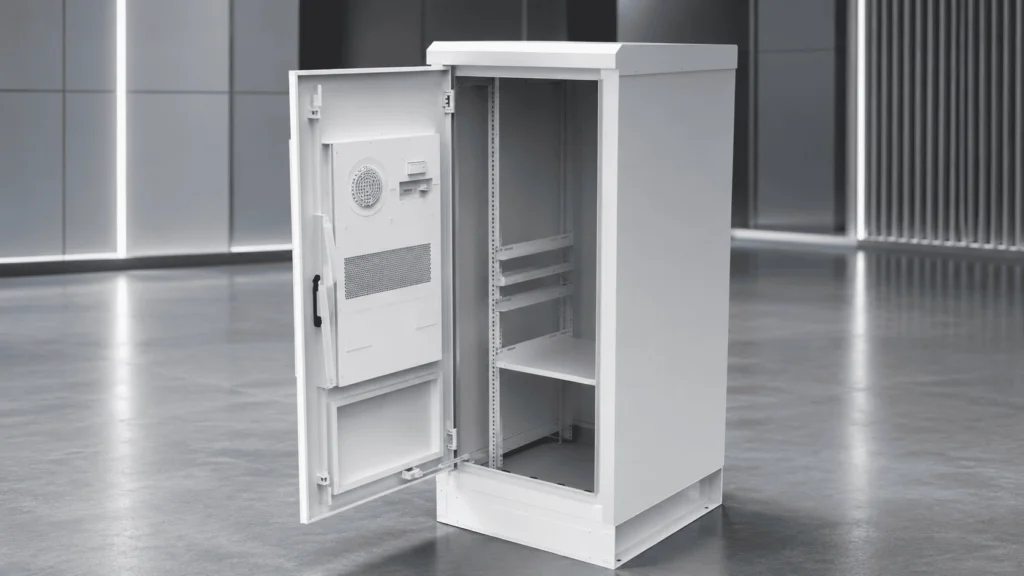
Because “Network” is also a famous film title, search engines may mix movie-related results with technical cabinet-related results. Buyers looking for an outdoor network cabinet should use more specific engineering terms.
Useful search and RFQ phrases include:
- Outdoor network cabinet for telecom equipment
- Weatherproof network cabinet with cooling system
- IP65 outdoor network cabinet for communication equipment
- Outdoor telecom cabinet for fiber and power equipment
- Harsh environment network cabinet with anti-condensation design
- Outdoor network enclosure for pole-mounted installation
- Custom outdoor equipment cabinet for coastal environment
The more specific the phrase, the easier it is for a manufacturer such as ShiRui to evaluate the correct design direction.
ShiRui Pro Tip: In RFQs, I prefer customers to describe the project environment rather than only request a cabinet name. “Coastal pole-mounted cabinet for fiber and PoE equipment” is much more useful than “outdoor network cabinet.”
Why is network rated R?
The film Network is rated R because of mature themes, strong language, and adult content associated with its dramatic storyline. This rating has no relation to outdoor network cabinet safety, IP ratings, electrical ratings, or environmental protection classifications used in engineering projects.
Difference Between Film Ratings and Cabinet Ratings
A movie rating and a cabinet rating describe completely different things. For outdoor network cabinets, buyers should focus on technical ratings, test documentation, and application requirements.
Based on our internal data and market analysis, here is the breakdown:
| Term | Applies To | What It Means | Relevance to Cabinet Selection |
|---|---|---|---|
| R rating | Film and media | Viewer age guidance | Not relevant to cabinet engineering |
| IP rating | Enclosures | Protection against dust and water under defined test conditions | Important, but not the only factor |
| IK rating | Enclosures | Mechanical impact resistance, where specified | Useful for public or vandal-prone sites |
| Electrical rating | Power systems | Voltage, current, grounding, protection, and compliance requirements | Must be project-specific |
| Material specification | Cabinet body and parts | Steel, aluminum, stainless steel, coating, fasteners | Important for corrosion and structure |
| Thermal performance | Cabinet climate control | Cooling, heating, airflow, heat exchange, or air conditioning behavior | Critical for active electronics |
An IP rating such as IP65 may indicate dust-tight protection and protection against water jets under defined test conditions, but it does not prove suitability for flooding, severe salt spray, high solar heat gain, poor cable sealing, or incorrect installation.
ShiRui Pro Tip: I always ask buyers what rating they actually need and why. A rating should match the environment and project standard, not be chosen only because it looks stronger on a datasheet.
Key Features & Comparison
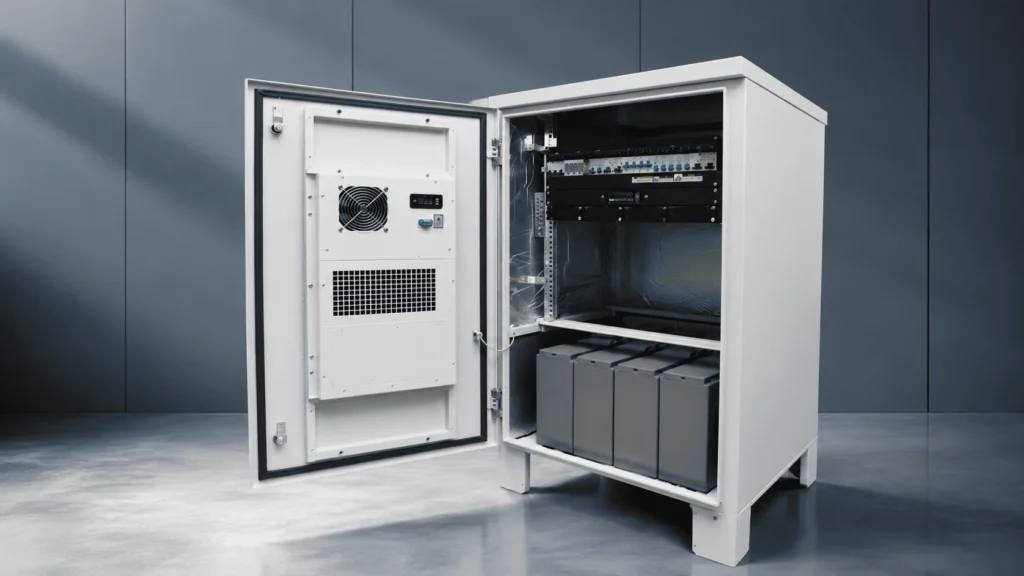
The most important features of an outdoor network cabinet include environmental sealing, thermal management, corrosion resistance, cable-entry protection, internal layout, electrical integration, structural mounting, security, monitoring, and maintainability. A reliable design balances these features according to the specific site rather than maximizing one specification alone.
Engineering Selection Matrix for Harsh Environments
A professional outdoor network enclosure should be selected through a risk-based comparison. Hot, dusty, coastal, humid, rainy, public, and pole-mounted sites require different design priorities. There is no single cabinet design that is ideal for every harsh environment.
Based on our internal data and market analysis, here is the breakdown:
| Environment / Requirement | Main Risk | Cabinet Design Priority | Engineering Notes |
|---|---|---|---|
| Hot and sunny climate | High internal temperature and solar heat gain | Cooling strategy, airflow design, exterior exposure control | Evaluate equipment heat load plus solar radiation, not cabinet size alone |
| Cold climate | Low-temperature startup, ice, snow, condensation | Heating, insulation where needed, low-temperature-rated components | Design according to minimum ambient temperature and equipment limits |
| High humidity | Condensation and corrosion | Anti-condensation control, humidity monitoring, heating or dehumidification where required | Waterproofing alone does not prevent condensation |
| Desert or dusty site | Dust ingress and cooling contamination | Dust sealing, filter strategy, isolated cooling where appropriate | Avoid uncontrolled outside-air intake in severe sand or dust conditions |
| Coastal environment | Salt-spray corrosion | Material selection, surface treatment, corrosion-resistant fasteners and accessories | No single material is universally best; evaluate exposure and cost |
| Heavy rain exposure | Water entry through doors, glands, vents, roof, or panels | Sealing, gasket quality, cable-entry protection, drainage design | Complete cabinet protection matters more than one waterproof component |
| Public area | Theft, vandalism, unauthorized access | Locks, reinforced doors, protected hinges, tamper monitoring where needed | Security level depends on site risk |
| Pole-mounted site | Wind area, weight, center of gravity | Bracket design, pole strength review, cable routing, service access | Structural evaluation should match actual project conditions |
| Ground-mounted site | Water accumulation, corrosion, base interface | Foundation design, bottom entry sealing, drainage, installation height | A standard cabinet should not be assumed suitable for flooding |
| Fiber-heavy installation | Fiber bending, connector protection, service loops | Fiber trays, bend-radius control, routing space, ODF integration | Plan fiber layout before cabinet fabrication |
| Battery installation | Heat, ventilation, safety, access | Battery compartment design based on battery technology and standards | Battery requirements must be project-specific |
| Remote unattended site | Delayed fault response | Temperature, humidity, door, power, water-leak, or cooling-status monitoring | Monitoring should match maintenance strategy |
Important cabinet features should be evaluated as a system:
- Door gasket quality and compression
- Cable gland selection and unused opening sealing
- Internal airflow and hot-spot prevention
- Fan, heat exchanger, or air-conditioning suitability
- Heating and anti-condensation control for cold or humid sites
- Material selection: galvanized steel, aluminum, or stainless steel where appropriate
- Surface treatment for UV and corrosion exposure
- Electrical layout, grounding, bonding, and surge protection planning
- Maintenance access for filters, cooling systems, batteries, cables, and power modules
- Mounting structure for wall, pole, ground, rooftop, or steel-frame installation
ShiRui Pro Tip: I recommend treating IP rating as one item in the selection matrix, not the whole decision. A cabinet can have a high IP rating and still fail in the field if heat, condensation, corrosion, or cable entry are ignored.
Cost & Buying Factors
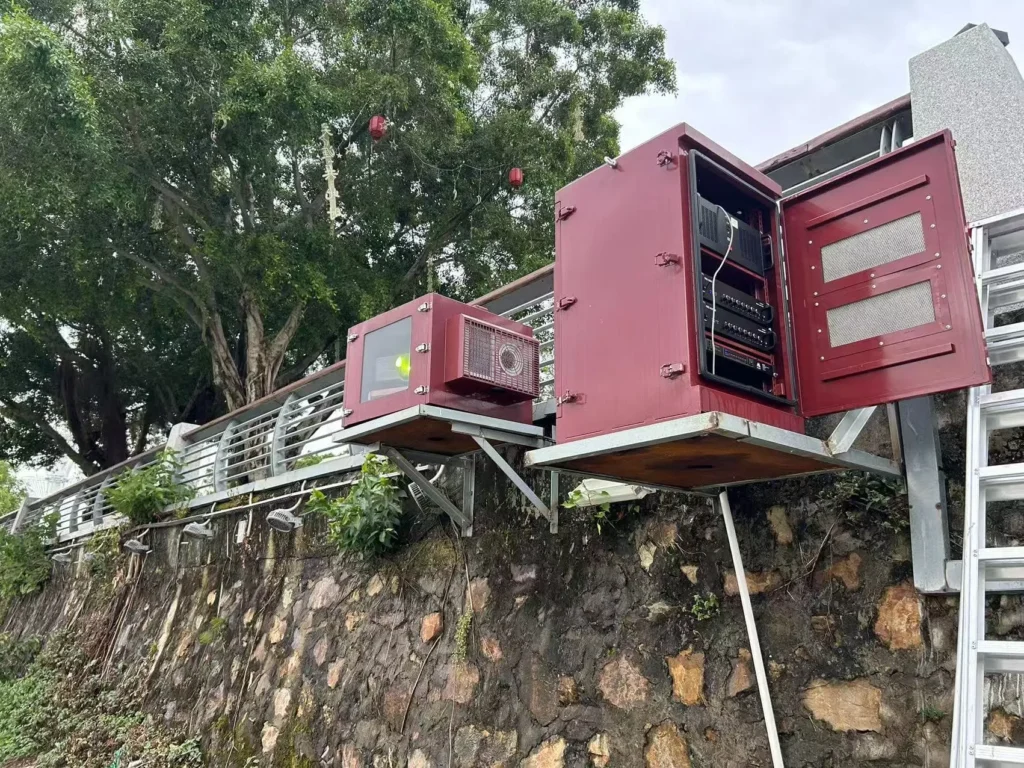
The cost of an outdoor network cabinet depends on equipment layout, material, surface treatment, cooling or heating system, IP requirement, corrosion protection, electrical integration, cable-entry design, monitoring, mounting structure, and production quantity. The lowest-price cabinet is rarely the best choice for harsh environments.
Cost Drivers Buyers Should Evaluate
Outdoor equipment cabinet pricing should be based on actual project requirements, not only size. A larger empty box may be cheaper than a smaller engineered cabinet, but it may not protect active network equipment properly.
Based on our internal data and market analysis, here is the breakdown:
| Buying Factor | Cost Impact | Why It Matters |
|---|---|---|
| Cabinet size and usable internal space | Medium | Affects material, structure, shipping, and installation |
| Material selection | Medium to high | Galvanized steel, aluminum, and stainless steel have different cost and corrosion behavior |
| Surface treatment | Medium | Outdoor coating must match UV, corrosion, and exposure requirements |
| IP protection level | Medium | Higher sealing requirements can affect doors, gaskets, glands, vents, and testing |
| Cooling system | Medium to high | Fans, heat exchangers, or industrial air conditioning depend on heat load and site conditions |
| Heating and anti-condensation | Low to medium | Important for cold or humid environments |
| Electrical integration | Medium to high | Power distribution, UPS, grounding, surge protection, and monitoring add complexity |
| Cable-entry design | Low to medium | Incorrect cable entry can compromise protection and maintenance |
| Security features | Low to medium | Locks, reinforced doors, tamper switches, and protected hinges depend on site risk |
| Mounting method | Medium | Pole, wall, ground, and rooftop installations require different structural designs |
| Testing and documentation | Project-dependent | IP reports, factory inspection records, and compliance documents may be required |
| Customization level | Medium to high | Custom layout, cutouts, brackets, cooling interfaces, and wiring increase engineering work |
A professional RFQ should include:
- Equipment list
- Equipment dimensions and quantity
- Total power consumption or heat load, if available
- Rack-unit requirements
- Project location and installation method
- Maximum and minimum ambient temperature
- Humidity, dust, rain, salt spray, and solar exposure
- Required IP rating or project standard
- Power supply and electrical integration needs
- Cable types, cable quantities, and cable-entry direction
- Cooling, heating, and monitoring requirements
- Maintenance access expectations
- Required quantity and documentation needs
Avoid common selection mistakes such as choosing only by price, assuming IP65 solves every environmental issue, ignoring heat load, overlooking condensation, forgetting coastal corrosion, using fan cooling in severe dust without maintenance planning, or adding cable holes after installation without proper sealing.
ShiRui Pro Tip: When buyers send only external dimensions, I cannot confirm whether the cabinet will work reliably. A complete RFQ helps us design the cabinet around equipment, environment, cooling, cabling, and maintenance from the beginning.
Conclusion
The right outdoor network cabinet should be selected according to both the equipment inside and the environment outside. For harsh environments, buyers should evaluate weather protection, temperature control, condensation, corrosion, dust, cable entry, electrical systems, maintenance, mounting, and verification together before approving a final design.
Recommended Selection Workflow
A reliable outdoor telecom cabinet is the result of engineering coordination, not a single specification. The most practical workflow is:
- Confirm equipment list
- Check equipment dimensions and rack requirements
- Evaluate power consumption and heat load
- Review project environment and climate risks
- Define required protection level
- Select cabinet material and surface treatment
- Choose thermal management method
- Plan internal layout and airflow
- Design power distribution and grounding
- Plan cable entry and fiber management
- Define security requirements
- Confirm maintenance access
- Review mounting method and structural interface
- Add monitoring options where useful
- Prepare technical drawings
- Verify design, documentation, and factory inspection requirements
- Manufacture and assemble according to approved specifications
ShiRui approaches outdoor network enclosure projects from a manufacturer’s perspective: first understand the equipment and site, then design the cabinet system around real operating conditions. This helps avoid oversizing, undercooling, poor sealing, condensation problems, cable-entry failures, and unnecessary cost.
ShiRui Pro Tip: If you are unsure which cabinet design is suitable, send us the equipment list, installation location, climate data, cable requirements, and mounting method. We can help evaluate the correct outdoor network cabinet configuration for your project.