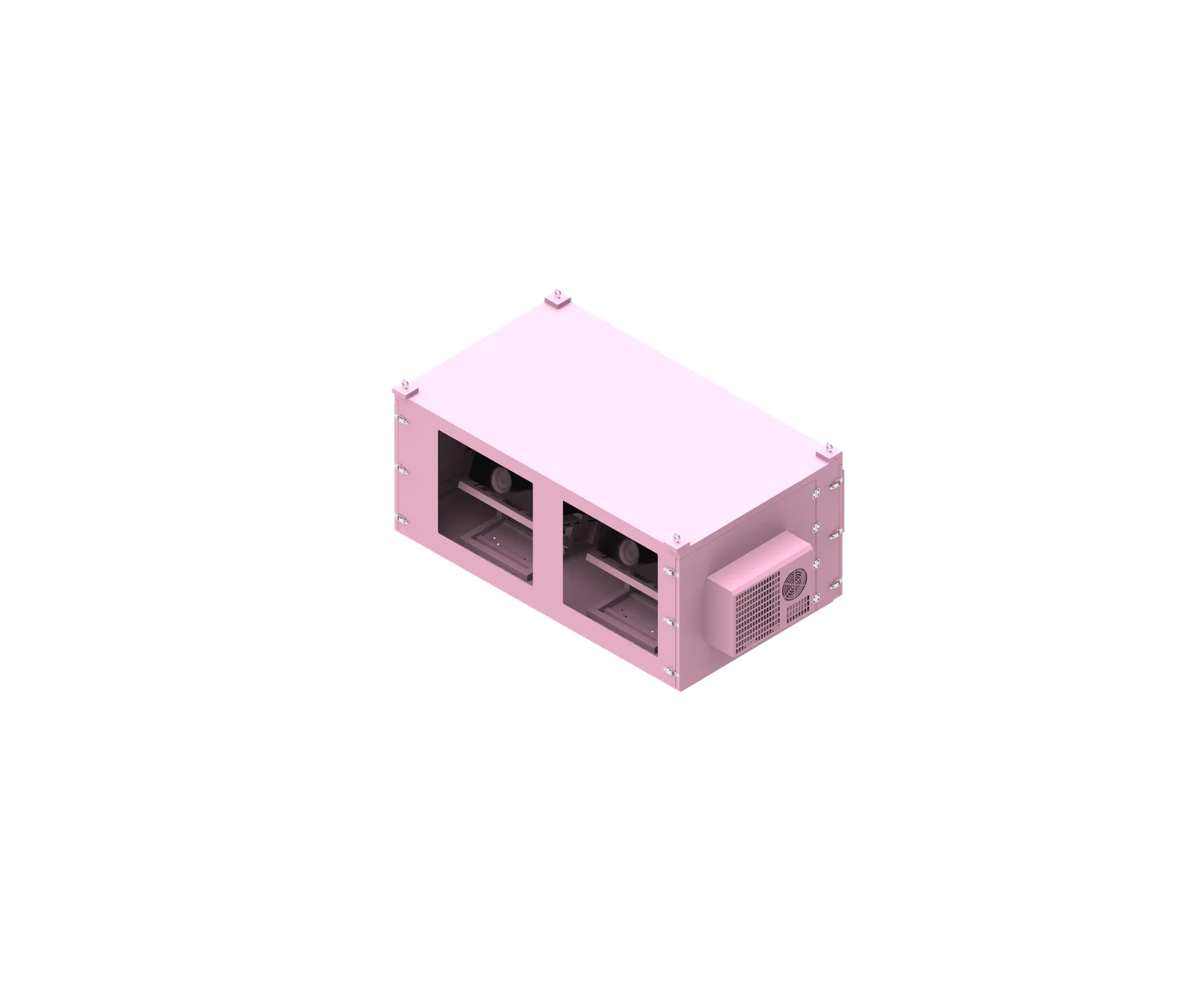
Selecting the right outdoor projector enclosure manufacturer is an engineering decision, not just a purchasing task. B2B buyers, AV integrators, projection contractors, and engineering companies should evaluate whether the supplier understands the projector, operating environment, cooling load, waterproof structure, installation method, and long-term service needs before confirming an order.
Video Guide: See how a waterproof enclosure provides a dedicated protection solution for outdoor projectors used in professional installations. This video introduces the enclosure concept and shows how a purpose-built housing can help protect projection equipment from demanding outdoor conditions while supporting long-term use
What is outdoor projector enclosure manufacturer?
An outdoor projector enclosure manufacturer designs and produces protective housings that allow projectors to operate safely in outdoor environments. A qualified manufacturer should not simply sell a metal box; it should engineer the enclosure around the projector model, cooling requirements, weather exposure, mounting method, and maintenance needs.
Video Guide: See how our projector waterproof case is evaluated for professional outdoor use. This video highlights enclosure protection and testing, including IP65/IP66 and EMC-related verification, providing a closer look at the quality and reliability behind outdoor projector housing solutions.
Role in Professional Outdoor Projection Projects
An outdoor projector enclosure manufacturer provides the mechanical, thermal, electrical, and environmental protection needed for projectors used in outdoor advertising, projection mapping, theme parks, building facades, events, and permanent installations.
For professional buyers, the key question is not “Can the supplier make an enclosure?” but “Can the supplier design the enclosure around the exact projector and project environment?”
A professional projector enclosure manufacturer should normally ask for detailed projector and site information before recommending a solution:
- Projector brand and model
- Overall dimensions and weight
- Power consumption and heat output
- Air intake and exhaust positions
- Lens position and projection angle
- Cable interface locations
- Mounting points and maintenance clearance
- Ambient temperature range and humidity conditions
- Installation method, such as wall, pole, ceiling, rooftop, or ground mounting
A supplier that recommends the same enclosure only based on lumen output should be reviewed carefully. Two 20,000-lumen projectors can have very different dimensions, airflow designs, and thermal loads.
ShiRui Pro Tip: When a buyer says, “I need an enclosure for a 20,000-lumen projector,” we do not treat that as enough information for final design. I would first confirm the projector model, power consumption, airflow direction, site temperature, working hours, and mounting method before recommending the enclosure structure.
How Does outdoor projector enclosure manufacturer Work?
An outdoor projector enclosure manufacturer works by converting project requirements into an engineered housing solution. The process usually includes projector analysis, thermal evaluation, airflow planning, waterproof design, structural design, drawing confirmation, sheet metal production, assembly, testing, packaging, and technical support for installation.
Video Guide: Discover an outdoor enclosure for projector designed for professional AV and projection projects. The video introduces the enclosure structure and demonstrates how a dedicated housing solution can support projector equipment in permanent outdoor installations.
Engineering Workflow From Requirement to Shipment
A reliable outdoor projector enclosure supplier should follow a structured engineering workflow rather than immediately quoting a standard box. This is especially important for custom outdoor projector enclosure projects where projector size, heat load, lens position, and installation conditions vary.
A typical workflow may include:
- Project requirement collection
The manufacturer confirms the projector model, quantity, installation location, ambient temperature, operating hours, power supply, and required protection level. - Projector compatibility review
The engineering team checks the projector’s dimensions, intake vents, exhaust vents, lens center, cable interfaces, and maintenance clearance. - Thermal-management evaluation
The manufacturer estimates heat load according to power consumption, ambient temperature, direct sunlight exposure, and operating duration. - Airflow and cooling design
Possible solutions may include forced-air cooling, fan cooling with temperature control, industrial air conditioning, heating, or constant-temperature control. - Waterproof and dustproof structure design
Door seals, optical window sealing, cable entry points, gaskets, access panels, and cooling-system interfaces are reviewed as one complete system. - Drawing confirmation
For custom projects, buyers should review enclosure dimensions, internal layout, mounting details, optical window position, and cable entry arrangement before production. - Manufacturing and assembly
Sheet metal processing, welding, grinding, surface treatment, powder coating, electrical assembly, and final fitting are completed. - Inspection and testing
The manufacturer checks dimensions, sealing, wiring, cooling operation, temperature-control function, optical window installation, and final assembly quality. - Packaging and shipment
Export packaging should protect the enclosure body, optical glass, electrical parts, and cooling components during transportation.
ShiRui Pro Tip: I prefer to see engineering communication before pricing is finalized. If a supplier gives a final quotation without asking about projector model, ambient temperature, airflow, or mounting method, the buyer should confirm whether the enclosure has actually been designed for the project.
Who are the best projector manufacturers?
The best projector manufacturers for outdoor enclosure projects are not defined by brand name alone. Buyers should consider projector size, brightness, power consumption, thermal output, lens configuration, airflow layout, service access, and whether the selected projector can be safely integrated into a suitable outdoor enclosure.
Video Guide: See how a waterproof projector enclosure provides a dedicated housing solution for professional projection equipment. This video focuses on the enclosure structure and its role in supporting stable, long-term projector operation in outdoor environments.
Selecting Projectors That Can Be Enclosed Safely
For outdoor projection projects, the projector brand matters, but the enclosure design depends more on the exact model. A high-brightness projector may require more cooling capacity, more internal clearance, stronger mounting support, and a larger optical window than a smaller unit.
When evaluating a projector for outdoor enclosure use, buyers should check:
- Whether the projector has clear intake and exhaust paths
- Whether the lens position can align with an optical window
- Whether enough clearance exists for cable connections
- Whether the projector weight is suitable for the planned mounting structure
- Whether the heat output can be managed in the project climate
- Whether maintenance access is realistic after installation
- Whether multiple projectors will influence one another thermally
Based on our internal data and market analysis, here is the breakdown:
| Evaluation Point | Why It Matters for Enclosure Design | Buyer Action |
|---|---|---|
| Projector model | Determines dimensions, airflow, lens position, and mounting | Provide exact brand and model |
| Power consumption | Indicates heat generation and cooling demand | Share technical datasheet |
| Intake and exhaust layout | Prevents blocked airflow and hot-air recirculation | Confirm vent locations |
| Lens center | Controls optical window position | Provide front-view dimensions |
| Weight | Affects bracket and structure design | Confirm projector and lens weight |
| Service access | Impacts door and internal layout | Define maintenance direction |
| Multi-projector use | Increases heat and alignment complexity | Share system layout drawings |
The best projector choice is the one that can be protected, cooled, aligned, mounted, and serviced reliably in the real installation environment.
ShiRui Pro Tip: I would never approve an enclosure only from a projector’s lumen rating. Brightness is useful, but enclosure engineering depends more on dimensions, airflow, heat output, lens geometry, and service access.
What to look for for an outdoor projector?
When selecting an outdoor projector, buyers should look beyond brightness. The projector should be suitable for the required throw distance, resolution, operating hours, lens position, heat generation, service access, and enclosure integration. The best projector is one the enclosure manufacturer can cool, protect, mount, and maintain properly.
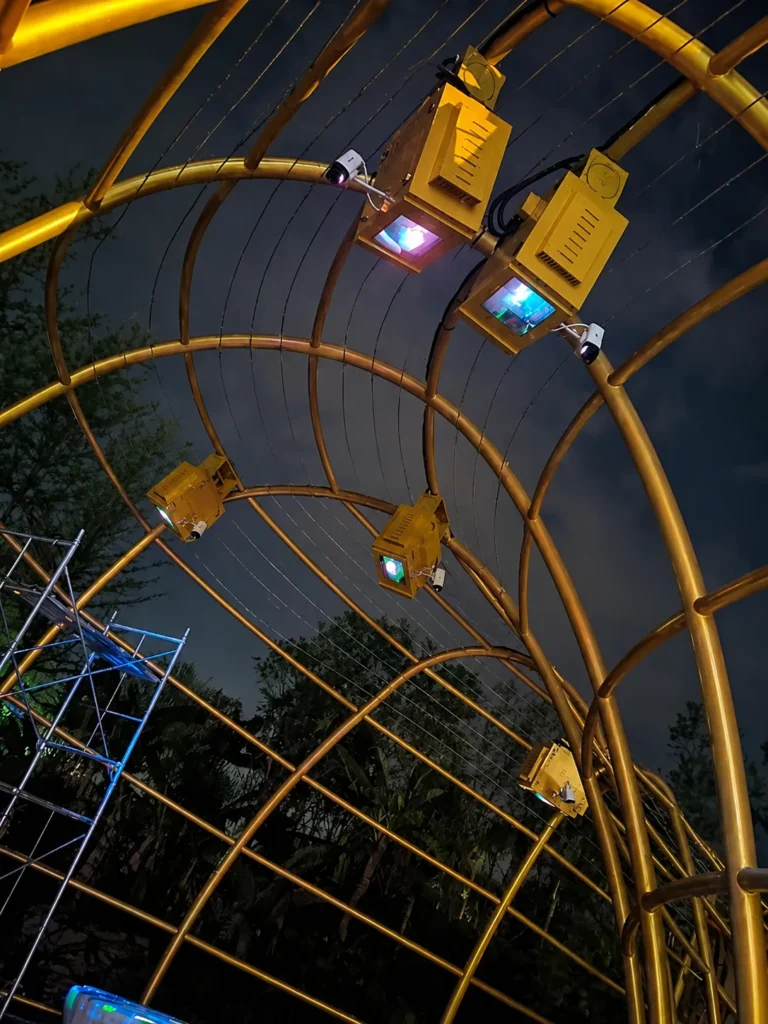
Projector Selection Criteria for Enclosure Integration
Outdoor projector performance depends on both the projector and the enclosure system. A high-performance projector can still fail if it is installed in a poorly designed enclosure that traps heat, blocks airflow, causes condensation, or makes maintenance difficult.
Buyers should review the following before choosing the projector and enclosure together:
- Brightness and application
Projection mapping, advertising, outdoor cinema, and architectural displays may require different brightness levels. - Power consumption
Higher power usually means greater heat output, which affects cooling-system selection. - Air intake and exhaust direction
The enclosure must respect the projector manufacturer’s original cooling path. - Lens position and projection angle
Optical window location must match the actual lens center, lens shift, and projection direction. - Operating schedule
A projector used several hours per day may require a different thermal strategy than one used occasionally. - Installation climate
Hot, cold, humid, dusty, coastal, or high-sunlight environments require different enclosure designs. - Maintenance requirements
The enclosure should allow filter cleaning, cable access, lens adjustment, and projector removal when needed. - Mounting method
Wall mounting, pole mounting, rooftop installation, and custom steel structures require different reinforcement designs.
A strong projector housing manufacturer will evaluate these details before recommending the enclosure size, cooling system, and internal layout.
ShiRui Pro Tip: For permanent outdoor installations, I always ask about the hottest expected ambient temperature and daily operating hours. These two details often determine whether simple fan cooling is acceptable or whether heating, cooling, or constant-temperature control should be considered.
What material is best for an outdoor projector screen?
The best outdoor projector screen material depends on viewing environment, image requirement, wind exposure, installation type, and maintenance needs. For enclosure projects, the screen choice should be considered together with projector brightness, projection distance, viewing angle, weather exposure, and whether the installation is temporary or permanent.
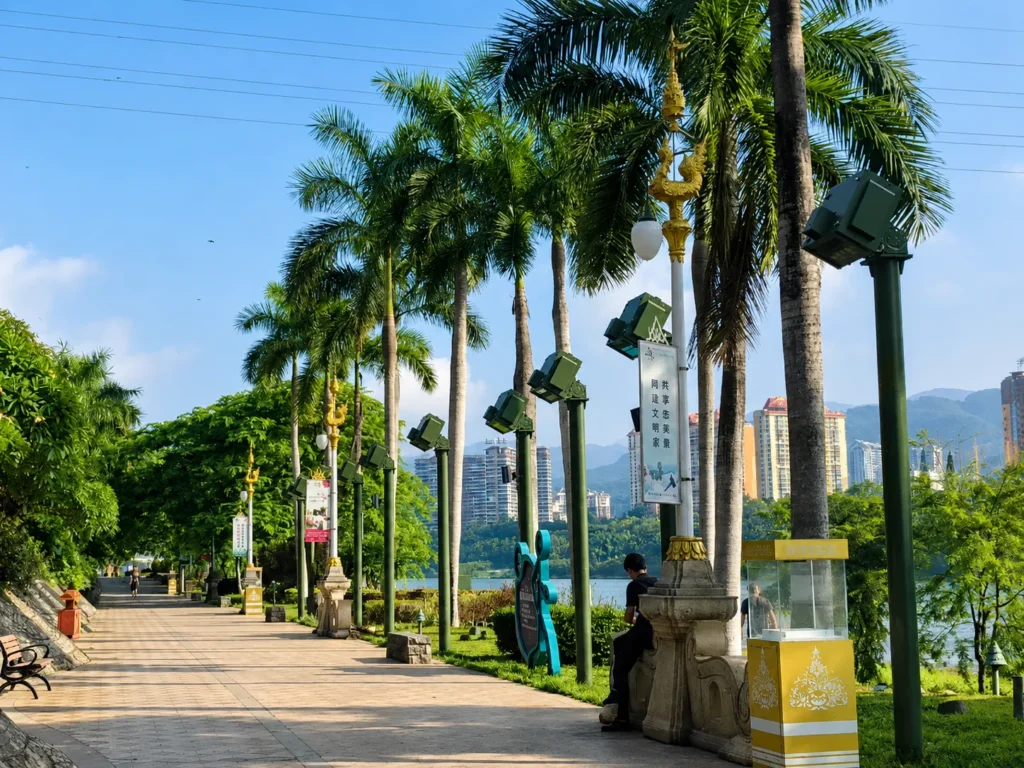
Screen Material Considerations for Outdoor Projection
Although the enclosure protects the projector, the screen or projection surface determines much of the visible image quality. Outdoor screens must handle ambient light, wind, moisture, dust, and repeated setup or long-term exposure.
Common screen material options include:
Based on our internal data and market analysis, here is the breakdown:
| Screen Material / Surface | Best Use Case | Advantages | Limitations |
|---|---|---|---|
| PVC projection screen | Outdoor cinema and temporary events | Good image surface, flexible, commonly available | Needs tensioning and weather care |
| Perforated PVC screen | Large venues where audio may sit behind the screen | Allows sound transmission | May reduce brightness slightly |
| Painted wall surface | Building projection and mapping | Cost-effective for fixed structures | Surface flatness and color affect image |
| Tensioned fabric screen | Events and portable setups | Lightweight and easy to install | Wind resistance must be managed |
| Rigid outdoor panel | Permanent installations | Stable surface and strong structure | Higher installation cost |
| Building facade | Projection mapping | Uses existing architecture | Requires projector alignment and content correction |
For professional projects, buyers should coordinate the projector, enclosure, screen, and installation geometry together. A powerful projector inside a well-designed enclosure will still deliver poor results if the projection surface is unsuitable.
ShiRui Pro Tip: When we support projection mapping projects, I like to confirm the projection surface early. The enclosure window position, projector angle, mounting height, and maintenance access can all be affected by the final screen or facade geometry.
Key Features & Comparison
A qualified outdoor projector enclosure manufacturer should be evaluated across engineering, thermal design, waterproofing, customization, production, inspection, documentation, and support. Buyers should use a structured checklist instead of comparing quotations alone, because the lowest unit price may increase total project risk and lifecycle cost.
Manufacturer Evaluation Checklist for Procurement Teams
A good outdoor projector enclosure manufacturer should understand the projector before designing the enclosure. This principle is the foundation of safe outdoor operation, because the cabinet must protect the projector while still allowing it to breathe, project, connect, and be serviced.
Based on our internal data and market analysis, here is the breakdown:
| Evaluation Area | What Buyer Should Check | Warning Sign |
|---|---|---|
| Projector compatibility | Does the supplier ask for the exact brand and model? | Quotes only by lumen output |
| Thermal design | Does the supplier evaluate power consumption, heat load, and ambient temperature? | Same cooling design for every project |
| Airflow design | Does the enclosure respect original intake and exhaust paths? | Intake or exhaust may be blocked |
| Waterproof design | Are doors, glass, cable entries, panels, and interfaces sealed? | Only a general “waterproof” claim |
| Dustproof structure | Are filters, seals, and ventilation paths considered? | Open vents without protection strategy |
| Condensation control | Are humidity, dew point, and day-night temperature changes considered? | Rain protection only, no humidity plan |
| Material selection | Are galvanized steel, aluminum, or stainless steel selected by environment? | One material used for all conditions |
| Sheet metal capability | Can the factory handle cutting, bending, welding, finishing, and assembly? | Unclear manufacturing process |
| Customization | Can dimensions, brackets, windows, cable entries, and cooling be customized? | Standard cabinet forced onto all projects |
| Optical window design | Is the window positioned according to lens center and projection angle? | Window location not confirmed by drawing |
| Structural mounting | Are weight, center of gravity, and reinforcement considered? | Mounting treated as an afterthought |
| Multi-projector design | Can the supplier manage combined heat, alignment, and airflow separation? | Large cabinet treated as a simple single-unit box |
| Quality control | What inspections are performed before shipment? | No clear inspection checklist |
| Testing | Can the supplier explain actual water, cooling, heating, or electrical tests? | Unsupported IP or performance claims |
| Technical drawings | Can the supplier provide layout, mounting, and electrical information? | No drawings before production |
| Project experience | Has the supplier handled similar projector size, climate, or application? | Only generic company-history claims |
| After-sales support | Is installation, wiring, temperature setup, and troubleshooting support available? | Support ends after shipment |
Buyers should not treat an IP rating, cooling claim, or customization promise as verified unless the manufacturer can explain the design basis, test method, or documentation behind it.
ShiRui Pro Tip: I recommend saving this checklist and sending it to every potential supplier. The quality of their answers often reveals more than the price sheet.
Cost & Buying Factors
Outdoor projector enclosure cost depends on projector size, cooling method, material, IP protection design, customization level, optical window requirements, electrical configuration, testing, packaging, and project support. A cheaper quotation may not reduce total cost if it creates overheating, water ingress, delivery delay, or installation problems.
Cost Drivers That Affect Total Project Risk
Price comparison is useful, but B2B buyers should evaluate the total cost of ownership. For outdoor projection, enclosure failure can damage the projector, interrupt a public display, delay a contractor’s installation schedule, or require expensive site rework.
Based on our internal data and market analysis, here is the breakdown:
| Buying Factor | Cost Impact | Procurement Consideration |
|---|---|---|
| Projector size and weight | Medium to high | Larger projectors require stronger structure and more space |
| Cooling system | High | Fan cooling, air conditioning, heating, or constant-temperature control vary significantly |
| Material choice | Medium | Aluminum, galvanized steel, and stainless steel suit different environments |
| IP protection structure | Medium to high | Better sealing requires proper doors, gaskets, cable glands, and interfaces |
| Optical window | Medium | Size, sealing, glass type, and positioning affect cost |
| Custom mounting brackets | Medium | Pole, wall, ceiling, rooftop, and steel-frame mounting require different designs |
| Electrical configuration | Medium | Temperature controllers, fans, heaters, power distribution, and monitoring add complexity |
| Multi-projector layout | High | More heat, more weight, more alignment, and more access requirements |
| Testing and inspection | Medium | Real verification reduces project risk |
| Packaging and export preparation | Medium | Large enclosures need proper protection for shipping |
| Technical documentation | Low to medium | Drawings and instructions reduce installation errors |
| After-sales support | Low to medium | Troubleshooting and spare parts improve lifecycle reliability |
A strong outdoor projector enclosure supplier should be able to explain why a specific configuration costs more or less. For example, an enclosure with industrial air conditioning may cost more upfront but may be necessary for a high-power projector in a hot outdoor environment.
Buyers should compare quotations by asking:
- Is the enclosure designed for the exact projector model?
- What cooling method is included?
- What ambient temperature is the design based on?
- What material and thickness are used?
- How are cable entries sealed?
- Is the optical window position customized?
- Are drawings provided before production?
- What tests are performed before shipment?
- What after-sales support is included?
ShiRui Pro Tip: I do not advise selecting the lowest quotation unless the technical scope is identical. In many projects, the safer supplier is the one that asks more questions before quoting, because those questions reduce design risk.
Conclusion
The best projector enclosure manufacturer is not necessarily the lowest-priced supplier or the one with the largest catalog. For professional projects, buyers should choose a manufacturer that understands the projector, calculates thermal requirements, designs airflow and protection, supports customization, provides documentation, and assists from design through installation.
Practical Procurement Takeaway
Evaluating an outdoor projector enclosure manufacturer should begin with one core principle: the manufacturer must understand the projector before designing the enclosure. A standard cabinet may look acceptable in a catalog, but outdoor performance depends on projector-specific engineering and site-specific protection.
Before placing an order, buyers should confirm that the manufacturer can support four major areas:
- Projector-specific engineering
The enclosure must match the exact projector model, lens position, airflow path, cable layout, and service access. - Thermal and environmental protection
Cooling, heating, waterproofing, dustproofing, condensation control, and sunlight exposure must be considered as a complete system. - Manufacturing and quality control
Sheet metal capability, assembly quality, sealing inspection, electrical checks, and functional testing should be clearly explained. - Project communication and technical support
Drawings, installation guidance, troubleshooting, spare parts, and technical communication are essential for contractors and integrators.
ShiRui supports buyers who need engineered outdoor projector enclosure solutions for professional installation environments. If you are preparing a project, provide the projector model, installation location, ambient temperature range, mounting method, and operating schedule so the enclosure can be evaluated correctly before production.
ShiRui Pro Tip: My final advice is simple: do not ask only “How much is the enclosure?” Ask “How will this enclosure protect, cool, mount, and service my exact projector in my actual environment?” That question leads to a much safer purchasing decision.