Condensation control starts with understanding dew point, not just blocking rain. In an outdoor installation, humid air can turn into water droplets when it touches a cold projector housing, optical window, air-conditioner surface, or internal metal wall. A well-designed Waterproof projector enclosure combines sealing, airflow, temperature control, humidity monitoring, and correct operating logic to protect projection quality and equipment reliability.
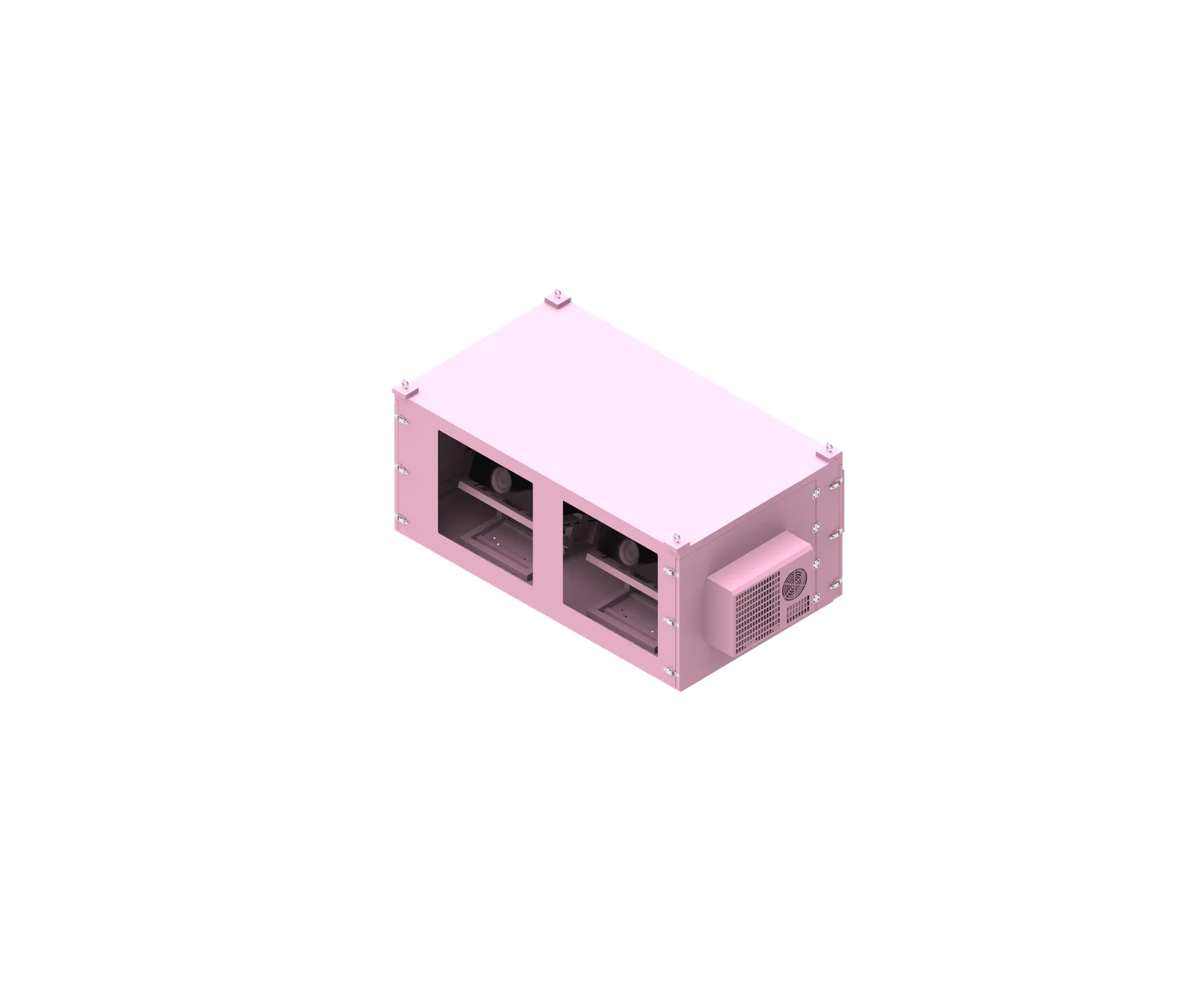
Video Guide: The enclosure combines a durable sheet metal structure, projector mounting space, an optical projection window and configurable environmental control components. Its final structure can be customized according to the projector model, equipment dimensions, installation method and local climate conditions.
What is Waterproof projector enclosure?
A Waterproof projector enclosure is a protective outdoor housing designed to shield a projector from rain, dust, corrosion, insects, impact, and unstable weather. For condensation prevention, however, the enclosure must do more than meet an IP rating; it must also manage internal humidity, airflow, temperature, and dew-point risk.
Video Guide: This video presents a custom outdoor projector enclosure with tailored protection, cooling and climate control for demanding outdoor projects.
Protective Housing with Climate-Control Requirements
A waterproof projector enclosure is typically used in outdoor cinemas, scenic night-tour projects, water-screen projection, coastal displays, subway installations, theme parks, and building facade projection. Its job is to create a controlled micro-environment around the projector while allowing heat to escape and the projected image to pass clearly through an optical window.
ShiRui outdoor projector shell products are generally non-standard customized solutions. Depending on the project, the enclosure body may use 201 stainless steel, 304 stainless steel, galvanized plate, or other selected materials. Functional options may include fresh-air ventilation, fresh-air plus air conditioning, fully sealed internal-circulation air conditioning, remote monitoring versions, heating, dehumidification, anti-fog airflow, and optional safety sensors.
Key elements commonly considered include:
- Weather-resistant metal structure customized to projector size and site conditions
- Sealed optical ultra-white glass projection window with high light transmission
- Door seals, cable-entry seals, and corrosion-resistant construction
- Built-in temperature probe and temperature/humidity sensor options
- Fan cooling, air conditioning, or fully sealed internal circulation
- Optional PTC heating and dehumidification module
- Optional water-leak, smoke, Wi-Fi, Ethernet, or 4G monitoring configuration
- F6 medium-efficiency filter where outside-air ventilation is used
- Reserved 10A or 16A multifunctional socket depending on electrical design
ShiRui Pro Tip: I always treat the enclosure as a climate-control system, not just a box. If humid air can enter, or if the optical glass becomes colder than the internal dew point, condensation can still appear even when rain never enters the housing.
How Does Waterproof projector enclosure Work?
A Waterproof projector enclosure works by combining mechanical protection with thermal and humidity control. It blocks direct water and dust, guides heat away from the projector, protects the projection window, and may use sensors, heaters, fans, air conditioning, or internal circulation to reduce condensation risk.
Video Guide: This video shows a custom outdoor projector enclosure designed for reliable protection, cooling and climate control in demanding environments.
Environmental Control Around the Projector
The enclosure creates a protective barrier between the projector and the outdoor environment. However, a projector generates heat during operation and cools after shutdown. When warm humid air remains inside the box and surrounding surfaces cool rapidly after sunset, condensation may form on the optical window, metal shell, internal wiring, or projector casing.
ShiRui typically evaluates three common thermal-management structures:
Based on our internal data and market analysis, here is the breakdown:
| Structure | How It Works | Best-Fit Conditions | Condensation Consideration |
|---|---|---|---|
| Fan-cooled projector enclosure | Uses filtered outside air and internal airflow to remove heat | Standard outdoor environments with manageable humidity and dust | Outside air enters the box, so humidity and dew point must be evaluated |
| Fan and air-conditioner hybrid | Uses fan ventilation and active cooling depending on operating conditions | Sites with higher heat load or changing ambient temperature | Control logic must avoid rapid temperature drops and excessive internal humidity |
| Fully sealed internal-circulation air-conditioned enclosure | Uses internal circulation cooling without direct outdoor air exchange | Coastal, desert, subway, water-screen, sandy, dusty, or humid environments | Reduces external moisture intake, but internal humidity still needs monitoring |
Some ShiRui configurations may activate heating at approximately 5°C or below and cooling at approximately 35°C or above, but these values should not be treated as universal settings. Final control logic must consider humidity, dew point, projector heat output, local climate, operating hours, and shutdown conditions.
ShiRui Pro Tip: I prefer to review the projector’s heat output before choosing the cooling method. Lumens alone are not enough. Two projectors with similar brightness can have very different power consumption, exhaust temperature, and enclosure airflow requirements.
How to weatherproof an outdoor projector?
To weatherproof an outdoor projector, place it inside a properly sealed enclosure, protect the optical path, manage cable entries, control heat, prevent humid air buildup, and verify operation under local weather conditions. The safest approach is to design weatherproofing and condensation prevention together from the start.
Video Guide: This video explains how custom outdoor projector enclosures are designed for projector size, cooling, mounting and environmental requirements.
Practical Weatherproofing Process
Weatherproofing is not only about rain protection. Outdoor projectors face moisture, dust, insects, salt spray, nighttime cooling, heat buildup, wind-driven water, and maintenance limitations. A poorly ventilated box may keep rain out but trap humidity inside, causing fogging, corrosion, or electrical faults.
A practical condensation-prevention and weatherproofing process includes:
- Evaluate local temperature and humidity conditions.
- Check day-to-night temperature changes, especially after sunset.
- Confirm projector power consumption, heat output, and operating hours.
- Select the correct cooling structure: fan-cooled, hybrid, or fully sealed internal circulation.
- Seal doors, hinges, cable entries, and the optical window.
- Install temperature and humidity monitoring where required.
- Add heating or dehumidification if cold starts or high humidity are expected.
- Maintain internal air circulation to avoid stagnant humid air.
- Inspect seals, sensors, filters, fans, and air-conditioning components regularly.
- Confirm control settings through project-specific testing before handover.
Typical project examples require different priorities:
- Water-screen projection: high humidity, splash, and lens fogging risk
- Coastal installation: salt spray, humid air, and corrosion risk
- Desert installation: large day-to-night temperature swings
- Subway or underground installation: metallic dust, limited ventilation, and persistent humidity
- Scenic night-tour project: long operation time and rapid nighttime cooling
ShiRui Pro Tip: I recommend testing the enclosure during the actual shutdown period, not only during daytime operation. Many condensation problems appear after the projector turns off and the internal air cools quickly.
What is the 4 6 8 rule for projectors?
The 4 6 8 rule is often used as a simple viewing-distance guideline, where screen size and viewing distance are estimated for comfort and image clarity. It does not determine condensation control. Enclosure design must still be based on projector model, heat output, environment, humidity, and cooling method.
Video Guide: This video introduces a custom outdoor projector enclosure designed around the projector’s size, lens position, cooling needs, installation method and operating environment. Final configurations are customized for each project.
Viewing Rules Are Not Climate-Control Rules
Projection layout rules help estimate audience viewing distance, screen size, and image visibility. They are useful during project planning, but they do not answer whether an enclosure needs fan cooling, air conditioning, heating, dehumidification, or fully sealed circulation.
For condensation prevention, the following factors are more important than lumens or viewing-distance formulas:
- Projector brand and model
- Power consumption and heat output
- Maximum and minimum ambient temperature
- Relative humidity and dew-point behavior
- Daily operating hours
- Installation environment
- Enclosure sealing method
- Cooling system type
- Shutdown conditions
- Maintenance frequency
Based on our internal data and market analysis, here is the breakdown:
| Planning Factor | Helps With Projection Layout | Helps With Condensation Control |
|---|---|---|
| Screen size | Yes | Indirectly |
| Viewing distance | Yes | No |
| Projector lumens | Yes | Indirectly |
| Projector power consumption | Indirectly | Yes |
| Ambient temperature range | No | Yes |
| Relative humidity | No | Yes |
| Cooling structure | No | Yes |
| Shutdown logic | No | Yes |
ShiRui Pro Tip: I never select an anti-condensation method from brightness alone. A high-lumen projector usually produces more heat, but the actual enclosure solution depends on the full thermal profile and site climate.
How to prevent condensation in electrical enclosures?
Condensation in electrical or projector enclosures is prevented by reducing humid air entry, avoiding cold internal surfaces below the dew point, maintaining circulation, adding heating or dehumidification when needed, and monitoring temperature and humidity. IP sealing helps, but active environmental control is often required.
Dew-Point Control Inside the Box
Condensation occurs when humid air contacts a surface colder than the dew point. In a projector enclosure, this may happen on the optical glass, projector body, cable terminals, internal steel plate, or air-conditioner evaporator surface. The risk increases during rapid cooling, high humidity, water-screen operation, underground installations, or after the projector shuts down.
Common condensation risks include:
- Humid outdoor air entering the enclosure
- Rapid temperature drops after sunset
- A cold optical window contacting warm humid air
- Moisture remaining inside after projector shutdown
- Incorrect ventilation design
- Air-conditioner surfaces becoming colder than the dew point
- Damaged door seals or cable-entry seals
- Inadequate heating during cold starts
Preventive design measures may include temperature and humidity sensors, intelligent control boards, PTC heating and dehumidification modules, anti-condensation heating, internal air circulation, anti-fog airflow around the projection window, sealed optical glass, fan cooling, air conditioning, fully sealed internal circulation, and optional alarms for water leakage or smoke.
ShiRui Pro Tip: I always check whether the air conditioner is solving heat but creating a new dew-point problem. Cooling too aggressively can make internal surfaces cold enough for moisture to condense.
Why IP65 Protection Alone Cannot Stop Condensation
IP65 protection can reduce dust ingress and protect against water jets, but it does not remove humidity already inside the enclosure or prevent moisture from condensing when temperatures change. Condensation prevention requires sealing, humidity control, airflow, heating, cooling logic, and regular maintenance working together.
IP Rating Versus Internal Moisture Behavior
An IP rating describes resistance to external dust and water intrusion under defined conditions. It does not guarantee that internal humidity will remain low, that temperature will stay above the dew point, or that the optical glass will stay clear during rapid nighttime cooling.
A sealed enclosure can still contain moisture from assembly, cable entry, service opening, humid air trapped during installation, or slow leakage through aging seals. Once the projector shuts down, internal air cools and the relative humidity rises. If any surface temperature falls below the dew point, water droplets can form inside the box.
Based on our internal data and market analysis, here is the breakdown:
| Protection Method | What It Helps Prevent | What It Does Not Automatically Prevent |
|---|---|---|
| IP65 enclosure body | Rain, dust, splash, insects | Dew-point condensation |
| Door and cable seals | Direct water and humid air entry | Moisture already trapped inside |
| Optical glass sealing | Water entering around projection port | Fogging if glass temperature drops |
| Internal heater | Cold-surface condensation | Heat buildup during operation |
| Dehumidification module | High internal moisture | Poor sealing or wrong airflow design |
| Remote monitoring | Delayed fault discovery | Physical seal damage unless inspected |
ShiRui waterproof certification can reach up to IP65 depending on product configuration, but the correct anti-condensation design still depends on project requirements. Optional configurations such as heating, dehumidification, remote monitoring, smoke detection, and water-leak detection should be selected according to the environment, not assumed as standard in every enclosure.
ShiRui Pro Tip: I treat IP65 as the starting point for outdoor protection, not the complete solution. If the site has coastal humidity, water screens, underground moisture, or big day-night temperature changes, I add climate-control review before finalizing the enclosure.
Key Features & Comparison
The best enclosure design depends on climate, projector heat output, sealing requirements, air quality, and maintenance access. A basic sealed box may protect from rain, but professional outdoor projection usually needs controlled cooling, anti-fog airflow, humidity monitoring, and optional heating or dehumidification.
Enclosure Types Compared for Condensation Control
Based on our internal data and market analysis, here is the breakdown:
| Enclosure Type | Cooling Method | Outside Air Exchange | Condensation Risk | Suitable Applications | Typical ShiRui Options |
|---|---|---|---|---|---|
| Basic sealed metal box | Passive heat dissipation only | Low | High if humidity is trapped inside | Temporary or low-risk sheltered use | Customized metal body and sealed window |
| Fan-cooled enclosure | Filtered air intake and exhaust airflow | Yes | Medium to high in humid areas | Standard outdoor sites with moderate humidity | F6 filter, fan system, temperature control probe |
| Air-conditioned enclosure | Active cooling with controlled ventilation or hybrid logic | Depends on design | Medium if cooling surfaces drop below dew point | Hot environments or high-power projectors | Air conditioning, sensors, control board |
| Fully sealed internal-circulation enclosure | Internal circulation air conditioning | No direct exchange | Lower external moisture intake, but still requires humidity control | Coastal, desert, subway, water-screen, dusty, humid sites | Internal circulation cooling, anti-fog airflow, heating/dehumidification options |
A robust ShiRui configuration may include waterproof, dustproof, anticorrosion, heating, and dehumidification functions. The projection port may use optical ultra-white glass with high light transmission, and an internal blowing device can help reduce frost or fog on the projection window surface. Remote versions may support Wi-Fi, Ethernet, or 4G connectivity depending on project requirements.
Core features to evaluate include:
- Enclosure material and corrosion resistance
- Optical window sealing and clarity
- Cooling structure and airflow path
- Internal circulation design
- Temperature and humidity sensing
- Heating and dehumidification logic
- Dust filtration and mosquito prevention
- Alarm and monitoring options
- Maintenance access and filter serviceability
ShiRui Pro Tip: I usually recommend fully sealed internal circulation when the outside air is salty, sandy, dusty, or persistently humid. Reducing direct air exchange can make the enclosure easier to stabilize.
Cost & Buying Factors
The cost of a Waterproof projector enclosure depends on size, material, cooling structure, sealing level, sensor package, heating or dehumidification requirements, remote monitoring, and customization complexity. Instead of choosing by price alone, buyers should match the enclosure to projector heat output and site conditions.
What Drives Project Cost
Pricing varies because outdoor projector enclosures are often engineered around the actual projector, installation environment, and required operating logic. A simple fan-cooled enclosure for a standard site is very different from a fully sealed internal-circulation air-conditioned system for coastal, subway, or water-screen projection.
Based on our internal data and market analysis, here is the breakdown:
| Buying Factor | Lower-Complexity Choice | Higher-Complexity Choice | Why It Matters |
|---|---|---|---|
| Material | Galvanized plate or basic stainless option | 304 stainless steel or corrosion-focused design | Coastal and humid sites need stronger corrosion resistance |
| Cooling | Fan cooling | Air conditioning or internal circulation | Higher heat loads require more controlled thermal management |
| Humidity control | Basic monitoring | Heating and dehumidification module | Helps reduce dew-point condensation risk |
| Monitoring | Local control only | Wi-Fi, Ethernet, or 4G remote version | Useful for remote scenic or municipal projects |
| Sensors | Temperature probe | Temperature/humidity, water-leak, smoke options | Improves early warning and operational safety |
| Air filtration | Basic ventilation | F6 medium-efficiency filter system | Reduces dust, insects, and maintenance problems |
| Optical window | Standard sealed window | Anti-fog airflow and high-transmission optical glass | Helps maintain image clarity in humid or cold conditions |
A good buying review should confirm:
- Projector model and dimensions
- Projector power consumption and exhaust direction
- Required enclosure material
- Maximum and minimum site temperature
- Humidity and dew-point risk
- Operating schedule and shutdown pattern
- Fan-cooled, hybrid, or internal-circulation preference
- Maintenance access and filter-cleaning schedule
- Need for remote alarms or data monitoring
- Installation drawings, mounting method, and cable routes
ShiRui Pro Tip: I advise customers not to over-focus on the enclosure shell price. The real value is in correct thermal design, because replacing a fogged optical window, corroded projector, or failed installation is usually more expensive than selecting the right control system early.
Conclusion
Condensation prevention requires a complete enclosure strategy: IP protection, correct sealing, humidity monitoring, controlled airflow, heating or dehumidification when required, and project-specific cooling logic. For outdoor projection, the most reliable solution is selected from real environmental data rather than assumptions.
Final Maintenance and Project Review Checklist
A Waterproof projector enclosure should be inspected regularly, especially before rainy seasons, winter operation, coastal exposure, or long night-tour schedules. Maintenance helps confirm that the enclosure still performs as designed after vibration, temperature cycling, service access, and weather exposure.
Use this maintenance checklist:
- Check door and cable-entry seals
- Inspect the optical window and projection-port sealing
- Check temperature and humidity sensors
- Confirm heater and dehumidification operation where installed
- Check fan and air-conditioner operation
- Remove dust from filters where applicable
- Review alarm and remote-monitoring records
- Inspect for water marks, rust, corrosion, or moisture
- Confirm anti-fog airflow around the projection window
- Test control settings after service or seasonal changes
To prepare a project-specific enclosure recommendation, provide:
- Projector brand and model
- Power consumption
- Installation location
- Maximum and minimum temperature
- Humidity conditions
- Daily operating hours
- Cooling preference
- Site photos or installation drawings
ShiRui Pro Tip: Send us your projector data and site conditions before selecting the enclosure. ShiRui can help evaluate the correct anti-condensation and climate-control configuration for your project.