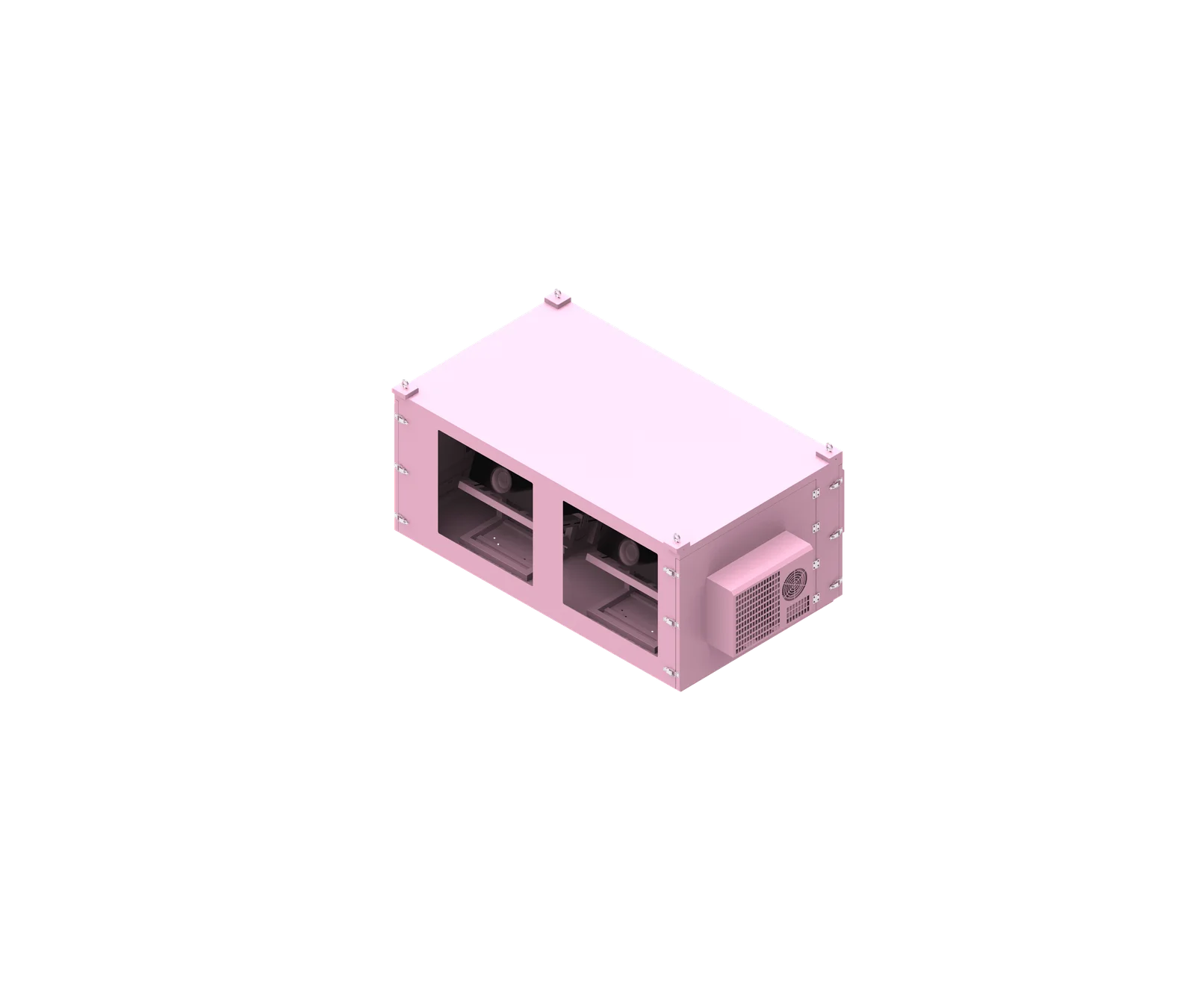
IP65 can keep rain out, but it cannot guarantee that condensation will not form inside the cabinet. Outdoor network cabinet condensation happens when humid air meets surfaces colder than its dew point. For a weatherproof network cabinet, the right prevention strategy combines moisture control, temperature control, air circulation, proper sealing, and project-specific engineering—not simply a higher IP rating.
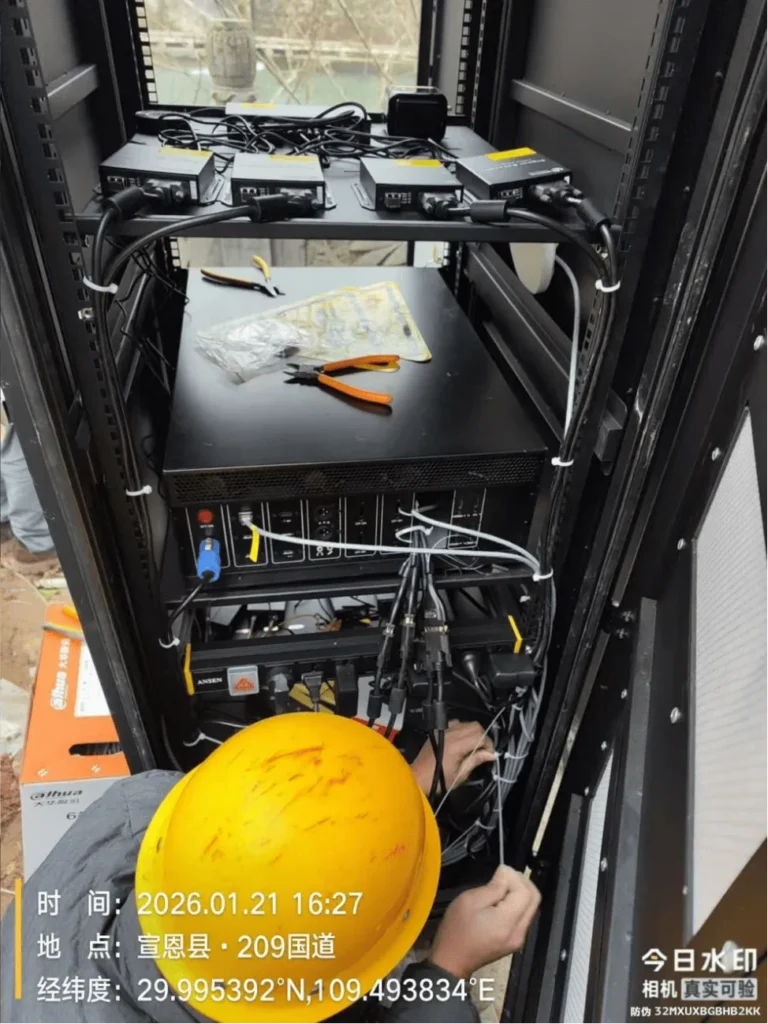
What is outdoor network cabinet condensation?
Outdoor network cabinet condensation is liquid moisture that forms inside the enclosure when humid internal air contacts cabinet walls, doors, cable glands, mounting plates, equipment surfaces, or cooling components below the dew point. It can occur even in a waterproof cabinet because sealing blocks rain, not the moisture already trapped inside.

Where Condensation Forms Inside the Cabinet
Warm air can hold moisture. When that air cools, or when it touches a colder surface, it may reach dew point and release water as droplets. In an outdoor telecom cabinet condensation can appear after a cold night, after rain, after maintenance, or after humid air is sealed inside during installation.
Common condensation locations include:
- Inner cabinet walls and roof panels
- Door seams, gaskets, and hinges
- Cable glands and conduit entry points
- Metal mounting plates and DIN rails
- Switches, routers, power supplies, and terminal blocks
- Fiber equipment, connectors, and optical modules
- Cold surfaces near air conditioners or heat exchangers
- Bottom panels or channels where moisture can collect
A high IP rating confirms resistance to specified dust and water ingress tests, but it does not certify dew-point control, humidity control, or internal temperature stability. This is why an anti condensation outdoor cabinet must be designed around actual climate, equipment heat load, cabinet construction, sealing quality, and operating schedule.
ShiRui Pro Tip: In our cabinet projects, I treat condensation as a thermal-humidity problem first and a sealing problem second. A sealed cabinet full of humid air can still sweat internally when the metal skin cools overnight.
How Does outdoor network cabinet condensation Work?
Condensation works through a simple chain: humid air enters or remains inside the cabinet, surfaces cool during environmental changes, and moisture appears when those surfaces fall below dew point. Day-night temperature swings, solar heating, shutdown periods, fan ventilation, and overcooling can all increase this risk.
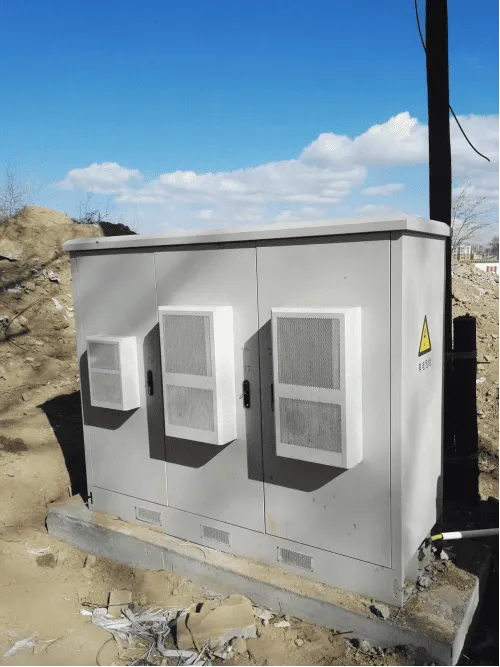
Dew Point, Temperature Change, and Moisture Movement
The core engineering logic is:
Humid Air + Cold Surface → Dew Point Reached → Condensation
During the day, solar heat gain and operating equipment may raise internal cabinet temperature. At night, the cabinet shell can cool rapidly, especially if it is metal and exposed to wind or clear-sky radiation. If the internal air remains humid, the cabinet wall, door, cable gland, or mounting plate may become cold enough for water droplets to form.
Condensation risk is affected by:
- Moisture entry through cable glands, conduits, access panels, vents, door openings, and installation work.
- Internal moisture retention when humid air is trapped inside a sealed cabinet.
- Cold surface formation caused by night cooling, air-conditioning, low ambient temperature, or metal thermal behavior.
- Equipment operation because active electronics may provide useful heat, while shutdown periods can allow rapid cooling.
- Airflow pattern because stagnant corners can remain cooler or more humid than the measured average cabinet air.
- Cooling method because fan cooling can exchange humid outdoor air, while air conditioning can create cold surfaces or condensate that must be drained correctly.
For a temperature controlled network cabinet, the objective is not to make the cabinet as warm or as cold as possible. The objective is to keep sensitive surfaces and internal air conditions away from condensation risk while still protecting the equipment’s required operating range.
ShiRui Pro Tip: When we review a condensation case, I always ask for both temperature and relative humidity data. Temperature alone does not reveal whether the cabinet is close to dew point.
What’s the best thing to stop condensation?
The best way to stop condensation is to control moisture, temperature, airflow, and sealing together. There is no universal heater size, humidity limit, or temperature set point. The correct solution depends on installation climate, equipment heat load, cabinet volume, material, cooling method, operating schedule, and required internal conditions.
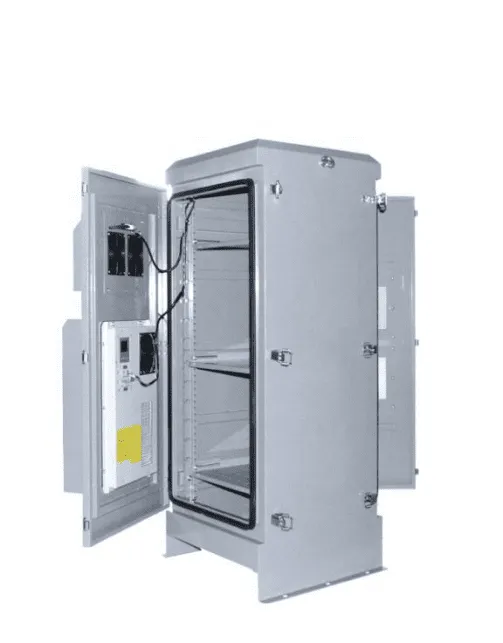
Practical Anti-Condensation Strategy
For most outdoor network cabinet condensation problems, the best prevention method is a combined design approach rather than a single device. A heater may help in cold and humid sites. Dehumidification may help in high-humidity sealed cabinets. Internal fans may reduce temperature stratification. Better cable sealing may stop humid air exchange. But none of these measures should be selected without considering the site conditions.
Based on our internal data and market analysis, here is the breakdown:
| Condensation Cause | Possible Solution |
|---|---|
| High internal humidity | Humidity control / dehumidification |
| Cold cabinet surfaces | Anti-condensation heating |
| Large day-night temperature change | Controlled heating/cooling |
| Humid air entering through gaps | Improve sealing |
| Moisture entering through cable paths | Improve cable-entry sealing |
| Poor internal circulation | Add controlled circulation |
| Overcooling by AC | Optimize temperature-control strategy |
| AC condensate problem | Proper drainage |
| Moisture trapped after maintenance | Dry or condition cabinet before closing |
A practical workflow is:
- Identify the project location and climate.
- Confirm maximum and minimum ambient temperatures.
- Review relative humidity and seasonal weather patterns.
- Calculate or evaluate equipment heat load.
- Select the cabinet sealing and cable-entry strategy.
- Choose heating, cooling, ventilation, or dehumidification as needed.
- Add internal circulation where local cold zones may occur.
- Place sensors where readings represent real cabinet conditions.
- Verify drainage if an air conditioner or condensate-producing device is used.
- Monitor field performance where condensation risk is critical.
ShiRui Pro Tip: I do not recommend buying an anti-condensation heater by guessing wattage. I first review cabinet size, surface area, climate, heat loss, humidity, and whether the equipment runs continuously or shuts down overnight.
How to keep a metal building from condensating?
The same principle applies to a metal building and a metal outdoor network cabinet: prevent humid air from contacting surfaces below dew point. Use insulation where appropriate, reduce rapid temperature swings, control ventilation, seal uncontrolled moisture entry, and manage humidity instead of assuming metal construction or waterproofing alone solves condensation.
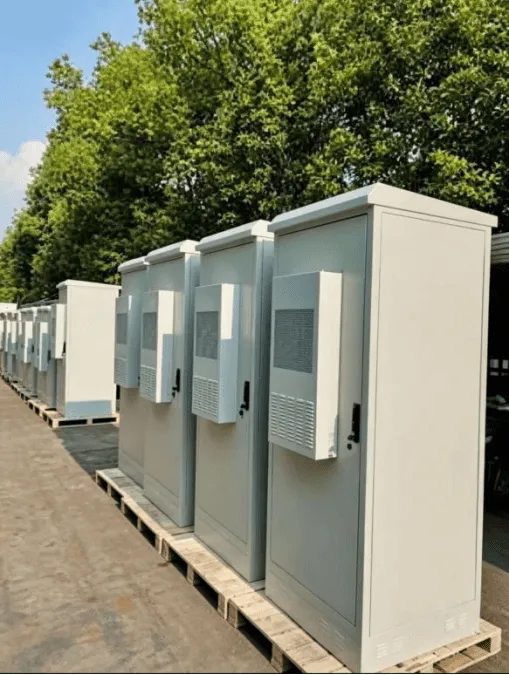
Applying Metal-Enclosure Lessons to Network Cabinets
Metal responds quickly to outdoor temperature changes. In a cabinet, this means the shell can become hot under direct sun and cold after sunset. That rapid swing can create internal condensation if humid air is present. Similar to metal buildings, surface temperature management matters as much as water ingress protection.
Useful design measures include:
- Insulation: May reduce rapid surface-temperature changes and limit cold-surface formation.
- Sun shields or double-skin structures: Can reduce solar heat gain and lower day-night thermal stress.
- Controlled internal circulation: Helps mix air and reduce stagnant cold or humid zones.
- Proper sealing: Reduces uncontrolled humid-air exchange through gaps, doors, panels, and cable entries.
- Humidity monitoring: Helps identify whether moisture is trapped inside the enclosure.
- Project-specific heating or cooling: Keeps internal conditions suitable without overcooling or overheating.
- Corrosion-resistant construction: Especially important in coastal areas where condensation and salt-laden air combine.
For coastal outdoor network cabinets, condensation control should be considered together with corrosion protection. Moisture on metal surfaces can accelerate degradation of terminals, mounting hardware, connectors, and exposed conductive parts.
ShiRui Pro Tip: For metal outdoor cabinets in coastal projects, I always review condensation and corrosion together. If moisture forms repeatedly, even good materials and coatings face a harder working environment.
What temperature causes condensation?
Condensation is not caused by one fixed temperature. It occurs when a surface temperature falls below the dew point of the surrounding air. Dew point changes with air temperature and relative humidity, so the same cabinet temperature may be safe in one climate and risky in another.
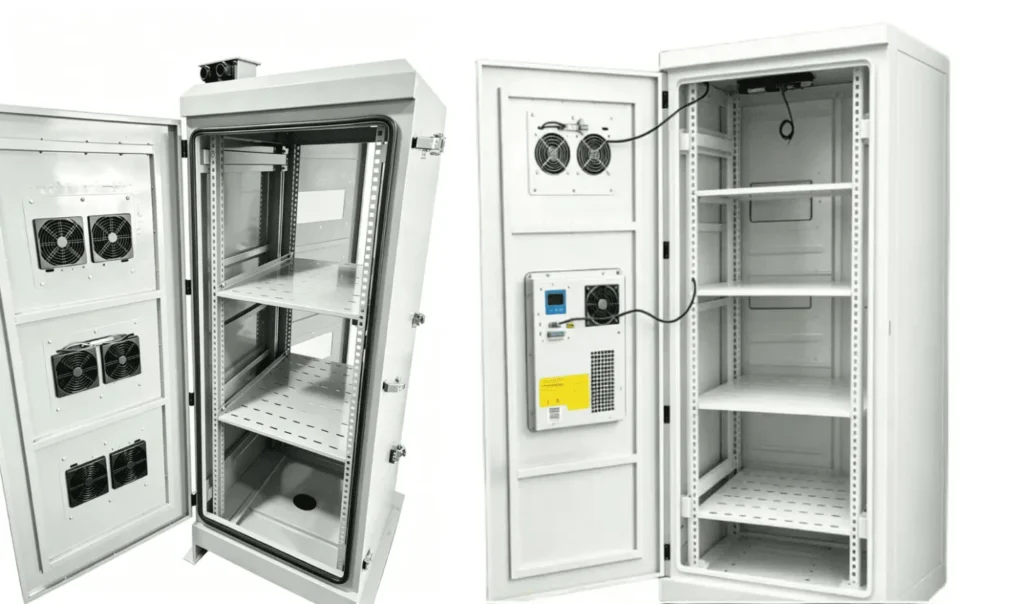
Understanding Dew Point Without Overcomplicating It
Dew point is the temperature at which air can no longer hold all of its moisture as vapor. When a cabinet surface falls below that condition, water can appear on the surface. This is why an outdoor cabinet may condense at night even if there is no rain.
Key points to understand:
- High relative humidity raises risk because the air is already closer to saturation.
- Cold surfaces trigger condensation even if the average cabinet air temperature looks acceptable.
- Rapid cooling is dangerous because the cabinet wall may cool faster than the internal air dries.
- Air conditioning can create risk if cold internal surfaces are exposed to humid air.
- Equipment heat can help temporarily by keeping surfaces warm during operation.
- Shutdown can increase risk because heat generation stops and cabinet surfaces cool.
- Sensor placement matters because one sensor near a fan, heater, or cooling outlet may not represent the whole cabinet.
For advanced designs, temperature and humidity measurements can be used to estimate dew point. The control objective may be to prevent critical cabinet surfaces from falling below relevant dew-point conditions. The required safety margin should be determined by project requirements, not by a universal rule.
ShiRui Pro Tip: I prefer monitoring both temperature and humidity in high-risk cabinets. If you only measure temperature, you may miss the exact moment when the cabinet is approaching dew point.
Key Features & Comparison
A reliable anti-condensation outdoor cabinet uses coordinated features: suitable sealing, controlled heating or cooling, humidity monitoring, internal circulation, cable-entry protection, drainage, and optional remote alarms. The best combination depends on the installation environment, not on a single feature such as IP rating, insulation, ventilation, or air conditioning.
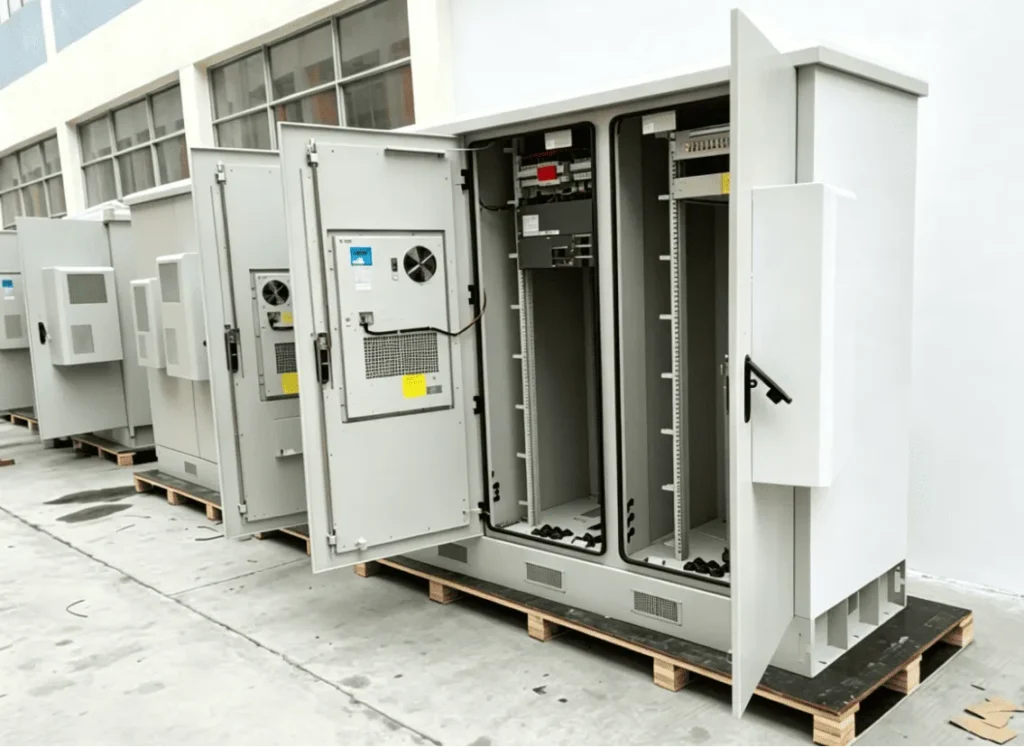
Anti-Condensation Feature Comparison
Based on our internal data and market analysis, here is the breakdown:
| Feature | Main Purpose | Strength | Limitation | Best-Fit Conditions |
|---|---|---|---|---|
| High IP-rated enclosure | Resist external dust and water ingress | Protects against specified external exposure | Does not guarantee humidity or dew-point control | Outdoor sites requiring weatherproof network cabinet protection |
| Door gasket and panel sealing | Reduce uncontrolled air and water entry | Limits moisture exchange | Can trap humid air if cabinet is sealed wet | Most outdoor telecom cabinet projects |
| Cable-entry sealing | Stop moisture paths through glands and conduits | Critical for real field performance | Poor installation can defeat cabinet rating | Sites with many cables or conduit routes |
| Anti-condensation heater | Keep surfaces above dew point in risk periods | Useful in cold/humid and shutdown conditions | Must be sized and controlled per project | Cold, humid, or large night-cooling environments |
| Hygrostat or humidity sensor | Detect internal moisture condition | Supports alarms or control actions | Placement must represent cabinet conditions | High-humidity or monitored cabinets |
| Temperature sensor | Support thermal control | Helps manage heating/cooling | Temperature alone is not enough | Temperature controlled network cabinet designs |
| Dew-point-based control | Coordinate temperature and humidity logic | More precise condensation prevention | Requires suitable sensor strategy and control design | Critical telecom, coastal, or high-value network sites |
| Internal circulation fan | Mix internal air and reduce local cold zones | Improves uniformity | Does not remove moisture by itself | Cabinets with stratification or dense equipment |
| Air conditioner | Control internal temperature | Protects equipment from overheating | Overcooling or drainage faults may increase risk | Hot climates or high heat-load cabinets |
| Dehumidification | Reduce internal moisture | Useful for consistently humid sealed systems | Capacity and method must match conditions | Hot/humid, tropical, or moisture-sensitive installations |
| Breather or pressure-balancing device | Reduce pressure cycling | Can limit stress on seals | Does not eliminate condensation alone | Thermally cycling enclosures with suitable IP design |
| Insulation or double-skin design | Reduce rapid surface temperature swings | Helps moderate solar and night-cooling effects | Not a replacement for humidity control | High solar exposure or large day-night variation |
| Remote monitoring | Track temperature, humidity, door, AC, heater, alarms | Supports maintenance and diagnostics | Not mandatory for every project | Unattended outdoor network cabinets |
The strongest designs combine several features around site reality. For example, a mild climate may only need strong sealing and internal circulation. A cold and humid climate may require controlled heating. A hot and humid climate may require cooling plus humidity management. A coastal installation may require condensation control and corrosion-resistant construction.
ShiRui Pro Tip: When ShiRui designs an outdoor cabinet, we do not treat the anti-condensation system as an accessory. We match sealing, cable entry, heating, cooling, sensors, and airflow to the real site conditions.
Cost & Buying Factors
The cost of preventing condensation depends on cabinet size, material, IP requirement, climate, equipment heat load, cooling method, sensors, heater or dehumidifier needs, monitoring functions, cable-entry complexity, and corrosion protection. Buyers should provide site and equipment data before expecting an accurate technical recommendation or price.
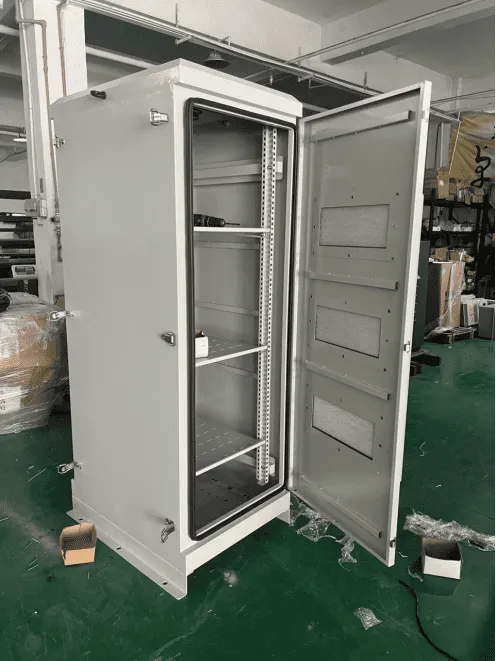
What Buyers Should Evaluate Before Purchasing
A low-cost cabinet may become expensive if it requires field modification after condensation appears. A better approach is to define environmental and operational requirements before selecting the cabinet structure and thermal-humidity control system.
Buyers should provide:
- Project location
- Maximum ambient temperature
- Minimum ambient temperature
- Relative humidity range
- Day-night temperature variation
- Coastal, tropical, desert, rainy, foggy, or high-humidity conditions
- Equipment list
- Equipment heat load
- Required internal temperature range
- Operating hours and shutdown periods
- Cooling method preference
- Required IP rating
- Installation method, including pole, wall, ground, or base mounting
- Cable quantity, diameter, and entry direction
- Battery type, if batteries are installed
- Monitoring requirements, such as temperature, humidity, door status, heater status, AC status, or water-leak alarm
- Maintenance access requirements
Typical cost-driving options include:
- Cabinet construction: material, wall thickness, insulation, sun shield, double roof, coating, and corrosion resistance.
- Environmental sealing: gaskets, locks, access panels, gland plates, cable glands, and conduit interfaces.
- Thermal control: fans, heat exchangers, air conditioners, heaters, or hybrid systems.
- Humidity control: sensors, hygrostats, dehumidifiers, desiccant provisions, and control logic.
- Monitoring: local display, alarms, remote communication, and data logging.
- Drainage design: AC condensate routing, blockage access, and water accumulation prevention.
- Pre-shipment inspection: functional checks for specified components, including heater, temperature controller, humidity sensor, internal fan, air conditioner, drainage, cable sealing, and door gaskets where applicable.
Desiccants may be useful for small, sealed, or temporary applications, but they have limited moisture capacity and require inspection or replacement. They should not be treated as the default long-term solution for active outdoor network cabinets.
ShiRui Pro Tip: Before quoting a condensation-control cabinet, I ask for climate data and the equipment heat load. Without that information, any recommendation for heater size, cooling capacity, or humidity control is only a guess.
Conclusion
To prevent condensation in outdoor network cabinet installations, do not rely only on a high IP rating. Control the relationship between humidity, temperature, and dew point using proper sealing, cable-entry design, air circulation, heating, cooling, dehumidification, monitoring, and drainage according to the actual project environment.
Final Engineering Recommendation
A waterproof outdoor network cabinet can still develop internal moisture. The right logic is:
Moisture Control + Temperature Control + Air Circulation + Proper Sealing
Not:
Higher IP Rating = No Condensation
For dependable outdoor network cabinet humidity control, evaluate the cabinet as a complete environmental system. Consider climate, solar exposure, night cooling, coastal corrosion risk, equipment heat, shutdown behavior, air-conditioning operation, cable paths, maintenance procedures, and sensor placement.
A practical ShiRui engineering workflow is:
- Confirm project climate and exposure.
- Review equipment heat load and operating schedule.
- Define required internal conditions.
- Evaluate dew-point and condensation risk.
- Select cabinet sealing and cable-entry design.
- Choose heating, cooling, ventilation, or dehumidification.
- Add internal circulation if needed.
- Plan drainage for AC condensate where applicable.
- Select temperature and humidity sensors.
- Verify operation before shipment and monitor field performance when required.
ShiRui can support project-specific weatherproof network cabinet design for telecom, network, power, and industrial applications where condensation prevention must be engineered rather than assumed.
ShiRui Pro Tip: My final advice is simple: give your cabinet supplier real site data before production. The best anti-condensation design is not the most complicated one—it is the one matched to your climate, equipment, and operating conditions.