Protecting a projector in hot and humid climates requires more than keeping rain away. Heat, moisture, condensation, corrosion, dust, insects, and rapid day-to-night temperature changes can all affect reliability. A properly engineered outdoor projector enclosure should combine weather sealing, airflow control, cooling, humidity monitoring, anti-condensation design, sealed cable entry, and project-specific thermal evaluation.
Video Guide: Explore our outdoor enclosure for projector applications designed for professional projection projects. This video gives a closer look at the enclosure design and shows how it supports reliable projector protection for long-term outdoor installations.
What is outdoor projector enclosure?
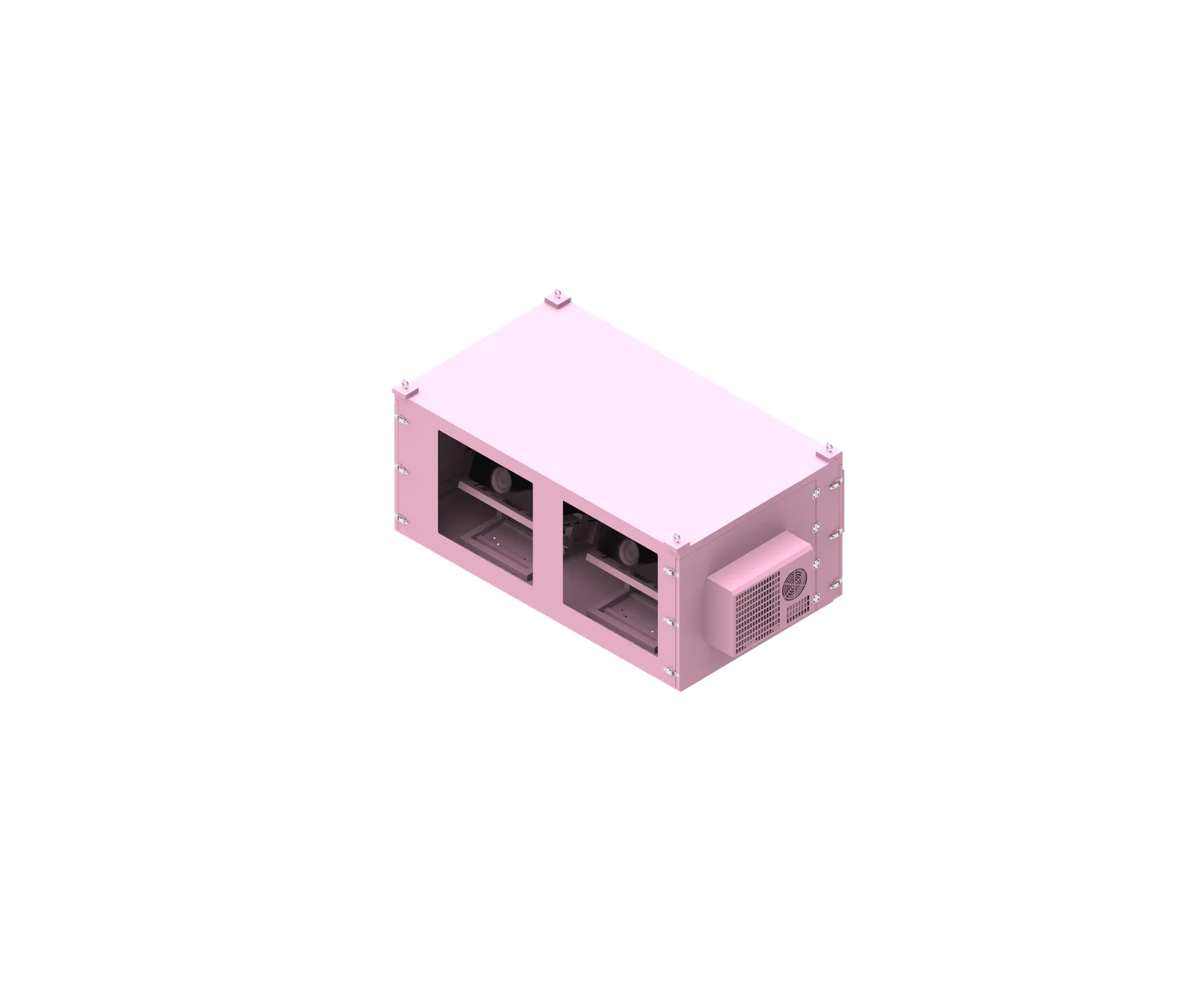
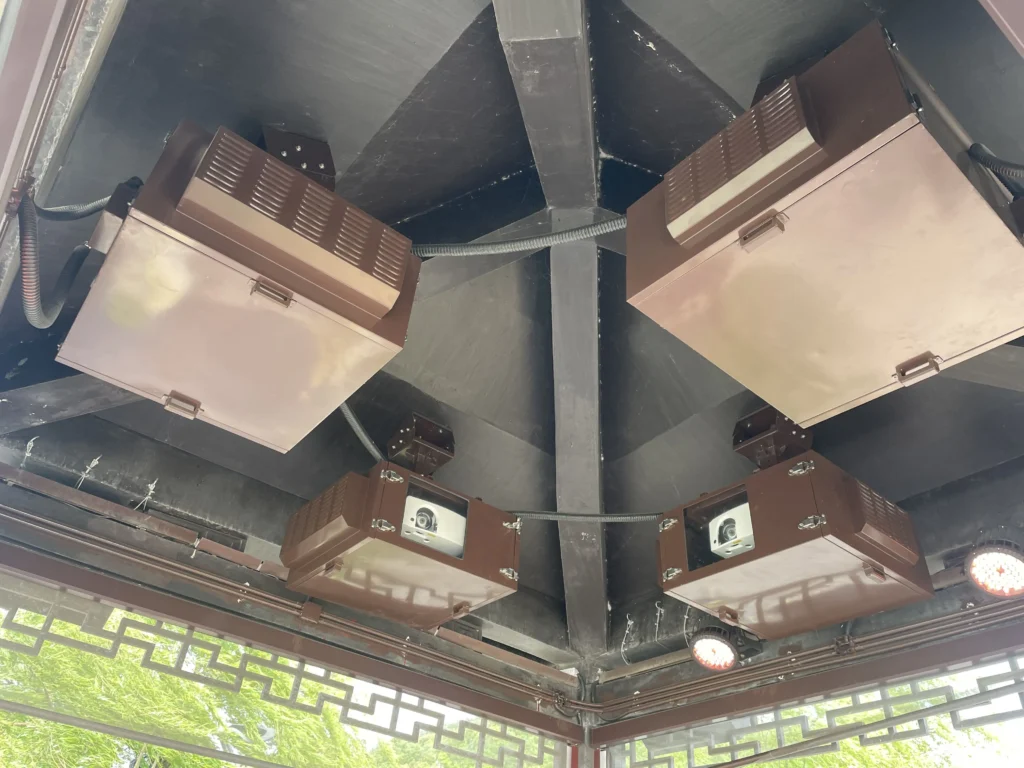
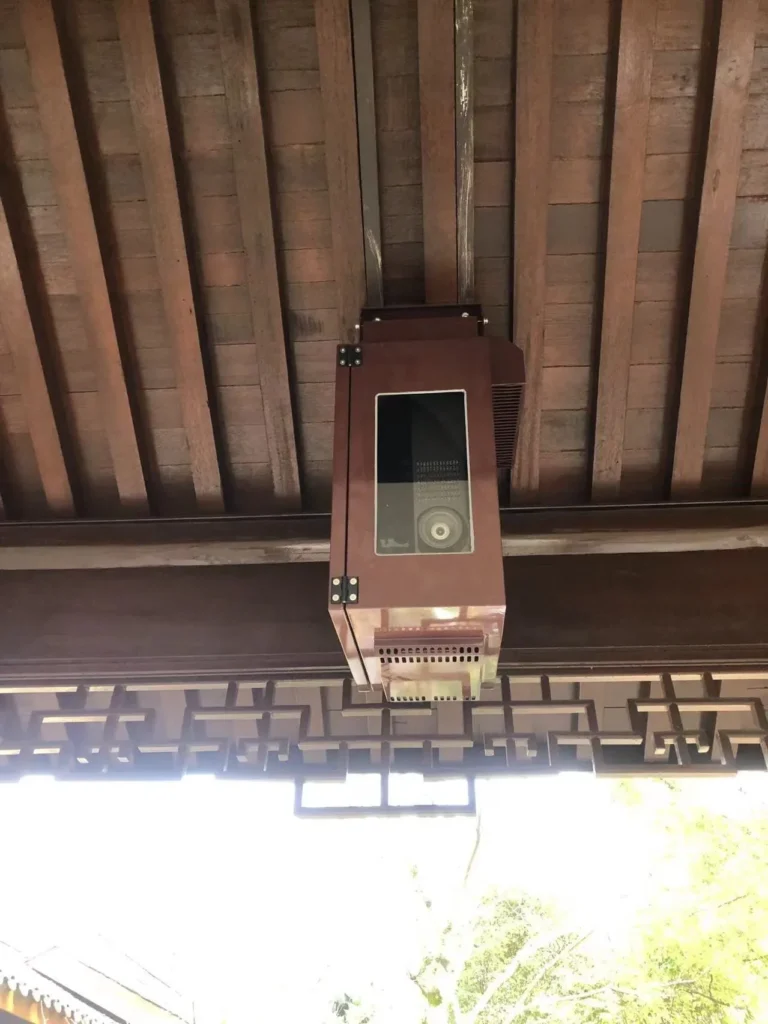
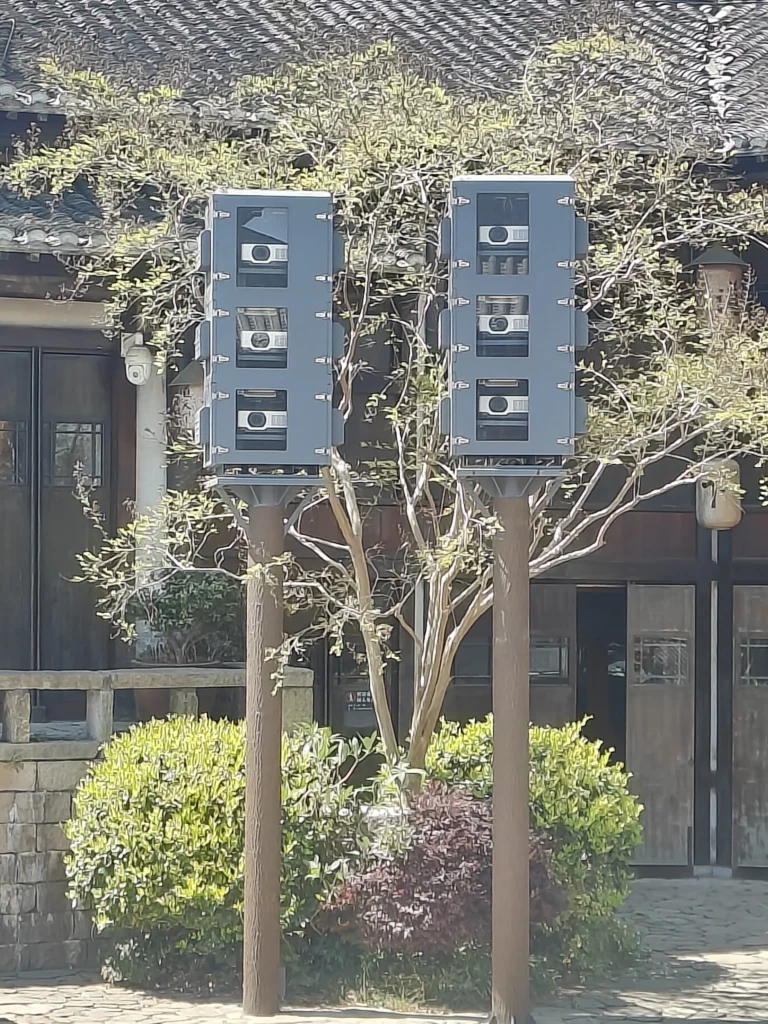
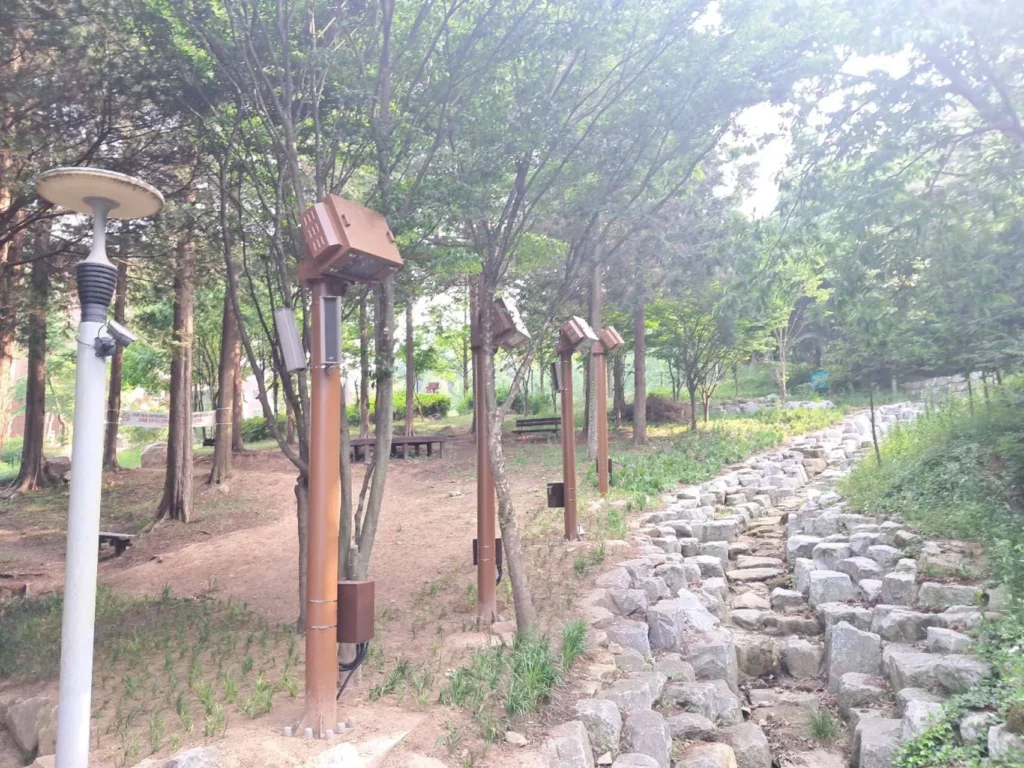
An outdoor projector enclosure is a protective housing designed to shield a projector from rain, dust, insects, heat, humidity, and physical exposure while still allowing safe projection, ventilation, wiring, and maintenance. In hot and humid climates, it must manage both environmental sealing and internal temperature control.
Video Guide: Watch the smoke test of our outdoor enclosure for projector applications and get a closer look at the enclosure structure and testing process. This video helps AV integrators and project contractors better understand the design used for professional outdoor projection installations.
Core Purpose and Main Components
An outdoor projector enclosure is not just a box around the projector. It is an engineered protection system that must maintain a safer operating environment around the projector while preserving image quality and service access.
A well-designed enclosure typically includes:
- Weather-sealed sheet metal construction
- A sealed optical projection window
- Controlled ventilation or active cooling
- Internal airflow paths that match projector intake and exhaust positions
- Temperature monitoring
- Humidity monitoring
- Cable-entry sealing
- Door gaskets and service access panels
- Optional heating or dehumidification for condensation control
- Corrosion-resistant material or surface treatment when needed
ShiRui evaluates the enclosure design according to projector heat load and site conditions, not projector lumens alone. The projector brand, model, dimensions, power consumption, intake/exhaust layout, maximum ambient temperature, humidity level, operating hours, and installation environment all affect the final enclosure configuration.
ShiRui Pro Tip: I always recommend sharing the projector specification sheet before selecting an enclosure. Two projectors with similar brightness can have very different power consumption, airflow direction, and heat output, which means they may need different cooling solutions.
How Does outdoor projector enclosure Work?
An outdoor projector enclosure works by creating a controlled barrier between the projector and the outdoor environment. It blocks rain, dust, insects, and accidental contact while using airflow, cooling, heating, dehumidification, and sensors to manage heat and moisture inside the housing.
Video Guide: Explore our outdoor waterproof projector enclosure designed for professional outdoor projection applications. This video gives a closer look at the enclosure design and shows how it helps protect projector equipment for reliable, long-term outdoor installations.
Protection Is a Combination of Sealing and Climate Control
In hot and humid climates, enclosure performance depends on balancing protection and heat removal. If the enclosure is sealed too tightly without cooling, projector heat can build up. If it uses too much outside air, humidity, dust, insects, or salt-laden air may enter.
A typical working sequence looks like this:
- The enclosure shell blocks rain, splashing water, dust, insects, and accidental impact.
- The optical window allows the image to pass through while reducing exposure at the projector lens.
- Cable entries are sealed to reduce moisture paths.
- Internal airflow keeps projector intake and exhaust areas clear.
- Sensors monitor temperature and humidity.
- Fans, air conditioning, heating, or dehumidification operate according to the control design.
- Maintenance access allows filter cleaning, inspection, and projector service.
For example, some ShiRui configurations may use control thresholds such as cooling near 35°C or heating near 5°C, but these are only project examples. Final temperature and humidity thresholds must be set according to the projector and installation site.
ShiRui Pro Tip: I do not treat IP rating as the whole answer. A sealed enclosure may resist rain well, but if it cannot remove heat or manage dew point, the projector can still fail in real outdoor operation.
How can I protect my projector from heat and rain?
To protect a projector from heat and rain, use a weather-sealed outdoor projector enclosure with a sealed optical window, gasketed doors, proper cable-entry sealing, and a cooling method matched to projector heat load, ambient temperature, humidity, operating hours, and airflow requirements.
Video Guide: Explore our outdoor enclosure for projector designed for professional outdoor projection projects. This video provides a closer look at the enclosure structure and shows how it supports reliable projector protection for long-term outdoor installations.
Practical Protection Steps for Heat, Rain, and Moisture
The best approach is to design the enclosure around the actual projector and the site environment. Rain protection alone is not enough if the projector overheats, fogs, or suffers corrosion.
Follow this project checklist:
- Confirm the projector brand and model.
- Review the projector specification sheet.
- Confirm power consumption and expected heat output.
- Measure projector dimensions and lens position.
- Identify air intake and exhaust locations.
- Evaluate maximum ambient temperature and relative humidity.
- Check minimum ambient temperature and day-to-night temperature changes.
- Review rain direction, dust level, insects, and salt-air exposure.
- Select fan cooling, air conditioning, hybrid cooling, or sealed internal circulation.
- Plan heating or dehumidification if condensation risk exists.
- Seal doors, cable entries, and the optical window.
- Reserve enough internal airflow and maintenance space.
- Configure temperature and humidity monitoring.
- Confirm the design through a project-specific drawing.
Common mistakes include blocking projector vents, choosing by IP rating only, ignoring power consumption, leaving cable entries unsealed, and using outside-air ventilation in extremely humid or polluted environments.
ShiRui Pro Tip: I always check the projector’s exhaust direction before confirming the enclosure layout. If hot exhaust air recirculates back into the intake, even a strong cooling system may perform poorly.
How to protect electronics from high humidity?
To protect electronics from high humidity, reduce moisture entry, monitor internal humidity, control condensation risk, use appropriate materials, and apply heating, dehumidification, or controlled internal airflow when required. A sealed box alone does not guarantee protection against dew point or internal moisture.
Video Guide: Discover a waterproof projector enclosure solution for outdoor projection projects. See the enclosure design and learn how it provides a practical housing solution for projector equipment used in permanent outdoor installations.
Humidity Control Requires More Than Waterproofing
High humidity affects projectors and other electronics in several ways. Moisture can enter through doors, cable entries, filter openings, or trapped air during assembly. Once inside, it can cause lens fogging, corrosion, unstable operation, or condensation on cold surfaces.
Based on our internal data and market analysis, here is the breakdown:
| Humidity Risk | What Can Happen | Practical Protection Method |
|---|---|---|
| Internal condensation | Moisture forms on glass, metal, or electronics | Use humidity sensing, heating, dehumidification, and dew-point-aware control |
| Lens or window fogging | Image becomes blurred or dim | Use sealed optical window, airflow management, and anti-condensation planning |
| Cable-entry moisture | Water vapor or rain enters through wiring holes | Use sealed glands, gaskets, and correct routing |
| Corrosion | Metal parts degrade over time | Select suitable material and surface treatment |
| Dust and insect contamination | Airflow paths and filters become blocked | Use filtered intake where suitable and maintain regularly |
| Nighttime temperature drop | Surfaces cool and moisture condenses | Use heating or dehumidification during shutdown or cold start conditions |
Available enclosure materials may include galvanized steel, aluminum alloy, 201 stainless steel, and 304 stainless steel. For humid, coastal, or corrosive environments, material and surface treatment should be selected according to site exposure. 304 stainless steel may be appropriate for some corrosive sites, but it is not automatically mandatory for every humid project.
ShiRui Pro Tip: I look closely at nighttime conditions, not only daytime heat. Many condensation problems appear after shutdown, when the projector cools and humid air reaches surfaces below the dew point.
How to use a projector outside in the sun?
Using a projector outside in the sun requires shade, appropriate screen selection, controlled projector temperature, and a properly ventilated or air-conditioned outdoor projector enclosure. Direct sunlight increases enclosure temperature and may reduce image visibility, so both thermal protection and viewing conditions must be planned.
Video Guide: Explore our outdoor projector enclosure designed for professional outdoor projection projects. This video provides a closer look at the enclosure design and shows how it supports reliable projector protection for long-term outdoor installations.
Daytime Projection Requires Thermal and Optical Planning
Outdoor use in sunlight creates two separate challenges: keeping the projector safe and making the image visible. A bright environment can wash out projected images, while direct sun exposure can raise the temperature inside the enclosure.
For better results:
- Avoid direct sunlight on the projector enclosure whenever possible.
- Use shading, roof cover, or a protected mounting position.
- Select a screen surface suitable for the lighting conditions.
- Confirm whether projection is intended for daytime, dusk, or nighttime viewing.
- Match the cooling method to projector power consumption and ambient temperature.
- Keep projector intake and exhaust paths unobstructed.
- Use temperature sensors to monitor enclosure conditions.
- Plan maintenance access for filters, fans, and cooling components.
Do not select cooling based only on lumens. A high-lumen projector often has higher heat output, but power consumption, optical design, and airflow layout provide a more accurate basis for enclosure design.
ShiRui Pro Tip: I prefer to reduce solar load before increasing cooling capacity. Shade, mounting angle, and enclosure color can make the climate-control system’s job much easier.
Why Waterproofing Alone Is Not Enough in Hot and Humid Climates
IP-rated sealing helps reduce rain and dust ingress, but it does not automatically remove projector heat, control humidity, or prevent condensation. In hot and humid climates, waterproofing must be combined with thermal management, airflow control, humidity sensing, and anti-condensation strategy.
Video Guide: Take a closer look at our waterproof projector enclosure for permanent outdoor projection projects. See the enclosure structure and learn how it provides a dependable housing solution for professional projector installations.
IP Rating Solves Only Part of the Problem
A high IP rating can be valuable, but it should not be confused with complete climate control. A projector generates heat while operating, and that heat must go somewhere. At the same time, humid air can create fogging or condensation if the internal surfaces cool below the dew point.
Important limitations of waterproofing alone include:
- It does not remove projector heat.
- It does not automatically reduce internal humidity.
- It does not prevent condensation by itself.
- It does not guarantee safe airflow around projector intake and exhaust vents.
- It does not protect against corrosion unless material and surface treatment are suitable.
- It does not eliminate maintenance needs for filters, seals, or cooling parts.
- It does not account for coastal salt air, dust, insects, or rapid temperature changes.
For this reason, ShiRui treats hot and humid outdoor projection as a combined waterproofing, thermal, humidity, and maintenance-access challenge.
ShiRui Pro Tip: When reviewing a project, I ask for both weather exposure and operating schedule. A projector running several hours every night in humid air needs a different protection strategy than one used occasionally under a covered structure.
Why Condensation Can Occur Even in an Air-Conditioned Enclosure
Condensation can occur when humid air contacts a surface colder than the dew point. Even inside an air-conditioned enclosure, moisture may collect on optical glass, metal surfaces, or equipment if cooling, airflow, humidity, and shutdown conditions are not controlled together.
Dew Point Risk in Practical Terms
Condensation is not only a rain problem. It happens when moisture already present in the air changes into liquid water on a cooler surface. In an enclosure, that surface could be the projection window, lens area, internal metal panel, or electronic component.
A practical sequence may look like this:
- Humid air exists inside or enters the enclosure.
- The air conditioner cools the enclosure or one internal surface.
- A glass or metal surface becomes colder than the dew point.
- Moisture condenses on that surface.
- Fogging, droplets, corrosion, or unstable operation may occur.
This is why cooling and dehumidification are different tasks. Cooling too aggressively may create cold surfaces. In high humidity, nighttime drops, projector shutdown, cold starts, water-screen projects, or coastal installations, heating, dehumidification, or controlled internal airflow may be needed.
ShiRui Pro Tip: I avoid setting cooling targets without checking humidity behavior. A colder enclosure is not always safer; the goal is stable equipment conditions, not simply the lowest possible temperature.
How to Choose the Right Cooling Method for Hot and Humid Sites
The right cooling method depends on projector power consumption, heat output, enclosure size, ambient temperature, relative humidity, operating duration, air quality, salt exposure, and maintenance access. Fan cooling, air conditioning, hybrid systems, and sealed internal circulation each fit different site conditions.
Cooling Method Selection Matrix
Fan cooling uses controlled outside-air exchange to remove internal heat. It may be suitable when heat load is moderate, ambient temperature allows effective ventilation, outside air is relatively clean, humidity is manageable, and filter maintenance is acceptable. However, fan cooling alone may be insufficient in very hot or humid conditions because it can bring more heat and moisture into the enclosure.
Air-conditioned enclosures may be considered when ambient temperature is high, projector heat output is high, operating hours are long, or stable internal temperature is required. The air conditioner must be matched to projector power consumption, enclosure size, heat load, ambient temperature, and operating duration.
Fully sealed internal-circulation air-conditioned enclosures minimize continuous outside-air exchange and may be more suitable for hot and humid coastal environments, salt-air sites, scenic areas, subway or underground projects, dusty locations, polluted outdoor environments, or sites where outside-air intake is undesirable.
Based on our internal data and market analysis, here is the breakdown:
| Cooling Method | Outside-Air Exchange | Suitable Environment | Humidity Consideration | Main Advantage | Main Limitation | Maintenance Requirement |
|---|---|---|---|---|---|---|
| Fan Cooling | Higher | Moderate heat load, cleaner air, manageable humidity | Can bring humid air into enclosure | Simple and effective when ambient air is suitable | Limited in very hot or humid sites | Filter and fan inspection |
| Air Conditioning | Lower to moderate, depending on design | High ambient temperature, high heat output, long operation | Must avoid overcooling and condensation | More stable temperature control | Requires correct sizing and control | Cooling unit service and drainage review |
| Fan + Air Conditioner Hybrid | Controlled combination | Sites with variable heat and weather conditions | Requires coordinated control strategy | Flexible operating modes | More complex design | Fan, filter, and AC maintenance |
| Fully Sealed Internal Circulation | Minimal continuous exchange | Coastal, dusty, polluted, underground, high-humidity sites | Still needs dew-point and humidity management | Reduces direct exposure to humid or contaminated outside air | Higher design complexity | Sensor, seal, AC, and humidity-control inspection |
ShiRui Pro Tip: I choose the cooling method after reviewing site air quality. If the outside air is hot, salty, dusty, or extremely humid, pulling that air through the enclosure may create more problems than it solves.
Key Features & Comparison
A reliable outdoor projector enclosure for hot and humid climates should combine weather-sealed construction, thermal control, humidity monitoring, anti-condensation measures, sealed optical projection, protected cable entry, corrosion-aware material selection, internal airflow planning, and maintainable access for service.
Feature Comparison for Climate-Resistant Enclosures
Based on our internal data and market analysis, here is the breakdown:
| Feature | Basic Weather Box | Fan-Cooled Enclosure | Air-Conditioned Enclosure | Fully Sealed Internal-Circulation Enclosure |
|---|---|---|---|---|
| Rain protection | Basic, depends on build quality | Strong with proper seals | Strong with proper seals | Strong with proper seals |
| Heat removal | Limited | Good when ambient air is suitable | Better for high heat loads | Better for harsh air-quality environments |
| Humidity management | Limited | Limited to moderate | Requires proper control | Stronger potential with correct humidity strategy |
| Condensation control | Usually weak | Requires added design | Requires dew-point-aware operation | Requires sensors, airflow, heating, or dehumidification |
| Dust and insect control | Depends on sealing | Filtered airflow may help | Lower intake may reduce exposure | Minimal outside exchange helps reduce ingress |
| Coastal suitability | Material-dependent | Risk if salt air is drawn in | Better if air exchange is limited | Often more suitable when designed correctly |
| Maintenance access | Often limited | Filter and fan access needed | AC and sensor access needed | Seal, AC, sensor, and humidity-control access needed |
| Best use case | Temporary or low-risk use | Moderate climate and heat load | Hot sites with higher projector heat | Humid, dusty, polluted, or salt-air sites |
Material options may include galvanized steel, aluminum alloy, 201 stainless steel, and 304 stainless steel. The right choice depends on corrosion risk, budget, installation location, structural needs, and surface treatment. For humid or coastal sites, material selection should be discussed during project evaluation rather than assumed from one rule.
ShiRui Pro Tip: I recommend comparing enclosure designs by airflow path and control logic, not just shell thickness. A strong metal box can still perform poorly if it traps heat or allows condensation at the optical window.
Cost & Buying Factors
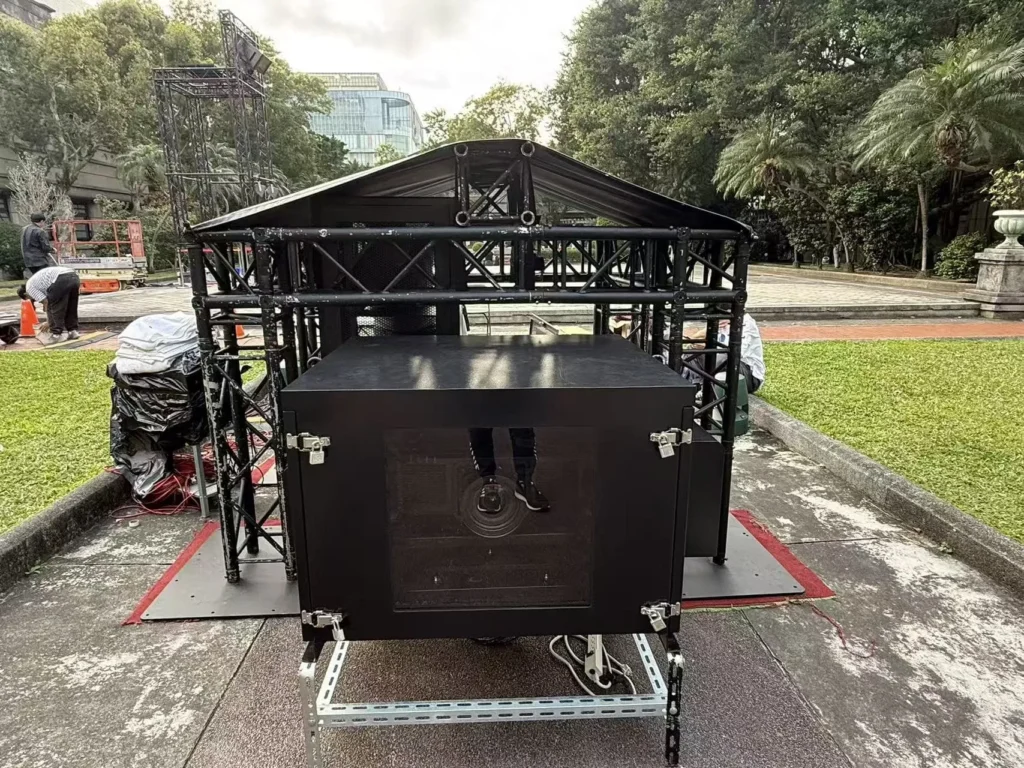
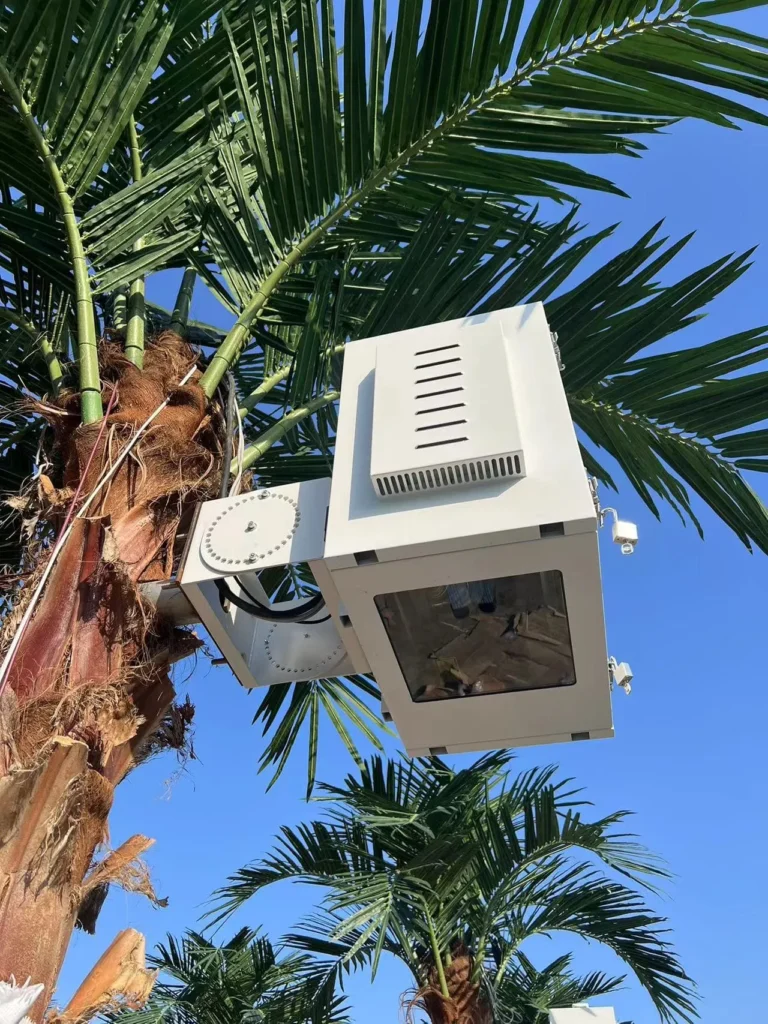
The cost of an outdoor projector enclosure depends on projector size, power consumption, heat output, cooling method, material, weather exposure, humidity-control requirements, cable-entry design, quantity, installation method, and maintenance access. A project-specific evaluation is more reliable than a fixed price estimate.
What Affects the Final Enclosure Configuration
Pricing and specification should be based on the projector and the environment. In hot and humid climates, a low-cost enclosure without thermal or humidity control may cost more later through projector downtime, optical fogging, corrosion, or repeated maintenance.
Key buying factors include:
- Projector brand and model
- Projector specification sheet
- Power consumption
- Projector dimensions
- Number of projectors
- Air intake and exhaust positions
- Maximum ambient temperature
- Minimum ambient temperature
- Relative humidity
- Daily operating hours
- Rain and dust conditions
- Coastal or salt-air exposure
- Installation method
- Site photos
- Installation drawings
- Maintenance access conditions
Avoid these purchasing mistakes:
- Choosing an enclosure only by IP rating
- Choosing cooling only by projector lumens
- Ignoring projector power consumption
- Using outside-air ventilation in very humid or polluted environments
- Ignoring nighttime condensation
- Cooling without considering dew point
- Blocking intake or exhaust vents
- Leaving insufficient internal airflow space
- Ignoring cable-entry sealing
- Using unsuitable materials in coastal environments
- Assuming a sealed box needs no humidity control
ShiRui Pro Tip: I ask customers for power consumption and operating hours early because those two details often change the cooling recommendation more than the projector brightness does.
Conclusion
Protecting a projector in hot and humid climates requires a complete enclosure strategy: weather sealing, heat removal, humidity monitoring, condensation prevention, corrosion-aware material selection, sealed cable entry, and maintainable access. The final enclosure and climate-control configuration should be confirmed through project-specific thermal and environmental evaluation.
Final Recommendation for Project Planning
A reliable outdoor projector enclosure should be selected according to the projector heat load and site conditions, not lumens alone. IP-rated sealing is useful for reducing rain and dust ingress, but it does not automatically solve overheating, humidity, condensation, or corrosion.
For hot and humid projects, confirm these details before final design:
- Projector model and specification sheet
- Power consumption and heat output
- Projector dimensions and airflow direction
- Daily operating hours
- Maximum and minimum ambient temperature
- Relative humidity
- Rain, dust, insect, and salt-air exposure
- Installation method and maintenance space
- Required quantity
- Site photos and drawings
ShiRui can evaluate whether fan cooling, air conditioning, hybrid cooling, fully sealed internal circulation, heating, dehumidification, or other control logic is more suitable for the project.
ShiRui Pro Tip: Send us your projector model, power consumption, operating hours, maximum temperature, humidity conditions, and site information. We can help review the climate-control requirements and recommend a project-specific outdoor projector enclosure configuration.