Wind load on a pole mounted projector enclosure is not determined by weight alone. The projected wind area, mounting height, enclosure orientation, bracket offset, pole strength, anchors, and foundation all interact as one structural system. For outdoor projection projects, ShiRui recommends evaluating the complete installed assembly before fabrication, especially for elevated, coastal, rooftop, open-field, or multi-projector installations.
What is pole mounted projector enclosure?
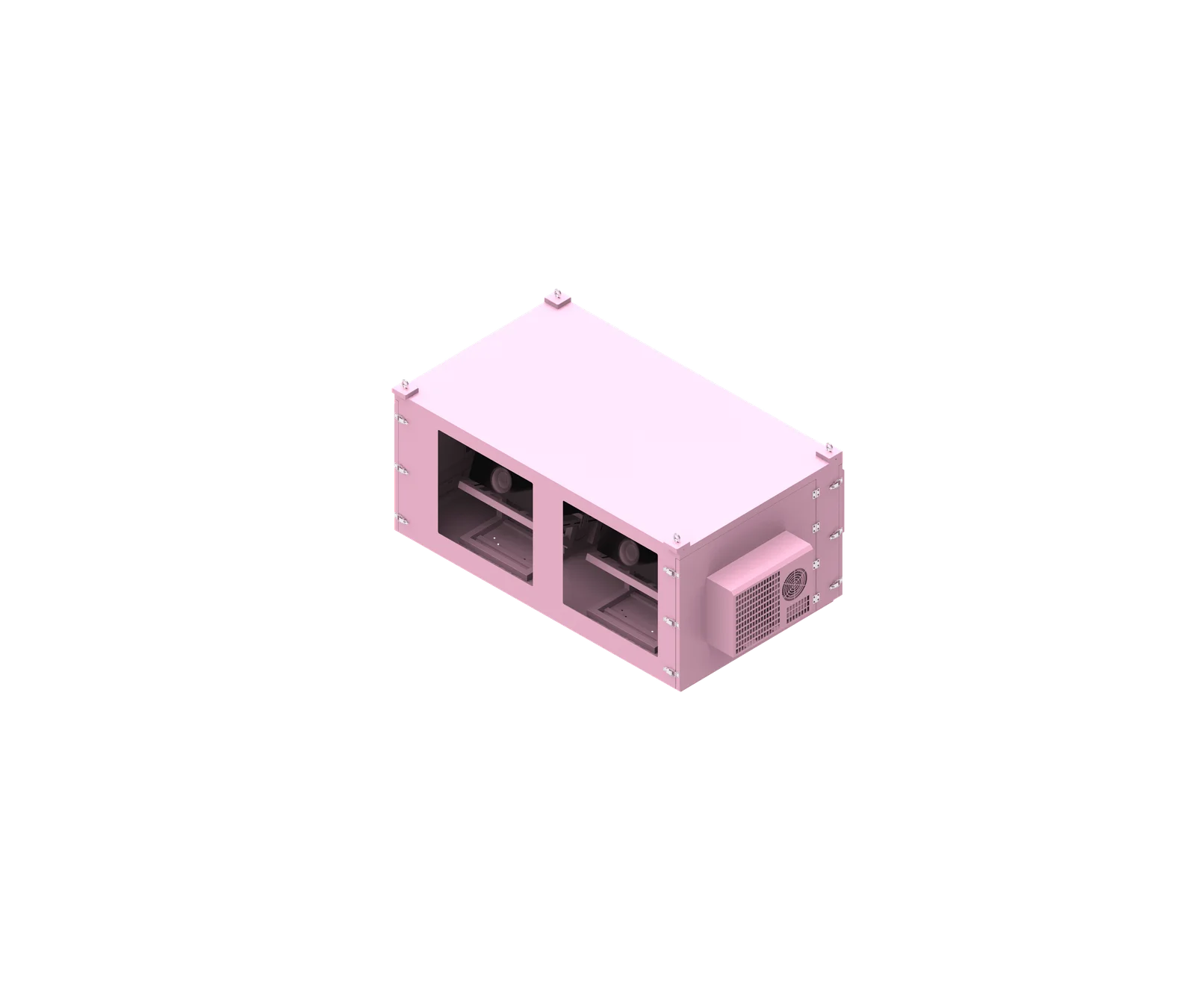
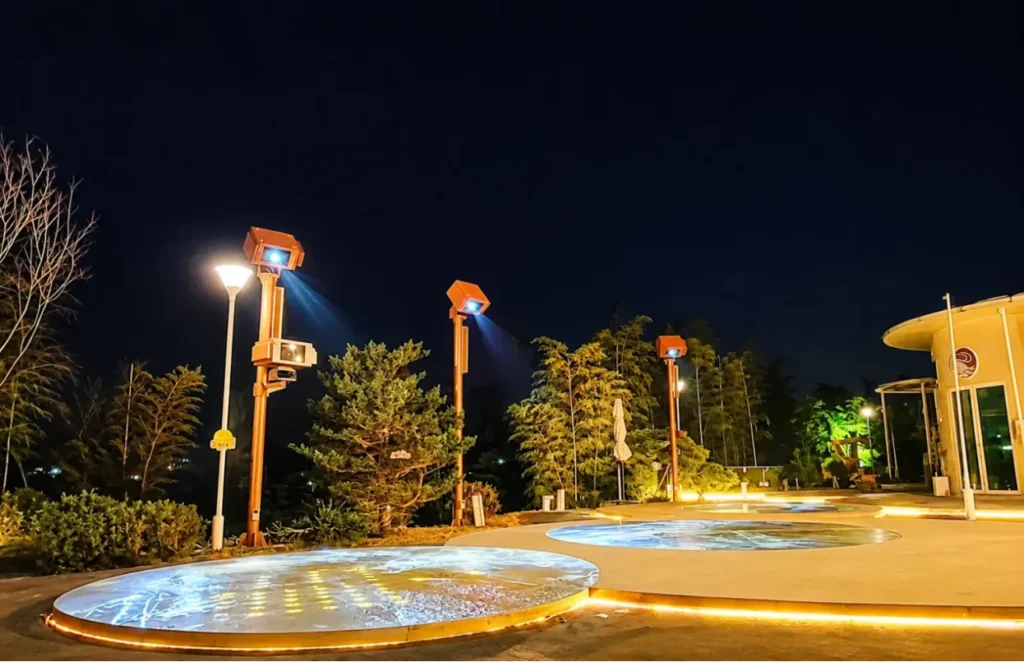
A pole mounted projector enclosure is an outdoor protective cabinet installed on a pole or support structure to house a projector, cooling system, power components, optical window, and mounting hardware. Its structural performance depends not only on the enclosure shell, but also on how wind loads travel through the bracket, pole, anchors, and foundation.
System-Level Definition
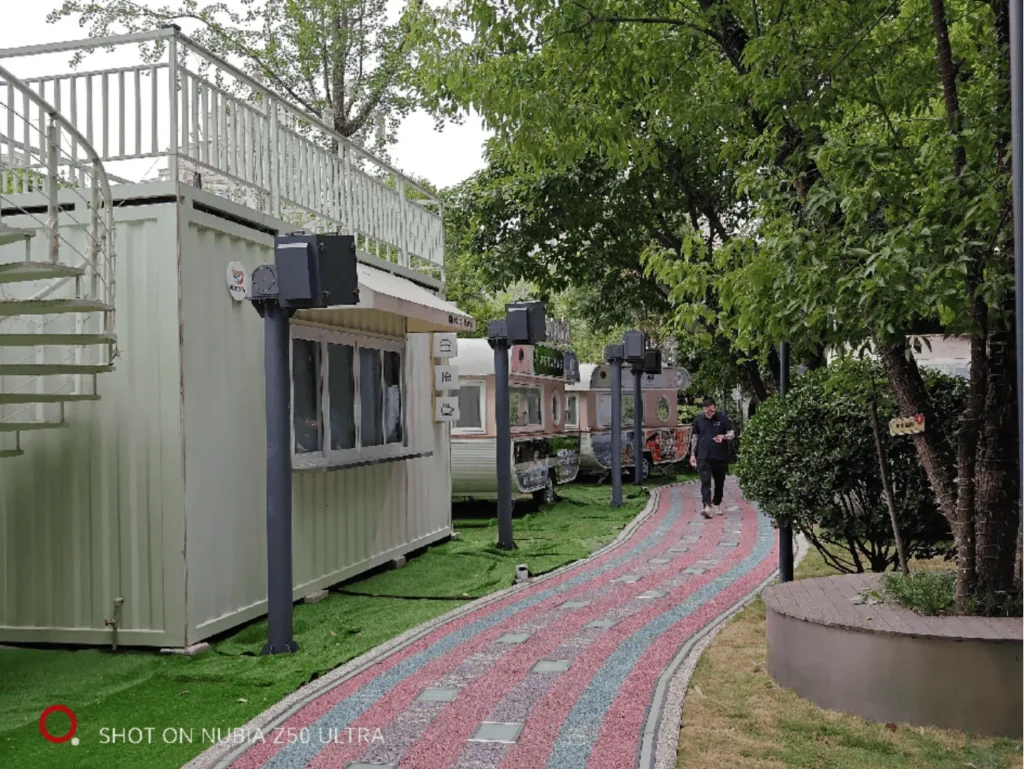
A pole mounted projector enclosure is designed to protect projection equipment from outdoor conditions while allowing accurate image projection. In wind-load design, the enclosure cannot be treated as an isolated box. It becomes part of a structural load path that must transfer gravity load, wind force, bending moment, and possible torsion into the supporting structure.
The complete load path typically includes:
- Enclosure body
- Projector and internal components
- Air conditioner, fans, heater, or cooling modules
- Optical window and access doors
- Enclosure-to-bracket interface
- Mounting bracket
- Pole or support frame
- Base plate and anchor system
- Foundation or building structure
Wind load is determined by more than enclosure weight—the projected area, mounting height, and complete support structure all matter. A compact but heavy enclosure may impose less wind demand than a lighter but larger enclosure installed high above ground.
ShiRui Pro Tip: When we review a pole-mounted outdoor projector enclosure concept, I first ask for the installation height, enclosure orientation, pole details, and cooling layout—not only the projector weight. These details often control the structural coordination.
How Does pole mounted projector enclosure Work?
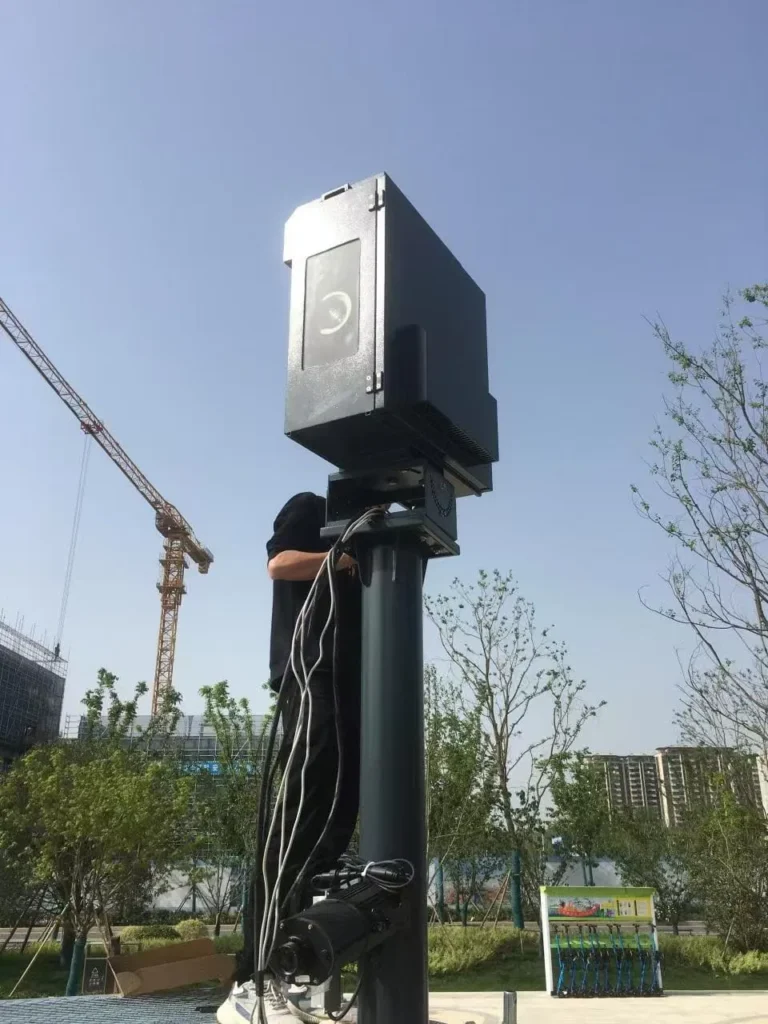
A pole mounted projector enclosure works by protecting the projector while transferring equipment weight and environmental loads into the pole structure. Under wind, the enclosure creates horizontal force and bending demand, especially when mounted high or offset from the pole centerline. The bracket, pole, anchors, and foundation must all be evaluated together.
Load Transfer and Structural Behavior
In normal operation, the enclosure protects the projector from rain, dust, temperature changes, and unauthorized access. In structural terms, however, it also acts as a wind-exposed body mounted above ground. Wind pressure acts on the projected surface area of the installed assembly, including the cabinet, air conditioner, brackets, and accessories.
The key engineering sequence is:
- Confirm projector model, dimensions, and weight.
- Determine enclosure size, cooling method, and finished assembly weight.
- Identify external components such as air conditioners, louvers, cable entries, and brackets.
- Estimate projected wind area for relevant wind directions.
- Confirm installation height and enclosure orientation.
- Define bracket geometry, offset, and mounting interface.
- Coordinate pole, base plate, anchors, and foundation review.
- Finalize structural and enclosure drawings before fabrication.
Wind creates both force and moment. If the enclosure is installed several meters above ground, the horizontal wind force acts through a lever arm, increasing bending demand at the pole and base. If the bracket offsets the enclosure from the pole centerline, torsion may also become important.
ShiRui Pro Tip: I never assume that a strong enclosure automatically creates a safe installation. If the bracket or existing pole is not verified, the weakest part of the system may not be the cabinet at all.
What are the benefits of pole mounted projector enclosure?
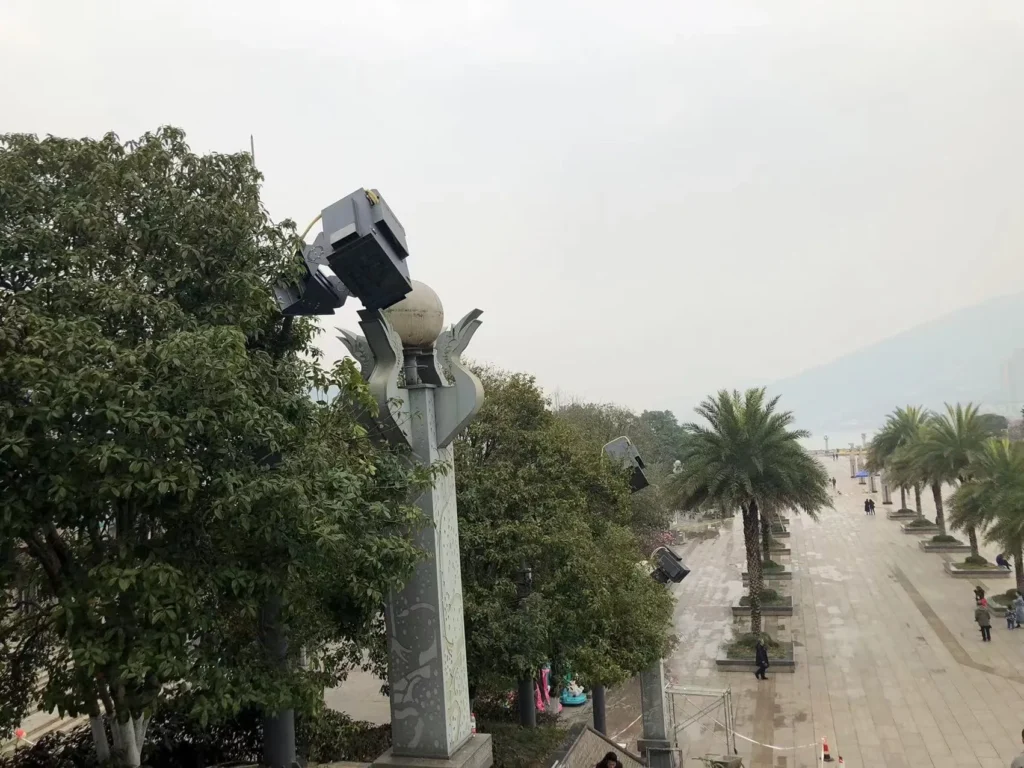
A pole mounted projector enclosure allows outdoor projectors to be positioned for clear projection lines, protected from weather, and integrated into public spaces without building-mounted supports. When properly engineered, it supports projection mapping, scenic installations, plazas, stadiums, and urban displays while maintaining access for cooling, maintenance, cable routing, and alignment.
Practical Advantages for Outdoor Projection
Pole mounting is useful when the projector must be placed away from a wall, façade, roof edge, or temporary truss. It can help achieve the correct throw distance and optical angle while keeping equipment elevated and protected.
Key benefits include:
- Flexible projector positioning for mapping, advertising, events, and scenic lighting
- Reduced need for building penetration or façade-mounted brackets
- Integrated environmental protection for projector, optics, power, and cooling
- Custom bracket geometry for projection angle and maintenance access
- Possibility of internal or external cable routing through pole or conduit
- Cleaner appearance for permanent public installations
- Adaptability for single-projector, dual-projector, or custom projector enclosure designs
However, these benefits only apply when the outdoor projector enclosure is engineered together with its support system. Larger cabinets, side-mounted air conditioners, tilted installation angles, and offset brackets can increase structural demand.
ShiRui Pro Tip: For B2B projects, I recommend deciding the projection geometry before finalizing the enclosure size. If the optical path, bracket offset, and maintenance direction change later, the wind-load review may also need to change.
How to maintain a pole mounted projector enclosure?
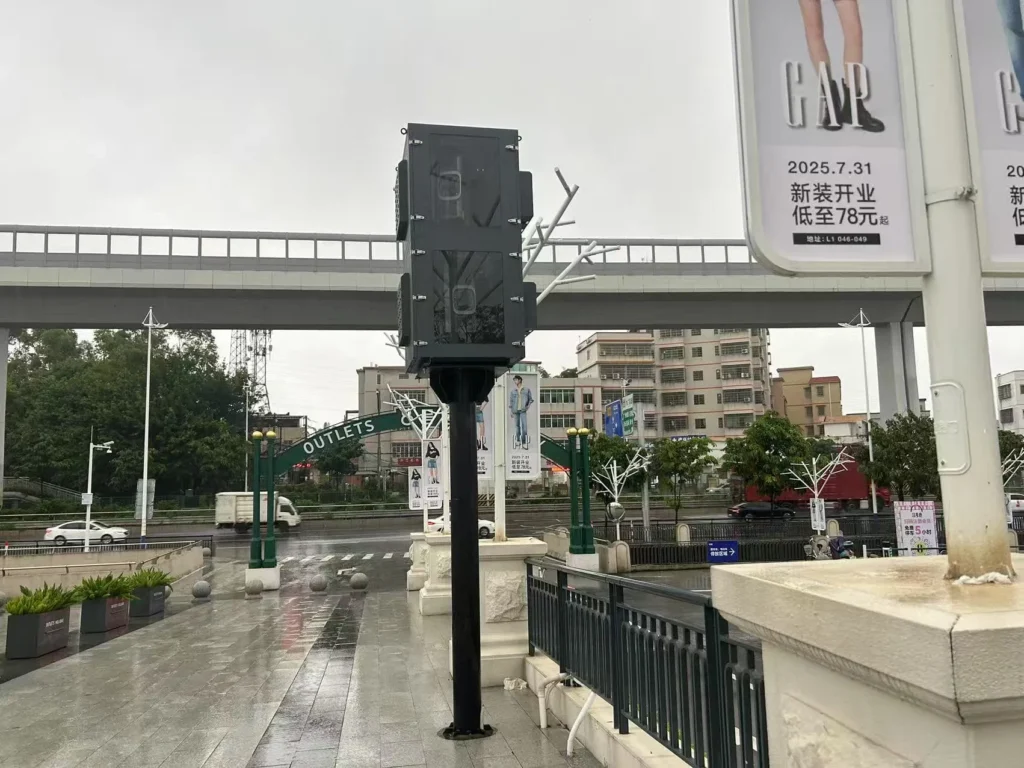
Maintenance of a pole mounted projector enclosure should include inspection of seals, optical glass, filters, cooling equipment, fasteners, corrosion protection, cable entries, brackets, and support connections. Maintenance must also consider weather conditions because open doors or removed panels can behave differently under wind than a closed and secured enclosure.
Maintenance Priorities in Wind-Exposed Installations
A wind resistant projector enclosure is not only about initial fabrication. Long-term reliability depends on routine inspection, especially for outdoor locations exposed to rain, dust, vibration, corrosion, and temperature cycles.
Recommended maintenance checks include:
- Inspect door seals, hinges, locks, and restraints.
- Check optical window frame, sealing, and retention condition.
- Clean or replace air filters according to the cooling system requirement.
- Inspect air conditioner, fans, vents, and drainage paths.
- Check mounting fasteners for loosening, corrosion, or deformation.
- Review cable entries for water sealing and strain relief.
- Inspect the bracket-to-enclosure and bracket-to-pole interfaces.
- Look for corrosion on enclosure panels, brackets, pole, and fasteners.
- Confirm projector alignment after severe weather or vibration events.
- Avoid opening large doors or removing panels in unsafe wind conditions.
Large maintenance doors can catch wind when open. An enclosure stable in the closed position may create additional hazards during servicing. Site safety procedures should control when and how elevated maintenance is performed.
ShiRui Pro Tip: I always ask maintenance teams to treat open-door service as a different condition from normal operation. Door size, opening direction, technician access, and wind exposure should be planned before the enclosure is built.
What is the price of pole mounted projector enclosure?
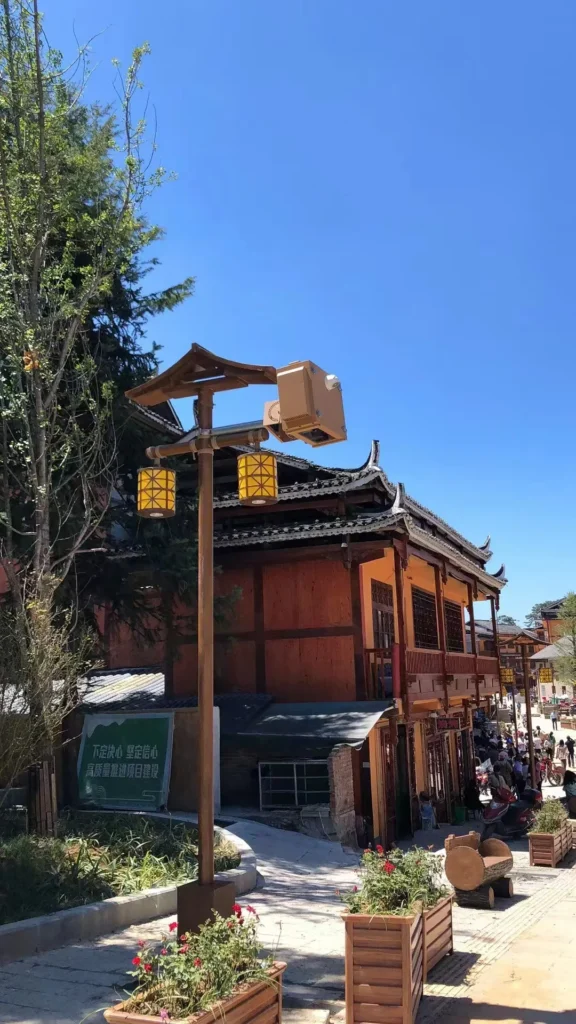
The price of a pole mounted projector enclosure depends on projector size, enclosure dimensions, cooling method, material, surface treatment, optical window, mounting interface, air-conditioning layout, structural reinforcement, quantity, and customization level. Wind-load coordination can also affect cost because bracket geometry, reinforcement, and drawings must match the actual installation conditions.
Cost Drivers for Custom Outdoor Enclosures
There is no universal price for a pole mounted projector enclosure because each project may require different dimensions, cooling, access, material, and structural interface details. A compact enclosure for one projector is very different from a dual-projector cabinet with external air conditioning and a custom pole bracket.
Typical cost factors include:
- Projector brand, model, dimensions, and weight
- Single, dual, or multi-projector configuration
- Required enclosure size and internal clearance
- Cooling method: ventilation, heat exchange, or industrial air conditioner
- Material selection: galvanized steel, stainless steel, or aluminum
- Corrosion protection and surface finish
- Optical glass size, sealing, and mounting method
- Door layout, locks, hinges, and service access
- Custom bracket interface and reinforced mounting zones
- Cable entry design and waterproofing requirements
- Drawing coordination and project documentation
- Quantity, packaging, and shipping requirements
ShiRui can provide enclosure dimensions, finished weight, mounting-interface details, equipment layout, and center-of-gravity information where available. The project’s structural engineer can then evaluate the complete support system according to local requirements.
ShiRui Pro Tip: If you want a useful quotation, send the projector model, mounting height, installation photos or drawings, pole details, and cooling expectations at the beginning. It helps us avoid underestimating size, access, and structural-interface requirements.
Key Features & Comparison
The most important wind-load factors are projected area, mounting height, orientation, equipment weight, center of gravity, bracket offset, pole structure, exposure condition, foundation capacity, and multi-projector configuration. These factors interact, so a projector enclosure structural design should be reviewed as a complete installed system rather than as a standalone cabinet.
Wind-Load Factors That Affect Design
Based on our internal data and market analysis, here is the breakdown:
| Factor | Why It Matters | Design Consideration |
|---|---|---|
| Enclosure width and height | Determines projected wind area | Larger faces can create higher wind force |
| Enclosure depth | Changes side-wind exposure and bracket spacing | Relevant wind directions should be reviewed |
| Installation height | Increases structural demand through lever arm effects | Ground-level assumptions may not represent elevated conditions |
| Enclosure orientation | Changes exposed area | Front, side, and angled wind may produce different responses |
| Projector and AC weight | Adds gravity load and affects total system demand | Finished assembled weight should be used |
| Center of gravity | Affects bracket loading and support reactions | Internal layout and external AC position matter |
| Bracket offset | Increases bending and may introduce torsion | Actual bracket geometry must be reviewed |
| Pole height and section | Controls support behavior | Existing poles should not be assumed suitable |
| Wind exposure | Depends on project site | Rooftops, coasts, plazas, fields, and mountains differ |
| Foundation and anchors | Transfer loads into supporting structure | Complete load path must be checked |
| Multi-projector design | Increases area, weight, and complexity | Single-projector support assumptions may not apply |
Wind pressure increases rapidly as design wind speed increases, approximately with the square of wind speed. However, final pressure values and structural verification depend on local standards, exposure, height, geometry, and project-specific requirements. For that reason, universal wind-speed claims should not be used without a clearly defined design or test basis.
ShiRui Pro Tip: When comparing enclosure options, I look for unnecessary projected area. A cabinet should not be oversized casually, but it must still allow proper cooling airflow, projector clearance, optical path, and maintenance access.
Cost & Buying Factors
Buyers should evaluate total project cost, not only enclosure price. A custom projector enclosure may require structural coordination, drawings, reinforced mounting interfaces, corrosion-resistant materials, cooling equipment, optical glass, cable routing, packaging, and installation planning. The support pole, anchors, foundation, and engineering review can significantly affect the final installed cost.
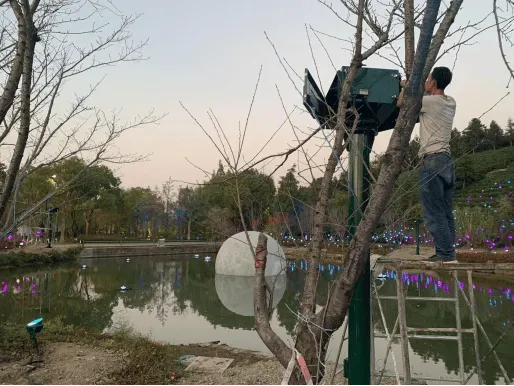
Buying Checklist for B2B Projects
The best purchasing process starts with accurate project information. Without installation height, pole data, orientation, and wind-design requirements, the enclosure manufacturer can only provide a preliminary concept.
Before requesting a quotation, prepare:
- Projector brand and exact model
- Projector dimensions and weight
- Required enclosure quantity
- Installation country, city, and site type
- Mounting height above ground or supporting structure
- Pole dimensions, material, and existing drawings if available
- Enclosure orientation and projection angle
- Cooling configuration preference
- Air conditioner location if required
- Bracket offset or special mounting arrangement
- Cable routing method
- Site drawings, photos, or 3D layout
- Project wind-design information where available
- Existing foundation details for retrofit projects
A practical workflow is:
- Confirm projector model.
- Determine enclosure dimensions and finished weight.
- Confirm cooling-system layout.
- Identify projected wind area.
- Confirm mounting height and orientation.
- Define bracket geometry.
- Obtain site wind-design requirements.
- Coordinate bracket, pole, base, anchors, and foundation review.
- Finalize structural and enclosure drawings.
- Fabricate and install according to approved design.
ShiRui Pro Tip: For retrofit projects, I never recommend attaching a heavy enclosure to an existing lighting pole or utility pole without verification. Existing poles may already carry lights, signs, cables, or other equipment that affect capacity.
Conclusion
A reliable pole mounted projector enclosure should be designed together with its supporting structure. Wind load is a system-level issue involving projected area, height, orientation, center of gravity, bracket offset, pole capacity, anchors, foundation, and site exposure. Final structural verification should follow applicable project requirements by qualified structural personnel where required.
Practical Engineering Takeaway
The key point is simple: wind load is determined by more than enclosure weight. A larger, lighter enclosure installed high on an offset bracket may create greater structural demand than a heavier but compact cabinet. The enclosure, projector, air conditioner, bracket, pole, anchors, and foundation must be considered as one connected system.
Common mistakes to avoid include:
- Checking enclosure weight but ignoring projected wind area
- Ignoring installation height
- Reviewing only one wind direction
- Using an existing pole without structural verification
- Ignoring bracket offset and torsion
- Excluding air conditioner weight and wind area
- Checking the enclosure but not the pole or foundation
- Oversizing the cabinet unnecessarily
- Ignoring vibration and projection alignment
- Assuming one wind-speed rating applies everywhere
Planning a pole-mounted outdoor projection project? Send ShiRui your projector model, mounting height, pole dimensions, installation drawing, and project wind requirements. We can provide the enclosure dimensions, finished weight, equipment layout, and mounting-interface information needed for structural coordination.
ShiRui Pro Tip: The safest approach is to coordinate early. We can support the enclosure design and interface data, while the project’s structural team verifies the complete pole, anchor, and foundation system for the actual site.