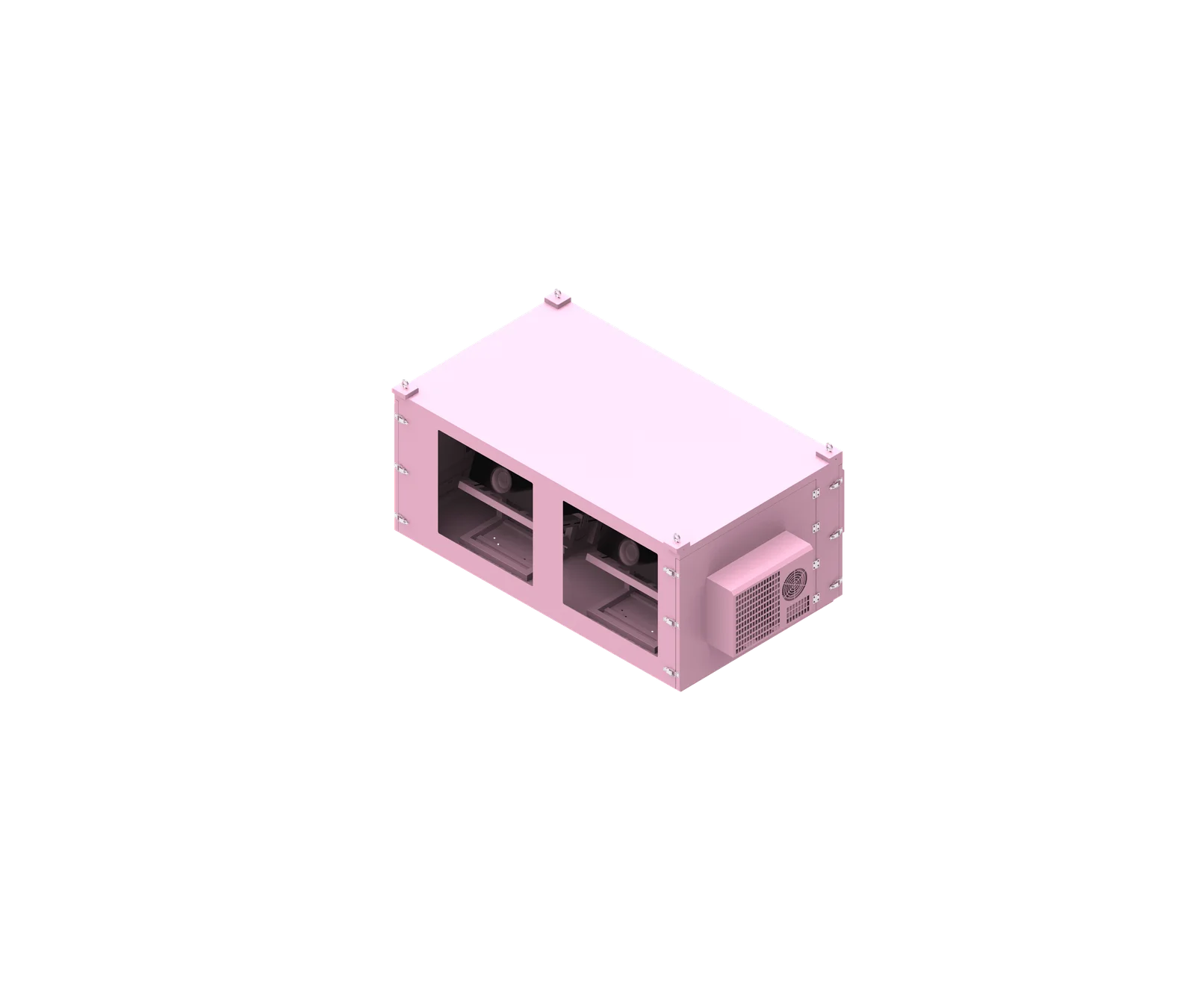
A smart city outdoor network cabinet is an engineered field infrastructure node for CCTV surveillance, traffic monitoring, public Wi-Fi, IoT gateways, roadside communication, and edge devices. It is not just a weatherproof network cabinet; it must coordinate networking, power distribution, PoE, fiber, UPS, cooling, heating, surge protection, security, cable management, and maintainability according to the actual project environment.
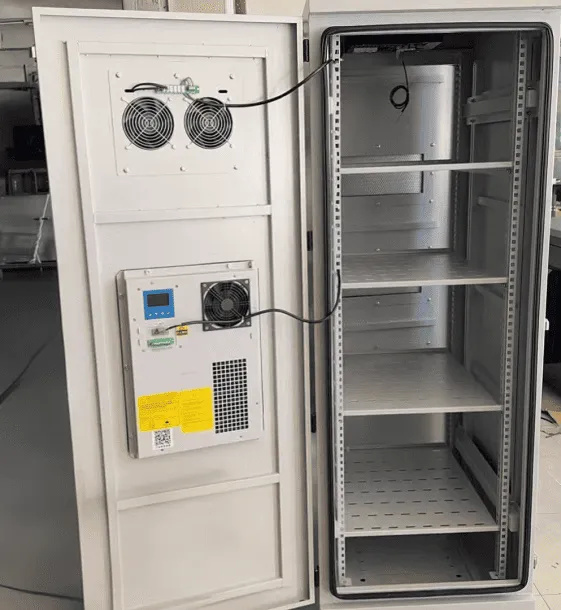
What is a smart city outdoor network cabinet?
A smart city outdoor network cabinet is an outdoor network enclosure designed to house and protect communication, power, fiber, PoE, monitoring, and environmental-control equipment in distributed city infrastructure. Its configuration depends on the field devices, network architecture, climate, installation method, backup-power needs, and maintenance strategy.
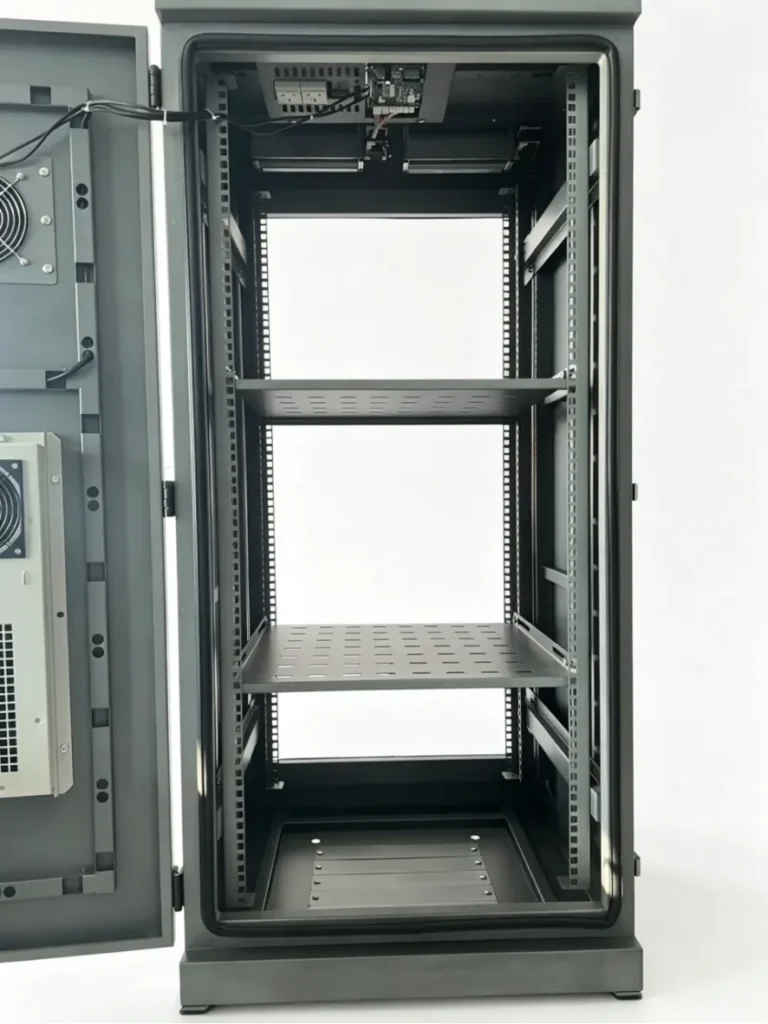
Field Infrastructure Node
A smart-city cabinet is not just a weatherproof enclosure—it is a complete outdoor network, power, and environmental-control node. In surveillance and smart-city projects, the cabinet may support cameras, sensors, switches, fiber equipment, routers, UPS systems, surge protection, and remote monitoring modules.
Common applications include:
- CCTV surveillance and public-security systems
- Traffic monitoring and license-plate recognition
- Public Wi-Fi and roadside communication
- Smart lighting and parking systems
- Environmental monitoring and IoT gateways
- Edge AI and video analytics
- Industrial or campus monitoring networks
The cabinet should always be engineered around the real project, not selected only by outer dimensions or a generic IP rating.
ShiRui Pro Tip: We always start by asking for the equipment list and installation environment before recommending a smart city equipment cabinet, because the same-looking cabinet can require very different cooling, power, fiber, and mounting designs.
How Does a smart city outdoor network cabinet Work?
A smart city outdoor network cabinet works by protecting field equipment while organizing power, data, fiber, cooling, grounding, and monitoring into one serviceable outdoor system. It connects local cameras, sensors, or devices to the wider network while maintaining environmental protection and electrical reliability.
System Operation Flow
In a surveillance network cabinet or outdoor CCTV cabinet, field devices typically connect into the cabinet through copper, fiber, or wireless links. Inside the cabinet, switches, PoE equipment, fiber distribution, power supplies, UPS, and protection devices work together to support stable communication and operation.
A practical engineering workflow is:
- Confirm the application type and connected devices.
- Define the network topology, such as access node, aggregation point, fiber distribution point, or edge node.
- List all active equipment, including switches, PoE devices, routers, converters, UPS, and monitoring modules.
- Calculate power load based on actual device specifications.
- Evaluate PoE load, UPS requirements, and internal heat generation.
- Design fiber routing, copper cable paths, and cable-entry sealing.
- Select cooling, heating, or condensation-control methods according to climate and heat load.
- Coordinate grounding, bonding, and surge protection with the site system.
- Finalize cabinet size, layout, mounting method, and maintenance access.
ShiRui Pro Tip: I recommend treating the cabinet as part of the network architecture, not as an accessory. When topology, power, and thermal design are decided early, the enclosure becomes much easier to manufacture and maintain.
What are the benefits of a smart city outdoor network cabinet?
The main benefit of a smart city outdoor network cabinet is reliable outdoor operation for distributed equipment. It protects electronics from weather, organizes power and network systems, improves maintenance access, supports backup power and monitoring, and helps standardize deployment across CCTV, traffic, Wi-Fi, IoT, and roadside projects.
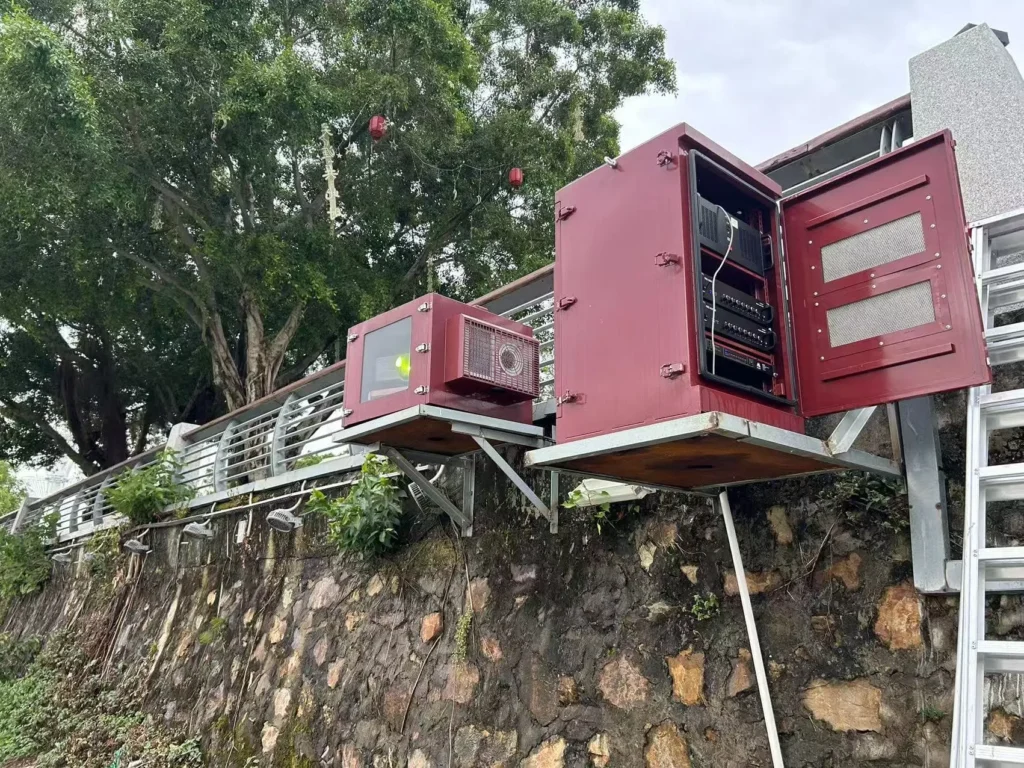
Practical Project Advantages
A well-designed outdoor telecom cabinet reduces field risk by combining protection, access, and system integration. For smart-city and surveillance projects, this matters because equipment is often distributed across roadsides, poles, walls, campuses, parking areas, and public spaces.
Based on our internal data and market analysis, here is the breakdown:
| Benefit Area | Practical Value | Design Consideration |
|---|---|---|
| Equipment protection | Shields network and power equipment from outdoor exposure | Match IP protection, material, sealing, and climate design to site conditions |
| Network reliability | Supports switches, fiber, routers, and communication devices | Design according to topology and device quantity |
| Power organization | Integrates AC, DC, PoE, UPS, and auxiliary power | Base all electrical design on actual loads |
| Thermal stability | Manages heat from switches, UPS, power supplies, and edge devices | Select fan, AC, heater, or other control methods from heat-load analysis |
| Maintenance efficiency | Improves access to cables, filters, batteries, and modules | Reserve service space before fabrication |
| Security | Helps protect public-area equipment from unauthorized access | Use locks, reinforced doors, protected hinges, and monitoring where required |
| Scalability | Allows reasonable future expansion | Plan spare space and cable routes according to project growth |
ShiRui Pro Tip: The best cabinet is not always the largest or most sealed one. I look for the cabinet that balances protection, airflow, wiring space, service access, and project-specific expansion.
How to maintain a smart city outdoor network cabinet?
Maintaining a smart city outdoor network cabinet requires regular inspection of sealing, cable entries, cooling devices, filters, power distribution, UPS, grounding, surge protection, locks, monitoring sensors, and internal cable organization. Maintenance frequency should reflect the site climate, dust level, equipment load, and project reliability requirements.
Maintenance Priorities
Outdoor network cabinets operate in changing environments, so preventive maintenance is essential. A waterproof cabinet can still face condensation, dust accumulation, cable-gland loosening, fan-filter blockage, corrosion, battery aging, or security damage.
A practical maintenance checklist includes:
- Inspect door seals, hinges, locks, and enclosure surface condition.
- Check cable glands, gland plates, conduit interfaces, and unused openings for sealing.
- Clean or replace filters if fan cooling is used.
- Confirm fans, air conditioners, heaters, and thermostats operate correctly.
- Inspect UPS, batteries, and backup-power status according to manufacturer guidance.
- Check fiber patching, service loops, connector protection, and cable bend management.
- Verify grounding, bonding, and surge-protection status according to site requirements.
- Review temperature, humidity, door status, power status, and alarm records if remote monitoring is installed.
- Make sure cables do not block airflow or prevent equipment replacement.
ShiRui Pro Tip: We design maintenance access before manufacturing, not after installation. If technicians cannot reach filters, fiber trays, UPS batteries, or cable glands easily, long-term operating cost will increase.
What is the price of a smart city outdoor network cabinet?
The price of a smart city outdoor network cabinet depends on cabinet size, material, IP protection, cooling or heating system, internal layout, power distribution, UPS space, monitoring functions, mounting structure, cable-entry design, and customization level. Accurate pricing requires project drawings or a complete equipment and environment specification.
Main Price Drivers
There is no universal price for a surveillance network cabinet because different projects require different structures and systems. A small wall-mounted outdoor CCTV cabinet for a few devices is very different from a floor-standing cabinet with fiber distribution, UPS batteries, cooling, monitoring, and security reinforcement.
Key cost factors include:
- Cabinet dimensions and structural strength
- Material choice, such as galvanized steel, 201 stainless steel, 304 stainless steel, or project-specific materials
- Surface treatment and corrosion-resistance requirements
- Cooling method, such as ventilation, fan cooling, air conditioning, heating, or condensation control
- Power distribution design and protection devices
- UPS and battery space, brackets, ventilation, and access
- Cable-entry quantity, gland plates, connectors, and sealing method
- Mounting type, including pole-mounted, wall-mounted, or floor-standing installation
- Monitoring features such as temperature, humidity, door status, water-leak alarm, UPS status, or fan/AC status
- Quantity, customization level, assembly work, and testing requirements
ShiRui Pro Tip: For accurate quotation, I suggest buyers provide the equipment list, cabinet location, installation method, cable schedule, cooling requirement, and required protection level first. This avoids underquoting a cabinet that later needs major redesign.
Key Features & Comparison
A reliable weatherproof network cabinet for smart-city and surveillance projects should combine environmental protection, organized power, network integration, thermal management, cable routing, security, monitoring, and maintainability. The best configuration depends on application type, device quantity, PoE load, fiber requirements, climate, and installation method.
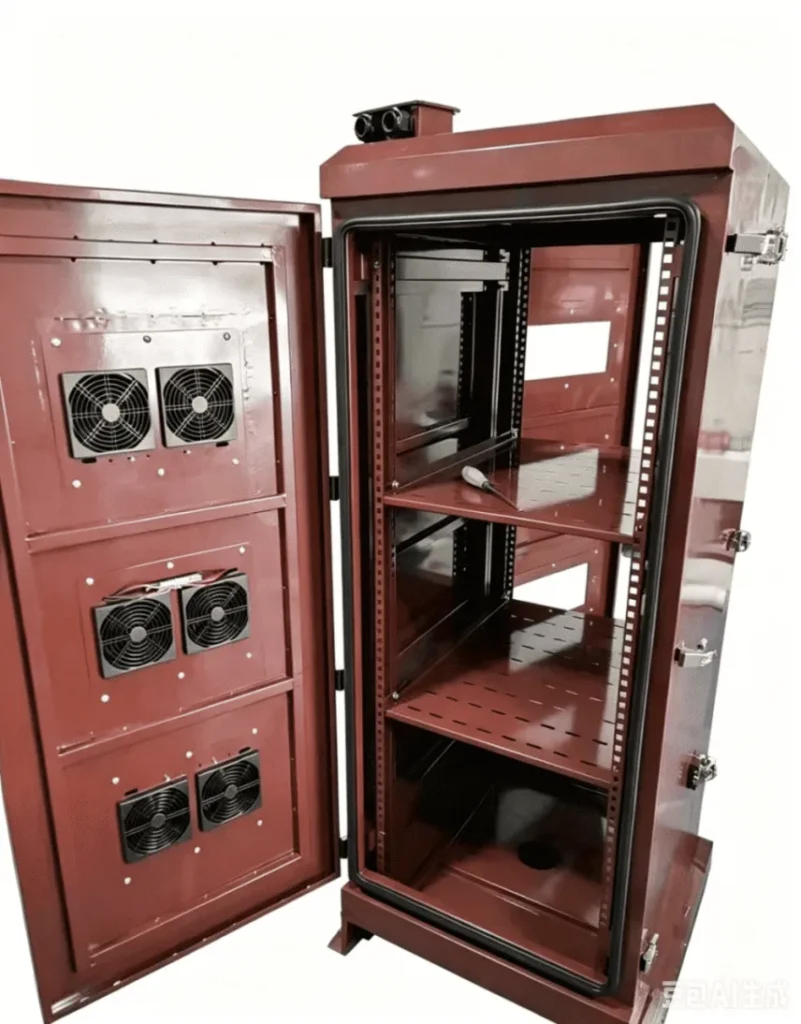
Application-Based Cabinet Planning
Different applications place different demands on the outdoor network enclosure. CCTV projects may focus on PoE, fiber, UPS, and cable entry. Traffic monitoring may add vibration, heat, and edge-computing concerns. Public Wi-Fi may need antenna planning and secure router placement.
Based on our internal data and market analysis, here is the breakdown:
| Application | Typical Equipment | Main Cabinet Concerns |
|---|---|---|
| CCTV Surveillance | PoE switch, fiber equipment, UPS, surge protection | Power load, cooling, cable entry, backup power |
| Traffic Monitoring | Network switch, edge computer, fiber, power supply | Heat load, vibration, roadside exposure, maintenance access |
| License-Plate Recognition | Cameras, PoE switch, edge processor, fiber converter | PoE demand, edge-computing heat, network reliability |
| Smart Parking | Network equipment, IoT gateway, sensor interface | Communication, power distribution, service access |
| Public Wi-Fi | Switch, router, wireless equipment, antenna cables | Heat, antenna routing, security, weather sealing |
| Smart Lighting | Controller, power module, network device | Cable management, power separation, outdoor protection |
| Environmental Monitoring | Gateway, sensors, modem, monitoring module | Humidity, condensation, remote monitoring |
| Roadside Communication | Fiber panel, switch, router, power system | Dust, rain, solar exposure, public access |
| Edge AI / Video Analytics | Edge computer, switch, storage or communication module | Higher heat load, cabinet size, cooling design |
Key features to evaluate include:
- Outdoor-rated enclosure structure
- Project-specific IP protection
- Material and corrosion-resistance selection
- Separate areas for power, fiber, network, and batteries where needed
- Cable glands, gland plates, sealed connectors, or conduit interfaces
- Fan cooling, air conditioning, heater, or condensation-control options
- Surge protection and grounding coordination
- Strong locks, protected hinges, and optional tamper monitoring
- Remote monitoring for temperature, humidity, door status, power, fan, AC, UPS, or water-leak alarms
ShiRui Pro Tip: I avoid recommending one standard cabinet for every smart-city project. A coastal CCTV cabinet, a desert roadside cabinet, and a cold-climate traffic cabinet may look similar outside but require very different internal engineering.
Cost & Buying Factors
When buying a smart city outdoor network cabinet, the correct approach is to define the application, equipment list, power load, PoE requirements, fiber design, climate, installation method, and maintenance strategy before selecting cabinet size or cooling. This prevents costly redesign during installation.
Buyer Information Checklist
For manufacturers like ShiRui, the most useful information is not only the required cabinet dimensions. We need to understand the complete outdoor node so the enclosure, sheet-metal structure, internal layout, cable entry, and environmental-control design match the field conditions.
Buyers should prepare:
- Application type, such as CCTV, traffic, Wi-Fi, IoT, parking, or edge AI.
- Camera or field-device quantity.
- Network equipment list and model information.
- PoE switch model and connected-device power requirements.
- Fiber requirements, patching method, and service-access needs.
- Power supply type, AC/DC distribution, and auxiliary loads.
- UPS and battery requirements, if backup power is needed.
- Cooling, heating, humidity, and condensation-control expectations.
- Project location, temperature, humidity, dust, rain, salt, or snow conditions.
- Required protection level and local project standards.
- Installation method: pole-mounted, wall-mounted, or floor-standing.
- Cable schedule, cable-entry direction, gland quantity, and conduit requirements.
- Monitoring requirements, such as temperature, humidity, door, power, AC, fan, UPS, or water-leak alarm.
- Quantity, delivery plan, drawing approval process, and testing requirements.
A recommended engineering workflow is:
Application → equipment list → network architecture → power load → PoE requirements → fiber design → backup-power requirements → thermal load → climate → IP requirement → cabinet size → internal layout → cable entry → grounding/surge protection → cooling/heating → monitoring → mounting method → maintenance access → technical drawing approval → fabrication → assembly → testing
ShiRui Pro Tip: The fastest way to reduce purchasing risk is to share the real equipment datasheets. Cabinet size, heat load, UPS space, cable entry, and mounting brackets all become clearer when the actual hardware is known.
Conclusion
The right smart city outdoor network cabinet depends on the actual surveillance or smart-city system. Start with the equipment list, network architecture, power load, PoE requirements, fiber needs, climate, and installation method before selecting cabinet size, cooling system, material, IP protection, and monitoring functions.
Final Engineering Recommendation
A professional outdoor network cabinet should be engineered as a complete field infrastructure node, not treated as a simple waterproof box. Reliable smart-city deployment requires environmental protection, networking, power, thermal management, cable routing, grounding, security, and maintenance access to work together.
Common design mistakes to avoid include:
- Choosing the cabinet only by equipment size.
- Ignoring PoE heat load and power consumption.
- Assuming a high IP rating solves overheating.
- Ignoring UPS heat, battery space, and maintenance access.
- Forgetting solar gain, condensation, dust, salt, or cold-weather effects.
- Poor fiber routing, connector protection, and service-loop planning.
- Poor cable sealing or unused openings.
- No grounding, bonding, or surge-protection coordination.
- Blocking airflow with cables or internal brackets.
- Selecting pole, wall, or floor mounting too late.
- Leaving no practical space for future maintenance or expansion.
ShiRui can support custom sheet-metal enclosure design for outdoor telecom cabinet, outdoor CCTV cabinet, surveillance network cabinet, and smart city equipment cabinet projects based on your equipment list, environment, mounting method, and project standards.
ShiRui Pro Tip: If you are planning a smart-city or surveillance deployment, send the application, equipment list, power load, climate, cable schedule, and installation method first. From there, we can help turn the cabinet into a reliable outdoor infrastructure node.