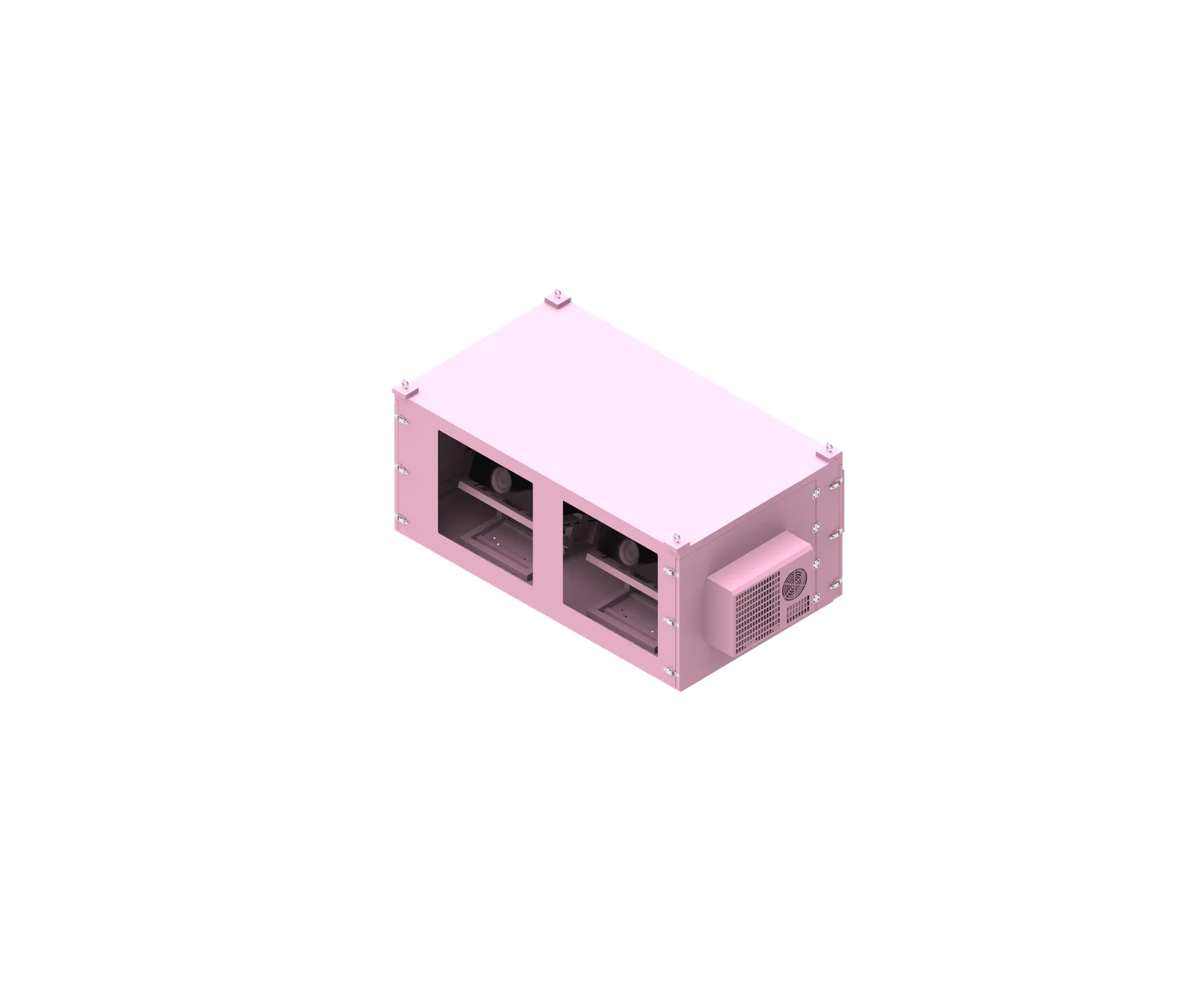
Selecting an outdoor enclosure for a 20,000–40,000 lumen projector is an engineering decision, not a simple cabinet purchase. High brightness usually means larger equipment, higher power consumption, more heat, stricter airflow requirements, and heavier installation structures. For ShiRui projects, the enclosure is designed around the actual projector model, site environment, operating hours, cooling demand, lens alignment, and maintenance access—not lumen rating alone.
Video Guide: This general weatherproof projector enclosure video is useful for understanding basic enclosure concepts before evaluating professional high-lumen outdoor systems.
What is high lumen projector enclosure 30000 lumen projector enclosure 40000 lumen projector enclosure air conditioned projector enclosure?
A high lumen projector enclosure is a protective outdoor housing designed for professional engineering projectors, commonly in the 20,000–40,000 lumen range. It protects the projector from weather, dust, heat, humidity, and installation risks while supporting airflow, cooling, optical alignment, cable routing, and long-term maintenance access.
Engineering Definition and Main Functions
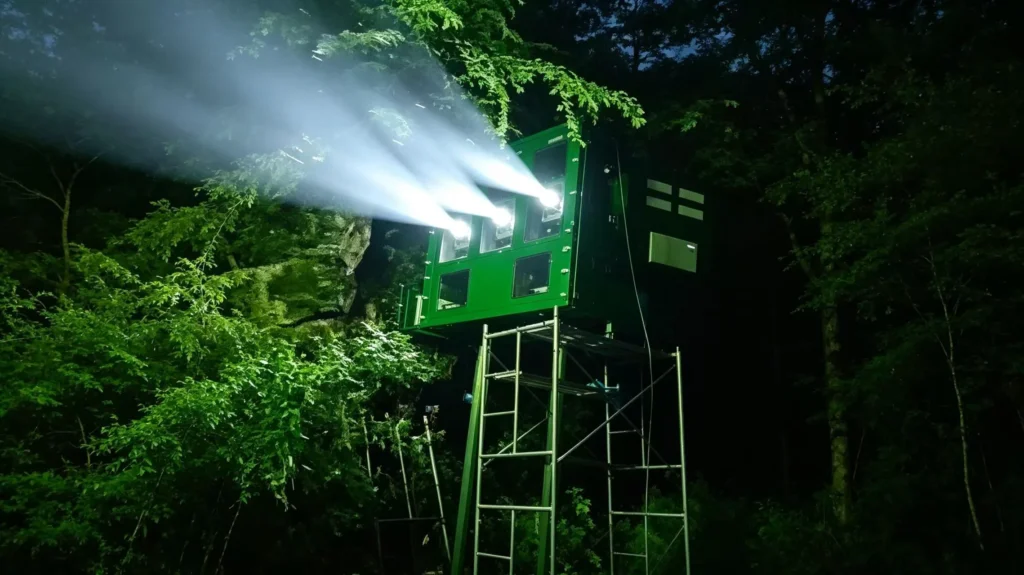
A high lumen projector enclosure for 30,000 lumen or 40,000 lumen projectors is typically used in outdoor projection mapping, cultural tourism shows, theme parks, large venue displays, architectural projection, and permanent AV installations. These projectors are not the same as small backyard units; they often have higher power consumption, larger bodies, heavier lenses, and more complex intake and exhaust paths.
For ShiRui, the enclosure design process begins with the projector specification sheet. A 30,000-lumen projector enclosure cannot be selected only because the projector is “30K.” Two projectors with similar brightness may have very different power consumption, airflow structure, lens position, and heat output.
Based on our internal data and market analysis, here is the breakdown:
| Design Element | Why It Matters for High-Lumen Enclosures | Project-Specific Requirement |
|---|---|---|
| Projector brand and model | Determines actual dimensions, heat load, lens location, and airflow | Must be confirmed before enclosure design |
| Power consumption | Strong indicator of heat generation | Required for cooling evaluation |
| Intake and exhaust locations | Prevents airflow blockage and overheating | Must match projector ventilation design |
| Lens position | Determines optical window location | Must be aligned with lens center and projection angle |
| Operating hours | Affects cooling demand and component durability | Longer use may require more stable thermal control |
| Ambient temperature and humidity | Determines cooling, heating, and condensation strategy | Site conditions must be reviewed |
| Dust, sand, or salt air | Influences sealing, filtration, material, and airflow design | Harsh sites may require sealed internal circulation |
| Maintenance access | Allows projector removal, lens adjustment, and cooling service | Must be designed into the cabinet layout |
ShiRui Pro Tip: When we evaluate a high lumen projector enclosure, I always ask for the projector model and specification sheet first. Lumens tell us the application class, but the engineering design starts with heat, airflow, dimensions, lens position, and environment.
How Does high lumen projector enclosure 30000 lumen projector enclosure 40000 lumen projector enclosure air conditioned projector enclosure Work?
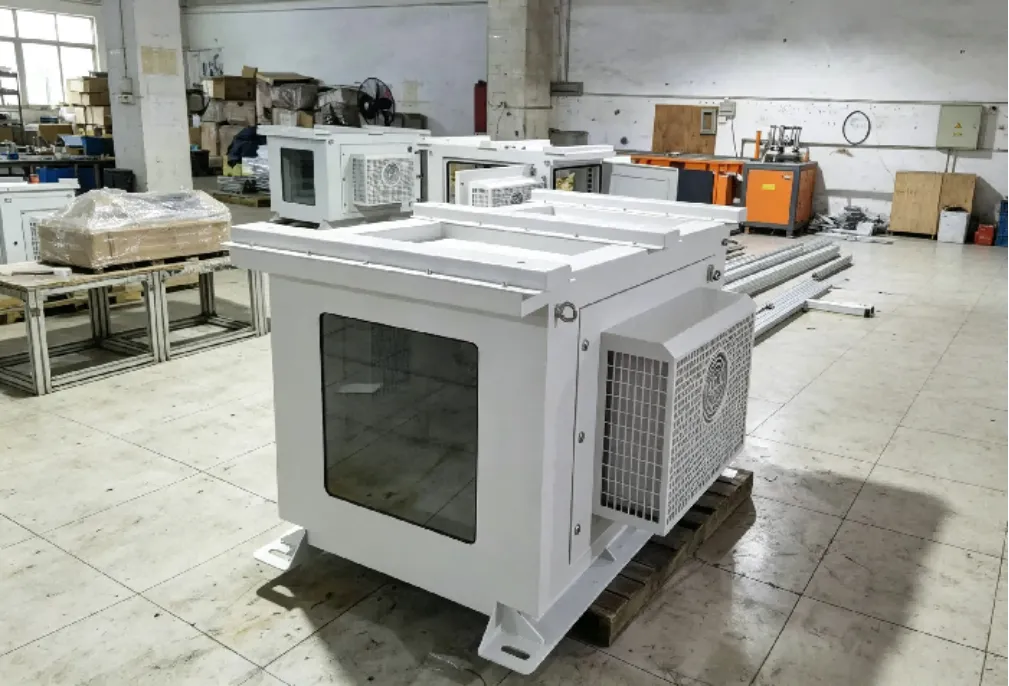
A high lumen projector enclosure works by combining weather protection, controlled airflow, thermal management, optical window alignment, structural support, and service access. Depending on the projector heat load and site conditions, the enclosure may use fan cooling, air conditioning, hybrid cooling, or sealed internal circulation.
Thermal Control, Airflow, and Optical Protection
For 20,000–40,000 lumen projectors, enclosure performance depends on how heat is removed and how the projector’s own ventilation path is preserved. A professional projector may draw air from the side, rear, bottom, or front, and exhaust hot air in a different direction. If the enclosure blocks these paths, even a powerful cooling system may fail to protect the projector properly.
ShiRui may design different cooling structures depending on the project:
- Fan cooling for suitable sites where ambient air is acceptable and heat load is manageable.
- Fan + air conditioner hybrid cooling when staged cooling is useful and ambient conditions vary.
- Air-conditioned projector enclosure design when high heat load, long operating hours, or high ambient temperature require more stable internal temperature control.
- Fully sealed internal-circulation air-conditioned enclosure for harsh environments such as desert, coastal, high-humidity, dusty, polluted, underground, or subway installations.
- Sensor-based control options such as temperature sensors, humidity sensors, heating, dehumidification, anti-condensation control, and anti-fog airflow around the optical window.
Cooling thresholds such as cooling near 35°C or heating near 5°C may be used as example control references in some configurations, but they are not universal settings. Actual control logic must be confirmed according to the projector, environment, and project requirements.
ShiRui Pro Tip: I do not recommend choosing cooling equipment before checking projector power consumption and airflow drawings. A cabinet that looks large enough can still fail if the intake, exhaust, and heat path are wrong.
Why Lumens Alone Are Not Enough
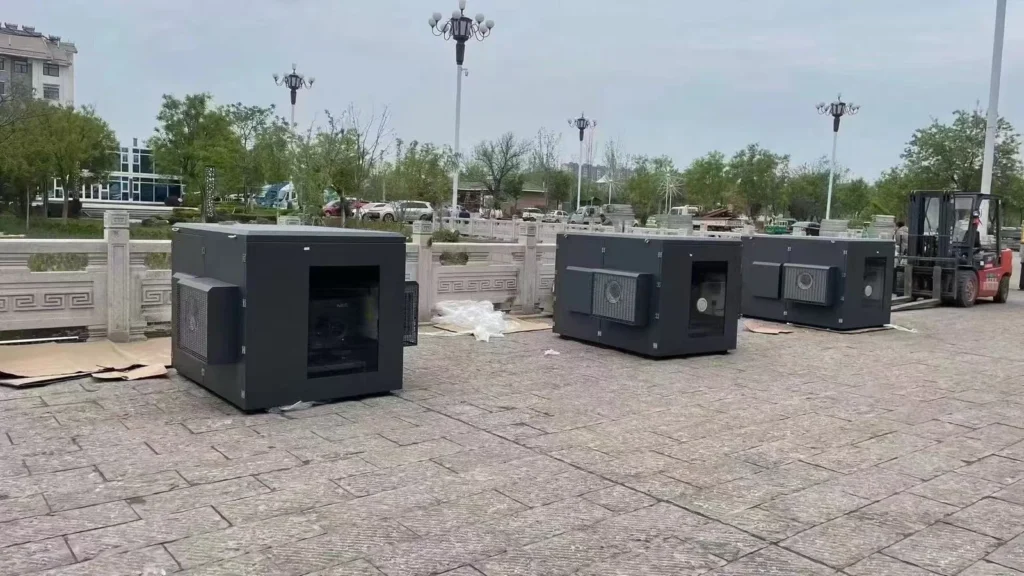
Lumens identify projector brightness, but they do not directly define enclosure size, cooling method, air conditioner capacity, or internal airflow structure. A 30,000-lumen projector is not automatically twice as difficult to cool as a 15,000-lumen projector because heat depends on power, airflow design, and environment.
Brightness Is Not the Same as Heat Load
High lumen output usually indicates a professional engineering projector, but brightness is only one part of the enclosure selection process. The projector’s actual power consumption, cooling architecture, and operating environment determine the required thermal strategy.
A 30,000 lumen projector enclosure may require air conditioning in one project and a different cooling structure in another. Likewise, a 40,000 lumen projector enclosure may need more space, stronger structure, or sealed internal circulation depending on dust, humidity, wind, salt air, and operating duration.
Based on our internal data and market analysis, here is the breakdown:
| Common Assumption | Why It Is Risky | Correct Engineering Approach |
|---|---|---|
| “Higher lumens always require the same type of air conditioner” | Lumens do not equal heat output | Check power consumption, heat load, and ambient temperature |
| “A 30K projector enclosure can fit any 30K projector” | Projector dimensions and airflow differ by brand and model | Design around the exact projector model |
| “Bigger cabinet means better cooling” | Oversized space without airflow control may create hot zones | Plan intake, exhaust, circulation, and cooling distribution |
| “Outdoor ventilation is always acceptable” | Dust, sand, insects, humidity, and salt air can damage equipment | Evaluate environmental exposure before choosing airflow type |
| “Cooling solves all outdoor risks” | Condensation may occur when humid air meets cold surfaces | Include humidity and dew point management when needed |
ShiRui Pro Tip: When a customer asks for a “30,000 lumen projector enclosure,” I treat that as the starting description, not the final specification. The real design begins after we review the projector datasheet and installation environment.
What Changes Between 20K, 30K and 40K Projector Enclosures?
The differences between 20K, 30K, and 40K projector enclosures are usually related to projector size, power consumption, heat output, cooling configuration, structural load, cable routing, and maintenance space. However, there are no rigid rules because every projector model and project environment must be evaluated individually.
Model-Dependent Design Differences
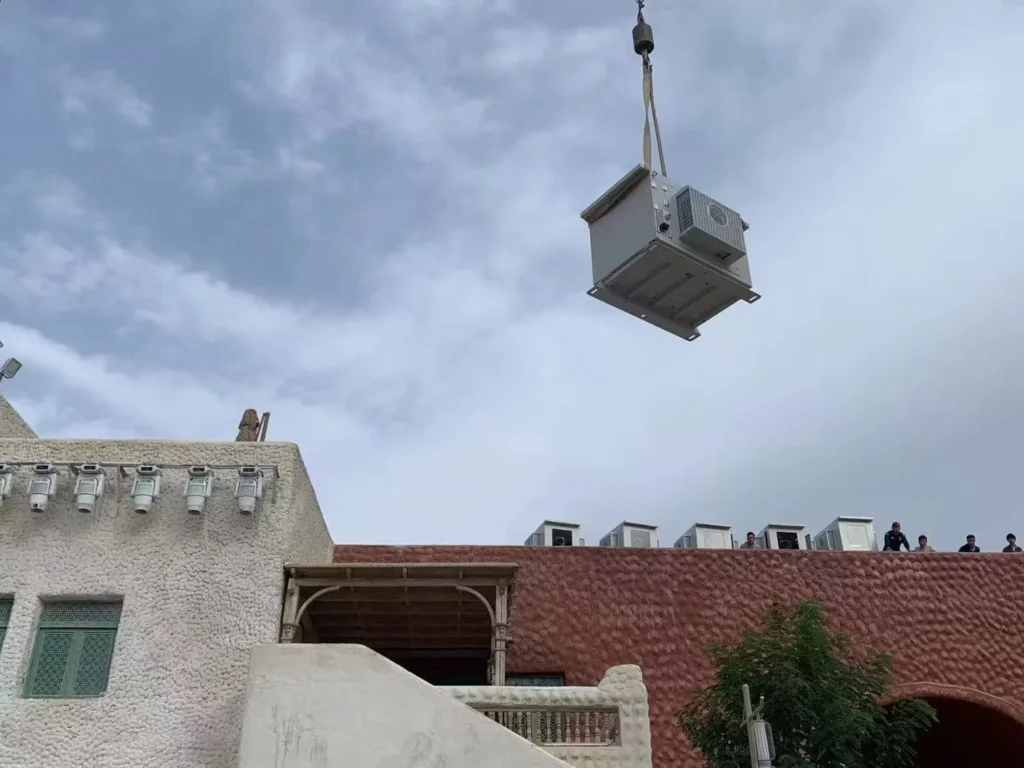
As projector brightness increases, the enclosure often becomes more complex, but not according to a fixed formula. A 25,000 lumen projector may be physically larger than another 30,000 lumen model. A 40,000 lumen projector may require a different airflow direction, larger lens clearance, heavier support, or more advanced cooling control.
ShiRui project experience includes configurations around 20,000 lumens, 23,000-lumen multi-projector and stacking applications, 25,000-lumen multi-projector systems, 26,000-lumen outdoor installations, 30,000-lumen high-brightness systems, 35,000-lumen harsh-climate installations, and 40,000-lumen engineering projection projects.
Based on our internal data and market analysis, here is the breakdown:
| Projector Range | Projector Size | Heat Load | Cooling Evaluation | Enclosure Space | Installation Structure | Typical Project Use |
|---|---|---|---|---|---|---|
| 20,000–25,000 lumens | Model dependent | Project specific | Fan cooling or active cooling may be evaluated | Based on projector body, airflow, and service access | Depends on cabinet weight and mounting method | Outdoor events, mapping, cultural display, fixed AV |
| 25,000–30,000 lumens | Often larger, but not universal | Requires thermal evaluation | Active cooling often considered depending on site | May require more cooling and cable space | May need reinforced ground, wall, pole, or custom support | Multi-projector and engineering projection |
| 30,000–40,000 lumens | Highly model dependent | Often significant, but must be calculated | Air conditioning or sealed circulation may be considered | Requires detailed layout for projector, cooling, lens, and maintenance | Structural load and wind exposure must be reviewed | Large-scale mapping, tourism shows, permanent installations |
ShiRui Pro Tip: I avoid saying “20K uses this cabinet, 30K uses that cabinet, and 40K uses another.” The safer approach is to compare projector datasheets, then design the enclosure around the actual heat, airflow, weight, and site conditions.
How many lumens should a good outdoor projector have?
A good outdoor projector may need anywhere from several thousand lumens to 40,000 lumens or more, depending on screen size, ambient light, throw distance, content type, and audience expectations. For professional outdoor mapping or large venue work, 20,000–40,000 lumens is a common engineering class.
Video Guide: See how a waterproof projector enclosure manages outdoor operating conditions with temperature and humidity sensing and F6 air filtration. The filtration system helps reduce dust and insect entry while supporting clean airflow around professional projection equipment.
Matching Brightness to Application Scale
Outdoor brightness requirements vary widely. A backyard movie setup does not need the same output as a building projection, cultural tourism show, or large-scale immersive display. In professional projects, lumen selection is usually determined by projection surface size, ambient light, throw distance, content contrast, and viewing distance.
For enclosure selection, however, projector lumen output only tells you the approximate application class. The enclosure still needs actual engineering data.
Key information to collect before selecting a high lumen projector enclosure includes:
- Exact projector brand and model
- Projector dimensions and weight
- Power consumption and heat output
- Air intake and exhaust locations
- Lens model, lens position, and projection direction
- Number of projectors
- Daily operating hours
- Maximum and minimum ambient temperature
- Relative humidity
- Dust, sand, salt-air, or polluted-air exposure
- Installation method and mounting structure
- Maintenance and service access requirements
ShiRui Pro Tip: If the projector has not been selected yet, I recommend choosing the projector and enclosure as one system. It prevents the common problem of buying a bright projector first and later discovering that the cabinet, cooling, or optical window layout does not fit.
How big should my outdoor projector screen be?
Outdoor projector screen size should be chosen according to viewing distance, projector brightness, throw ratio, image resolution, ambient light, and content detail. For 20,000–40,000 lumen projectors, screen size can be large, but the final design must balance image brightness, clarity, and optical geometry.
Screen Size, Throw Distance, and Enclosure Position
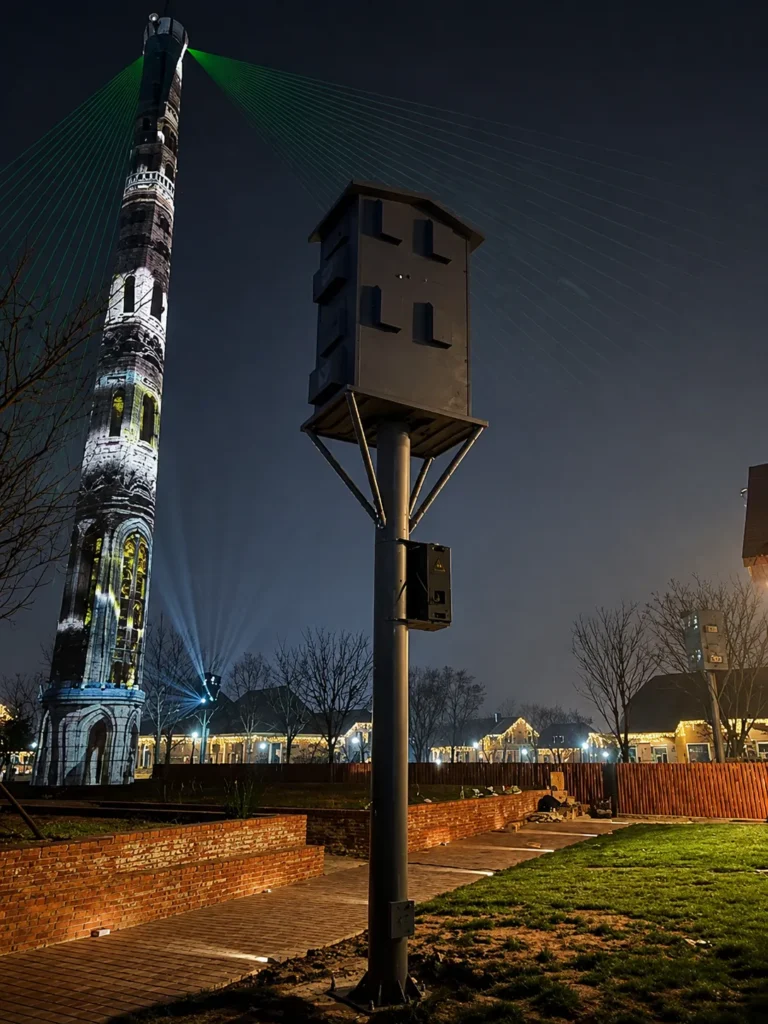
The enclosure affects screen planning because it fixes the projector’s physical position, lens height, projection angle, and service direction. For engineering projectors, the optical window must be designed around the lens center—not simply placed in the middle of the cabinet.
A high-lumen projector enclosure should consider:
- Lens center position so the optical window aligns with the actual projection axis.
- Lens diameter and lens shift range to avoid vignetting or edge obstruction.
- Projection direction and angle for front projection, upward projection, downward projection, or mapping applications.
- Throw distance and screen size to confirm the image area and brightness distribution.
- Maintenance access so technicians can adjust focus, zoom, lens shift, and projector position.
- Stacking or multi-projector layout when multiple images are blended, overlapped, or aligned.
For example, a 23,000-lumen multi-projector installation requires combined evaluation of lens alignment, stacking structure, cooling distribution, enclosure weight, and maintenance space. Multi-projector screen planning is more complex than simply increasing cabinet size.
ShiRui Pro Tip: I always confirm the projector lens model and projection direction before placing the optical glass. A few centimeters of lens misalignment can create serious installation problems on a large outdoor screen.
What color screen is best for an outdoor projector?
The best outdoor projector screen color depends on ambient light, contrast requirements, projector brightness, viewing angle, and surface type. White screens are common for brightness, while gray or specialized surfaces may improve perceived contrast in some environments. For engineering projection, the full optical system should be evaluated.
Screen Surface and Optical Window Considerations
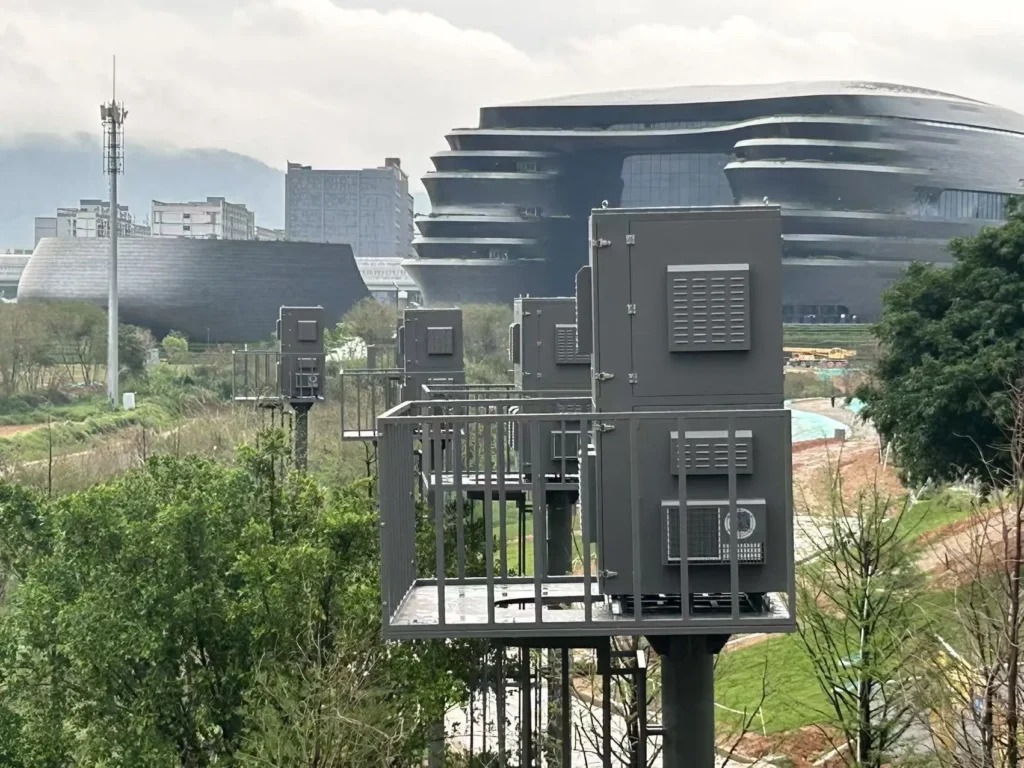
Screen color is part of the image design, but enclosure design must also protect image quality. The optical window should use suitable high-transmittance optical glass where applicable, and it should be positioned according to the lens center, projection direction, projection angle, and lens shift. A fixed transmittance percentage should not be assumed unless confirmed for the specific product.
Outdoor projection image quality can be affected by:
- Ambient light from buildings, street lamps, signage, or event lighting
- Projection surface color and reflectivity
- Lens angle and throw distance
- Optical glass cleanliness and angle
- Condensation or fogging near the projection window
- Dust or salt deposits on external surfaces
- Multi-projector blending and alignment
- Wind, vibration, and mounting stability
ShiRui configurations may include anti-fog airflow around the projection window, internal circulation, heating, humidity sensing, or dehumidification depending on the project environment. These features are especially relevant in coastal, high-humidity, underground, or cold-weather installations.
ShiRui Pro Tip: Do not evaluate screen color separately from projector location and enclosure glass. A good projection surface can still look poor if the optical window fogs, the lens is misaligned, or the projector angle is compromised.
Key Features & Comparison
A professional high lumen projector enclosure should be evaluated by thermal design, environmental protection, airflow compatibility, material, structural strength, optical window alignment, maintenance access, and control options. For 30,000 lumen and 40,000 lumen projector enclosure projects, cooling and environment must be matched to real site conditions.
Video Guide: Discover the key features of our waterproof projector box for professional outdoor projection systems. This video highlights protection against rain, dust and corrosion, along with heating, dehumidification and anti-frost functions designed to support reliable projector operation in changing outdoor conditions
Feature Priorities for Professional Outdoor Projects
Based on our internal data and market analysis, here is the breakdown:
| Feature | Why It Matters | ShiRui Engineering Approach |
|---|---|---|
| Thermal design | Prevents overheating and hot zones | Based on heat load, power consumption, airflow, and ambient temperature |
| Cooling configuration | Determines internal temperature stability | Fan, hybrid, air-conditioned, or sealed circulation selected by project |
| Airflow compatibility | Protects projector intake and exhaust paths | Designed around the projector ventilation layout |
| Optical window | Maintains projection quality | Aligned to lens center, lens diameter, shift, and projection angle |
| Material selection | Affects corrosion resistance, strength, weight, and budget | Galvanized steel, aluminum alloy, 201 stainless steel, or 304 stainless steel may be considered |
| Sheet metal thickness | Affects rigidity, door size, mounting, and load capacity | ShiRui has used approximately 1.2–4.0 mm across different projects |
| Installation structure | Supports total system weight and wind exposure | Ground, pole, wall, ceiling, stacking, or custom support design |
| Maintenance access | Enables projector removal, lens adjustment, filter service, and cooling maintenance | Designed before production drawing approval |
| Remote monitoring options | Supports distributed or permanent installations | WiFi or 4G may be available depending on configuration |
| Sensors and alarms | Helps manage temperature, humidity, smoke, or water leak risks | Optional functions selected according to project needs |
Based on our internal data and market analysis, here is the breakdown:
| Cooling Configuration | Air Exchange | Heat Load Suitability | Environment | Main Advantage | Main Consideration |
|---|---|---|---|---|---|
| Fan Cooling | Uses outside-air ventilation | Suitable only when heat load and ambient air allow | Cleaner, moderate environments | Simple structure and direct ventilation | Dust, humidity, insects, and high ambient temperature must be evaluated |
| Fan + Air Conditioner Hybrid | Combines ventilation and active cooling | Useful for staged thermal management | Sites with variable temperature conditions | Can switch or combine cooling methods as needed | Not universally superior; control logic must be project-specific |
| Air-Conditioned Cooling | Active cooling with controlled air movement | Often considered for high heat load or long operation | Hot climates or demanding projector loads | More stable internal temperature control | Capacity must be selected by heat load, not lumens alone |
| Fully Sealed Internal Circulation | Minimizes continuous outside-air exchange | Suitable for harsh environments when designed correctly | Desert, coastal, dusty, humid, polluted, underground, or subway sites | Reduces direct exposure to dust, sand, salt air, insects, and humidity | Condensation, dew point, sealing, and moisture control still matter |
Common selection mistakes include:
- Selecting an enclosure only by lumens
- Ignoring projector power consumption
- Ignoring projector intake and exhaust locations
- Choosing a cabinet before confirming the projector model
- Leaving insufficient internal airflow space
- Undersizing the cooling system
- Ignoring humidity and condensation
- Using outside-air ventilation in heavy dust or salt air
- Providing insufficient maintenance access
- Ignoring total weight in multi-projector systems
- Assuming one enclosure fits different projector brands
- Selecting enclosure material only by price
ShiRui Pro Tip: In harsh environments, I pay as much attention to humidity, salt air, dust, and condensation as I do to heat. A powerful cooling system is not enough if the enclosure continuously pulls corrosive or dusty air across the projector.
Cost & Buying Factors
The cost of a high lumen projector enclosure depends on projector size, quantity, cooling configuration, material, sealing level, optical window design, structure, sensors, remote monitoring, installation method, and customization complexity. A 30000 lumen projector enclosure or 40000 lumen projector enclosure should be quoted after engineering review.
Video Guide: Take a closer look at our outdoor projector enclosure designed for professional projection applications. This video showcases the enclosure structure and provides a clear view of the housing solution used to protect projector equipment in long-term outdoor installations.
Practical Buying Workflow and Quotation Inputs
Pricing should not be based only on projector brightness. A single 30,000-lumen projector may need a different enclosure from a dual 30,000-lumen system. A coastal 35,000-lumen installation may require different material and sealing compared with an indoor-adjacent protected outdoor site. A multi-projector enclosure may need stronger structure, more cooling distribution, independent airflow paths, and additional maintenance access.
A practical selection workflow is:
- Confirm projector brand and model.
- Obtain the projector specification sheet.
- Confirm projector dimensions and weight.
- Check power consumption and airflow path.
- Confirm projector quantity.
- Evaluate maximum and minimum ambient temperature.
- Evaluate relative humidity and condensation risk.
- Check dust, sand, salt-air, or polluted-air exposure.
- Select cooling configuration.
- Determine internal enclosure space.
- Confirm lens and optical-window alignment.
- Design mounting structure.
- Plan maintenance access.
- Select enclosure material.
- Prepare and approve the engineering drawing.
Customer information to provide for ShiRui evaluation:
- Projector brand
- Projector model
- Specification sheet
- Lumen output
- Power consumption
- Projector dimensions
- Projector weight
- Lens model
- Number of projectors
- Projection direction
- Installation method
- Daily operating hours
- Maximum ambient temperature
- Minimum ambient temperature
- Relative humidity
- Dust or sand conditions
- Coastal or salt-air exposure
- Required quantity
- Site photos
- Installation drawings
Avoid suppliers that provide fixed answers without project data. Do not rely on invented fixed cooling capacity, standard enclosure dimensions, universal clearance values, guaranteed internal temperature, fixed lumen-to-cooling formulas, exact air-conditioner power, wind-load ratings, noise levels, certification data, test results, or universal 24/7 performance claims unless confirmed for the specific project.
ShiRui Pro Tip: For buying decisions, I recommend approving the engineering drawing before production. It is much easier to adjust cooling layout, cable entry, lens position, and service doors on the drawing than after the enclosure arrives on site.
Conclusion
For 20,000–40,000 lumen projectors, brightness identifies the application class, but power consumption, heat load, airflow, projector dimensions, lens position, environment, and operating requirements determine the enclosure. The safest choice is a project-specific design reviewed against the actual projector and installation site.
Final Selection Guidance for Engineering Buyers
A professional outdoor enclosure should protect the projector without fighting against the projector’s own thermal design. For high-brightness systems, the enclosure must manage heat, airflow, humidity, condensation, dust, corrosion, structure, optical alignment, and maintenance access together.
ShiRui has experience with single-projector, dual-projector, stacked, and multi-projector enclosure configurations for approximately 20,000–40,000 lumen engineering projectors. These include project types around 23,000-lumen stacking systems, 30,000-lumen dual-projector installations, 35,000-lumen harsh-climate applications, and 40,000-lumen engineering projection projects. However, one enclosure model should not be assumed to fit every projector in the same lumen range.
Before requesting a quotation, prepare:
- Projector model and specification sheet
- Power consumption and heat-related data
- Projector quantity and arrangement
- Installation environment and operating hours
- Maximum and minimum ambient temperature
- Humidity, dust, sand, or salt-air conditions
- Lens model and projection direction
- Site drawing, mounting method, and photos
- Maintenance access requirements
For a project-specific enclosure and cooling evaluation, send ShiRui the projector model, specification sheet, power consumption, quantity, installation environment, operating hours, and site drawing. This allows the enclosure to be designed around real engineering requirements instead of assumptions.
ShiRui Pro Tip: My final advice is simple: do not buy the enclosure by lumen number alone. Send the projector datasheet and site conditions first, then let the enclosure design follow the heat load, airflow path, environment, and maintenance requirements.