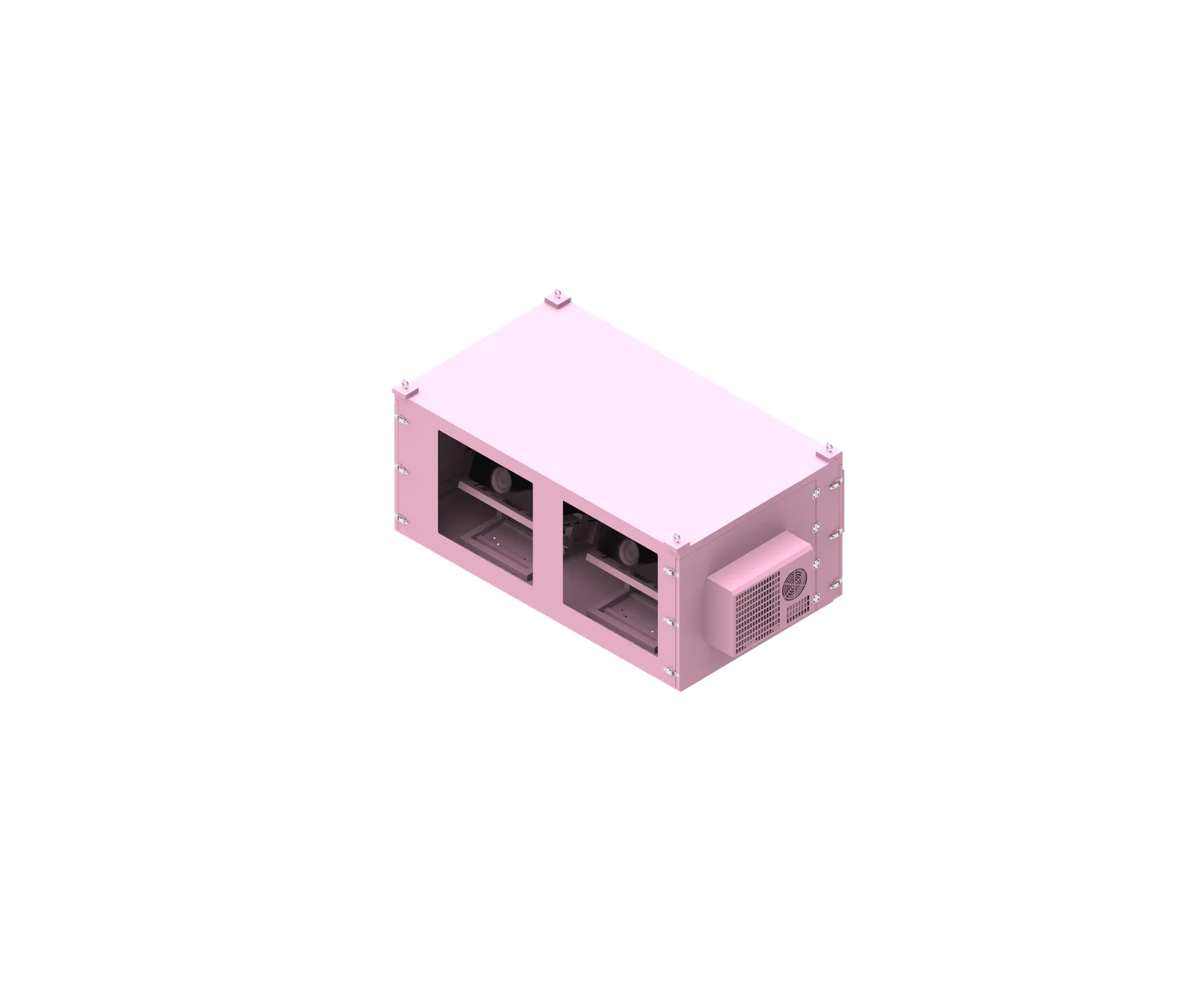
Coastal projector installations face more than rain: airborne chloride deposits, salt mist, high humidity, wind-driven water, condensation, sunlight, sand, and wet-dry cycling can attack enclosure bodies, welds, fasteners, hinges, cable glands, cooling components, electrical connections, and optical glass. A suitable outdoor projector enclosure for coastal environments requires project-specific material selection, corrosion protection, cooling, humidity control, protected cable entry, drainable construction, compatible hardware, and planned maintenance.
What is outdoor projector enclosure for coastal environments?
An outdoor projector enclosure for coastal environments is a purpose-engineered protective housing for projectors installed near seas, islands, beachfront resorts, marinas, waterfront parks, and marine-influenced scenic areas. It must address rain ingress, salt-laden air, chloride deposits, humidity, condensation, sand, UV exposure, cooling load, cable sealing, and corrosion-prone components.
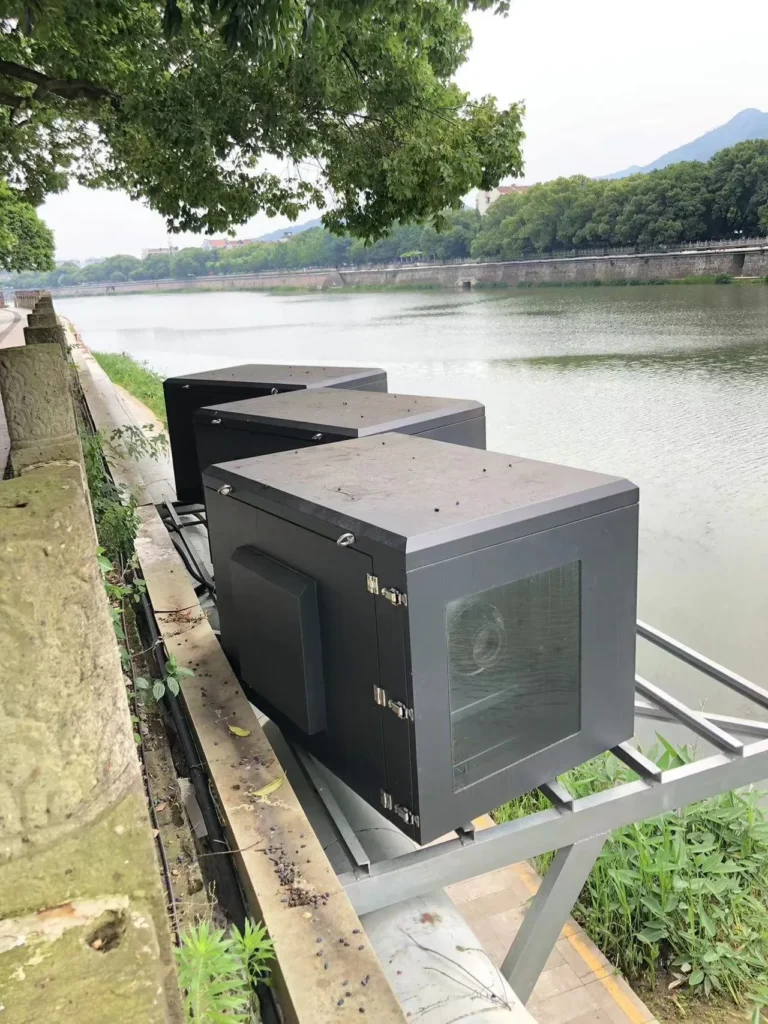
Coastal Enclosure Definition and Engineering Scope
A coastal projector enclosure is not simply a waterproof box. It is a weatherproof projector housing designed around the projector’s heat output, airflow direction, lens geometry, service access, site exposure, and corrosion risks.
Normal rain exposure is usually intermittent fresh water. Coastal exposure may include salt-laden air, salt mist, wind-driven spray, high relative humidity, sand, airborne pollutants, and repeated wet-and-dry cycles. These conditions can accelerate corrosion at cut edges, weld seams, threaded holes, door hardware, cable glands, and dissimilar-metal joints.
Coastal severity varies by distance from open water, prevailing wind, installation height, shelter, direct splash, salt-deposition rate, rain washing, humidity, industrial pollution, and maintenance frequency. There is no universal shoreline distance that automatically defines every coastal environment.
Based on our internal data and market analysis, here is the breakdown:
| Exposure Factor | Why It Matters | Enclosure Design Impact |
|---|---|---|
| Salt-laden air | Chlorides can remain on surfaces after moisture evaporates | Material, coating, fasteners, cleaning access |
| Wind-driven spray | Water can hit seals and vents from unusual directions | Gasket design, intake placement, drain paths |
| High humidity | Raises condensation risk after shutdown | Dew-point control, heaters, dehumidification |
| Sand and dust | Can clog filters and abrade seals | Filtration, maintenance access, IP rating |
| UV exposure | Can degrade plastics, seals, and coatings | UV-resistant components and shading |
| Wet-dry cycles | Concentrate salt deposits over time | Surface finish, drainage, maintenance plan |
ShiRui Pro Tip: I treat coastal projects as corrosion-control projects first and waterproofing projects second. If the quotation only discusses IP rating and ignores chlorides, condensation, fasteners, and cleaning access, the enclosure review is incomplete.
How Does outdoor projector enclosure for coastal environments Work?
A coastal projector enclosure works by combining ingress protection, thermal management, corrosion-resistant construction, controlled airflow or closed-loop cooling, humidity management, sealed cable entry, optical-window protection, and drainable geometry. Its function is to keep the projector operating within environmental limits while reducing exposure to salt, moisture, dust, and temperature stress.
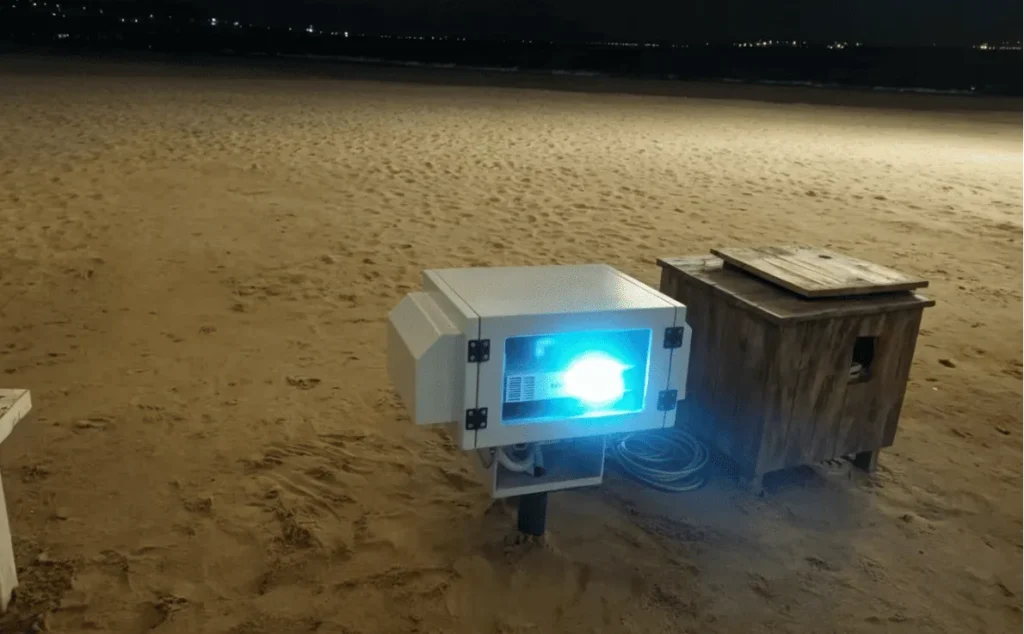
Protection Mechanisms Inside a Coastal Projector Enclosure
A coastal projector enclosure works as an integrated environmental-control system. The enclosure body blocks rain and dust. Gaskets and cable glands reduce water and particle ingress. The optical window preserves the projection path while protecting the projector lens area. Cooling architecture removes projector heat without exposing sensitive equipment to unnecessary salt aerosol.
Salt corrosion begins when chloride deposits retain moisture and increase the conductivity of surface films. This can damage painted panels, carbon-steel edges, weld seams, fasteners, hinges, locks, cable glands, terminals, fan motors, cooling coils, optical-window frames, and grounding hardware.
Crevice corrosion can occur where moisture and chlorides remain trapped in tight gaps, such as under washers, inside folds, behind hinges, or around poorly drained seams. Galvanic corrosion can occur when dissimilar metals are electrically connected in the presence of conductive moisture.
A climate controlled projector enclosure may use ventilation, positive-pressure filtration, air conditioning, or a closed loop projector enclosure design. The correct approach depends on projector heat load, chloride severity, humidity, operating hours, maintenance access, and customer specification.
Based on our internal data and market analysis, here is the breakdown:
| Cooling Method | When It May Be Considered | Main Coastal Risk | Required Design Review |
|---|---|---|---|
| Filtered outside-air cooling | Lower exposure sites with manageable humidity | Salt aerosol, sand, filter loading | Filter sealing, pressure loss, intake location |
| Positive-pressure filtered ventilation | Sites needing reduced dust and water entry | Filter bypass or insufficient fan pressure | Fan curve, filter media, pressure balance |
| Air-conditioned enclosure | High heat load or severe humidity | Condensate management and coil corrosion | Drainage, service access, duty cycle |
| Closed-loop climate-controlled enclosure | When outdoor-air exchange is undesirable | Condensation still possible if poorly controlled | Dew-point margin, sealing, humidity monitoring |
For related design fundamentals, see How Projector Airflow Direction Affects Enclosure Design and How to Prevent Condensation Inside a Projector Enclosure.
ShiRui Pro Tip: I never select the cooling method from projector brightness alone. I first check heat dissipation, air intake and exhaust direction, site humidity, salt exposure, service access, and whether the client can maintain filters and condensate lines.
What are the benefits of outdoor projector enclosure for coastal environments?
The main benefits are longer equipment protection, more stable projection operation, reduced salt and moisture exposure, safer cable management, improved thermal control, better optical-window protection, and easier maintenance planning. For resorts, theme parks, projection-mapping shows, and scenic night tours, this supports more predictable outdoor operation in aggressive coastal conditions.
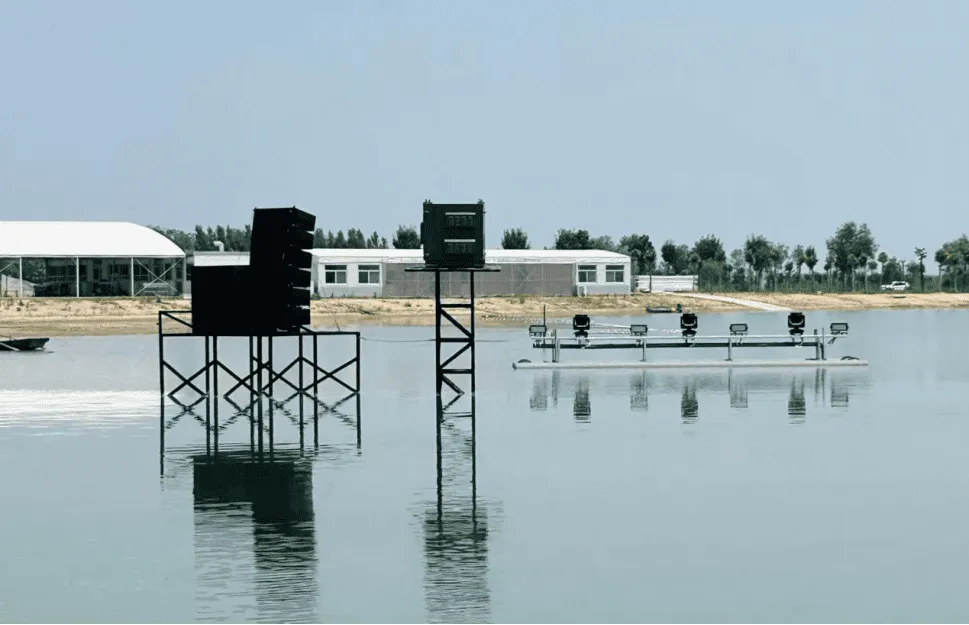
Practical Benefits for Coastal Projection Projects
For AV integrators and projection-mapping contractors, the value of a coastal projector enclosure is not only protecting the projector from rain. It is controlling the environment around a high-value optical and electronic device.
A corrosion resistant projector enclosure can help reduce damage to exposed surfaces, but corrosion control must include fabrication details. A strong panel material may still fail around untreated welds, cut edges, threaded inserts, fasteners, hinges, or joints. Stainless steel performance is also affected by smooth surface finish, drainage, clean fabrication, weld treatment, pickling or passivation where applicable, and avoiding crevices.
Surface treatment and fabrication should review edge preparation, weld cleanup, powder-coating pretreatment, coating documentation, sealed cut edges, drainable folds, accessible corners, protected threaded holes, isolated dissimilar metals, and compatible washers.
Based on our internal data and market analysis, here is the breakdown:
| Material or Finish | When It May Be Considered | Main Advantage | Main Coastal Limitation |
|---|---|---|---|
| Powder-coated galvanized steel | Moderate exposure with budget control | Zinc protection plus coating barrier | Cut edges and damaged coating need attention |
| Powder-coated carbon steel | Less aggressive sites or short-term projects | Cost-effective fabrication | Vulnerable if coating is damaged |
| Aluminum | Weight-sensitive structures | Light weight and natural oxide layer | Galvanic issues and chloride pitting risk |
| 304 or 304L stainless steel | Controlled exposure with good maintenance | Better general corrosion resistance than carbon steel | Not suitable for every coastal location |
| 316 or 316L stainless steel | Higher chloride exposure than 304 applications | Improved chloride resistance | Not corrosion-proof in severe crevices or deposits |
| Higher-alloy stainless steels | Severe chloride exposure by specification | Stronger resistance in aggressive environments | Higher cost and procurement complexity |
Material selection depends on chloride severity, direct salt exposure, service-life expectation, fabrication method, weld quality, surface finish, cleaning access, budget, structural load, and customer specification. No single material is correct for every coastal projector enclosure.
ShiRui Pro Tip: I ask buyers to define corrosion expectations in writing. “Seaside use” is not a specification; test method, material, coating, acceptance criteria, and maintenance responsibility must be clear before production.
How to maintain a outdoor projector enclosure for coastal environments?
Maintenance is essential because coastal protection is not maintenance-free. A seaside projector enclosure should be inspected for salt deposits, optical-window contamination, filters, cooling coils, fans, gaskets, weld seams, coating damage, fasteners, hinges, locks, cable glands, drain outlets, condensate lines, brackets, grounding, and humidity or temperature sensors.
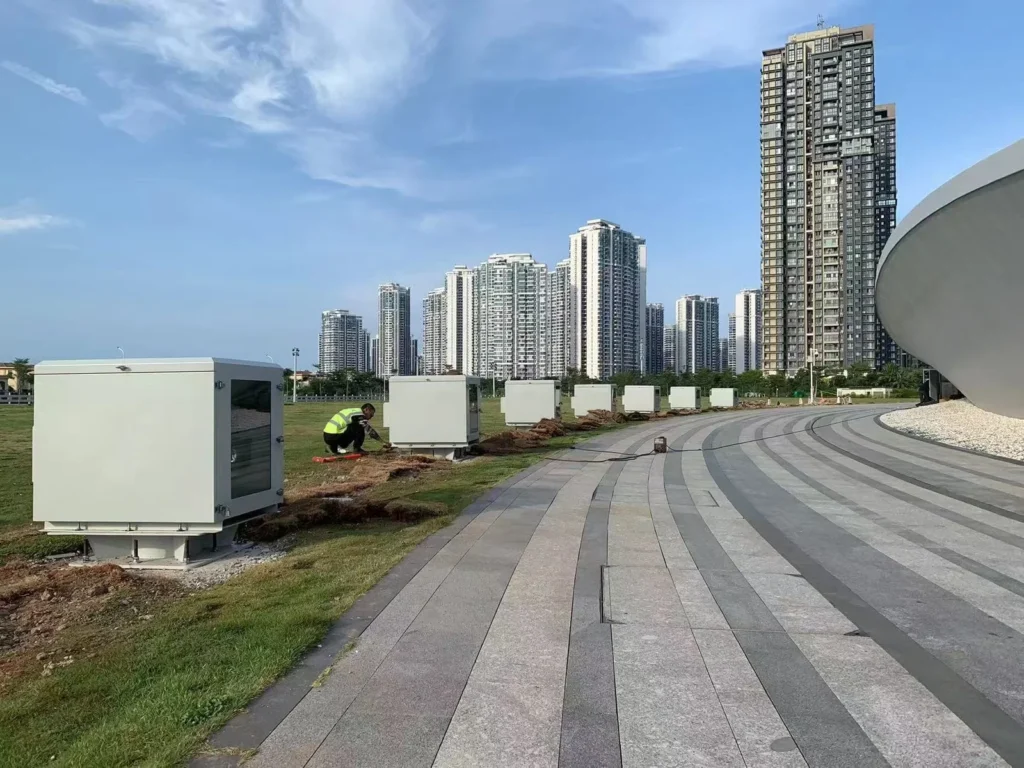
Coastal Maintenance and Condensation Control
Coastal maintenance frequency should be based on site exposure, salt accumulation, equipment criticality, operating hours, and manufacturer instructions. A sheltered marina installation may require a different plan from an exposed beachfront projection-mapping tower. Avoid universal monthly or annual claims unless the project specification defines them.
Condensation is one of the most underestimated coastal risks. External water may not enter the enclosure, yet humid air can condense on cold surfaces after projector shutdown, rapid nighttime cooling, or maintenance access. Cold optical glass, trapped humid air, and insufficient standby control can create projector enclosure condensation control problems.
Environmental controls may need to remain energized after the projector is switched off. Designers may consider temperature and humidity monitoring, dew-point margin control, anti-condensation heating, dehumidification, standby ventilation, condensate drainage, and remote humidity alarms. Do not assume a closed-loop projector enclosure automatically prevents all corrosion or condensation.
Maintenance should include:
- Remove salt deposits using approved cleaning methods only.
- Inspect optical glass for salt film, water spotting, mineral residue, fogging, seal damage, internal reflection, and beam clipping.
- Check filters, fan operation, cooling coils, condensate drains, and air paths.
- Inspect door gaskets, hinges, locks, cable glands, drain outlets, and mounting brackets.
- Review coating damage, weld seams, fasteners, dissimilar-metal joints, grounding, and sensor readings.
Do not pressure wash unless the specific enclosure configuration and maintenance instructions allow it.
ShiRui Pro Tip: I recommend logging humidity alarms, filter condition, glass cleaning, and any corrosion marks with photos. A simple maintenance record helps separate design issues from exposure, cleaning, or site-operation problems.
What is the price of outdoor projector enclosure for coastal environments?
The price depends on projector size, quantity, heat load, lens clearance, material selection, corrosion treatment, cooling architecture, IP rating, required corrosion evidence, cable-entry design, mounting method, optical-window requirements, and service access. A coastal projector enclosure is usually quoted from project data rather than a one-size catalog price.
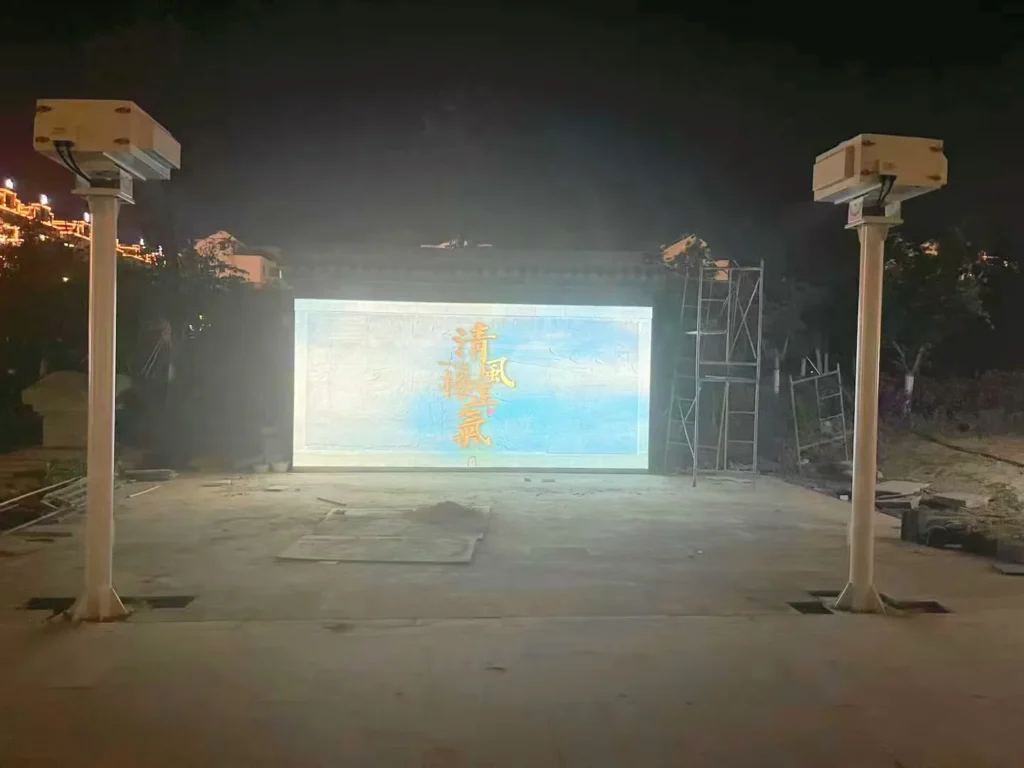
Pricing Variables and Required Project Information
A salt spray projector enclosure for a high-brightness projector can cost more than a general outdoor enclosure because coastal work affects many subsystems. Air conditioning, closed-loop thermal control, corrosion-resistant hardware, custom cable glands, structural mounting, window protection, and documentation requirements all influence price.
Buyers should also distinguish official standard evidence. IP65 is an ingress-protection rating, not a corrosion certificate. ShiRui’s intelligent climate-controlled enclosure, main tested model shirui-12000, was tested under report CTB200724004Q to GB/T 4208-2017 for IP65. The tested items met the specified requirements.
Recorded IPX5 water-test information included a 6.3 mm nozzle, 12.5 L/min water-flow rate, 2.5–3 m distance, at least three minutes test duration, no internal water ingress, and pass judgment. Recorded IP6 dust-test information included a 1 m³ dust chamber, 2 kg talcum powder, 75 μm sieve size, pressure difference no more than 2 kPa, eight-hour vacuum test, no internal dust, and pass judgment. The report lists related models from shirui-4500 through shirui-40000, while the main test was conducted on shirui-12000.
However, IP65 does not prove salt-spray resistance, long-term corrosion resistance, chloride resistance, UV resistance, cooling capacity, condensation prevention, or immersion protection. A field-modified enclosure may not retain the documented protection level. For more background, see IP54 vs IP55 vs IP65 Projector Enclosures.
Based on our internal data and market analysis, here is the breakdown:
| Required Information | Why It Matters | Design Area Affected |
|---|---|---|
| Projector brand, exact model, lens, quantity | Confirms fit, airflow, and optical path | Mechanical layout |
| Dimensions, weight, power consumption, heat data | Defines structure and cooling load | Thermal and structural design |
| Intake/exhaust direction and orientation | Prevents airflow blockage | Cooling architecture |
| Temperature, humidity, shoreline distance, wind | Defines environmental severity | Material and condensation review |
| Direct salt spray, rain, sand, pollution | Determines protection strategy | Sealing and filtration |
| Mounting method, height, flood or tidal risk | Affects structure and access | Installation design |
| Required IP rating and corrosion standard | Defines documentation needs | Testing and compliance review |
| Cable entries, site photos, drawings | Prevents field modifications | Production and installation |
ShiRui Pro Tip: I advise clients to send projector data before requesting price. Without heat load, lens position, airflow direction, and site exposure, a low quotation may exclude the engineering that coastal installations actually require.
Key Features & Comparison
Key features should include project-specific material selection, treated fabrication details, compatible fasteners and hinges, protected cable glands, controlled cooling, condensation management, optical-window drainage, service access, and clear separation between IP evidence and corrosion evidence. The best coastal projection mapping enclosure is engineered around the site, not only the projector.
Feature Comparison for Coastal Design Review
Coastal design must review every exposed component, not only the cabinet body. Fasteners, hinges, locks, cable glands, washers, brackets, grounding hardware, and electrical connectors can become weak points if their material and galvanic compatibility are not specified.
The same applies to standards. ISO 9227:2022 specifies neutral salt spray, acetic acid salt spray, and copper-accelerated acetic acid salt spray test methods. It does not by itself define the required duration for a projector enclosure, acceptance criteria, permitted corrosion, expected outdoor service life, direct ranking of every material, or guaranteed years in service.
Any salt-spray claim should identify the tested material or component, surface preparation, coating system, test method, duration, acceptance criteria, and final result.
ISO 12944 addresses corrosion protection of steel structures by protective paint systems. ISO 12944-9 covers protective paint systems for offshore and related structures exposed to marine atmospheres or sea and brackish water. A complete projector enclosure is not automatically certified to ISO 12944 because one coating product references the standard, and the standard’s coating classifications should not be applied to stainless-steel enclosures without explaining the scope.
Based on our internal data and market analysis, here is the breakdown:
| Feature | Coastal Purpose | What to Verify |
|---|---|---|
| IP-rated enclosure sealing | Limits water and dust ingress | Test scope, model tested, field modifications |
| Corrosion-resistant material | Reduces chloride attack risk | Grade, finish, fabrication, cleaning access |
| Treated welds and edges | Prevents early weak-point corrosion | Weld cleanup, passivation or coating process |
| Compatible hardware | Reduces galvanic and crevice corrosion | Fastener, hinge, lock, washer materials |
| Protected cable glands | Limits water and salt entry | Gland material, sealing, cable diameter |
| Climate control | Manages heat and humidity | Heat load, dew point, condensate drainage |
| Optical-window design | Protects projection path | Seal, drainage, cleaning access, beam clearance |
| Maintenance access | Supports long-term protection | Door swing, safe access, replaceable parts |
Verified ShiRui Coastal Project Snapshot
Project Location:
Pingtan International Tourism Island, Tannan Bay Scenic Area, Fujian, China
Confirmed ShiRui Project Configurations:
- 15,000-lumen air-conditioned single-projector enclosure
- 15,000-lumen air-conditioned dual-projector vertically stacked enclosure
Application Context:
High-brightness fixed outdoor projection in an island and coastal scenic-area environment
Confirmed Engineering Themes:
- Air-conditioned thermal management
- Single and vertically stacked dual-projector configurations
- Outdoor environmental protection
- High-brightness projection support
An 8,000-lumen outdoor enclosure for a mirror or rail-mirror projection configuration is also documented for the same scenic-area reference. The verified archive confirms location, lumen level, air-conditioned configuration, and single or vertically stacked arrangement. It does not confirm enclosure material, stainless-steel grade, coating system, salt-spray result, operating temperature, maintenance history, or measured corrosion performance.
ShiRui Pro Tip: I use project references carefully. A coastal scenic-area installation proves relevant configuration experience, but it should not be used as a substitute for your own material, corrosion, cooling, and maintenance specification.
Cost & Buying Factors
Buying decisions should compare lifecycle risk, not only enclosure price. For coastal installations, the main cost drivers are heat removal, corrosion specification, material and finish, custom fabrication, environmental monitoring, IP documentation, cable-entry design, mounting structure, access safety, and the level of evidence required by the project owner or consultant.
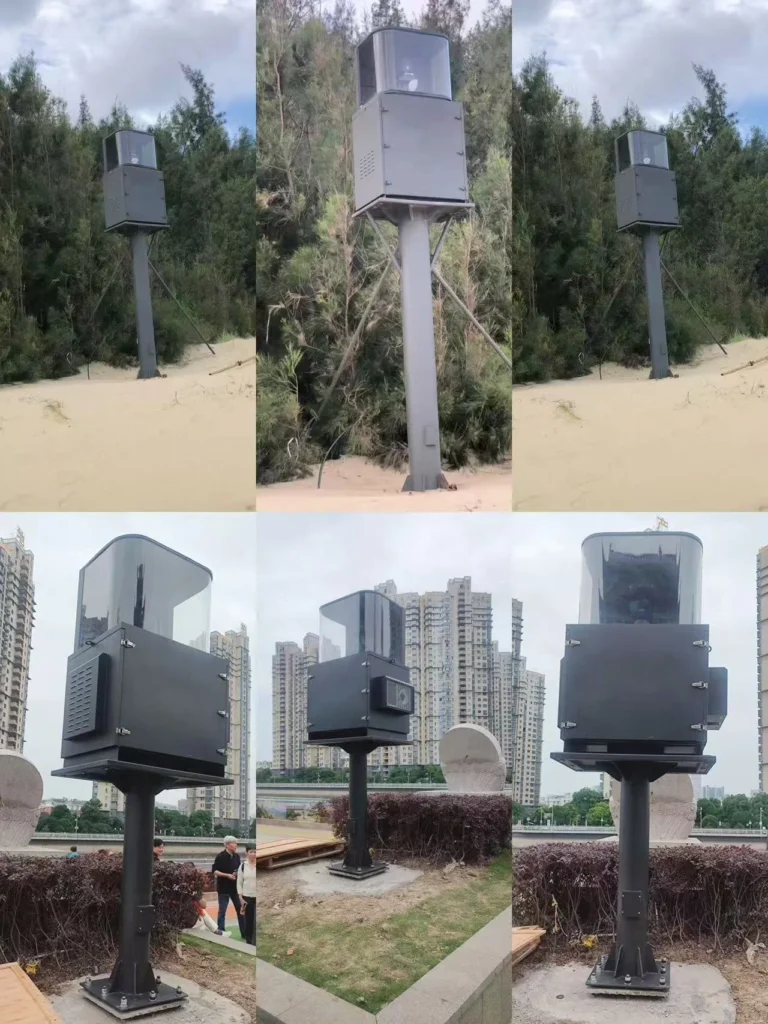
Procurement Checklist for Coastal Buyers
A marine projector enclosure or high-humidity projector enclosure should be evaluated as a custom engineered product. The buyer should confirm the projector and lens first, then review the site environment, then define enclosure protection, cooling, and maintenance expectations.
A higher IP rating does not automatically provide better corrosion resistance. Ingress testing and corrosion testing answer different questions. IP testing evaluates dust and water entry under defined conditions. Corrosion testing evaluates materials, coatings, or components under defined corrosive exposure and acceptance criteria.
Before issuing a purchase order, confirm the following:
- Exact projector and lens confirmed.
- Heat load reviewed.
- Site salt exposure assessed.
- Humidity and condensation reviewed.
- Material selected for actual exposure.
- Coating or surface treatment documented.
- Weld treatment reviewed.
- Dissimilar metals reviewed.
- Fasteners and hinges specified.
- Cooling architecture selected.
- Filter pressure loss reviewed if ventilation is used.
- Optical window and drainage reviewed.
- Cable glands reviewed.
- Mounting-frame corrosion reviewed.
- IP report scope reviewed.
- Salt-spray evidence reviewed separately from IP evidence.
- Maintenance access confirmed.
- Final drawing approved before production.
Useful related planning resources include How to Plan Cable Entry for an Outdoor Projector Enclosure, Pole Mount Projector Enclosure, Outdoor Projector Enclosure for Theme Parks, Outdoor Projector Enclosures for Water-Screen Projection, and the Outdoor Projector Enclosure product page.
ShiRui Pro Tip: I encourage buyers to request drawings before production, not after delivery. Cable entries, projection angle, lens clearance, drain direction, and service door access are much easier to correct on drawings than on a coastal site.
Conclusion
A coastal projector enclosure must be engineered for salt, humidity, condensation, heat, wind-driven water, sand, UV exposure, and maintainable corrosion control. IP65 can support ingress-protection evaluation, but it is not a salt-spray or marine-corrosion certificate. The correct solution depends on projector data, site exposure, documentation requirements, and maintenance planning.
Final Engineering Takeaways and FAQ
For coastal resorts, island scenic areas, marinas, theme parks, and projection-mapping projects, enclosure selection should separate four evidence categories: verified project experience, verified ingress testing, official corrosion standards, and project-specific engineering guidance.
ShiRui’s verified Pingtan coastal scenic-area reference confirms 15,000-lumen air-conditioned single-projector and vertically stacked dual-projector enclosure configurations in an island environment. ShiRui’s IP65 reference confirms ingress-test performance for the tested intelligent climate-controlled enclosure model shirui-12000 under GB/T 4208-2017, with related models listed from shirui-4500 through shirui-40000. Neither reference should be overstated as a universal salt-spray certification.
Frequently asked questions:
- What makes a coastal projector enclosure different?
It must address chloride deposits, salt mist, humidity, condensation, wind-driven spray, sand, UV exposure, and corrosion-prone details such as welds, hinges, locks, cable glands, and fasteners. - Does IP65 protect against salt spray?
IP65 is an ingress-protection rating for dust and water jets under defined test conditions. It does not prove salt-spray resistance, chloride resistance, UV resistance, cooling capacity, or condensation prevention. - Is 304 stainless steel suitable for coastal projector enclosures?
Sometimes, but not for every coastal location. Suitability depends on chloride severity, surface finish, drainage, fabrication quality, crevice risk, cleaning access, and required service expectations. - Is 316 stainless steel completely corrosion-proof?
No. 316 or 316L stainless steel generally improves chloride resistance compared with 304, but it is not immune to crevice corrosion, deposits, poor drainage, or severe chloride exposure. - Is fan cooling suitable near the sea?
It may be considered in some projects, but outside-air ventilation can introduce salt aerosol, humidity, sand, and pollutants. Filtration, sealing, pressure loss, intake location, and maintenance must be reviewed. - When should a closed-loop enclosure be considered?
It may be considered when salt concentration is high, humidity is severe, outdoor-air exchange is undesirable, heat load is high, operating hours are long, or maintenance access is difficult. - How can condensation be controlled in coastal environments?
Use temperature and humidity monitoring, dew-point margin review, standby environmental control, anti-condensation heating, dehumidification where appropriate, condensate drainage, and remote alarms. - What test reports should buyers request?
Request IP reports for ingress protection and separate corrosion evidence for materials, coatings, or components. Salt-spray claims should identify test method, duration, preparation, coating system, acceptance criteria, and result.
Send ShiRui your projector brand, exact model, lens, quantity, power consumption, installation orientation, site temperature, humidity, distance from the coast, salt-spray exposure, mounting method, required IP rating, corrosion specification, site photos, and structural drawings for a custom coastal projector enclosure review.
ShiRui Pro Tip: I prefer to solve coastal risk before fabrication starts. When the projector data, site photos, wind direction, humidity, corrosion requirements, and maintenance access are clear, the enclosure can be engineered with far fewer assumptions.