Theme parks should evaluate heat load, humidity, water exposure, dust, insects, corrosion risk, vibration, guest access, noise limits, service access, and monitoring before selecting an outdoor projector enclosure. Unlike temporary outdoor events, attractions operate repeatedly, often near water, fog, crowds, landscaping, and show-control networks, so the enclosure must be designed as part of the permanent AV infrastructure, not just as weather cover.
What is outdoor projector enclosure for theme parks?
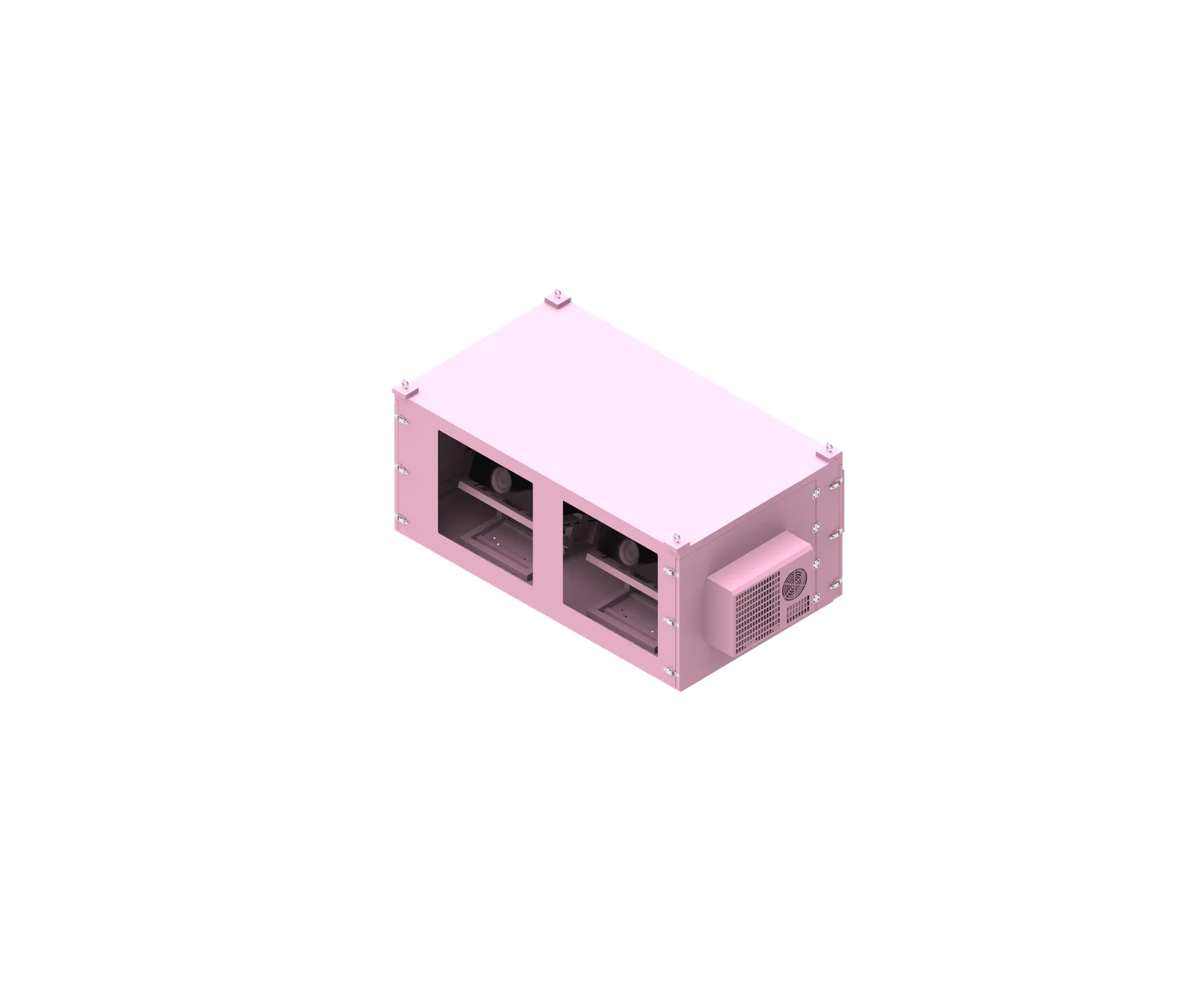
An outdoor projector enclosure for theme parks is a protective housing that allows professional projectors to operate outdoors or in semi-outdoor attraction environments. It shields the projector from rain, dust, insects, humidity, tampering, heat buildup, and operational disruption while supporting cooling, monitoring, alignment, and maintenance access for long-term show reliability.
Functional Definition and Application Scope
A theme park projector enclosure is not simply a waterproof box. It is an engineered outdoor attraction projector housing that must balance environmental protection, projector thermal requirements, optical quality, serviceability, safety, and show uptime.
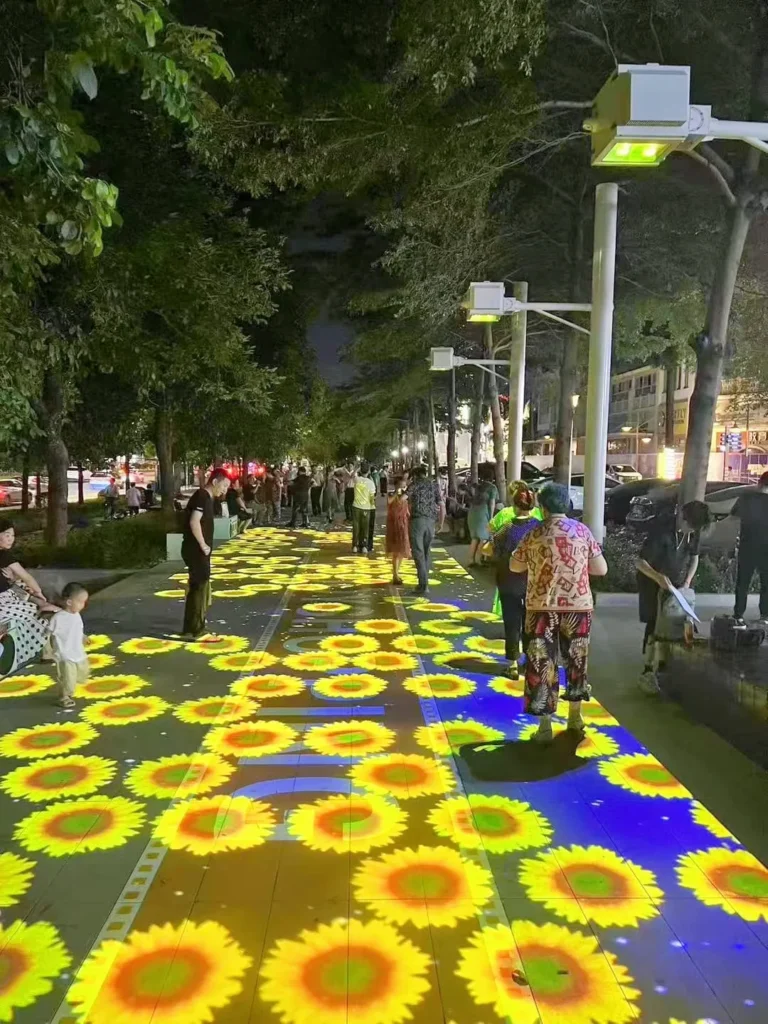
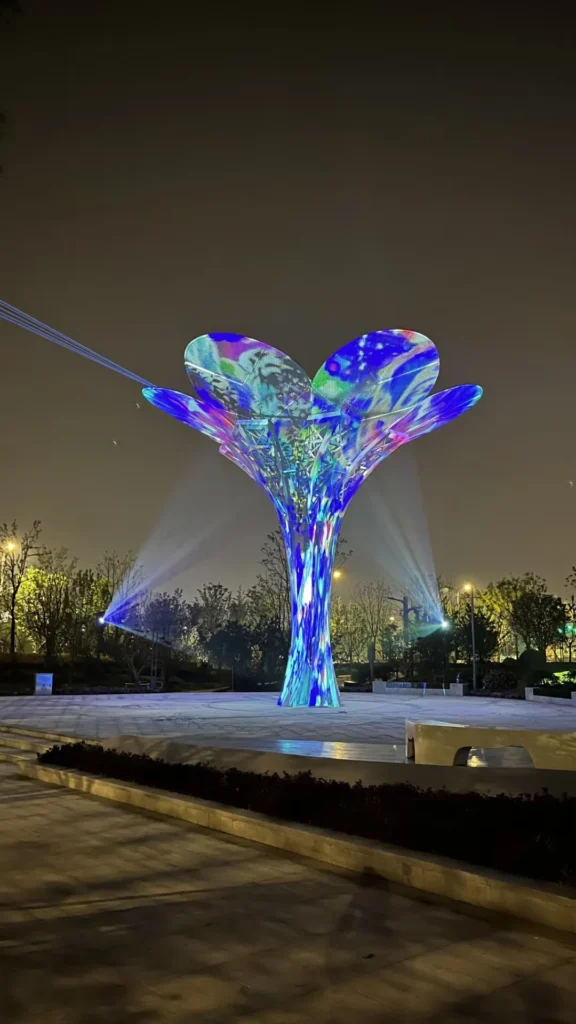
For theme park projection mapping, water-screen shows, immersive queues, scenic night tours, seasonal events, and dark-ride exterior scenes, the enclosure becomes part of the show system. It must be compatible with projector airflow, lens position, mounting orientation, access direction, cable routing, and local electrical requirements.
Based on our internal data and market analysis, here is the breakdown:
| Use Case | Main Environmental Risk | Enclosure Design Priority | Data Basis |
|---|---|---|---|
| Building projection mapping | High heat load, alignment drift, wind exposure | Climate control, rigid mount, remote monitoring | Engineering recommendation |
| Water-screen or water-feature show | Mist, high humidity, condensation, corrosion | Water-resistant design, dehumidification, corrosion-resistant material | Engineering recommendation |
| Immersive queue area | Guest contact, noise, concealed installation | Anti-tamper locks, low-noise ventilation, hidden access | Engineering recommendation |
| Night parade route | Dust, vibration, difficult access | Filtration, vibration isolation, quick-service doors | Engineering recommendation |
| Forest or scenic night tour | Insects, moisture, temperature swing | Insect screens, heating, anti-condensation control | Engineering recommendation |
| Seasonal event | Repeated installation, storage, transport damage | Quick connectors, portable frame, transport protection | Engineering recommendation |
| Multi-projector blending | Heat, alignment, service congestion | Independent airflow, precise mounting, multiple access doors | Engineering recommendation |
A weatherproof projector enclosure is usually selected after reviewing the projector manufacturer’s operating environment limits, intake/exhaust positions, maximum power consumption, lens throw, and maintenance requirements. Final configuration should not be based on a universal IP rating or a universal air-conditioning recommendation. It should be determined by actual spray direction, thermal load, ambient temperature and humidity, dust level, salt or chemical exposure, electrical standards, and service workflow.
ShiRui Pro Tip: I always start by asking where the water, heat, and people are coming from. If those three risks are mapped correctly, the enclosure design becomes much more accurate than choosing only by projector brightness or enclosure size.
How Does outdoor projector enclosure for theme parks Work?
An outdoor projector enclosure for theme parks works by creating a controlled operating space around the projector. It manages airflow, heat rejection, moisture, filtration, cable sealing, optical transmission, and access control so the projector can run outdoors while staying within the manufacturer’s operating requirements and attraction maintenance procedures.
Environmental Control and Protection Principle
A theme park projector enclosure works through layered protection. The outer structure blocks direct weather and physical contact. The airflow or climate-control system manages heat. Filters, seals, insect barriers, drainage paths, and optional dehumidification reduce contamination and condensation risks. Sensors report operating conditions before they become show-stopping failures.
Typical systems may use fan cooling, air conditioning, heat exchangers, or sealed internal circulation. There is no single correct method for all attractions. A fan-cooled enclosure may be suitable for moderate heat and protected locations, while a climate-controlled projector enclosure may be necessary where ambient heat, humidity, solar exposure, or projector power demand is higher. Heat-exchanger or sealed circulation designs may be considered where external dust, fog, insects, or corrosive air should be isolated from the projector compartment.
- Outer protection layer
Blocks rain, water splash, dust, insects, guest contact, and incidental impact. - Thermal-management layer
Removes projector heat using fans, air conditioning, heat exchangers, or sealed internal circulation depending on site conditions. - Moisture-control layer
Uses drainage, sealing, heating, dehumidification, or anti-condensation logic where required. - Optical layer
Provides a clear projection path through a window or aperture while minimizing reflection, distortion, and image loss. - Monitoring layer
Tracks temperature, humidity, door status, power, alarms, and network communication where specified. - Service layer
Allows safe filter changes, lens cleaning, projector access, alignment checks, and emergency maintenance.
ShiRui Pro Tip: I recommend designing the enclosure airflow around the projector’s real intake and exhaust path, not around the enclosure shape. A beautiful enclosure that recirculates hot exhaust back into the intake will still cause thermal problems.
What are the benefits of outdoor projector enclosure for theme parks?
The main benefits are improved projector protection, more stable show operation, reduced weather-related interruption, safer guest-area installation, easier preventive maintenance, and better remote supervision. A properly designed theme park projector enclosure helps protect AV investment while supporting projection mapping, nighttime shows, immersive attractions, and seasonal operations.
Operational Benefits for Permanent Attractions
Theme park installations differ from temporary outdoor events because they are usually integrated into scenery, buildings, water features, control rooms, parade routes, or guest-facing areas. They may operate for many nights per year and must be maintained by park operations teams, not only by event technicians.
A projector enclosure for nighttime shows supports both show quality and maintenance planning. It helps reduce exposure to sudden rain, fog effects, dust, insects, and accidental contact. It also provides a defined location for sensors, power distribution, networking, and cable strain relief.
Based on our internal data and market analysis, here is the breakdown:
| Benefit | Why It Matters in Theme Parks | Relevant Configuration |
|---|---|---|
| Weather protection | Outdoor shows must continue despite changing weather conditions | Rain shielding, sealing, drainage, corrosion-resistant materials |
| Thermal stability | High-brightness projectors generate significant heat | Fan cooling, air conditioning, heat exchanger, or sealed cooling design |
| Moisture control | Humidity, mist, and condensation can damage optics and electronics | Dehumidification, heating, humidity monitoring, anti-condensation logic |
| Guest safety and access control | Equipment may be near queues, pathways, or scenic structures | Locks, concealed mounting, barriers, tamper-resistant fasteners |
| Maintenance efficiency | Parks need repeatable service routines | Filter access, removable panels, lighting, labeled wiring |
| Show reliability | Projection failure can affect guest experience and operations | Remote alarms, sensor logging, service access, spare-parts planning |
| Image consistency | Alignment changes can affect projection mapping quality | Rigid base, vibration control, stable lens window, alignment access |
The benefits are strongest when the enclosure is designed during attraction planning rather than added after projector selection. Early coordination allows scenic designers, AV consultants, electrical engineers, and operations teams to reserve airflow space, drainage clearance, cable routing, service access, and safe lifting paths.
ShiRui Pro Tip: I prefer involving the maintenance team before fabrication. They will quickly identify whether a filter, lens, or door can actually be accessed during a busy operating day.
How to maintain a outdoor projector enclosure for theme parks?
Maintenance should include filter inspection, window cleaning, seal checks, drainage checks, sensor verification, cooling-system inspection, door-lock testing, cable inspection, corrosion review, and alignment confirmation. The schedule should be adjusted to local dust, insects, humidity, fog effects, water features, show hours, and recorded alarm history.
Preventive Maintenance Schedule and Acceptance Checks
Maintenance for a weatherproof projector enclosure should be documented as part of the attraction’s AV preventive-maintenance program. Parks should not rely only on emergency service after alarms occur. Routine inspections help identify blocked filters, insect buildup, drainage obstruction, door-seal wear, corrosion, and early cooling-system issues.
For commissioning, the enclosure should be checked under realistic show conditions. Acceptance testing should include projector operation, thermal monitoring, humidity behavior, alarm reporting, door access, lens alignment, image quality, and maintenance access.
- Pre-installation site survey checklist
- Confirm projector model, brightness, maximum power consumption, intake and exhaust locations.
- Record ambient temperature and relative humidity range where available.
- Identify full-sun exposure hours and shading conditions.
- Map rain direction, water spray, mist, fog effects, and water-feature distance.
- Assess dust, pollen, insects, salt air, chemicals, landscaping, and cleaning procedures.
- Check guest-access risk and required barriers or concealed installation.
- Confirm mounting method: ground, wall, pole, truss, or scenic structure.
- Confirm noise requirement and measurement distance.
- Confirm local electrical, grounding, drainage, and safety requirements.
- Confirm service access, lifting route, and emergency replacement path.
- Commissioning and acceptance-test procedures
- Verify enclosure model, dimensions, material, door operation, locks, and cable entries.
- Confirm projector clearance, airflow direction, and lens alignment.
- Run the projector at expected show brightness and content mode.
- Monitor enclosure temperature, projector inlet temperature, and internal humidity.
- Test cooling, heating, dehumidification, and alarm functions where specified.
- Confirm network monitoring, power status, door alarm, and alarm notification.
- Inspect for light reflection, optical window contamination, ghosting, or image distortion.
- Check noise at the agreed measurement distance.
- Record baseline operating values for future maintenance comparison.
- Preventive maintenance schedule
- Before show season: Full enclosure inspection, seal inspection, sensor verification, cooling-system test, mounting check.
- Weekly or biweekly during heavy operation: Visual check for water, dust, insects, alarms, abnormal noise, and blocked vents.
- Monthly or as site conditions require: Filter inspection or replacement, window cleaning, drain clearing, fastener check.
- After storms or water-feature changes: Water-ingress inspection, corrosion check, cable-entry inspection.
- After fog-effect or seasonal-event periods: Residue cleaning, fan/filter review, optical-window inspection.
- Annually: Full functional test, electrical inspection, structural review, monitoring-data review, maintenance-log analysis.
ShiRui Pro Tip: I advise logging every filter change and alarm with the show date and weather condition. After one season, that log becomes more useful than any generic maintenance interval.
What is the price of outdoor projector enclosure for theme parks?
The price depends on projector size, heat load, enclosure material, cooling method, corrosion protection, monitoring functions, optical window requirements, mounting structure, certification needs, and service-access design. A simple outdoor projector housing costs less than a climate-controlled projector enclosure with sensors, dehumidification, custom mounting, and show-control integration.
Pricing Drivers and Quotation Variables
A theme park projector enclosure should be priced as a technical subsystem, not as a commodity cabinet. The enclosure cost may include mechanical fabrication, thermal design, cooling hardware, optical window, filtration, electrical integration, sensors, alarms, brackets, scenic coordination, testing, packing, and documentation.
Because no complete project specification has been supplied here, exact ShiRui pricing should not be assumed. The following table is a buying-factor guide, not a quotation.
Based on our internal data and market analysis, here is the breakdown:
| Cost Factor | Lower-Complexity Configuration | Higher-Complexity Configuration | Impact on Price |
|---|---|---|---|
| Projector size and power | Compact projector, moderate heat load | Large high-brightness projector, high power draw | High |
| Cooling method | Fan-assisted ventilation | Air conditioner, heat exchanger, sealed circulation | High |
| Moisture control | Basic drainage and ventilation | Heating, dehumidification, humidity alarms | Medium to high |
| Material | Standard coated metal | Stainless steel, marine-grade treatment, special coating | Medium to high |
| Monitoring | Local temperature display | Networked temperature, humidity, door, power, alarm outputs | Medium |
| Optical path | Standard projection opening or basic window | Coated optical glass with specified transmission requirements | Medium |
| Mounting | Standard ground or wall mount | Custom scenic structure, truss, pole, vibration isolation | Medium to high |
| Guest-area protection | Basic lock | Anti-tamper hardware, concealed installation, barriers | Medium |
| Documentation | Basic drawings | Project-specific test report, wiring diagram, maintenance manual | Medium |
| Logistics | Standard packing | Export crate, seasonal transport protection, spare parts | Low to medium |
For budget planning, buyers should also consider installation labor, cabling, power distribution, drainage, network connection, access platforms, scenic concealment, commissioning time, and spare filters or cooling components.
ShiRui Pro Tip: I recommend asking for a configuration quotation, not just a cabinet price. The enclosure itself may be only part of the cost if the attraction needs custom brackets, monitoring, drainage, or low-noise treatment.
Key Features & Comparison
Key features include weather protection, thermal management, humidity control, filtration, corrosion resistance, optical-window quality, remote monitoring, secure access, noise management, rigid mounting, and serviceability. The best theme park projector enclosure is selected by attraction risk, not by applying the same enclosure design to every outdoor projector location.
Feature Comparison by Cooling and Attraction Requirement
Different enclosure technologies solve different problems. A fan-cooled enclosure can be efficient and simple in suitable environments, but it exchanges air with the outside environment. An air-conditioned enclosure provides stronger heat rejection but adds power demand, condensate management, maintenance, and noise considerations. Heat-exchanger and sealed internal-circulation designs can reduce contamination exposure, but they must still be matched to projector heat load and ambient conditions.
Based on our internal data and market analysis, here is the breakdown:
| Feature / Option | Fan-Cooled Enclosure | Air-Conditioned Enclosure | Heat-Exchanger Enclosure | Sealed Internal-Circulation Enclosure |
|---|---|---|---|---|
| Typical Use | Protected outdoor areas, moderate heat load | Hot or high-load installations needing active cooling | Dusty or contaminated locations requiring separated air paths | High-contamination or moisture-sensitive environments |
| Outdoor Air Contact | Direct or filtered outside-air exchange | Usually reduced but depends on design | External and internal air paths separated | Minimal external air exchange |
| Heat Rejection Capability | Depends on ambient air and airflow | Higher active cooling capability | Depends on exchanger capacity and ambient conditions | Depends on integrated cooling strategy |
| Dust and Insect Control | Requires filters and screens | Requires filtration and sealing strategy | Better separation from projector compartment | Strong contamination isolation if properly sealed |
| Humidity/Condensation Control | Limited unless heating/dehumidification is added | Can support humidity strategy, but condensate must be managed | Requires separate humidity strategy if needed | Often paired with humidity and condensation control |
| Maintenance Need | Filter and fan inspection | Cooling unit, filter, condensate, power inspection | Fan and exchanger inspection | Seal, circulation, humidity-control inspection |
| Noise Consideration | Fan noise | Compressor and fan noise | Fan noise | Fan/circulation noise |
| Best Fit | Moderate-risk areas | High thermal-load locations | Dust, fog, or insects where separation is helpful | Sensitive installations requiring isolation |
A responsible selection process also checks projector compatibility before enclosure fabrication:
- Projector dimensions, weight, and service-clearance requirements.
- Lens position, throw angle, zoom/focus access, and optical window size.
- Intake and exhaust positions, airflow volume, and forbidden recirculation zones.
- Maximum projector power consumption and expected show operating mode.
- Orientation: landscape, portrait, stacked, downward tilt, or custom angle.
- Manufacturer-specified operating temperature and humidity range.
- Filter service method and lamp/laser maintenance access where applicable.
- Cable bend radius, power connector clearance, network connection, and control wiring.
- Mounting tolerance for projection mapping alignment and multi-projector blending.
- Emergency removal path and safe handling procedure.
ShiRui Pro Tip: I avoid finalizing the enclosure drawing until the exact projector lens and orientation are confirmed. A small lens shift can change the window size, airflow space, and service-door position.
Cost & Buying Factors
Buying decisions should consider total ownership cost, not only enclosure purchase price. Theme park teams should evaluate installation complexity, energy consumption, maintenance time, filter replacement, cooling-system service, monitoring integration, access equipment, spare parts, downtime risk, and whether the enclosure supports long-term attraction operation.
Total Cost of Ownership and Data Tracking
A waterproof projector housing may seem inexpensive at purchase, but long-term cost depends on how often it must be serviced and how reliably it supports show operation. For permanent attractions, technical directors and AV consultants should define measurable operating indicators before handover.
Because the supplied project profile does not include measured ShiRui field performance data, this guide does not present first-party uptime, alarm-rate, service-time, or energy-use results. For a real project case study, the following calculations should be used consistently.
Based on our internal data and market analysis, here is the breakdown:
| Metric | Calculation Method | Required Data | Notes |
|---|---|---|---|
| Recorded system uptime | Operating time without enclosure-related interruption ÷ scheduled operating time × 100% | Show schedule, interruption log, cause classification | Should separate projector, media server, power, and enclosure causes |
| Alarm rate | Number of enclosure alarms ÷ operating hours | Temperature, humidity, door, power, network alarm logs | Alarm severity should be classified |
| Maintenance time | Total routine service minutes ÷ number of enclosures or service events | Maintenance logs, technician time records | Include access setup if it is enclosure-related |
| Energy use | Average cooling-system power × operating hours | Power meter readings or controller logs | Separate projector power from enclosure cooling power |
| Filter interval | Hours or months between inspection/replacement | Filter log, dust condition, pressure or visual inspection | Should be adjusted by season and location |
| Emergency service events | Count of unscheduled enclosure-related service calls | Work orders and root-cause notes | Should exclude unrelated projector faults unless caused by enclosure conditions |
When comparing suppliers, request drawings, thermal strategy, electrical interface, airflow diagrams, access diagrams, monitoring options, and maintenance instructions. For outdoor projector climate control, ask how the supplier handles condensate, humidity alarms, filter access, corrosion prevention, optical-window cleaning, and recovery after power loss.
ShiRui Pro Tip: I like to define uptime calculations before the system opens. If the team waits until a failure happens, it becomes much harder to agree whether the cause was projector, enclosure, power, network, or operation.
Conclusion
A successful outdoor projector enclosure for theme parks is selected through site-specific engineering. The right design protects against weather, heat, humidity, dust, insects, corrosion, vibration, noise, and tampering while preserving image quality, maintenance access, monitoring capability, and attraction uptime. ShiRui can support configuration planning when project data is clearly defined.
Final Selection Checklist for Configuration or Quotation
A theme park projector enclosure should be designed from actual project conditions, not from assumptions. One installation result does not guarantee the same performance at another site because ambient temperature, humidity, water spray, sun exposure, show schedule, projector heat load, and maintenance practices can vary significantly.
For a ShiRui configuration review or quotation, prepare the following information:
- Project type: theme park, scenic night tour, water-screen show, immersive attraction, dark ride, parade route, or seasonal event.
- Country, climate region, installation altitude, and expected installation date.
- Projector brand, model, brightness, maximum power consumption, dimensions, weight, and orientation.
- Number of projectors and whether they are blended, stacked, portrait-mounted, or individually aimed.
- Show schedule: hours per day, days per year, seasonal shutdowns, and maintenance windows.
- Mounting method: ground, wall, pole, truss, scenic structure, rooftop, or concealed location.
- Recorded or expected ambient temperature and relative humidity range.
- Full-sun exposure, shade condition, rain direction, water spray, fog effects, water-feature distance, and cleaning spray risk.
- Dust, pollen, insects, salt air, chemical exposure, landscaping, and corrosion concerns.
- Noise requirement and measurement distance.
- Guest-access risk: public reach, barriers, locks, anti-tamper requirements, and scenic concealment.
- Required cooling method if already specified, or request engineering recommendation.
- Heating, dehumidification, filtration, optical-window, and monitoring requirements.
- Local electrical requirements, cable entries, grounding, network protocol, and alarm interface.
- Required documentation, test reports, certifications, packing, spare parts, and maintenance manuals.
Author: ShiRui Technical Documentation Team, focused on outdoor AV enclosure application guidance for projection and attraction environments.
Technical reviewer: ShiRui enclosure engineering reviewer, responsible for mechanical layout, thermal-management review, service-access review, and application-specific configuration validation.
This guide is based on engineering recommendations, market analysis, and configuration practices. Where measured project data is not supplied, no specific uptime, ingress-protection rating, thermal result, service-life claim, or certified environmental performance should be assumed.
ShiRui Pro Tip: Send the projector datasheet, site photos, water-feature layout, mounting height, and expected show schedule together. With those details, we can usually identify the major enclosure risks much faster and avoid costly redesign later.