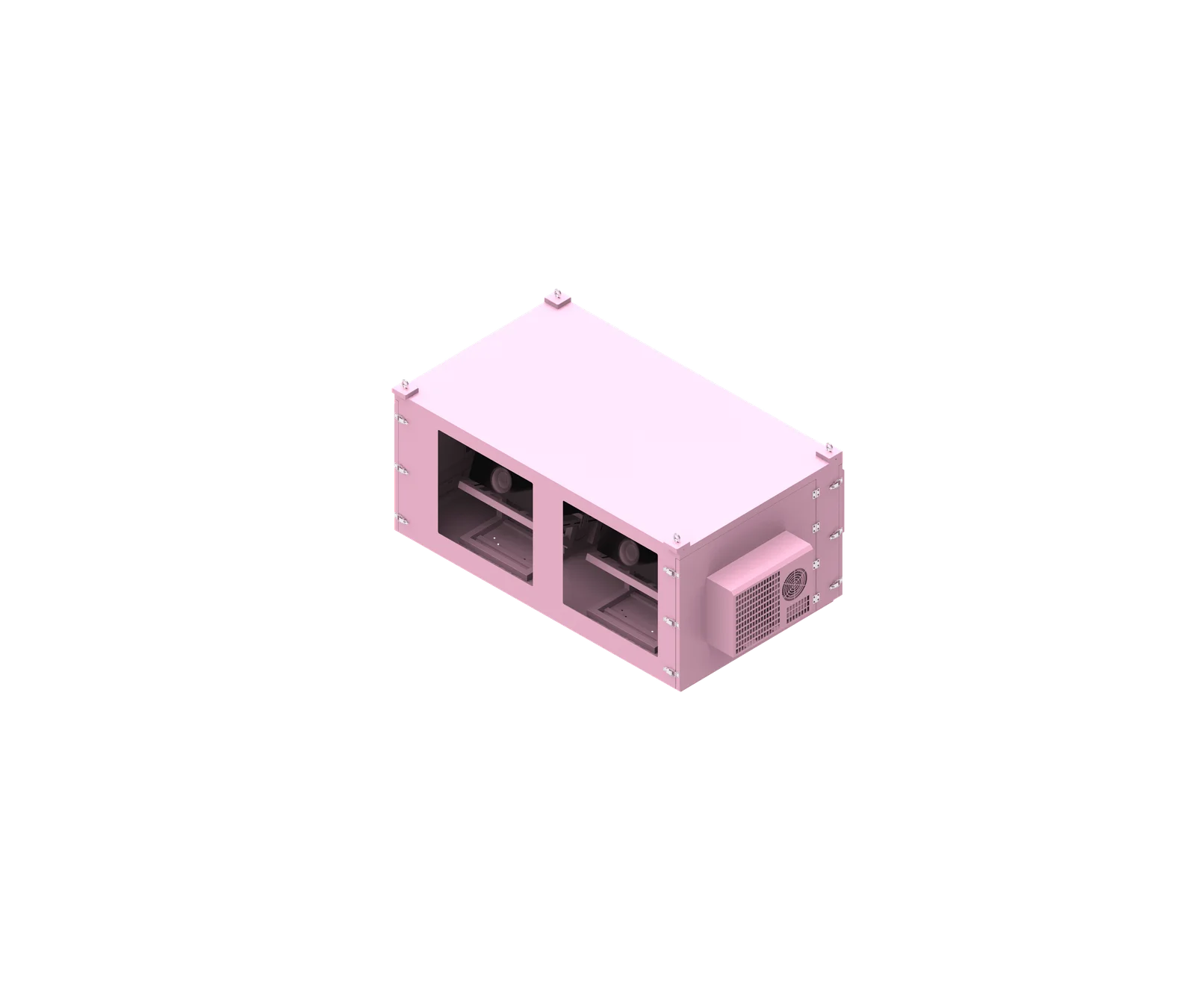
Insulation can be useful in an outdoor projector enclosure, but it should never be added automatically. The key principle is simple: insulation slows heat transfer in both directions—it can keep outdoor heat out, but it can also keep projector heat in. A correct decision depends on projector heat load, climate, solar exposure, cooling method, humidity, condensation risk, and the complete thermal-management design.
What is outdoor projector enclosure insulation?
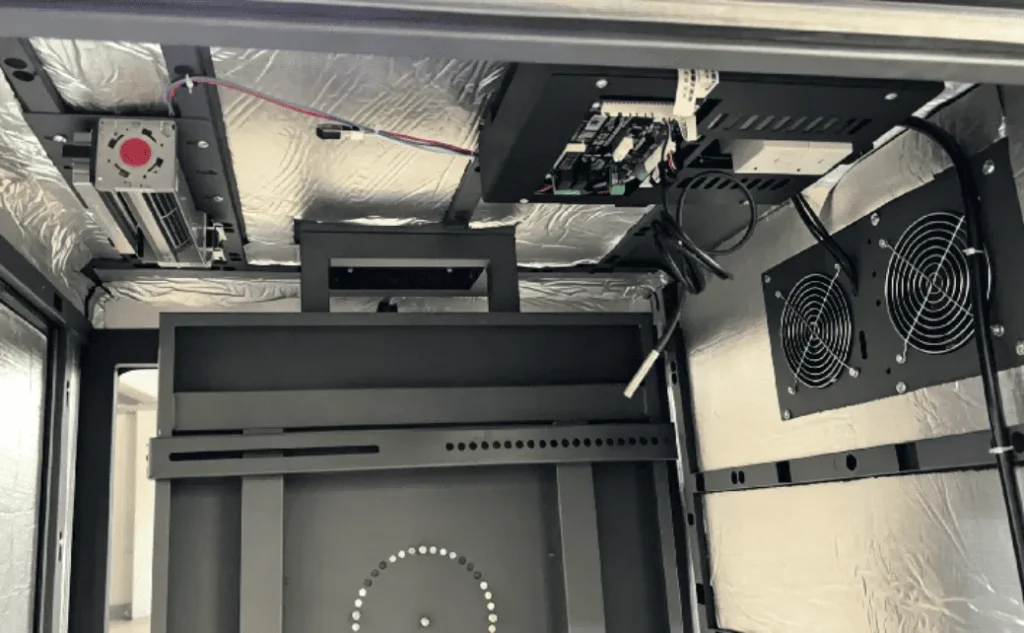
Outdoor projector enclosure insulation is a thermal insulation layer added to selected enclosure walls, doors, or roof areas to reduce conductive heat transfer. It is not a cooling system. Its purpose is to slow heat movement between outdoor conditions and internal equipment, which can help or hurt depending on the enclosure’s thermal design.
Functional Role in Enclosure Thermal Design
In practical outdoor projector enclosure thermal design, insulation is used to modify heat transfer through the enclosure structure. It may be installed on interior metal panels, service doors, roof sections, or other surfaces where conductive heat transfer is significant.
The important point is that insulation works in both directions:
- In hot weather, it can reduce heat entering through sun-heated or hot enclosure panels.
- In cold weather, it can reduce heat loss from a heated cabinet.
- During projector operation, it can also reduce passive heat escaping from the enclosure.
- In humid climates, it can change surface temperatures and affect condensation behavior.
Based on our internal data and market analysis, here is the breakdown:
| Enclosure Condition | Insulation Consideration |
|---|---|
| Sealed + Industrial AC | Often worth evaluating |
| Cold Climate + Heater | May reduce heat loss |
| Strong Direct Sun | Can help, but sun shield/color also matter |
| Fan-Cooled Cabinet | Benefit may be limited |
| Natural Ventilation | Must evaluate carefully |
| High Internal Heat Load | Insulation may reduce passive heat rejection |
| Hot & Humid Climate | Must consider condensation |
| Large Day/Night Temperature Swing | Can slow temperature change both ways |
ShiRui Pro Tip: I always treat insulation as one part of the thermal system, not as a default enclosure upgrade. Before adding it, confirm whether the main problem is outdoor heat entering the cabinet or projector heat needing to escape.
How Does outdoor projector enclosure insulation Work?
Outdoor projector enclosure insulation works by reducing conductive heat transfer through enclosure panels. Heat still exists; it simply moves more slowly. This means insulation can reduce environmental heat gain or heat loss, but it cannot remove projector heat. Active cooling, heating, airflow, or heat exchange may still be required.
Heat Transfer Path and Practical Effect
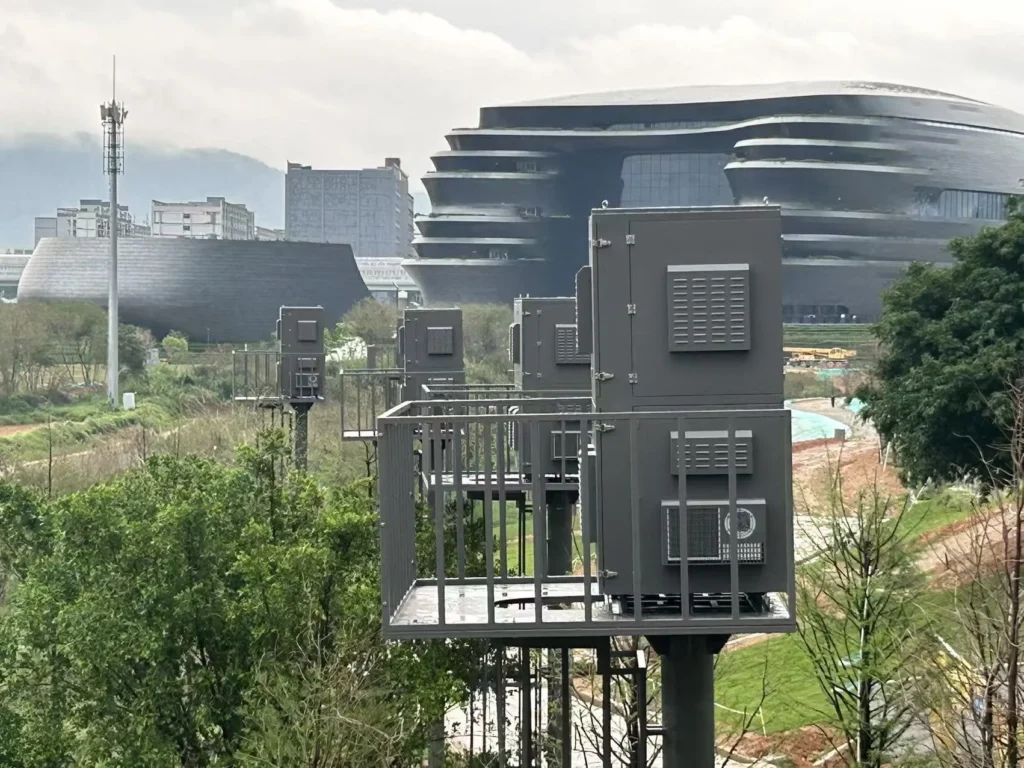
Without insulation, heat can move more easily through metal enclosure surfaces. With insulation, that movement is slowed, but not eliminated.
Conceptually:
Outside Heat
→ Enclosure Wall
→ Insulation
→ Internal Air
Or in the opposite direction:
Projector Heat
→ Internal Air
→ Insulation
→ Enclosure Wall
→ Outdoor Environment
This is why projector enclosure thermal insulation must be evaluated carefully. If the cabinet relies on its metal surfaces to reject heat, insulation may reduce a useful cooling path. If the cabinet is sealed and air-conditioned, insulation may reduce unwanted environmental load and support temperature control.
A practical engineering sequence is:
- Identify the exact projector model and electrical power consumption.
- Calculate internal heat from the projector and other equipment.
- Review maximum and minimum ambient temperatures.
- Evaluate direct sunlight, enclosure color, and surface coating.
- Select the cooling or heating architecture.
- Estimate heat transfer through enclosure surfaces.
- Check humidity, dew point, and condensation risk.
- Decide whether insulation supports the final thermal strategy.
ShiRui Pro Tip: I do not use projector lumens to estimate heat load. Lumens describe light output, not enclosure heat. For thermal design, I use actual power data, cooling requirements, and manufacturer specifications.
What are the benefits of outdoor projector enclosure insulation?
The main benefit of outdoor projector enclosure insulation is improved control over heat transfer between the cabinet and outdoor environment. It may reduce heat gain in hot climates, reduce heat loss in cold climates, and improve temperature stability. However, these benefits only apply when insulation matches the cooling, heating, and airflow strategy.
Where Insulation Can Add Value
Insulation may be valuable when external environmental heat transfer is a meaningful part of the total thermal load. This is common in sealed air-conditioned enclosures, heated cold-climate cabinets, or installations exposed to strong sun and large day-night temperature swings.
It can also help slow rapid temperature changes, which may support more stable internal conditions. However, slower temperature change is not always good. If the enclosure stores heat during the day, insulation may also slow nighttime cooling.
Based on our internal data and market analysis, here is the breakdown:
| Benefit Area | How Insulation May Help | Important Limitation |
|---|---|---|
| Hot climate operation | Reduces conductive heat from hot panels | Projector heat still needs active removal |
| Cold climate operation | Reduces heat loss from heated enclosure | Does not replace heaters or startup logic |
| Direct sunlight | Reduces transfer from heated surfaces | Sun shields and reflective coatings may be more effective |
| Sealed AC enclosure | Reduces external thermal load | AC must still remove internal equipment heat |
| Temperature stability | Slows fast temperature changes | May delay cooling after heat buildup |
| Condensation management | Can change internal surface temperatures | Does not guarantee condensation prevention |
For direct sunlight, insulation should be compared with other design tools:
- Light-colored or solar-reflective coating
- External sun shield
- Ventilated double roof
- Proper enclosure orientation
- Industrial air conditioning
- Internal air circulation
- Temperature and humidity control
ShiRui Pro Tip: In outdoor projection projects, I often look at the roof first. A sun-heated top panel can become a major heat source, but the best answer may be a double roof, sun shield, coating change, insulation, or a combination.
How to maintain an outdoor projector enclosure insulation?
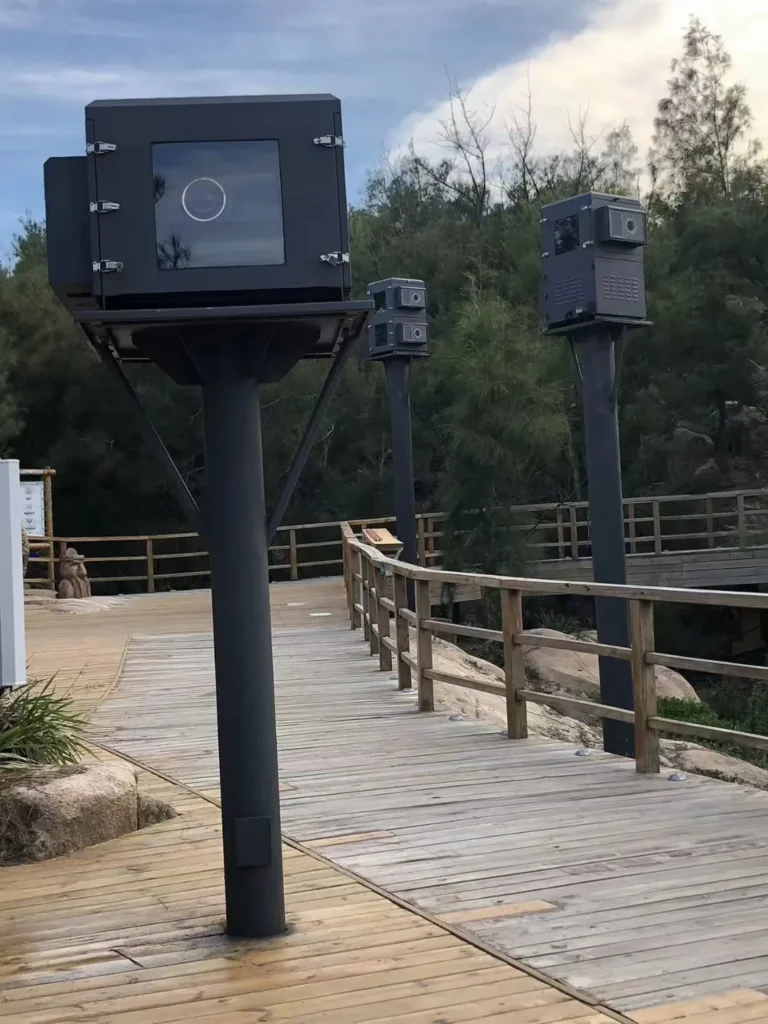
Maintaining outdoor projector enclosure insulation means checking that it remains dry, secure, clean, undamaged, and clear of airflow paths. Insulation should not detach, block projector intakes, interfere with fans, reduce service access, trap moisture against metal, or compromise gaskets, cable entries, optical paths, or cooling-system interfaces.
Inspection and Service Checklist
Insulation maintenance is not only about the insulation material itself. It is also about the surrounding thermal, mechanical, electrical, and moisture-control details.
During routine service, technicians should check:
- Adhesion and attachment Confirm that bonded insulation has not detached from sheet metal due to heat, cold, humidity, vibration, or aging.
- Airflow clearance Make sure insulation does not block projector intake air, exhaust air, fans, ducts, filters, or AC supply and return paths.
- Moisture condition Look for trapped moisture, staining, mold risk, condensation marks, or hidden corrosion behind insulation.
- Door and gasket interaction Verify that insulation does not interfere with gasket compression, sealing flanges, hinges, locks, or drainage paths.
- Cable entry areas Confirm that insulation does not obstruct cable glands, gland plates, bend radius, or maintenance access.
- Optical path clearance Ensure insulation does not protrude into the projected light cone, optical-window clear aperture, or lens adjustment area.
- Cooling-system interface Inspect AC, heat exchanger, or ventilation interfaces for gaps, air leakage, and uncontrolled thermal paths.
- Repair quality If panels are modified, drilled, or replaced, restore both environmental sealing and thermal performance.
Retrofitting insulation into an existing cabinet requires special caution. It can reduce internal clearance, disrupt airflow, make maintenance harder, and change the original heat balance. If an enclosure is overheating, do not assume insulation will solve it. First identify whether the cause is solar load, inadequate cooling, hot-air recirculation, dirty filters, cooling-system failure, or excessive internal heat.
ShiRui Pro Tip: When we design an insulated projector enclosure, we check the finished internal dimensions—not just the bare metal dimensions. Insulation thickness can affect projector clearance, airflow space, wiring access, and serviceability.
What is the price of outdoor projector enclosure insulation?
The price of outdoor projector enclosure insulation depends on material type, coverage area, cabinet size, installation complexity, fire and moisture requirements, adhesive method, thermal analysis, and integration with cooling or heating systems. There is no universal cost because insulation must be engineered around the complete enclosure design.
Cost Drivers Behind an Insulated Projector Enclosure
Insulation cost should not be evaluated only by square meter price or material thickness. A professional insulated projector enclosure may require engineering review, modified panel construction, protected edges, compatible adhesives, condensation analysis, and validation testing.
Based on our internal data and market analysis, here is the breakdown:
| Cost Factor | Why It Matters |
|---|---|
| Enclosure size | Larger surface area increases material and labor |
| Insulation material | Different materials vary in moisture resistance, durability, and compliance |
| Coverage scope | Roof-only, wall-only, door insulation, or full internal lining changes cost |
| Cooling method | AC-cooled, fan-cooled, heated, or passive designs require different evaluation |
| Fire requirements | Project standards may require specific flame, smoke, or material performance |
| Adhesive system | Bonding must tolerate heat, cold, humidity, vibration, and long service life |
| Internal space | Cabinet may need to be enlarged to preserve airflow and service access |
| Condensation control | Humid or coastal projects may require additional design measures |
| Prototype testing | Demanding projects may need temperature mapping or field validation |
| Custom fabrication | Doors, brackets, AC interfaces, windows, and cable entries may need modification |
A buyer should provide the following information before asking for an accurate price:
- Projector brand and model
- Quantity of projectors
- Projector electrical power consumption
- Additional internal equipment heat load
- Project city or region
- Maximum and minimum ambient temperatures
- Direct sun exposure
- Enclosure color and finish preference
- Required cooling or heating method
- Operating hours and schedule
- Humidity, dust, sand, salt spray, or coastal exposure
- Required internal operating temperature range
ShiRui Pro Tip: If a customer asks only for “insulation price,” I usually ask for the projector model and climate data first. The real cost is not just insulation material—it is making sure the final thermal design works safely and reliably.
Key Features & Comparison
A good insulated projector enclosure is not defined by insulation alone. It must combine suitable thermal insulation, controlled airflow, correct cooling or heating capacity, moisture protection, secure material installation, service access, and optical clearance. The best design depends on whether the enclosure must reject internal heat or block external thermal load.
Design Feature Comparison for Projector Enclosure Thermal Insulation
Based on our internal data and market analysis, here is the breakdown:
| Feature / Design Choice | Best Used When | Main Advantage | Main Risk If Misapplied |
|---|---|---|---|
| Full cabinet insulation | Sealed AC or heated enclosures in extreme climates | Reduces environmental heat transfer | May trap projector heat if cooling is insufficient |
| Roof-only insulation | Strong solar load on top panel | Reduces localized roof heat transfer | Does not address wall, door, or window heat paths |
| Ventilated double roof | Direct sun exposure | Stops solar heat before it reaches main cabinet | Must not block AC condenser airflow or service access |
| External sun shield | High solar radiation | Reduces direct radiation on enclosure surface | Poor design can obstruct maintenance or airflow |
| Light-colored coating | Outdoor sun exposure | Can reduce solar absorption depending on coating properties | Does not replace cooling or insulation analysis |
| Industrial AC cooling | Sealed high-heat systems | Actively removes internal and environmental heat | Requires correct sizing and internal circulation |
| Fan cooling | Moderate climates or ventilated designs | Simple heat removal by air exchange | Insulation may offer limited benefit |
| Internal circulation fans | AC or sealed enclosures | Moves cold air to projector intake and hot air back to cooling unit | Poor placement can create hot spots |
| Closed-cell insulation category | Moisture-sensitive environments | May reduce moisture absorption compared with some open-cell materials | Still requires fire, adhesive, and durability review |
| Open-cell insulation category | Select controlled applications only | May be lightweight or easy to install | Can absorb moisture depending on material and exposure |
| Door insulation | Large service doors in insulated cabinets | Reduces major thermal bypass path | Must preserve gasket sealing and lock function |
| Condensation control | Humid, coastal, or cooled enclosures | Reduces moisture-related failure risk | Insulation alone does not prevent condensation |
A useful simplified thermal view is:
Total Cooling Load =
Projector Heat
+ Other Internal Equipment Heat
+ Solar Heat Gain
+ Environmental Heat Transfer
- Any Useful Passive Heat Rejection
Insulation mainly changes the environmental heat-transfer term. It does not remove projector heat, electrical heat, or solar load that has already entered the system.
ShiRui Pro Tip: For sealed air-conditioned enclosures, insulation often deserves serious evaluation. For fan-cooled or naturally ventilated cabinets, I review it more cautiously because wall heat rejection and airflow may be part of the cooling strategy.
Cost & Buying Factors
When buying an insulated projector enclosure, the key question is not whether insulation is included, but whether the full thermal design is correct. Buyers should evaluate projector heat load, ambient temperature, solar exposure, cooling architecture, humidity, material compliance, maintenance access, and final tested performance before approving the design.
Buyer Decision Guide for Insulated Projector Enclosures
A practical buying process should begin with engineering data, not insulation thickness. Universal thicknesses, R-values, U-values, cooling savings, or temperature reductions should not be assumed without project-specific analysis.
Use this decision sequence:
- Confirm the exact projector model.
- Determine projector electrical power and internal heat load.
- Add heat from media players, power supplies, network devices, and control equipment.
- Collect maximum and minimum ambient temperature data.
- Evaluate solar exposure, enclosure orientation, color, and coating.
- Define whether the enclosure is sealed, fan-cooled, naturally ventilated, AC-cooled, heated, or heat-exchanger cooled.
- Estimate environmental heat transfer through cabinet surfaces.
- Consider passive heat rejection through metal panels.
- Review humidity, dew point, condensation risk, and moisture control.
- Select suitable insulation material category if insulation is beneficial.
- Define insulation coverage and thickness through thermal design.
- Check final internal dimensions, airflow paths, cable access, and optical clearance.
- Validate with prototype testing or temperature mapping when project risk justifies it.
Based on our internal data and market analysis, here is the breakdown:
| Buyer Question | Why It Is Important |
|---|---|
| Is the enclosure sealed or ventilated? | Insulation behaves differently in AC-cooled and fan-cooled systems |
| What is the projector power consumption? | Internal heat load is the foundation of cooling design |
| Is the cabinet exposed to direct sun? | Solar radiation can dominate external heat gain |
| What color and coating will be used? | Surface finish affects solar absorption |
| Is humidity high? | Condensation and material moisture behavior must be evaluated |
| Is the site coastal or dusty? | Corrosion, sealing, filtration, and maintenance needs change |
| Will the projector run at night only? | Daytime preheating may still affect startup conditions |
| Is heating required in winter? | Insulation may help retain heat but does not replace heater control |
| Are there fire or smoke requirements? | Insulation must meet project and local compliance expectations |
| Can technicians access equipment? | Insulation must not make service impractical |
ShiRui Pro Tip: Before quoting a temperature controlled projector enclosure, we ask for the operating schedule. A projector used at night may still sit in a sun-heated enclosure all afternoon, which can change the entire startup condition.
Conclusion
An outdoor projector enclosure should be insulated only when insulation supports the complete thermal-management strategy. It can reduce unwanted heat transfer from hot or cold outdoor conditions, but it can also reduce passive heat dissipation from the projector. The correct decision requires engineering review, not a universal rule.
Practical Final Recommendation
The best answer is not “always insulate” or “never insulate.” The correct question is:
Does this enclosure mainly need to block external heat,
or does it mainly need to reject internal projector heat?
In sealed air-conditioned or heated enclosures, insulation may be beneficial, especially in extreme climates or strong solar exposure. In fan-cooled, naturally ventilated, or passive designs, insulation may offer limited benefit or may even make internal heat rejection more difficult.
Before deciding, evaluate:
- Exact projector model and power consumption
- Other internal equipment heat
- Maximum and minimum ambient temperature
- Solar exposure and enclosure color
- Cooling or heating method
- Internal airflow path
- Humidity and condensation risk
- Available internal space
- Fire and material requirements
- Maintenance access
- Final testing conditions
For demanding installations, ShiRui can support custom outdoor projector enclosure thermal design, including insulation evaluation, cooling architecture, enclosure layout, AC integration, airflow planning, and practical manufacturability review.
ShiRui Pro Tip: My final rule is simple: do not add insulation automatically. First determine where the heat is coming from, then confirm how the enclosure will remove it. Only then decide whether insulation improves the system.