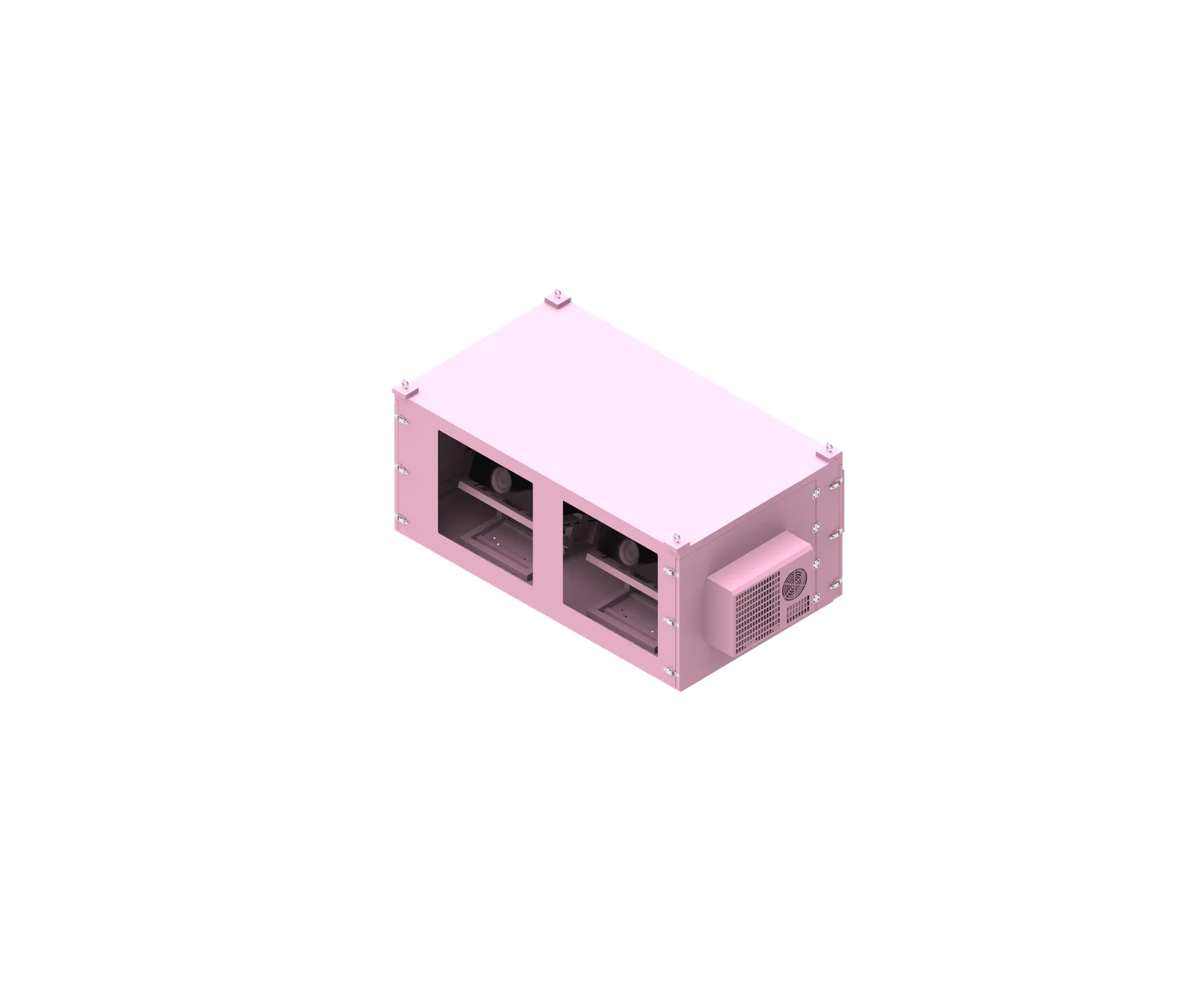
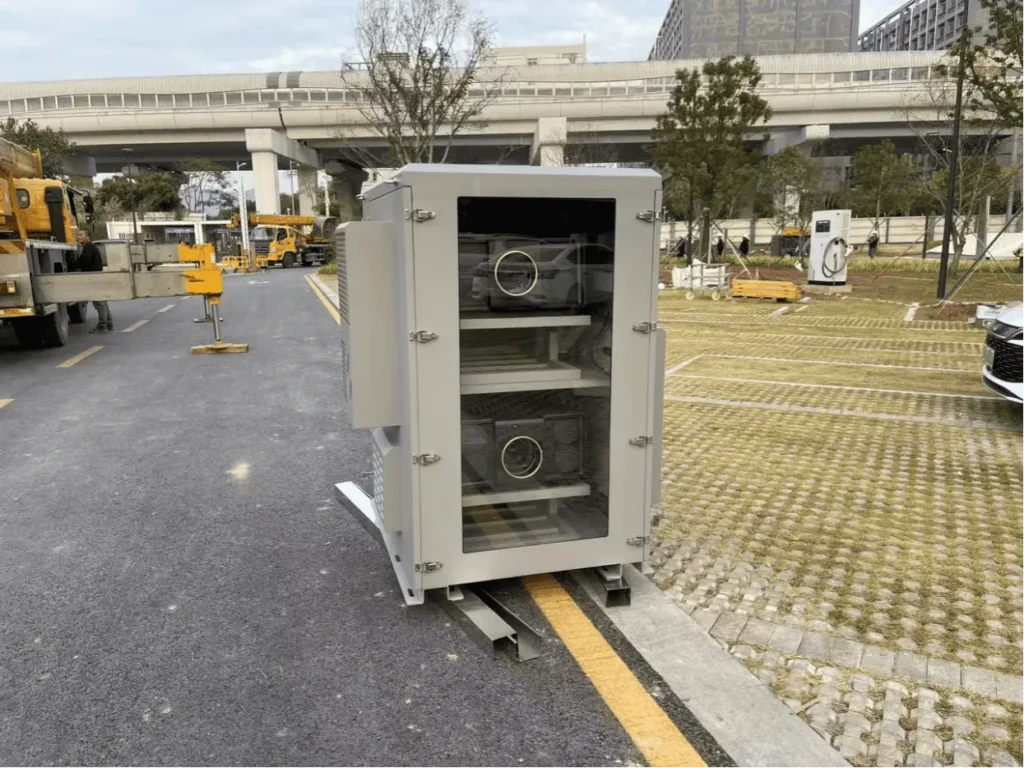
A dual projector enclosure changes much more than cabinet size. For outdoor installations, two projectors affect structure, cooling, airflow, optical alignment, wiring, service access, and environmental protection. From a manufacturer’s perspective, the right projector enclosure design must be recalculated around the exact projector models, operating conditions, and installation method rather than adapted from a standard single projector enclosure.
What is dual projector enclosure?
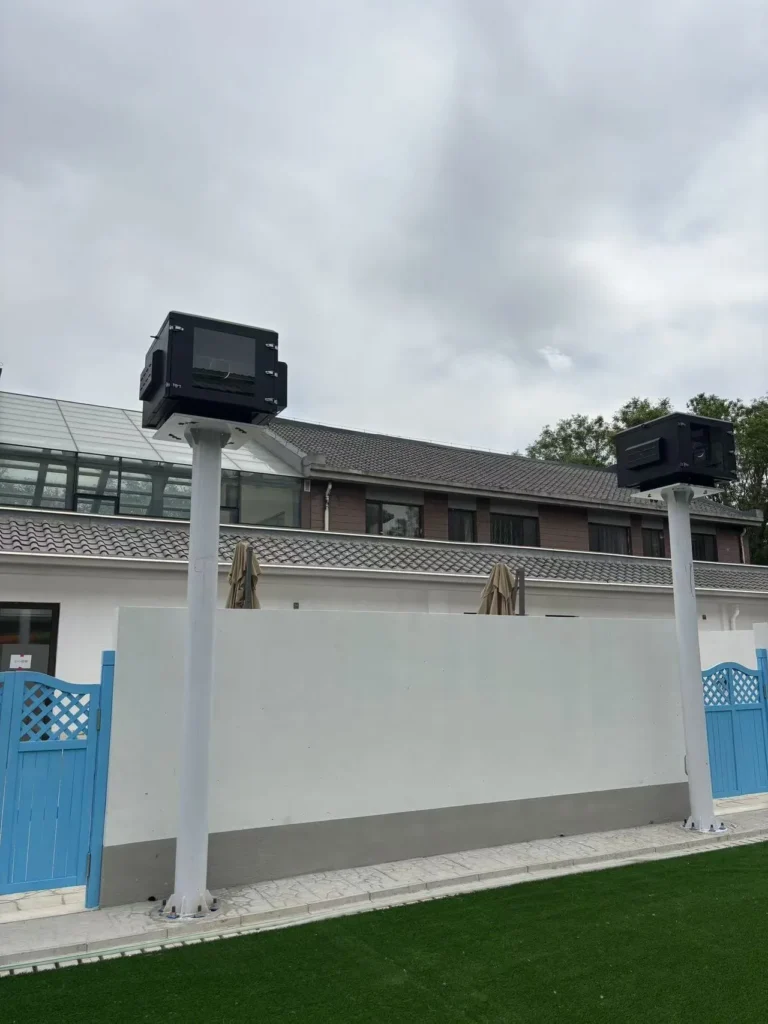
A dual projector enclosure is a protective cabinet designed to house two projectors in one controlled environment. Unlike a single projector enclosure, it must manage combined heat output, dual lens positions, heavier structural loads, cable routing, airflow separation, and precise alignment for blending, stacking, redundancy, or high-brightness projection applications.
Purpose and Engineering Scope
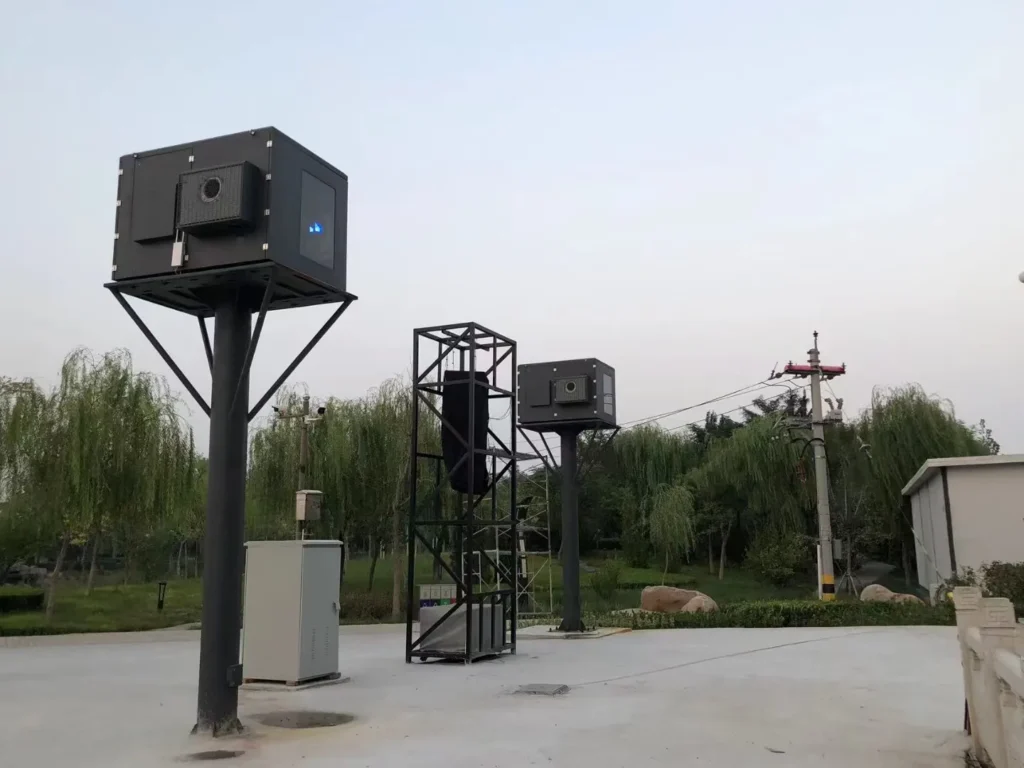
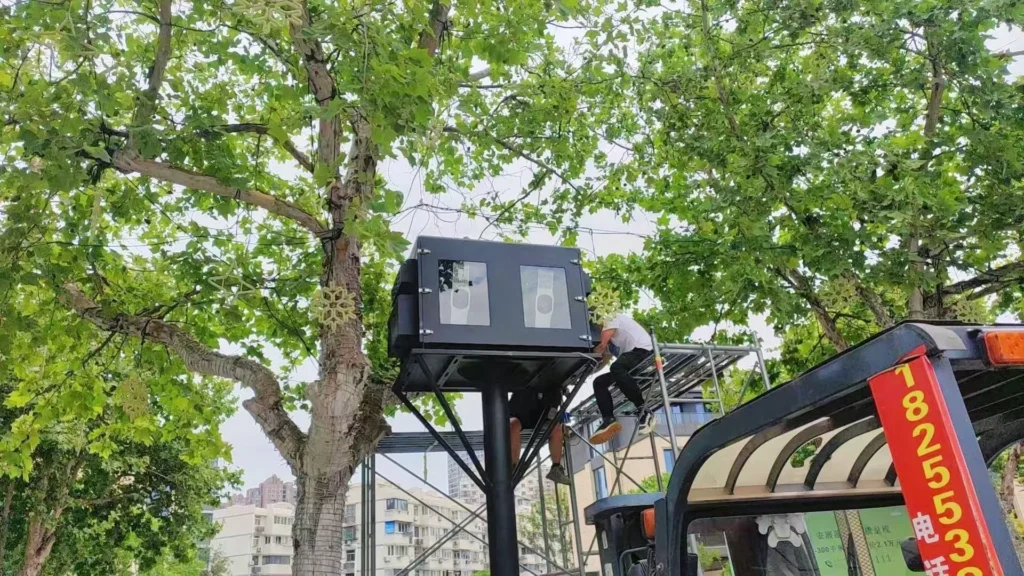
A dual projector enclosure protects two projectors from dust, rain, humidity, heat, cold, impact, and unstable outdoor conditions while keeping both machines correctly positioned and serviceable. It is commonly used in large outdoor projection mapping, theme parks, stadiums, museums, public art installations, and high-brightness events where one projector may not provide enough output or redundancy.
The main difference is that the cabinet is engineered as a coordinated system. Two projectors do not simply occupy twice the space; they also interact thermally, optically, mechanically, and electrically.
Based on our internal data and market analysis, here is the breakdown:
| Design Area | Single Projector Enclosure | Dual Projector Enclosure |
|---|---|---|
| Projector Quantity | One projector | Two projectors |
| Cabinet Layout | Simpler internal arrangement | Layout-specific design |
| Heat Source | One heat load | Combined heat load |
| Optical Window | One lens position | Two lens positions or wider optical area |
| Mounting | Single bracket or tray | Dual adjustable mounting structure |
| Service Access | Usually one main access point | Larger or multi-door access preferred |
| Cable Routing | Lower cable density | Higher power, signal, and network cable density |
ShiRui Pro Tip: When we design a custom projector enclosure for two units, we always request projector model drawings first. Lens position, intake direction, exhaust direction, and service clearance often determine the cabinet design more than the projector’s external dimensions alone.
How Does dual projector enclosure Work?
A dual projector enclosure works by creating a protected, temperature-controlled cabinet around two projectors while maintaining correct airflow, optical alignment, power distribution, and maintenance access. Its cooling and ventilation system must remove the combined heat of both projectors without allowing hot exhaust from one unit to affect the other.
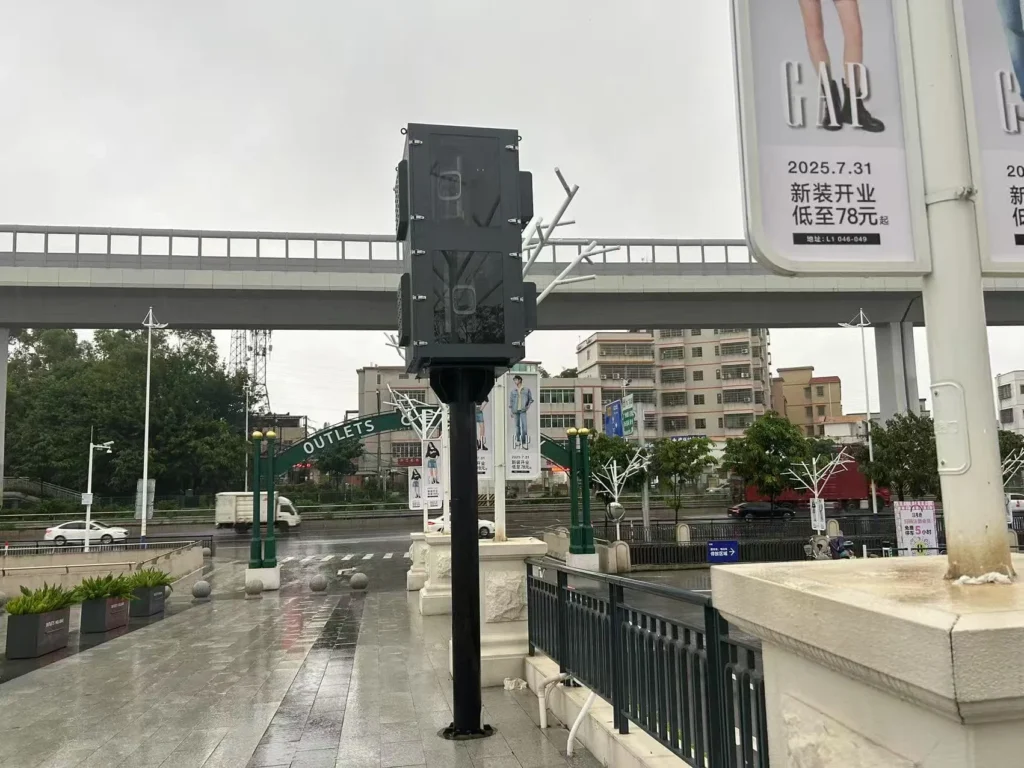
Airflow, Cooling, and Projection Control
The enclosure works as a controlled micro-environment. The cabinet shell provides outdoor protection, the internal frame supports both projectors, the optical glass allows projection, and the cooling system keeps operating temperature within the required range.
For a dual projector enclosure, airflow design is especially important. If one projector exhausts hot air directly toward the intake of the second projector, the second unit may overheat even if the enclosure has fans. This is why airflow channels often need to be separated, redirected, or balanced.
A typical working sequence includes:
- Outdoor protection seals the cabinet against rain, dust, wind-blown particles, and humidity.
- Structural support holds both projectors securely using reinforced rails, trays, or brackets.
- Cooling control removes heat through forced ventilation, filtered airflow, or industrial air-conditioning.
- Airflow separation prevents hot exhaust air from recirculating into either projector intake.
- Optical transmission allows both beams to pass through correctly positioned optical glass.
- Power and signal management organizes electrical supply, HDMI, SDI, fiber, network, and control cables.
- Maintenance access allows technicians to adjust lenses, remove filters, check cables, and service the cooling system.
ShiRui Pro Tip: I do not recommend copying the fan layout from a single projector enclosure. For two projectors, we calculate the thermal load from both machines and then match the cooling method to projector wattage, ambient temperature, operating hours, and cabinet orientation.
What is the best cabinet for an UST projector?
The best cabinet for an UST projector is a low-profile, precision-aligned enclosure with excellent ventilation, controlled dust protection, and an optical opening designed around the projector’s ultra-short-throw lens geometry. For outdoor use, the cabinet must also manage heat, humidity, waterproofing, and stable positioning near the projection surface.
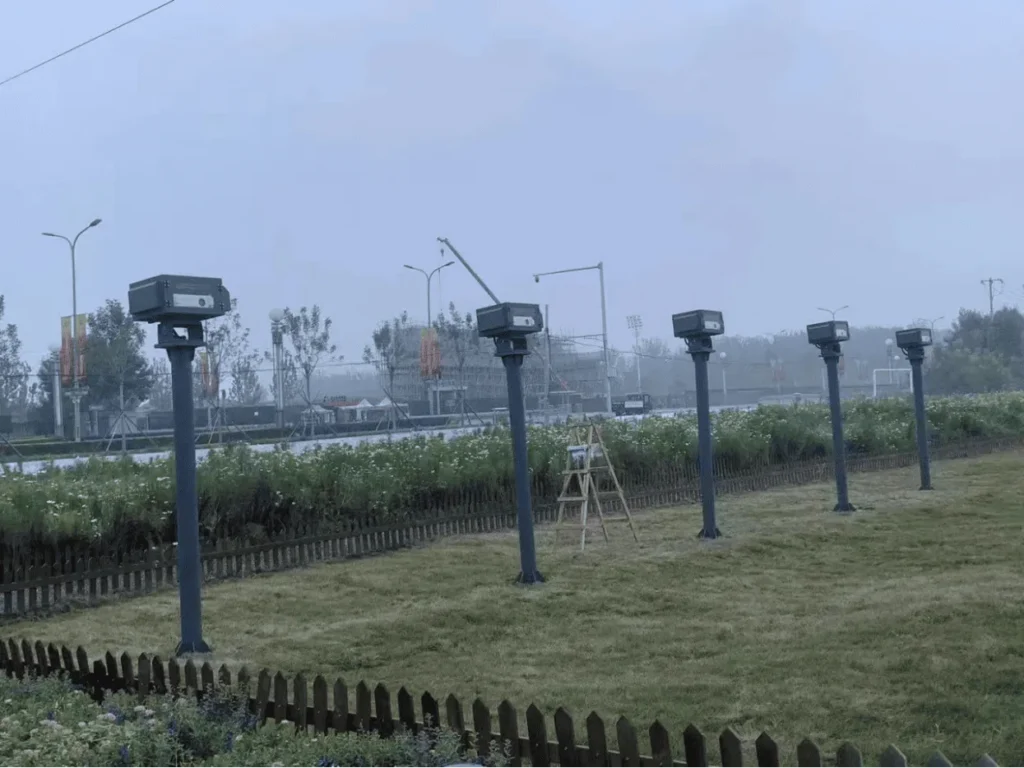
UST Cabinet Requirements
An ultra-short-throw projector has a different optical path from a standard long-throw projector. The projection angle is steep, the lens is usually near the top or front of the projector, and small positioning errors can visibly distort the image. This makes cabinet geometry extremely important.
For outdoor UST applications, the enclosure should not block the projection cone. It also needs enough internal clearance for the projector’s intake and exhaust vents, because many UST projectors are installed close to walls, screens, or architectural surfaces where airflow can be restricted.
Important UST cabinet features include:
- Accurate lens clearance to avoid shadowing or clipping the projected image.
- Low-profile structure when the unit is placed near the screen base.
- Rigid mounting base to prevent image movement from vibration.
- Ventilation paths matched to the projector model rather than generic fan placement.
- Anti-dust and anti-condensation protection for outdoor or semi-outdoor environments.
- Easy access panels for focus adjustment, cable checks, and filter cleaning.
- Non-reflective internal finish to reduce stray light inside the cabinet.
ShiRui Pro Tip: For UST projector cabinets, we always confirm the projection cone before finalizing the optical opening. Even a well-cooled cabinet can fail in practice if the front structure blocks part of the image.
Can you use both sides of a projector screen?
You can use both sides of some projector screens, but only if the screen material is designed for front and rear projection or has suitable light transmission characteristics. Standard front-projection screens are usually optimized for one viewing direction, so image brightness, contrast, and color may suffer from the opposite side.
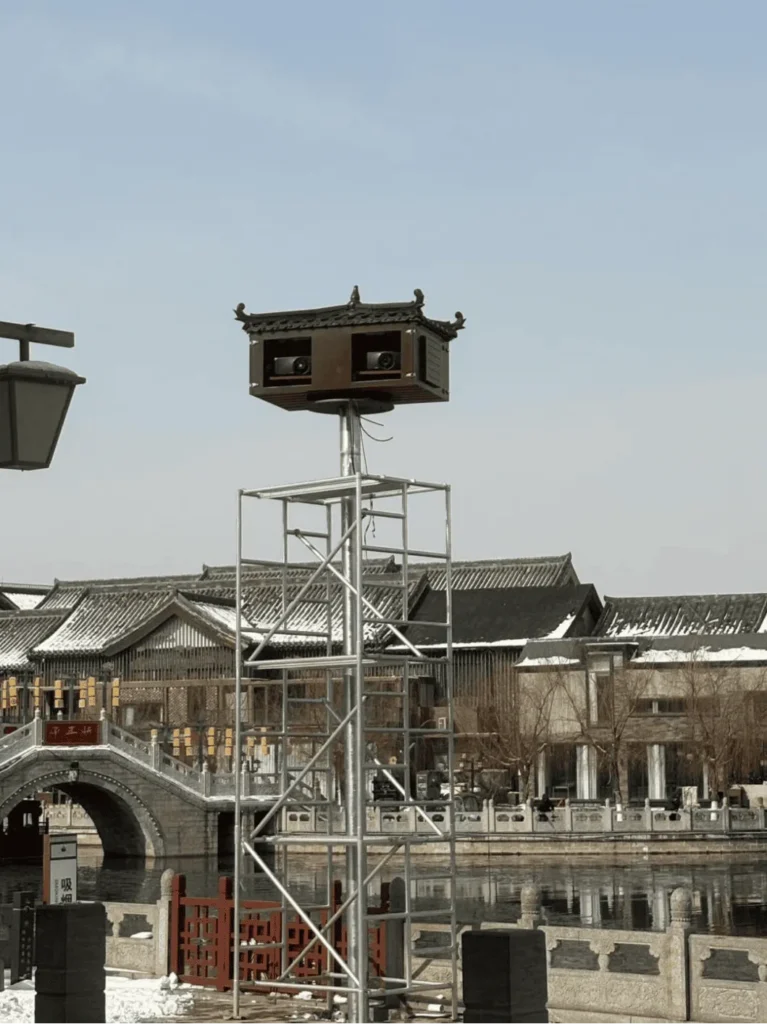
Screen Direction and Enclosure Planning
Whether both sides of a screen can be used depends on screen material, gain, opacity, ambient light, and projection method. A normal front-projection screen reflects light back toward the audience. If you try to view it from behind, the image may appear dim, reversed, uneven, or washed out.
Rear-projection and dual-view screens are different. They are engineered to transmit light through the screen while controlling diffusion and hotspotting. In some installations, projectors may be placed on opposite sides of a screen for different audiences, but this requires careful optical planning.
Based on our internal data and market analysis, here is the breakdown:
| Screen Type | Can Both Sides Be Used? | Typical Result | Enclosure Impact |
|---|---|---|---|
| Standard Front Projection | Usually no | Poor rear-side image | Enclosure placed in front-view projection path |
| Rear Projection Screen | Rear viewing only or primary rear use | Good transmitted image | Enclosure positioned behind screen |
| Dual-View Screen | Yes, if designed for it | Viewable from both sides | May require two projection positions |
| Transparent Film/Glass Screen | Application-dependent | Good for display windows | Cabinet must manage reflections and angle |
| Outdoor Inflatable/Matte Screen | Usually one-sided | Best from front side | Enclosure aligned for front projection |
ShiRui Pro Tip: Before choosing a single projector enclosure or dual projector enclosure, confirm whether the screen is reflective, transmissive, or dual-view. The screen type directly affects projector position, lens angle, optical window placement, and cabinet orientation.
Which is better for outdoor use, an outdoor TV or a projector?
An outdoor TV is usually better for simple daylight viewing and lower maintenance, while a projector is better for very large images, event spaces, architectural projection, and flexible screen sizes. For professional outdoor projection, a properly engineered outdoor projector enclosure is essential to protect the projector and stabilize performance.
Outdoor Display Selection Factors
Outdoor TVs and projectors solve different problems. An outdoor TV offers integrated weather resistance, high brightness in smaller formats, and simpler daily operation. However, size becomes expensive and limited when the viewing area grows.
A projector can create much larger images, but it is more sensitive to ambient light, heat, dust, humidity, and alignment. That is why projector protection is not optional in permanent or semi-permanent outdoor installations. A custom projector enclosure can make projection practical by providing cooling, sealing, filtration, power management, and maintenance access.
Based on our internal data and market analysis, here is the breakdown:
| Factor | Outdoor TV | Projector with Outdoor Projector Enclosure |
|---|---|---|
| Best Use | Patios, restaurants, signage, daylight viewing | Large screens, events, mapping, public spaces |
| Image Size | Limited by panel size | Highly scalable |
| Daylight Performance | Usually stronger | Depends on projector brightness and screen |
| Weather Protection | Built into product | Provided by enclosure |
| Installation Flexibility | Wall or stand mounted | Flexible throw distance and screen size |
| Maintenance | Lower | Requires enclosure and optical checks |
| Cost at Very Large Size | Very high | Often more practical |
| Redundancy Options | Limited | Dual projector enclosure can support backup or stacking |
ShiRui Pro Tip: If the required image is under typical TV sizes and used in bright daylight, an outdoor TV may be simpler. If the project requires a large visual impact, projection is often the better choice—but only with a cabinet designed for the actual outdoor conditions.
Key Features & Comparison
The biggest cabinet design changes between single and dual projector systems are internal layout, cooling capacity, airflow separation, structural reinforcement, optical window positioning, power distribution, and maintenance access. A dual projector enclosure must be engineered around two machines as one integrated projection system, not as an enlarged single-projector box.
Engineering Differences That Matter Most
A single projector enclosure is generally easier to size, cool, wire, and service. A dual projector enclosure introduces additional variables because both projectors influence each other inside the same cabinet. Heat, airflow, lens position, cable density, and load balance must be reviewed together.
Based on our internal data and market analysis, here is the breakdown:
| Design Factor | Single Projector Enclosure | Dual Projector Enclosure |
|---|---|---|
| Cabinet Size | Compact and model-based | Larger, layout-specific, and clearance-driven |
| Internal Layout | One projector body with service space | Two bodies plus spacing, brackets, cables, and access zones |
| Heat Load | Heat from one projector | Combined heat load from both projectors |
| Cooling System | Lower cooling capacity | Higher cooling capacity or industrial AC may be required |
| Airflow | Simpler intake and exhaust planning | Must prevent airflow interference and heat recirculation |
| Load Capacity | Single equipment load | Reinforced frame, base plate, rails, and supports |
| Center of Gravity | Easier to control | Must be checked for stability and mounting safety |
| Optical Window | One lens position | Two lens positions, wider glass, or custom window layout |
| Alignment | Basic projector positioning | Fine adjustment for blending, stacking, or backup use |
| Power Distribution | Simpler power supply | Higher total load with organized distribution |
| Cable Management | Fewer cables | More signal, network, control, and power cables |
| Maintenance | Easier access | More service clearance or multi-door access required |
| Outdoor Protection | Smaller sealed structure | Larger cabinet must still maintain waterproofing and dustproofing |
| Customization | Based mainly on projector model | Based on model, quantity, layout, environment, and operating hours |
The most common mistake is assuming that a dual cabinet only needs more internal width. In reality, the manufacturer must recalculate:
- Total projector dimensions and lens coordinates.
- Combined weight and mounting load.
- Heat generation from both machines.
- Intake and exhaust direction for each projector.
- Required optical glass size and position.
- Cable routing and power distribution.
- Service path for projector removal and filter inspection.
- Outdoor sealing, drainage, condensation control, and corrosion protection.
ShiRui Pro Tip: In our experience, the optical window and airflow plan should be confirmed before final cabinet fabrication. If these two areas are wrong, the enclosure may look correct externally but still cause image obstruction, overheating, or difficult maintenance.
Cost & Buying Factors
The cost of a dual projector enclosure depends on projector size, total heat load, cabinet material, cooling method, optical glass design, structural reinforcement, waterproof rating, control system, and customization level. It is usually more expensive than a single projector enclosure because the engineering requirements increase across nearly every cabinet subsystem.
Pricing Drivers and Specification Checklist
A custom projector enclosure should be quoted from real project data, not only from outer dimensions. Two projectors may require a larger cabinet, but the larger cost drivers are often cooling, structural support, optical glass customization, and service access.
Based on our internal data and market analysis, here is the breakdown:
| Buying Factor | Cost Impact | Why It Matters |
|---|---|---|
| Projector Size and Quantity | High | Determines cabinet volume, frame size, and layout |
| Projector Brightness and Wattage | High | Higher wattage usually means higher heat load |
| Cooling Method | High | Forced-air cooling costs less than industrial AC systems |
| Outdoor Environment | Medium to High | Hot, dusty, humid, coastal, or freezing sites need stronger protection |
| Optical Glass Size | Medium | Dual lenses may require larger or multiple optical windows |
| Structural Reinforcement | Medium | Two projectors increase load and stability requirements |
| Mounting Method | Medium | Pole, wall, truss, roof, or ground installation affects frame design |
| Power Distribution | Medium | Dual units may need upgraded wiring and protection |
| Maintenance Access | Medium | Multi-door cabinets and removable trays add complexity |
| Smart Controls | Optional | Temperature alarms, remote monitoring, and automation add value |
Before buying, prepare the following information:
- Projector brand and exact model number.
- Quantity of projectors inside one cabinet.
- Installation orientation: side-by-side, stacked, angled, or custom.
- Outdoor temperature range and humidity conditions.
- Daily operating hours and seasonal use pattern.
- Required waterproof, dustproof, or corrosion-resistance level.
- Mounting method and available support structure.
- Projection distance, lens position, and alignment requirements.
- Power supply details and signal cable type.
- Maintenance expectations and access direction.
ShiRui Pro Tip: I recommend avoiding quotes based only on “two projectors in one box.” A reliable supplier should ask for projector drawings, thermal data, installation photos, and site temperature before confirming the final enclosure design and price.
Conclusion
A dual projector enclosure is not simply a single projector enclosure made twice as large. Cabinet dimensions, structural strength, cooling capacity, airflow paths, optical window placement, power distribution, and maintenance access must all be redesigned around the two projectors and the real outdoor installation environment.
Final Specification Priorities
For professional outdoor projection, enclosure performance depends on engineering accuracy. A single projector enclosure may be sufficient for straightforward installations, but dual-projector systems require deeper coordination between mechanical design, thermal control, optical alignment, and maintenance planning.
The most important takeaways are:
- Size the enclosure around real projector dimensions, not rough estimates.
- Calculate cooling based on combined heat output.
- Keep intake and exhaust paths separated and unobstructed.
- Reinforce the structure for two projectors and long-term stability.
- Design the optical window around actual lens positions and projection angles.
- Provide enough access for alignment, cleaning, cable work, and projector removal.
- Choose a custom projector enclosure when standard dimensions cannot meet site needs.
For brands, integrators, and project owners, the safest approach is to treat the enclosure as part of the projection system rather than as an accessory. ShiRui can help evaluate projector models, environmental conditions, and installation requirements to develop a cabinet design suitable for single or dual projector outdoor use.
ShiRui Pro Tip: When a project involves image blending, brightness stacking, or backup projection, I always suggest finalizing the projector layout and alignment method before cabinet production. The enclosure should support the projection strategy—not force the projection team to work around cabinet limitations.