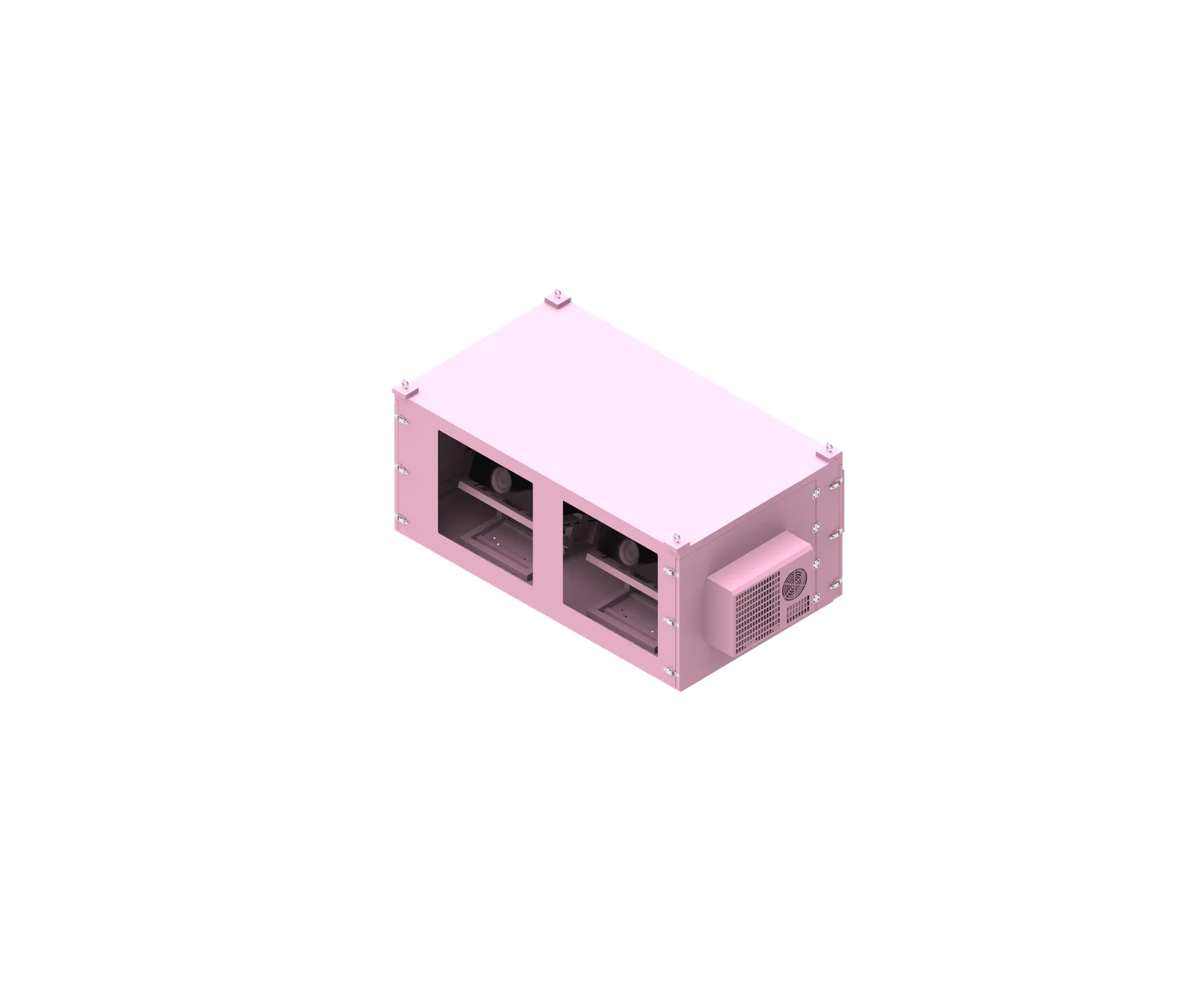
Outdoor projection projects rarely fail because of appearance; they fail when the enclosure is not matched to heat load, airflow, humidity, mounting structure, cable entry, or maintenance access. From a manufacturer’s point of view, the right outdoor projector enclosure should be selected according to the projector model, project environment, installation method, cooling method, and long-term service requirements.
This guide explains the main types of outdoor projector enclosures used in B2B projects, including fresh air cooling, air-conditioned designs, internal circulation systems, waterproof structures, anti-condensation functions, pole mounting, ceiling mounting, wall mounting, and custom sheet metal configurations.
Quick Comparison Table
| Rank | Company Name | Country | Key Products |
|---|---|---|---|
| 1 | Tempest | USA | Outdoor Projector Enclosures |
| 2 | ShiRui | China | Outdoor Projector Enclosure |
| 3 | Screen Solutions International (SSI) | USA | Defender Series Outdoor Enclosures |
| 4 | ProEnc | USA / UK | Outdoor Projector Housings |
| 5 | DeerTV | China | Weatherproof Projector Enclosures |
| 6 | Gobo Projections | USA | Fiberglass Outdoor Projector Enclosures |
| 7 | Your Pixel Store (YPS) | USA | YPS Projector Enclosure |
| 8 | Apollo Enclosures | USA | Weatherproof TV Enclosures |
| 9 | GoboSource | USA | Exterior Gobo Projectors |
What to Consider When Looking for Manufacturers?
When sourcing an outdoor projector enclosure, buyers should not only compare cabinet size or appearance. In real engineering projects, the enclosure type is usually classified by cooling method, waterproof structure, installation method, material, internal configuration, and project environment.
As a manufacturer of outdoor projector enclosures, waterproof projector cases, outdoor network cabinets, and sheet metal processing products, ShiRui usually recommends confirming the following points before quotation or design:
- Projector model
- Projector dimensions
- Lens position
- Air inlet and air outlet direction
- Heat load or lumen level, if available
- Outdoor environment
- Installation method
- Mounting hole requirements
- Cable entry direction
- Maintenance access direction
- Cooling method
- Cabinet drawing, if available
- Remote monitoring requirement
- Project quantity
What Is an Outdoor Projector Enclosure?
An outdoor projector enclosure is a protective cabinet designed to help a standard or professional projector operate in outdoor or semi-outdoor environments. Depending on the project, it may include waterproof sealing, dustproof structure, optical glass, cooling system, heating, dehumidification, anti-condensation design, cable entry, internal bracket, and maintenance doors.
For many B2B projects, an outdoor projector enclosure is not a single standard box. It is often a project-matched product designed around the projector model, optical path, installation angle, ventilation requirement, and site environment.
Why Different Projects Need Different Enclosure Types
A scenic night-tour project, a coastal building projection, a subway projection, and a water screen projection may all need different enclosure structures.
For example:
- A dusty desert project may need stronger dust control and internal circulation cooling.
- A coastal project may require attention to corrosion, humidity, and dehumidification.
- A subway project may need limited air exchange and easier maintenance access.
- A building projection project may need accurate lens alignment, mounting holes, and cabinet drawings.
- A water screen projection project may need anti-fog design, optical glass protection, and waterproof sealing.
This is why outdoor projector enclosure types should be selected by project conditions, not only by enclosure appearance.
Types by Cooling Method
Fresh Air Outdoor Projector Enclosure
A fresh air outdoor projector enclosure is suitable for outdoor projects where filtered airflow is allowed. This structure introduces outside air through a filtered inlet and discharges hot air through an outlet.
A fresh air system may use an F6 medium-efficiency air filter for dustproof and anti-mosquito filtration. The design should consider:
- Projector heat load
- Air inlet direction
- Air outlet direction
- Filter maintenance access
- Outdoor dust and insect conditions
- Projector fan position
- Cable routing and sealing
This type is often suitable for outdoor sites where ventilation is possible and the ambient air condition is acceptable.
Fresh Air + Air Conditioning Projector Enclosure
A fresh air + air conditioning projector enclosure is used for higher heat-load projectors or long-hour outdoor projection projects. It combines fresh air structure with air conditioning according to:
- Site temperature
- Projector heat load
- Operating hours
- Installation position
- Cabinet size
- Projector airflow direction
This type is often considered when fan ventilation alone may not be enough for stable long-term operation.
Internal Circulation Air-Conditioned Projector Enclosure
An internal circulation air-conditioned projector enclosure is usually used for sandy, dusty, humid, or subway project environments. This type can use air conditioner compressor cooling without a fan outlet or special external air inlet, which helps reduce direct entry of outside dust and water vapor.
It is commonly considered for:
- Desert or dusty projects
- Subway projection projects
- High-humidity environments
- Sites where outside air exchange should be reduced
- Projects requiring better control of internal temperature and moisture
Remote-Control Outdoor Projector Enclosure
A remote-control outdoor projector enclosure can be designed as:
- Fresh air remote version
- Fresh air + air conditioning remote version
- Internal circulation air conditioning remote version
Remote monitoring options can include WiFi, Ethernet, and 4G connection to an Ali Cloud IoT platform with encrypted data communication. For scenic night-tour projects, building projection, and distributed outdoor installations, remote monitoring can help project teams check enclosure status without opening every cabinet on site.
Types by Waterproof and Anti-Condensation Design
IP65 Waterproof Projector Enclosure
An IP65 waterproof projector enclosure is used for fixed outdoor projection projects exposed to rain, dust, and humidity. Waterproof certification can be up to IP65, depending on project design and requirements.
For outdoor use, waterproof design should consider more than the outer cabinet. Buyers should also check:
- Cable entry sealing
- Maintenance door sealing
- Projection window sealing
- Air inlet and outlet waterproof design
- Drainage risk
- Installation angle
- On-site rain direction
Anti-Condensation Projector Enclosure
An anti-condensation projector enclosure is used for high-humidity, low-temperature, or water vapor environments. It can include:
- Heating
- Dehumidification
- Temperature and humidity sensing
- Internal blowing device
- Anti-fog design near the projection window
The internal blowing device can help reduce frost or fog on the projection window. One possible control logic is:
- Heating starts when temperature is ≤ 5°C and humidity is ≥ 85%
- Heating stops when temperature reaches 10°C and humidity is ≤ 75%
This type is useful for water screen projection, coastal projects, humid parks, and cold outdoor environments.
Weatherproof Projector Enclosure
A weatherproof projector enclosure is used for outdoor environments with rain, dust, insects, humidity, and temperature changes. Weatherproof protection should not be understood as only a sealed box. A complete weatherproof design also needs:
- Cooling system
- Cable entry design
- Optical glass alignment
- Waterproof maintenance door
- Dustproof and anti-mosquito filtration
- Anti-condensation function when needed
- Internal projector bracket
- Service clearance
The projection port can use optical ultra-white glass with about 95% light transmittance to support projection output while protecting the projector lens area.
Types by Installation Method
Pole Mount Projector Enclosure
A pole mount projector enclosure is used for scenic projects, building projection, commercial plazas, and outdoor fixed installations where the projector is mounted on a pole or support frame.
Before design, buyers should provide:
- Pole structure
- Mounting hole requirements
- Site photos
- Projector model
- Lens direction
- Cabinet weight and support requirements
- Cable entry direction
Ceiling Mount Projector Enclosure
A ceiling mount projector enclosure is used for ceiling, truss, canopy, or suspended installation. The design should consider:
- Ceiling structure
- Bracket position
- Cable entry direction
- Maintenance door direction
- Lens alignment
- Safety and service space
This type is common in semi-outdoor commercial areas, covered plazas, stages, and truss-mounted projection projects.
Wall-Mounted Projector Enclosure
A wall-mounted projector enclosure is used when the projector is installed on a building wall or fixed vertical structure. The enclosure should match:
- Wall bracket design
- Mounting holes
- Lens position
- Service clearance
- Cable entry
- Cooling direction
- Installation height
For building projection, lens alignment and bracket position are especially important because small angle errors may affect the projected image.
Floor-Standing Projector Enclosure
A floor-standing projector enclosure is used for ground projection, temporary project areas, or sites where wall, pole, or ceiling mounting is not suitable.
The design should consider:
- Base stability
- Ground level
- Cable entry
- Waterproof risk near the floor
- Maintenance space
- Projector angle adjustment
- Anti-theft or security requirements where needed
Types by Material
Outdoor projector enclosure material selection depends on corrosion risk, installation site, project budget, and customer requirements. One material is not always suitable for every project.
201 Stainless Steel Projector Enclosure
201 stainless steel can be discussed for general project requirements depending on installation environment and budget. It may be considered for projects where corrosion risk and environmental exposure are manageable.
304 Stainless Steel Projector Enclosure
304 stainless steel can be discussed for outdoor projects with higher corrosion concerns, such as coastal or humid environments. It is often considered when the project site has water vapor, salt air, or stronger corrosion risk.
Galvanized Plate Projector Enclosure
Galvanized plate can be used according to project requirements, surface treatment needs, and installation environment. It may be selected when the project needs sheet metal processing, surface coating, and cost control.
Types by Internal Configuration
Basic Waterproof Projector Enclosure
A basic waterproof projector enclosure can include:
- Waterproof housing
- Optical glass
- Cable entry
- Maintenance door
- Internal projector bracket
This type is suitable when the environment is not too complex and the projector heat load can be handled by the selected cooling structure.
Temperature-Controlled Projector Enclosure
A temperature-controlled projector enclosure can include:
- Built-in temperature control probe
- Temperature and humidity sensor
- Heating
- Dehumidification
- Fan cooling logic
One possible fan cooling logic is:
- Fan cooling starts when box temperature is higher than the preset 35°C value by ≥ 2°C
- Fan stops working when temperature is below the preset value by ≤ 2°C
This type helps the enclosure respond to changing outdoor temperatures.
Sensor Monitoring Projector Enclosure
A sensor monitoring projector enclosure can include:
- Temperature sensing
- Humidity sensing
- Road temperature sensing
- Smoke alarm
- Flooding alarm
For distributed outdoor projection projects, sensor monitoring can support maintenance planning and remote status review.
Power-Ready Projector Enclosure
A power-ready projector enclosure can reserve a 16A or 10A multifunctional socket according to projector requirements and internal power layout. This helps integrators organize internal wiring and installation work.
Types by Project Environment
Outdoor Projector Enclosure for Coastal Projects
For coastal projects, buyers should consider humidity, water vapor, and corrosion risk. 304 stainless steel may be discussed depending on the site environment and budget. Dehumidification and anti-condensation design may also be needed.
Outdoor Projector Enclosure for Desert or Dusty Projects
For desert or dusty projects, dust control is a key design point. The enclosure may use a sealed structure, F6 filter, or internal circulation air conditioning depending on the dust level and cooling requirement.
Outdoor Projector Enclosure for Subway Projects
Subway projects may have water vapor, limited ventilation, dust, and maintenance restrictions. Internal circulation air conditioning is often considered because it reduces direct outside air exchange. Maintenance access direction should be confirmed before production.
Outdoor Projector Enclosure for Water Screen Projection
Water screen projection environments can have high humidity and water vapor. The enclosure should consider waterproof sealing, optical glass, anti-fog design, internal blowing device, heating, and dehumidification.
Outdoor Projector Enclosure for Scenic Night-Tour Projects
Scenic night-tour projects often require long-hour operation, multiple projector points, and remote maintenance. Buyers should confirm projector model matching, cooling method, cable entry, installation structure, and remote monitoring needs.
Outdoor Projector Enclosure for Building Projection
Building projection projects require accurate lens alignment, mounting structure confirmation, cabinet drawing review, cable entry planning, and suitable cooling method selection. Site photos and projector model information are important before quotation.
How to Choose the Right Outdoor Projector Enclosure
A practical selection process can follow these steps:
- Confirm the projector model and dimensions.
- Check the lens position and projection angle.
- Review projector air inlet and outlet directions.
- Estimate heat load or use lumen level as a reference if available.
- Confirm outdoor environment: rain, dust, humidity, insects, temperature, corrosion risk.
- Select cooling method: fresh air, fresh air + air conditioning, or internal circulation air conditioning.
- Confirm installation method: pole, ceiling, wall, or floor-standing.
- Confirm material: 201 stainless steel, 304 stainless steel, or galvanized plate.
- Confirm cable entry direction and internal power layout.
- Confirm maintenance door direction and service clearance.
- Decide whether remote monitoring is required.
- Review cabinet drawing before production when available.
What Information to Send Before Quotation
To receive a more accurate enclosure selection, buyers can prepare:
- Projector brand and model
- Projector dimensions
- Lens position drawing or photo
- Air inlet and air outlet location
- Project site photos
- Installation method
- Mounting hole requirements
- Cable entry direction
- Expected operating hours
- Local outdoor temperature and humidity
- Dust, rain, corrosion, or water vapor conditions
- Remote monitoring requirement
- Quantity
- Cabinet drawing, if available
Possible internal request items include:
- Send Projector Model
- Request a Quote
- Discuss Cooling Method
- Send Site Photos
- Review Enclosure Options
- WhatsApp Consultation
How to Verify a Reliable Supplier?
For B2B buyers, AV integrators, engineering contractors, scenic night-tour project teams, importers, distributors, and OEM buyers, supplier verification should focus on practical manufacturing and project support capability.
Useful verification materials include:
- Certificates available on request
- Offline exhibition materials
- Factory video
- Real product photos
- Engineering project case photos
- Sheet metal processing capability
- Self-developed outdoor projector shell products
- Outdoor network cabinet and waterproof projector case production experience
A reliable supplier should be able to discuss the project based on projector model, heat load, site environment, installation method, cabinet structure, cooling logic, and maintenance access—not only send a standard product picture.
Buyers should also ask for:
- Product structure photos
- Internal configuration options
- Cooling method explanation
- Material options
- Cable entry design
- Optical glass position
- Maintenance door direction
- Remote monitoring options
- Packaging and project delivery communication
Manufacturer Directory (THE DETAILED LIST)
1. Tempest
Tempest is a manufacturer of outdoor and indoor enclosures for digital projectors, endorsed by major projector manufacturers. Its products are used worldwide in various climates for projection mapping and other applications. [4, 36, 39]
- Country: USA
- Website: https://tempest.biz/
- Main product: Outdoor Projector Enclosures
2. ShiRui
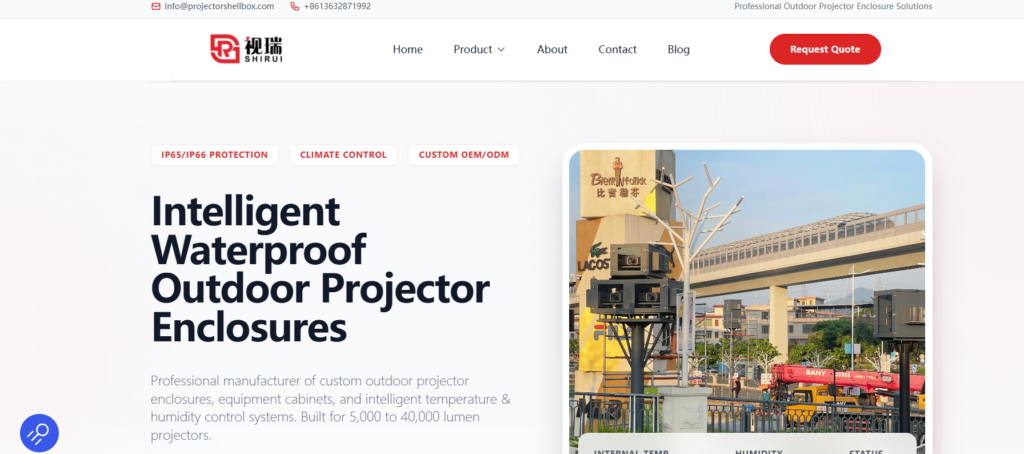
ShiRui manufactures custom outdoor projector enclosures with IP65/IP66 waterproof and dustproof protection, intelligent temperature and humidity control, anti-condensation design, heating, cooling, dehumidification, WiFi/4G remote monitoring, and OEM/ODM sheet metal customization for outdoor projection projects.
- Country: China
- Website: https://waterproofprojectorenclosure.com/
- Main product: Outdoor Projector Enclosure
3. Screen Solutions International (SSI)
Screen Solutions International manufactures a wide range of digital display solutions, including climate-controlled outdoor projector enclosures designed to protect against heat, cold, dust, and moisture. [1, 18, 21]
- Country: USA
- Website: https://www.ssiscreens.com/
- Main product: Defender Series Outdoor Enclosures
4. ProEnc
ProEnc is a manufacturer of protective housings for electronics with locations in the USA and UK. The company specializes in secure, cooled enclosures for outdoor projector deployment. [3, 20]
- Country: USA / UK
- Website: https://www.proencltd.com/
- Main product: Outdoor Projector Housings
5. DeerTV
DeerTV is a global manufacturer of outdoor TV and projector enclosures, known for providing weatherproof and dustproof protective cases for residential and commercial markets in over 120 countries. [2, 15, 35]
- Country: China
- Website: https://deertv.com/
- Main product: Weatherproof Projector Enclosures
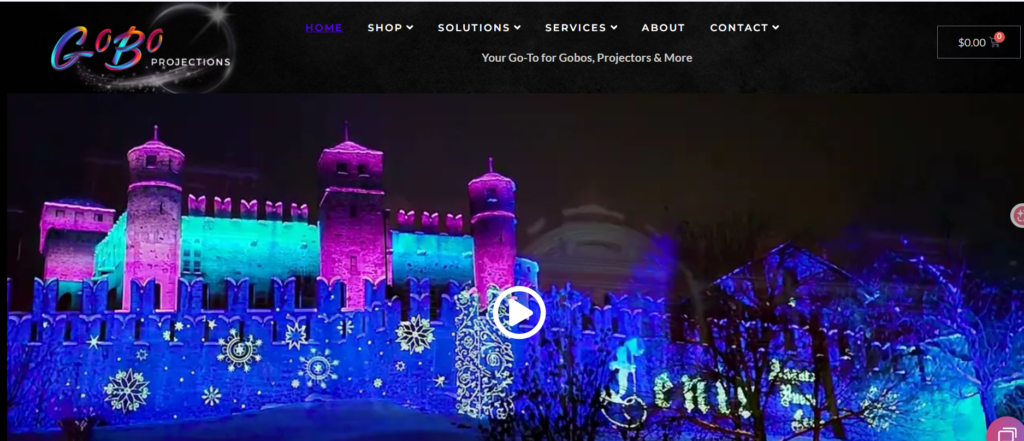
6. Gobo Projections
Gobo Projections is based in Pennsylvania and provides a range of projection solutions, including custom-built fiberglass outdoor enclosures designed to be corrosion-proof and insulated. [8, 19, 44]
- Country: USA
- Website: https://goboprojections.com/
- Main product: Fiberglass Outdoor Projector Enclosures
7. Your Pixel Store (YPS)
Your Pixel Store supplies professional lighting and display products, offering a metal outdoor projector enclosure designed for permanent commercial displays and holiday projections. [10, 54]
- Country: USA
- Website: https://yourpixelstore.com/
- Main product: YPS Projector Enclosure
8. Apollo Enclosures
Apollo Enclosures specializes in manufacturing weatherproof enclosures that allow standard TVs to be used outdoors. Its products protect against weather, moisture, and extreme temperatures. [45, 46]
- Country: USA
- Website: https://www.apolloenc.com/
- Main product: Weatherproof TV Enclosures
9. GoboSource
GoboSource offers a wide range of gobo projectors, including weather-resistant exterior models designed for rugged conditions and large-scale projection on buildings and other surfaces. [47]
- Country: USA
- Website: https://www.gobosource.com/
- Main product: Exterior Gobo Projectors
FAQ
What is the main purpose of an outdoor projector enclosure?
The main purpose is to protect the projector from rain, dust, insects, humidity, temperature changes, and installation risks while supporting proper cooling, lens alignment, cable entry, and maintenance access.
Is a waterproof projector enclosure enough for outdoor use?
Not always. Waterproof protection is only one part of the design. Outdoor use also requires cooling, optical glass alignment, anti-condensation planning, cable sealing, and maintenance access.
Which cooling method should I choose?
The cooling method depends on projector heat load, site temperature, dust level, humidity, and operating hours. Common options include fresh air cooling, fresh air + air conditioning, and internal circulation air conditioning.
When should internal circulation air conditioning be used?
Internal circulation air conditioning is usually used for sandy, dusty, humid, or subway project environments where reducing outside air exchange is important.
What material should I choose for an outdoor projector enclosure?
Material selection depends on corrosion risk, installation site, project budget, and customer requirements. Options can include 201 stainless steel, 304 stainless steel, and galvanized plate.
What information is needed for custom enclosure design?
Useful information includes projector model, dimensions, lens position, air inlet and outlet direction, site photos, installation method, mounting holes, cable entry direction, maintenance access, cooling method, quantity, and cabinet drawing if available.
Conclusion
The right outdoor projector enclosure is selected by project conditions, not only by cabinet appearance. Cooling method, waterproof structure, anti-condensation design, installation method, material, internal configuration, and maintenance access all affect long-term outdoor projector performance.
For project selection, send the projector model, site photos, installation method, cable entry direction, and cabinet drawing if available. A manufacturer can then help review enclosure options, cooling method, material selection, and remote monitoring requirements before production.