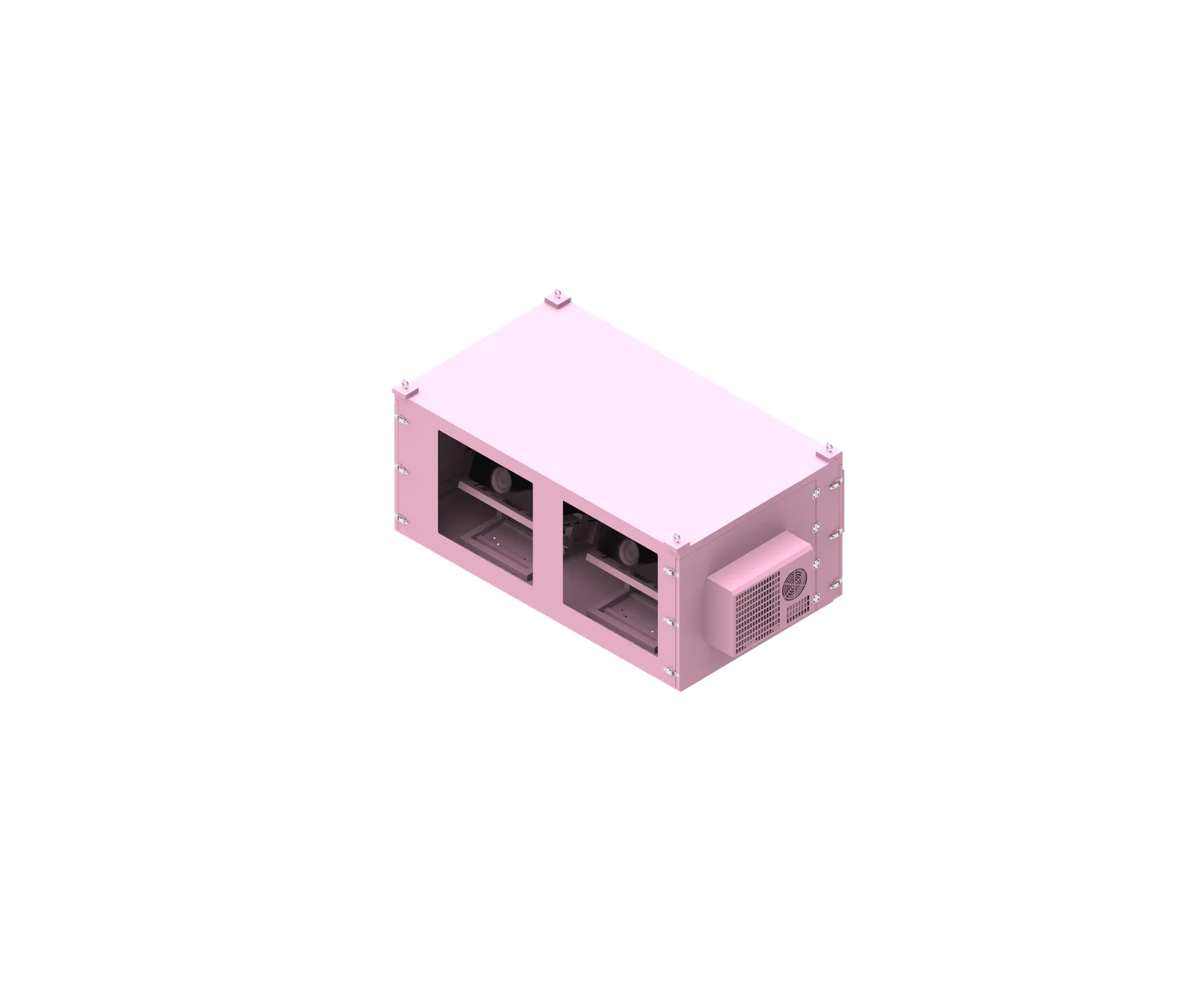
A projector enclosure cannot be quoted accurately from lumen output alone. Telling an outdoor projector enclosure manufacturer “I need housing for a 20,000-lumen projector” is usually not enough because dimensions, power consumption, heat load, airflow path, lens position, weight, and mounting points vary widely by model. A complete outdoor projector enclosure RFQ helps ShiRui evaluate enclosure size, cooling configuration, mounting structure, and environmental protection faster.
Video Guide: Discover our waterproof projector enclosure designed for professional outdoor projection systems. This video introduces the enclosure design and shows how it helps protect projector equipment in long-term outdoor installations and changing weather conditions.
What is outdoor projector enclosure RFQ?
An outdoor projector enclosure RFQ is a structured request for quotation that gives the manufacturer the technical details needed to design and price a suitable weatherproof projector housing. It should include projector model, quantity, dimensions, cooling needs, installation method, environment, power requirements, and any custom specifications.
Video Guide: Take a closer look at our outdoor projector housing designed for professional outdoor projection projects. This video showcases the enclosure structure and provides an overview of a protective housing solution for projector equipment used in permanent outdoor installations.
RFQ Purpose and Required Engineering Inputs
An outdoor projector enclosure RFQ is not only a price request. For a custom outdoor projector enclosure, it is also the starting point for engineering evaluation. The manufacturer needs to understand what projector will be installed, how much heat it generates, where it will be mounted, and what environmental risks it must resist.
A useful projector enclosure RFQ checklist should include:
- Projector brand and exact model number
- Number of projectors
- Projector dimensions and weight
- Power consumption of each projector
- Air intake and exhaust locations
- Lens model, lens center position, and projection direction
- Installation method, such as pole, wall, ceiling, rooftop, or ground mounting
- Maximum and minimum ambient temperature
- Humidity, rain, dust, sunlight, salt spray, snow, or sand conditions
- Operating hours per day
- Required IP rating, such as IP65
- Voltage and frequency
- Cable entry and interface requirements
- Maintenance access requirements
- Material, color, and surface finish preferences
- Monitoring or remote-control requirements
- Project location and total enclosure quantity
- Drawings, photos, manuals, or site layout information
ShiRui Pro Tip: I always recommend sending the exact projector model first. Once we know the model, we can check the projector’s size, airflow direction, heat output, lens position, and installation clearances before discussing cabinet dimensions or price.
How Does outdoor projector enclosure RFQ Work?
An outdoor projector enclosure RFQ works by converting project information into an engineering quotation. The manufacturer reviews the projector data, calculates clearance and cooling requirements, checks environmental protection needs, confirms mounting structure, and then prepares a suitable enclosure design, specification, and projector enclosure quotation.
Video Guide: See how a waterproof projector case creates a controlled operating environment for professional projection equipment. This video focuses on temperature and humidity management inside the enclosure, helping support stable projector performance during long-term outdoor use.
From Project Data to Enclosure Quotation
A professional outdoor projector housing quotation usually follows a technical review process. The more complete the RFQ, the fewer clarification emails are needed, and the faster the manufacturer can provide an accurate proposal.
Typical RFQ workflow:
- Buyer submits projector information
The RFQ should include the projector brand, exact model, quantity, datasheet, and manual if available. - Manufacturer checks internal clearance
The enclosure must allow space for installation, airflow, cable bending, lens adjustment, and maintenance. - Thermal load is evaluated
Cooling is estimated from projector power consumption, total heat output, ambient temperature, and operating hours. - Airflow design is reviewed
The enclosure should not block the projector’s original airflow intake or exhaust. Hot exhaust air must not recirculate into the intake. - Lens window position is determined
Lens center, diameter, shift range, and projection angle affect optical glass size and location. - Mounting structure is designed
Pole, wall, roof, ceiling, or custom steel-frame mounting affects reinforcement and load distribution. - Environmental protection is selected
Rain, dust, humidity, salt spray, snow, and sunlight affect sealing, coating, material, and temperature-control design. - Quotation and technical proposal are prepared
The final projector enclosure quotation should reflect enclosure size, cooling system, material, control system, quantity, and packaging.
ShiRui Pro Tip: I do not suggest quoting only from approximate cabinet size. Two projectors with similar brightness may require completely different airflow paths and cooling capacity, so the RFQ should always begin with the actual projector model and project environment.
What are the key features of an outdoor projector?
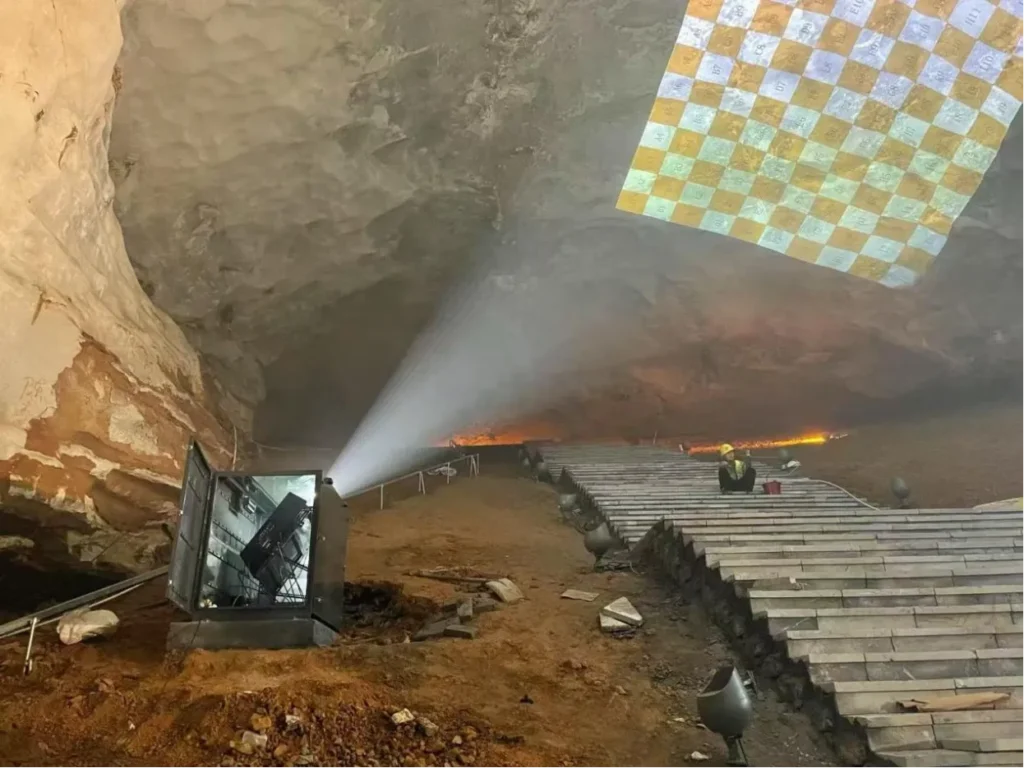
For an outdoor projector enclosure RFQ, the most important projector features are not only brightness. The manufacturer needs projector dimensions, weight, power consumption, heat generation, intake and exhaust positions, lens location, mounting points, operating orientation, and cable connection layout to design reliable custom projector housing.
Projector Specifications That Affect Enclosure Design
A projector’s lumen rating does not define the enclosure. A 20,000-lumen projector from one brand may have a different size, weight, power draw, fan layout, and lens position than another 20,000-lumen projector. That is why projector enclosure specifications must be based on model-specific data.
Based on our internal data and market analysis, here is the breakdown:
| Projector Feature | Why It Matters for Enclosure Design | RFQ Recommendation |
|---|---|---|
| Brand and exact model | Determines compatibility and technical reference | Always include full model number |
| Dimensions | Determines internal cabinet size and clearance | Provide length, width, and height |
| Weight | Affects mounting frame and reinforcement | Include net projector weight |
| Power consumption | Helps estimate heat load | Provide rated wattage |
| Intake location | Determines fresh-air path | Mark side, front, rear, or bottom intake |
| Exhaust location | Prevents hot-air recirculation | Provide airflow diagram if available |
| Lens position | Determines optical window location | Include lens center and projection direction |
| Lens model | Affects window diameter and projection angle | Provide lens model for mapping projects |
| Mounting points | Affects internal support structure | Send projector drawing if available |
| Cable ports | Affects access and cable entry design | List HDMI, fiber, power, LAN, and control cables |
ShiRui Pro Tip: When buyers send us a projector manual or dimensional drawing, we can usually identify airflow, lens center, service access, and mounting points much faster than from a short text description.
How to build an outdoor projector enclosure?
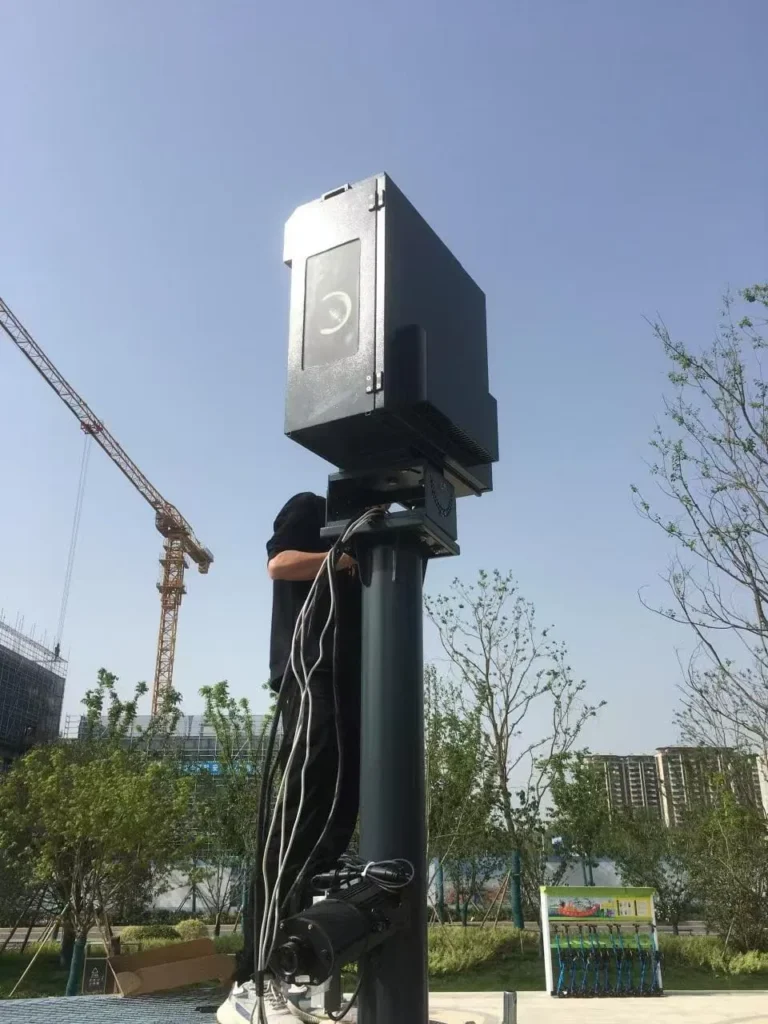
To build an outdoor projector enclosure, start with the exact projector model, then design the cabinet around clearance, airflow, optical window position, cooling capacity, waterproof sealing, cable entry, mounting structure, and maintenance access. For professional projects, custom outdoor projector enclosure design should be engineering-led, not size-led.
Practical Design Steps for Custom Projector Housing
A reliable outdoor projector housing must protect the projector without damaging its cooling performance. The enclosure should not trap heat, block air intake, force exhaust back into the projector, or make lens adjustment and maintenance impossible.
Recommended build and design sequence:
- Confirm projector model and datasheet
Use the manufacturer’s manual to check size, airflow, power consumption, weight, and service zones. - Define internal clearance
Allow space for airflow, cables, mounting brackets, lens adjustment, and projector removal. - Map intake and exhaust airflow
Separate fresh air and hot exhaust paths whenever possible. - Calculate cooling demand
Consider projector wattage, ambient temperature, sunlight exposure, enclosure volume, and operating hours. - Position the optical glass window
Align the window with the lens center, projection angle, and lens shift range. - Select material and finish
Galvanized steel, aluminum, or stainless steel may be used depending on environment and corrosion risk. - Design waterproof cable entry
Cable glands, sealed entry plates, and service loops should be planned before production. - Add maintenance access
Door position and opening direction should allow filter cleaning, projector removal, and cooling-system service. - Confirm mounting interface
Wall, pole, ceiling, ground, rooftop, or custom steel structure mounting must be considered early. - Test sealing and ventilation logic
Weather protection and cooling performance must work together, not against each other.
ShiRui Pro Tip: I advise customers not to minimize cabinet size too aggressively. A compact enclosure may look efficient, but insufficient clearance can reduce airflow, increase temperature, and make maintenance difficult.
What do I need for an outdoor projector?
For an outdoor projector installation, you need the projector, suitable outdoor projector housing, weatherproof power and signal cabling, mounting structure, cooling or heating system, optical window, sealed cable entries, environmental protection, and maintenance access. For an RFQ, provide all related technical and site information.
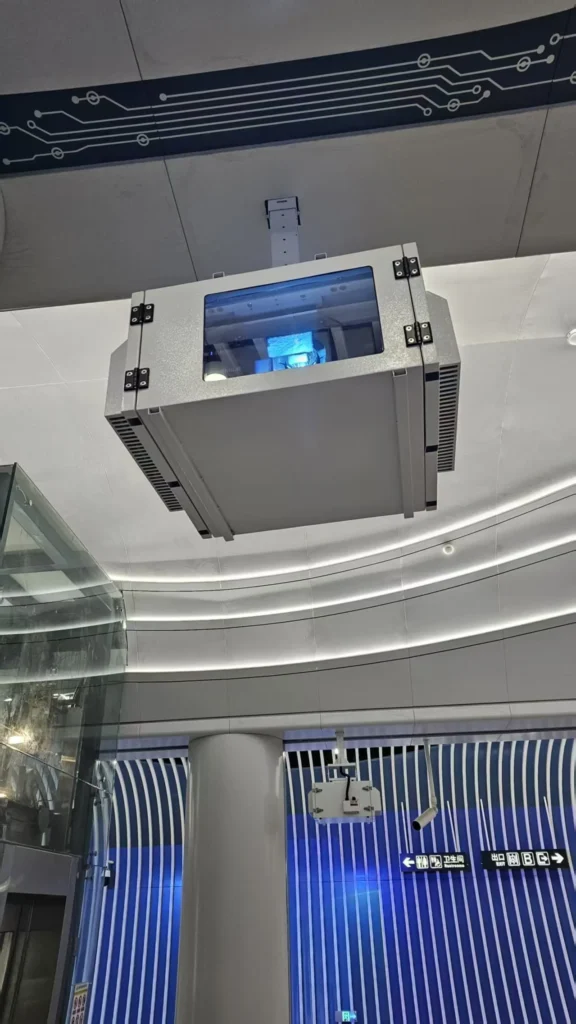
Complete Outdoor Projection System Requirements
An outdoor projection system is more than a projector placed inside a box. The housing, cooling system, electrical components, cables, mounting frame, and site environment must work together.
Essential items to prepare:
- Projector and lens
- Exact projector model
- Lens model
- Lens center and projection angle
- Lens shift requirements
- Outdoor projector enclosure
- Correct internal dimensions
- Weatherproof sealing
- Optical glass window
- Access doors
- Cable entry points
- Internal mounting platform
- Cooling and temperature control
- Forced-air cooling
- Temperature-controlled fans
- Industrial air-conditioning
- Heating system for cold regions
- Constant-temperature control if required
- Electrical configuration
- Voltage
- Frequency
- Single-phase or project-specific supply
- Power distribution
- Control wiring
- Signal and control cables
- HDMI
- Fiber
- Network cable
- Control cable
- Signal cable
- AC power cable
- Installation structure
- Pole mount
- Wall mount
- Ceiling mount
- Ground base
- Rooftop structure
- Custom steel frame
- Environmental protection
- Rain resistance
- Dust protection
- UV exposure consideration
- Salt-spray resistance
- Snow or freezing protection
- Sand and high-temperature protection
ShiRui Pro Tip: For international projects, I always ask for voltage, frequency, and project location early. Cooling components and electrical parts may need to match the destination market, not only the projector specification.
Key Features & Comparison
Based on our internal data and market analysis, here is the breakdown:
| RFQ Information | Why It Matters | What to Send to ShiRui |
|---|---|---|
| Projector brand and model | Determines cabinet compatibility | Full manufacturer name and exact model number |
| Quantity | Determines layout and total heat load | Number of projectors and enclosures |
| Projector dimensions | Determines enclosure size | Length, width, height, and dimensional drawing |
| Projector weight | Determines structural strength | Net weight of each projector |
| Power consumption | Helps calculate cooling demand | Rated wattage for each projector |
| Intake and exhaust positions | Determines airflow design | Manual, airflow diagram, or marked photos |
| Lens model and position | Determines optical window | Lens model, center position, diameter, and projection angle |
| Installation method | Determines mounting structure | Pole, wall, ceiling, ground, rooftop, or custom steel frame |
| Max/min temperature | Determines cooling and heating | Summer maximum and winter minimum temperature |
| Humidity and environment | Determines protection level | Rain, dust, sunlight, salt spray, snow, sand, or coastal conditions |
| Operating hours | Affects thermal design | Daily operating time or 24/7 requirement |
| IP requirement | Determines sealing design | IP54, IP55, IP65, or project-specific requirement |
| Voltage and frequency | Determines electrical configuration | Local voltage, frequency, and phase requirement |
| Cable interfaces | Determines cable entry design | Power, HDMI, fiber, LAN, signal, and control cables |
| Maintenance access | Determines door and clearance design | Required service direction and access limitations |
| Material and finish | Affects durability and appearance | Galvanized steel, aluminum, stainless steel, color, coating |
| Monitoring requirements | Affects control-system design | Temperature, humidity, alarm, network monitoring |
| Project location | Helps evaluate climate and logistics | Country, city, or installation region |
| Drawings and photos | Improves design accuracy | Site photos, layout drawings, steel structure drawings, projector manual |
A strong projector enclosure RFQ checklist helps the manufacturer determine four critical engineering items: enclosure dimensions, cooling capacity, internal and external mounting structure, and environmental protection requirements.
For simple projects, the minimum RFQ should include the projector model, quantity, installation method, ambient temperature range, operating hours, and project location. For complex projection mapping, multi-projector arrays, or permanent outdoor installations, the RFQ should also include lens data, airflow diagrams, mounting drawings, and site photos.
Cost & Buying Factors
The cost of a custom outdoor projector enclosure depends on more than cabinet size. Pricing is affected by projector quantity, enclosure material, cooling method, IP rating, mounting structure, control system, cable sealing, optical window size, and production quantity.
Based on our internal data and market analysis, here is the breakdown:
| Buying Factor | Cost Impact | Notes |
|---|---|---|
| Exact projector model | High | Determines size, airflow, lens window, and internal structure |
| Cooling method | High | Fan cooling costs less than industrial air-conditioning or constant-temperature control |
| Enclosure material | Medium to high | Stainless steel and special anti-corrosion materials usually cost more |
| IP rating | Medium to high | Higher sealing requirements increase design and manufacturing complexity |
| Quantity | Medium | Larger quantities may improve production efficiency |
| Mounting method | Medium | Custom steel interfaces, pole brackets, or rooftop frames affect cost |
| Electrical configuration | Medium | Voltage, frequency, and control components may vary by market |
| Monitoring system | Medium | Remote temperature, humidity, alarm, or network control increases system complexity |
| Optical window | Medium | Size, glass specification, sealing, and alignment affect design |
| Surface finish | Low to medium | Color, coating thickness, and corrosion protection affect cost |
| Packaging and logistics | Medium | Large enclosures require stronger export packaging and shipping planning |
When comparing a projector enclosure quotation, buyers should not only compare the final price. They should compare whether the proposal clearly addresses airflow, heat load, sealing, mounting, maintenance, cable entry, and environmental conditions.
A low-cost enclosure that is not designed around the projector’s real airflow and heat output may create overheating, condensation, access problems, or premature projector failure.
Conclusion
A complete outdoor projector enclosure RFQ helps the manufacturer provide a faster, more accurate technical proposal and quotation. The key point is simple: an outdoor projector enclosure should not be quoted from lumen output alone.
At minimum, buyers should provide the exact projector model, quantity, installation method, project location, maximum and minimum ambient temperature, operating hours, and required enclosure quantity. For professional projection mapping or multi-projector systems, also include projector drawings, lens information, airflow diagrams, installation drawings, and site photos.
Need a quotation for an outdoor projector enclosure? Send ShiRui your projector model, quantity, installation method, project location, and ambient temperature range. We can evaluate the enclosure size, cooling configuration, environmental protection, and mounting structure for your project.