Buying an outdoor projector enclosure is not only about checking a brochure claim such as “IP65” or “waterproof.” Professional buyers should review whether the supplier can provide relevant test reports, verification documents, and factory inspection records that match the actual enclosure model, configuration, electrical system, cooling method, and project environment.
Video Guide: See how an outdoor enclosure for projector is evaluated through smoke testing. The video demonstrates the testing process used to review enclosure structure and airflow performance for professional outdoor projection systems.
What is outdoor projector enclosure test report?
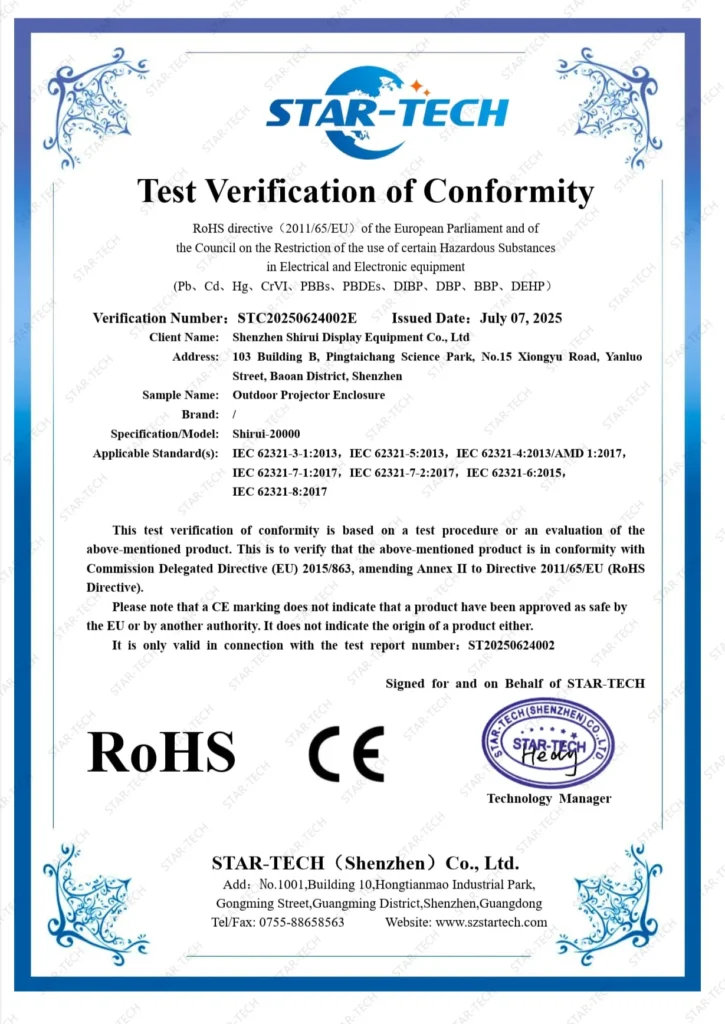
An outdoor projector enclosure test report is technical evidence showing how an enclosure or related component was tested under defined conditions. It may cover IP protection, waterproofing, dust resistance, thermal performance, electrical safety, EMC, materials, corrosion resistance, or factory inspection, depending on the product configuration and project requirements.
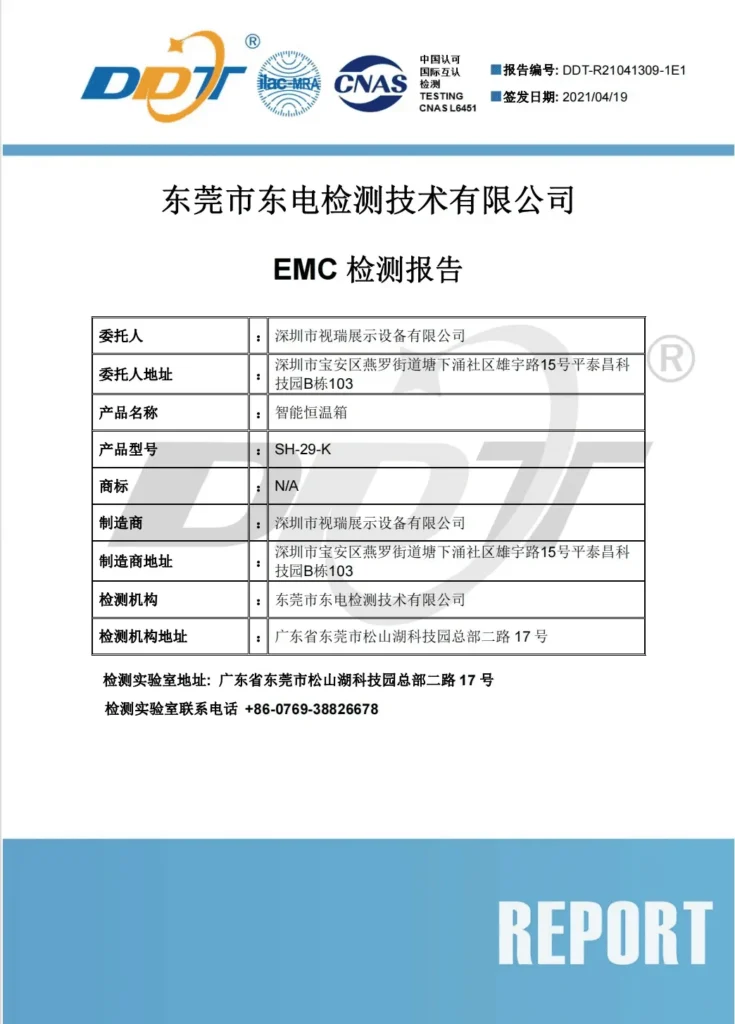
What the Report Actually Proves
An outdoor projector enclosure test report should answer one practical question: does the tested product match the enclosure you are buying? A report is useful only when the product model, structure, sealing design, cooling system, electrical components, and test conditions are relevant to the quoted configuration.
Buyers should not treat every document as equal. A third-party IP test report, a factory waterproof test record, a component CE certificate, and a final inspection checklist all serve different purposes.
Based on our internal data and market analysis, here is the breakdown:
| Document Type | What It May Prove | What Buyers Should Verify |
|---|---|---|
| IP protection test report | Ingress protection level such as IP65 | Model, configuration, standard, test result |
| Waterproof test record | Resistance to water at key sealing points | Doors, glass, cable entries, cooling interfaces |
| Dust protection test | Resistance to dust entry | Filters, vents, cable glands, final assembly |
| Thermal performance data | Internal temperature control ability | Ambient temperature, heat load, cooling method |
| Electrical documentation | Safety of powered components | Complete system or component-only scope |
| Factory inspection report | Final production quality | Dimensions, wiring, seals, assembly, function |
ShiRui Pro Tip: I always advise buyers to ask, “What exactly was tested, under which standard, on which product configuration, and does it apply to my order?” This question is more valuable than simply asking whether the enclosure “has a certificate.”
How Does outdoor projector enclosure test report Work?
A test report works by documenting a defined test method, sample configuration, test standard, operating conditions, and result. For outdoor projector enclosures, the most important point is whether the tested sample represents the final cabinet, including doors, optical window, cable glands, cooling devices, and electrical components.
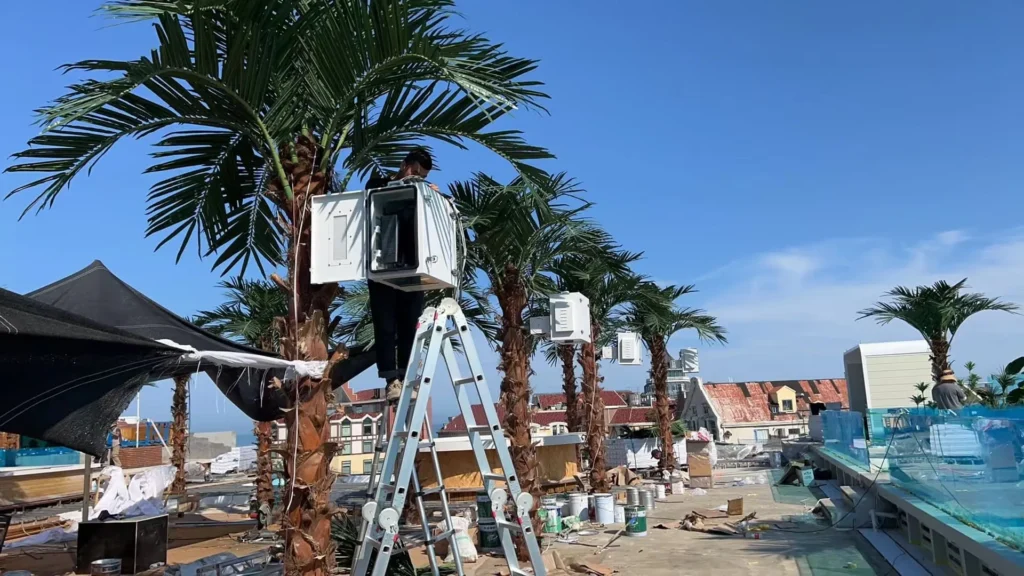
How Test Evidence Connects to Product Claims
A supplier may claim IP65, waterproof performance, cooling capability, corrosion resistance, or intelligent temperature control. A valid report or technical record should show how that claim was verified.
For example, an IP65 statement should ideally be supported by testing according to an applicable ingress-protection standard such as IEC 60529 or an equivalent recognized standard. However, if the test was performed on a sealed empty cabinet, and your purchased unit includes an air conditioner, fan vents, cable glands, or additional access doors, the original report may not fully represent the final configuration.
A practical verification process should include:
- Check the report applicant and manufacturer name.
- Confirm the product name and model number.
- Compare report photos with the quoted enclosure design.
- Review the tested configuration, including doors, glass, vents, and cable entries.
- Identify the test standard and test method.
- Check the test result, report date, and report number.
- Confirm whether the report covers the complete enclosure or only a component.
- Ask whether custom modifications affect the report’s relevance.
ShiRui Pro Tip: When we support project buyers, I recommend attaching the approved drawing or configuration sheet to the RFQ. That way, the buyer and manufacturer can confirm whether existing reports apply or whether additional testing is needed before production.
What to look for when buying an outdoor projector?
When buying an outdoor projector for enclosure use, check brightness, heat output, size, lens position, operating temperature range, maintenance access, and installation environment. The enclosure and projector must be selected together because a high-brightness projector may require stronger cooling, larger internal space, and better airflow management.
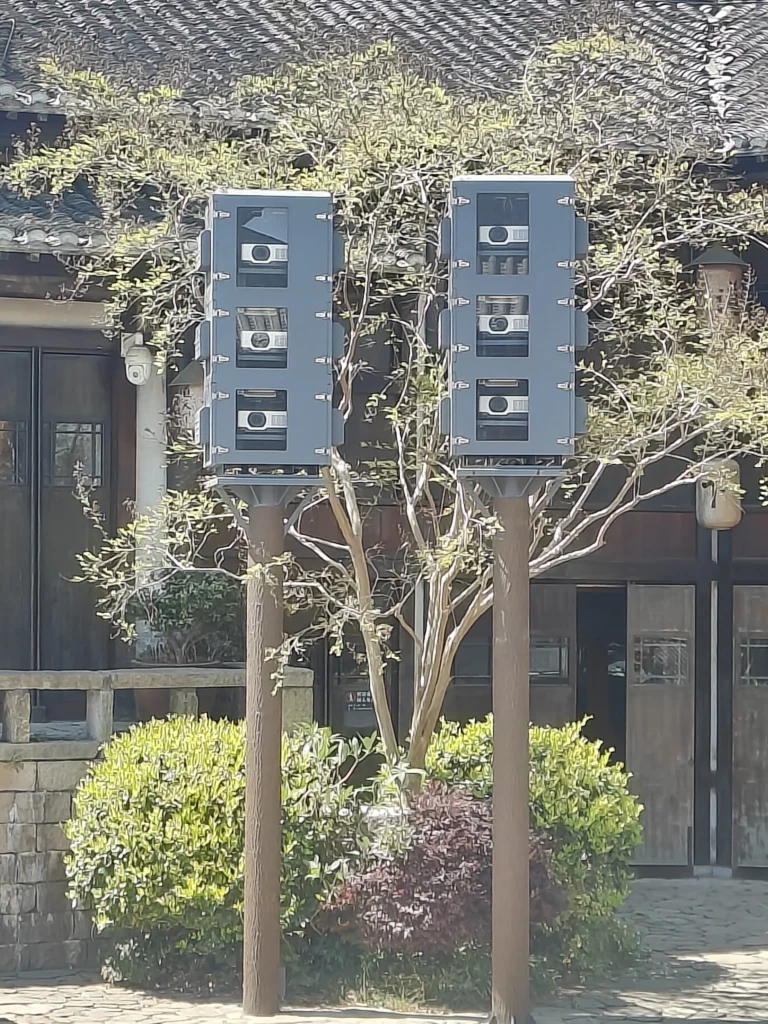
Projector and Enclosure Compatibility Checks
The projector enclosure is not just a protective box. It becomes part of the projector’s operating environment. If the projector produces significant heat, the enclosure must remove that heat while still protecting against rain, dust, humidity, and unauthorized access.
Buyers should check both the projector specification and the enclosure engineering plan before placing an order.
Based on our internal data and market analysis, here is the breakdown:
| Buying Factor | Why It Matters | What to Confirm |
|---|---|---|
| Projector brightness | Higher brightness usually means higher heat | ANSI lumens and power consumption |
| Projector heat load | Determines cooling demand | Actual wattage and exhaust direction |
| Lens position | Affects optical window design | Lens height, throw angle, window size |
| Projector dimensions | Affects cabinet size and service space | Length, width, height, cable clearance |
| Operating temperature | Must match outdoor environment | Projector limits and enclosure control range |
| Maintenance access | Important for filters, lens, cables, and service | Door direction and internal mounting |
| Installation site | Affects waterproofing, dust, corrosion, and wind load | Coastal, desert, roof, pole, wall, or ground |
ShiRui Pro Tip: I prefer to review the projector datasheet before confirming enclosure design. If the projector model changes after enclosure design approval, cooling capacity, optical window location, and internal brackets may also need to be reviewed.
How many ANSI do I need for an outdoor projector?
The ANSI lumens needed for an outdoor projector depends on screen size, ambient light, viewing distance, content type, and whether projection happens after sunset or in partially lit environments. For enclosure planning, ANSI lumens also matter because brighter projectors usually create more heat that the enclosure must control.
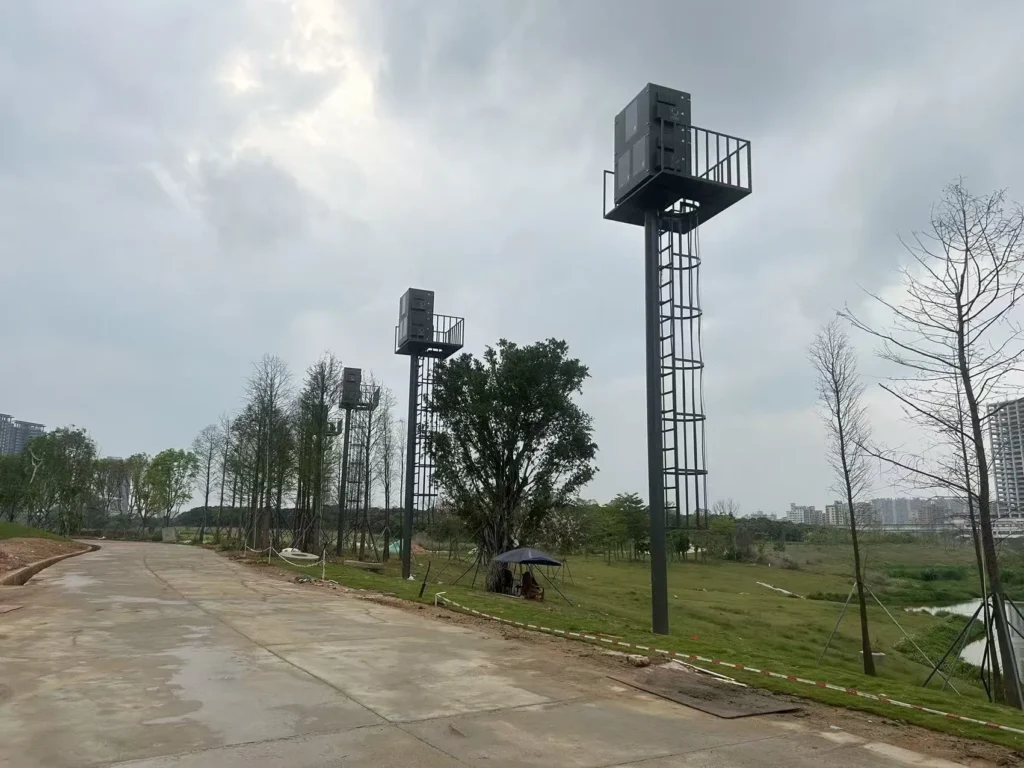
Brightness Planning for Outdoor Installations
There is no single ANSI lumen number that fits every outdoor project. A small backyard screen used after dark has different requirements from a commercial projection-mapping project, scenic-area installation, or outdoor advertising display.
For procurement, brightness should be considered together with thermal management. A very bright projector may require industrial air conditioning, optimized airflow, or a larger enclosure.
General planning points include:
- Low ambient light: Lower brightness may be acceptable for smaller screens after dark.
- Moderate ambient light: More ANSI lumens are usually needed for clear image contrast.
- Large screen size: Larger projection surfaces require higher brightness.
- Commercial outdoor use: Higher brightness and stronger enclosure cooling are often required.
- Continuous operation: Thermal performance and component reliability become more important.
- High-temperature site: Cooling capacity should be calculated using ambient temperature and projector heat load, not enclosure volume alone.
ShiRui Pro Tip: I do not recommend choosing an enclosure only after the projector is purchased. The ANSI lumen level, power consumption, exhaust direction, and duty cycle should all be reviewed before selecting the cooling system.
What is the best outdoor projector to buy?
The best outdoor projector is the one that matches the site brightness requirement, screen size, operating schedule, service plan, and enclosure design. For B2B projects, buyers should prioritize compatibility, thermal load, lens layout, reliability, and documentation rather than selecting only by brand or maximum brightness.
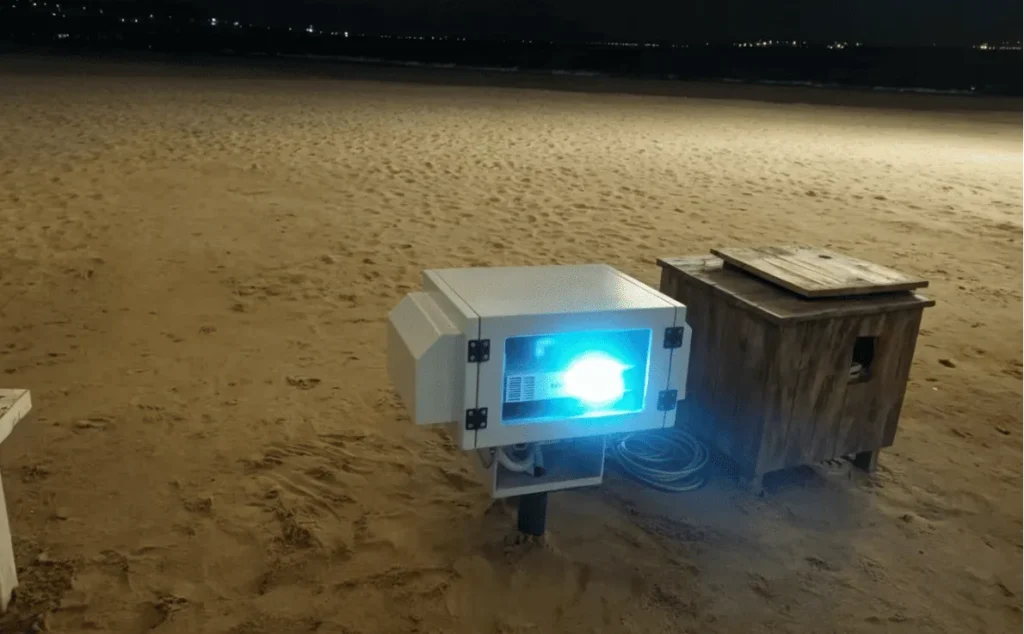
Selection Criteria for Enclosed Outdoor Use
For outdoor enclosure applications, the “best” projector is not always the brightest or most expensive one. It is the projector that can operate reliably inside a controlled enclosure under the expected ambient temperature, humidity, dust, and service conditions.
Key selection criteria include:
- Brightness requirement: Match ANSI lumens to screen size and ambient light.
- Thermal output: Confirm power consumption and exhaust airflow direction.
- Physical size: Leave space for installation, wiring, and maintenance.
- Lens position: Ensure accurate alignment with the enclosure optical window.
- Operating temperature range: Compare projector limits with site conditions.
- Duty cycle: Confirm whether the projector will run occasionally or continuously.
- Maintenance access: Consider filter cleaning, lamp or laser service, and cable access.
- Integration needs: Check control ports, sensors, power supply, and monitoring requirements.
ShiRui Pro Tip: For custom ShiRui enclosures, I prefer receiving the projector model, site temperature range, installation photos, and operating schedule together. This helps avoid mismatches between projector heat output and enclosure cooling capacity.
Key Features & Comparison
Buyers should compare outdoor projector enclosure evidence across environmental protection, thermal management, electrical safety, material quality, corrosion resistance, structural design, and factory inspection. Required reports are not identical for every project, but each supplier claim should be supported by documents relevant to the actual enclosure configuration.
Test Report Checklist for Procurement Review
Based on our internal data and market analysis, here is the breakdown:
| Document / Test | What Buyers Should Check | Common Risk if Ignored |
|---|---|---|
| IP test report | Model, configuration, IP rating, standard, report date | IP claim appears only in marketing material |
| Waterproof test | Doors, seals, optical glass, cable entries, cooling interfaces | Tested cabinet differs from final product |
| Dust test | Openings, filters, vents, cable glands, final configuration | Dust enters through modified interfaces |
| Thermal test | Ambient temperature, heat load, internal temperature, runtime | “Works at 50°C” claim lacks test conditions |
| Cooling-system test | Cooling method, capacity, set points, heat load | Cooling selected by cabinet size only |
| Heating / low-temperature test | Heater trigger, recovery time, startup behavior | Cold-climate operation is unverified |
| Temperature-control data | Sensor location, trigger logic, tolerance, alarm conditions | “Intelligent control” is undefined |
| Humidity / condensation review | Dehumidification, heating, circulation, anti-fog measures | Waterproof cabinet still develops condensation |
| Electrical documents | Powered components, wiring, sockets, controllers | Component safety does not cover full system |
| EMC documents | Complete enclosure or component-only scope | One module certificate is misused for whole product |
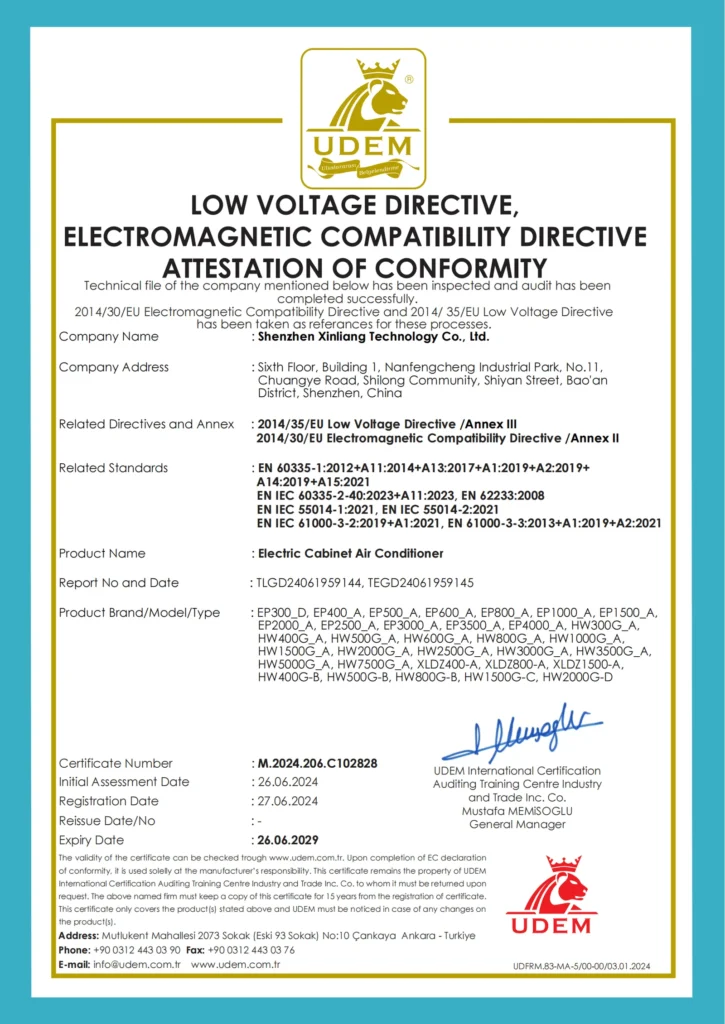
| CE documents | Test report, certificate, DoC, component coverage | CE logo is mistaken for full performance proof |
| RoHS documents | Relevant materials or electronic components | RoHS is confused with waterproof certification |
| Material certificate | Material grade, thickness, surface treatment | Quoted material differs from production material |
| Salt-spray / corrosion test | Standard, duration, coating, acceptance criteria | Coastal corrosion risk is underestimated |
| Coating inspection | Thickness, adhesion, surface quality | Outdoor finish fails prematurely |
| Structural review | Weight, mounting, wind exposure, center of gravity | Mounting system is not suitable for installation |
| Aging test | Cooling, heating, fans, sensors, controller operation | Functional problems appear after shipment |
| Factory inspection | Dimensions, assembly, wiring, seals, optical window | Custom unit does not match approved drawing |
ShiRui Pro Tip: A component certificate is not the same as complete enclosure certification. For example, a CE document for an internal air conditioner does not automatically prove that the complete outdoor projector enclosure has the same compliance scope.
Cost & Buying Factors
The cost of an outdoor projector enclosure depends on size, material, IP protection level, cooling method, heating system, optical window design, electrical control, surface treatment, customization, and documentation requirements. Buyers should define required reports in the RFQ because additional testing can affect lead time and cost.
Pricing Factors That Affect Procurement Decisions
Outdoor projector enclosure pricing is strongly linked to engineering complexity. A simple weather-resistant cabinet and a fully temperature-controlled enclosure with industrial air conditioning, sensors, wiring, and custom mounting have very different cost structures.
Buyers should avoid comparing only unit price without comparing configuration and documentation scope.
Based on our internal data and market analysis, here is the breakdown:
| Cost Factor | Why It Affects Price | Procurement Note |
|---|---|---|
| Cabinet size | Larger cabinets require more material and fabrication | Confirm projector dimensions early |
| Material | Galvanized steel, aluminum, and stainless steel differ in cost | Match material to environment |
| IP design | Higher sealing requirements increase design complexity | Ask for applicable test evidence |
| Cooling method | Fans, heat exchange, or air conditioning vary greatly | Match cooling to projector heat load |
| Heating system | Needed for cold climates | Define low-temperature requirements |
| Optical window | Size, glass type, sealing, anti-fog design affect cost | Confirm lens position and projection angle |
| Electrical system | Controllers, sensors, sockets, wiring add complexity | Check safety and EMC documentation scope |
| Surface treatment | Powder coating, coating thickness, corrosion protection vary | Important for coastal or industrial sites |
| Custom mounting | Pole, wall, truss, or ground installation may need reinforcement | Review load and center of gravity |
| Test reports | Third-party testing can add cost and time | Specify required standards before production |
ShiRui Pro Tip: I recommend listing required documents in the RFQ, not after the order is finished. If a project needs IP testing, CE-related documents, salt-spray data, or special factory inspection records, the manufacturer should know before production planning.
Conclusion
For an outdoor projector enclosure, buyers should prioritize evidence related to environmental protection, thermal management, electrical safety, material suitability, and final product configuration. The most important rule is simple: a report is valuable only when the tested product matches the enclosure being purchased.
Practical Procurement Takeaway
Not every outdoor projector enclosure needs exactly the same certificates or test reports. Requirements depend on destination market, electrical configuration, installation environment, customer specification, and project risk level.
However, buyers should always verify whether supplier claims are supported by relevant evidence. IP65, waterproof, dustproof, constant temperature, CE, RoHS, corrosion resistance, and structural safety claims should be reviewed carefully according to the actual product configuration.
Before confirming an order, buyers should:
- Define required standards and documents in the RFQ.
- Confirm whether reports cover the complete enclosure or only components.
- Compare report photos and model numbers with the quoted product.
- Review whether custom changes affect test relevance.
- Request final factory inspection records for custom enclosures.
- Keep approved drawings, configuration sheets, and inspection documents together.
ShiRui Pro Tip: If you are purchasing for a formal outdoor project, send ShiRui the projector model, installation site conditions, required IP level, temperature range, electrical requirements, and documentation expectations at the RFQ stage. That allows the enclosure design and supporting evidence to be aligned from the beginning.